

10 Tasty Ways To Use A Block Of Feta Cheese
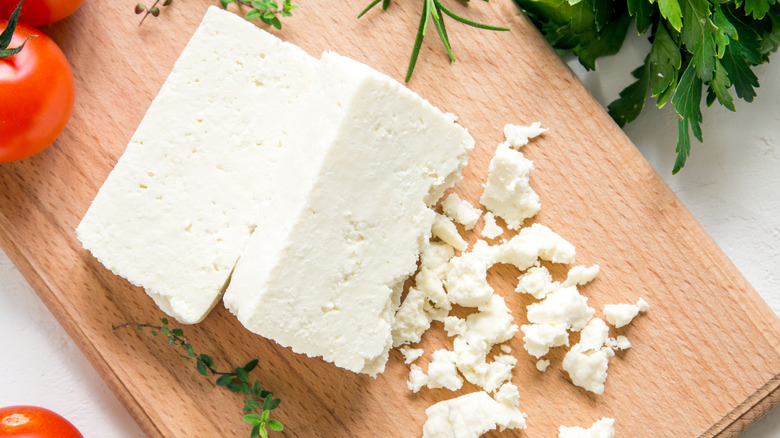
The Internet has gone wild for recipes with feta cheese, and rightfully so. With feta's distinctively tangy profile, salty bite, and creamy-crumbly texture, this ancient Greek cheese is amazingly versatile. It deftly pivots between leading roles in salads, appetizers, dips, egg dishes, pastas, sheet-pan meals, and desserts.
Authentic Greek feta is made with only sheep's milk or a blend of sheep's and goat's milk but in many U.S. grocery stores, you'll find feta-style cheeses made with cow's milk. Leading brands like Athenos, Président, and Treasure Cave produce "Greek-inspired" cow's-milk feta, which tastes milder and has a crumblier texture than authentic Greek feta. Either style is tasty, but chefs who want to stay true to feta's roots should check the label for sheep's and/or goat's milk.
Whatever type of feta you buy, purchase it in block form. Even if a recipe calls for crumbled feta, buy a block and crumble it yourself. Unlike most cheeses, feta is cured in a saltwater brine, which keeps it moist and creamy. Block feta is packed in some of its brine. Pre-crumbled feta has no brine, and it often contains anti-caking additives that make for a drier texture and shorter shelf life. A feta block in brine will stay fresh, moist, and creamy in your refrigerator for at least a week, even after the package is opened. And really, feta is easy to crumble — it takes only seconds. Here are 10 tasty ways to make a block of feta the star of your next meal.
1. Bake a block of feta into an easy-peasy pasta

A few years ago, baked feta pasta went viral on TikTok, earning instant celebrity status for its unbeatable flavor combination, impressive presentation, and ridiculously easy preparation. How easy is it? If you can turn on your oven, you can make baked feta pasta. By simply roasting a feta block nestled in a crowd of cherry tomatoes, you get all the wow factor of a tomato-cream sauce without the heaviness of actual cream.
The goal is to roast the tomatoes until they burst and the feta gets soft and toasty golden brown, maybe even a little singed. When the tomato-and-feta mixture comes out of the oven, you can get creative with add-ins: Fresh basil, minced garlic, and/or black olives supply zesty flavor. Pre-cooked chicken, sausage, or shrimp deliver extra protein. Whatever you add, the final step is spooning the sauce over a bowl of cooked pasta, and your choice of pasta can make or break this dish. Short, sturdy pastas like rigatoni, penne, or fusilli do a great job of standing up to this chunky, tomato-studded concoction.
If you're running short on cherry tomatoes, feta and pasta can also be combined to make a green pasta sauce: Toss feta, spinach, and garlic into a food processor or blender and whirl it around. Add this mixture to cooked pasta, and stir in a few halved tomatoes for a colorful accent.
2. Give tomato soup a feta upgrade

Americans have enjoyed tomato soup since the mid-1800s, but the Campbell's Soup Company put a ring on the country's finger in 1897 when it developed condensed tomato soup. The affordable, just-add-water canned soup quickly became a staple in American kitchens.
For a modern take on this nostalgic classic, try adding feta to your tomato soup. Tangy feta cheese pairs beautifully with tomatoes, adding the perfect amount of creaminess to balance out the savory, sweet-sour tomatoes. The result is a sophisticated version of the classic lunch pairing of a grilled cheese sandwich and tomato soup, but with the grilled cheese mixed into the soup.
To make this cozy, comforting soup via the easiest route, start by pulling out your Dutch oven or a similar large, sturdy vessel, then pour in a few cans (or aseptic boxes) of your favorite tomato soup brand. Roast some fresh cherry tomatoes and a block of feta in a hot oven, then add the cheesy mixture to the premade soup.
Overachievers can make their own tomato soup base with onion, garlic, canned or fresh tomatoes, and vegetable or chicken broth. Go the extra mile by giving your homemade soup more complexity: Add orzo pasta, a handful of spinach or salad greens, or spicy sausage, then finish it off with oven-roasted feta.
3. Add feta cheese to a vegetarian skillet meal
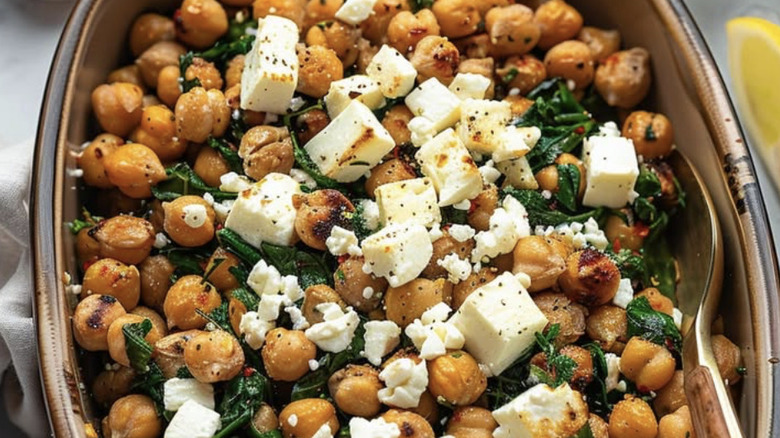
When you want to throw together something easy and healthy for dinner, a feta-studded vegetarian skillet fits the bill. Feta's crumbly yet creamy texture adds richness and depth to plant-based dishes, it provides a good source of protein and fat, and it combines well with beans or roasted vegetables.
Build your meal on a foundation of beans — almost any legume will work as a hearty base. Many chefs lean on chickpeas, a.k.a. garbanzo beans, because they're common pantry staples, but you can also use green or brown lentils, pinto beans, or black beans. Colorful vegetables and greens add a vitamin boost, and a block of feta unites the flavors — the tangy cheese is a perfect counterpoint to the earthy beans and greens.
There are no hard-and-fast rules for making a vegetarian skillet, so you can use almost anything you have on hand. Besides the beans, you might toss in a can of tomato sauce or marinara, a handful of leafy spinach or kale, and whatever vegetables are in your fridge — maybe sliced sweet potatoes, carrots, or red bell peppers. Nudge the veggies around as they simmer over low heat, then add chopped feta squares on top. Put the skillet in the oven (or transfer its contents to a baking pan) and let it bake until the feta softens and browns. Feta made with sheep's or goat's milk softens the best. When it's time to serve this nutrient-packed meal, expect to hear some applause.
4. Skewer feta with melon and herbs

Whether you're hosting a July barbecue or a September birthday, there's something about appetizers speared with sticks that just says "party time." For home chefs who like turning food prep into an art project, these watermelon and feta skewers are as fun to make as they are to eat.
Pairing watermelon and feta cheese might seem like a modern-day phenomenon, but it's actually an ages-old Mediterranean combination that caters to our natural affinity for sweet and salt. It's easy enough to toss tangy feta and juicy watermelon pieces into a salad, but it's more festive to cut them up into bite-sized squares, then stack them on wooden skewers or toothpicks with a fragrant basil leaf between them.
You can customize the components as you please: Add more color by assembling some stacks with cantaloupe or honeydew instead of watermelon, or adjust the flavor profile by using fresh mint instead of basil.
You can't go wrong with this refreshing appetizer if you follow these tips: Make sure your knife is extra sharp so you get a clean cut on the feta and the fruit. And while ordinary wooden skewers will hold the stacks together, decorative metal or wooden skewers make these fruit-and-cheese kabobs look even more festive.
5. Air-fry feta for a crunchy snack
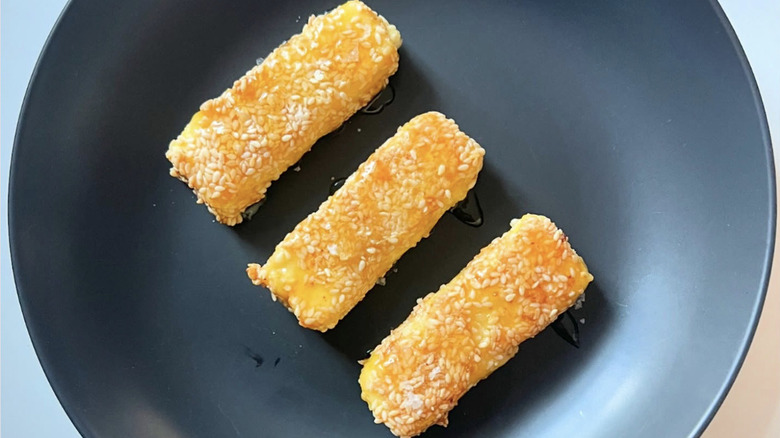
Waiters in Greek restaurants will often flick a match and set the crispy, oozing cheese ablaze with ouzo or another alcohol, creating a flaming spectacle in the dining room. Home chefs who own an air fryer can recreate the delectable flavor of saganaki with this cheesy-crunchy feta snack (minus the fireworks and most of the artery-clogging fats).
To make it, cut your feta block into uniform squares about an inch in size. (If you prefer a rectangular, two-bite shape, cut the pieces two inches long by an inch wide.) Pat the pieces dry with a paper towel, then dip them into a beaten egg mixture followed by panko bread crumbs or crumbled corn flakes. Make sure the pieces are thoroughly coated, then place them on the air fryer tray with space between them. Spray them lightly with olive oil, then air-fry until they turn golden brown and crispy. Finish the feta bites with a squeeze of lemon juice, and eat them while they're hot. Some people add a sprinkle of honey or sesame seeds, but that's your call.
6. Arrange feta blocks into checkerboard art
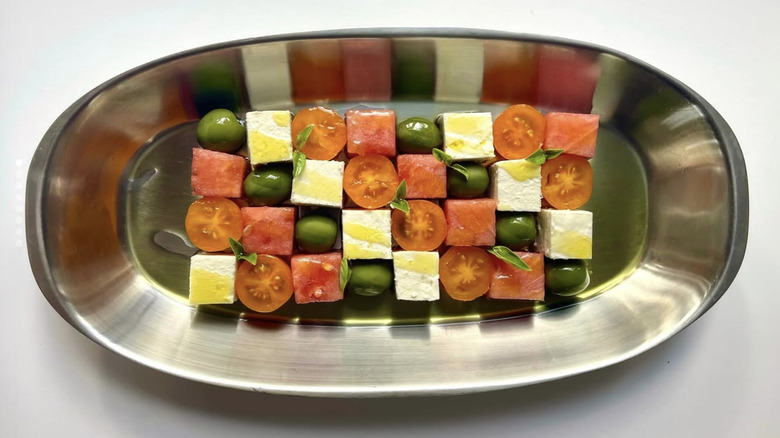
Is this checkerboard too pretty to eat? Maybe, but when you pluck a forkful from the middle of this plated salad, you'll destroy its symmetry but discover it tastes as good as it looks. Part of the pleasure of making this dish is that you can play with the ingredients to reflect your favorite color scheme. Feta cheese is a must, but the other "squares" could be roasted beets, cut radishes, halved cherry tomatoes, whole green olives, watermelon, cucumber slices, cantaloupe, honeydew, or any vegetable or fruit that can be cut into tidy one-inch blocks or circles. A few round shapes on your checkerboard create an eye-pleasing contrast to the uniform squares. Make sure the round elements are similar in size to their square counterparts.
Cut up all your chosen produce first, then start arranging your checkerboard. Once you're pleased with your design, whip up a simple dressing. For a light finish, drizzle olive oil and balsamic glaze over the entire salad in a diagonal pattern, then sprinkle freshly cut basil or parsley on top. For a sweeter dressing, try mixing honey and lemon. No matter how you top your checkerboard, don't overdo it or you'll hide your beautiful artwork.
7. Add creamy feta to a colorful shakshuka
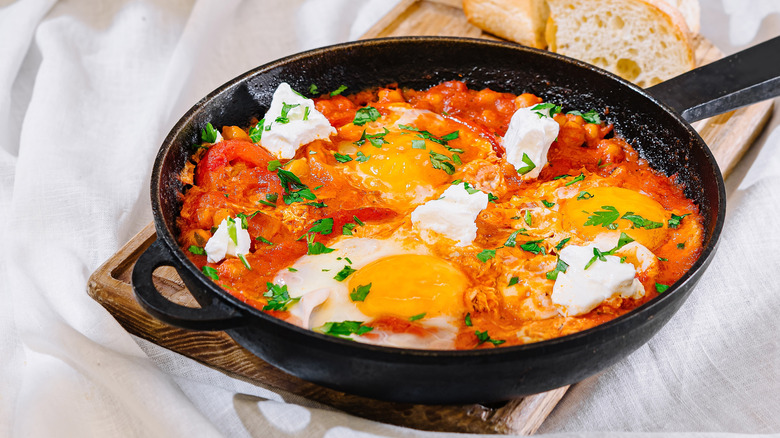
A traditional Middle Eastern shakshuka is a rustic, one-skillet meal of poached eggs in a sauce of tomatoes, onions, and bell peppers. Its Arabic name comes from the way it's prepared — shakshuka roughly translates to "a mixture." The standard ingredients are a guaranteed crowd-pleaser, but you can take shakshuka up a notch by topping it with tangy feta cheese slices or a generous amount of crumbled feta. The white cheese adds a bright finish, and its tangy-salty flavor blends well with sweet-sour tomatoes.
The dish is usually served in the cast-iron skillet it was cooked in, along with some crusty bread for dipping. The final product delivers both high-impact presentation and an aromatic fragrance. Shakshuka's craftwork lies in carefully seasoning and simmering the sauce, but the fun lies in adding the eggs: After the sauce thickens, make a few divots with the back of a spoon, and crack one egg into each. Place a lid over the skillet and cook the eggs to your liking, soft or hard.
Non-traditional shakshukas can also benefit from the addition of feta. Try making a green shakshuka with leafy kale, shaved brussels sprouts, leeks, and feta, or for a heartier and smokier dish, stick with the tomato-and-egg base but use white beans for extra heft.
8. Give sweet potatoes a feta flavor boost
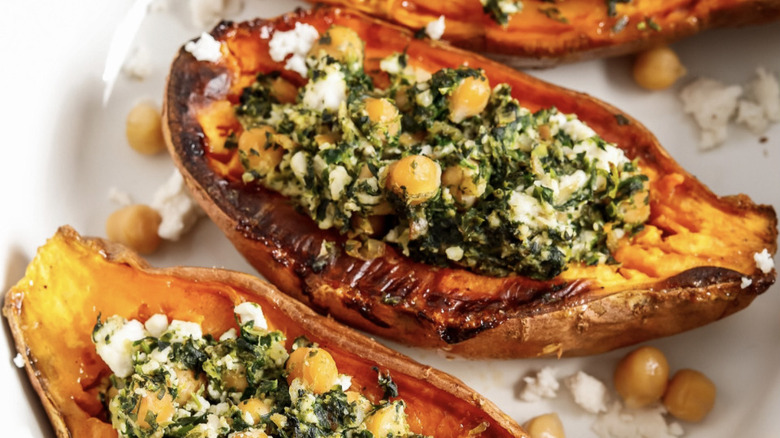
Chefs sometimes pigeonhole sweet potatoes as a fall-season ingredient, but these root vegetables are available year-round and make a colorful, nutritious, suitable-any-time dish. Think outside the box and serve them at a summer barbecue, or when you need to make a side dish for a holiday dinner, surprise everyone with feta-stuffed or feta-topped sweet potatoes. They're a wonderfully savory departure from the sugar-laden sweet potato casserole that your grandma always made.
One easy way to combine sweet potatoes and feta is to roast sliced sweet potatoes, drizzle on hot honey for a spicy kick, and crumble some feta over the top. The tanginess of the feta is a perfect balance to the potatoes' natural sweetness and the honey's heat. A heartier and more elaborate way to marry feta and sweet potatoes is to stuff halved potatoes with feta and spinach, feta and garbanzo beans, feta and quinoa, or feta and sliced mushrooms. Feta goes with almost everything, so tailor the filling to your taste buds.
You'll need to roast the halved sweet potatoes until the skins are crisp and caramelized and the flesh is tender, then scoop out about a third of their insides. Thoroughly mix the tender "mash" with the feta-based filling, then spoon the mixture back into the halved potatoes and bake them again.
9. Wrap up a feta block for a salty-sweet appetizer

It's not easy to walk the fine line between sweet, salty, and savory, but phyllo-wrapped baked feta has impeccable balance. Known as feta me meli, this traditional Greek appetizer is surprisingly easy to make: Wrap a block of feta in phyllo dough, then let your oven's heat morph the cheesy "package" into a deliciously creamy snack enveloped in a crispy, flaky, golden crust.
If you haven't purchased phyllo dough before, this paper-thin pastry dough is found in the freezer section of most large supermarkets. You'll need to thaw it out before using it, which takes less than an hour. The next step is to exercise your gift-wrapping skills, but with a culinary twist: Spread one phyllo sheet on a flat, clean surface. Cut the sheet twice as wide as your feta block and brush it with olive oil. Place the feta near the bottom of the phyllo sheet, closest to you, then roll the feta and its phyllo wrapper away from you until you reach the top of the sheet. Fold the sheet's sides underneath, brush the top with olive oil, and place the block on a baking sheet with the folded sides down. (Work quickly once you take the phyllo dough out of its packaging; it dries out fast when exposed to air.) After baking, finish your phyllo-wrapped feta block with sesame seeds and drizzled honey.
10. Roast a feta block with summer fruit
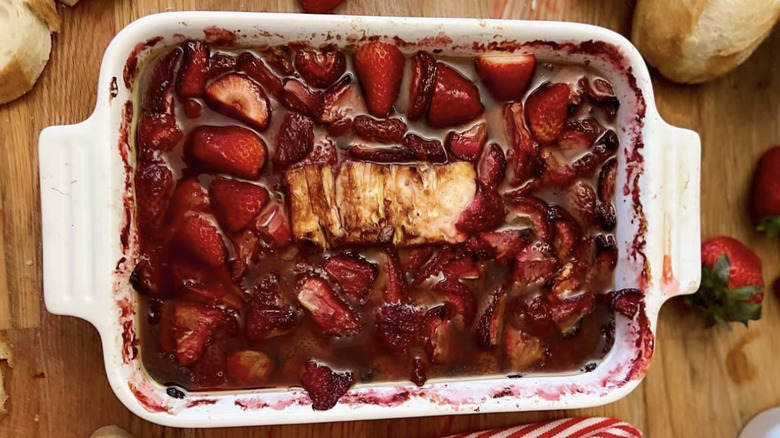
Roasting strawberries, blueberries, or stone fruit with a block of savory feta results in a dish that's an idyllic marriage of salty and sweet, and it can serve dual functions as either appetizer or dessert. The roasted fruit softens, and the feta becomes spreadable, so this colorful dish should be served with a spreading knife and seedy crackers or crusty bread for dipping. It's also helpful to supply a serving fork to spear the larger fruit pieces and a big spoon to scoop up the juices.
Roasting is a great solution for fruit that hasn't aged gracefully. Whether you have no-longer-perfect berries, peaches, plums, or figs, the oven's heat brings out the fruit's natural sugars and blends its juices into a jammy consistency. Like many roasted dishes, this one improves with age, so you'll want to make enough to have leftovers for a day or two. Preparation is a breeze: Add a few cups of fruit to a large baking dish. Drizzle the fruit with olive oil, honey, and a pinch of salt, then roast for about 20 minutes. Pull the dish out of the oven, place a block of feta in the center of the warm berries, and bake again until the feta softens and turns golden brown.