

Ossobuco Al Pomodoro Recipe
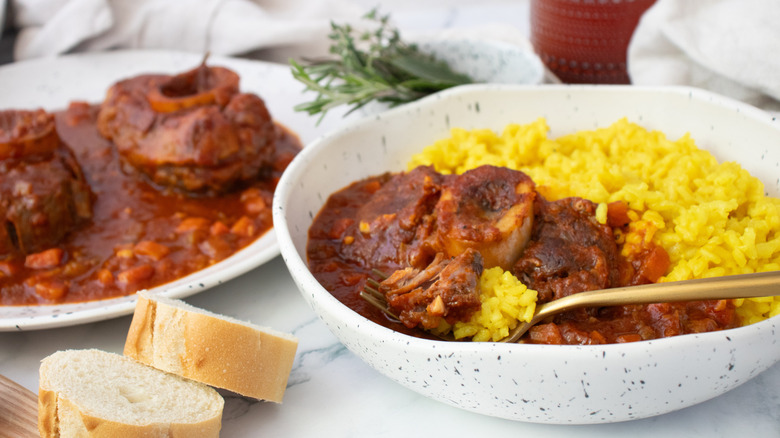
Ossobuco is a real treat: Super rustic and classically comforting, it's a true star of Italian cuisine. In my ossobuco al pomodoro recipe, the ossobuco is paired with a savory tomato sauce that's dotted with mirepoix veggies, garlic, and earthy herbs. That combination totally infuses into the beef shanks, tenderizing them into flaky, meaty, fall-off-the-bone pieces of pure succulence. Traditional ossobuco typically features veal shanks, but I opt for beef shanks for a just-as-tasty rendition with an ingredient that's a little easier to source for the home chef.
Though there are quite a few ways to cook ossobuco, I went pretty traditional to the Northern Italian-style with this recipe: searing the shanks, deglazing with lots of wine, and slow-braising to fork tenderness. Ossobuco literally means "bone with a hole," a reference to the added marrow bonus provided by the shanks. If you haven't had the opportunity to try slow-cooked marrow yet, this recipe is a great place to start. Despite yielding such a decadent and impressive final dish, this ossobuco recipe is ultimately fairly simple to make, with the oven handling most of that braising heavy-lifting and naturally melding all of the saucy, savory flavors with little effort on your end.
Gather the ingredients for ossobuco al pomodoro
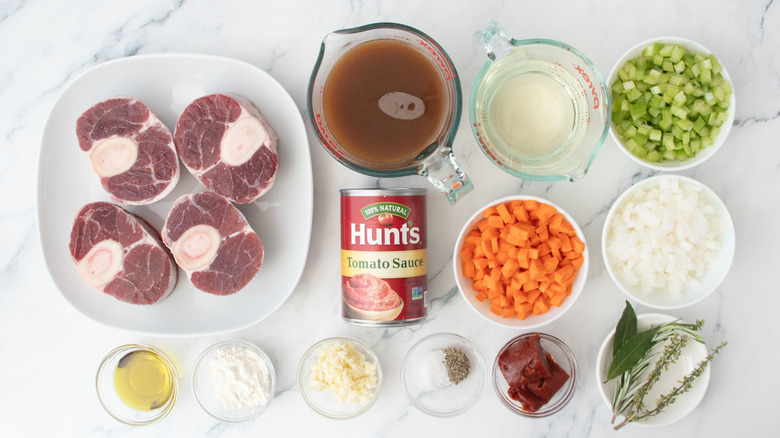
For the ossobuco itself, you'll need ossobuco beef shanks along with flour, salt, and pepper for seasoning and olive oil for searing. To build the rest of the dish, you'll need more olive oil, diced carrots, diced celery, diced onion, minced garlic, tomato paste, white wine, tomato sauce, beef broth, fresh rosemary, fresh thyme, and bay leaves.
Step 1: Dry the beef shanks
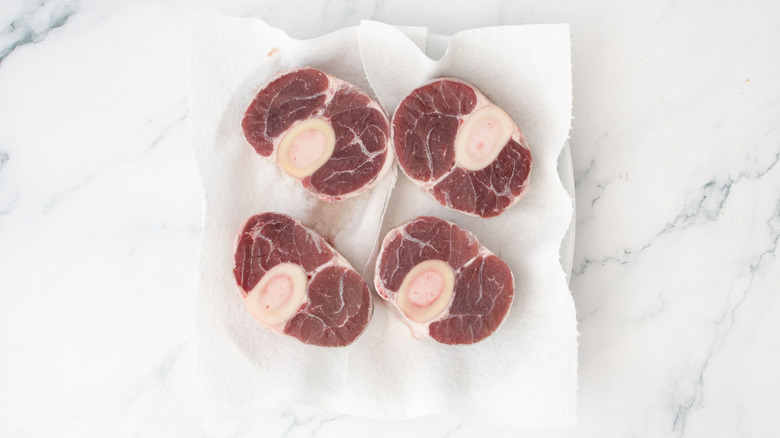
Pat the shanks dry with paper towels.
Step 2: Flour and season the beef shanks

Sprinkle the shanks with flour, salt, and pepper, dusting evenly.
Step 3: Heat olive oil in oven-proof pot
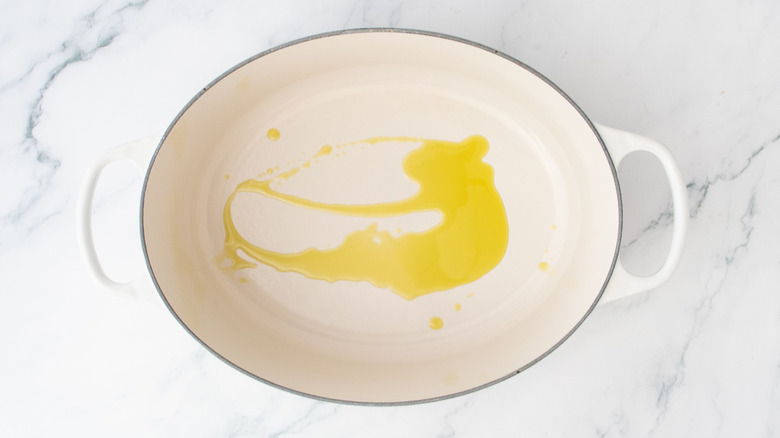
Heat 2 tablespoons of olive oil in a large oven-proof pot over medium-high heat.
Step 4: Sear the beef shanks
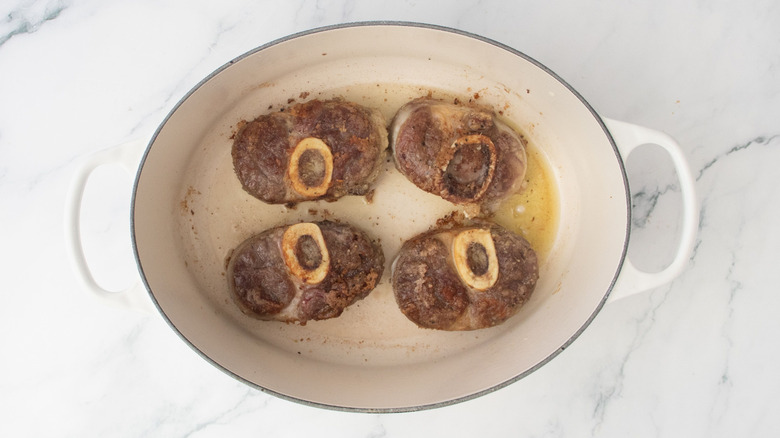
Once hot, add the shanks and sear for 3 minutes per side or until brown.
Step 5: Set the seared shanks aside
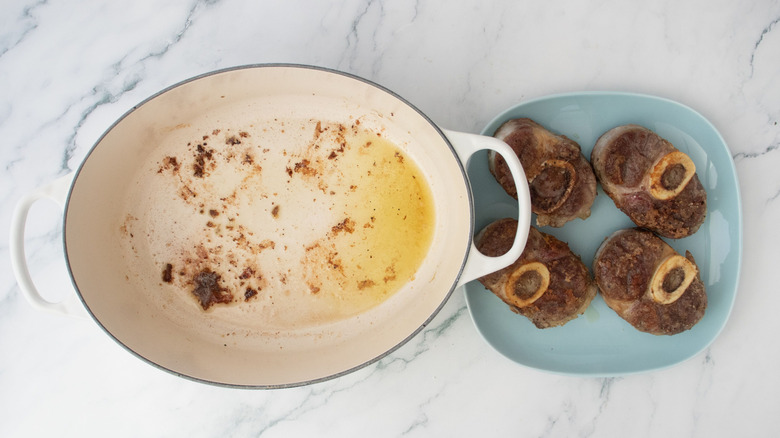
Remove the seared shanks from the pot and set them aside.
Step 6: Add the carrots, onion, and celery to the pot
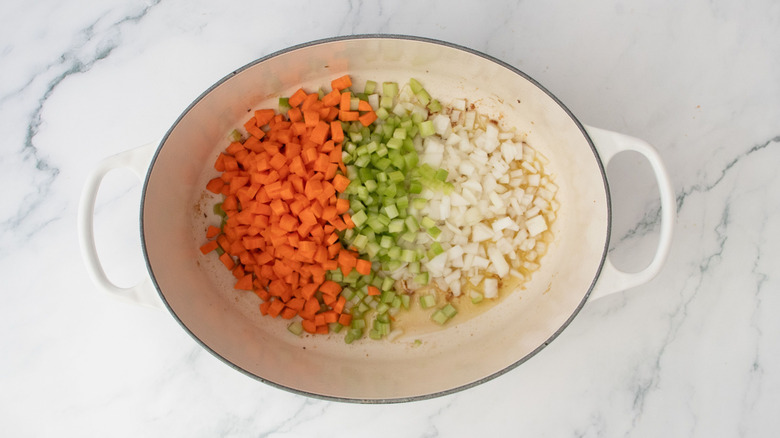
Add the remaining olive oil, carrots, celery, and onion to the pot.
Step 7: Cook the mirepoix veggies until tender
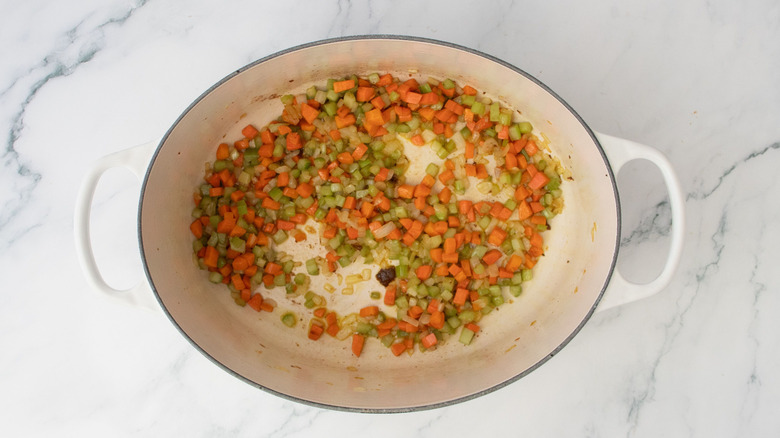
Stir to combine and cook for 10 minutes, stirring occasionally, until tender.
Step 8: Stir in garlic and tomato paste
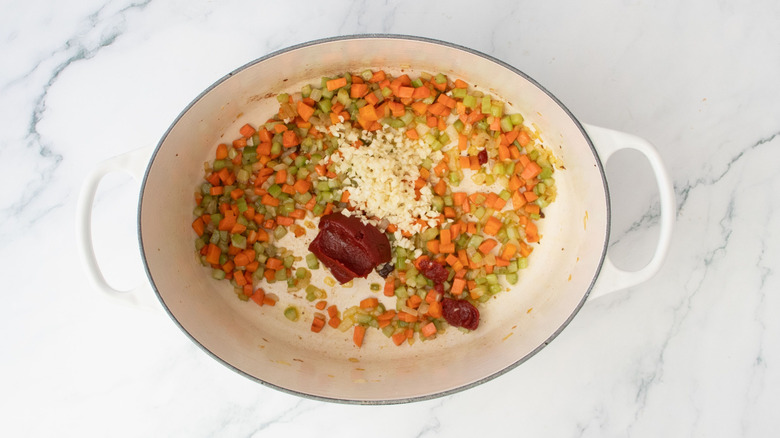
Add the garlic and tomato paste to the pot, stir to combine, and cook for 2 minutes.
Step 9: Deglaze with wine
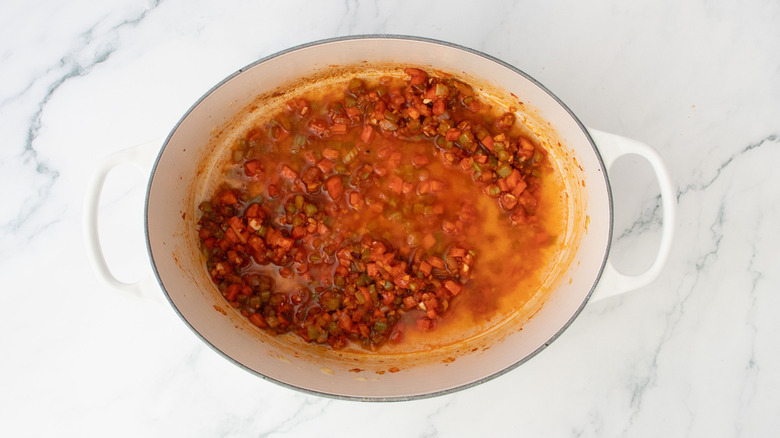
Deglaze the pot with wine and bring to a simmer.
Step 10: Let the wine evaporate
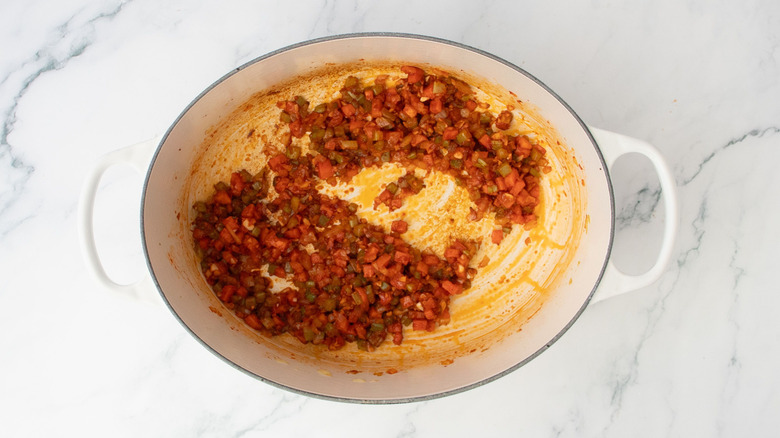
Cook, stirring frequently, until the wine has almost completely evaporated.
Step 11: Preheat the oven
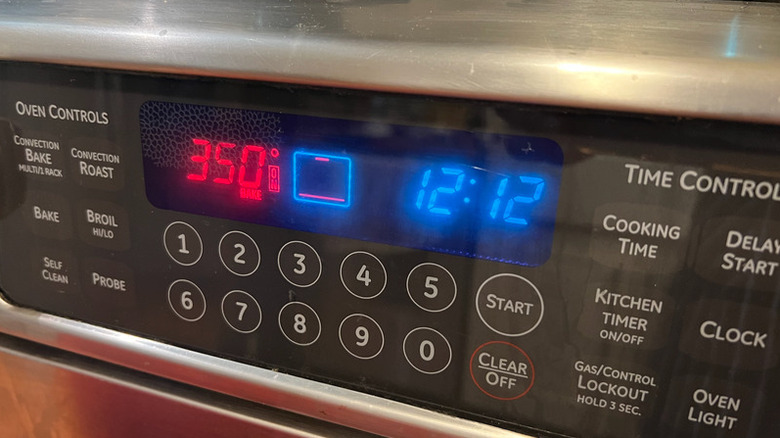
Preheat the oven to 350 F.
Step 12: Add tomato sauce, broth, and herbs to the pot
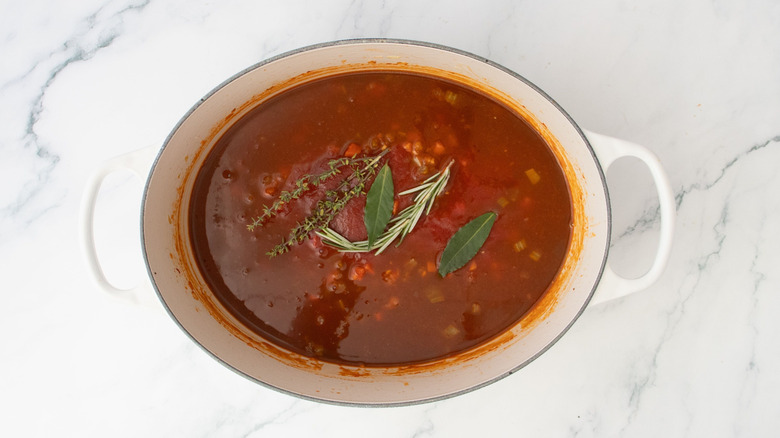
Add the tomato sauce, broth, rosemary, thyme, and bay leaves to the pot, stir to combine, and bring to a simmer.
Step 13: Return the beef shanks to the pot
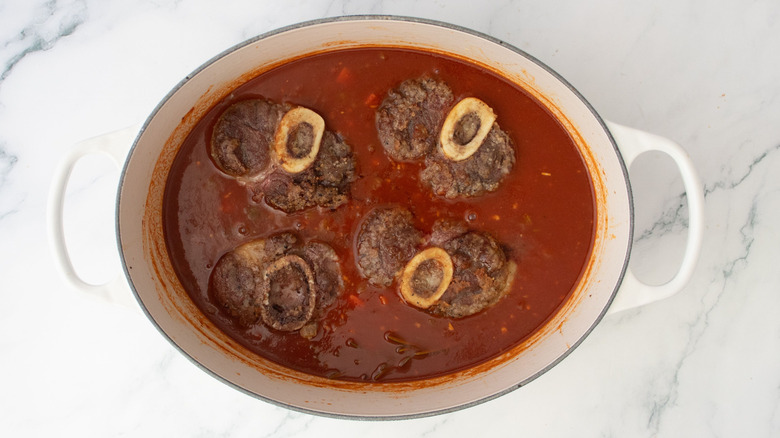
Once the sauce is simmering, return the seared shanks to the pot, and nestle them into the sauce.
Step 14: Cover the pot and transfer it to the oven
Cover the pot and place it in the oven.
Step 15: Braise the ossobuco
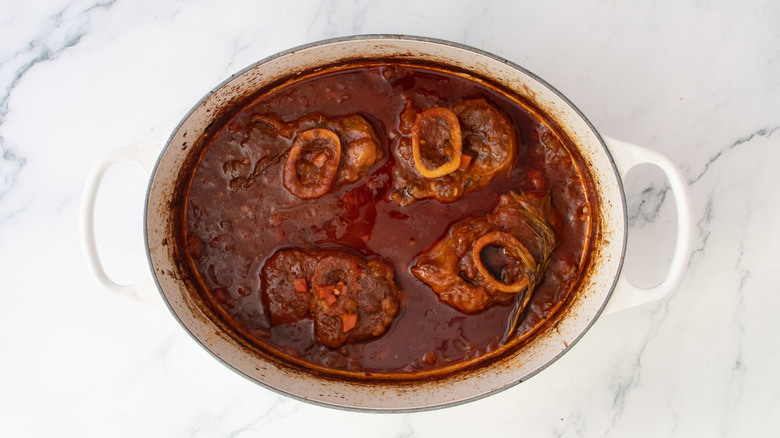
Braise for 2 hours or until the shanks are fork-tender.
Step 16: Serve the ossobuco
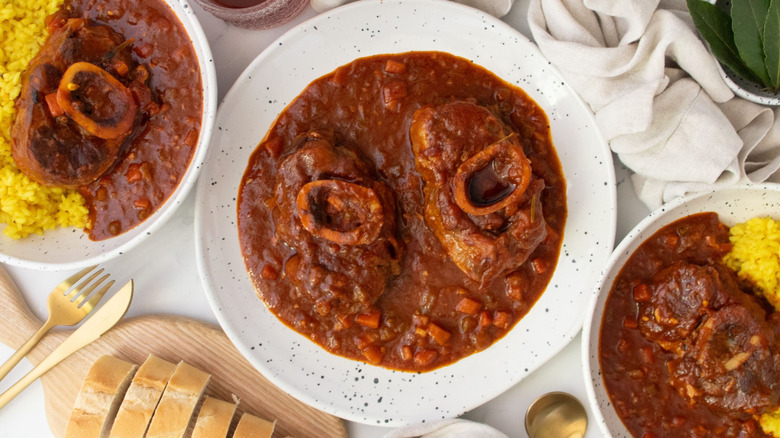
To serve, divide the shanks between plates, and top generously with the sauce.
What can I serve with ossobuco al pomodoro?
Ossobuco al Pomodoro Recipe
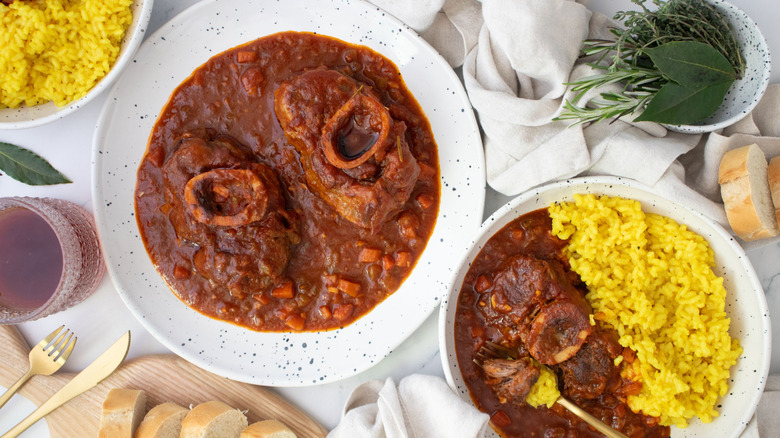
In our ossobuco al pomodoro recipe, beef shanks cook slow and low in a savory tomato sauce for flaky, meaty, fall-off-the-bone pieces of pure succulence.
Ingredients
- 4 ossobuco beef shanks
- 2 tablespoons all-purpose flour
- ½ teaspoon salt
- ½ teaspoon black pepper
- 4 tablespoons olive oil, divided
- 1 cup diced carrots
- 1 cup diced celery
- 1 cup diced yellow onion
- 5 garlic cloves, peeled and minced
- ¼ cup tomato paste
- 1 cup white wine
- 1 (15-ounce) can tomato sauce
- 2 cups beef broth
- 1 sprig fresh rosemary
- 1 sprig fresh thyme
- 2 bay leaves
Directions
- Pat the shanks dry with paper towels.
- Sprinkle the shanks with flour, salt, and pepper, dusting evenly.
- Heat 2 tablespoons of olive oil in a large oven-proof pot over medium-high heat.
- Once hot, add the shanks and sear for 3 minutes per side or until brown.
- Remove the seared shanks from the pot and set them aside.
- Add the remaining olive oil, carrots, celery, and onion to the pot.
- Stir to combine and cook for 10 minutes, stirring occasionally, until tender.
- Add the garlic and tomato paste to the pot, stir to combine, and cook for 2 minutes.
- Deglaze the pot with wine and bring to a simmer.
- Cook, stirring frequently, until the wine has almost completely evaporated.
- Preheat the oven to 350 F.
- Add the tomato sauce, broth, rosemary, thyme, and bay leaves to the pot, stir to combine, and bring to a simmer.
- Once the sauce is simmering, return the seared shanks to the pot, and nestle them into the sauce.
- Cover the pot and place it in the oven.
- Braise for 2 hours or until the shanks are fork-tender.
- To serve, divide the shanks between plates, and top generously with the sauce.
Nutrition
| Calories per Serving | 713 |
| Total Fat | 27.4 g |
| Saturated Fat | 6.4 g |
| Trans Fat | 0.0 g |
| Cholesterol | 132.6 mg |
| Total Carbohydrates | 24.3 g |
| Dietary Fiber | 4.8 g |
| Total Sugars | 10.5 g |
| Sodium | 1,424.4 mg |
| Protein | 80.2 g |

How do I source and prep beef shanks for ossobuco?
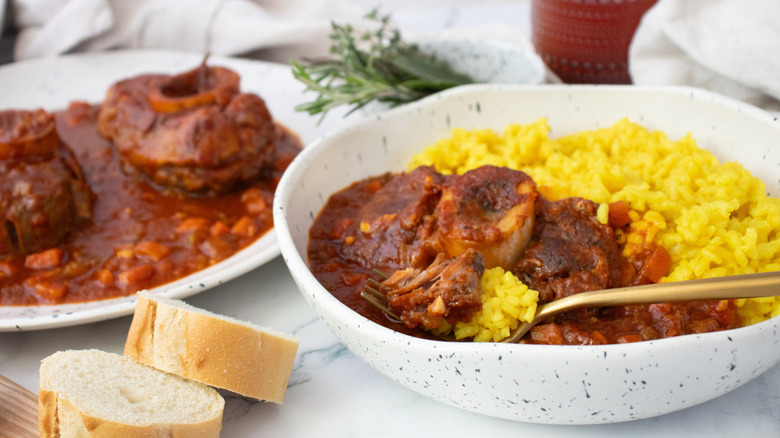
What's fun about making ossobuco is that the name of the dish is also synonymous with the cut of meat you'll be using: well-marbled beef or veal shanks with a cleaved/exposed bone in the center. The shank is a much-used muscle, so the meat tends to be a bit tough and stringy, which makes it perfect for low-and-slow recipes like this one. You'll also notice a really thick marrow center, which is also very tasty to eat once slow-cooked. Veal shanks are the most traditional to use for ossobuco, and some Italian butchers may stock this item specifically. If not, beef shanks are just as tasty.
Most gourmet/specialty butchers will carry ossobuco, or they will be able to portion out ready-to-cook pieces that require no extra prep work or trimming. Ask the butcher specifically for ossobuco; they'll know what you are talking about. When I was researching where to get my ossobuco, I noticed some online purveyors offering direct ship options. In terms of size, you'll want shanks that are portioned to about 1- to 1 ½-inch thickness.
What are tips for braising the beef shanks?
When it comes to cooking beef shanks, braising is the only cooking method you should ever go with to ensure optimal tenderness and richness. Braising combines two cooking methods — a high-heat sear followed by a slow-low covered cook either in the oven or on the stovetop. Braising meats accomplishes a couple things: The searing portion helps develop flavor and create this dynamic crust on the outside of our ossobuco, and the slow cooking helps break down tougher proteins and infuse our meaty shanks with the flavor from our saucy ingredients (aromatics, wine, tomatoes).
Perhaps the most tedious aspect of braising these beef shanks is that they do need quite a bit of time to cook in the oven, but the good news is that you don't need to babysit the ossobuco once the shanks are seared and nestled into the simmering sauce — all you need to do is cover and wait. I recommend checking on the shanks at about the 2-hour mark of braising. We are looking for an almost fall-off-the-bone tenderness. If they're not quite to that level of tenderness, flip the shanks over and cook (covered) for another 30 minutes, or until they are ultra-tender. The sauce will thicken and turn stew-like as the meat braises, and if it ends up getting too thick or dark around the edges, stir in a little more beef broth or water to keep things moving. You can also reduce the oven temperature to 325 F in the event of browning sauce.