

Filipino Pork Adobo Recipe
We may receive a commission on purchases made from links.
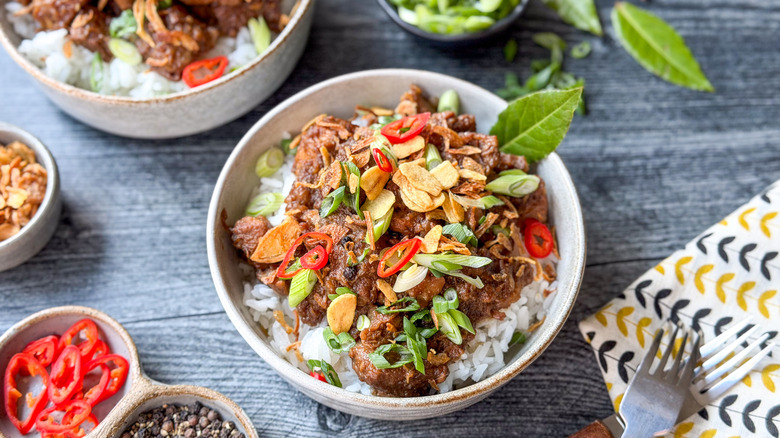
Adobo is the celebrated national dish of the Philippines for good reason. A classic "low and slow" cook, adobo involves a lengthy marination of meat in a piquant bath of vinegar and soy, laced with other pungent flavors like garlic, peppercorns, and bay leaf. The meat is braised until it becomes slightly caramelized, glossy, and fall-apart tender. Pair this with rice and zesty garnishes, and you have a dish that is soul satisfying in every bite. Recipe developer Julie Kinnaird shares with us her take on a traditional Filipino pork adobo, served over fragrant jasmine rice and garnished with fiery Thai peppers and crispy garlic and shallots. This recipe takes a bit of time, but the steps are simple, and the results are worth the wait.
The word "adobo" translates as "marinated" and gives a nod to a fusion of influences coming from both Spain and Asia. Adobo can be made with any sort of meat or vegetables, but pork is especially well-suited for a moist heat method of cooking. You can make this dish your own by adding additional vegetables or mixing up the garnishes, but you will ultimately be satisfied by the complexity of the tangy/salty/sweet sauce and spoon-tender meat.
Gather the Filipino pork adobo ingredients
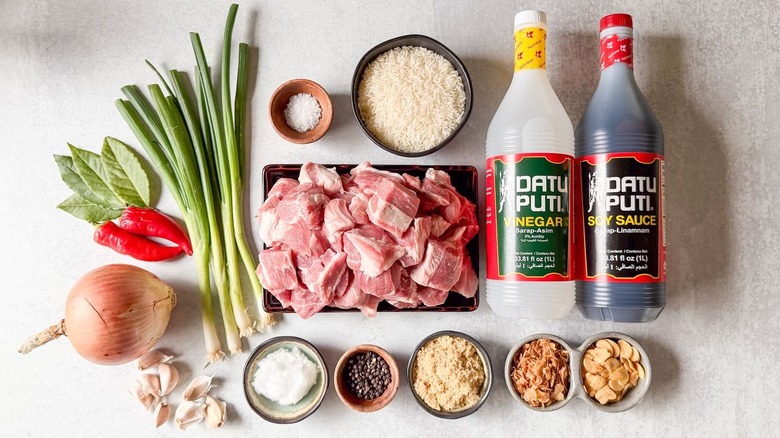
To make your Filipino pork adobo, you will need pork shoulder (boneless is easiest for cutting) that you will cut into cubes to become the base of your dish. Filipino cane vinegar and soy sauce make this dish authentic, although Kinnaird says you could substitute apple cider or rice vinegar and regular soy sauce if needed for the marinade. Brown sugar, whole black peppercorns, and fresh bay leaves finish off the marinade ingredients (use dried bay leaves if fresh are not available). Virgin coconut oil is used for cooking sliced yellow onion and whole cloves of garlic before adding the marinated pork. You will also cook some Jasmine rice on the side in salted water. To garnish your finished pork adobo, you will need scallions, Thai or Fresno chilies, and crispy shallot and garlic flakes.
Step 1: Add the marinade ingredients to the pork
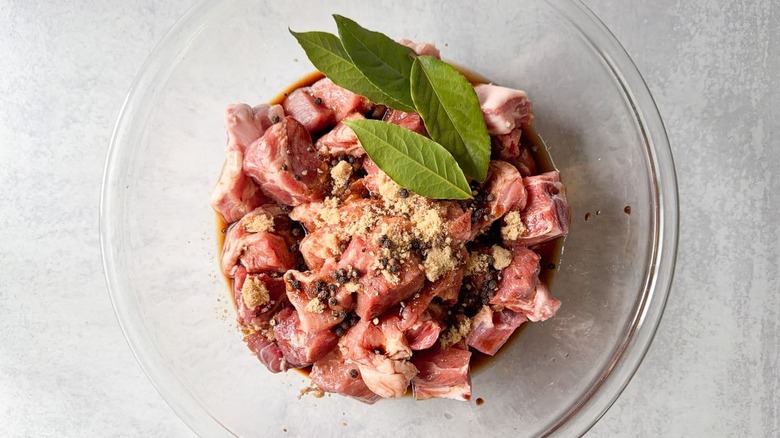
In a large, non-reactive bowl, combine the pork, vinegar, soy sauce, brown sugar, peppercorns, and bay leaves.
Step 2: Toss to coat
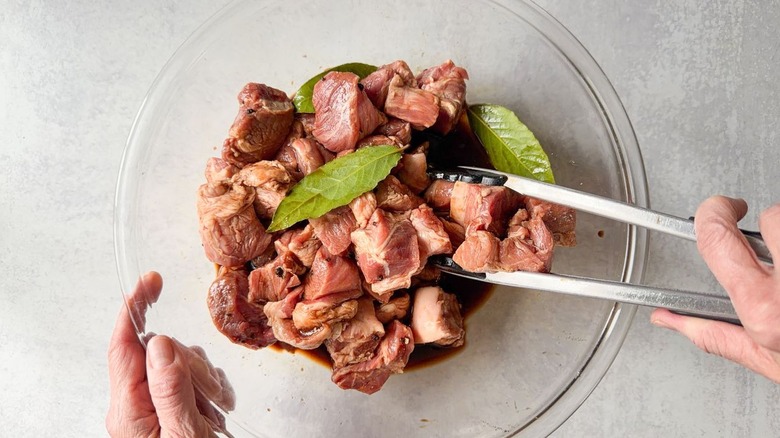
Toss to thoroughly coat the pork.
Step 3: Marinate the pork
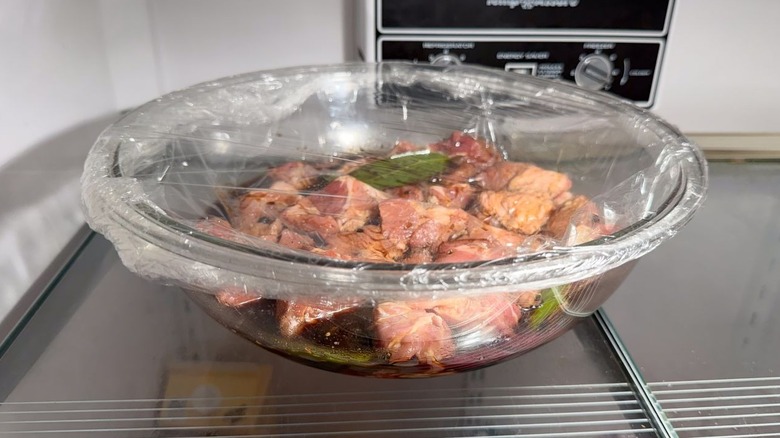
Cover the bowl with plastic and refrigerate for at least 2 hours or preferably overnight.
Step 4: Drain the pork
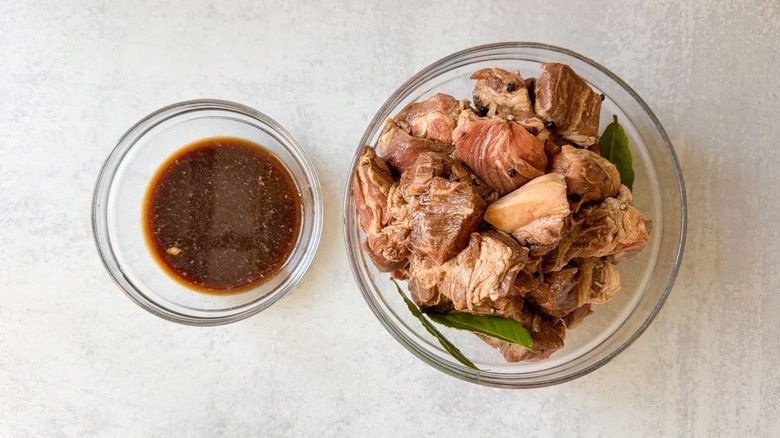
Remove the pork from the refrigerator, drain it, and reserve the marinade.
Step 5: Heat the coconut oil
Heat the coconut oil in a large Dutch oven or braising pot over medium heat.
Step 6: Add the onion and garlic
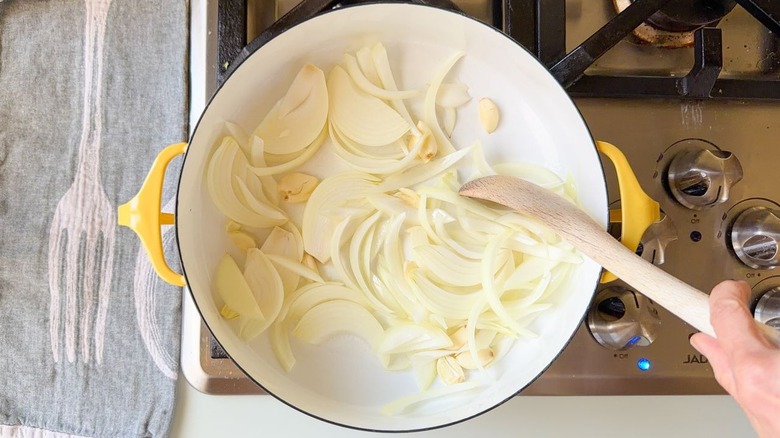
Add the onion and garlic and cook, stirring frequently, until softened and golden (about 5 minutes).
Step 7: Add the drained pork
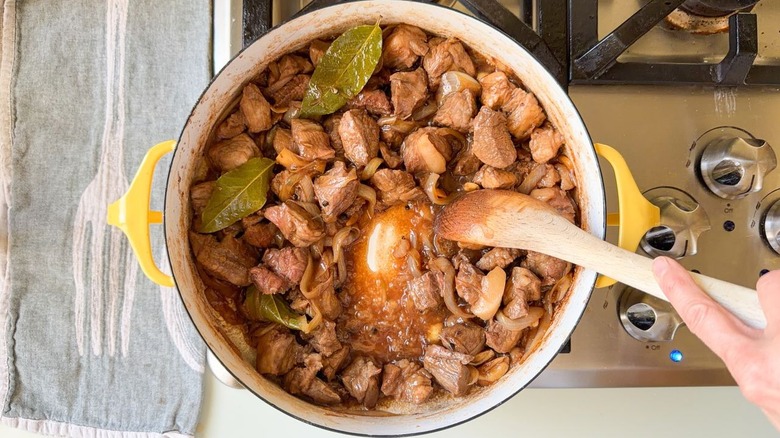
Increase the heat to high, add the drained pork, and cook, stirring frequently to prevent sticking, until the pork starts to caramelize (about 15 minutes).
Step 8: Add the reserved marinade
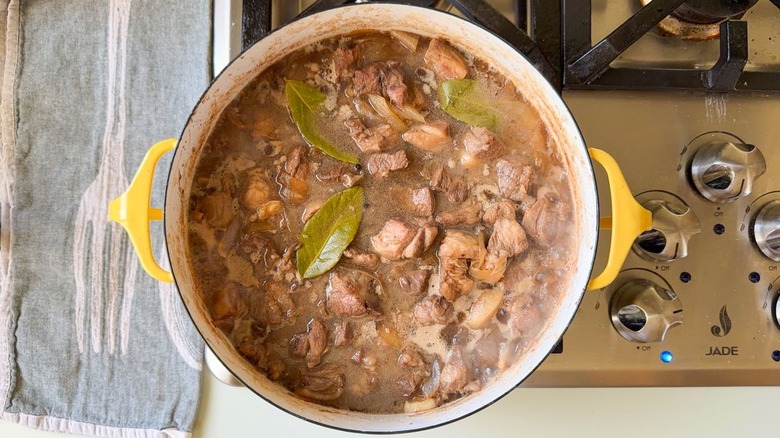
Add the reserved marinade and 2 cups of water to the pot and bring to a boil.
Step 9: Cover and simmer

Reduce the heat to medium-low and simmer, covered, for about 2 hours until the pork is very tender.
Step 10: Heat water for the rice

While the pork is braising, bring the remaining 2 cups of water and salt to a boil in a medium pot.
Step 11: Stir in the rice
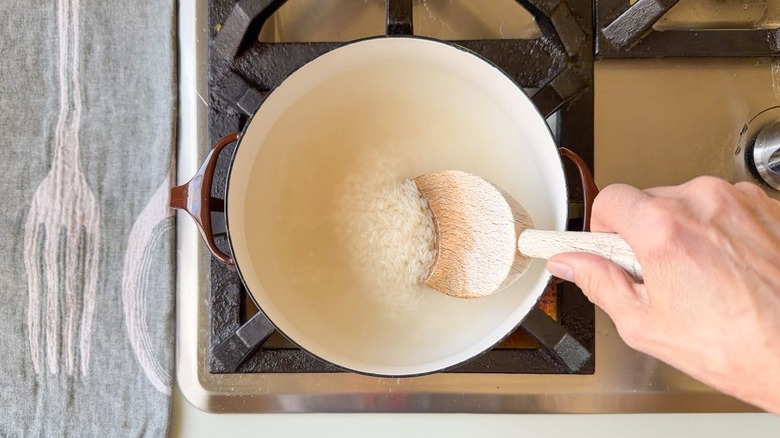
Stir in the rice.
Step 12: Cover and simmer the rice

Cover the pot and reduce the heat to low.
Step 13: Fluff the rice
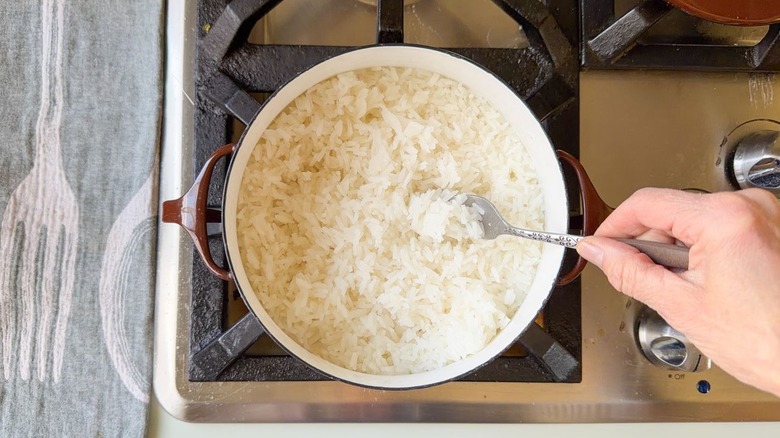
Cook the rice for 20 minutes, remove the lid, and fluff the grains. Set it aside.
Step 14: Increase the heat on the pork
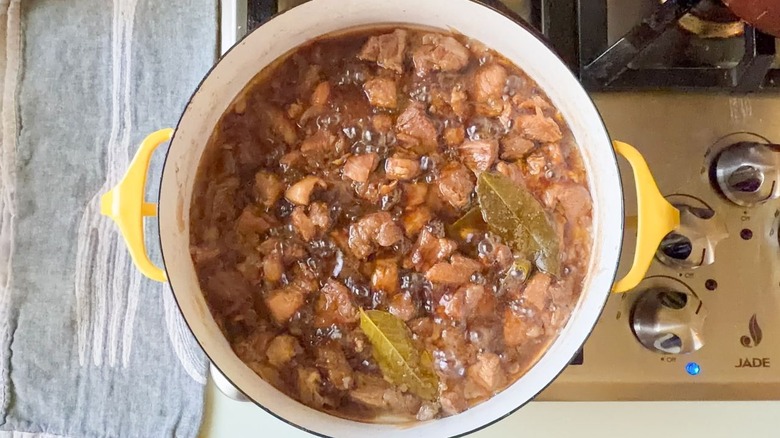
Once the pork is tender, uncover the pot and increase the heat to medium-high.
Step 15: Simmer the pork to thicken the sauce
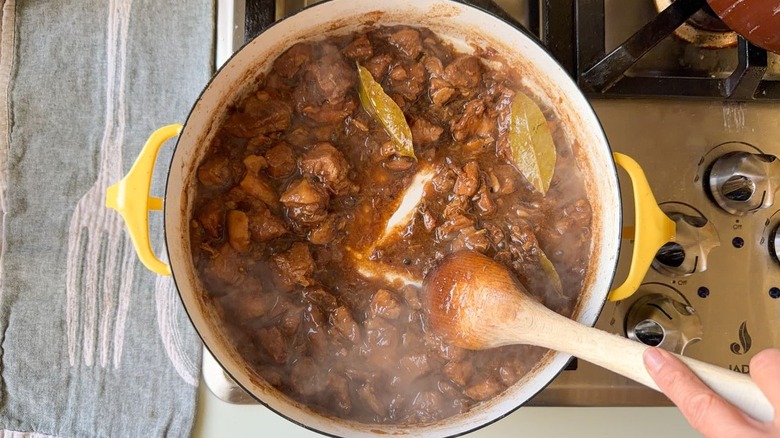
Simmer the pork until the sauce has become thickened and glossy.
Step 16: Garnish the pork and serve over the rice
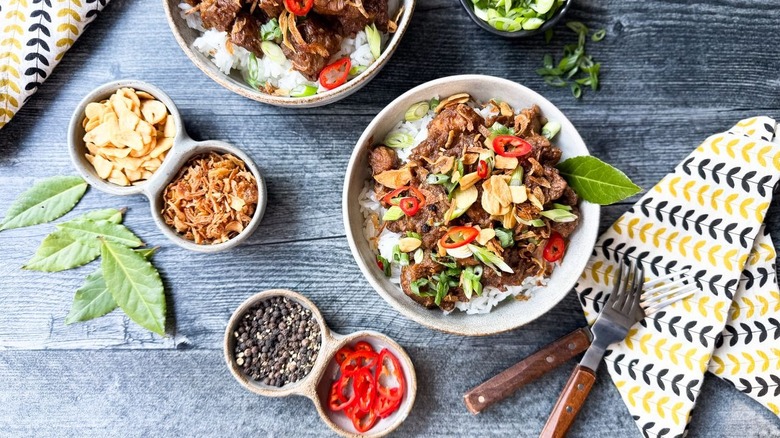
Serve the pork adobo over the rice and garnish with the scallions, sliced chilies, crispy shallots, and crispy garlic.
What pairs well with Filipino pork adobo?
Filipino Pork Adobo Recipe
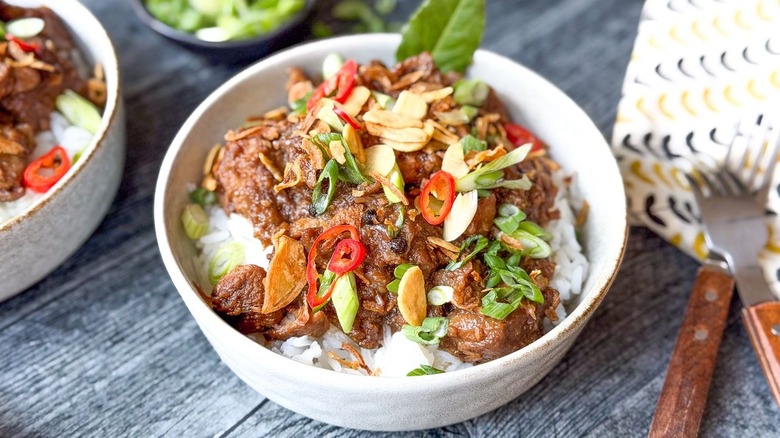
In our classic low-and-slow cooked FIlipino adobo recipe, pork is braised in a piquant bath of vinegar, soy, garlic, and bay leaf until fall-apart tender.
Ingredients
- 2 ½ pounds pork shoulder, cut into 1 ½-inch chunks
- ⅔ cup Filipino cane vinegar
- ½ cup Filipino soy sauce
- 3 tablespoons brown sugar
- 2 teaspoons black peppercorns
- 4 fresh bay leaves
- 2 tablespoons virgin coconut oil
- 1 large yellow onion, peeled, halved through the stem end, and cut into thick slices
- 8 large cloves garlic, peeled and crushed
- 4 cups water, divided
- 1 teaspoon sea salt
- 1 cup Jasmine rice, rinsed
- ½ cup thinly sliced scallions
- 1 or 2 small Thai or Fresno chilies, stems and seeds removed and thinly sliced
- ¼ cup crispy shallots
- ¼ cup crispy garlic
Directions
- In a large, non-reactive bowl, combine the pork, vinegar, soy sauce, brown sugar, peppercorns, and bay leaves.
- Toss to thoroughly coat the pork.
- Cover the bowl with plastic and refrigerate for at least 2 hours or preferably overnight.
- Remove the pork from the refrigerator, drain it, and reserve the marinade.
- Heat the coconut oil in a large Dutch oven or braising pot over medium heat.
- Add the onion and garlic and cook, stirring frequently, until softened and golden (about 5 minutes).
- Increase the heat to high, add the drained pork, and cook, stirring frequently to prevent sticking, until the pork starts to caramelize (about 15 minutes).
- Add the reserved marinade and 2 cups of water to the pot and bring to a boil.
- Reduce the heat to medium-low and simmer, covered, for about 2 hours until the pork is very tender.
- While the pork is braising, bring the remaining 2 cups of water and salt to a boil in a medium pot.
- Stir in the rice.
- Cover the pot and reduce the heat to low.
- Cook the rice for 20 minutes, remove the lid, and fluff the grains. Set it aside.
- Once the pork is tender, uncover the pot and increase the heat to medium-high.
- Simmer the pork until the sauce has become thickened and glossy.
- Serve the pork adobo over the rice and garnish with the scallions, chilies, crispy shallots, and crispy garlic.
Nutrition
| Calories per Serving | 1,014 |
| Total Fat | 58.6 g |
| Saturated Fat | 23.5 g |
| Trans Fat | 0.0 g |
| Cholesterol | 201.3 mg |
| Total Carbohydrates | 60.3 g |
| Dietary Fiber | 3.3 g |
| Total Sugars | 10.5 g |
| Sodium | 1,958.5 mg |
| Protein | 57.2 g |

What is unique about Filipino cane vinegar and soy sauce?
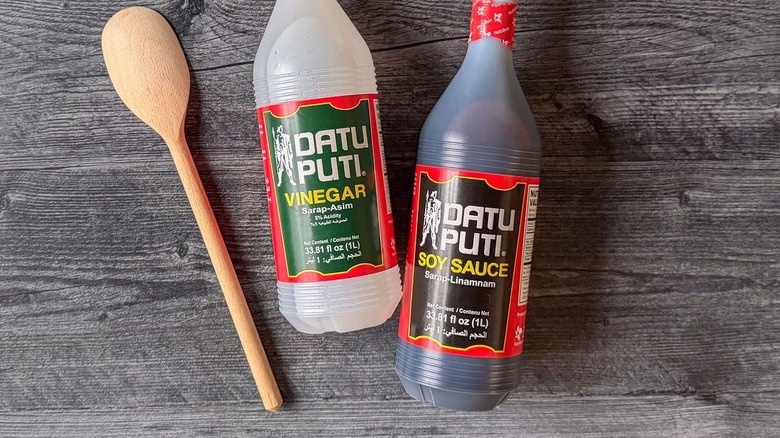
Vinegars can be made from a wide variety of carbohydrates, from apples to rice to grapes. World cuisines have often infused vinegars into their dishes that are based upon the natural starters surrounding them. In the Philippines, vinegars are primarily made from local cane sugar, as well as from coconut and palm plants. Vinegar is an essential element in Filipino cuisine, not only for the distinctive sharp and tangy flavor it imparts to food, but also historically as an important preserving agent in the hot tropical climate. Filipino cane vinegar has a subtle sweetness to it, yet it is still sharp enough to stand up to aggressive flavors like garlic, peppercorns, and chilies.
The development of Filipino soy sauce (called toyò) is linked to trade routes that once brought Chinese influence to the islands. Filipino cultural tastes led to the development of a saltier and more deeply-colored soy sauce, which was not only intensely flavorful but also handy for preserving food. In dishes like adobo, Filipino soy sauce infuses the meat with rich caramel notes, and can also be used as a condiment on the table.
Can I use a different cut of pork for this recipe?
Pork is one of the most versatile meats, as each cut offers different textures and benefits for a variety of cooking methods. Yet, choosing the wrong cut can yield less than delectable results in your recipe. For something like Filipino pork adobo, you do not want a relatively tender and lean cut like the loin, but rather a portion that has more marbling of the fat, leading to a juicy and flavorful end result. Although pork shoulder is a more "tough" cut from the pig (meaning an area that is exercised more), a recipe that calls for a long marination and braise, like adobo, gives the connective tissue in the shoulder adequate time to break down and become tender. It is also one of the more affordable parts of the pig.
Although pork shoulder may be the best-suited cut for this recipe, you have other options with this recipe. Kinnaird likes to point out that labeling can often become confusing with pork, so it is good to know where the different cuts are coming from. A Boston butt (or simply "pork butt") is actually the upper front part of the shoulder, while roasts labeled as "pork shoulder" can include the lower or "picnic" section of the shoulder. For a very luxurious version of adobo, pork belly is often used. Once cubed, the pork belly has a high fat-to-lean meat ratio, which Kinnaird says means that it cooks down into an intensely flavorful and rich dish.