

10 Tips You Need For Cooking Like Martha Stewart

As home cooks, most of us don't have an entourage on hand to ensure things go smoothly during our kitchen endeavors, nor do we have the culinary chops required to throw Martha Stewart-level dinner parties for our families and friends. But this shrewd businesswoman and empire builder has amassed a small fortune, making us believe we can at least come close.
After early careers as a model, stockbroker, and caterer, Stewart began cooking, gardening, decorating, and crafting in her Connecticut home with an eye on attracting would-be homemakers. Tapping into our collective appetites for perfection, especially in the kitchen, Stewart considers herself a lifelong student and educator, saying on her website: "I continue to learn each and every day, and will continue to teach what I know to as many people as will listen."
Lucky for us, Stewart and her associates have generated a wealth of resources over the years for improving our culinary skills. Taking cues from her books on entertaining, as well as her blog posts and social media videos, we've assembled 10 tips you need for cooking like Martha Stewart.
1. Use a mason jar to peel and separate garlic
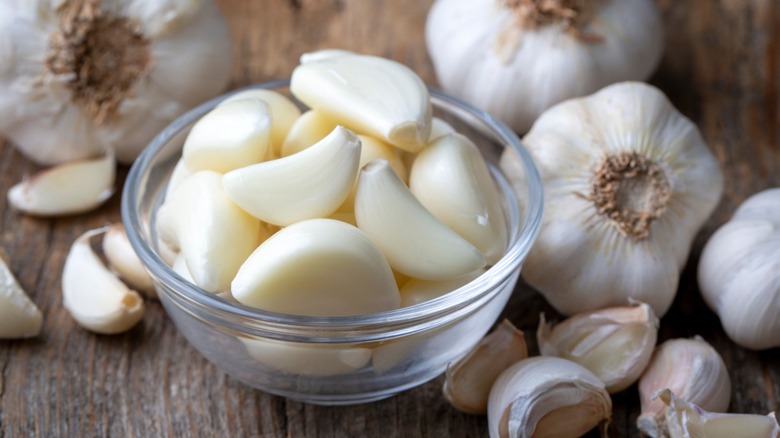
Generally speaking, those of us who cook agree fresh garlic beats jarred garlic every time, but the hassle of storing, peeling, and mincing garlic has many time-pressed chefs and intimidated bulb peelers turning to pre-prepped offerings in the condiment aisle. Fortunately, for those of us wanting to elevate the flavors in our garlic dishes, Stewart says we have better options. Enter her unique trick for peeling and separating garlic with a ball jar.
"When you're faced with a hard head of garlic, take a covered ball jar and smash it," Stewart says in a YouTube demonstration of this technique. Use the bottom of the jar and a cutting board to break the bulb up into cloves that can then be easily separated. Once the heavy outer coating is pulled away from the garlic, place the cloves into the jar and close the lid.
In an update to her previously published stainless steel bowl garlic peeling hack, Stewart vigorously shakes the closed ball jar like an icy martini, saying: "Wait til you see this magic," as she opens the jar to reveal cloves that are separated from their skins. "Now it's all beautifully peeled."
2. For the perfect char, pat dry steak before pan-searing it
When preparing steak for dinner, many of us light the grill to get the job done. Whether the occasion is casual and involves a bucket of beer and some summer salads or slightly more upscale, featuring an expertly paired wine and a rich mushroom steak sauce, we have come to associate steak with grill marks and outdoor cooking. But Stewart says that's a mistake.
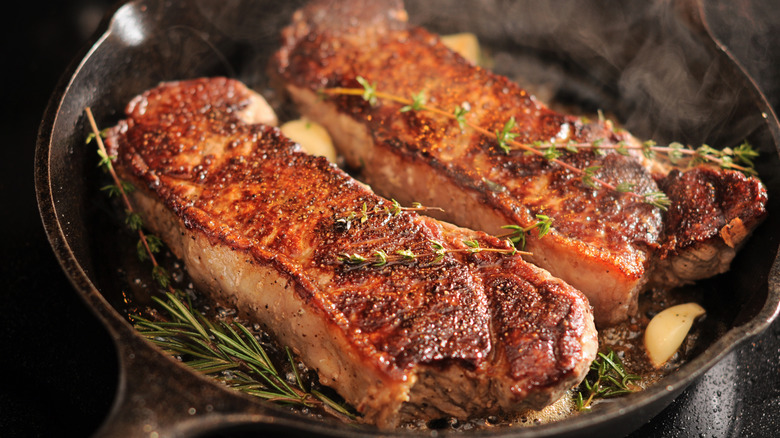
For the juiciest, most flavorful steaks, Stewart recommends pan-searing on the stove top rather than grilling. The technique uses "high heat to seal in the juices by forming a delicious crust," Stewart says on YouTube. Choose a middle loin cut like strip steak, which has some marbling and a little fat, and let it sit out for about an hour before preparing it.
One of the most important steps in pan-searing steak involves removing excess moisture, Stewart says. "Dry the meat very well with paper toweling before you cook it ... Any moisture will collect under the meat and cause steam," which Stewart says is a steak cooking no-no. Season the strip with salt and pepper and throw it into a sizzling hot pan over a pat of butter to create a caramelized char, Stewart recommends. Once you try this tip for cooking like Martha Stewart, you may never grill steak outside again.
3. Use your cappuccino machine to steam cook scrambled eggs
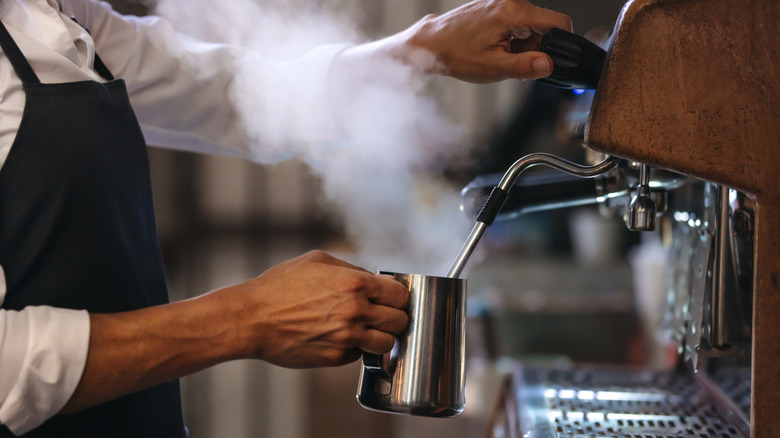
Stewart often utilizes a steaming basket and a covered saucepan to cook the perfect soft-boiled egg, which she says is "when the white of the egg is firm, and the yolk is silky, creamy, and liquid gold," according to The Martha Blog. Steaming soft-boiled eggs is a great way to create a semi-firm exterior and a luscious center, but what about making scrambled eggs? Martha has one especially surprising cooking tool to use for that: a cappuccino machine.
It's a "very fun way to cook scrambled eggs," Stewart says on Facebook. To begin the process, break the eggs up in a small pitcher with a fork or small whisk, add a teaspoon and a half of butter, and a little salt and pepper. Then, insert your cappuccino maker's steaming wand directly into the eggs and froth as you would milk. "In just a matter of seconds, your eggs are finished," Stewart says. "The eggs turn out light and fluffy and buttery and delicious ... It is a conversation piece in your kitchen too."
4. Boil, smash, and bake your crispy potatoes
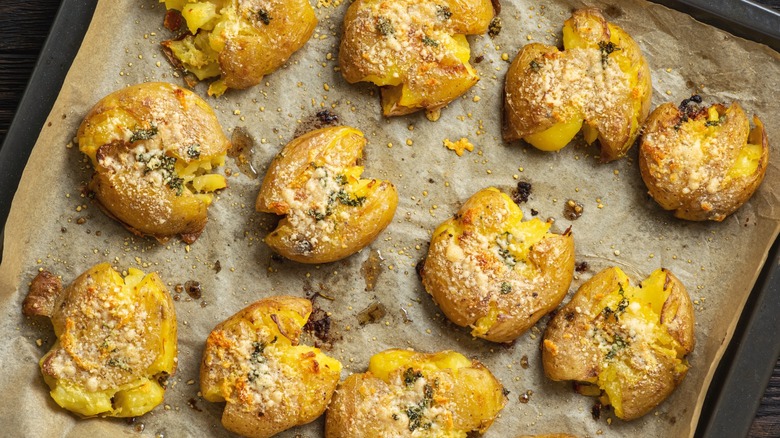
In our humble opinion, it's hard to screw up potatoes. Even when they're not cooked perfectly, they're still pretty good. But that standard doesn't fly in Stewart's kitchen. One of her favorite ways to serve potatoes involves a two-step cooking process that produces potatoes she says, "look like little flowers on the baking sheet," (via YouTube).
Beginning with new or baby potatoes, preferably multicolored, boil for eight to nine minutes until they are soft but not falling apart. After they've cooled a bit, drain and transfer the cooked potatoes to a sheet pan drizzled with high-quality olive oil and smash each individually with the heel of your hand. Top with some salt, pepper, and thyme sprigs and a little more oil, then bake for 25 minutes at 425 degrees.
"These golden potatoes are crispy on the outside and creamy on the inside," Stewart says on Facebook. Arrange them neatly on a serving platter and top each potato with a dollop of sour cream and some minced chives. With this tip for cooking like Martha Stewart, you'll be wowing your family and dinner guests like a pro.
5. Take bread to the next level by incorporating cheese and olives
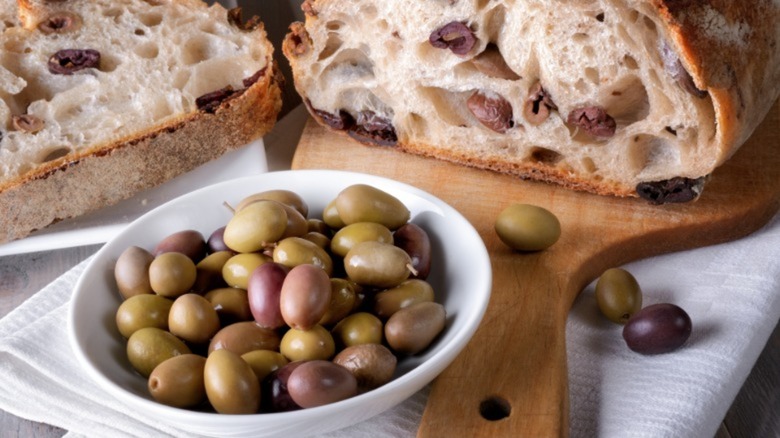
Stewart is a fan of using an enameled cast iron Dutch oven to make the perfect no-knead bread because a tight seal keeps bread moist inside while high heat delivers a crispy crust. Stewart offers several recipes for no-knead bread — a technique made popular by her friend Jim Lahey, who owned Sullivan Street Bakery in New York City — but for an extra special touch, she often adds cheese and olives.
After the dry ingredients for her No Knead Bread recipe have been prepared, Stewart adds cubes of Gruyere cheese and slices of Manzanilla olives to the dough before proceeding with the rising steps. "You can use other kinds of cheeses, but I like the taste of the Gruyere with the olives," she says on Facebook. Once the dough is ready to bake, oil and preheat your Dutch oven. Stewart says this is "an essential step in the process" that yields golden, crispy crust.
"Wouldn't you like to serve that to your family tonight?" Stewart says. "With a great salad and a homemade lasagna? ... It's absolutely terrific."
6. Butter both sides of the parchment paper for no-break, no-crack brownies
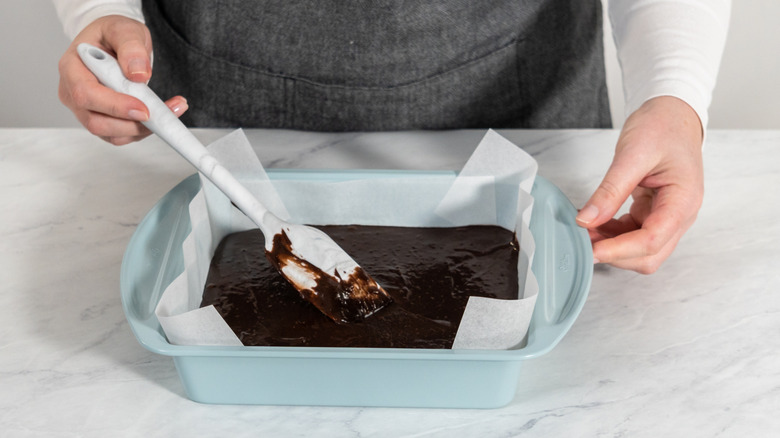
Whether your brownie preferences tend toward cakey, fudgy, or chewy, there's one thing we can generally agree on — nothing ruins the presentation of fresh-baked brownies like broken edges and sticky bottoms. Demonstrating her secret step for easy brownie removal on Instagram, Stewart agrees, saying: "When you try to get the brownies out of the pan, they often times stick and break," which can make for a messy finished product. To prevent this culinary calamity from ruining your batch, Stewart suggests using parchment paper, of course, but also recommends a generous double buttering process.
Before pouring your batter into the pan, butter the bottom and cover it with parchment paper that drapes over the edges on opposite sides. Then butter the top of the paper as well, Stewart says: "I always butter again ... and when they're done baking, you just turn them over, and you'll have no difficulty getting them out."
7. Turn leftover spaghetti and refrigerator staples into a robust Italian casserole
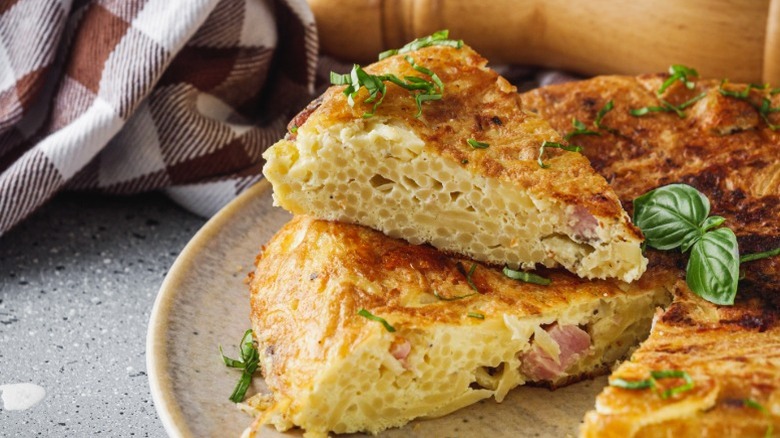
Next time you find yourself staring into the open refrigerator trying to come up with a dinner plan, don't dismiss that container of leftover spaghetti before you hear this tip for cooking like Martha Stewart. "How many times have you been stuck with a big bowl of leftover pasta?" Stewart asks in a YouTube video with fellow chef Eleanora Scarpetta. "Well, the Italians have a solution for this problem ... It's a sort of noodle frittata or pasta pie, made with ingredients that may already be in your refrigerator." If you've got eggs, cheese, cream, and some deli meat, you've got all you need to whip up this simple recipe.
Regular spaghetti is the ideal width because it "winds better," Stewart says. "But any spaghetti will do." While the measurements can be estimated and should be proportional to the amount of pasta you have on hand, begin by whisking roughly six eggs in the bottom of a large bowl. Add a cup of grated Pecorino Romano or parmesan, a handful of shredded mozzarella, and a cup and a half of chopped salami, prosciutto, or soppressata. Mix in ¼ cup cream and any herbs you have on hand, and bake in a greased cake pan for 40 minutes at 375 degrees Fahrenheit. Slice like a pizza and enjoy this easy, Martha Stewart-approved spaghetti pie.
8. Add sour cream in place of milk for extra moist banana bread
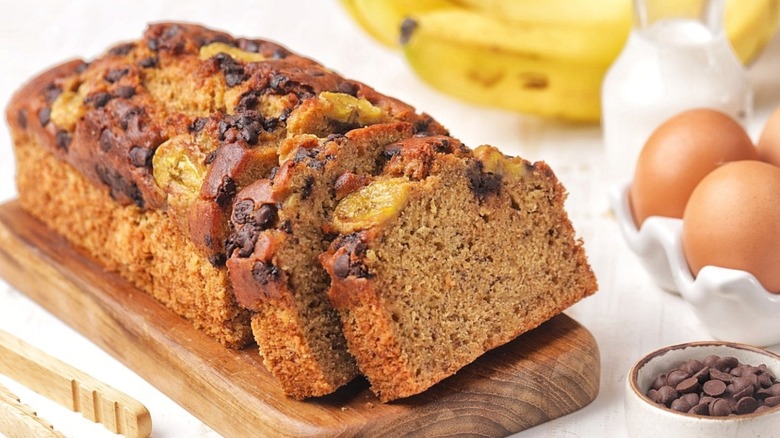
Anyone who's ever sawed into a dry, subpar loaf of banana bread can attest; not all recipes produce the sweet, moist experience your palate is anticipating. While bananas are clearly the most important ingredient in ultra-moist banana bread and should be selected thoughtfully, there's another ingredient that's just as important, according to Stewart. If you're looking for tips on how to cook like Martha Stewart, the key to moist, delicious banana bread is sour cream.
When added to banana bread batter in place of milk or buttermilk, "Sour cream is a much richer and fatter dairy product that adds moistness and richness to tender layer cakes," Stewart says on her website. "It adds a subtle tang that balances the sweetness of the bananas and sugar," she adds. In her debut book, "Entertaining," Stewart's recipe for The Best Banana Bread calls for adding ½ cup sour cream at the same time as the bananas and vanilla. If you don't have sour cream on hand, Stewart recommends plain yogurt as a good substitute, preferably Greek since it has a similar texture.
9. Roast leftover beef bones to create a delicious, dark stock
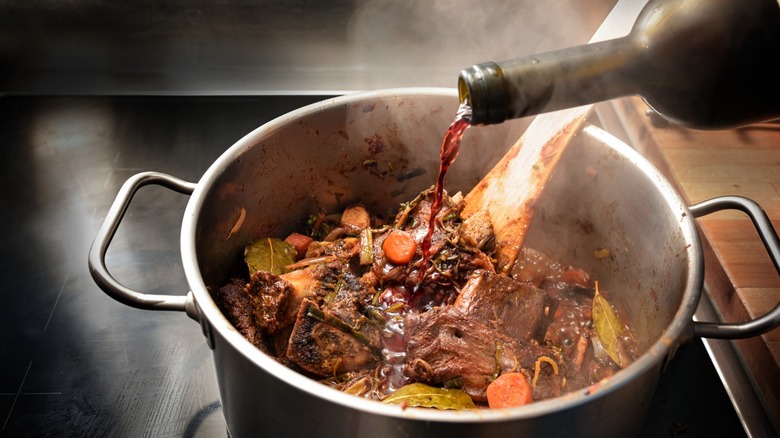
Before you reach for that can of beef broth or jar of crystallized bullion to lay the foundation for your soups and savory recipes, Stewart has a more sophisticated idea — make the stock yourself. Using bones you've salvaged from previous meals or acquired from the butcher, and a roasting pan, you can definitely improve your stock game with this tip for cooking like Martha Stewart.
"When making beef stock, the beef, the bones, and the aromatics are roasted first to give a deeper flavor and darker color," Stewart says in a YouTube tutorial. Begin by placing veal shank, oxtail, and neck bones (or any other bones you have on hand that have a little meat and fat clinging to them) in a roasting pan drizzled with unflavored cooking oil. Roast uncovered for about 45 minutes at 400 degrees Fahrenheit, stirring often, then add two tablespoons of tomato paste and your aromatics (celery, carrots, onions, and garlic). Give it a good stir and return it to the oven until everything is browned.
Next, place bones and vegetables into a deep stockpot and use red wine to deglaze the roasting pan. "Boil off the alcohol by reducing that red wine by a third or a half," Stewart says, then pour it into the stockpot and cover everything with water. Simmer for 8 hours, add fresh herbs, then strain through a cheesecloth. Chill, remove the fat layer, and then you're left with a "gorgeous broth, very rich, very flavorful ... so good."
10. Strive for warmth and simplicity, not perfection
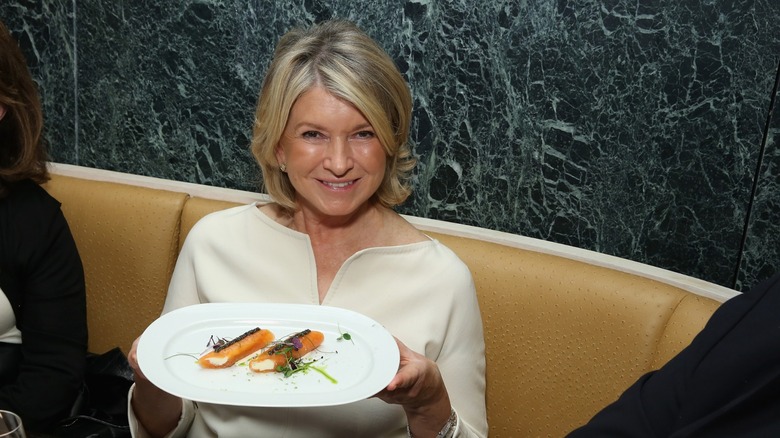
While Stewart makes cooking and entertaining seem effortless, she says perfection should never be the goal when cooking for friends and family. Keep gatherings warm and the menu simple by striving for "scruffy hospitality," she says on Instagram. "[It's] the art of embracing imperfection and welcoming friends into your home as it truly is."
Although there is a time and place for old school hosting with elaborate centerpieces and fancy folded napkins, you don't need a perfectly clean kitchen or a complex menu to give guests a wonderful evening. In fact, a lived-in dining room, no-frills food, and a low-stress presentation can often make people feel more relaxed. "You're crafting a cozy, welcoming space where friends can unwind, even if every surface isn't spotless," Stewart says on her website. Comfort, ambiance, and conversation are just as important as food and drink quality. "At the end of the day, your friends won't remember the mess; they'll remember how welcome they felt."