

10 Tips For Grocery Shopping With A Budget
We may receive a commission on purchases made from links.
It seems like we're always at the mercy of whatever the grocery store charges for food — and we kind of are. Most of us don't hunt or grow all our food from scratch, making the grocery store a literal lifeline for providing food and household essentials. But that doesn't make it any less disheartening to walk through the refrigerator aisle and exclaim: "They want how much for eggs?"
The bad news is that grocery store prices aren't going down anytime soon. The United States Department of Agriculture's Economic Research Service estimates that grocery prices will continue to climb 2.3% in 2026, which will undoubtedly put strain on individuals living on fixed incomes, as well as families and people living alone — bascially, all of us. No one is immune to rising prices, and this can make your grocery budget feel entirely out of your control.
But the good news is, there are still ways to reclaim some power over your grocery budget without having to skip out on your favorite foods or go too far out of your way to save money. In an effort to help you spend less at the store, we came up with a list of simple yet manageable tips that all grocery shoppers should take advantage of. Through careful planning and thoughtful purchases, you too can get the most value out of your weekly shop.
1. Make a list – and stick to it
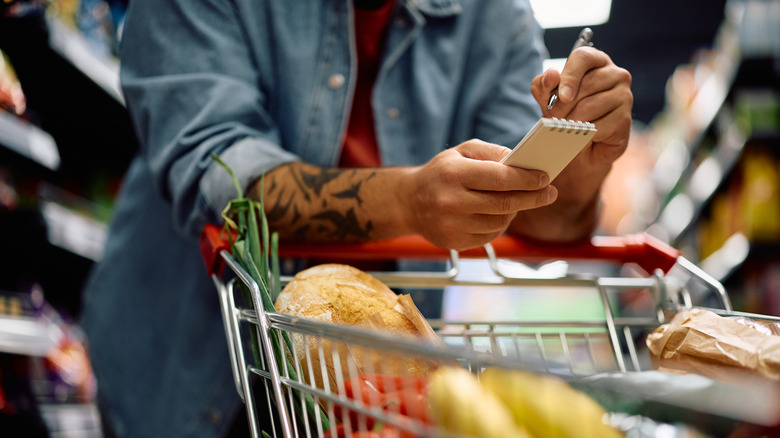
You're standing in the grocery store, looking around for all of the things you're running low on. What was it ... Eggs? Milk? Possibly oatmeal? Not making a list before you head to the store means that you may not remember to buy everything you actually need. This means you'll have to make extra trips for forgotten basics or small but important components of your recipes. You might also end up buying stuff you really don't need, and increase the amount of money you spend on each trip.
You can purchase aesthetic shopping list pads (like this one from Hebayy on Amazon) and stick them on your fridge or keep them on your countertop, though a pad of paper or sticky note works just as well. Add things to your list as you need them, and before you head to the store, do a pantry audit to see which items you have plenty of and which ones you need to replace.
Paying attention to expiration dates will also ensure that you're restocking foods only when you need to and can lower your grocery budget even more. Bring a pen with you to the store so you can cross off items as you add them to your cart — and be sure to stick to what's on the list. Another thing that helps with this? Paying in cash — you can't spend more than you have in your wallet, which will force you to stick to your budget.
2. Go with canned or frozen foods when you can
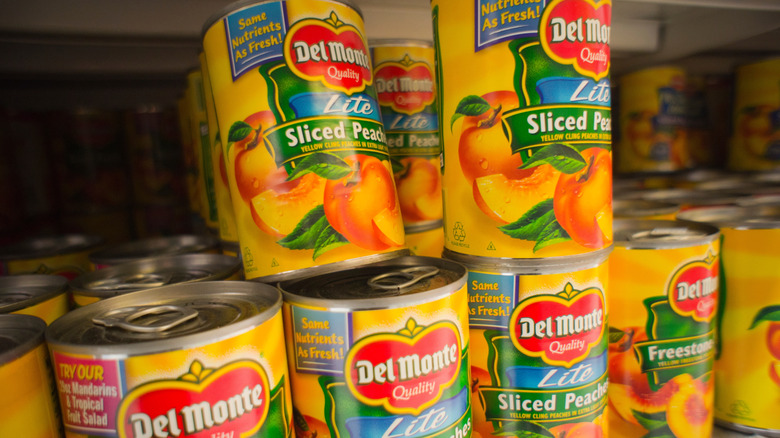
Besides changing how you shop, a great way to save money when you visit the grocery store is also to change what you buy. Fresh produce, in particular, is one of the most expensive items that you can add to your cart — especially if you're incorporating it into multiple veg-forward dishes or you just like to have a container of blueberries or blackberries tucked away in your fridge for snacking. Veggies and fruit can also spoil easily, meaning you could be throwing away money if you can't eat them fast enough.
If you want to save money, try swapping out some of that fresh produce for frozen or canned items. The important word here is "some." If you're making crispy roasted Brussels sprouts, a fruit salad, or plump roasted squash, you're going to want to use fresh produce every time. But if you're just planning on dropping a handful of berries into a smoothie or making a quick soup, canned or frozen options will work just fine. Canned and frozen foods can be just as nutritious as fresh; just keep an eye on the sodium content and added syrups, as these can alter the flavor and texture of the food.
Other canned goods that you may want to stock up on are in the meat and seafood section. You can make simple sandwiches with canned tuna or canned chicken, or put some canned meat in your breakfast hash to save money and add protein.
3. Compare prices ahead of time

Price comparisons will help you limit your grocery budget and get the most out of your purchases. There are a lot of comparisons to be made, including between stores, between products, and between product sizes. The first thing that you can do to save money is to compare prices across stores. Aldi, for example, typically has more affordable staples than other stores, though you may need to buy its generic products instead of your favorite brands to get those deals. It's also worth considering that Aldi carries a limited number of SKUs compared to somewhere like Walmart, so you may need to visit multiple stores to get everything you need. This might not be worth it time-wise or in terms of gas money. You can use apps and weekly ads and circulars to shop around, check out deals, and decide which store is going to give you the best value.
Once you get to the store, you can also compare prices across brands. Not only should you consider the unit price, but also the price per weight noted on the shelving sticker. Larger packages may not always be cheaper by unit, and you'll want to shop for the items that give you the most product for your money. That being said, even if a larger product has a better price per weight, you don't want to buy it if you won't be able to use it all before it goes bad. The mathematical headache is worth it; taking the time to compare per unit and per weight prices can save you a ton in the long run.
4. Bulk-buy when it's realistic
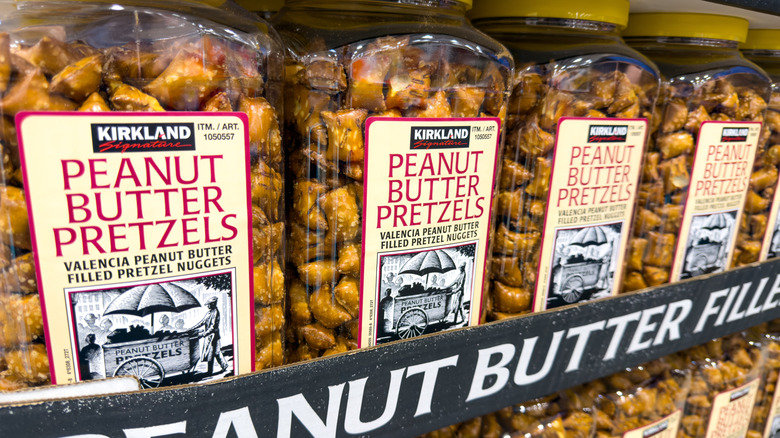
One of the "solutions" to grocery budgeting that many people suggest is buying in bulk from warehouse stores. While this tip is one that we recommend trying, there are some important caveats. Sure, Costco is known for being cheap (after all, it does carry many products for under $5 outside of its fan-favorite food court), but it may not be a good go-to option for every household.
For one, wholesale grocery stores tend to focus on large portions, so if you're living alone or with just one other person, it may not make sense to buy 10 pounds of ground beef or a 2-pound bag of potato chips. The membership cost is another factor. If you're not visiting the store often, it's just an extra expense.
However, there are some things that are good buys at bulk retailers — mainly items that don't go bad or can be frozen. Costco's chicken breasts, for example, are almost always more affordable at the warehouses than at other grocery stores, and you can always drop the uncooked portion into the freezer and use it later. We also pick up laundry detergent, paper towels, and other dry goods at warehouses because they have a lower per-unit price than at other stores — and we have room to store them. When shopping in bulk, always focus on non-perishable products or ones you know will get eaten before they go bad, and be sure to check the per-unit prices with other stores to ensure you're really getting a good deal.
5. Don't shop hungry
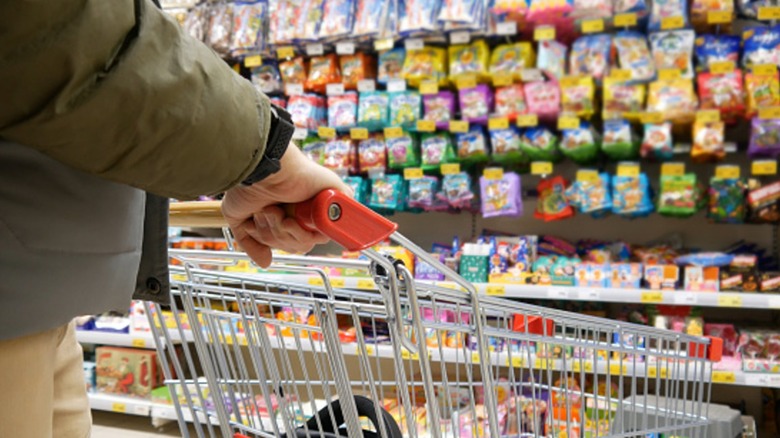
We would be remiss to mention something that we're all guilty of: shopping while hungry. A study of 2,000 American shoppers conducted by OnePoll found that folks who shop while hungry end up shelling out, on average, $26 more than they would if they weren't hungry (via StudyFinds). 60% of the surveyed population also reported that they were willing to forego their health goals if they were shopping while hungry.
The easiest way to avoid this mistake, of course, is to eat a meal before running errands. You can also circumvent the highly processed foods that you may be drawn to when hungry by shopping around the exterior of the store, rather than wandering aimlessly through the aisles. Grabbing a smaller shopping basket, rather than a cart, can also decrease the amount of stuff you buy on impulse.
One of the biggest spots for impulse buys happens not in the main part of the store, but in the checkout aisle. Most stores stock candy, soda, and snacks next to the register because they're quick, impulse buys that are easy to toss in your cart when you check out — and when you're already fatigued and hungry, that chocolate bar looks like just what you need to power through. Try to avoid buying these tiny (and often overpriced) snacks and pack a treat in your car for afterward.
6. Limit convenience foods
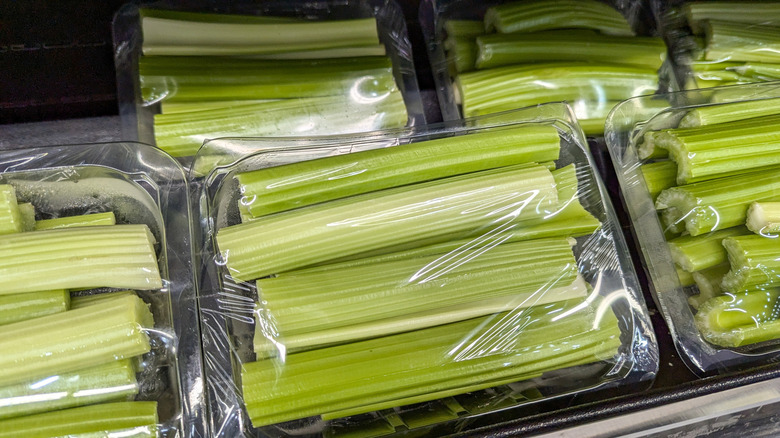
The phrase "time is money" is not lost on us. While buying pre-packaged convenience foods — like chopped onions, celery sticks, sliced watermelon, zucchini noodles, and portioned mirepoix — can save precious time in the kitchen, it can really wreck your budget. However, there are some instances when these foods come in handy; breaking down a whole pineapple can be messy, cauliflower rice takes more time than it should, and squeeze bottles of herbs, garlic, and ginger can last longer than the fresh stuff. So, purchase these with caution, and if you can prep them yourself without too much hassle, do so.
Another class of foods under the convenience umbrella can also be found near the entrance to the store, deli, or the produce section. We're talking about those ready-to-eat sandwiches and wraps, Panera Bread soups, deli salads, single-serve cakes, and bagged cookies. We'd group many of these items in the "impulse buy" category: You see them, you're hungry, and suddenly they're in your cart. Stores make a killer markup on these items, but chances are that you could make a cheaper and more delicious version yourself if you bought all of the ingredients (or, in the case of the cake or cookies, opted for the full-size product) instead.
7. Buy store brands rather than name brands
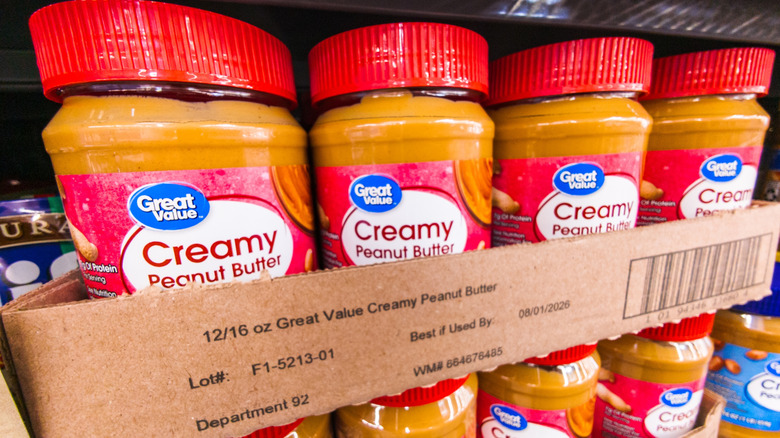
The price differences between store brands and name brands can be mind-boggling. In fact, you could drastically reduce your grocery bill by buying generic products instead of name-brand ones. In many cases, the products are almost exactly the same. There are also many generic grocery items that are better than, or at least comparable to, name brands, but you might want to do some research first to ensure that what you are saving in price, you're not sacrificing in quality. We, for one, have had our fair share of disappointing Great Value Walmart products over the years, and doing some research would have saved us a ton of time and money.
If you don't have a preference for name-branded products, you may want to consider shopping at a store where most of the products are store brands, such as Aldi or Trader Joe's. While both of these popular grocers carry some name brands, the majority of the SKUs are in-house products, which can cut down on advertising and merchandising costs for the retailer. This saving is then transferred to shoppers in the form of lower prices.
8. Scour the discount aisle
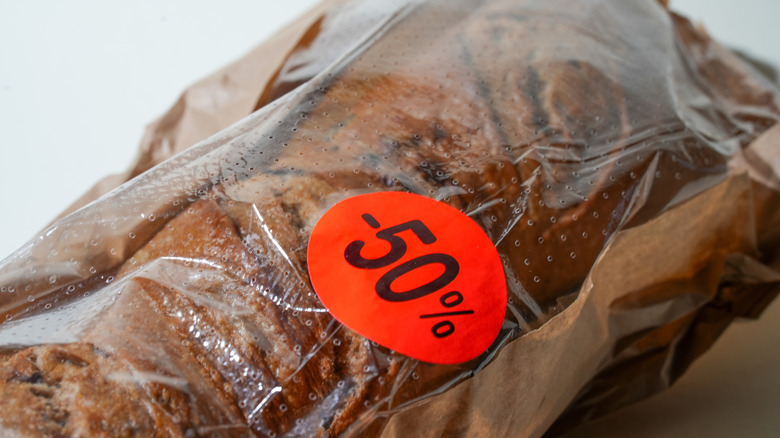
A discount aisle hates to see us coming. This is where all of the breads, baked goods, slightly dented cans, and other forgotten-about items go as a last resort. And as long as you pay attention to expiration dates, you could be scoring great deals on otherwise expensive items.
However, there are some important caveats. Obviously, the foods still need to be safe to eat — meaning not moldy and with any safety seals intact — so plan to do a visual inspection of each item before buying it. You should also consider whether you could prolong the food's shelf life by freezing or refrigerating it. If we find a bag of bagels that is nearing its expiration date, for example, we'll tuck them into our freezer and enjoy them weeks (potentially even months) later.
You may also consider repurposing items that look a little worse for wear. Unclaimed birthday cakes and bakery items can be made into cake pops or added to homemade ice cream, while slightly stale bread can be cubed up and used for croutons, bread pudding, or French toast. The selection on these discount racks isn't the same every time, so you may not be able to rely on it for the majority of your shopping list necessities — but discount sections are good for making quick (and affordable) swaps.
9. Shop with leftovers in mind
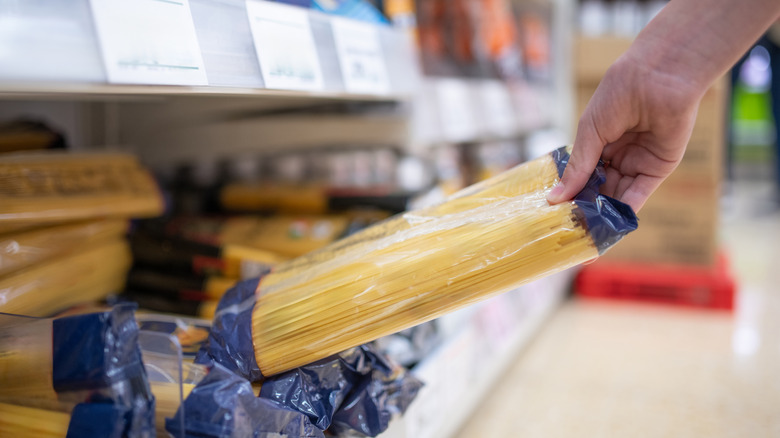
If you don't already meal plan and prep, consider this your sign to start. Centering meals around useful staples and not being afraid of leftovers are key habits for saving money at the grocery store (and potentially decreasing how often you eat out, too). Think about it: How many times have you spent more than you would have wanted on a spice, tropical fruit, or strange ingredient, only to use it in a one-off recipe and either have to throw the rest away or relegate it to the depths of your pantry? While we're all for experimenting in the kitchen, we're not all for the cost that comes along with it. For these instances, we'd recommend buying just the amount you need for a one-off dish — you can always buy more if you plan to use it again.
That brings us to everything else. When you're shopping for items, think about how you can use them in multiple recipes throughout the week. For example, you can buy and use one box of pasta for a side dish, pasta salad, main meal, and more. Stir-fry tastes as good on the first day as it does on day two or three, while a massive pack of chicken breasts (like the aforementioned ones from Costco) can be cooked and used in various dishes. You could have chicken tacos one night and chicken piccata the next from the same pack. These staples will allow you to stretch your budget and minimize food waste.
10. Sign up for loyalty benefits
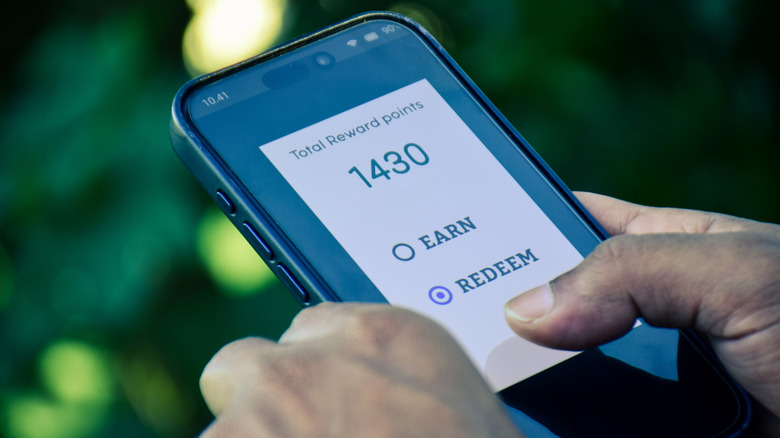
Technology is one of the best tools you have to save money on your grocery budget. Loyalty apps, in-store credit cards, and redeemable points can help you shave tons off your bill, and in many cases, the only real work you need to do is to sign up for them. We, for example, have a BJ's Wholesale Club membership, which allows us to purchase things in-warehouse and also gives us discounts on gas. Some items come with extra money off gas, and we also earn rewards from every purchase we make, which essentially makes the membership pay for itself (and then some). BJ's also has an app that allows us to clip digital coupons, which are automatically applied when we check out. Other stores offer exclusive discounts to loyalty card holders, so be sure to scan your card or input your phone number when you check out to get all of those savings.
You can also use other apps to help you save money on groceries. Flipp is one that helps you compare prices and browse circulars, while the trusty RetailMeNot will help you find promotions and discounts at your favorite stores.