

Beef Rydberg-Style Steak And Potatoes Recipe
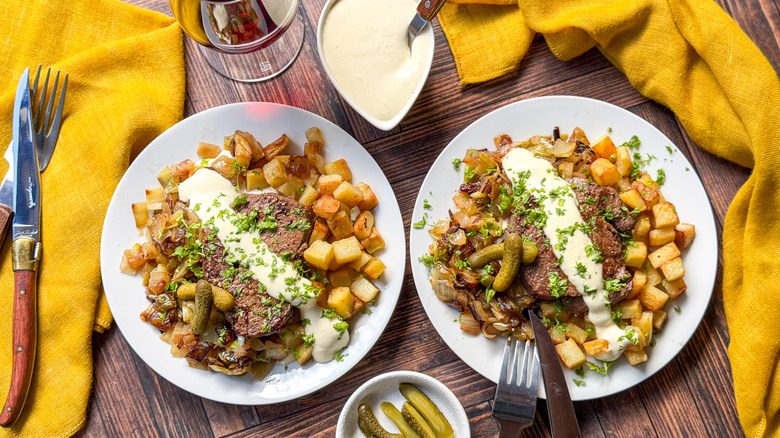
"Steak and potatoes" is synonymous not only with classic American fare but also with endless variations on the pairing around the globe. There is just something so pleasing about a rich and savory cut of juicy steak combined with earthy, starchy, and comforting potatoes. Both steak and potatoes lend themselves to a wide variety of cooking techniques and presentations, so bringing in some cultural significance is a tasty way to approach the dish from a delicious new perspective. When recipe developer Julie Kinnaird thinks about steak and potatoes, she is drawn to a dish from her Swedish roots, known as biff (beef) Rydberg. For this preparation, the steak is cubed and sauteed, as are potatoes and onions, and each component is presented separately on a platter, then served with an egg yolk or a mustard cream sauce to tie all the parts together. Kinnaird takes this same concept, yet uses whole medallions of filet mignon for an elegant and sophisticated take on the dish.
This dish requires a bit of prep work — chopping the vegetables with precision and preparing the sauce — yet several steps may be done in advance to make the actual cooking time flow smoothly. The potatoes and onions can be chopped ahead and refrigerated (potatoes soaked in water, onions covered with plastic wrap), and the sauce will hold up for about 8 hours, with just a touch of gentle whisking to refresh. The dish should be eaten right away once cooked, so having your mise en place is essential for the most delicious results.
Gather the beef Rydberg-style steak and potatoes ingredients
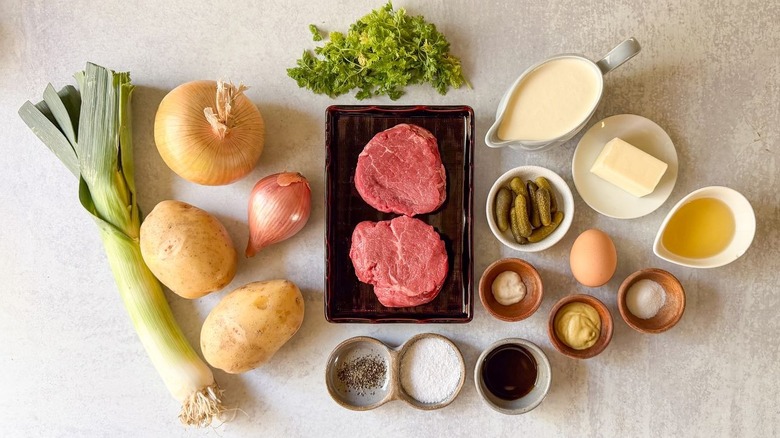
For making this dish, the three main components are filet mignon, Yukon Gold potatoes, and a few members of the onion family: sweet yellow onion, shallots, and leeks. You will need both butter and canola oil for cooking the potatoes, onions, and the beef. Kosher salt and freshly ground pepper are used for seasoning these items. You will also make a luxurious mustard cream sauce, comprised of heavy cream, Dijon mustard, creamed horseradish, a fresh egg yolk, a bit of sugar, and salt for seasoning. To finish off your beef Rydberg-style steak and potatoes, you will need some fresh chervil and a few zesty cornichons. Chervil is a wonderful herb with a hint of citrus and flavors reminiscent of both parsley and French tarragon. If you can't find chervil, Italian parsley will also be a fresh and verdant addition to the dish.
Step 1: Whip the cream until thick
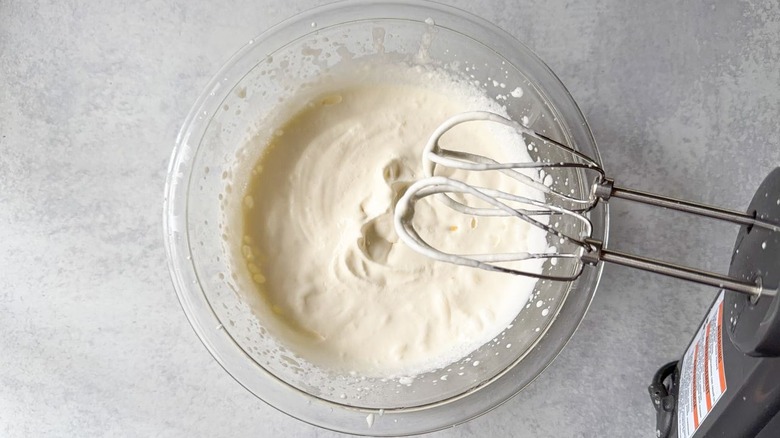
To make the mustard cream sauce, add the cream to a mixing bowl and beat, using a hand mixer or whisk, until the cream has thickened to a spreading consistency.
Step 2: Add the yolk, mustard, horseradish, sugar, and salt
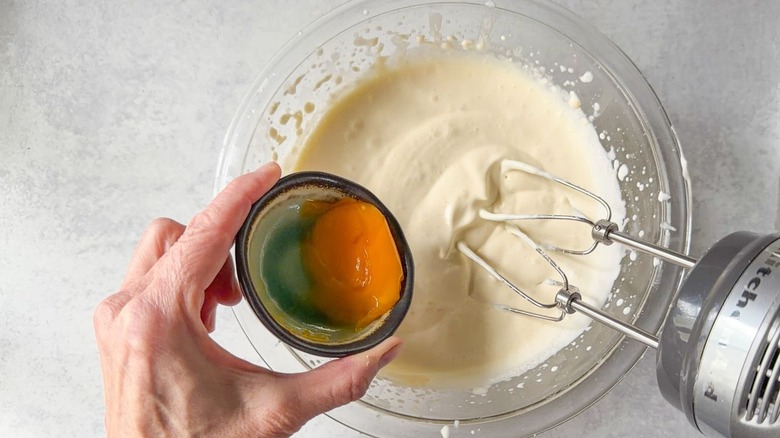
Gently mix in the yolk, mustard, horseradish, sugar, and ½ teaspoon salt. Chill until ready to use.
Step 3: Preheat the oven

Preheat the oven to 325 F.
Step 4: Season the beef
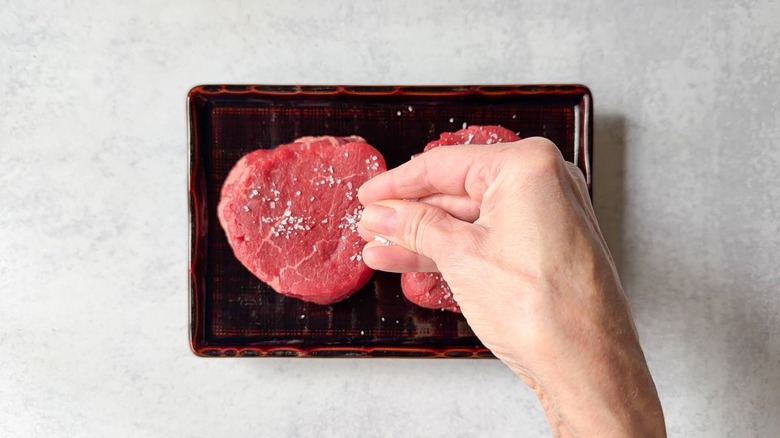
Season the beef all over with 1 teaspoon salt. Set aside at room temperature.
Step 5: Bring the potatoes to a boil
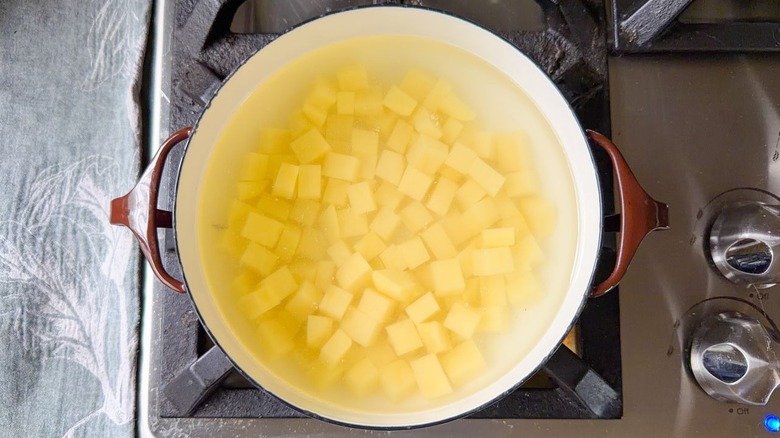
Bring a large pot of water to a boil with the potatoes over high heat.
Step 6: Cook the potatoes for 5 minutes
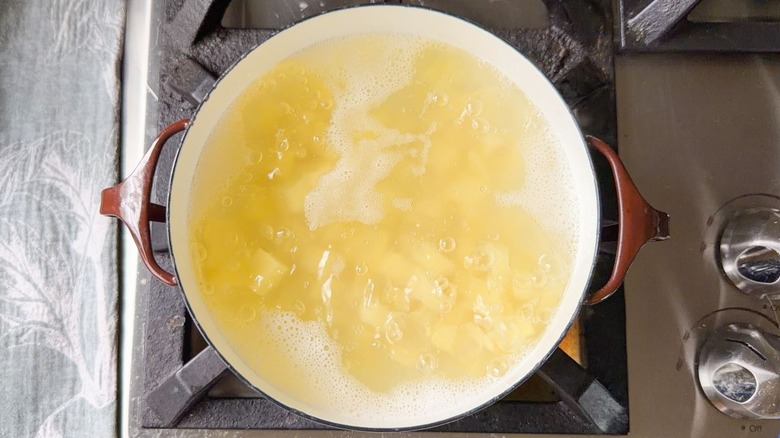
Reduce the heat to medium and cook for 5 minutes.
Step 7: Drain and rinse the potatoes
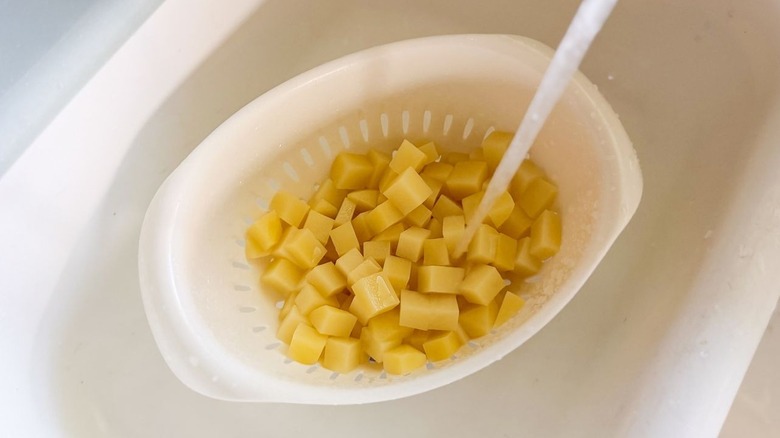
Drain and rinse the potatoes with cold water.
Step 8: Dry the potatoes
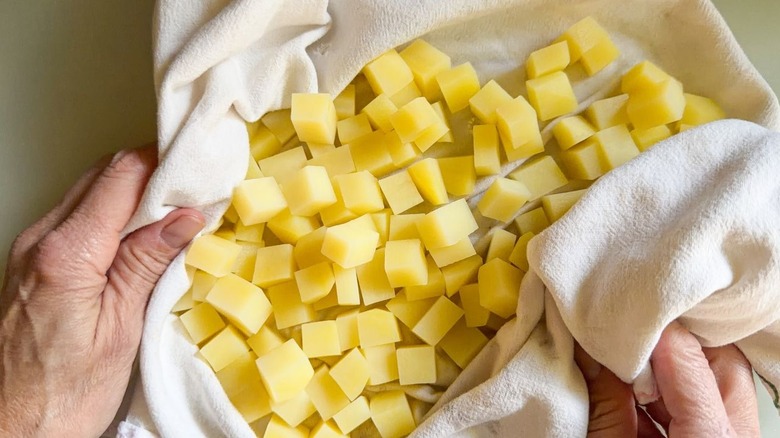
Pat the potatoes dry.
Step 9: Heat a cast iron skillet with butter and oil
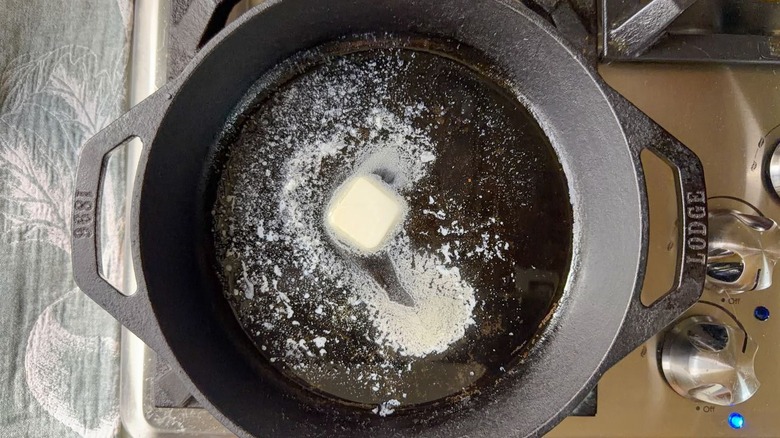
Heat a large cast-iron skillet or other pan over medium heat and add 1 tablespoon butter and 1 tablespoon oil.
Step 10: Add the potatoes
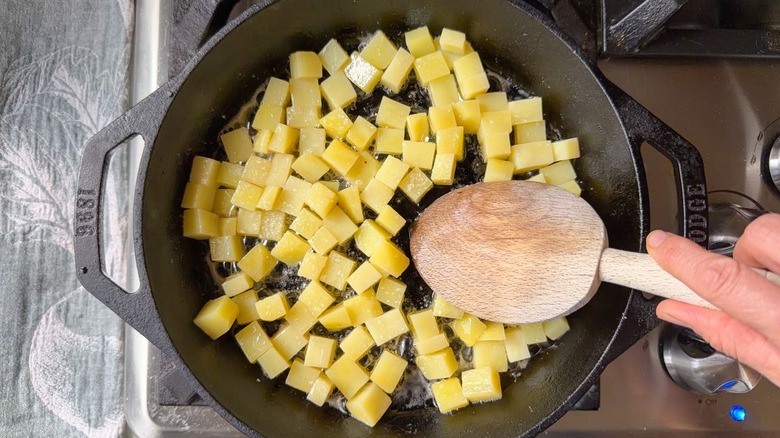
Add the potatoes and ½ teaspoon salt and cook, stirring only occasionally, until crispy and golden (about 15 minutes).
Step 11: Transfer the potatoes to an oven dish
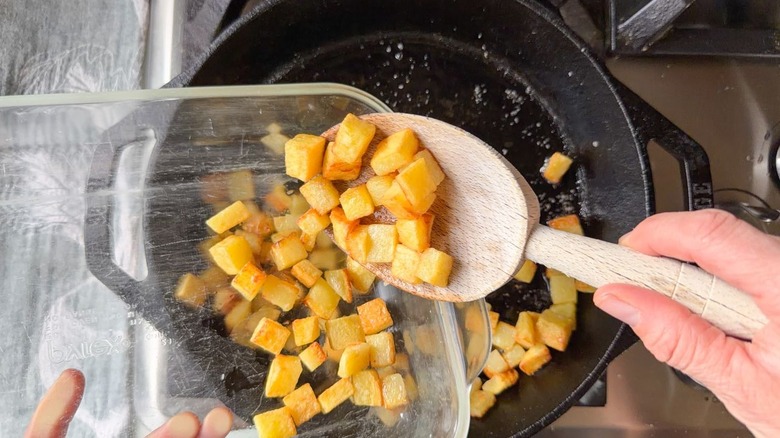
Transfer the potatoes to a heat-safe dish and keep them warm in the oven.
Step 12: Add the onion, shallot, and leek to the pan
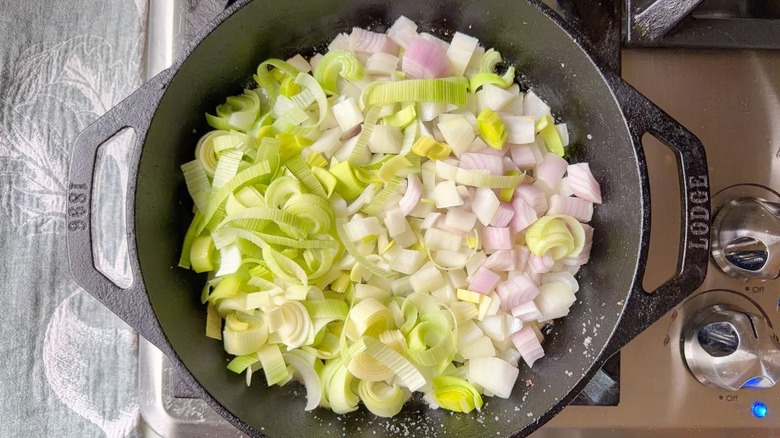
Return the pan to medium heat and add 1 tablespoon butter, 1 tablespoon oil, and the onion, shallot, and leek.
Step 13: Cook until golden brown
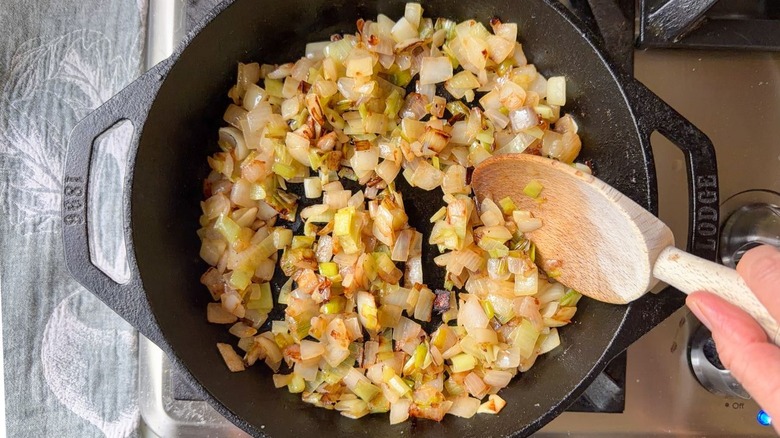
Cook, stirring occasionally, until softened and golden brown (about 15 minutes).
Step 14: Add the onions to the baking dish
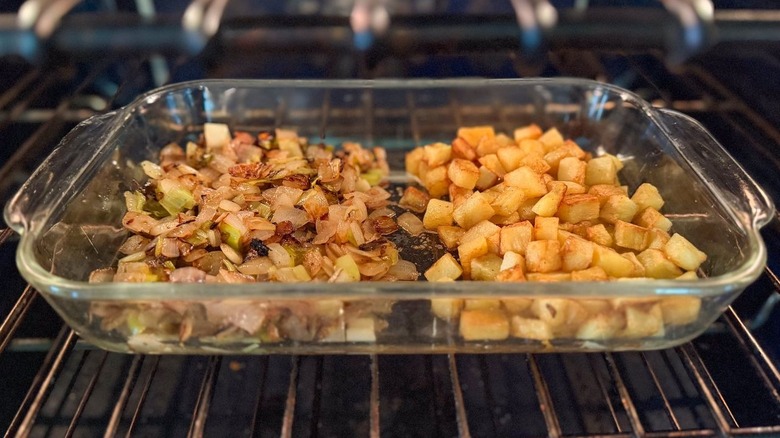
Transfer the onion mix to the oven with the potatoes.
Step 15: Wipe the skillet clean
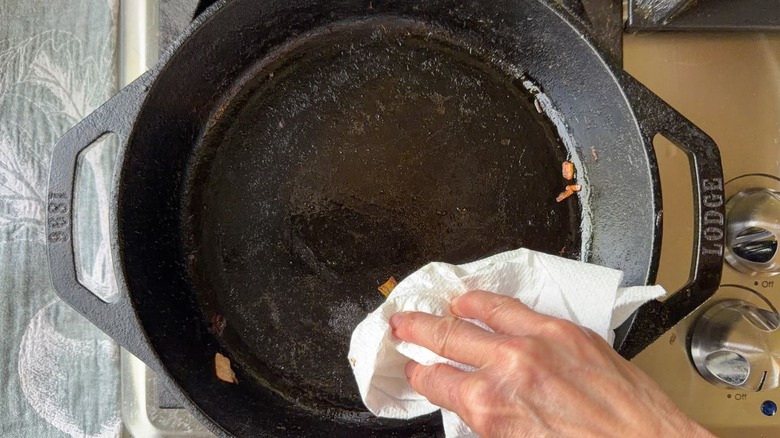
Wipe the pan clean of any bits.
Step 16: Heat the remaining oil
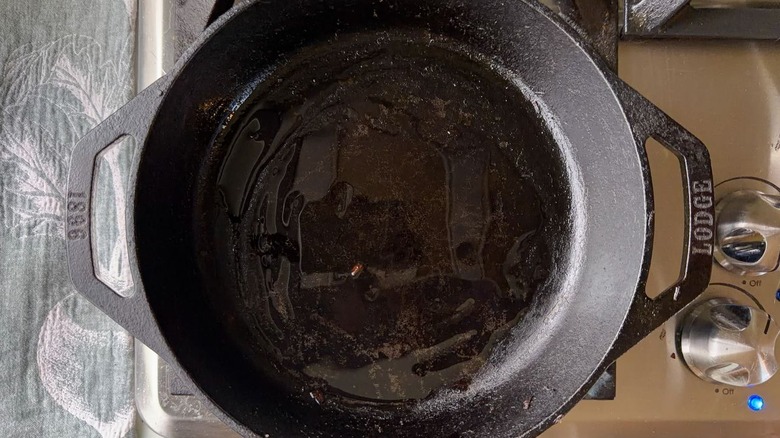
Heat the remaining 2 tablespoons of oil over medium heat.
Step 17: Add the filets
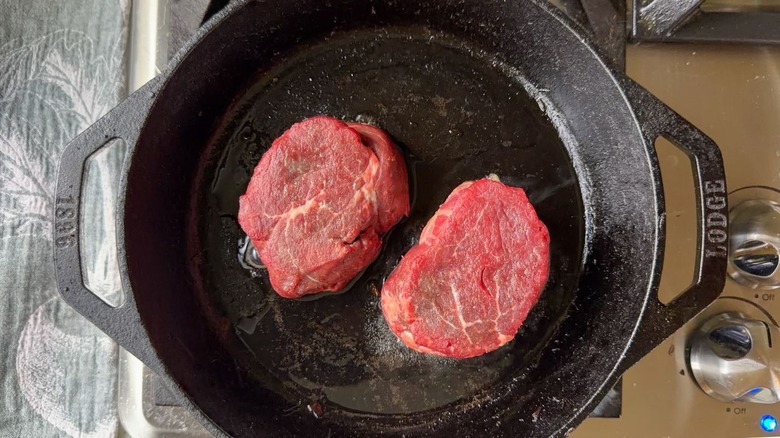
Add the filets and cook for one minute.
Step 18: Turn the filets to the other side
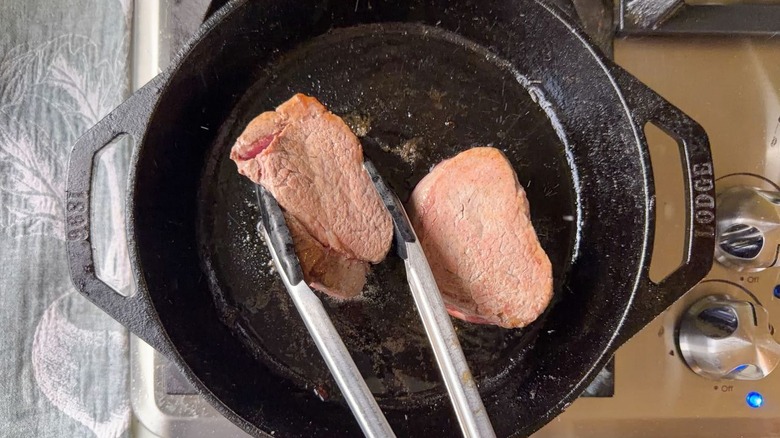
Turn the filets and cook for one minute on the other side.
Step 19: Continue to cook and flip every minute
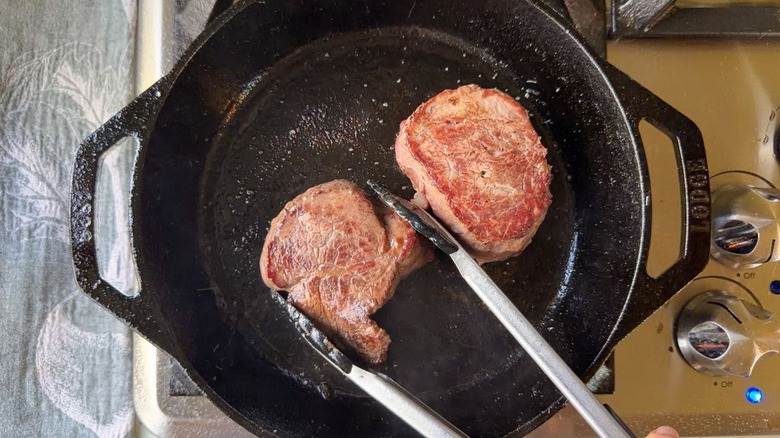
Continue to cook and flip for a total of 6 minutes.
Step 20: Add the Worcestershire sauce and more butter
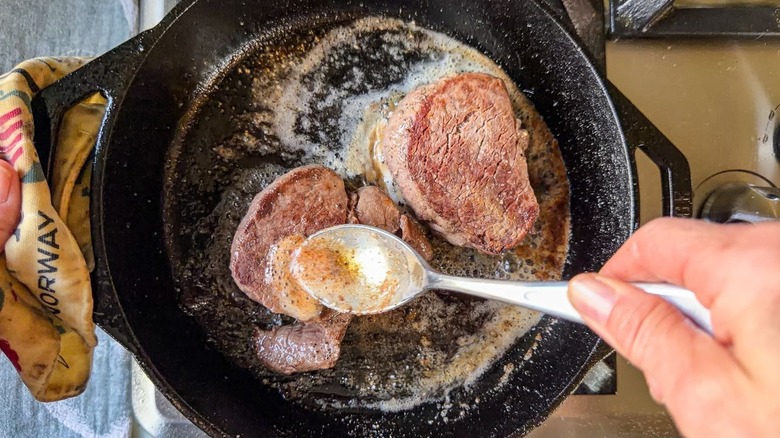
Add the Worcestershire and remaining 2 tablespoons of butter to the pan and use a spoon to baste the filets with the melted butter, flipping after 1 minute.
Step 21: Cook to desired temperature
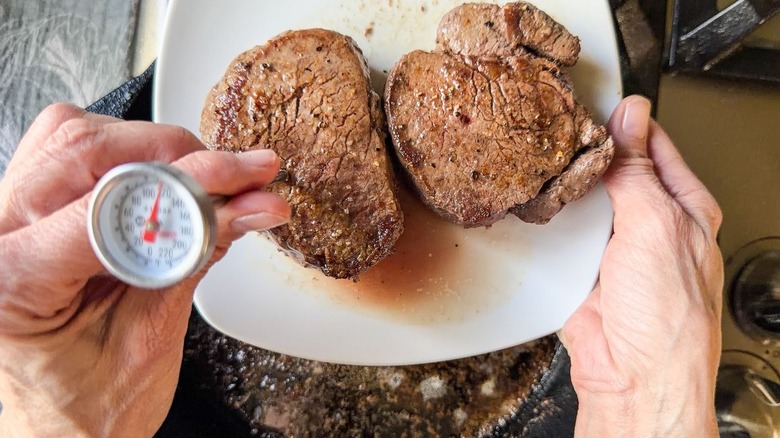
Continue to baste and cook until the internal temperature reaches 120-125 F for medium-rare. Transfer the filets to a plate.
Step 22: Spread some of the mustard cream sauce on plates
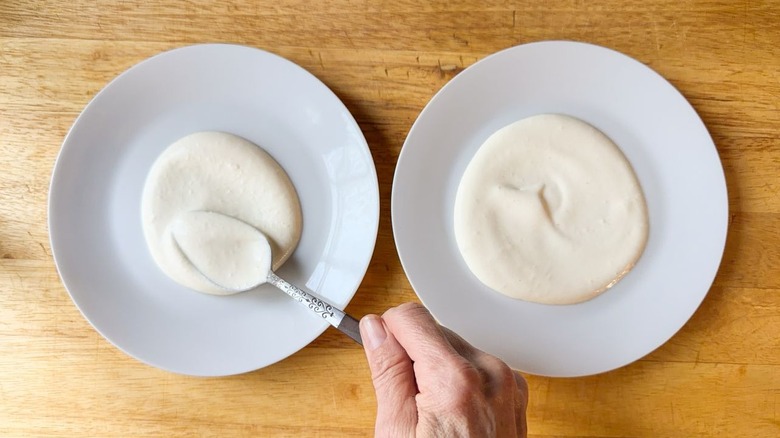
While the filets rest, spread some of the mustard cream on 2 plates.
Step 23: Place the filets on the sauce
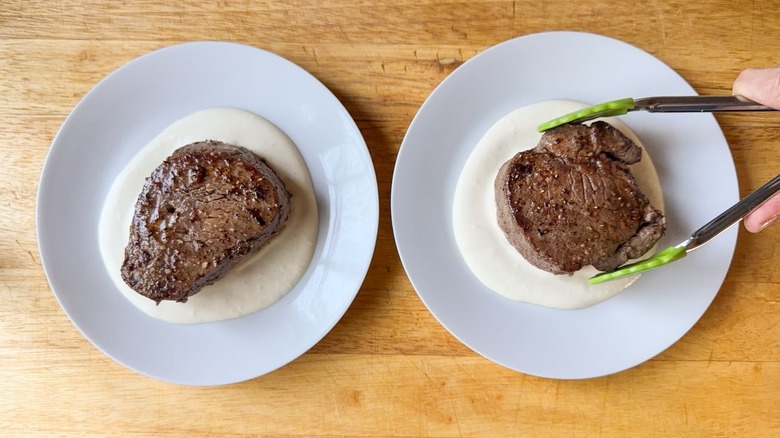
Top the cream on each plate with a filet.
Step 24: Add the onions and potatoes to the plates
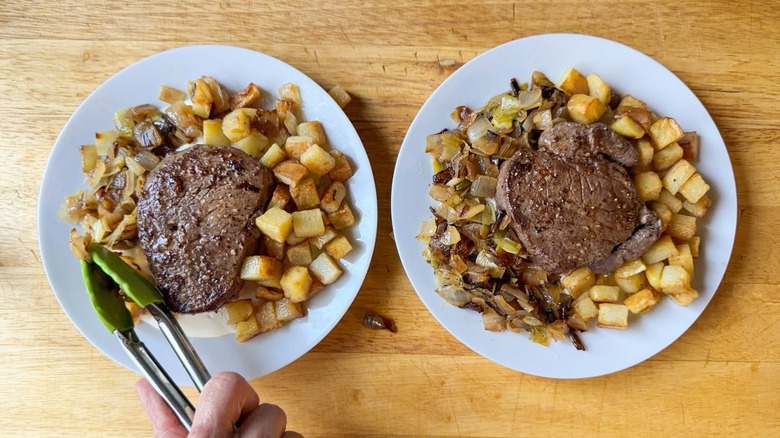
Add the warm potatoes to one side of the meat and the warmed onions to the opposite side.
Step 25: Add a bit of mustard cream to the filets
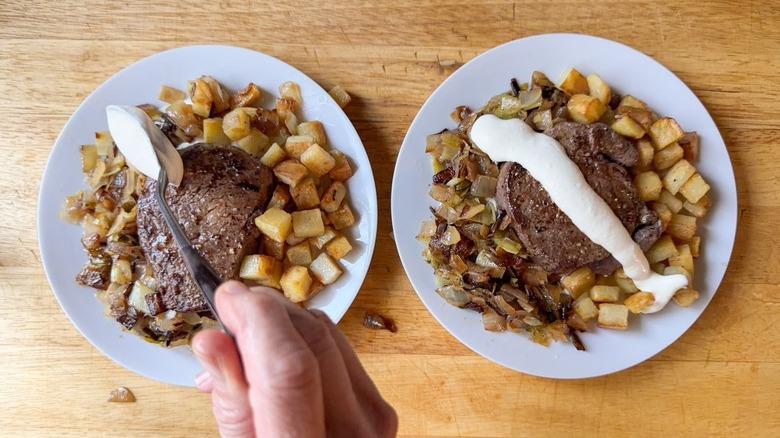
Add a bit more mustard cream to the top of the steaks.
Step 26: Sprinkle on some of the chervil
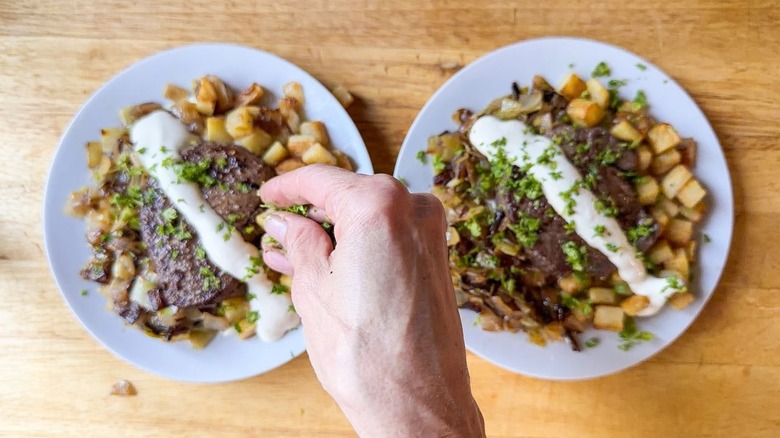
Sprinkle with the chopped chervil or parsley.
Step 27: Garnish with the cornichons
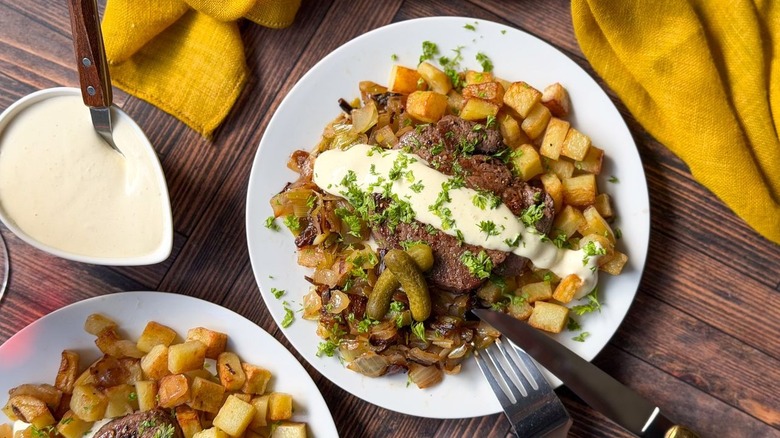
Garnish with the cornichons and serve immediately with the remaining sauce.
What can I serve with steak and potatoes?
Beef Rydberg-Style Steak And Potatoes Recipe
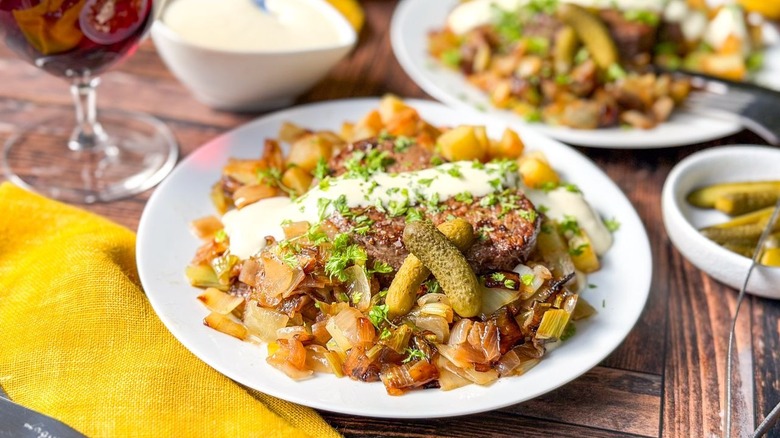
In our beef Rydberg-style steak and potatoes recipe, filet mignon medallians are served alongside roast potatoes, sauteed onions, and a creamy mustard sauce.
Ingredients
- ¾ cup chilled heavy cream
- 1 large egg yolk
- 1 tablespoon Dijon mustard
- 1 teaspoon creamy horseradish
- 1 teaspoon granulated sugar
- 1 tablespoon kosher salt, divided
- 2 (8-ounce) filet mignon steaks
- 2 yellow potatoes (about 1 pound total), peeled and cut into ½-inch dice
- 4 tablespoons butter, divided
- 4 tablespoons canola oil, divided
- 1 medium sweet onion, peeled and cut into ½-inch dice
- 1 large shallot, peeled and cut into ½-inch dice
- 1 large leek (white part only), halved and cut into ½-inch slices
- 1 tablespoon Worcestershire sauce
- ½ teaspoon freshly cracked black pepper
- ¼ cup chopped fresh chervil or Italian parsley
- 2 tablespoons sliced cornichons
Directions
- To make the mustard cream sauce, add the cream to a mixing bowl and beat, using a hand mixer or whisk, until the cream has thickened to a spreading consistency.
- Gently mix in the yolk, mustard, horseradish, sugar, and ½ teaspoon salt. Chill until ready to use.
- Preheat the oven to 325 F.
- Season the beef all over with 1 teaspoon salt. Set aside at room temperature.
- Bring a large pot of water to a boil with the potatoes over high heat.
- Reduce the heat to medium and cook for 5 minutes.
- Drain and rinse the potatoes with cold water.
- Pat the potatoes dry.
- Heat a large cast-iron skillet or other pan over medium heat and add 1 tablespoon butter and 1 tablespoon oil.
- Add the potatoes and ½ teaspoon salt and cook, stirring only occasionally, until crispy and golden (about 15 minutes).
- Transfer the potatoes to a heat-safe dish and keep them warm in the oven.
- Return the pan to medium heat and add 1 tablespoon butter, 1 tablespoon oil, and the onion, shallot, and leek.
- Cook, stirring occasionally, until softened and golden brown (about 15 minutes).
- Transfer the onion mix to the oven with the potatoes.
- Wipe the pan clean of any bits.
- Heat the remaining 2 tablespoons of oil over medium heat.
- Add the filets and cook for one minute.
- Turn the filets and cook for one minute on the other side.
- Continue to cook and flip for a total of 6 minutes.
- Add the Worcestershire and remaining 2 tablespoons of butter to the pan and use a spoon to baste the filets with the melted butter, flipping after 1 minute.
- Continue to baste and cook until the internal temperature reaches 120-125 F for medium-rare. Transfer the filets to a plate.
- While the filets rest, spread some of the mustard cream on 2 plates.
- Top the cream on each plate with a filet.
- Add the warm potatoes to one side of the meat and the warmed onions to the opposite side.
- Add a bit more mustard cream to the top of the steaks.
- Sprinkle with the chopped chervil or parsley.
- Garnish with the cornichons and serve immediately with the remaining sauce.
Nutrition
| Calories per Serving | 1,646 |
| Total Fat | 127.0 g |
| Saturated Fat | 54.2 g |
| Trans Fat | 1.2 g |
| Cholesterol | 446.5 mg |
| Total Carbohydrates | 72.9 g |
| Dietary Fiber | 9.2 g |
| Total Sugars | 21.4 g |
| Sodium | 2,078.7 mg |
| Protein | 57.2 g |

What are some tips or tricks for cooking filet mignon? Is there another cut of beef I can use for this recipe?
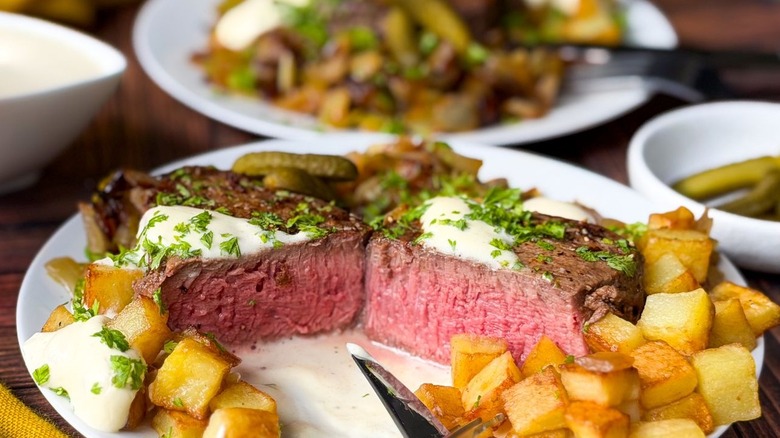
Filet mignon is an ultra-tender and elegant cut of beef taken from the prized tenderloin. Filet mignon is generally cut thick, so it is a juicy cut of beef that comes from an area of the cow that is protected from much use, yielding its supple texture. Filet mignon is easy to cook, and although it is a relatively lean cut of beef with little marbling, it also has a more delicate flavor and easily takes on seasonings and sauces without overpowering them. The key to cooking filet mignon, says Kinnaird, is to avoid overcooking at all costs. Anything beyond medium-rare for this cut can lead to drying out the meat. Rather than a hard sear in the pan, she prefers to do a continuous cook on both sides over moderate heat, along with basting to keep infusing the meat with moisture. The result is a nice caramelized crust with a juicy, pink interior.
Tournedos are another cut from the tenderloin that would work well for this recipe. These are more petite medallions taken from the very tip of the tenderloin, next to where the filet mignon is sourced. These will cook very quickly, so take care to keep the temperature in check. You could also opt for a ribeye or Delmonico steak. These have more marbling than meat coming from the tenderloin, but can be cooked with a similar method for this recipe.
What is the history of Beef Rydberg?
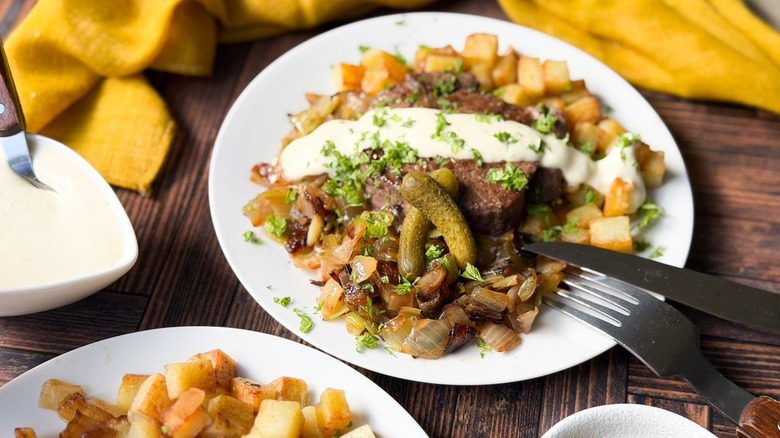
Beef Rydberg hails from the Hôtel Rydberg, which was a Stockholm institution in the late 19th century. The dish was a deconstructed version of beef hash, but made with the finest cuts of beef to suit high-end customers. The beef, cubed potatoes, and onions were all cooked separately, then arranged on a platter to mix with an egg yolk served in a shell. Grated fresh horseradish and parsley, along with a bit of mustard sauce, were served as accompaniments so that the guest could mix all components together to create their own luxury hash. Although the hotel itself did not survive past the early 1900s, the dish is still a standard in Swedish cuisine to this day.
Kinnaird says that she can recall her Swedish grandmother making a version of this dish, sometimes using game meat in place of the beef. She often would use chopped leftover baked potatoes and fry them up in a bit of bacon grease stored in a coffee tin near her stove. This recipe is a classic example of a dish that has humble roots, uses up scraps of food to create a complete meal, yet takes the concept and elevates it into something worthy of nobility.