

Garlicky Melting Cabbage Recipe
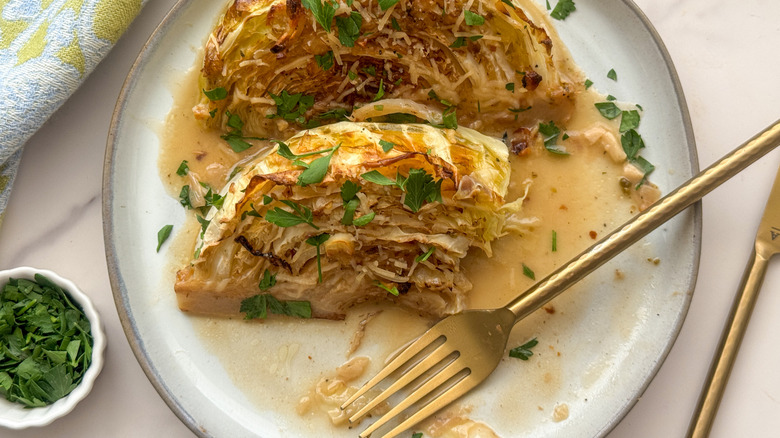
Cabbage is the chameleon of the produce aisle. It seamlessly shreds for slaws, chops for crunchy salads, sits for hours and ferments for kimchi or sauerkraut, simmers in soups, and roasts up beautifully as satisfying steaks. Not only is it one of the most versatile veggies, but it is also loaded with fiber and nutrients, and is very budget-friendly. In this garlicky melting cabbage recipe, we cut it into wedges, sear it, then roast it until it is buttery soft and mouthwatering. We simmer butter, shallots, and lots of garlic together before adding Parmesan cheese, broth, cream, and spices, for a creamy, savory aromatic sauce that we pour over the wedges. A slow bake helps the cabbage wedges meld with all the flavors in the sauce while developing a tender interior and golden, caramelized edges. Once finished with lemon and parsley for bright freshness, this dish might arguably be your new favorite way to make cabbage.
I love making this melting cabbage for a side with entrees like baked salmon, seared pork chops, stuffed portobello mushrooms, or crispy baked tofu. Since cabbage is available year-round and has such a long shelf life, it is an easy side to make for a weeknight dinner or for an entertaining event.
Gather the ingredients for garlicky melting cabbage
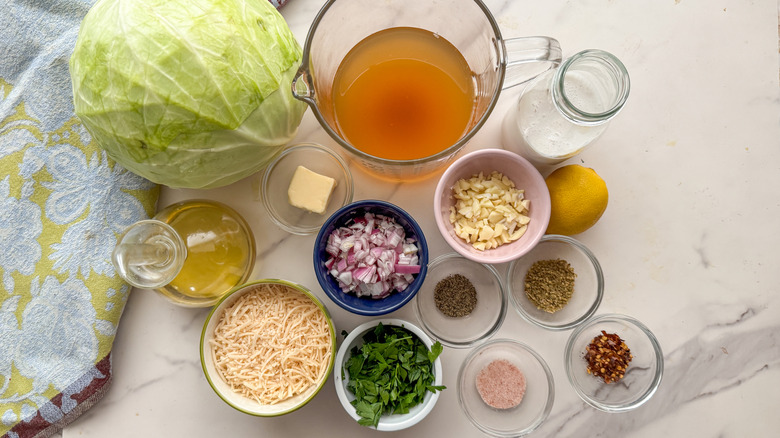
To make this recipe, start by buying your cabbage. Although there are many types of cabbage, we're using simple green cabbage for this recipe, which works best. While you're in the produce section of the store, pick up a shallot, garlic, lemon, and fresh parsley. Chives or chopped green onions are other nice choices for topping the finished cabbage. Hit up the dairy aisle for unsalted butter, heavy cream, and Parmesan cheese. To make this recipe vegan, substitute the cream with canned coconut milk and dairy-free versions of butter and Parmesan. Check your pantry for olive oil, vegetable broth, dried oregano, red pepper flakes, salt, and pepper.
Step 1: Preheat the oven
Preheat the oven to 350 F.
Step 2: Cut the cabbage into wedges
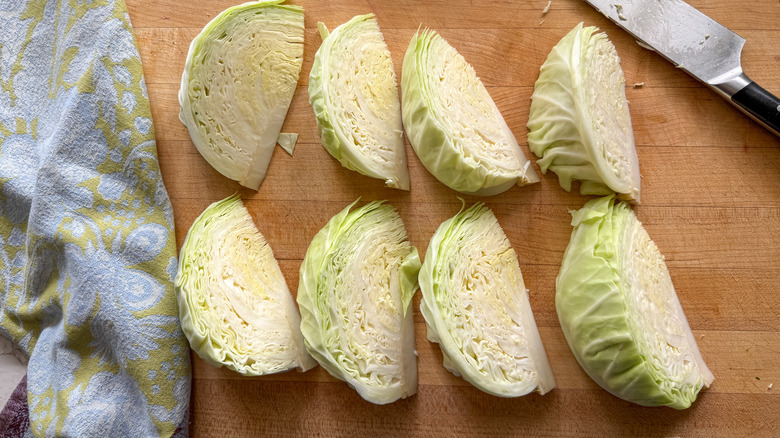
Cut the cabbage into 8 wedges, slicing through the core so each wedge stays intact.
Step 3: Heat the olive oil in a skillet
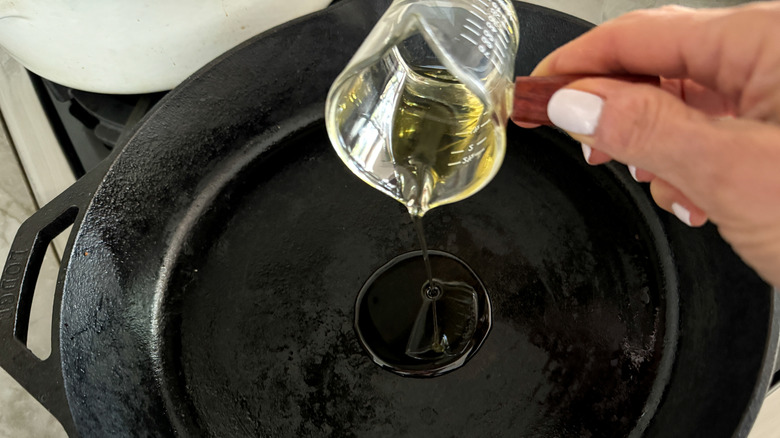
Heat half of the olive oil in a large skillet over medium heat.
Step 4: Sear the cabbage
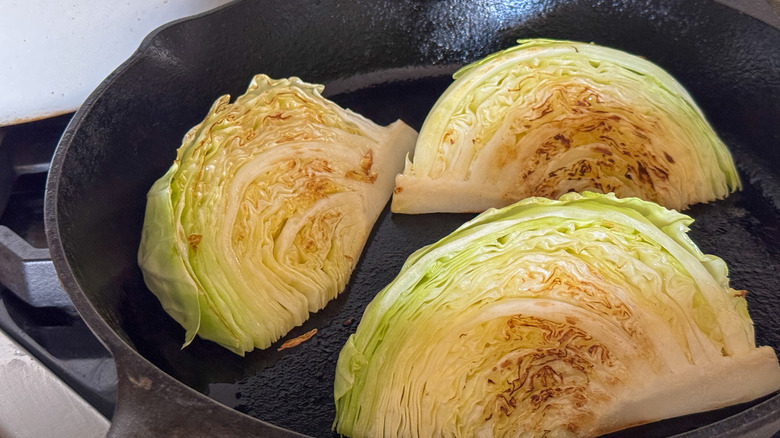
Working in batches, sear the cabbage wedges cut side down for 4-5 minutes per side, until the faces are lightly golden. Add the remaining oil for the second batch.
Step 5: Arrange the wedges in a baking dish
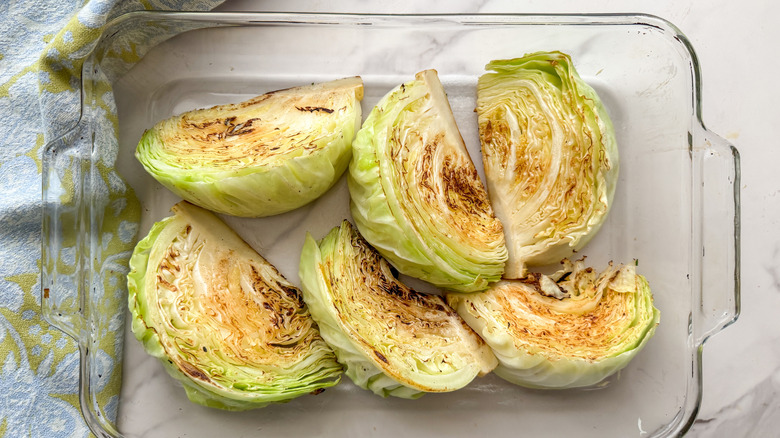
Arrange the seared wedges snugly in a single layer in a 9 x 12-inch baking dish. Based on the size of your cabbage, you might only be able to fit 6 wedges.
Step 6: Melt butter in the skillet
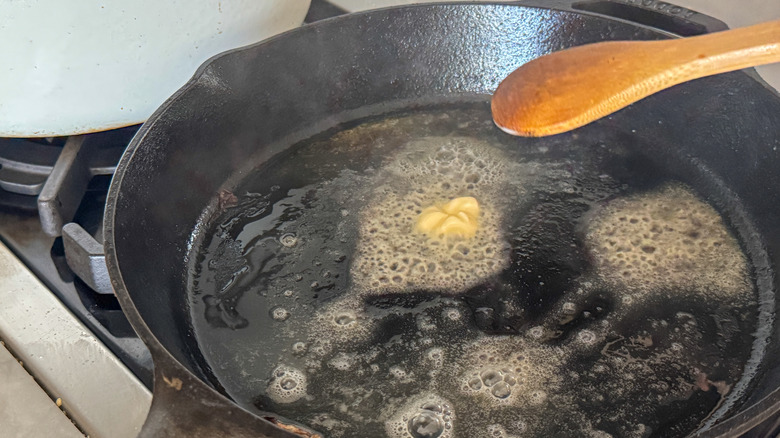
Melt the butter in the same skillet and bring the heat to medium.
Step 7: Saute the aromatics
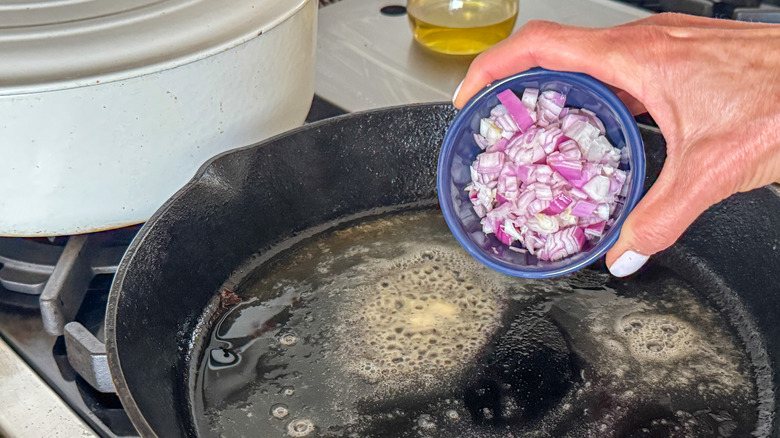
Add the shallot and garlic and cook for 2 to 3 minutes, until the garlic is fragrant and lightly golden at the edges.
Step 8: Pour in the broth
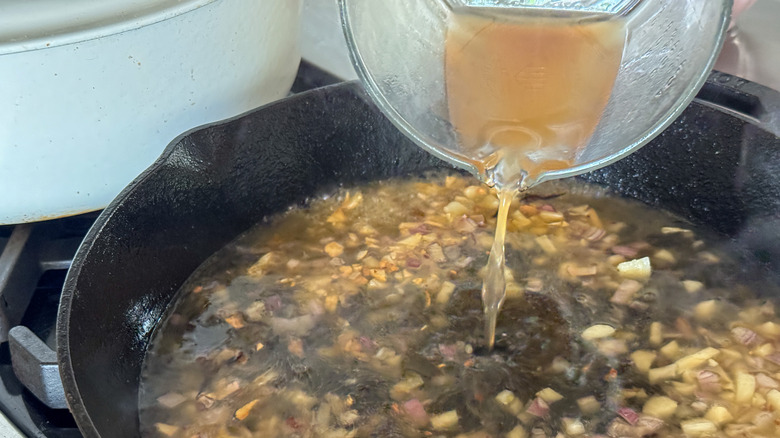
Pour in the broth, scraping up the browned bits from the bottom of the pan.
Step 9: Stir in cream, cheese, and seasonings
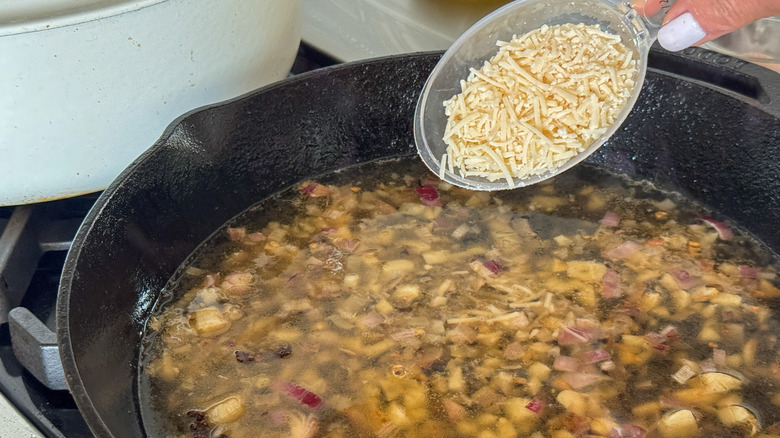
Stir in the cream, ¾ cup Parmesan, oregano, red pepper flakes, salt, and pepper.
Step 10: Cover and simmer
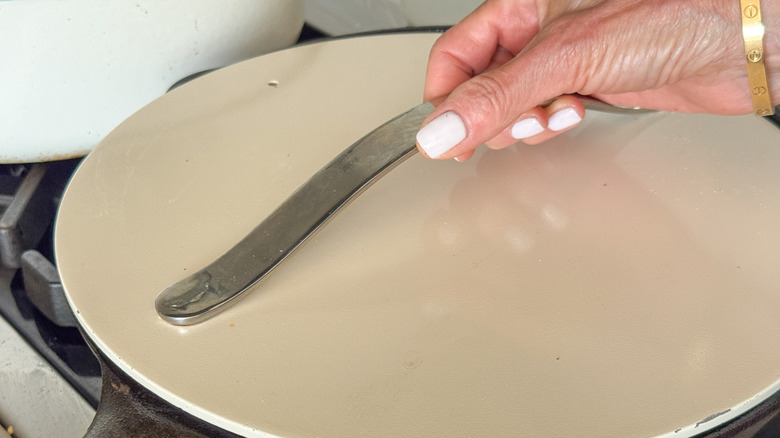
Cover and simmer the sauce for 10 minutes.
Step 11: Pour the sauce over the cabbage
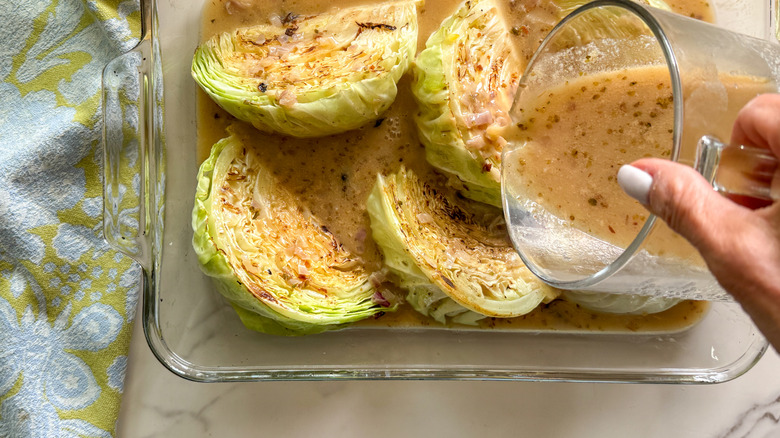
Pour the sauce evenly over the cabbage wedges.
Step 12: Bake the cabbage
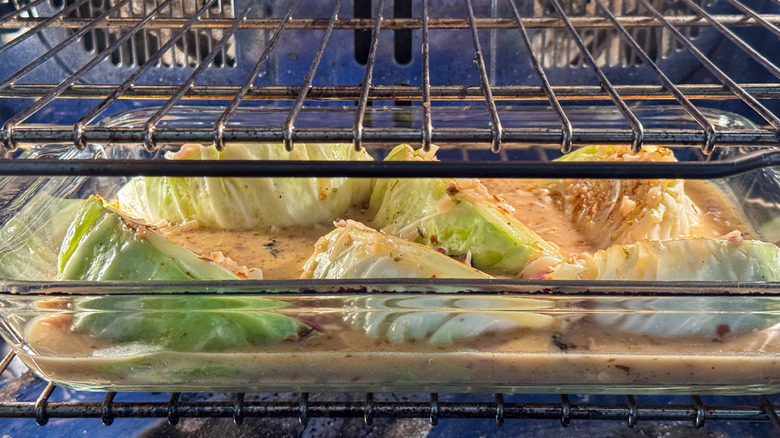
Bake for 60 minutes, until a knife slides easily into the thickest part of a wedge and the tops are golden brown with crisped edges.
Step 13: Add Parmesan
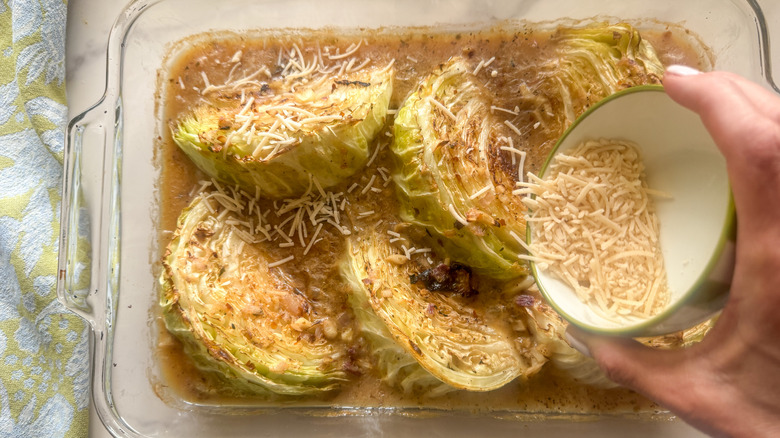
When you have 20 minutes left to bake, add the remaining Parmesan on top and continue baking.
Step 14: Add the lemon and parsley before serving
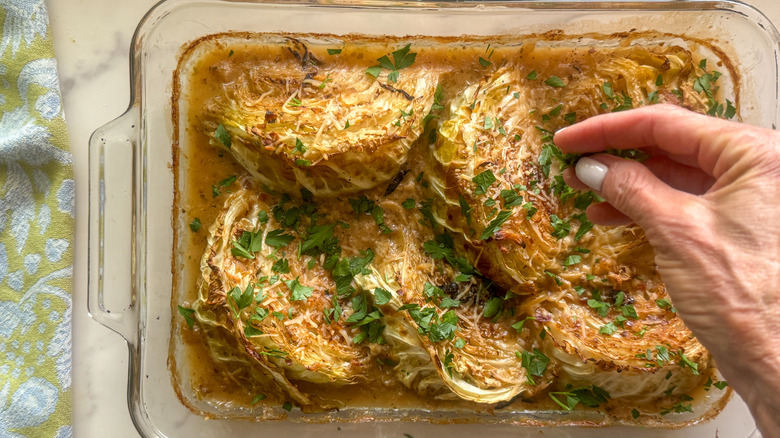
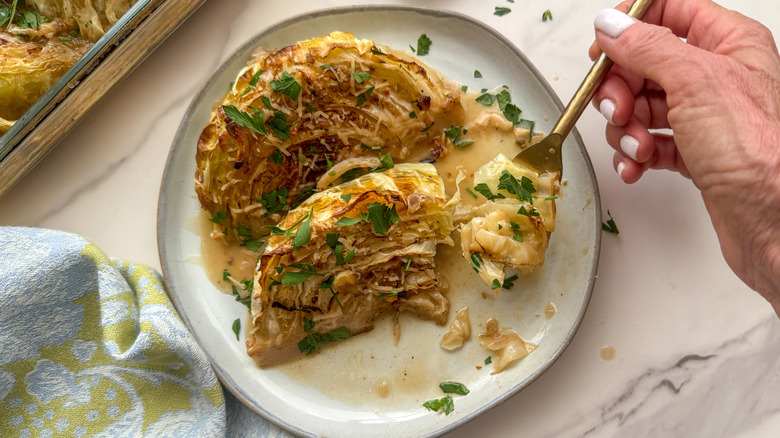
Drizzle the lemon juice evenly over the baked cabbage and add chopped parsley before serving.
What can I serve with melting cabbage?
Garlicky Melting Cabbage Recipe
Seared cabbage wedges get a long slow cook in a buttery, creamy, garlicky sauce until fall-apart tender in our easy and sophisticated melting cabbage recipe.
Ingredients
- 1 medium head green cabbage
- 2 tablespoons olive oil, divided
- 2 tablespoons unsalted butter
- 1 shallot, minced
- 8 cloves garlic, minced
- 1 cup vegetable broth
- 1 cup heavy cream
- 1 cup freshly grated Parmesan cheese, divided
- 1 teaspoon dried oregano
- ½ teaspoon red pepper flakes
- ½ teaspoon salt
- ¼ teaspoon black pepper
- Juice of 1 small lemon
- 2 tablespoons chopped, fresh parsley, for garnish
Directions
- Preheat the oven to 350 F.
- Cut the cabbage into 8 wedges, slicing through the core so each wedge stays intact.
- Heat half of the olive oil in a large skillet over medium heat.
- Working in batches, sear the cabbage wedges cut side down for 4-5 minutes per side, until the faces are lightly golden. Add the remaining oil for the second batch.
- Arrange the seared wedges snugly in a single layer in a 9 x 12-inch baking dish. Based on the size of your cabbage, you might only be able to fit 6 wedges.
- Melt the butter in the same skillet and bring the heat to medium.
- Add the shallot and garlic and cook for 2 to 3 minutes, until the garlic is fragrant and lightly golden at the edges.
- Pour in the broth, scraping up the browned bits from the bottom of the pan.
- Stir in the cream, ¾ cup Parmesan, oregano, red pepper flakes, salt, and pepper.
- Cover and simmer the sauce for 10 minutes.
- Pour the sauce evenly over the cabbage wedges.
- Bake for 60 minutes, until a knife slides easily into the thickest part of a wedge and the tops are golden brown with crisped edges.
- When you have 20 minutes left to bake, add the remaining Parmesan on top and continue baking.
- Drizzle the lemon juice evenly over the baked cabbage and add chopped parsley before serving.
Nutrition
| Calories per Serving | 271 |
| Total Fat | 21.8 g |
| Saturated Fat | 11.9 g |
| Trans Fat | 0.4 g |
| Cholesterol | 53.9 mg |
| Total Carbohydrates | 11.3 g |
| Dietary Fiber | 3.5 g |
| Total Sugars | 5.4 g |
| Sodium | 400.4 mg |
| Protein | 9.5 g |

What does melting actually mean in melting cabbage?
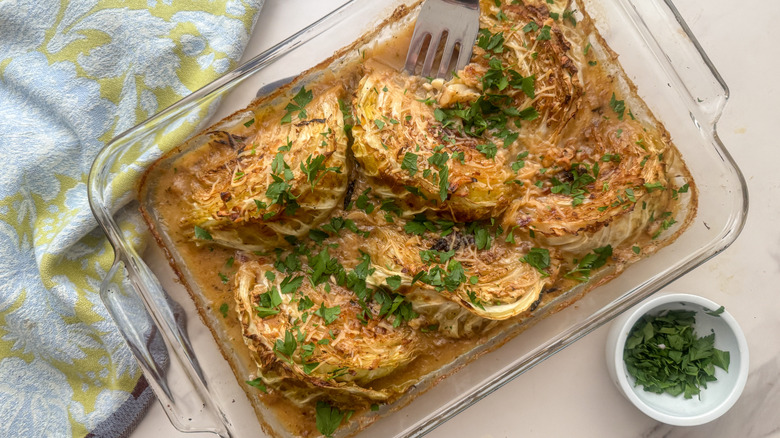
The concept of "melting vegetables" is having quite a culinary moment recently, but it's actually not a new technique. It is a technique that originated in France and is a spinoff of fondant potatoes, which translates to melting potatoes. The "melting" refers to the texture of the cabbage (or any other vegetable) after it bakes long and slow and actually melts in your mouth. To achieve this type of texture, the vegetable needs to be seared in a pan to develop a golden crust, then smothered in a sauce that slowly breaks the vegetable down into a silky and buttery bite. Once it goes through the process, it transforms from a crunchy vegetable to a tender one layered with flavor from a creamy garlicky sauce.
You can use this technique with other vegetables. Other common types of melting vegetables include potatoes, which is the vegetable that started it all. Use rounds of Yukon Gold potatoes and follow the sear then braise method. You can try it with sweet potatoes to get even more dramatic caramelization, and they will become soft enough to eat with a spoon. Leeks are another great option for the melting method, and they become a great side dish to serve with numerous entrees. Melting carrots, onions, and butternut squash all work beautifully with the melting treatment as well.
How do I keep the cabbage wedges from falling apart?
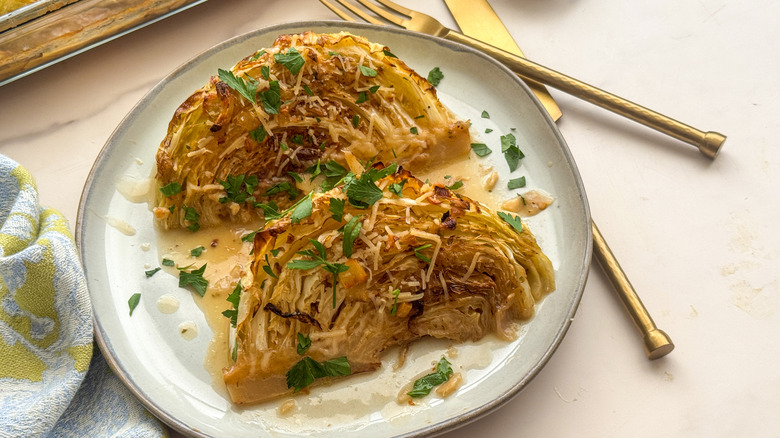
When working with cabbage in any wedge- or steak-like capacity, it is important to keep it intact so the pieces hold their structure during the long bake cycle. Luckily, cabbages have a very defined core, and when you cut the vegetable taking the core into account, you end up with pieces that stay together. Usually when you buy a cabbage, the outer leaves are thin and can be dirty or damaged. Start by peeling the outer layer and discarding it. To cut through the core, place the cabbage upside down on your board and use a very sharp knife to make a straight cut through the cabbage. Once you have the cabbage cut in half, carefully cut each half into quarters, and then again into 8 wedges. As you sear the wedges, they will begin to soften, and you'll need to flip them carefully, ideally with a silicone spatula that has some give. Use the same care when moving them in and out of the baking dish.
If you prefer to cut the cabbage into cabbage steaks, cut crosswise through the head to make 1-inch slabs. They are much more delicate to work with since only the center slices contain the core, so you'll have to flip them carefully and expect to lose some of the outer leaves. That being said, the flat sides give you more area for searing, and the finished steaks make a beautiful presentation.