

1-Wok Sesame Chicken Recipe
We may receive a commission on purchases made from links.
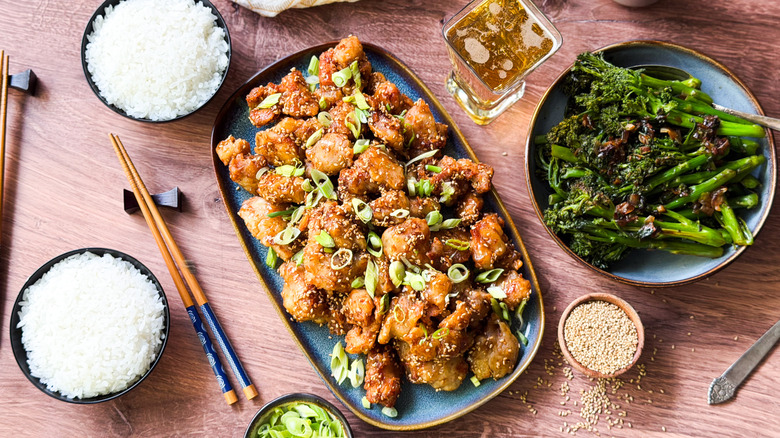
Sesame chicken is synonymous with Chinese take-out. It is one of those dishes that seems complex, and is so incredibly satisfying, that it's hard to imagine recreating the balance of crunch, sticky sweetness, and rich umami flavor at home. Intimidating as it may seem, better-than-takeout sesame chicken is only a wok away. I find that when I am making Chinese dishes at home, I often end up using multiple pots and pans, leading to a mountain of cleanup at the end of the night. My take on this iconic dish uses just one wok to both fry the chicken and create the finishing sauce. The trick is to stay organized and make the time for your mise en place, which will speed up the cooking process and lead to better temperature and texture in your finished dish.
Although this 1-wok sesame chicken recipe calls for an array of sauces, condiments, and battering agents that you may not have lurking in your pantry or fridge, most are easy to come by at your local grocer in the Asian section (and certainly accessible on Amazon). Once you experiment with this dish and understand how each element contributes to the overall flavor dynamics, you can have fun incorporating these products into other dishes.
Gather the 1-wok sesame chicken ingredients
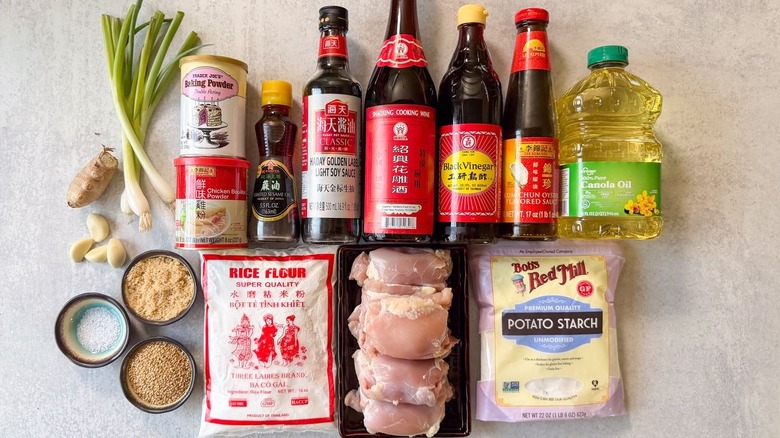
To make the chicken super flavorful and juicy, you will build a marinade made from soy sauce, Shaoxing cooking wine, sesame oil, Chinese chicken bouillon powder, fresh ginger root, and garlic. The extra-crispy batter is made with white rice flour, potato starch, baking powder, and kosher salt. This batter once fried will be your crispy shield against soggy chicken once it is doused in the sauce. To make this sauce, you will need more garlic and soy, brown sugar, oyster sauce, Chinese black vinegar, more sesame oil and chicken powder, plus roasted sesame seeds. The sauce starts out with a bit of peanut oil, which is also used for frying in your wok. Scallions and another generous sprinkle of roasted sesame seeds finish off the dish. Prepare some steamed rice or any other sides, as you wish.
Step 1: Make the chicken marinade
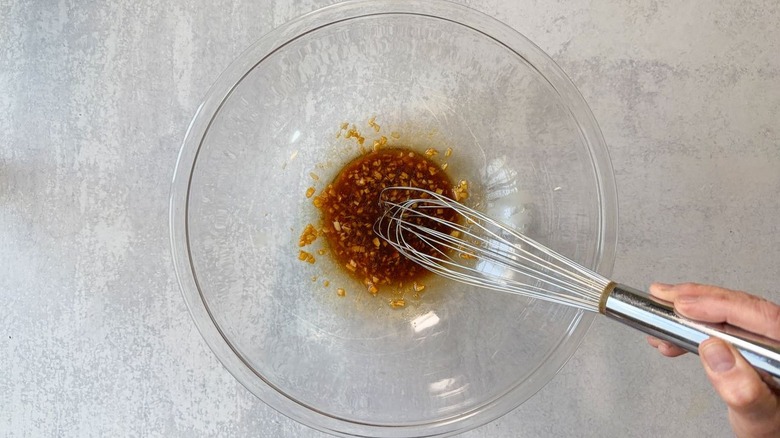
Combine the soy sauce, cooking wine, sesame oil, chicken powder, ginger, and garlic in a large bowl.
Step 2: Add the chicken to the marinade
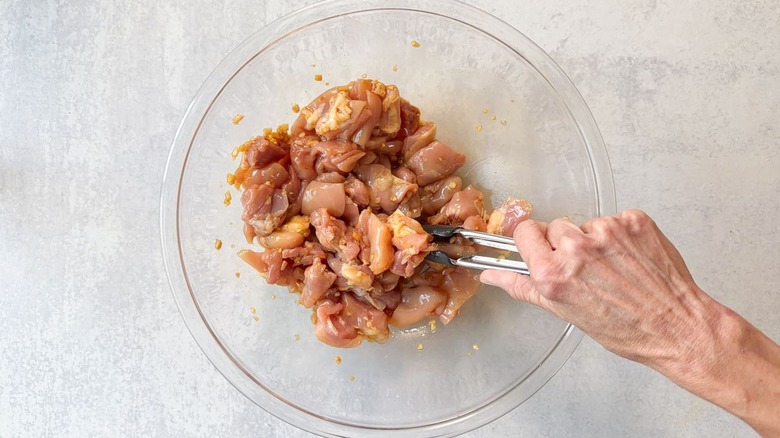
Add the chicken to the bowl and mix to evenly coat the pieces.
Step 3: Refrigerate the chicken
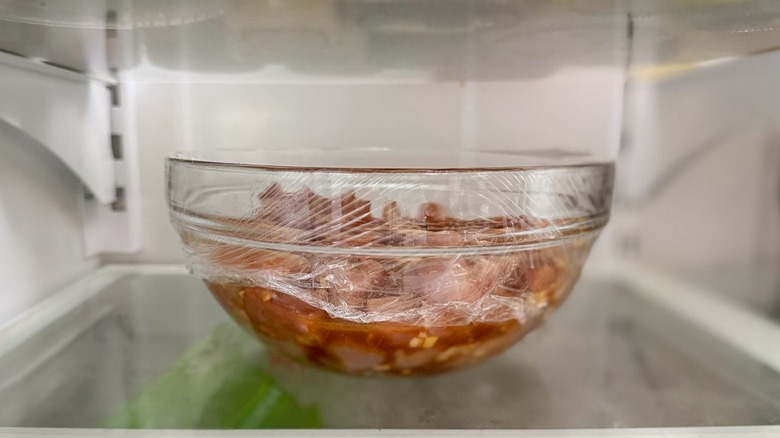
Cover and refrigerate the chicken for 30 minutes.
Step 4: Combine the dry ingredients for the batter
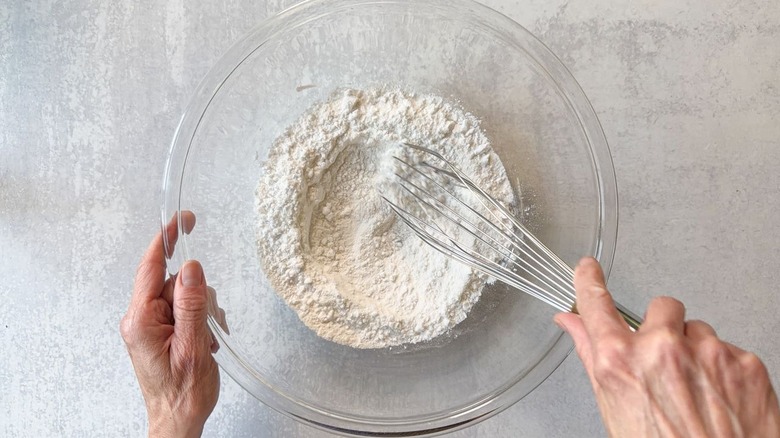
Make the batter by combining the rice flour, ½ cup potato starch, baking powder, and salt in a large bowl.
Step 5: Add water and whisk until smooth
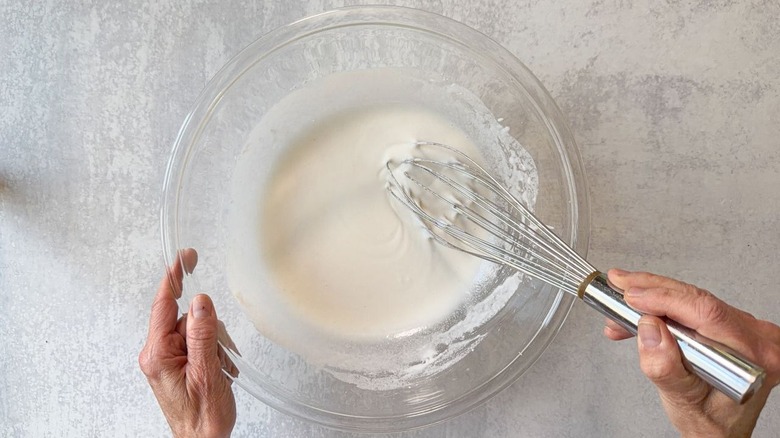
Whisk in ¾ cup of cold water until smooth.
Step 6: Toss the marinated chicken with potato starch
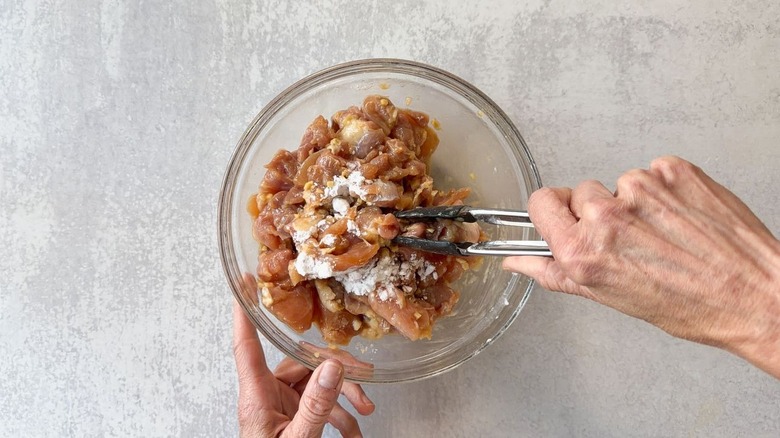
Remove the chicken from the refrigerator and toss it with the remaining 2 tablespoons potato starch to coat.
Step 7: Fit a baking sheet with a rack
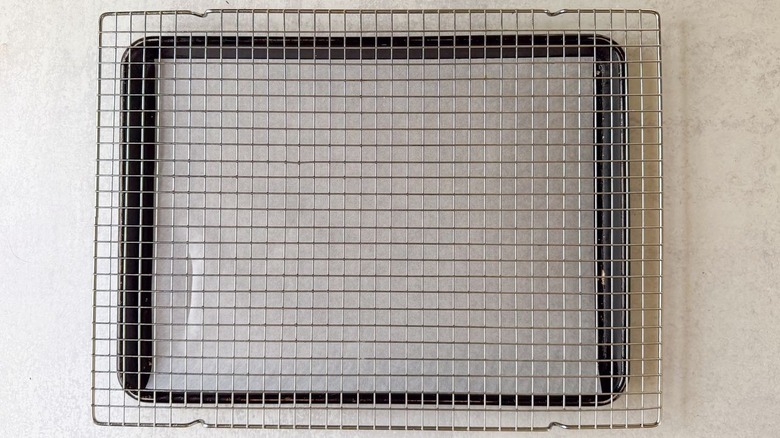
Line a baking sheet with parchment and fit it with a rack.
Step 8: Heat the peanut oil in a wok
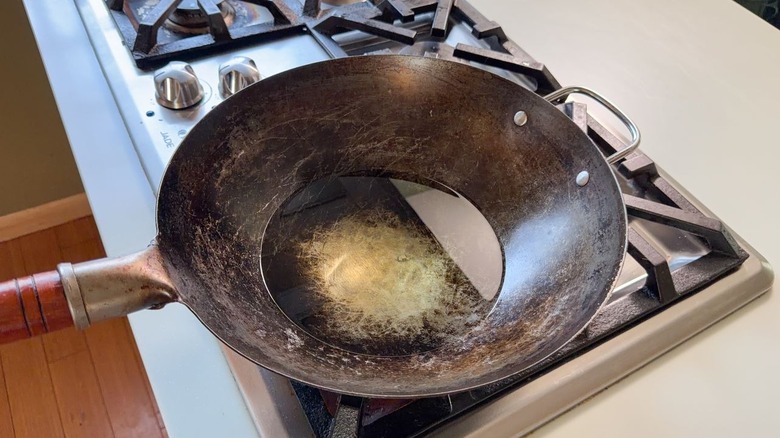
Heat 2 cups of peanut oil in a large wok or Dutch oven over medium-high heat.
Step 9: Coat the chicken with the batter
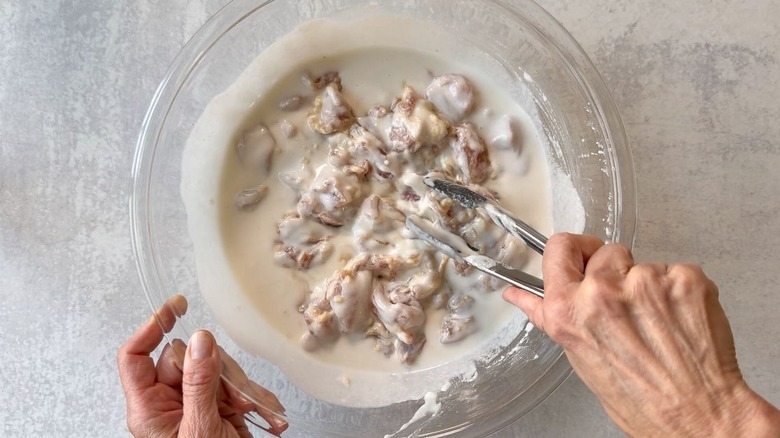
Add the chicken to the batter and evenly coat.
Step 10: Fry the chicken in batches
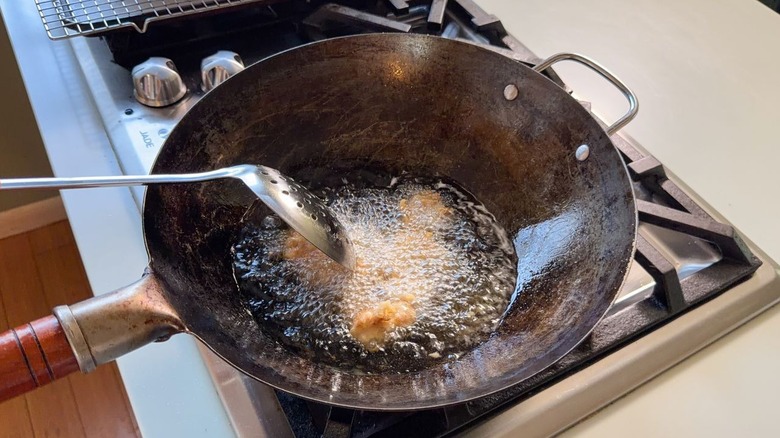
Once the oil reaches 350 F, fry the chicken in batches until crispy and pale golden brown (3-4 minutes per batch).
Step 11: Drain the fried chicken pieces on a paper towel
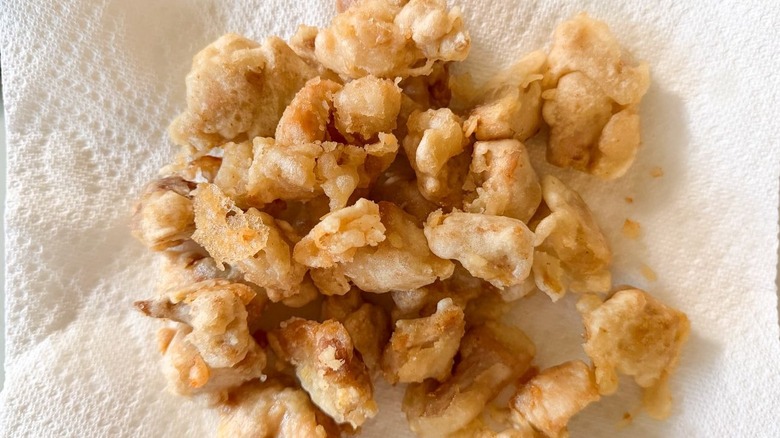
Remove the chicken from the wok and drain it on a paper towel-lined platter.
Step 12: Increase the oil temperature to 375 F
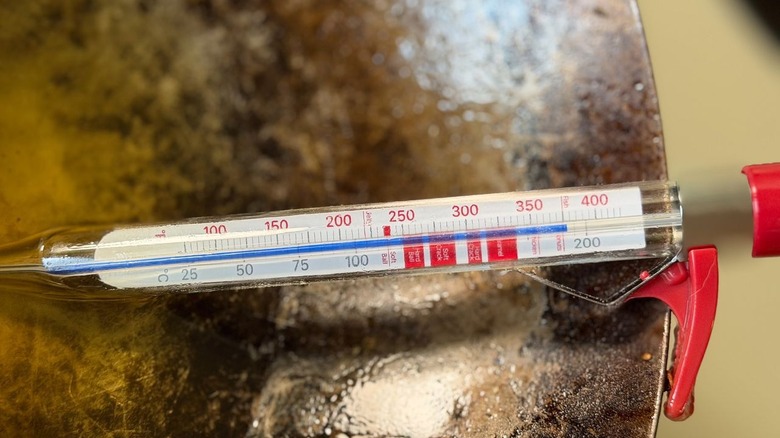
Once all of the chicken has been fried, increase the oil temperature to 375 F.
Step 13: Flash fry the chicken pieces
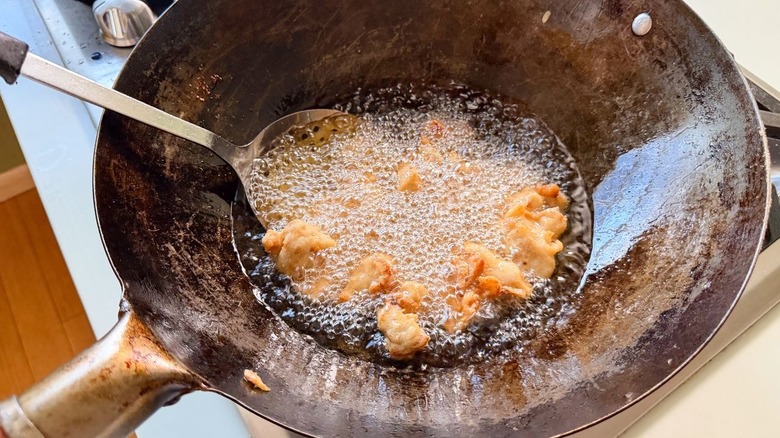
Flash fry the chicken pieces once more for about a minute until deep golden brown, then drain them on the prepared rack.
Step 14: Remove the peanut oil from the pan
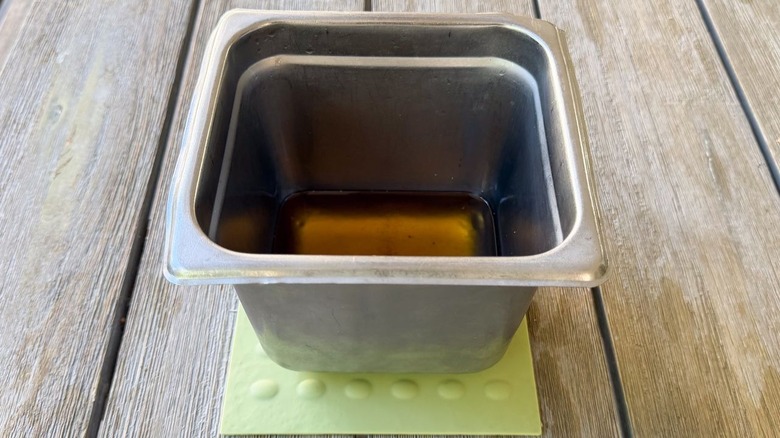
Carefully pour the hot peanut oil into a heatproof container. Let cool completely before discarding.
Step 15: Add fresh peanut oil to the wok
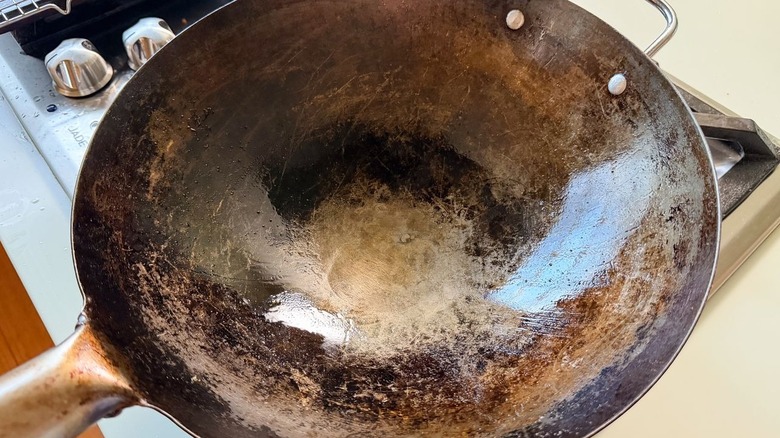
Add 2 tablespoons of peanut oil to the wok over medium heat.
Step 16: Add the garlic
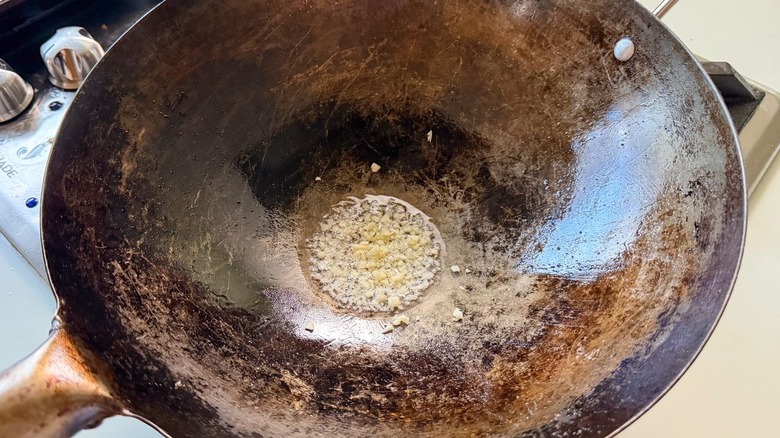
Add the garlic and saute until fragrant.
Step 17: Make the sauce
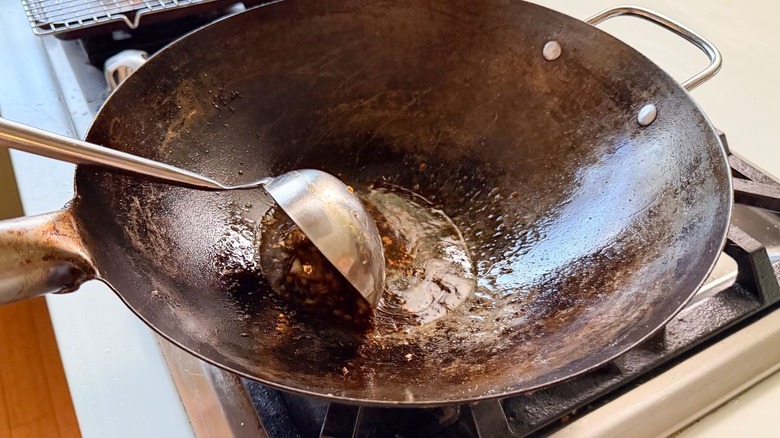
Stir in the soy sauce, brown sugar, oyster sauce, black vinegar, sesame oil, and chicken powder, and bring to a simmer to thicken slightly.
Step 18: Add the fried chicken and sesame seeds
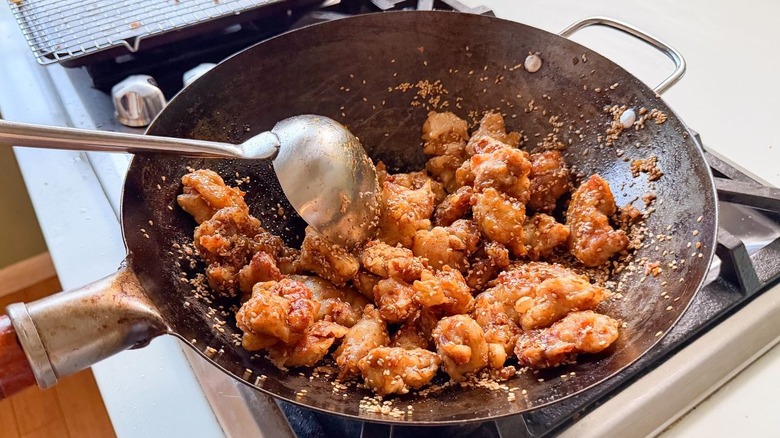
Add the fried chicken pieces and sesame seeds to the wok and toss to coat.
Step 19: Garnish and serve the 1-wok sesame chicken
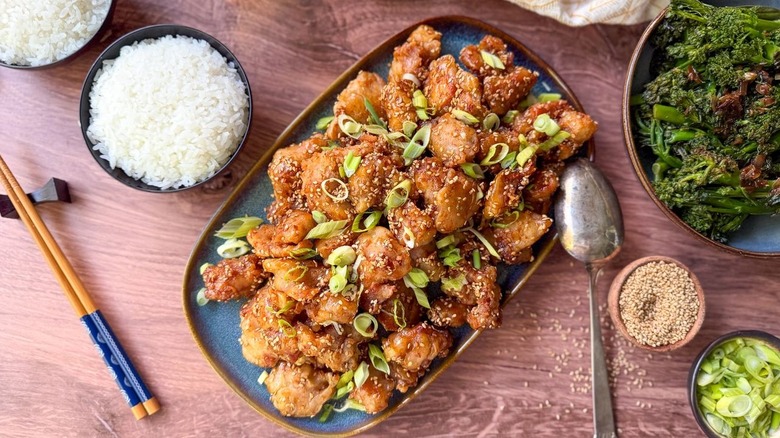
Transfer the sesame chicken to a serving platter and garnish with the scallions and sesame seeds. Serve immediately with the steamed rice, if desired.
What can I serve with sesame chicken?
1-Wok Sesame Chicken Recipe
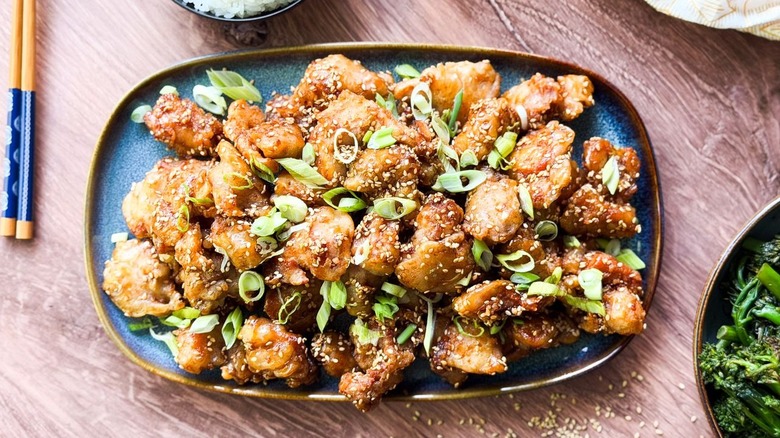
With our easy better-than-takeout sesame chicken recipe, the crispy, sticky, sweet, umami flavor of ever-popular sesame chicken is only a wok away.
Ingredients
- For the marinade
- 1 tablespoon soy sauce
- 1 tablespoon Shaoxing cooking wine
- 1 tablespoon sesame oil
- 2 teaspoons Chinese chicken bouillon powder
- 1 teaspoon peeled and minced fresh ginger root
- 2 large cloves garlic, minced
- 1 ½ pounds boneless, skinless chicken thighs, cut into bite-sized pieces
- For the batter and frying
- 1 cup white rice flour
- ½ cup plus 2 tablespoons potato starch, divided
- ½ teaspoon baking powder
- ½ teaspoon kosher salt
- 2 cups peanut oil, for frying
- For the sauce
- 2 tablespoons peanut oil
- 2 large cloves garlic, minced
- 3 tablespoons soy sauce
- 2 tablespoons brown sugar
- 1 tablespoon oyster sauce
- 1 tablespoon Chinese black vinegar
- 1 tablespoon sesame oil
- ½ teaspoon Chinese chicken bouillon powder
- 3 tablespoons toasted sesame seeds
- For serving
- ¼ cup thinly sliced scallions
- 1 tablespoon toasted sesame seeds
Optional Ingredients
- Steamed white rice
Directions
- Combine the soy sauce, cooking wine, sesame oil, chicken powder, ginger, and garlic in a large bowl.
- Add the chicken to the bowl and mix to evenly coat the pieces.
- Cover and refrigerate the chicken for 30 minutes.
- Make the batter by combining the rice flour, ½ cup potato starch, baking powder, and salt in a large bowl.
- Whisk in ¾ cup of cold water until smooth.
- Remove the chicken from the refrigerator and toss it with the remaining 2 tablespoons potato starch to coat.
- Line a baking sheet with parchment and fit it with a rack.
- Heat 2 cups of peanut oil in a large wok or Dutch oven over medium-high heat.
- Add the chicken to the batter and evenly coat.
- Once the oil reaches 350 F, fry the chicken in batches until crispy and pale golden brown (3-4 minutes per batch).
- Remove the chicken from the wok and drain it on a paper towel-lined platter.
- Once all of the chicken has been fried, increase the oil temperature to 375 F.
- Flash fry the chicken pieces once more for about a minute until deep golden brown, then drain them on the prepared rack.
- Carefully pour the hot peanut oil into a heatproof container. Let cool completely before discarding.
- Add 2 tablespoons of peanut oil to the wok over medium heat.
- Add the garlic and saute until fragrant.
- Stir in the soy sauce, brown sugar, oyster sauce, black vinegar, sesame oil, and chicken powder, and bring to a simmer to thicken slightly.
- Add the fried chicken pieces and sesame seeds to the wok and toss to coat.
- Transfer the sesame chicken to a serving platter and garnish with the scallions and sesame seeds. Serve immediately with the steamed rice, if desired.
Nutrition
| Calories per Serving | 1,019 |
| Total Fat | 68.6 g |
| Saturated Fat | 12.0 g |
| Trans Fat | 0.0 g |
| Cholesterol | 160.1 mg |
| Total Carbohydrates | 60.6 g |
| Dietary Fiber | 2.6 g |
| Total Sugars | 4.8 g |
| Sodium | 1,537.0 mg |
| Protein | 39.5 g |

What are the origins of sesame chicken?
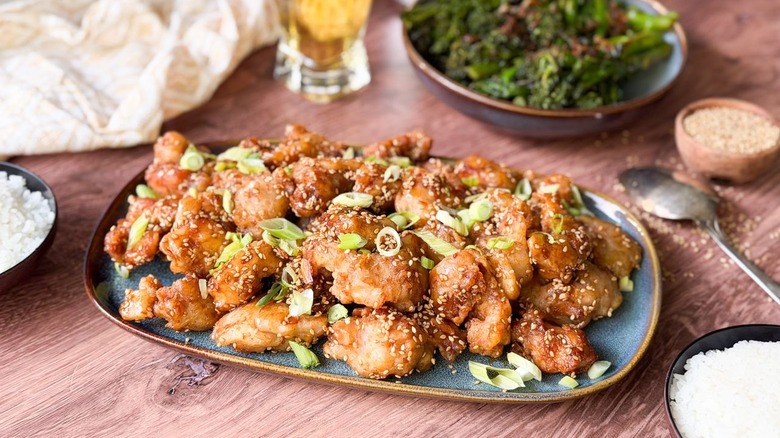
Although some people think they are eating traditional Chinese food when indulging in a plate of hot sesame chicken, it turns out that you won't find this exact dish in China. There is a similar Sichuan dish called La Zi Ji, which features fried chicken breasts cooked in sesame oil along with spicy chiles and plenty of peppercorns. There is also a theory that sesame chicken, as we know it, has its origins in Cantonese cuisine. So how exactly did this Americanized dish come to be?
As with many Americanized dishes that have become iconic in the United States, sesame chicken was likely introduced by immigrants who were adjusting to new culinary resources, as well as opening Chinese restaurants with dishes that appealed to a broad new society. What we know for sure is that sesame chicken can now be found in restaurants around the world, appealing to those who have a fondness for the familiar rich, sweet taste as well as those who appreciate a complex dish that balances the sweetness with savory umami depth.
Are there any substitutions I can make in this sesame chicken recipe?
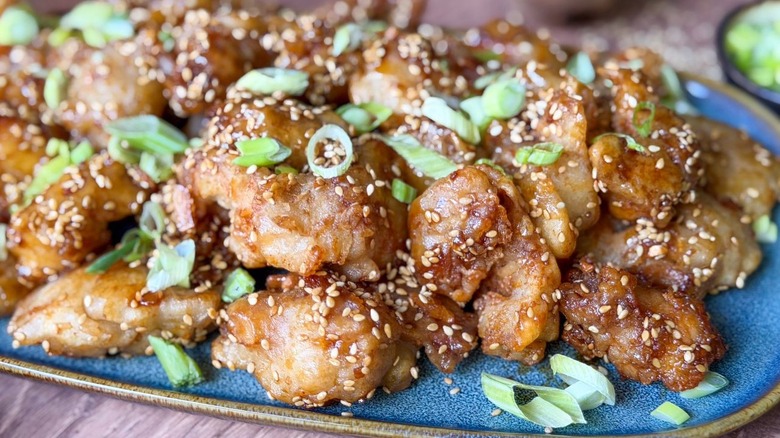
The first obvious substitution that might come to mind is with the chicken thighs. Perhaps you don't like dark meat or you just really want to use some chicken breasts you have in the refrigerator. Using chicken breast meat is completely acceptable, with a few caveats. First, the breast meat will naturally be drier because it has a lower fat content than the thighs. This means keeping a careful eye on frying time, to make sure the chicken gets cooked through while avoiding overdoing the cook and drying out the interior. Keep your chicken pieces as uniform as possible so that overall cooking will be consistent. For the batter, you can swap in all-purpose flour for the rice flour, but again, be prepared for a different result. The batter will be a bit more dense and less shatteringly crispy. When adding liquid to the batter, you can adjust to the different flour by aiming for a thin paste-like consistency.
With the sauce, you can experiment with different sweeteners like honey or agave nectar. Sweetness coming from the brown sugar has a caramel twinge, but honey or agave will add their own unique profile. Honey will also provide a nice sticky quality to the sauce. Chinese black vinegar and oyster sauce have distinctive flavors that make this recipe unique, but I realize these are not always common household ingredients. Try using equal parts balsamic vinegar and unseasoned rice vinegar in place of the black vinegar, and experiment with using hoisin sauce instead of oyster.