

Japanese Restaurant-Style Carrot Ginger Salad Recipe
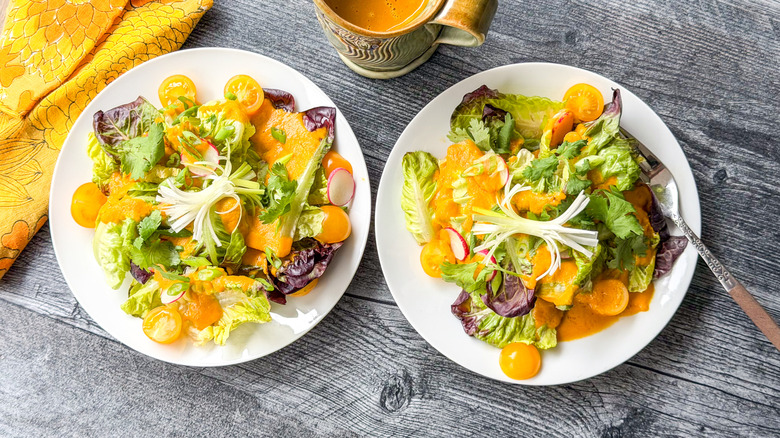
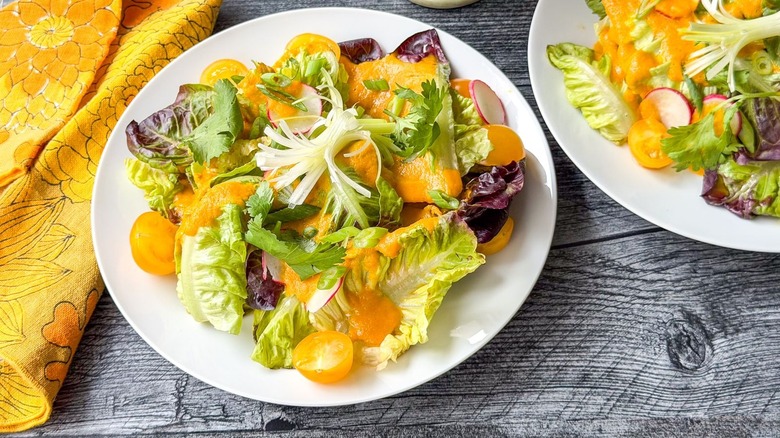
If you have dined in a Japanese hibachi or steakhouse-style restaurant any time in the past several decades, chances are you have been served a crisp wedge of iceberg lettuce doused in a sunny orange dressing. While this classic Japanese American starter does not actually have ties to Japan, the fresh and citrusy flavors prepare your palate for umami-rich foods to come. Our Japanese restaurant-style carrot ginger salad recipe — courtesy of recipe developer Julie Kinnaird – pays homage to the sweet, pulpy dressing served at Benihana and the like. This dressing is quite simple to prepare using a blender or food processor to combine carrots, sweet onion, plenty of ginger root, and a tangy dressing of rice vinegar, white miso paste, soy, maple syrup, and lime juice. The simple salad of crisp little gem lettuce, zesty radishes, and juicy cherry tomatoes is topped with a festive scallion brush for flair.
The dressing can be made in advance and keeps well in the refrigerator for up to a week. While iceberg is traditional for this salad, Kinnaird likes the delicacy of the baby gem leaves, which also act as useful scoops for catching the bits of dressing. No matter what kind of lettuce greens you prefer, having them ice cold and crisp makes this salad even more delightful.
Gather the Japanese restaurant-style carrot ginger salad ingredients
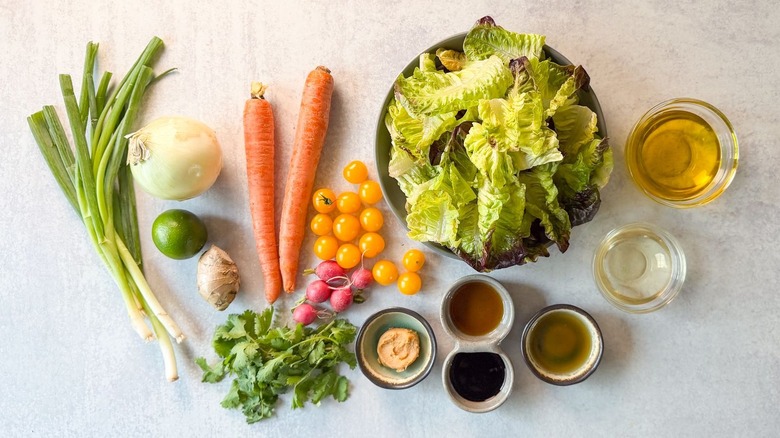
For this Japanese restaurant-style carrot ginger salad you will need freshly peeled carrots, sweet onion, and a large knob of fresh ginger root for your dressing base. To this you will add seasoned rice vinegar, white miso paste, maple syrup, soy sauce, and fresh lime juice. While running the blender, you will add avocado oil and a touch of sesame oil. For the salad, select little gem lettuce (or your favorite greens), cherry tomatoes, radishes, and fresh cilantro. Kinnaird's extra touch is to make scallion brushes with the whites of the scallion, then slicing the greens for garnish.
Step 1: Chill the plates
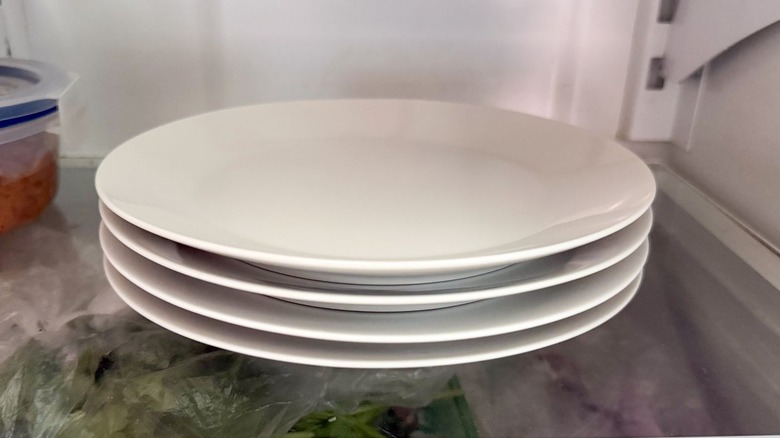
Chill 4 salad plates.
Step 2: Start the dressing
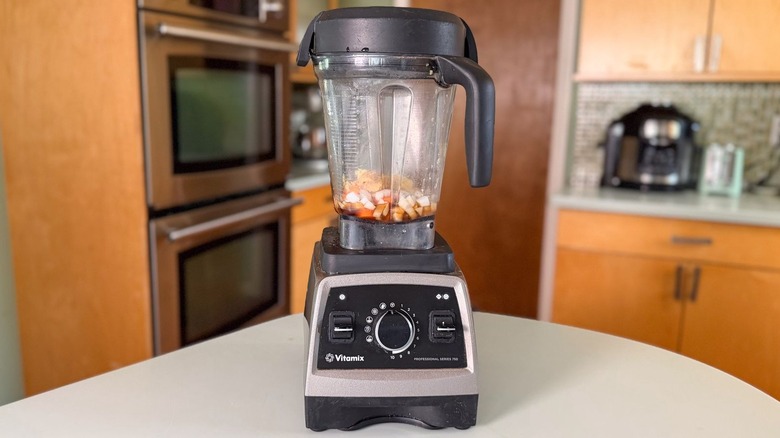
Place the carrots, onion, ginger, rice vinegar, miso, maple syrup, soy sauce, and lime juice in a high-speed blender.
Step 3: Process the dressing
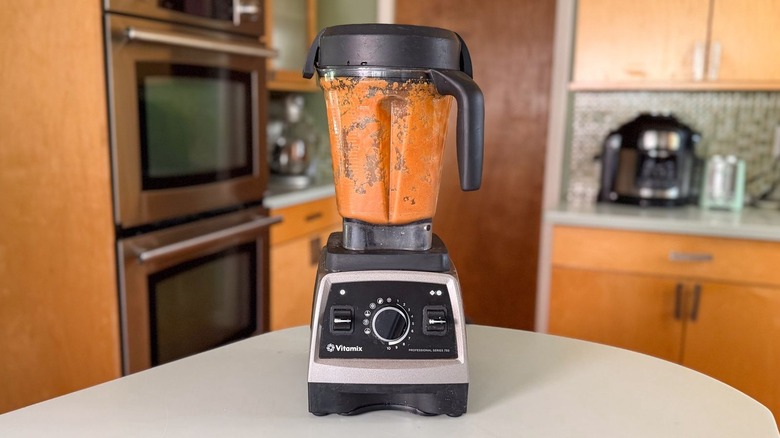
Process until the vegetables are finely chopped.
Step 4: Drizzle in the oils
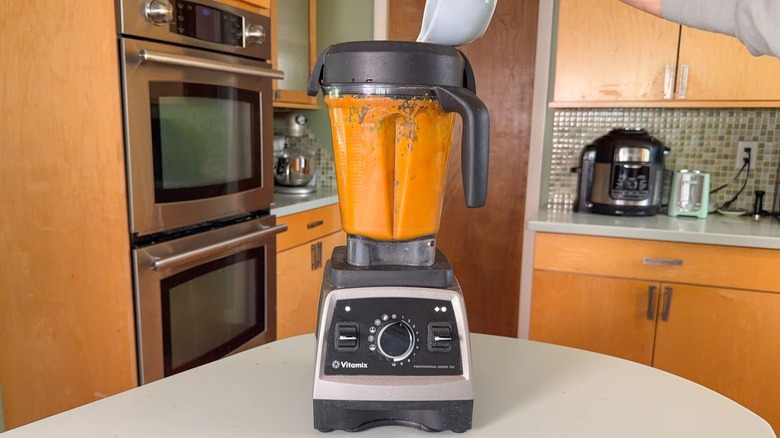
With the blender running on a low speed, drizzle in the avocado and sesame oils until the dressing is thickened and smooth.
Step 5: Chill the dressing
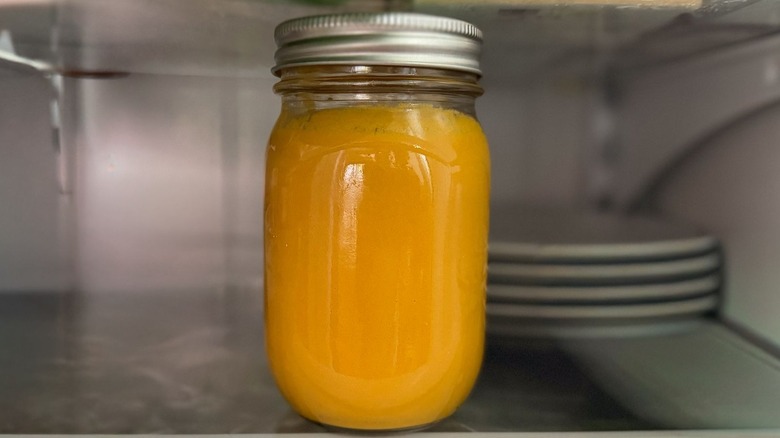
Transfer the dressing to a jar or pitcher and chill until ready to use.
Step 6: Start making the scallion brushes
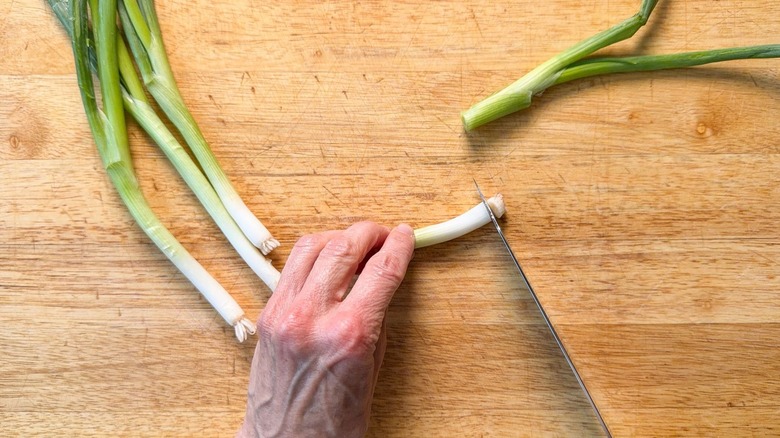
To make the scallion brushes, trim each scallion and cut a 2-inch piece starting from the stem end.
Step 7: Slice the scallion greens
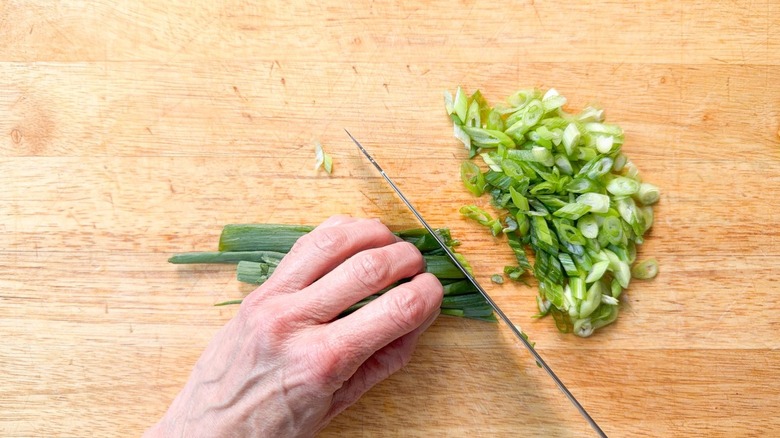
Thinly slice the green scallion parts on a bias and reserve.
Step 8: Cut slits into the scallion pieces
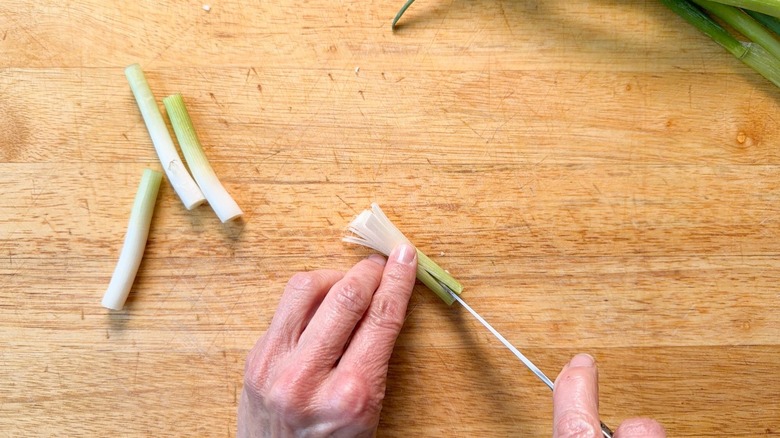
Using the tip of a sharp knife, cut lengthwise slits through both ends of the scallion pieces, leaving a ¼-inch segment intact in the center.
Step 9: Place the scallion brushes in ice water
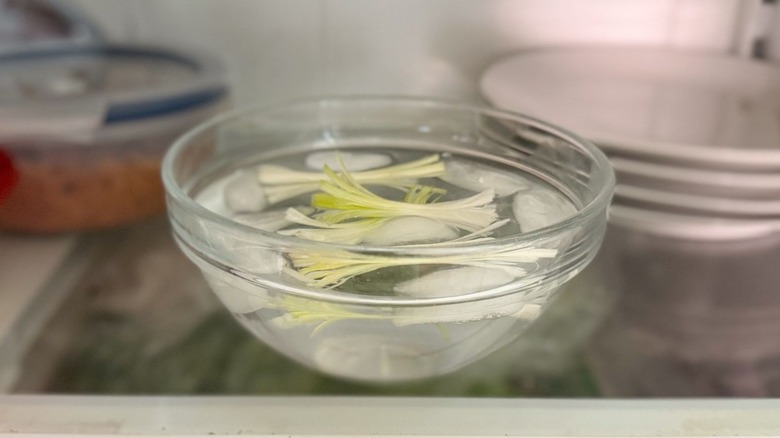
Place the scallion brushes in a bowl of ice water in a refrigerator until the ends curl (about 20 minutes).
Step 10: Dry the scallion brushes
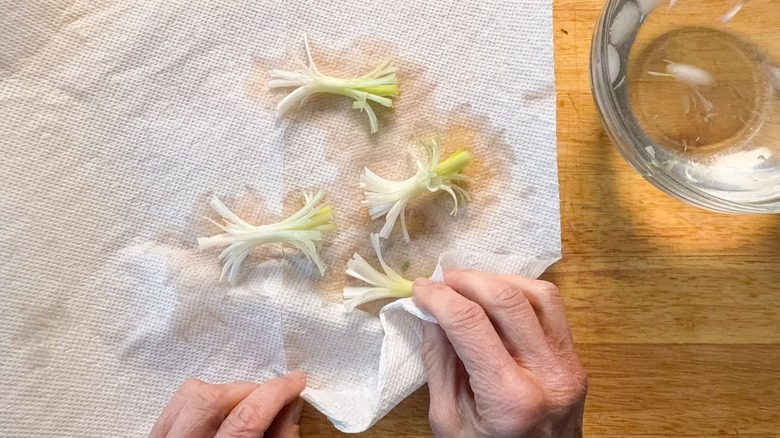
Remove the brushes from the water and blot dry.
Step 11: Place the lettuce on the chilled plates
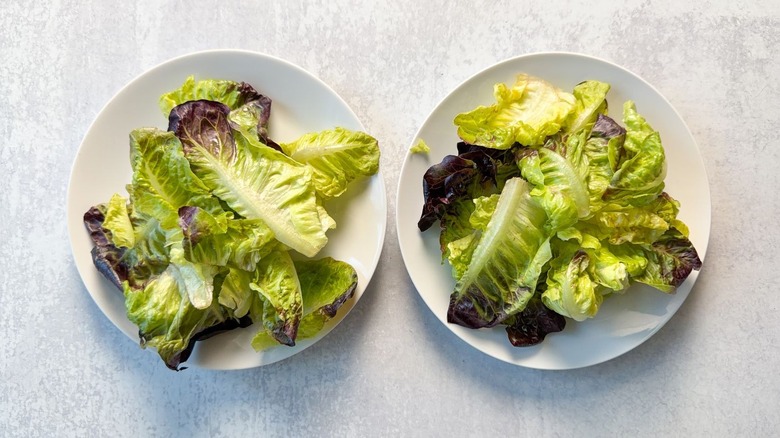
Remove the plates from the refrigerator and divide the lettuce between the plates.
Step 12: Add the tomatoes and radishes
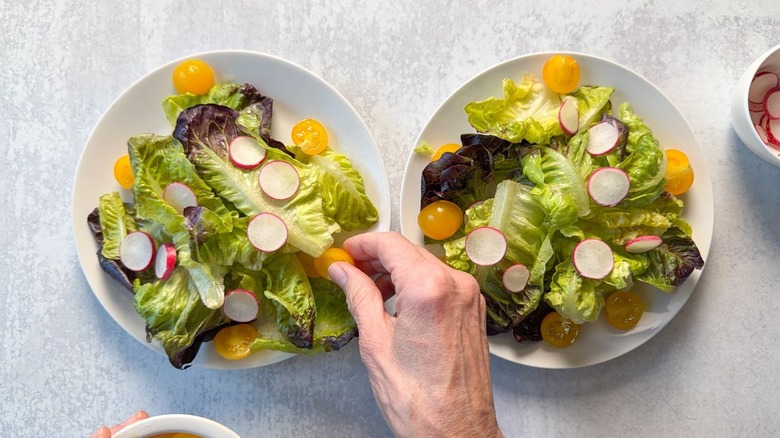
Add the tomatoes and radish slices.
Step 13: Add the dressing to the salads
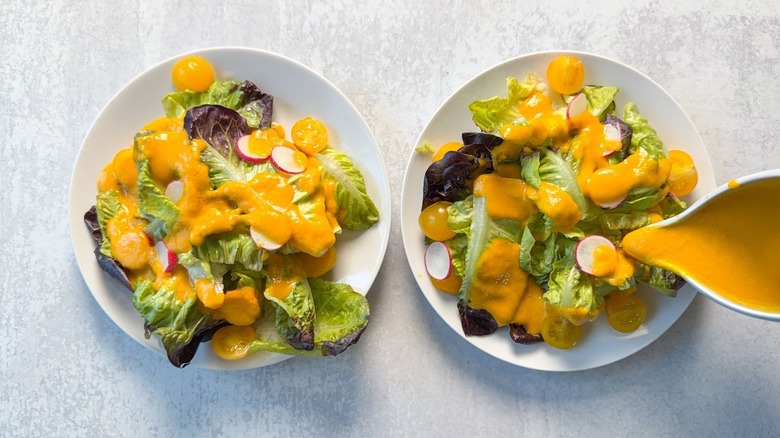
Drizzle some of the dressing over the salads.
Step 14: Add the garnishes
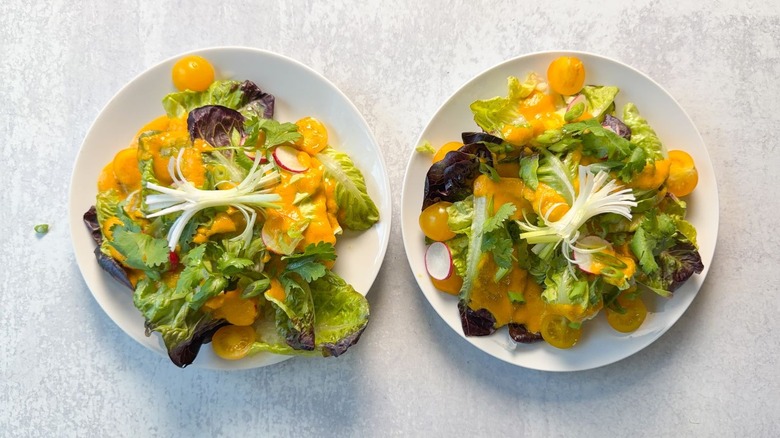
Garnish with the cilantro sprigs, sliced scallion greens, and a scallion brush.
Step 15: Serve the salads

Serve the salads immediately.
What pairs well with carrot ginger salad?
Japanese Restaurant-Style Carrot Ginger Salad Recipe
Carrots, ginger, and miso combine in this vibrant and citrusy Japanese restaurant-style dressing, which pairs perfectly with zesty radishes and crisp greens.
Ingredients
- 2 large carrots (6 ounces), peeled and cut into 1-inch pieces
- ¼ cup chopped sweet onion
- 2 tablespoons freshly grated ginger
- ¼ cup seasoned rice vinegar
- 1 tablespoon white miso paste
- 1 tablespoon maple syrup
- 1 tablespoon soy sauce
- 1 tablespoon fresh lime juice
- ½ cup avocado oil
- 1 tablespoon sesame oil
- 4 scallions
- 6 cups little gem lettuce, washed and chilled
- ½ cup cherry tomatoes, halved
- ¼ cup thinly sliced radish
- ¼ cup cilantro sprigs
Directions
- Chill 4 salad plates.
- Place the carrots, onion, ginger, rice vinegar, miso, maple syrup, soy sauce, and lime juice in a high-speed blender.
- Process until the vegetables are finely chopped.
- With the blender running on a low speed, drizzle in the avocado and sesame oils until the dressing is thickened and smooth.
- Transfer the dressing to a jar or pitcher and chill until ready to use.
- To make the scallion brushes, trim each scallion and cut a 2-inch piece starting from the stem end.
- Thinly slice the green scallion parts on a bias and reserve.
- Using the tip of a sharp knife, cut lengthwise slits through both ends of the scallion pieces, leaving a ¼-inch segment intact in the center.
- Place the scallion brushes in a bowl of ice water in a refrigerator until the ends curl (about 20 minutes).
- Remove the brushes from the water and blot dry.
- Remove the plates from the refrigerator and divide the lettuce between the plates.
- Add the tomatoes and radish slices.
- Drizzle some of the dressing over the salads.
- Garnish with the cilantro sprigs, sliced scallion greens, and a scallion brush.
- Serve the salads immediately.
Nutrition
| Calories per Serving | 338 |
| Total Fat | 31.3 g |
| Saturated Fat | 3.7 g |
| Trans Fat | 0.0 g |
| Cholesterol | 0.0 mg |
| Total Carbohydrates | 14.0 g |
| Dietary Fiber | 3.1 g |
| Total Sugars | 7.6 g |
| Sodium | 419.8 mg |
| Protein | 2.8 g |

How did this salad come to be a popular Japanese restaurant staple in the U.S.?
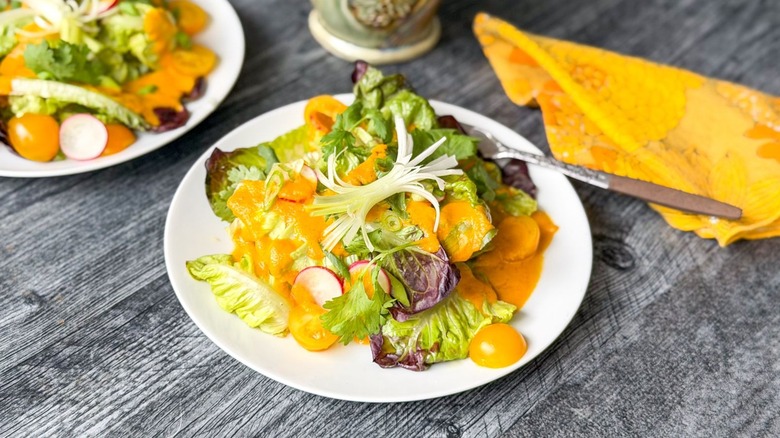
The origins of this salad and dressing seem to be rooted to the introduction of Teppanyaki-style cooking in the U.S., especially with the Benihana restaurant chain. The flashy, performance style of hibachi cooking in this genre of restaurant has stayed popular since its introduction in the 1960s, and the featured dishes have stood the test of time. What Kinnaird finds interesting about this dressing is the adaptation of traditional Japanese flavors, like ginger, miso, and rice vinegar, into a new presentation that would be appealing to an American market. If you think about dressings popular at that time — French, Russian, Thousand Island — they all had a sweetness-forward profile. Iceberg lettuce was also the go-to green. The standard Benihana salad offering would have been a basic wedge, maybe a few tomato and radish slices, and a generous ladle of dressing.
This salad works because it is an excellent gateway for the palate leading up to the main event of flash fried steak, seafood, and vegetables flying off the cleaver. When served in less flashy circumstances, like a sushi lunch special, the dressing is a perfect compliment to salty miso soup and umami-rich rice rolls.
What are some other ways to use this carrot dressing?
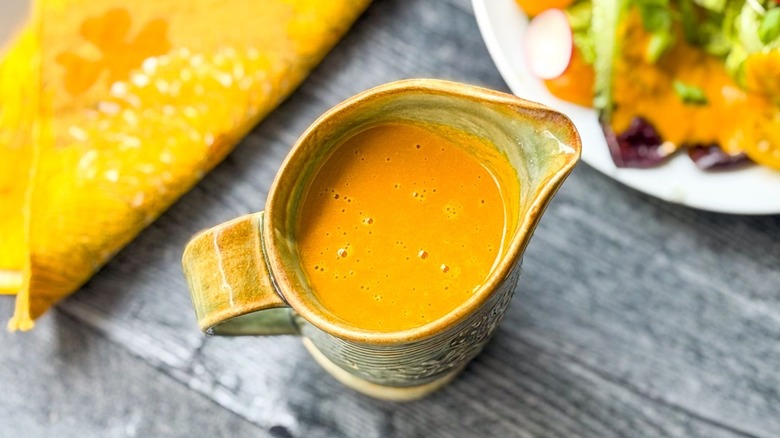
This carrot ginger dressing is a showstopper in appearance and flavor, not only on greens but on plenty of other ingredients and preparations. The contrasting sweet and savory flavors and pop of gingery spice can be paired with everything from roasted root vegetables to hearty grain dishes. Try marinating chicken breasts or thighs in this dressing before grilling them, for a flavorful twist that also adds a juicy quality to the meat. Use it as a dip for chilled shrimp or crab, or spread it in a sandwich with egg salad.
Kinnaird says that her favorite way to use this dressing is over chilled soba noodles in hot summer weather. She tosses in some shelled edamame, shredded purple cabbage, fresh mint leaves, and spring onions. After drizzling on the dazzling dressing, she adds a touch of micro bok choy. All together, it's a perfect combo of earthy, spicy, tangy, and sweet flavors.