

Swedish-Inspired Stuffed Cabbage Rolls Recipe
We may receive a commission on purchases made from links.
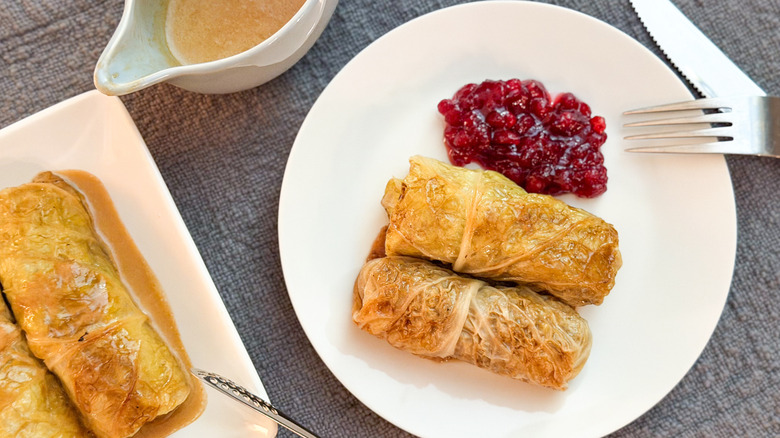
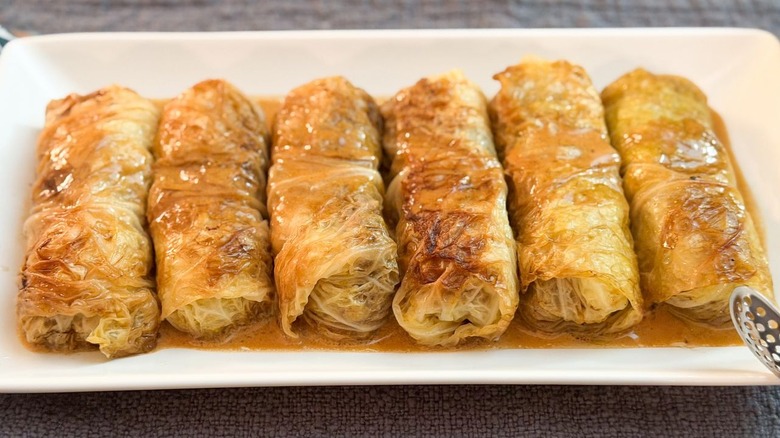
The humble cabbage role can be found in many different cuisines, especially those of Eastern European nations. While the technique of wrapping assorted ingredients in a leaf as a vessel for cooking is common, many different cultures have found unique ways to embrace the cabbage roll as their own, and each interpretation gives a window into their culinary history. Enter Swedish-inspired stuffed cabbage rolls. Recipe developer Julie Kinnaird shares with us her updated version of an old family recipe, frequently prepared by her Swedish grandmother. Kinnaird fills lacy blanched Savoy cabbage leaves with a mixture of both pork and beef, saffron-infused arborio rice, aromatic vegetables, and a trio of typical Swedish spices. She pan-fries the rolls in butter and a bit of sugar to give them a caramelized coating, then bakes and finishes them with a beefy cream pan sauce. A dollop of lingonberry sauce at the end gives this dish sophistication and layers of complex flavors that make it worthy to enjoy at an elegant dinner party — or any time that you need a comforting yet intensely flavorful dish.
Making these cabbage rolls is a bit of a process, but once you have it down, they can become a regular part of your meal prep rotation. Kinnaird loves the balance of ingredients, but suggests that you can switch up the ground meat with turkey or chicken, or even incorporate some sausage to add additional spice.
Gather the Swedish-inspired stuffed cabbage rolls ingredients
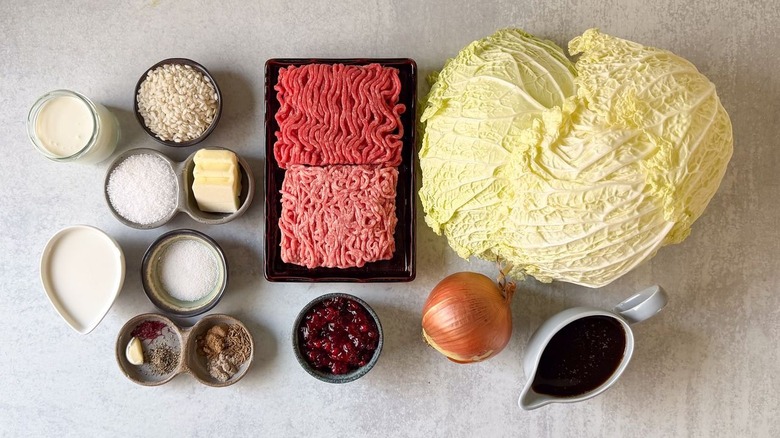
For your cabbage roll filling, you will need both ground beef and ground pork. Select the leanest varieties you can find to avoid excess fat in your filling. You will combine the meat with chopped yellow onion and a minced garlic clove, cooked in unsalted butter until softened. You will also use this butter for browning your cabbage rolls and in a pan sauce to finish them with.
For your filling, cook a small batch of short-grain Arborio rice. This type of rice has a creamy texture when cooked, which will make your filling especially tender. The rice is also cooked with saffron threads. Saffron is expensive, but worth it for the intense golden hue and floral spice that it imparts to food. Other seasonings you need for the filling include ground coriander and cardamom, caraway seeds, and black pepper. A bit of whole milk is added to moisten the mixture.
To wrap up this filling, Kinnaird uses leaves of Savoy cabbage, as they add textural and visual appeal to the dish. The cabbage leaves are blanched with kosher salt. The cabbage rolls are browned in unsalted butter and sugar. After browning your assembled cabbage rolls, you will deglaze the pan with beef stock and use the resulting reduction in the baking pan. You will also use additional stock to make a pan sauce with heavy cream and more unsalted butter. The dish is finished prepared lingonberry sauce.
Step 1: Heat water, salt, and saffron for the rice
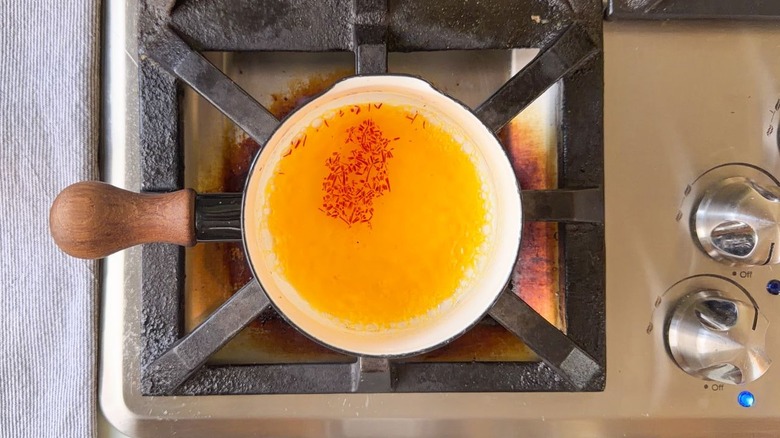
Bring ¾ cup water, ¼ teaspoon salt, and the saffron to a boil in a small pot.
Step 2: Stir in the rice
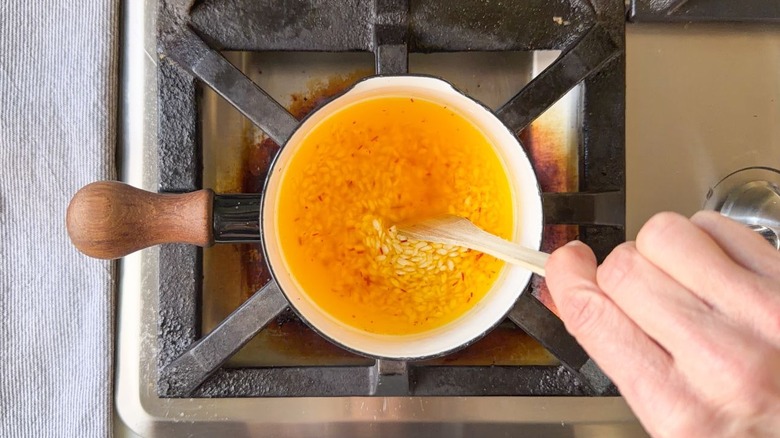
Bring ¾ cup water, ¼ teaspoon salt, and the saffron to a boil in a small pot.
Step 3: Cover and cook the rice
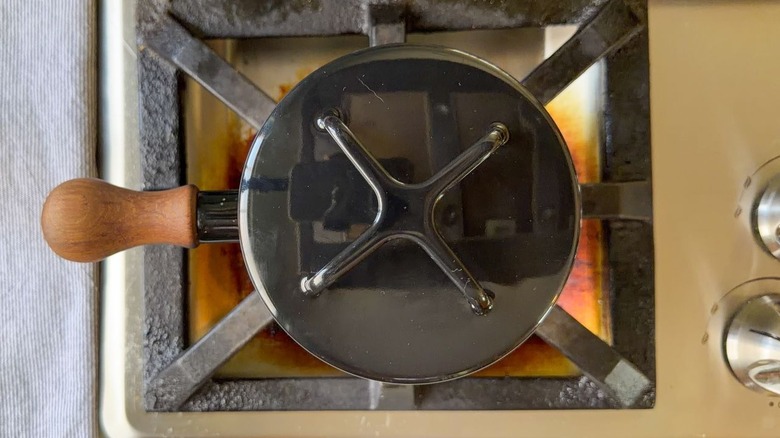
Cover and cook for 20 minutes until the rice is tender and the liquid is absorbed.
Step 4: Cool the rice
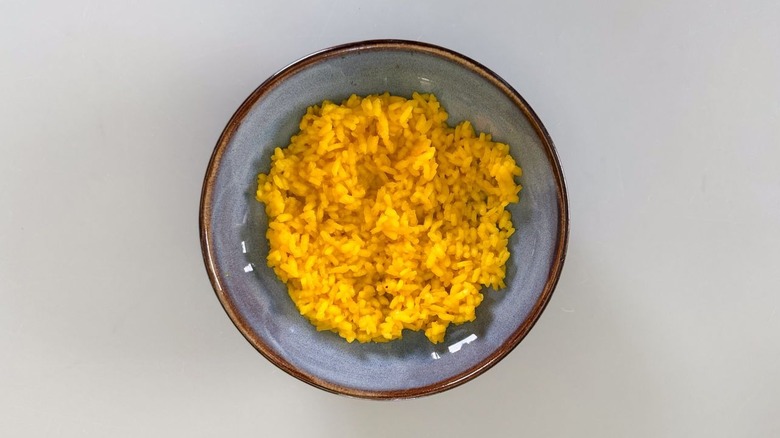
Transfer the rice to a shallow bowl and cool it to room temperature.
Step 5: Heat a large pot of water and salt
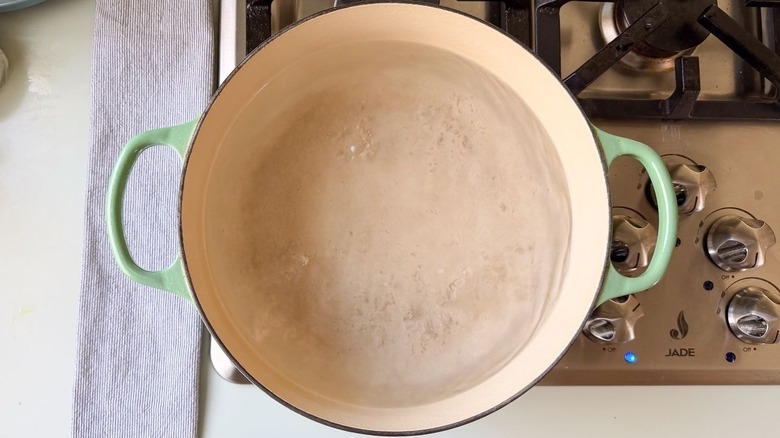
Bring a large pot of water and ¼ cup salt to a boil.
Step 6: Place a rack over a sheet pan
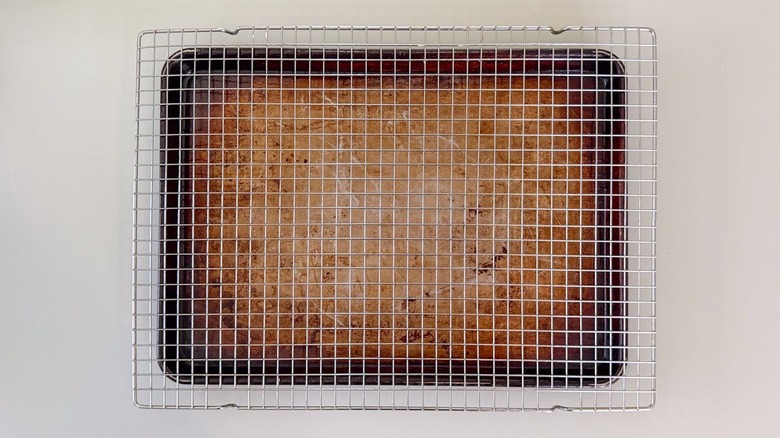
While the water heats, place a rack over a large baking sheet.
Step 7: Place 3 of the cabbage leaves into the pot
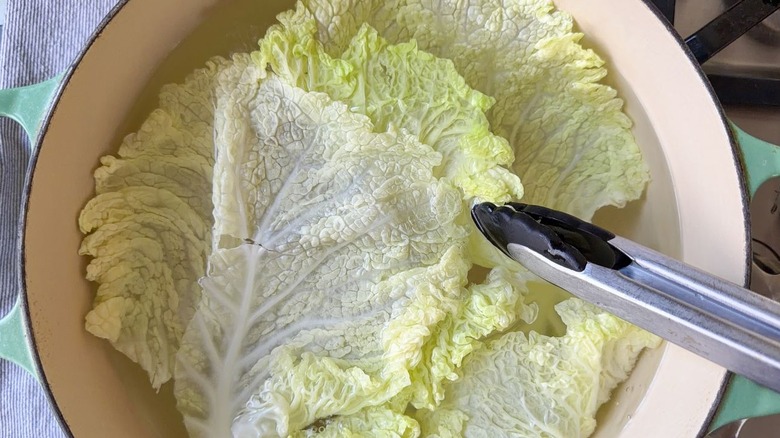
Lower 3 of the cabbage leaves into the water and cook for about 2 minutes until softened.
Step 8: Drain the leaves
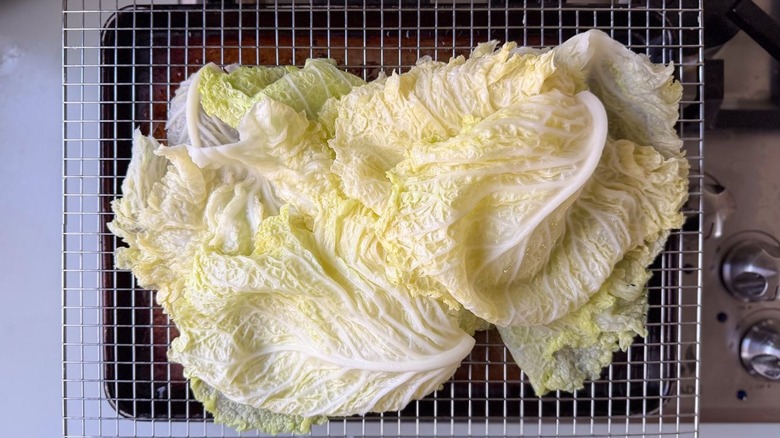
Remove the leaves with tongs and drain on the rack.
Step 9: Repeat the process with the remaining leaves
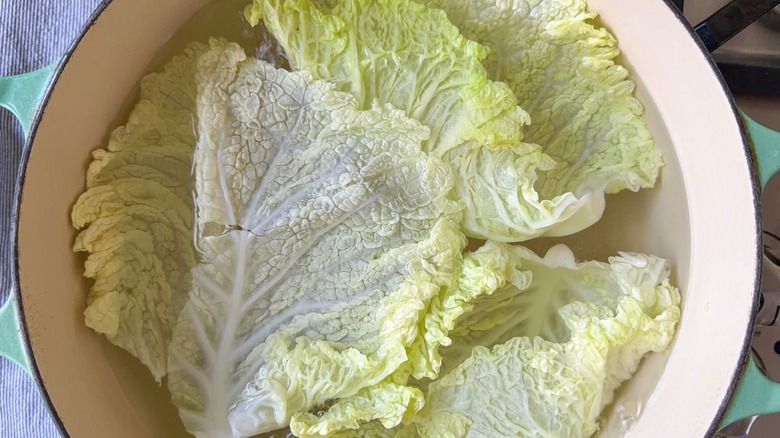
Repeat with the remaining leaves, keeping the water at a gentle boil.
Step 10: Heat butter in a skillet
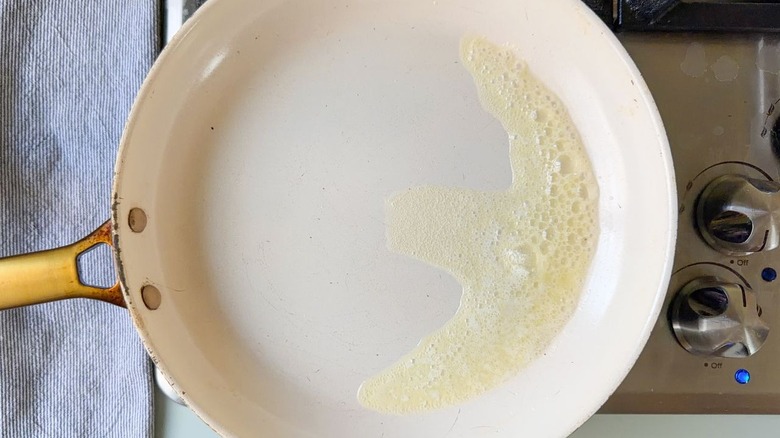
Heat 1 tablespoon butter over medium heat in a skillet.
Step 11: Add the onion and garlic
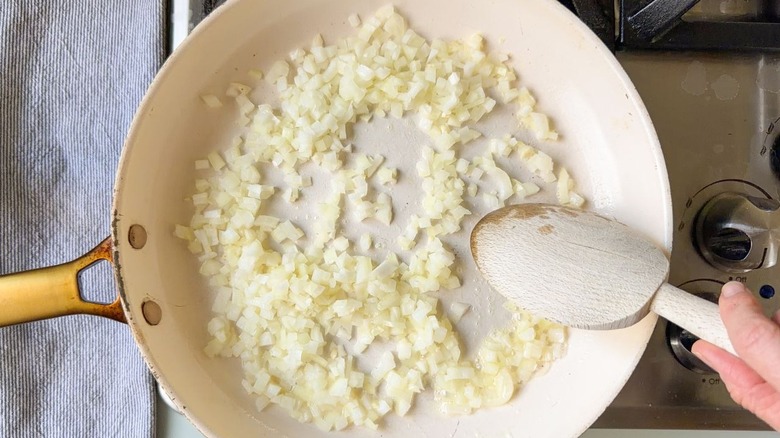
Add the onion and garlic and saute until soft but not brown (about 3 minutes).
Step 12: Cool the onion and garlic
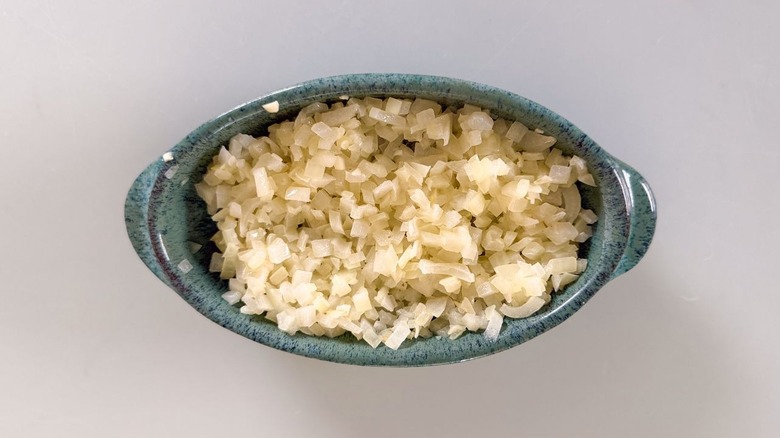
Transfer the onion and garlic to a shallow bowl and cool to room temperature.
Step 13: Mix the filling for the cabbage
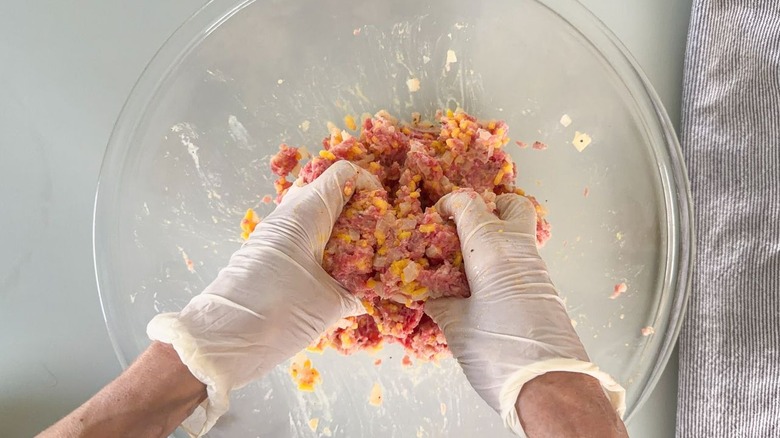
In a large bowl, combine the ground pork and beef, cooled rice and onion, milk, coriander, caraway, cardamom, pepper, and ½ teaspoon salt and mix until combined.
Step 14: Cut the stem end from a cabbage leaf
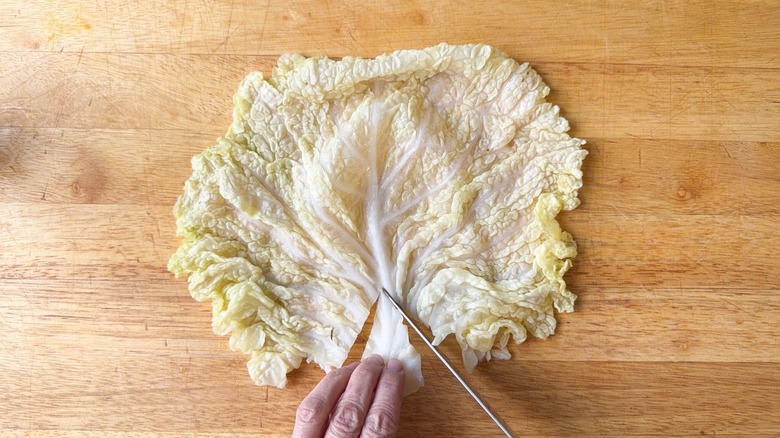
Place 1 cabbage leaf on a large cutting board rib-side-down and cut out the bottom of the stem in an upside-down V.
Step 15: Place some of the filling in the center of the leaf
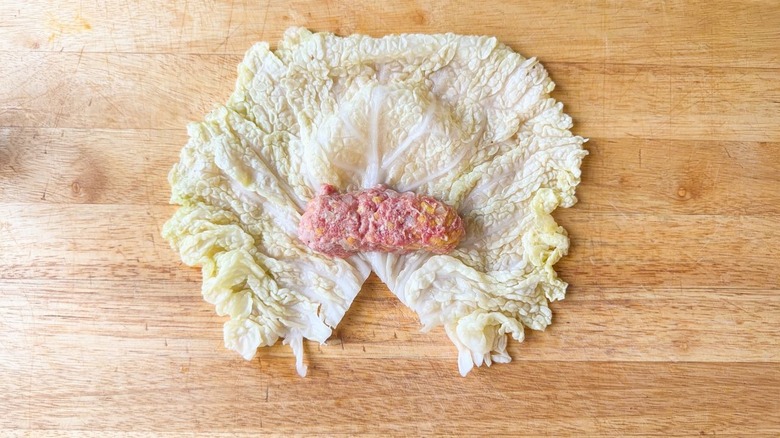
Place about 3 tablespoons of the meat filling on the center of the leaf towards the stem end and shape into a cylinder.
Step 16: Fold the bottom of the leaf over the filling
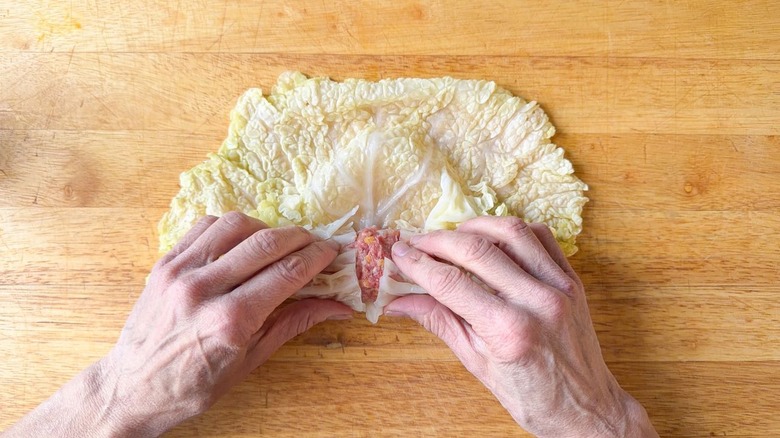
Fold and roll the bottom of the leaf over the meat.
Step 17: Fold the sides
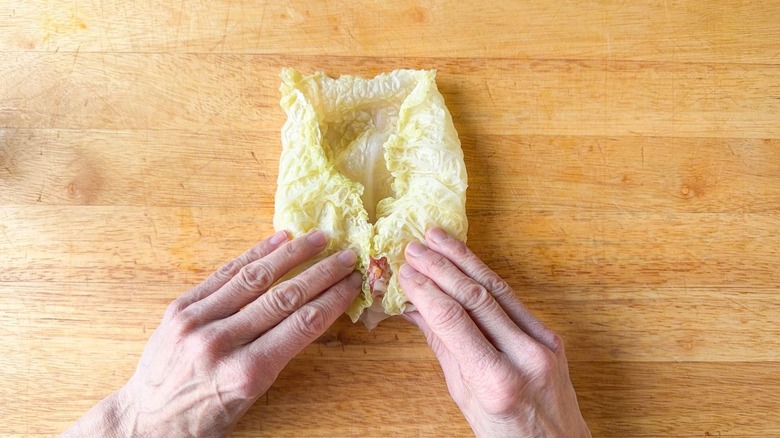
Fold in the sides.
Step 18: Roll up tightly
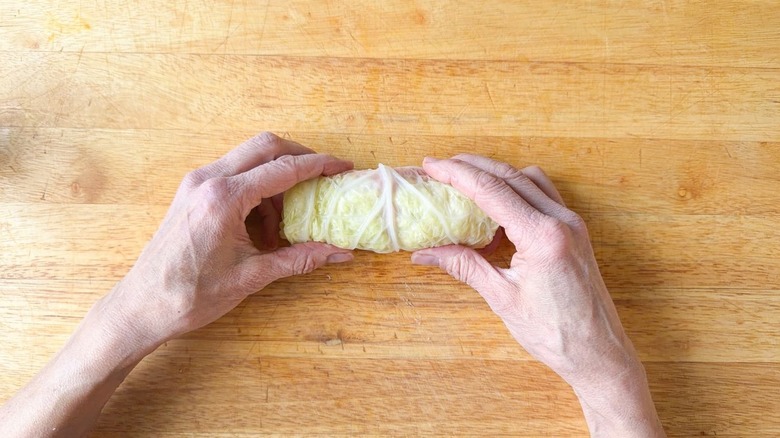
Finish rolling the leaf up tightly.
Step 19: Repeat with thhe remaining leaves
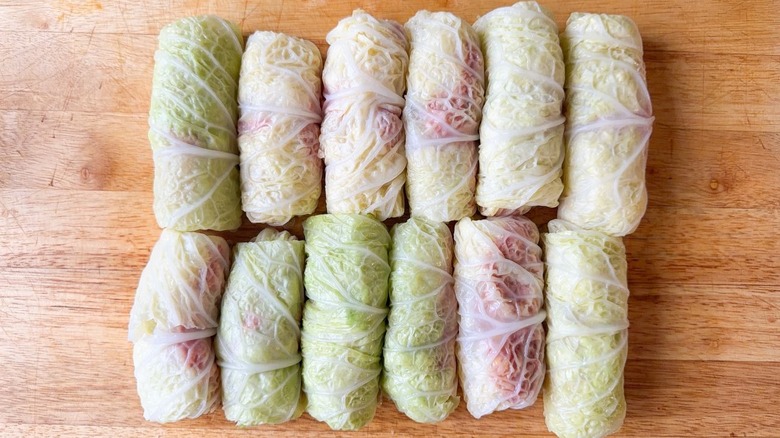
Repeat with the remaining leaves and filling.
Step 20: Preheat the oven
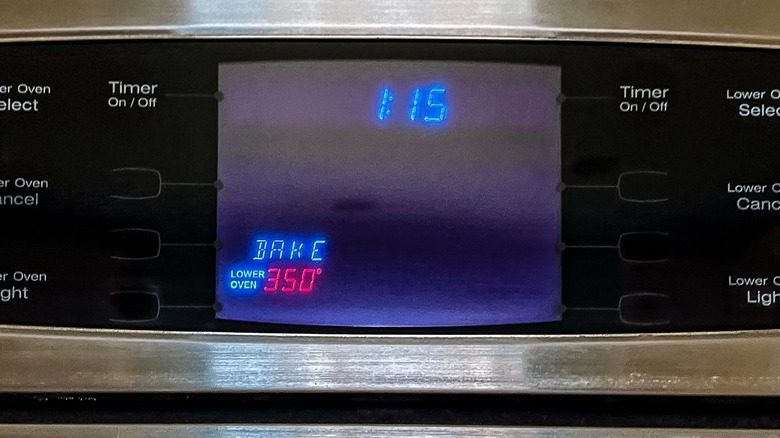
Preheat an oven to 350 F.
Step 21: Oil a baking dish
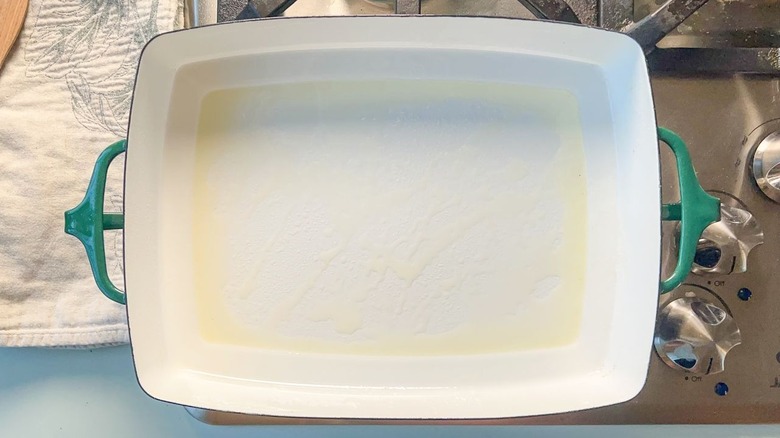
Oil a large baking dish.
Step 22: Heat butter in a skillet
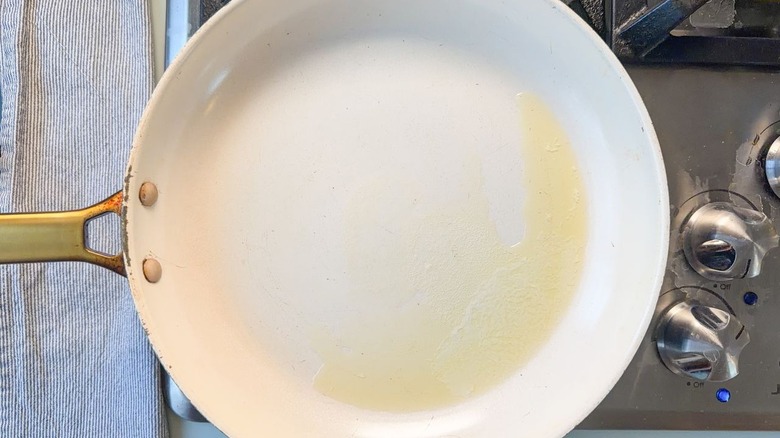
Heat 1 tablespoon butter in a skillet over medium-high heat.
Step 23: Add 6 cabbage rolls and sprinkle with sugar
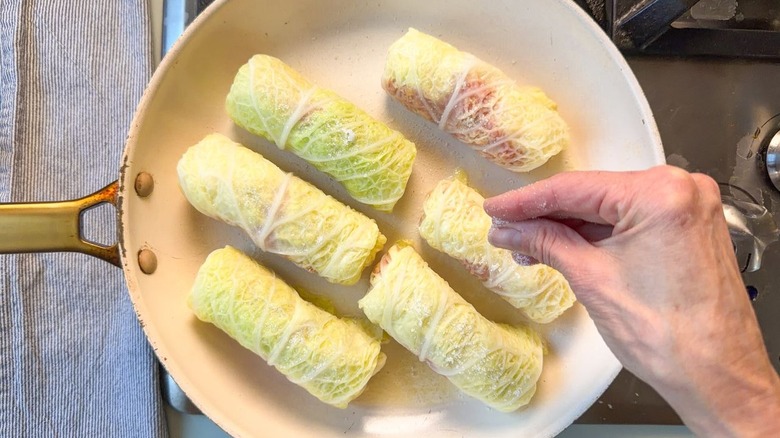
Add 6 cabbage rolls and sprinkle the tops with 1 teaspoon sugar.
Step 24: Brown the rolls
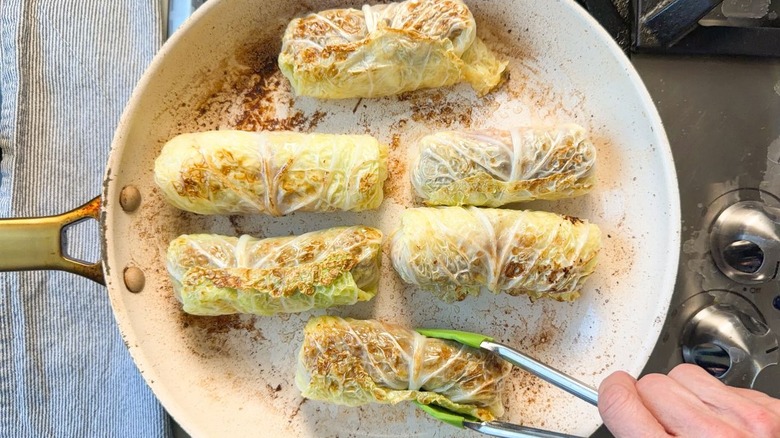
Carefully brown the rolls on all sides.
Step 25: Transfer the rolls to the baking pan
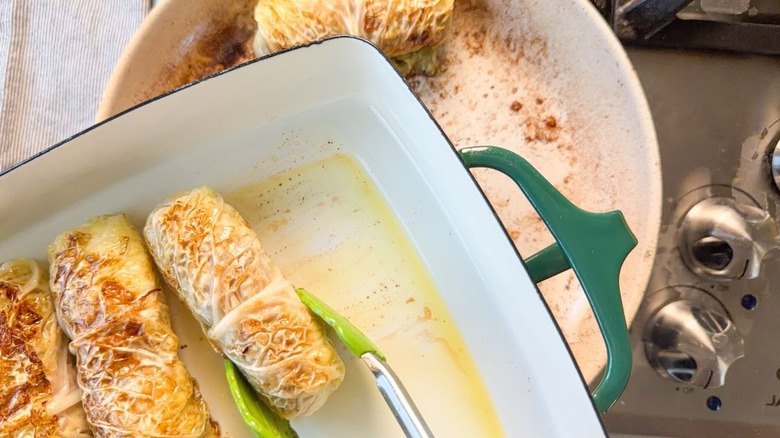
Transfer the rolls to the baking dish and repeat with the remaining rolls, adding 1 tablespoon butter to the pan.
Step 26: Add beef stock to the skillet
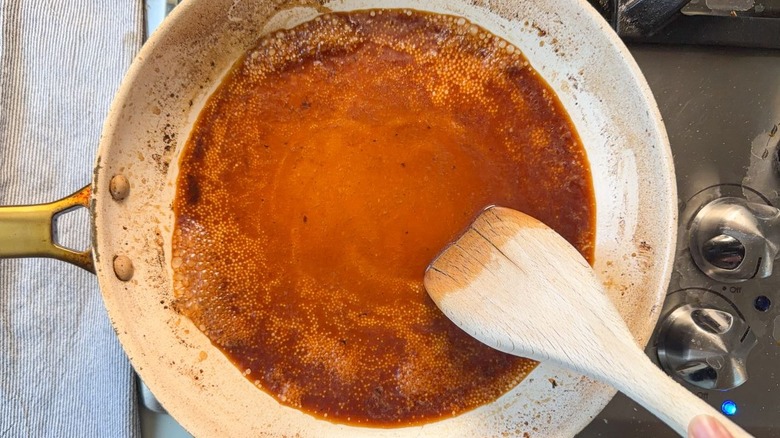
When all the rolls are removed, add ½ cup beef stock to the skillet and bring it to a boil, scraping up any browned bits.
Step 27: Reduce the broth and pour it over the rolls
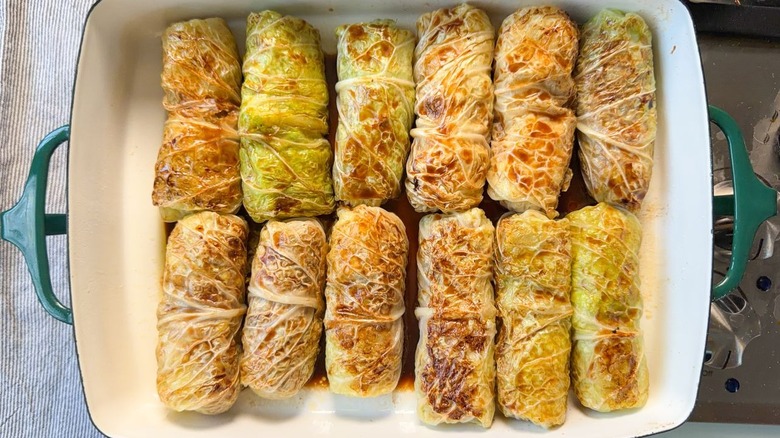
Reduce the broth slightly, then pour it over the top of the cabbage rolls.
Step 28: Cover and bake the cabbage rolls
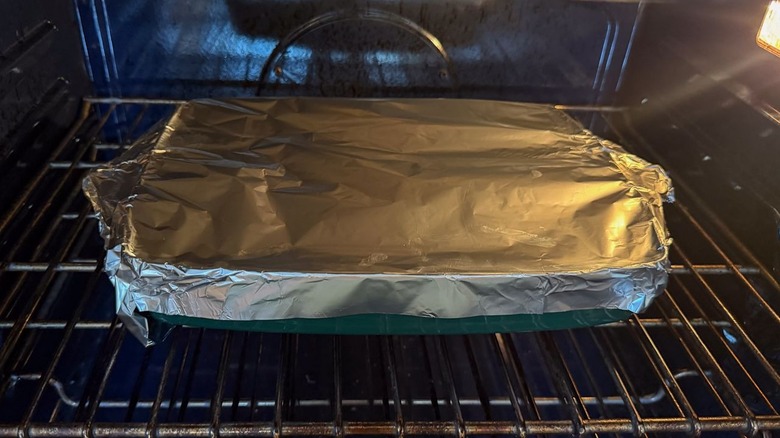
Cover the dish with foil and bake for about 30 minutes.
Step 29: Add the remaining butter to the skillet
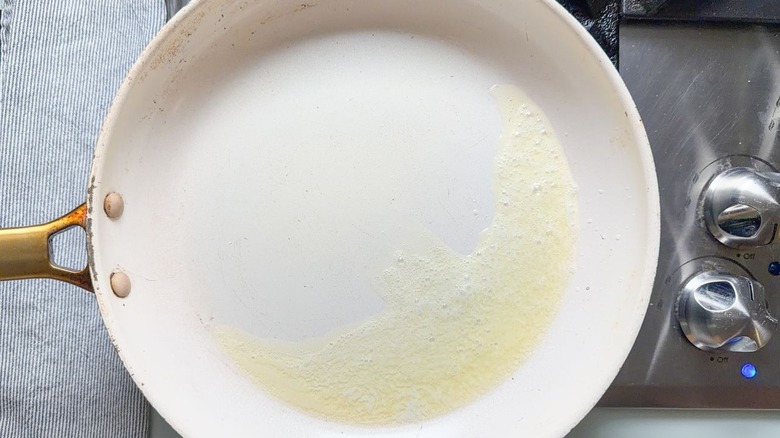
While the cabbage rolls are baking, add the remaining butter to the skillet over medium heat.
Step 30: Add the remaining stock, cream, and salt
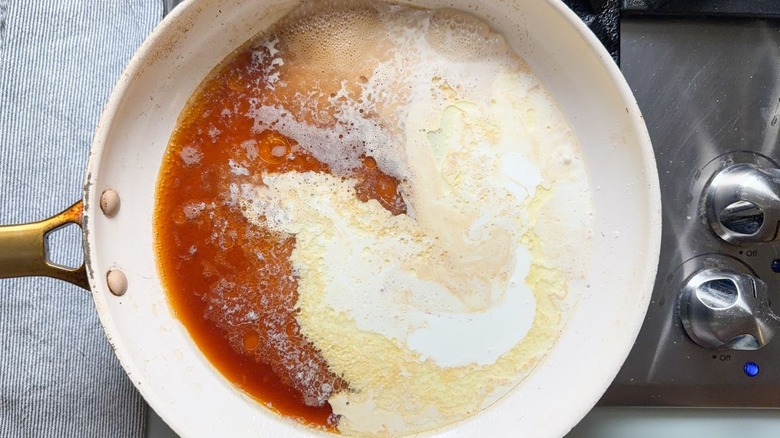
Once the butter has melted, pour in the remaining beef stock, heavy cream, and ½ teaspoon of salt.
Step 31: Simmer until thickened
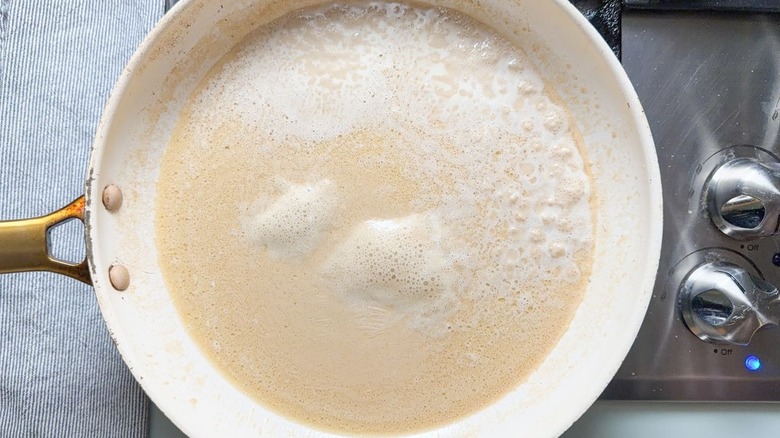
Simmer until the sauce has slightly thickened and keep warm.
Step 32: Remove the cabbage rolls from the oven
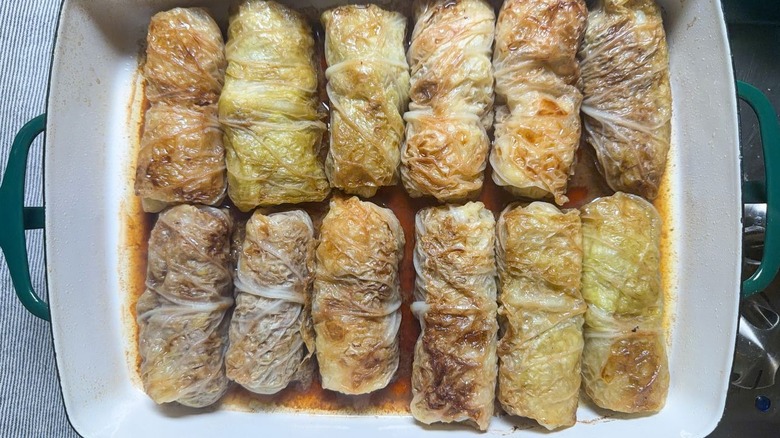
Remove the cabbage rolls from the oven and uncover.
Step 33: Transfer the rolls to a platter and add the sauce
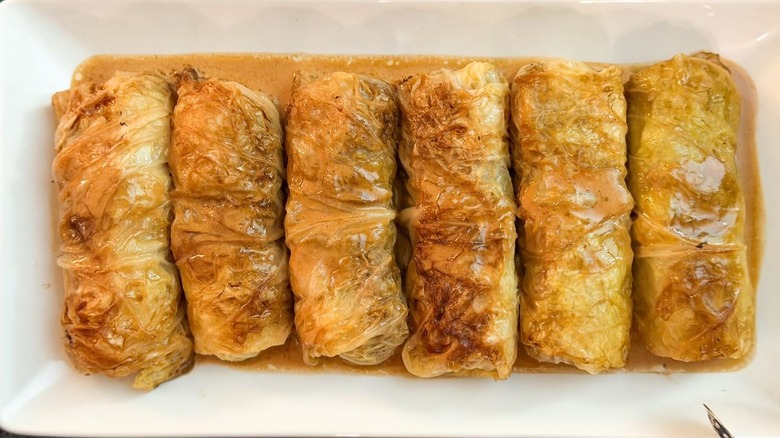
Arrange the baked cabbage rolls on a platter and drizzle with the pan sauce.
Step 34: Serve the rolls with the lingonberries
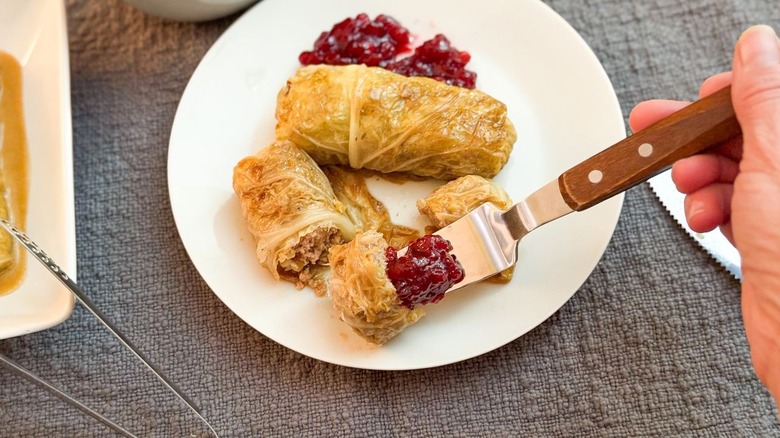
Serve the rolls warm with the lingonberry sauce.
What pairs well with cabbage rolls?
Swedish-Inspired Stuffed Cabbage Rolls Recipe
Our elevated Swedish-inspired stuffed cabbage rolls contain cardamom and saffron-seasoned ground meat and rice and are served in a creamy, brothy sauce.
Ingredients
- ¼ cup plus 1 ¼ teaspoons kosher salt, divided
- ¼ teaspoon saffron strands
- ¼ cup arborio rice, rinsed
- 12 large Savoy cabbage leaves
- 4 tablespoons unsalted butter, divided
- 1 small yellow onion, finely chopped
- 1 large clove garlic, minced
- ½ pound ground pork
- ½ pound ground beef
- ½ cup whole milk
- ½ teaspoon ground coriander
- ½ teaspoon caraway seeds
- ¼ teaspoon ground cardamom
- ¼ teaspoon freshly cracked black pepper
- 2 teaspoons granulated sugar, divided
- 1 cup beef stock, divided
- ½ cup heavy cream
- ½ cup lingonberry sauce
Directions
- Bring ¾ cup water, ¼ teaspoon salt, and the saffron to a boil in a small pot.
- Stir in the rice and bring back to a simmer.
- Cover and cook for 20 minutes until the rice is tender and the liquid is absorbed.
- Transfer the rice to a shallow bowl and cool it to room temperature.
- Bring a large pot of water and ¼ cup salt to a boil.
- While the water heats, place a rack over a large baking sheet.
- Lower 3 of the cabbage leaves into the water and cook for about 2 minutes until softened.
- Remove the leaves with tongs and drain on the rack.
- Repeat with the remaining leaves, keeping the water at a gentle boil.
- Heat 1 tablespoon butter over medium heat in a skillet.
- Add the onion and garlic and saute until soft but not brown (about 3 minutes).
- Transfer the onion and garlic to a shallow bowl and cool to room temperature.
- In a large bowl, combine the ground pork and beef, cooled rice and onion, milk, coriander, caraway, cardamom, pepper, and ½ teaspoon salt and mix until combined.
- Place 1 cabbage leaf on a large cutting board rib-side-down and cut out the bottom of the stem in an upside-down V.
- Place about 3 tablespoons of the meat filling on the center of the leaf towards the stem end and shape into a cylinder.
- Fold and roll the bottom of the leaf over the meat.
- Fold in the sides.
- Finish rolling the leaf up tightly.
- Repeat with the remaining leaves and filling.
- Preheat an oven to 350 F.
- Oil a large baking dish.
- Heat 1 tablespoon butter in a skillet over medium-high heat.
- Add 6 cabbage rolls and sprinkle the tops with 1 teaspoon sugar.
- Carefully brown the rolls on all sides.
- Transfer the rolls to the baking dish and repeat with the remaining rolls, adding 1 tablespoon butter to the pan.
- When all the rolls are removed, add ½ cup beef stock to the skillet and bring it to a boil, scraping up any browned bits.
- Reduce the broth slightly, then pour it over the top of the cabbage rolls.
- Cover the dish with foil and bake for about 30 minutes.
- While the cabbage rolls are baking, add the remaining butter to the skillet over medium heat.
- Once the butter has melted, pour in the remaining beef stock, heavy cream, and ½ teaspoon of salt.
- Simmer until the sauce has slightly thickened and keep warm.
- Remove the cabbage rolls from the oven and uncover.
- Arrange the baked cabbage rolls on a platter and drizzle with the pan sauce.
- Serve the rolls warm with the lingonberry sauce.
Nutrition
| Calories per Serving | 197 |
| Total Fat | 15.6 g |
| Saturated Fat | 7.8 g |
| Trans Fat | 0.3 g |
| Cholesterol | 49.4 mg |
| Total Carbohydrates | 6.2 g |
| Dietary Fiber | 0.5 g |
| Total Sugars | 2.0 g |
| Sodium | 233.2 mg |
| Protein | 8.0 g |

What are lingonberries and how else can they be used?
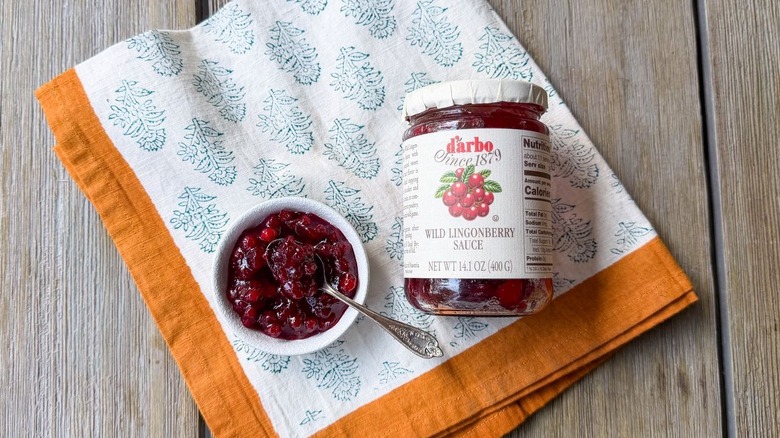
Lingonberries are tart little gems that look a bit like a tiny cranberry. They grow wild on evergreen bushes in cold regions in the Northern hemisphere, such as Scandinavia. Lingonberries can be utilized in culinary preparations ranging from desserts to savory dishes and drinks. In the United States, they are most often found in the form of imported jarred sauces or preserves in specialty stores.
Kinnaird says that she grew up eating lingonberries with the Swedish side of her family. They were always present to accompany Swedish meatballs or game meats, such as venison or wild duck. Their tartness provides a striking contrast to rich savory dishes, such as these cabbage rolls. Lingonberries also pair well with tomato-based preparations, such as this Scandinavian-inspired cocktail sauce. Kinnaird says she loves using lingonberry preserves in filled cookies, swirled into coffee cakes, or paired with dark chocolate.
What is the Swedish influence on these cabbage rolls?
Cabbage rolls in different iterations have long been part of Swedish cuisine, going by the name of kåldolmar. If you notice the spelling of this Swedish word, you will see the root "dolma," referencing dolmas that hail from ancient Turkish cuisine. Even before dolmas, however, Swedes were stuffing entire heads of cabbage with random ingredients in a classic "make the most of what you have" peasant food approach. Kinnaird remembers her own grandmother preparing cabbage rolls from a recipe passed down from the generations of family in Sweden. These cabbage rolls were typically filled with ground beef, suet, bread crumbs, and leftover grated cooked potatoes. Beyond salt and pepper, caraway and a hint of nutmeg might go in, but the cabbage rolls were simply baked in a white sauce of potato starch and milk, rather than being browned on the stove.
Cardamom, caraway, and coriander are all popular spices in Swedish cuisine, coming from the influence of the spice trade via the Vikings. Saffron is also included in that grouping, and Kinnaird says her inclusion here is to make this dish a bit more festive or holiday-ready, as saffron was often reserved for holiday cuisine in Sweden. Lingonberries also give this dish classic Swedish flair.