

The Absolute Best Ways To Use Frozen Fruits
We may receive a commission on purchases made from links.
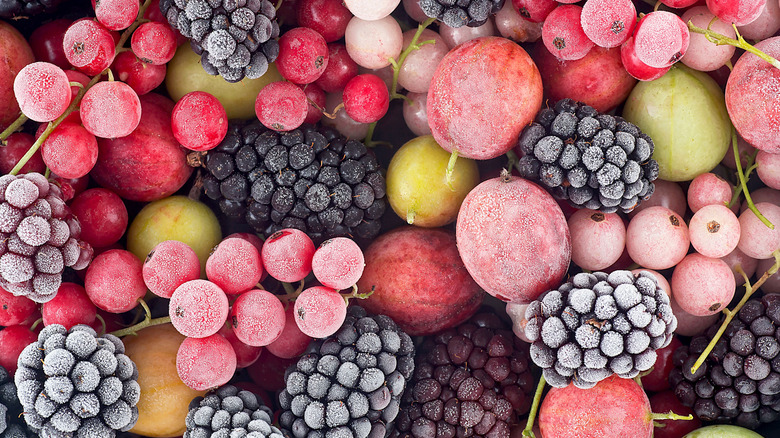
Keeping a bag or three of frozen fruit in your freezer lets you have fruit out of season, and freezing is a terrific way to preserve an abundance of fruit that you got through sales or an over-productive garden. As long as the fruit doesn't have added ingredients like extra sugar or syrup, it's just as healthy to eat as it was when it was freshly picked. But all too often, bags of fruit sit for months in freezers because people don't know what to do with them. Maybe they have bananas marred by freezer burn because they were tired of having banana bread every week and stopped baking, or they're tired of having blueberry muffins. If that sounds like you, you're in luck. There are plenty of other ways to use frozen fruit so that you're not stuck with the same dishes every week.
That said, some frozen fruits are better than others for different uses. Some are terrific when eaten out of hand by themselves in summer, while others are way better when turned into curds or syrups. Some are baking champions, while others are great when thrown into other recipes as a mix-in. Obviously, the "best" uses are kind of subjective. For example, lots of baking recipes use frozen blueberries, but you might decide you're not a fan of the texture. Grab those bags from the freezer and look at these uses for different frozen fruits to find more suggestions for using them up.
Bananas
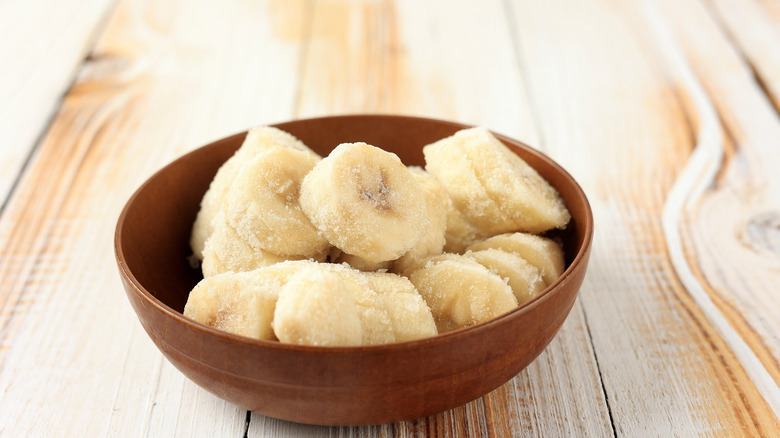
Frozen bananas are very good for baked goods and banana pancakes, but they're good for so many other uses. Dip them whole or sliced into melted chocolate and then re-freeze them to let the chocolate harden. You can dip the chocolate-coated fruit into chopped nuts before you stick them back in the freezer, too. Or, put thinly sliced frozen bananas on a baking sheet to make banana bark; top the slices with layers of peanut butter and melted chocolate, chocolate and chopped nuts, or another topping. Freeze the whole thing and break it into pieces for a snack.
You can also blend frozen banana slices to create an ice cream substitute. Eat as is or blend in additional ingredients like chocolate or berries. Just remember that if you blend the slices for too long, you can end up with melted banana purée instead of an icy dessert.
Frozen bananas work well in smoothies, but if recent research is accurate, you might not want to add cocoa to those smoothies if you're trying to get health benefits from flavanols. Bananas contain polyphenol oxidase (PPO), which is an enzyme that counters flavanol absorption. A lot of fruits contain PPOs, but some, like bananas, have higher PPO activity than others. Researchers from the Royal Society of Chemistry found that PPO activity could block your body from absorbing more flavanols from cocoa in banana-based smoothies compared to berry-based smoothies. Bananas and cocoa are fine to have together if you just like the flavors, of course.
Strawberries, raspberries, blackberries, and blueberries
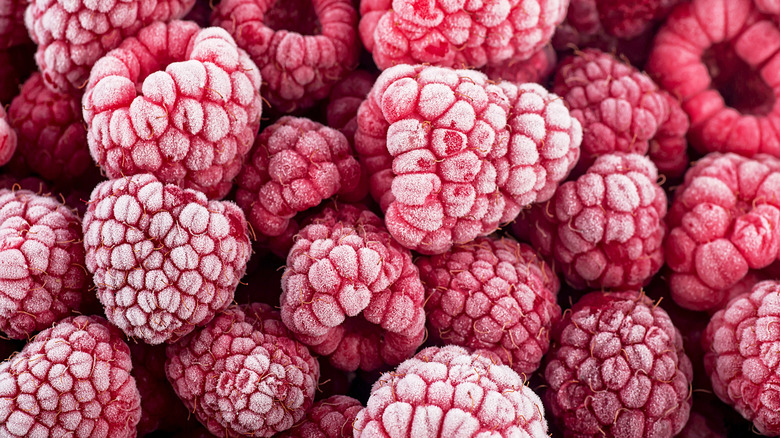
Berries, namely strawberries, raspberries, blackberries, and blueberries, are some of the more versatile frozen fruits because there are so many great ways to use them. One great use is as a mix-in for ice cream or yogurt. You can chop up the frozen fruit for added texture, or let the fruit thaw and mix in the soft fruit and its juice. That's particularly tasty when mixed with plain yogurt. Toss frozen berries into baked oatmeal recipes, blend them into smoothies, thaw them slightly to make jam, put them into an ice shaver or drag them over a grater to create shaved ice, or cook them down into sauces and compotes. About the only ways you can go wrong with using frozen fruit are if you try to bite down onto a strawberry that's been frozen rock-solid, and if you don't drain thawed fruit before adding it to a baked good. The thawed juice or water can discolor the rest of the food.
A few people on Reddit have pointed out that blackberries go well with salmon, either as a garnish or as a cooked compote. Ina Garten also has a delicious recipe for mixed frozen berries that you may want to try. It's from her cookbook "Barefoot Contessa at Home," and mixes frozen — yes, specifically frozen — berries with white chocolate, heavy cream, and vanilla extract. The last three ingredients are heated up and poured over the berries, melting them over the next few minutes.
Melon
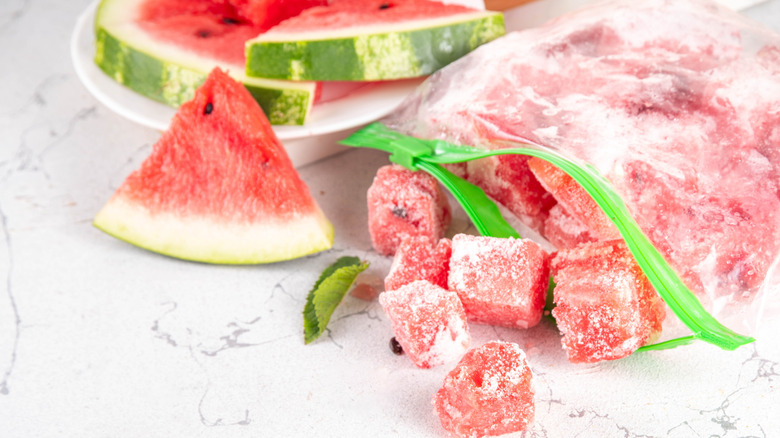
Melon tends to have a lot of water, which doesn't bode well for freezing and then thawing the fruit to use. That's why cooks tend to recommend against freezing watery vegetables like iceberg lettuce, because the thawing stage changes the vegetables' texture completely. That happens to melons, too. However, when frozen in small chunks or thin slices, some melon can be very refreshing, especially in hot weather. We're talking about watermelon, which you can blend into a slushie. You can also cut watermelon into relatively thin slices, cut a slit in the base of the slice, stick a skewer or ice pop stick into the slice, and freeze. You get a crispy watermelon ice pop a few hours later. Or you can cut the watermelon into long sticks and freeze those instead.
As for other melons (and watermelon, too), blend frozen chunks of seedless melons to make sorbet, smoothies, slushies, granitas, or shaved ice. When freezing melon slices or chunks, first flash-freeze the individual pieces by setting them in a single layer on a baking sheet that you can fit into your freezer. Let them freeze for anywhere between 30 minutes to an hour, and then move the pieces into a freezer bag.
One use you shouldn't use them for is fruit ice cubes. Yes, they'll keep your drink cold. But when they start to thaw, they won't release a lot of flavor, and they can end up as unappetizing blobs in your drink.
Mango
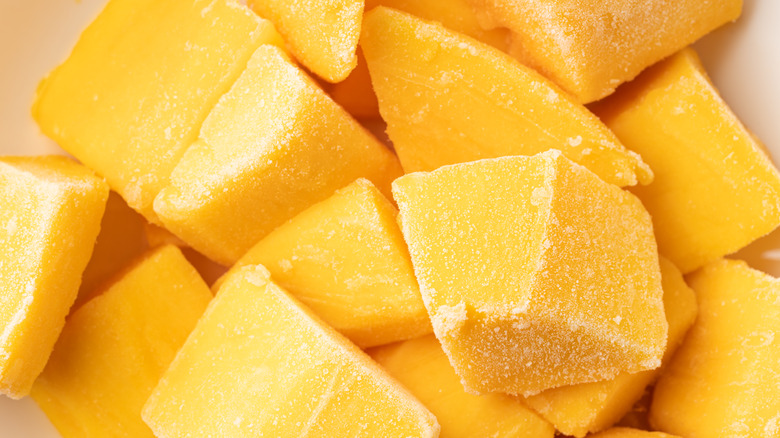
Like other frozen fruits, frozen mango is great as an ingredient in smoothies or blended into sorbet. It turns out that you can use frozen mango to make lassi, an Indian drink that also contains yogurt, sugar, milk, spices, and other ingredients depending on the specific recipe. While some have reported buying frozen pulp and letting it thaw, others have just used the fruit while still frozen. Of course, if you blend the frozen mango with heavy cream and sweetened condensed milk, you can make a no-churn version of ice cream.
If you have time to let the frozen mango thaw, you can also add it to iced tea. Blend frozen chunks or thaw some frozen purée and add some to brewed iced tea; start with one part purée to two parts tea, such as 1 cup mango to 2 cups tea. One other use you might consider is eating frozen mango chunks by themselves. Some have mentioned online that letting frozen mango pieces thaw for about an hour or so gave them the perfect texture for snacking.
Grapes
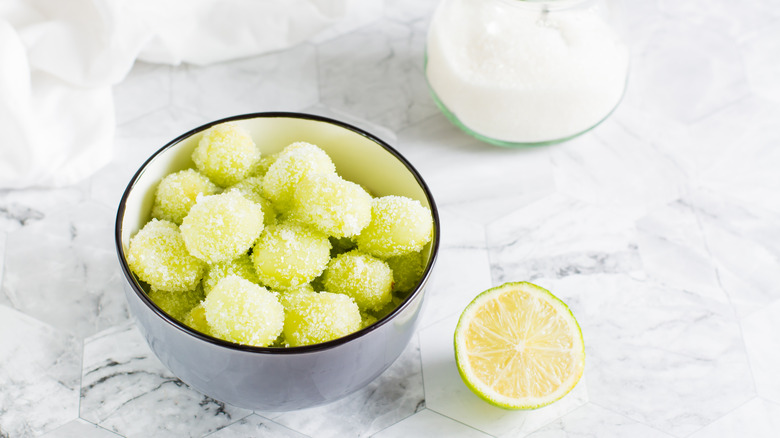
Frozen grapes are very good when turned into sorbet, and you don't need any complicated ingredient lists to make it. Put frozen seedless grapes in a blender with lemon juice and sugar to taste, and you're done.
If any use for frozen grapes stands out, it's as a hot-weather snack. They're simple to make and easy to eat if you let them sit for a few minutes before biting into them, and you can flavor them with sugar and lemon or lime juice, or flavored gelatin powder. However, you need to keep three things in mind. First, wash and dry them before freezing them. Frozen dirt doesn't add anything to the flavor. Second, if you're freezing grapes for a snack, freeze seedless ones. You're not going to want to bite into grape seeds, nor will you want to deal with chewing around the seeds and then discarding them.
Third, whole grapes in general, let alone frozen grapes, are a choking risk because they can block airways. They're a particularly bad risk for young children, who might try to swallow the whole grapes without chewing. Grapes are actually a major cause of food-related deaths in childhood, and some doctors say children under two years old shouldn't have them at all. If you have children older than two years old who are still relatively young, cut up grapes, including frozen ones. If a child has trouble chewing, peel fresh grapes before cutting them, and avoid giving them frozen grapes.
Passion fruit
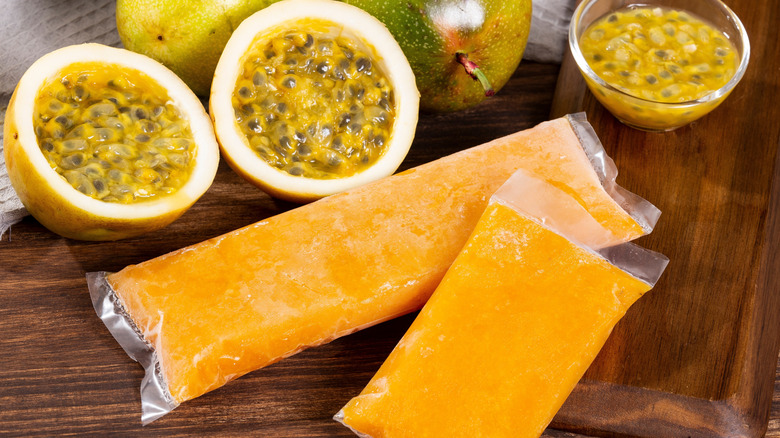
Frozen passion fruit is usually available as packaged pulp, rather than as whole frozen fruit. But that's not a bad thing as the pulp is perfect for making passion fruit curd, and the pre-packaged pulp lets you skip the step of scooping the pulp out of the inedible peel. Eat the curd on its own, use it as a filling for pastries or pavlova, spread it on bread — the possibilities are endless. The pulp also works in similarly textured desserts such as panna cotta. You can also cook the pulp down to make a syrup for cocktails, mocktails, or homemade soda.
A lot of commercially frozen pulp is seedless, but if you have pulp with seeds, don't worry; those are edible. They are crunchy, so if you're making a passion fruit cake with seeded pulp, be prepared for some extra texture in each bite. If you want to make a smoothie, which is another terrific use for the frozen pulp, the smoothie will also have crunchy seed fragments. However, if you're not thrilled with that texture, you can always thaw the pulp and remove the seeds. Note that removing the seeds will also reduce the amount of fiber you get from eating the fruit.
Cherries
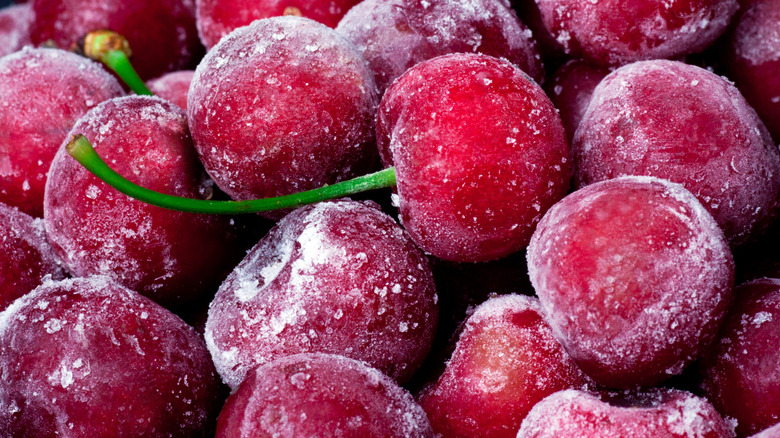
Frozen cherries are versatile, but slice them in half before using them. The cherries are usually pitted before the freezing stage, but the pitting process can leave pit fragments (and sometimes entire pits) behind. These are very unpleasant to bite down on because teeth can't really break the fragments apart. While the cherries might look a bit nicer when whole, do your teeth a favor and check for pit fragments.
That said, frozen cherries are terrific by themselves as a hot-weather snack; eat them partially frozen or let them thaw for a short time in the fridge. They're excellent as yogurt or ice cream mix-ins or toppings, and you can cook them down to make sauces, too. They maintain their shape comparatively well, albeit with a hole punched in them during the pitting process, and you can include them in baked goods.
One use that a number of Redditors have suggested is brandy. Suggestions include using champagne yeast and tossing in all the cherries you have, be they sour or sweet. An alternative is cherry liqueur using vodka, and some have mentioned making brandied cherries or cherries in bourbon for a garnish. If you really want a cherry-flavored drink that doesn't contain alcohol, though, you can always make smoothies.
Lychees
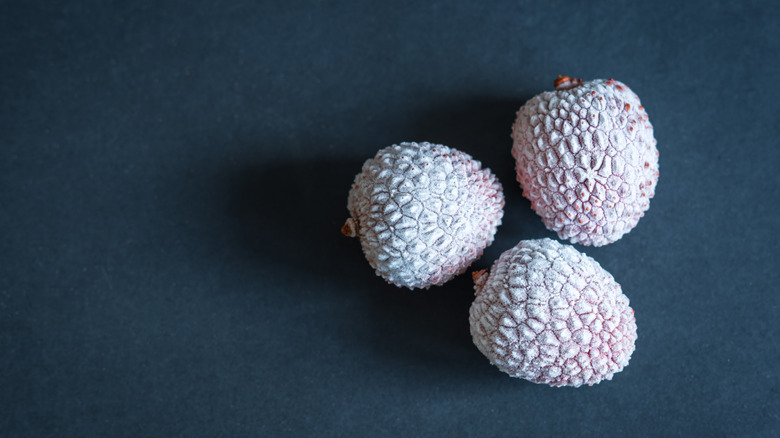
Lychees are usually available fresh or canned, but you can find them in packs in some stores' freezer sections. If you want to use them when they're still frozen, you can always blend the fruit into a sorbet or use them in smoothies. If, somehow, you have whole lychees that are frozen, you'll need to thaw them a little to remove the peel and pit. Luckily, commercially produced frozen lychees are usually peeled and pitted.
Two other uses require thawing the lychees. One of those uses is making a syrup to use in cocktails, and the other is to use the fruits themselves as garnishes for lychee-flavored cocktails. Lychee martinis are rather popular, blending the syrup from canned lychees with vodka and vermouth. It is possible to eat thawed frozen lychees on their own, but it's not popular a way to use them. Some people like them, but others consider the texture to be unpalatable.
Pineapple
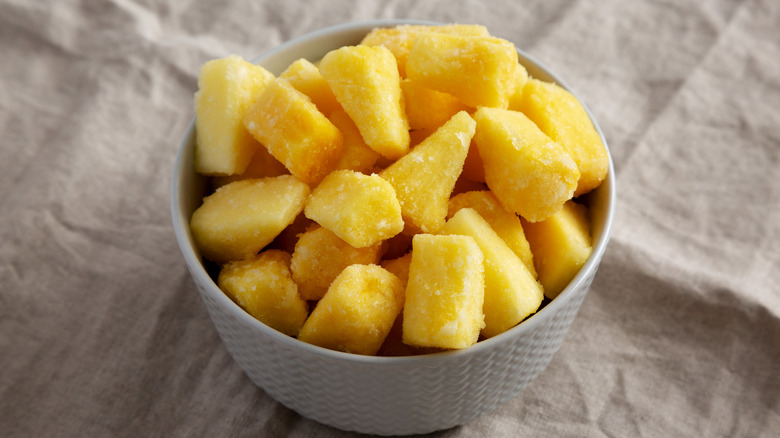
If any frozen fruit has more uses than berries, it's pineapple. Frozen pineapple, by some miracle, doesn't turn into a completely mushy mess when thawed. That makes it a fabulous fruit to keep around because you can use it in fruit salads or other recipes that call for fresh or canned pineapple after you let it thaw. There are even recipes for frozen fruit salads, too. It's also delicious on hot days when you want a cold snack that isn't full of added sugars; the frozen chunks or tidbits that you find in stores thaw quickly enough so that they're still very cold but not impossible to chew.
People online have said they like to make ice cream toppings with the fruit, and thawed pineapple and its juice are good in marinades. There are also any number of piña colada recipes you could make with juice from the thawed fruit. One use for frozen pineapple, though, is close to many a Disney fan's heart: copycat Dole Whip. Back in April 2020, when Disney and other parks (and just about everyone else) had closed down due to the pandemic, the company gave users of its app a treat in the form of the recipe for Dole Whip. Frozen pineapple, pineapple juice, and a scoop of ice cream blended together were all you needed to have the treat while stuck at home. You can also make variations on the Dole Whip recipe using ingredients like agave syrup and coconut cream.
Peaches, nectarines, and apples
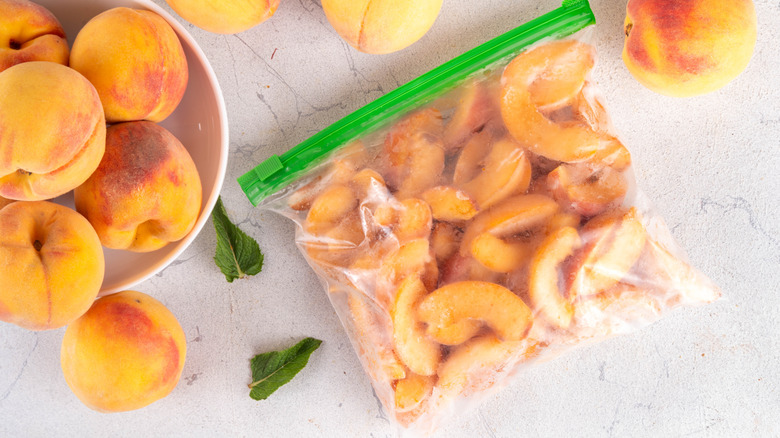
Finally, frozen peaches, nectarines, and apples all tend to have the same uses. Peaches and nectarines are literally the same fruit; nectarines just don't have the fuzz that peaches do, due to a recessive genetic mutation. So, anything you use peaches for, you can use nectarines for and vice versa. (Fun fact: Sometimes peach trees will spontaneously produce nectarines.) Apples aren't the same fruit, obviously, but the sturdy flesh is suitable for the same uses of peaches and nectarines.
Baking, of course, is a great use for frozen peaches, nectarines, and apples. Cooking breaks down the fruit and softens it, which masks the effects from thawing. More than one person has posted online about accidentally freezing whole apples, and suggestions to thaw the fruit and use it in crisps and other dishes have worked out well. You can find similar advice about peaches, too. Some have warned, though, not to bake the frozen fruit as the chunks could release too much moisture during baking. Additional good uses are smoothies, of course, as well as sauces or compotes. Peach jam, nectarine jam, and apple butter are all winners, too.