

22 Iconic International Street Foods Everyone Should Try
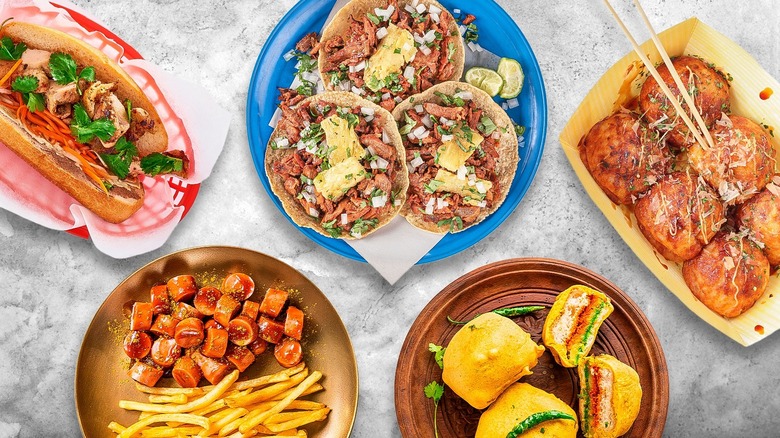
If you want to sample the most authentic flavors in any country, street food is the way to go. It's quick, affordable, and usually made with recipes and cooking techniques that locals have been perfecting for generations. It's what people living there eat when they want something tasty, familiar, and comforting, so it can tell you a lot about regional tastes and cultures. Plus, it's one of the easiest ways to save money on food when traveling.
Walk through almost any city and you'll find some version of food being served on the street, but what that looks like changes depending on where you are. In Mexico, tacos al pastor are wildly popular, while saucy currywurst hits the spot in Germany. Bakso vendors are ubiquitous in Indonesia, and choripán is the go-to snack in Argentina. With so many options out there, we've pulled together 22 of the most iconic street foods that everyone should try at least once.
1. Vada pav (India)
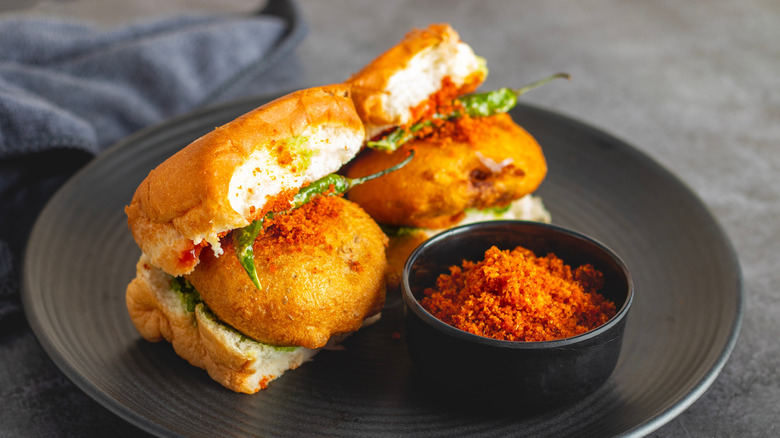
Stroll the streets of Mumbai and you'll inevitably come across vendors selling vada pav. These handheld snacks are like international versions of hamburgers, but instead of a meat patty, they feature a fried potato ball sandwiched in a bun. Local legend has it that a vendor named Ashok Vaidya created the vada pav in the 1960s, and it's been a wildly popular street food ever since.
A vada pav typically consists of mashed potatoes flavored with spices and coated in a chickpea flour batter. The ball (vada) is deep-fried until golden and crispy, then nestled in a soft, fluffy bun (pav). Popular toppings include dry garlic chutney and cilantro-mint chutney. Many vendors also offer fried green chiles on the side.
2. Tacos al pastor (Mexico)
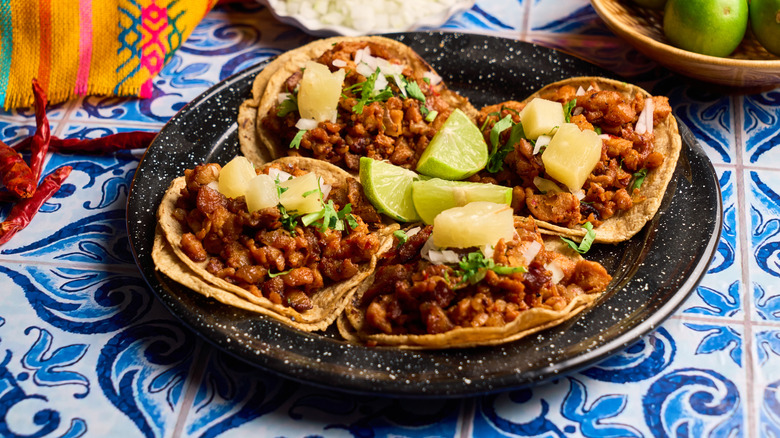
You can find numerous taco styles in Mexico, but one of the most popular is tacos al pastor. From the busy streets of Mexico City to resort towns along the coasts, you can find taco stands and shops where workers shave roasted pork off giant vertical spits and pile it onto tortillas. Toppings include roasted pineapple, chopped onion, cilantro, and salsa.
Interestingly, tacos al pastor are one of several Mexican dishes with international roots. In the 1930s, there was a large influx of Lebanese immigrants to Mexico, and they introduced shawarmas, which consist of shaved, spit-roasted lamb served in pita bread. Mexicans adopted the vertical spit technique, but changed the recipe to include local ingredients like pork marinated in citrus and chiles, and used tortillas instead of pita.
3. Currywurst (Germany)
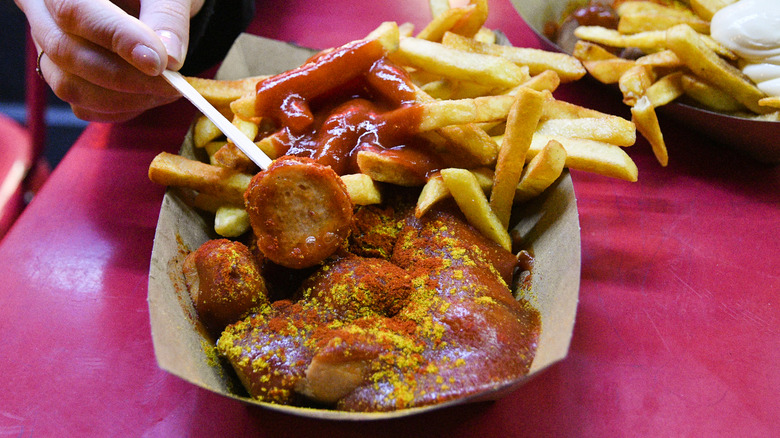
For many Germans, currywurst is the go-to street food snack. It consists of sliced sausage that's smothered in a tangy tomato sauce and dusted with curry powder. Some vendors also add paprika and other seasonings, and many spots serve the saucy sausage with fries on the side.
There are a few different origin stories for currywurst, but the most credible is that a Berlin snack bar owner named Herta Heuwer invented the dish in the late 1940s. The story goes that she was bored one day, so she whipped up a mixture of ketchup, Worcestershire sauce, curry powder, sugar, and salt and tossed sausage in it. The dish was a hit and would go on to become one of Germany's most iconic street foods.
4. Jianbing (China)
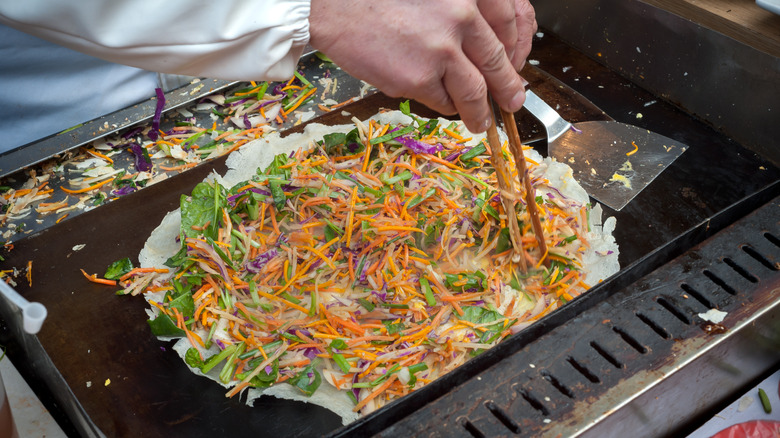
In cities across China, busy workers start the day with jiangbing. This breakfast street food is similar to a savory crepe, and it dates back roughly 1,800 years. Local lore states that soldiers under military strategist Zhuge Liang lost their cooking utensils, so he taught them how to cook batter on their shields.
Jianbing starts with a batter made of wheat and mung bean flour that's spread thin across a flat griddle. A raw egg is mixed on top along with cilantro, scallions, and pickled mustard greens. Once the crepe is firm, it's folded over, and hoisin sauce, chili sauce, and crispy fried wontons are added. Then, the whole thing is folded up and cut in half for easy eating.
5. Pide (Turkey)
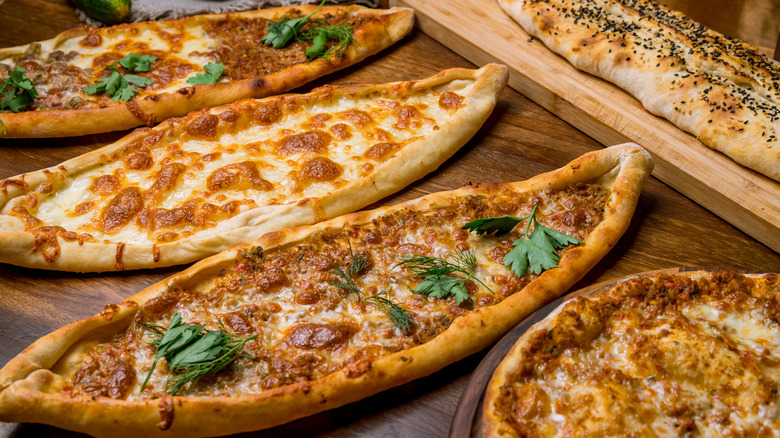
At first glance, pide looks a lot like pizza. In fact, it's often referred to as "Turkish pizza." However, there are a few slight differences. For one, the pide dough is typically shaped into an oval with raised edges that some say resembles a boat. In addition, the crust is often brushed with butter after it comes out of the oven, which makes it extra-craveable.
Like pizza, pide can include a wide array of toppings. Some people prefer to go simple with just cheese and a fried egg. Another popular combo is ground beef or mutton, bell peppers, and tomatoes. In addition, pide can be served open or folded over like a calzone, which makes it even easier to eat on the go.
6. Arepas (Venezuela and Colombia)
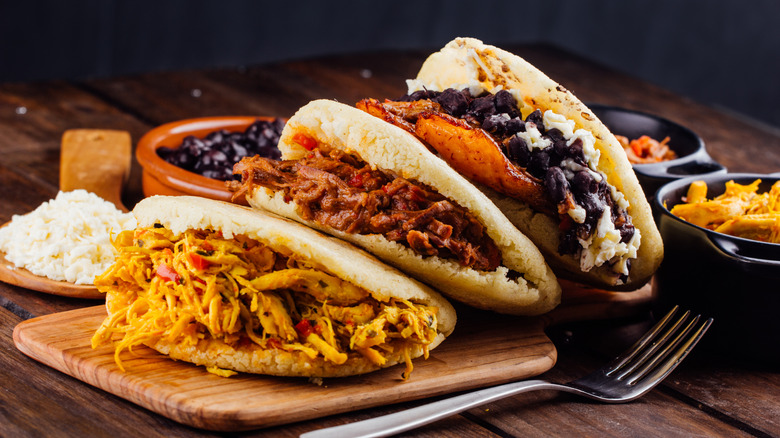
Arepas may just be the perfect street food snack. They're basically cornbread patties that can be eaten on their own, as a side dish, or stuffed with a wide variety of fillings. They're easy to make with just a few ingredients, including cooked cornmeal called masarepa, water, and butter or lard. They're typically griddled until crispy on the outside and soft in the middle.
Long before European settlers arrived in South America, indigenous people were making arepas, and the tradition still carries on today. The handheld snacks are particularly popular in Venezuela and Colombia, where you can find countless variations. They can be simply spread with butter and sprinkled with cheese or stuffed with everything from shredded meat to beans and vegetables.
7. Takoyaki (Japan)
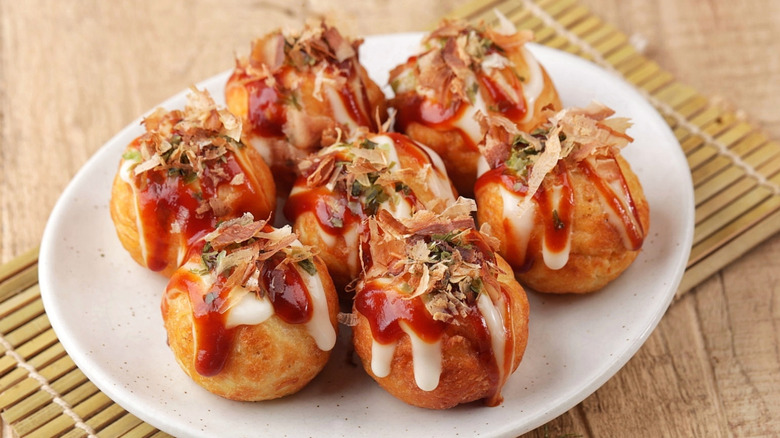
Tokyo may be considered one of the best food cities in the world, but there are plenty of other cities in Japan that have must-try street foods too. Osaka, for example, is renowned for its delicious takoyaki, which are deep-fried octopus balls. Vendors make them by pouring flour batter into special grill pans with circular grooves, then adding minced octopus, scallions, and pickled ginger.
There are a few things that make takoyaki so enticing. First, the balls are rotated until crispy on the outside, but slightly creamy inside. Then they're drizzled with a special takoyaki sauce made from ketchup, Worcestershire sauce, sugar, and an umami-packed soup base called mentsuyu. The final touches are a squeeze of mayo and a sprinkling of bonito flakes.
8. Doubles (Trinidad and Tobago)
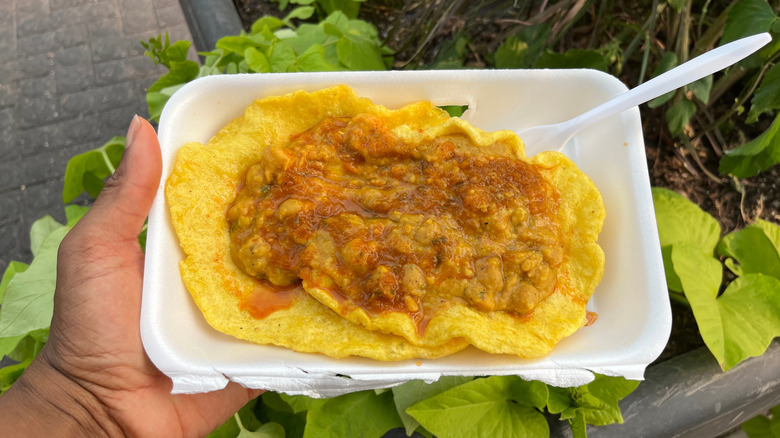
Nothing says comfort food in Trinidad and Tobago like doubles. You can find them served at carts and stalls all over the islands from morning to night, and they consist of fried flatbread called bara that's filled with curried chickpeas. Popular condiments include hot pepper sauce, tamarind sauce, cucumber, and a pickled green mango chutney called kuchela.
Doubles are a great example of how curries from around the world have evolved with time. Curry first made its way to Trinidad and Tobago in the 19th century via indentured Indian laborers. In the 1930s, the Deen family, who were descendants of those laborers, started selling curried chickpeas with bara from their roadside kitchen. The name "doubles" came from customers requesting two pieces of bara, and it stuck.
9. Bánh mì (Vietnam)
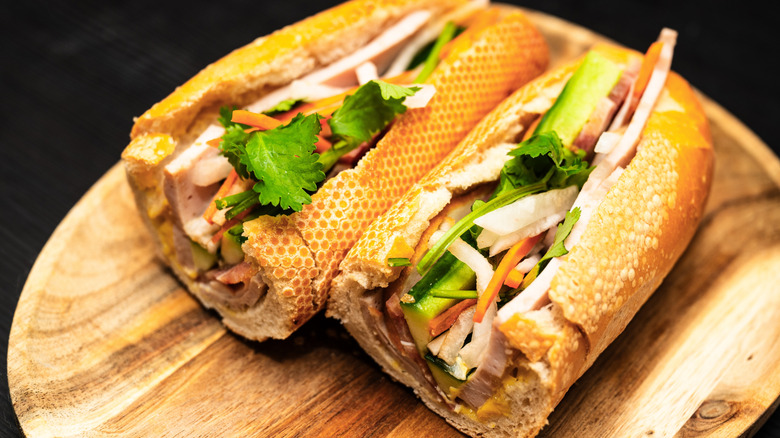
Street food is a way of life in Vietnam, with roadside eateries selling everything from noodles to seafood and cold beer. One of the most popular street foods is bánh mì. It came about after the French introduced bread, cold cuts, and cheese during colonial times. The Vietnamese combined those with local ingredients to make tasty, easy-to-eat sandwiches.
There are numerous variations of bánh mì across Vietnam, but they all start with a specific type of bread that's similar to a baguette, but shorter and with a thin, crispy exterior and a fluffy interior. From there, you can add everything from pate to cold cuts, fish cakes, and meatballs. Toppings can include sliced cucumber, pickled veggies, mayo, Maggi sauce, and cilantro.
10. Bunny chow (South Africa)
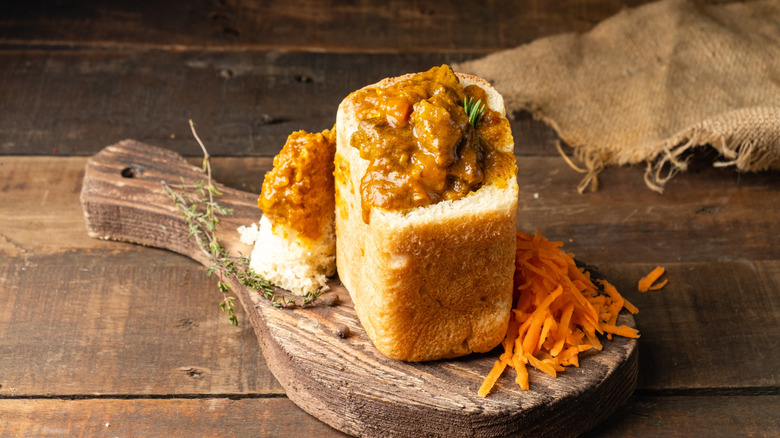
Contrary to what the name might lead you to believe, bunny chow is not a light, plant-based snack. In fact, it's quite the opposite. Picture a loaf of white bread that's hollowed out and filled with a rich curry made with mutton, chicken, or beans. The bread bowl makes for an easy way to carry the dish on the go and eat it utensil-free.
The most common story about how bunny chow came to be is that Indian merchants — called "bania" in Sanskrit — created the dish in Durban around the mid-20th century. It also has a somewhat dark history. During apartheid, black South Africans were prohibited from eating at certain restaurants, so bunny chow was a way to serve transportable, take-away food.
11. Momos (Tibet and Nepal)
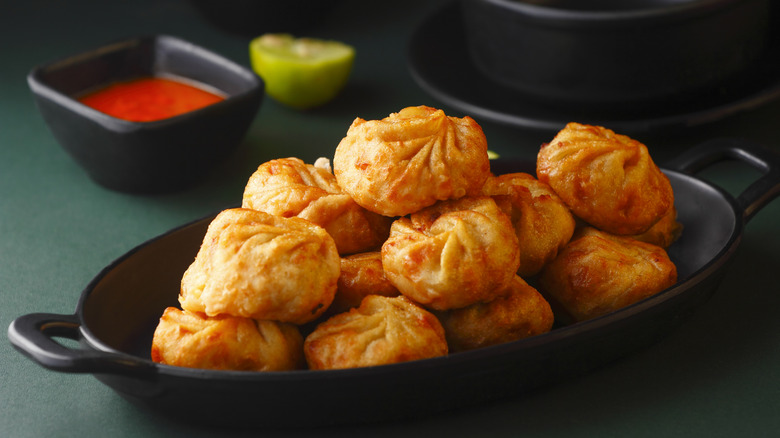
If you're a dumpling fan, momos are a must-try. Originally from Tibet, these round parcels of goodness made their way to neighboring countries like Nepal, Bhutan, and India when waves of Tibetans left their home country after the Chinese occupation. In the Himalayan regions, you can find momos everywhere, from street food stalls, restaurants, family dinner tables, and celebration spreads.
Momos are almost always made with flour dough that's rolled thin into balls and filled with meat, spices, and vegetables. Common fillings include yak meat, chicken, and beef, cabbage, and sometimes paneer cheese. After the dumplings are pinched together, they're either steamed or fried and served piping hot. They're especially good when dipped into a spicy and tangy tomato-chili sauce called achar or cilantro-mint chutney.
12. Choripán (Argentina)
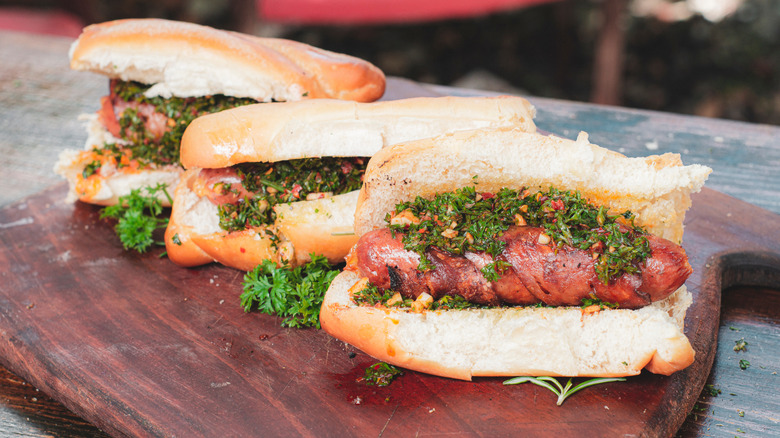
For those who grew up eating hot dogs from carts or street stands, choripán will seem familiar. However, there are a few differences between the Argentinian street food snack and its hot dog counterparts in other countries. For authentic Argentinian choripán, the sausage must be grilled chorizo. Then there is the bread, which is almost always toasted to make it crispy.
At its most basic, choripán is exactly what the name implies: a mix of "chorizo" and "pan," which is Spanish for bread. However, many say you can't eat choripán without chimichurri, a sauce made with fresh parsley, oregano, minced garlic, vinegar, and oil. Salsa criolla is another option that adds vibrant colors and flavors thanks to its mix of diced bell peppers, tomatoes, onions, vinegar, and oil.
13. Bakso (Indonesia)
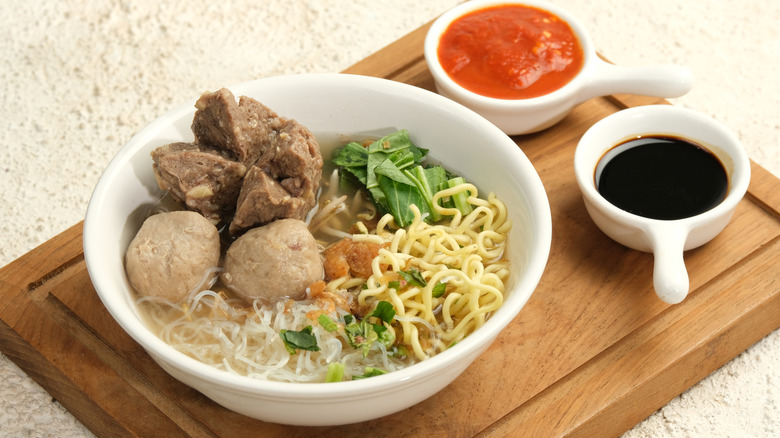
In Indonesia, you can find street food everywhere, and sometimes it even comes to you. That's the case with kaki lima carts, which translate to "five legs" and refer to the three cart legs and the two legs of the vendor pushing the cart. More often than not, the vendors will be selling one of Indonesia's most iconic dishes: bakso, which is a beloved meatball and noodle soup.
There are several varieties of bakso, but one of the most common styles features beef, chicken, or fish meatballs served in a clear broth with yellow egg noodles or white rice noodles. The soup can be garnished with crispy wontons, green cabbage, and crispy fried shallots. Condiments include spicy sambal, vinegar, and kecap manis (a sweet soy sauce).
14. Pupusas (El Salvador)
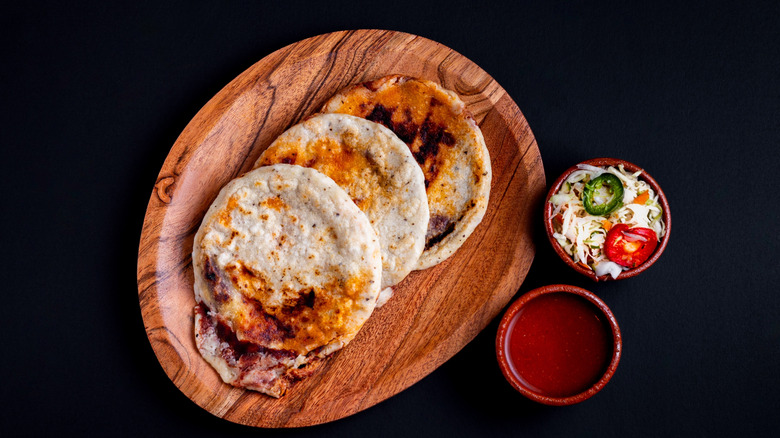
Many Latin American countries have national dishes that are deeply ingrained in the culture, and El Salvador is no exception. Pupusas can be found everywhere from street food stalls to home kitchens and fancy restaurants. Archaeological evidence shows that the Pipil people were eating these thick corn tortillas as far back as 3,000 years ago.
Pupusas are typically made by flattening dough made with masa harina (corn flour) into discs, then cooking them on a flat grill called a comal. You can eat them plain, or do like the locals do and top them with salsa roja and curtido, which is a vinegary cabbage and carrot slaw. Pupusas can also be stuffed with a variety of ingredients, including beans, cheese, chicharrón, and squash.
15. Tteokbokki (South Korea)
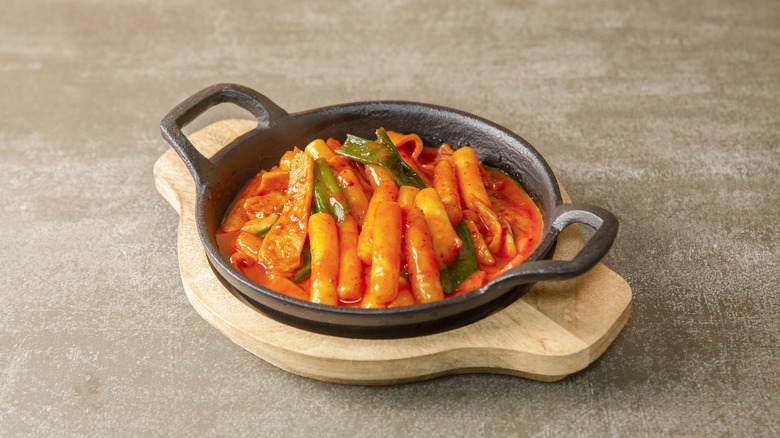
Walk through a street market in Seoul and you'll probably catch the smell of tteokbokki wafting through the air. It's a street food favorite and a dish that many Koreans have fond memories of eating from a young age. It consists of springy rice cakes stir-fried in a fiery red sauce that typically includes gochujang, soy sauce, garlic, sugar, and stock or water. It's spicy, sweet, and savory, plus you get the toothsome chew of the rice cake.
One of the great things about tteokbokki is how customizable it is. You can make the sauce five-alarm spicy or tone it down with more sweetness or savory flavors. In addition, you can throw in ingredients like hard-boiled eggs, seafood, meats, veggies, or noodles to make it more hearty.
16. Gyros (Greece)
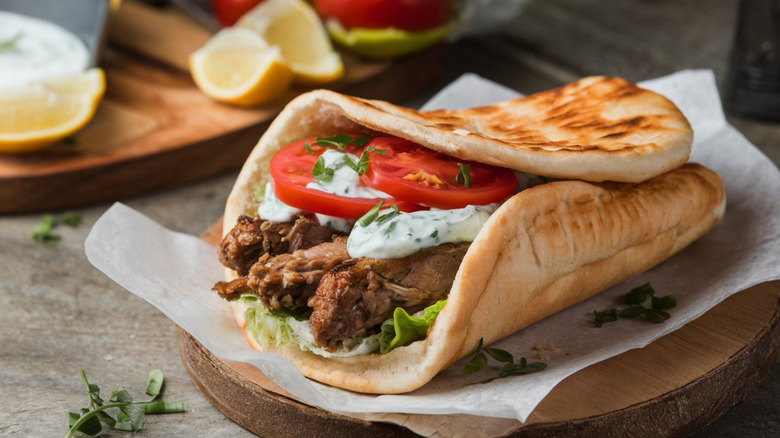
If you're in Greece and need a quick meal on the go, you can't go wrong with a gyro. Just look for the shops and stalls sporting vertical spits piled high with roasted, marinated meat. Many say the best meat for gyros is lamb, but you can also find versions with beef, chicken, and pork. The meat is shaved off in thin slices and served in a pita with fresh toppings.
Gyros likely came to Greece by way of Turkey sometime in the early 20th century. They're related to other spit-roasted handheld snacks like doner kebabs, shawarmas, and tacos al pastor. What sets gyros apart is the addition of tomatoes, red onions, and cool and creamy tzatziki sauce made with cucumber, yogurt, and garlic.
17. Pad Thai (Thailand)
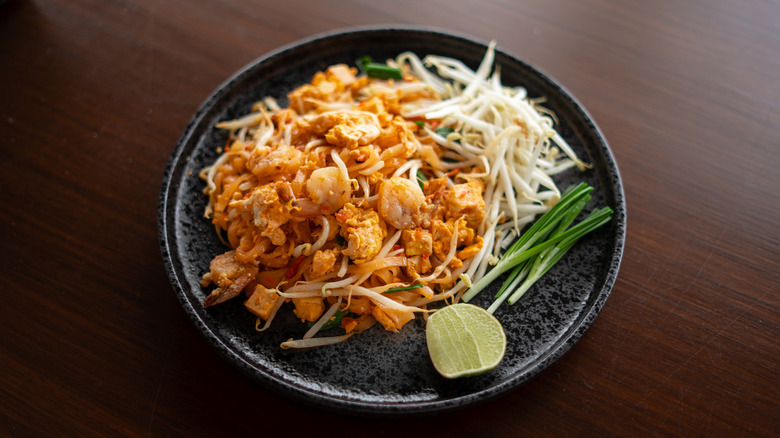
Most people outside Thailand know pad Thai from restaurants, but in Thailand, it's a street food staple. The dish dates back to the 1940s, when the Thai government encouraged people to eat more noodles in response to a rice shortage. The government even distributed recipes for pad Thai (aka "Thai fried noodles") and offered free noodle carts to vendors.
Today, pad Thai is typically made with fresh rice noodles that are tossed in a screaming hot wok with ingredients like tofu, dried shrimp, chili flakes, pickled radish, egg, and sometimes meat or fresh shrimp. The sauce is sweet, sour, and savory, with a mix of tamarind paste, palm sugar, and fish sauce. Garnishes can include scallions, chopped peanuts, and bean sprouts.
18. Anticuchos (Peru)
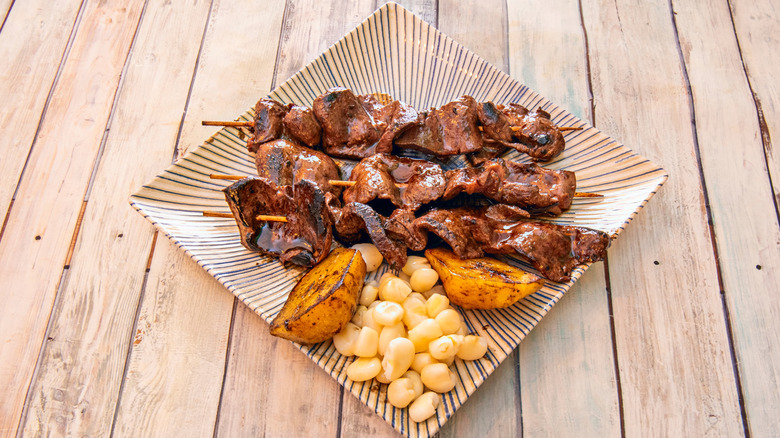
It's hard to find a more quintessential Peruvian street food than anticuchos. The classic version features slices of cow heart that are marinated in ingredients like vinegar, garlic, cumin, and a yellow pepper called aji. The slices are skewered and cooked over charcoal until tender, then served with an aji pepper sauce, potatoes, and corn.
Although records show that the Inca had traditions of grilling meat prior to the arrival of the Spanish, many sources state that the origins of anticuchos lie with enslaved African people. Plantation owners would often give meat scraps and offal to slaves, who found ways to make it more palatable by marinating the meat and cooking it over a fire. The dish went on to become so beloved that now there's even a national anticuchos day.
19. Arancini (Italy)
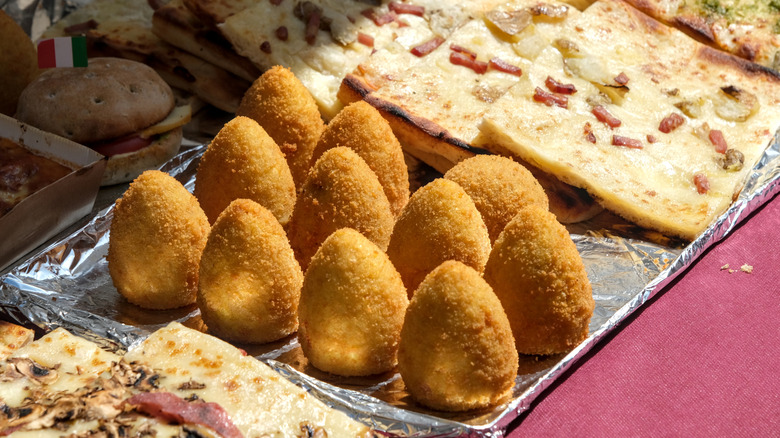
Arancini have been a part of Sicilian cooking for centuries, and it's easy to see why. These orange-hued balls (the name translates to "little oranges") are crispy on the outside and have creamy, chewy risotto that's flavored with saffron on the inside. Many also feature fillings like meat ragu, cheese, eggplant, or prosciutto. They're the ultimate finger food and perfect for eating on the go.
This tasty street food dates back to the 10th century, when Sicily was under Arab rule. The Arabs introduced a wealth of ingredients like saffron and created irrigation systems to grow rice. It's likely that the first arancini were simply rice formed into balls. Later, people discovered that breading and frying them made them easier to transport on journeys, and even more delicious.
20. Kottu (Sri Lanka)
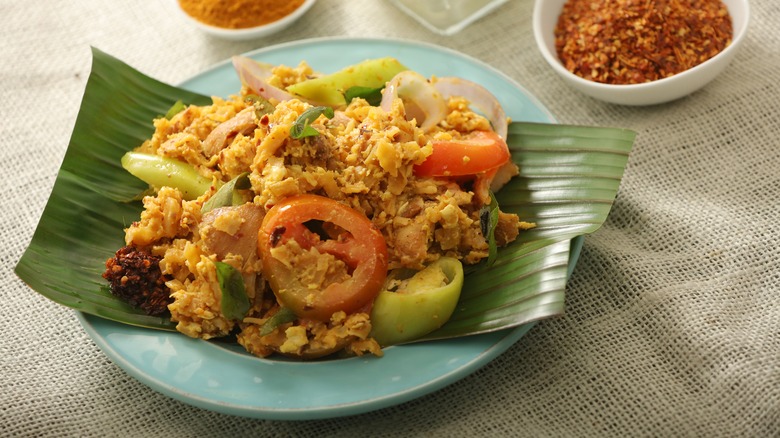
Walk down a busy city street in Sri Lanka, and you'll probably hear the ting of metal on metal coming from food carts. That's the sound of kottu being made. It starts with aromatics like ginger, curry leaves, garlic, cardamom, and chiles. Those get tossed in a hot wok with vegetables, meat, eggs, and chopped pieces of roti bread.
It's unclear exactly when kottu was created, but it became popular in the 1970s as a quick and affordable street food. It's pretty genius in that it's easy to prepare with whatever ingredients are on hand, and it makes for a flavorful and filling meal. The name simply means "chopped bread" in Tamil, which leaves a lot of room for interpretation.
21. Laksa (Singapore and Malaysia)
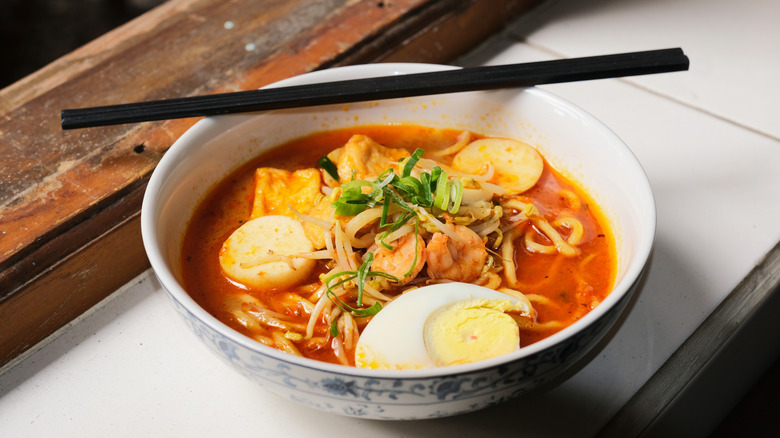
No visit to the Malay Peninsula is complete without trying a bowl of laksa. It's considered one of Singapore's most famous dishes and is just as renowned in neighboring Malaysia. The dish has its roots in Peranakan cuisine, which features Chinese and Malay influences. At its essence, laksa is a rich and fragrant noodle soup amped up with spices, seafood, and fresh herbs.
There are two main versions of laksa, both of which start with a curry paste base. Laksa lemak is more common in Singapore, and it features a creamy coconut milk gravy and ingredients like prawns, cockles, fish cakes, and fried tofu. Asam laksa is more popular in Malaysia, and it includes fish and sometimes pineapple in a sour tamarind broth. Both include plump rice noodles.
22. Fish and chips (England)
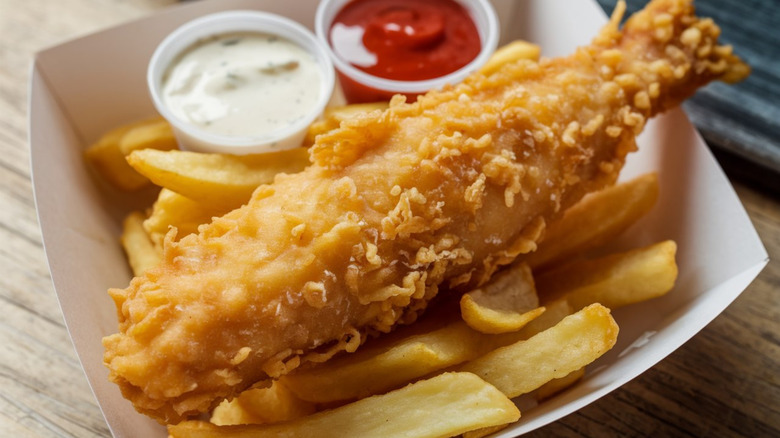
Wrapped in paper and often eaten by the seaside, fish and chips is about as British as it gets. It's easy to see the appeal — you have soft, flaky fish enveloped in a crispy coating along with hearty, thick-cut fries, both of which can be doused in malt vinegar or dunked in creamy, tangy tartar sauce. Add some mushy peas, and you have a complete comfort food meal.
The beginnings of fish and chips in the U.K. can be traced back to Jewish refugees, who introduced fried fish in the 16th century. Fried potatoes likely made their way to the country via Belgium sometime after the 17th century. Although we don't know who was the first to start selling them together, we do know that chip shops started popping up in the 1860s, and they've been popular ever since.