

10 Scrapped McDonald's Menu Items That Never Gained Popularity With Customers
We may receive a commission on purchases made from links.
One of the great things about McDonald's is that no matter which location you hit up, you can count on finding your favorite dishes. The Big Mac tastes the same in Chicago as it does in Los Angeles, and fries are always fries. That familiar consistency has been a big part of how McDonald's grew into the global giant it is today. At the same time, the chain has never stopped trying out new things. Over the decades, the company has launched countless new burgers, sides, and mains. Some went on to become iconic hits, while others were straight-up fails.
Interestingly, McDonald's started out as a barbecue joint. In 1940, brothers Maurice and Richard McDonald opened a small drive-through spot in San Bernardino, California, called McDonald's Bar-B-Q. It did well, but the brothers soon realized that the demand for burgers was huge. In 1948, they revamped and started selling hamburgers, fries, and shakes. In 1954, Ray Kroc joined as the franchising agent, and under his direction, the chain exploded. From those early days, the menu continued to evolve as the company added new items to stay competitive.
When McDonald's launches a new product, it's often for a limited time only so that the company can gauge how customers respond. Plenty of items have made grand returns or even become permanent menu items thanks to the cult-like followings they developed right from the get-go. However, several experimental dishes didn't go over so well. These are 10 of the company's scrapped menu items that never really gained popularity with customers, including several that were considered some of McDonald's worst mistakes.
1. Hula Burger
After the McDonald brothers reinvented their restaurant as a burger joint, the original menu had just a few items: hamburgers, cheeseburgers, apple pies, soft drinks, milk, coffee, and potato chips. In 1949, fries replaced the chips, and that menu stayed pretty much the same for nearly 15 years until one franchisee noted an issue. Lou Groen of Cincinnati, Ohio, found that his sales declined every Friday during Lent, when his large Catholic customer base would abstain from eating meat. That led to two new menu items, one of which was an utter flop.
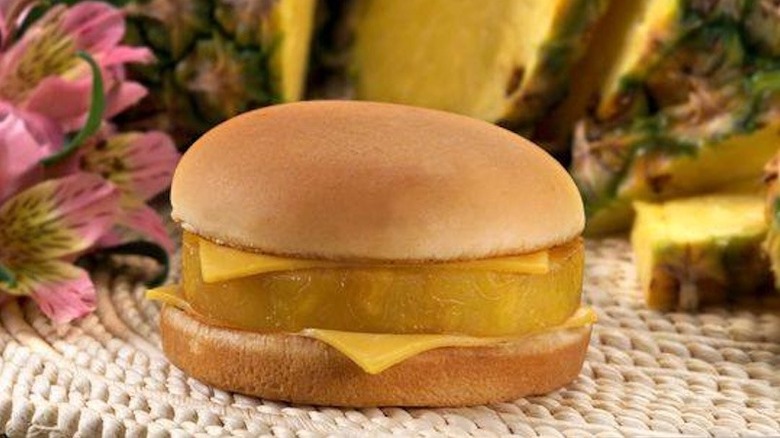
In 1962, Groen proposed offering a breaded whitefish sandwich on the McDonald's menu to see if that would boost sales during Lent. Ray Kroc was intrigued, but he had another idea for a burger with a fruity twist. He called it the Hula Burger, and it consisted of a pineapple slice topped with cheese and sandwiched in a bun. Kroc suggested testing Groen's Filet-O-Fish sandwich and the Hula Burger in a head-to-head competition to determine which one would generate more sales.
Although Kroc was convinced the Hula Burger would be a clear winner, it only counted for six sales, while Groen's fish sandwich rang in at a whopping 350 sales. The Filet-O-Fish became a permanent menu item, and the Hula Burger has never been seen again. While the Filet-O-Fish may have sounded controversial at the time (and even has its detractors today), clearly it proved more appealing to diners than a slice of pineapple posing as a burger.
2. Onion Nuggets
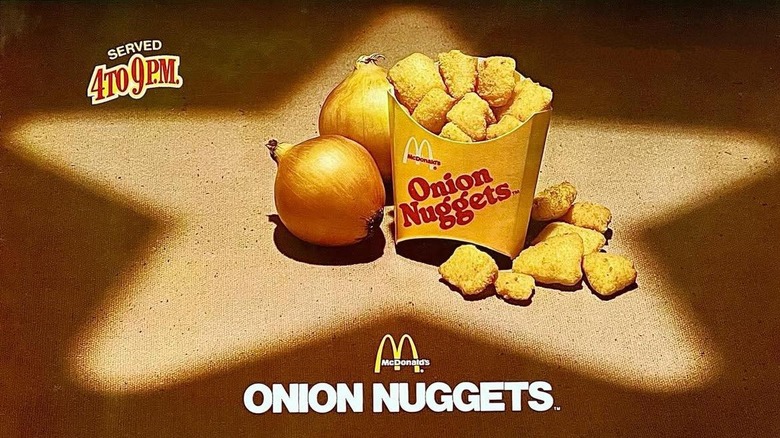
McDonald's is famous for its fries, but the chain has tried other fried items over the years, some of which have been more successful than others. One of the more unusual attempts was Onion Nuggets. They consisted of chunks of onions that were deep-fried until crispy and golden. They were sold in a cardboard carton just like the fries and were meant to be a tasty snack or side. Unfortunately, they didn't manage to win customers over.
In 1976, René Arend took on the position of executive chef of McDonald's, and his first task was to create a new side. He came up with the Onion Nuggets, which were meant to be something along the lines of onion rings, but in a bite-sized format. The nuggets launched in 1978, but they got a pretty lukewarm reception. McDonald's gave it a good go, keeping them on the menu until 1979, but they were ultimately pulled due to low sales. There was a silver lining, though.
One of the little-known facts only real McNugget fans know is that the failed Onion Nuggets were the prototype for McDonald's famous Chicken McNuggets. Legend has it that Fred Turner, who was the McDonald's chairman at the time, told Arend that he should try chicken instead of onions. In 1983, Chicken McNuggets launched, and they were a resounding success. In fact, they were so popular that they triggered a shortage of chicken meat, and that led Arend to create another dish that gained a massive following: the iconic McRib.
3. McPizza
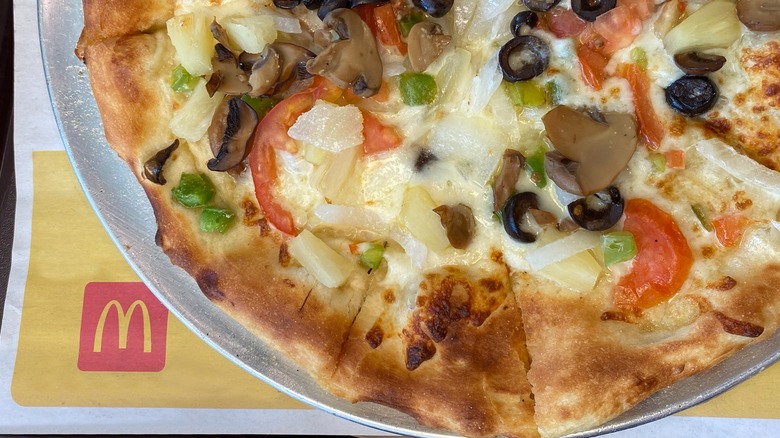
If you grew up in the 1990s, there's a good chance you remember eating pizza at McDonald's. Affectionately called McPizza (although that was never the real name), the pizzas came in family-sized and personal-sized pies, and you could choose between cheese, pepperoni, sausage, and the deluxe, which included sausage, onions, mushrooms, and peppers. Speaking from personal experience, they weren't all bad, at least not from a kid's perspective. That being said, there were a few issues.
By the 1980s, McDonald's was already riding high. The chain had scored big with its breakfast line, Happy Meals, and Chicken McNuggets. Even so, the company was constantly looking for ways to stay ahead of competitors and capture more of the family dining market, and pizza seemed like a good fit. McDonald's began testing it in select locations, and by the early 1990s, it was available in hundreds of locations in the U.S. and Canada.
The main problem with McDonald's pizza was that it took too long to make. Although McDonald's had created special fast-cooking ovens for its pizza, customers still had to wait longer than they would for a burger and fries. In addition, many customers thought the pizza was pretty mediocre. Plus, the special equipment and packaging were somewhat of a logistical nightmare. In the end, McDonald's decided to halt the pizzas, and they were all but gone by the early 2000s. However, die-hard fans can still grab one at the world's largest Entertainment McDonald's (aka Epic McD ) in Orlando.
4. McSpaghetti
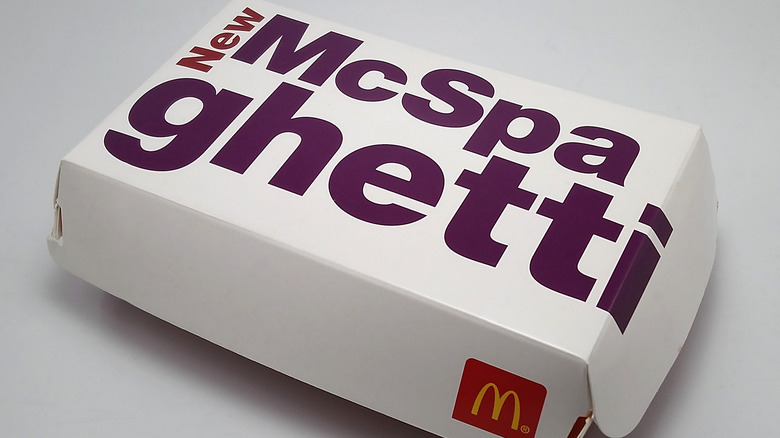
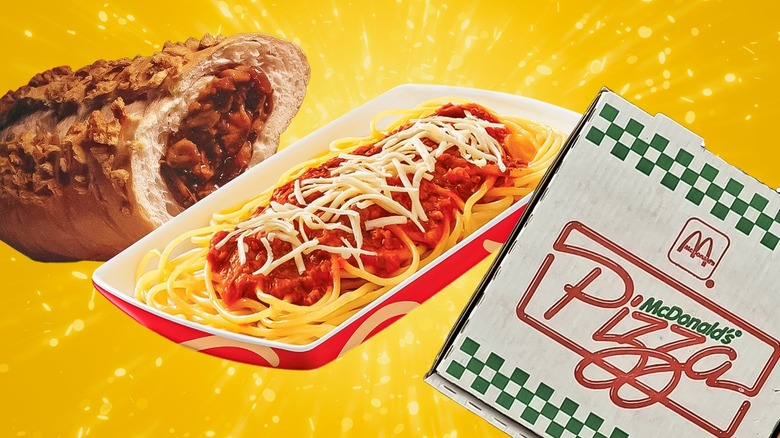
Considering that McDonald's was willing to take on some of the biggest pizza chains in the nation, it's not surprising that the chain also tried its hand at pasta. In the 1980s, McDonald's introduced the McSpaghetti alongside other dishes like lasagna and fettuccine Alfredo. Despite the initial excitement, the McSpaghetti didn't manage to impress American diners enough to survive past the 1990s. However, it's still going strong in a few key locations.
Around the same time that McDonald's rolled out its first pastas in America, a man named George Yang was at the helm of the first McDonald's franchise in the Philippines. He knew that the best way to win fans was by catering to local tastes, so he lobbied to have special dishes added to the menu. In 1986, a McSpaghetti was introduced that featured sweet banana ketchup, hot dog slices, and cheese. It was a huge hit, and even today, many people will tell you it's one of the top international McDonald's menu items you need to try when traveling.
You can also sample a version of McSpaghetti at Epic McD. Considered one of the most unique McDonald's locations in the world, Epic McD spans three stories and 19,000 square feet, and it offers menu items that you won't find in many other locations. There's a build-your-own pasta option that gives you choices of spaghetti, ravioli, tortellini, or cavatappi with sauces like bolognese, marinara, pesto, Alfredo, or olive oil and garlic. You can also top your pasta with ingredients like tomatoes, mushrooms, or bacon.
5. McHotDog
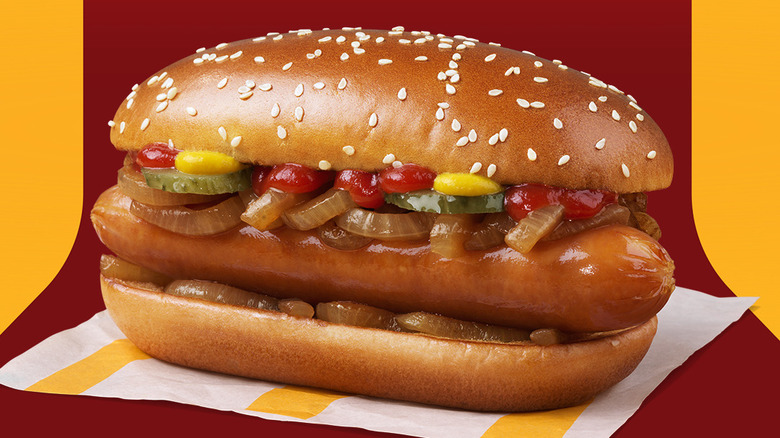
Before the McDonald brothers opened what would go on to become the iconic McDonald's chain, they tried their hand at running a hot dog stand. As history shows, burgers were a much smarter play. You'd think that later decision-makers might have taken note of that before giving hot dogs a try, but in 1995, the McHotDog hit select locations in the U.S. and later in Canada. Given that many people have no recollection of the hot dogs but can remember McDonald's pizza, it's safe to say the McHotDog was pretty underwhelming.
If Ray Kroc had been alive when the McHotDog was in the works, he probably would have nipped the idea in the bud. In his autobiography, "Grinding It Out: The Making of McDonald's," he discussed adding new menu items to the menu, and he was pretty explicit that hot dogs were an absolute no-go. He said, "There's a damned good reason we should never have hot dogs. There's no telling what's inside a hot dog's skin, and our standard of quality just wouldn't permit that kind of item."
Regardless of all the warning signs, McDonald's kept the McHotDog around until about 1999 in North America, and occasionally brought it back as a seasonal menu item in some locations. It also made appearances abroad, notably in Japan, where it was offered as both a lunch and breakfast item. In 2025, the company rolled out a Classic Hot Dog at McDonald's locations in Korea. It features a plain hot dog on a sesame seed bun with optional condiments like mustard, pickles, onion, and ketchup.
6. McStuffins
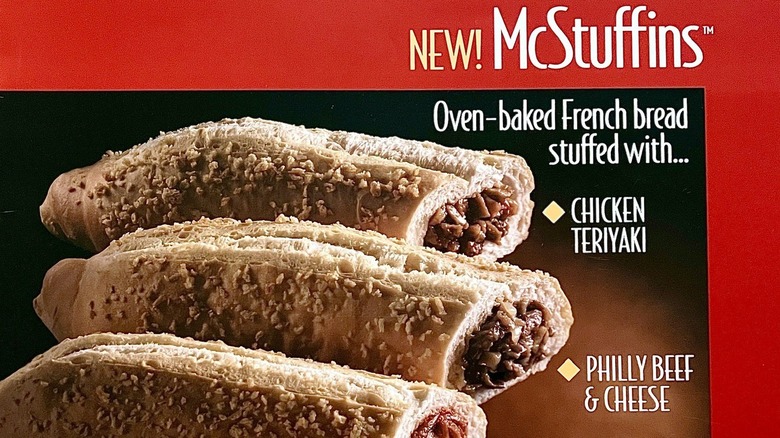
The 1990s were arguably one of the most experimental periods for McDonald's, with the chain rolling out everything from pizza to hot dogs, "healthy" burgers, and McFlurries in an array of flavors. One of the stranger ideas to come out of this era was McStuffins. They were like a mash-up of submarine sandwiches and Hot Pockets, which, for those who don't know, are microwaveable calzone-style pastries filled with cheese and meat. McStuffins might sound like a fun twist on a sandwich, but customers weren't exactly lining up to get their hands on them.
It's clear from the McStuffin commercials that McDonald's had high hopes for the sandwiches. Several ads centered around McDonald's employees trying to keep key elements about the sandwiches secret, like the fact that the chain would be baking its own French bread in restaurants all day and stuffing the bread with tasty fillings like barbecue chicken, pepperoni pizza, chicken teriyaki, and Philly beef and cheese. The insinuation was that if people found out about them, they would mob the restaurants in a McStuffin-crazed frenzy.
It appears that McStuffins were only released to small test markets in 1993, as many people have no recollection of them, including people who worked at McDonald's during that time. Obviously, the sandwiches didn't do so well because they were pulled a short time later. Perhaps it's because they were too similar to Hot Pockets and just couldn't compete. Or maybe it's that the flavors weren't great. Then again, maybe McDonald's pulled them because baking fresh bread every day was just too time-consuming.
7. McLean Deluxe
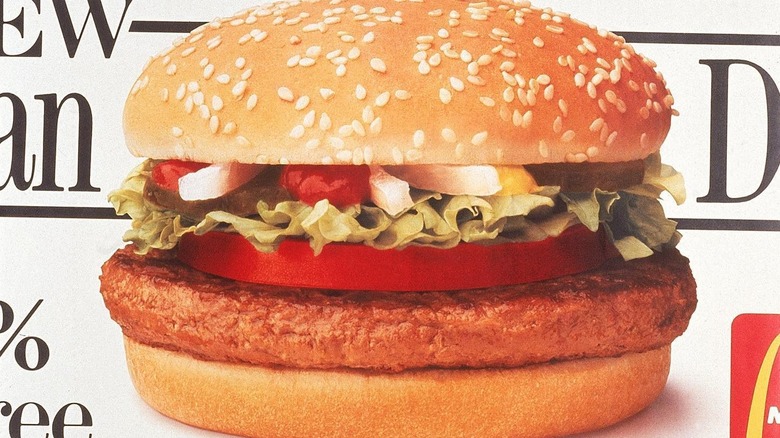
McDonald's built its reputation on its hamburgers, and it continued to attract fans with numerous new burger additions. The Big Mac was added to the menu in 1968, and it's been a top seller ever since. The Quarter Pounder arrived in 1973 and became just as beloved. However, not every burger was destined for long-term success. In fact, one McDonald's burger failed so hard, it earned the name "McFlopper." Its real name was the McLean Deluxe.
By the early 1990s, low-fat diets were all the rage, and McDonald's wanted in on the trend. Its solution was the Deluxe Line of burgers, which were meant to be healthier options geared towards adults. The first burger to roll out was the McLean Deluxe in 1991. It featured a patty that was 91% lean beef, with the missing fat replaced by a seaweed extract called carrageenan. It was topped with lettuce, tomato, pickles, ketchup, and mustard, and served on a bakery-style bun.
Although McDonald's went all out with the McLean Deluxe, from getting food scientists to engineer the burger to spending tons on an advertising campaign, the burger fell flat with diners. Sure, it was a healthy alternative with about 10% to 15% less fat than a Big Mac, but that's not necessarily what people wanted when they pulled up to a McDonald's drive-thru window. In addition, many found it dry and off-putting, with some saying it tasted like ground-up newspapers.
8. Mighty Wings
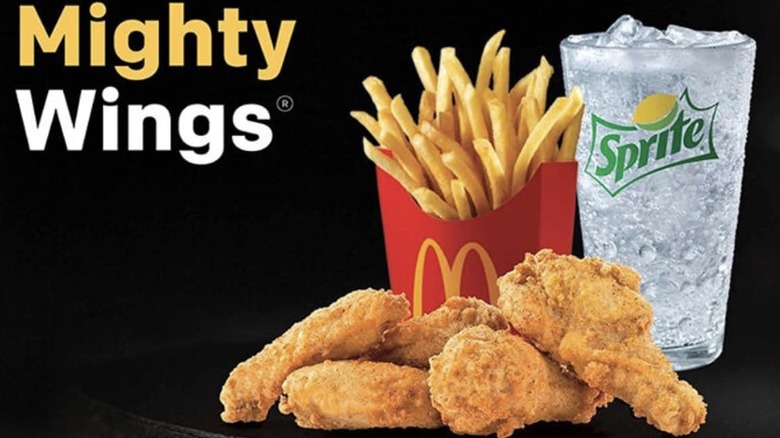
McDonald's has had some real ups and downs with chicken products over the years. Take the McChicken, which first launched in 1980, but was taken off the menu due to lackluster sales. Three years later, Chicken McNuggets were a massive success, which may have prompted the company to reintroduce the McChicken in 1988 with better results. In 2013, the chain launched limited-edition bone-in chicken wings to kick off the NFL football season. Unfortunately, McDonald's Mighty Wings never really took flight with customers.
The Mighty Wings were pretty standard fare that you might find in any sports bar. McDonald's described them as "bone-in, crispy chicken wings that deliver a spicy kick with every bite." Apparently, they were inspired by larger chicken wings that did well in the Hong Kong market. The wings and drummettes came in three-piece, five-piece, and 10-piece boxes and could be paired with a choice of nine different sauces. McDonald's also teamed up with NFL players Joe Flacco, Colin Kaepernick, and Victor Cruz to market the wings.
While the bone-in wings did have some fans, they performed pretty poorly across the board. So poorly, in fact, that by the end of the year, McDonald's still had 10 million pounds of unsold wings. One of the main problems was that people thought they were too pricey. According to CBS News, CEO Don Johnson admitted that $1 a wing wasn't very competitive at that time. In addition, some people couldn't handle the spice level.
9. Arch Deluxe
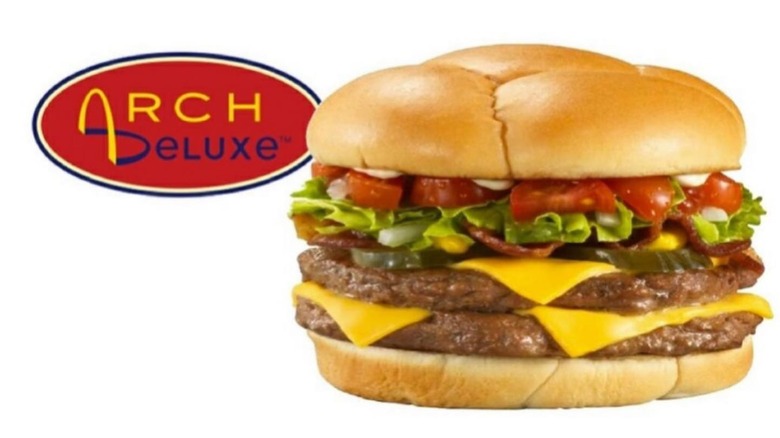
By the time Andrew Selvaggio took on the role of McDonald's head chef in 1994, the McLean Deluxe had already been on the menu for a few years, and the company was very much still invested in creating burgers that appealed to adults. Selvaggio was tasked with creating a sophisticated burger, and after much trial and error, the Arch Deluxe launched in 1996. It featured a beef patty with peppered bacon, lettuce, tomato, onions, cheese, ketchup, and Dijonnaise on a bakery-style bun.
As with the McLean Deluxe, McDonald's went to town promoting its latest addition to the Deluxe family. One Arch Deluxe commercial featured Andrew Selvaggio in full chef attire discussing the quality of the ingredients, while another featured a teenage boy and girl on a date with the boy picking off the Arch Deluxe toppings, and the girl saying, "I guess we really do mature faster." In addition, the tagline was "It's the burger with the grown-up taste."
Adults may have been the target market for the Arch Deluxe, but many weren't overly impressed. It's not that it tasted bad, because the burger did have its fans. It was more that the message was just off. For one, it's never a good idea to market a product as something people will find unappetizing, even if those people are kids. Plus, many knew and loved McDonald's for its affordable food, and fancy burgers didn't quite fit the image. All up, the Arch Deluxe was an epic fail, and it disappeared in 2000, along with the whole Deluxe line.
10. McSalad Shakers
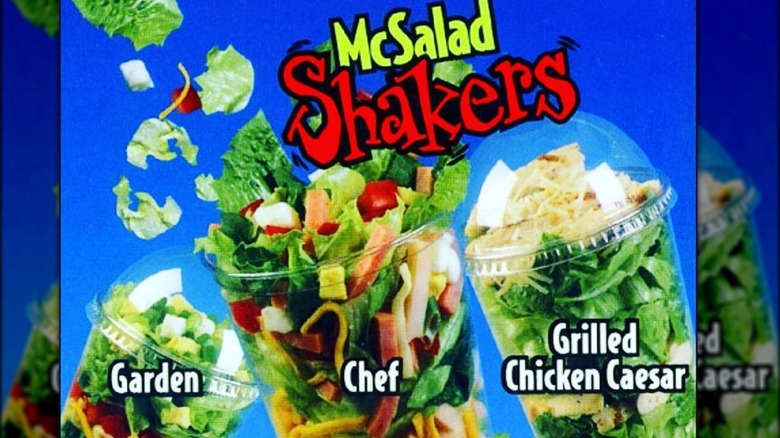
Even before the McLean Deluxe was rolled out to entice health-conscious customers, McDonald's had been experimenting with adding lighter options to the menu. In 1987, the company debuted three salads, including the Garden Salad, Chef Salad, and Chicken Oriental Salad. They were generally well-received, but in 2000, McDonald's decided they needed a revamp, so it came out with McSalad Shakers. The new salads were essentially salads in cups that you could shake and mix up yourself.
It's not surprising that McDonald's decided to give its salads a makeover in the early 2000s, given that public opinion was shifting. People were becoming more conscious about what they ate, and fast food was being blamed for a variety of health problems. At the time, the McSalad Shakers seemed like a smart and fun idea. They came in three versions: Garden, Chef, and Chicken Caesar. At first, the shakeable salads were a novelty. However, it's clear the concept wasn't a huge hit because McDonald's pulled them from the menu in 2003.
The main problem people had with the McSalad Shakers was that they didn't seem all that healthy, given that they were loaded with meats, cheeses, and dressings. Take the Chef McSalad Shaker, which featured lettuce, julienned ham and turkey, cheddar and jack cheese, chopped eggs, chopped tomato, and green onions. McDonald's eventually replaced the Shakers with more traditional salad bowls, and those stuck around for years, until McDonald's stopped selling salads altogether during the COVID pandemic.