

18 Types Of Candy You Can Make With Common Pantry Ingredients
We may receive a commission on purchases made from links.
Candy-making is a labor of love. It requires attention to detail, particularly around temperatures and repetitive stirring, as well as patience, time, and often unique ingredients you may not already have on hand. If you're just learning to make candy at home, the last thing you want to do is invest tons of money into niche ingredients like invert sugar and isomalt before you even know whether you want to take up candy-making as a hobby.
This is why I wanted to come up with a list of relatively simple confections you can make at home with ingredients already in your pantry (or at least ingredients you can use for other things besides candy-making so they won't go to waste). Since the ingredient lists are fairly short and simple, these treats also have the benefit of being beginner-friendly, customizable, and, in many cases, ones you can make with the whole family.
1. Buckeyes
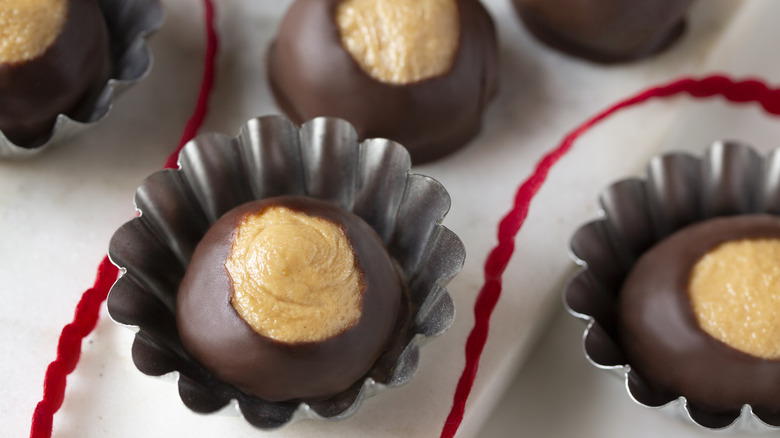
No, I'm not talking about the nut of Ohio's state tree, nor is this about the mascot of The Ohio State University. Rather, this is about the delicious chocolate-and-peanut-butter candies, which are arguably the most iconic dessert in Ohio. The recipe is simple: Peanut butter, butter (or coconut oil), powdered sugar, and vanilla are combined, rolled into balls, and then almost entirely covered in chocolate. The chocolate-free spot in the center is what makes these tasty, savory-sweet treats resemble their namesake nut.
Milk chocolate is a favorite for this recipe, though you could also use dark chocolate if you prefer a stronger cocoa flavor. I strongly recommend freezing the peanut butter balls on a sheet pan before covering them with chocolate — and keeping a slotted spoon handy so you can fish the balls out without getting chocolate all over your hands.
2. Chocolate bark
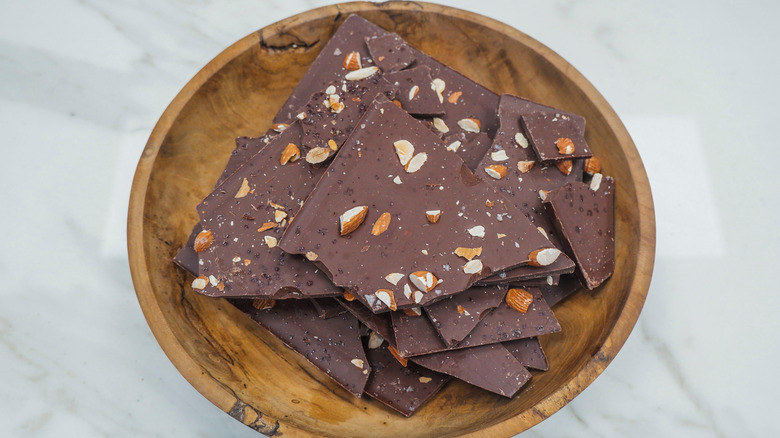
Chocolate bark is one of the easiest candies to make, and you can switch up the recipe depending on the pantry staples you have on hand. The only real essential you need is chocolate (I prefer baking chocolate, which melts more consistently than chips). Melt the chocolate and spread it on a baking sheet, then stud it with your favorite add-ins, like nuts, pretzels, and candies; once it's cooled, crack it into bite-sized shards. You can also use almond bark (like this option from Great Value), which melts especially well.
Variations of this simple confection abound, including chocolate toffee bark and easy almond bark, the latter of which features almonds and vanilla. I've also had good results with sprinkling flaky sea salt on top (Malden is my go-to brand).
3. Fudge
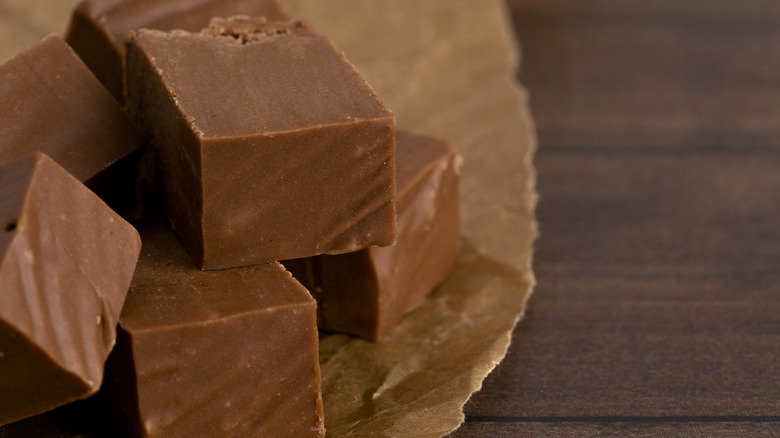
Fudge seems harder to make than it actually is. However, its ingredient list is relatively short, especially if you are following a shortcut recipe. For one, you can make the easiest peanut butter fudge recipe ever by combining your favorite peanut butter with whipped cream cheese frosting. Once you microwave the two together, plop the mixture into a lined pan and let it set in the fridge before slicing. You can also make a shortcut chocolate fudge with canned sweetened condensed milk and melted chocolate chips (both white and milk chocolate work).
Both of these preparations will save you the agony and frustration of stirring traditional, corn syrup-based fudge on the stovetop and trying to get it to the right temperature. The fact that these shortcut variations are made with pantry staples makes them even more attractive, as does the ability to mix in your favorite add-ins, like crushed Oreos, pretzels, and nuts.
4. Simple caramel
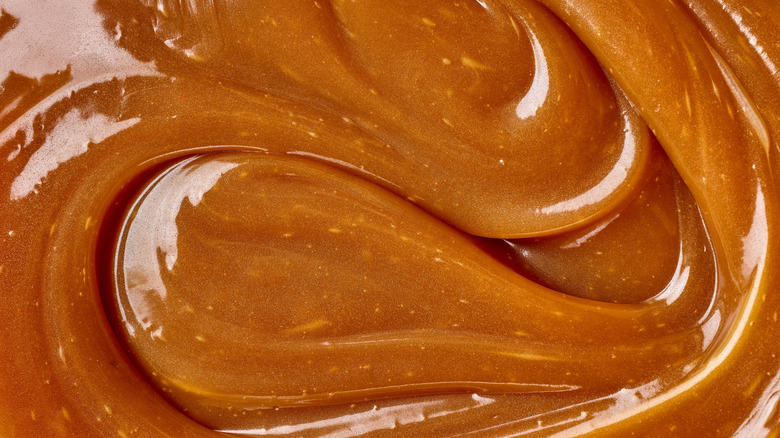
Caramel is a trial-by-fire recipe — both literally and figuratively. You have to pay attention to so many sensory cues, be careful not to burn it, and also avoid sloshing it around in the pan as it cooks. But the boost of culinary confidence you get when you get it right is unmatched.
You need very few ingredients to make homemade caramel, and you might already have them in your cupboard: corn syrup, sugar, vanilla, evaporated milk (some recipes call for heavy cream), and butter. You can also make an entirely dairy-free, pantry-goods-only recipe with canned sweetened condensed coconut milk, coconut oil, and full-fat coconut milk.
My biggest pieces of advice for making caramel are to read the recipe and avoid walking too far away from it as it cooks. If you add something prematurely, heat it too high, or skip a step, the resulting "caramel" is likely not going to be usable.
5. Marshmallows
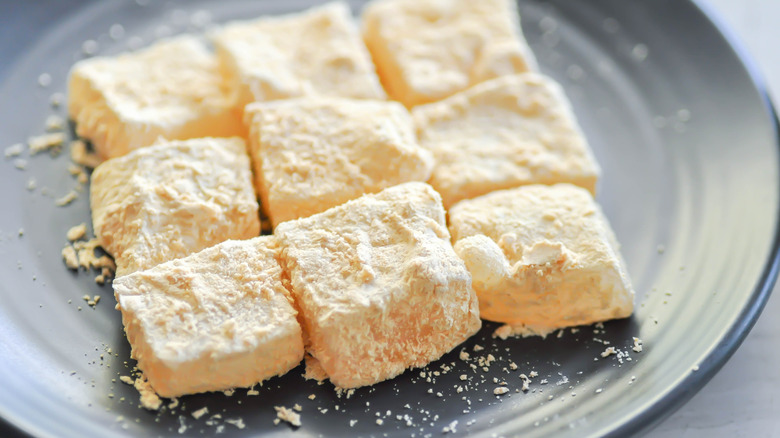
Homemade marshmallows can be made with pantry staples like gelatin, granulated sugar, and powdered sugar, but this three-ingredient treat is not entry-level, and it's not mess-free. It's not one I'd recommend a beginner home cook try, but if you're patient and willing to make mistakes, it is worth trying (once). You have to make sure everything is super, super clean so that the gelatin sets properly, prevent the sugar from crystallizing, heat it to the firm-ball stage, whisk the syrup with the bloomed gelatin, cover it in powdered sugar (and usually cornstarch) to limit sticking, and let it set. TL;DR, it's a lot of work for a couple of 'mallows in your hot chocolate.
However, once you are comfortable, you can experiment with different extracts and even swirl in some caramel. This is a great recipe to try as a weekend project.
6. Honeycomb toffee
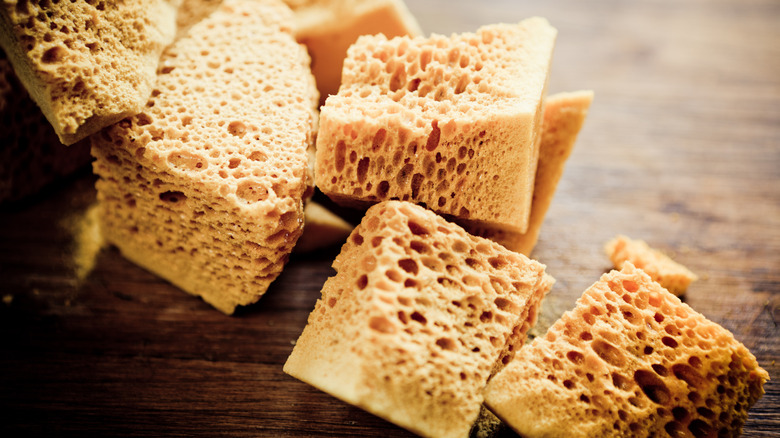
If you are looking for a candy recipe that uses pantry staples and is surprisingly simple, I'd point you to honeycomb toffee. This recipe requires a handful of pantry staples, including honey, sugar, and, surprisingly, baking soda. Some recipes will also use corn syrup or brown sugar. Once the syrup comes together, add baking soda, which triggers the release of carbon dioxide and gives this candy its signature honeycomb texture. Be sure to line a pan ahead of time, as once that baking soda is mixed in, you don't have long before it deflates.
The cooled, sliced toffee can be dunked in melted chocolate or drizzled with melted caramel. It's a very airy candy, and biting into a piece is similar to eating actual honeycomb. If breaking your teeth on hard caramel isn't your idea of fun, honeycomb toffee is a great alternative.
7. Chocolate clusters
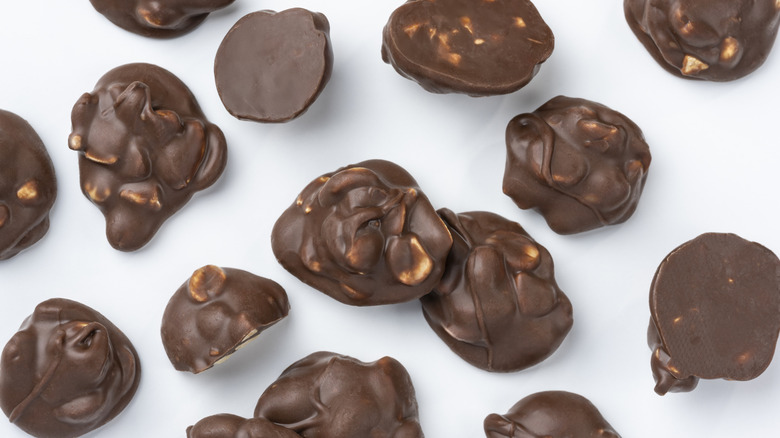
These chocolate clusters are about as simple as homemade candy gets. You only need about an hour, a Crock-Pot, and three ingredients to make them, and they're one that kids can help with (both in terms of making and eating). Chocolate chips, peanut butter, and roasted peanuts meld together in a slow cooker; just stir often to prevent anything from sticking to the bottom and burning. Once melted and well mixed, scoop it onto a lined cookie sheet and let the candy set.
If you want to limit mess, I would recommend using a cookie scoop, like this 1.5-tablespoon KitchenAid one, so that you don't risk sticky fingers trying to pry the chocolate off a spoon. Peanuts are standard, but you can also swap them out with almond butter and roasted almonds if you prefer.
8. Potato candy
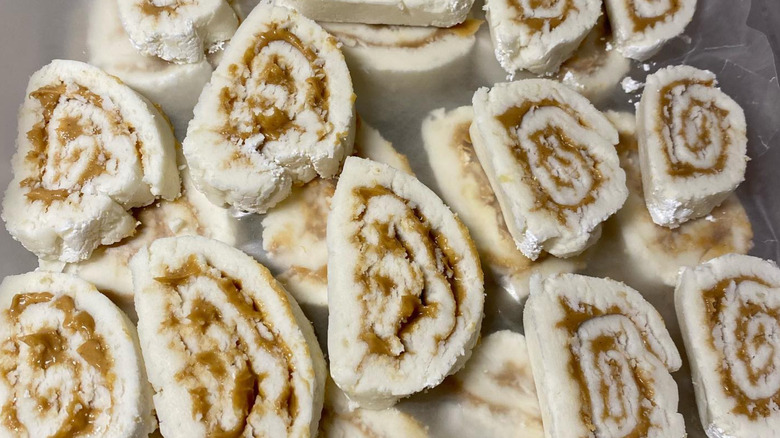
What kind of candy? Potato candy! This unique treat is made with mashed potatoes, which may make you scratch your head. Aside from an odd ingredient, this old-school candy comes together with a few other simple ingredients, like powdered sugar and peanut butter. If you don't have leftovers on hand, you can use a box of instant mashed potatoes prepared with water.
The potatoes are mixed with powdered sugar until a dough forms. The sticky dough is then rolled out on a sugar-dusted surface, slathered with peanut butter, and rolled up like a Swiss roll. From there, it can be sliced into bite-sized pieces. I recommend cutting it small, as the amount of powdered sugar in this recipe means the rolls are super sweet.
9. Gummy candy
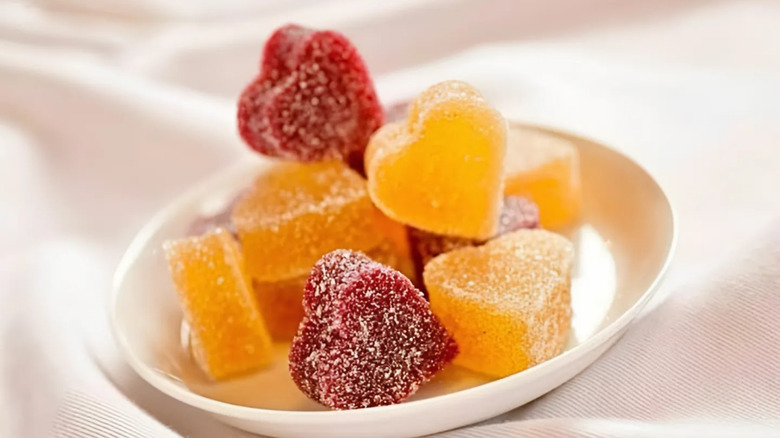
You probably don't think about your favorite gummy bear brand and think, "Oh yeah, let me try to make these at home!" But you can, so long as you have two ingredients: fruit juice and powdered gelatin. Mix the gelatin directly into the juice on the stovetop, then pour it into your molds to set. If you prefer a chewier texture, they will be ready after a couple of hours in the fridge. For a harder candy (akin to a store-bought gummy), leave it at room temperature for a few hours.
Since this recipe requires only two ingredients, variations abound. Pineapple or mango juice would give you a tropical candy, though you could always try using strawberry lemonade for summery-tasting gummies. Be sure to use a silicone mold, like this one from Sakolla, as it makes popping the candies out easier than a hard plastic mold.
10. Rock candy
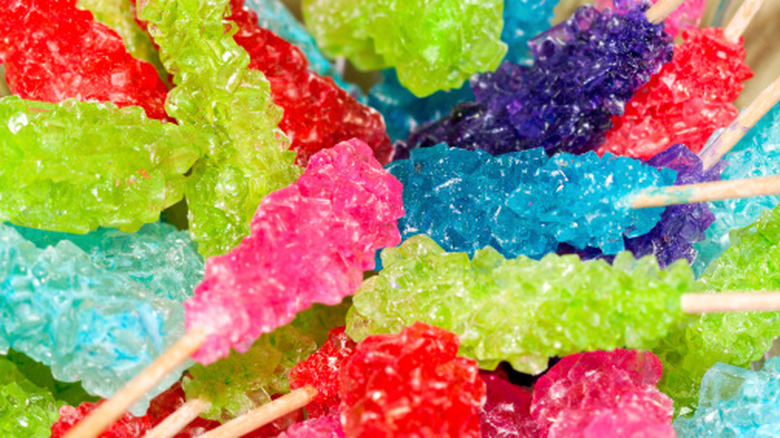
Friends, we're back in elementary school science class and making rock candy. This project is excellent for teaching kids about crystal formation and patience, and it's also delicious and relatively simple. You only need three ingredients to make this candy (which was surprisingly popular during the Victorian era): sugar, water, and flavoring. Many people will stock up on sticks (like this set of 100), but you can also use heavy-duty, food-safe string if you prefer.
The sticks or twine dangle in the hyper-sweet solution, and after a few days, you can remove them to reveal a funky, crystalline structure and plenty of color (you can use food coloring for this). Try flavoring your rock candy with oils and extracts. Root beer extract offers a nostalgic flavor, while fresh lemon juice yields rock candy that's perfect for swirling into iced tea.
11. Toffee-coated Saltines
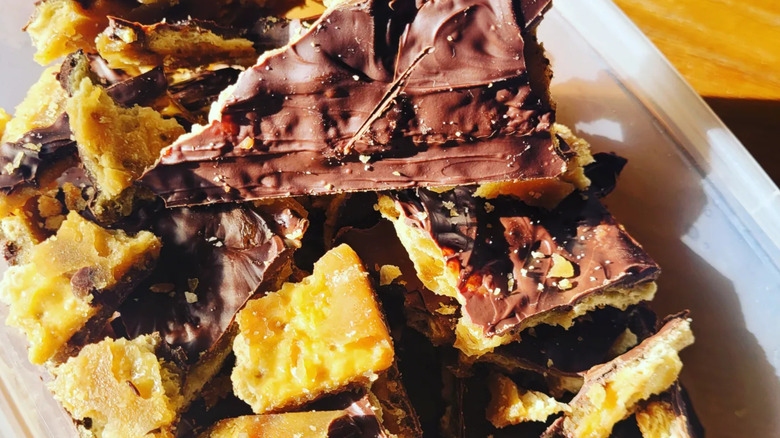
Toffee-coated saltines are a popular holiday treat. This creative way to use saltines turns an otherwise bland cracker into a sweet, crunchy confection that eaters of all ages will love. You technically only need two added ingredients to make this holiday treat: brown sugar and butter. However, if you want to skip the butter, you can also melt caramel candies for this recipe; the mixture will just be thicker, and depending on the candies you use, the caramel layer may be sticky and gooey, or crunchy.
Things can get messy, so line your pan with foil ahead of time and lay your crackers in a single layer. Boil the brown sugar and butter together until thick and fragrant, or heat up your caramels in the microwave until molten, spread the mixture on the crackers with a spatula, and pop the tray in the oven to finish. You can customize these crackers with a sprinkle of chocolate chips or a drizzle of melted chocolate; the latter creates a sticky base for crumbled candy canes, holiday sprinkles, or sea salt. Once the chocolate and toffee have set, crack the pieces and enjoy them!
12. Peanut butter cups
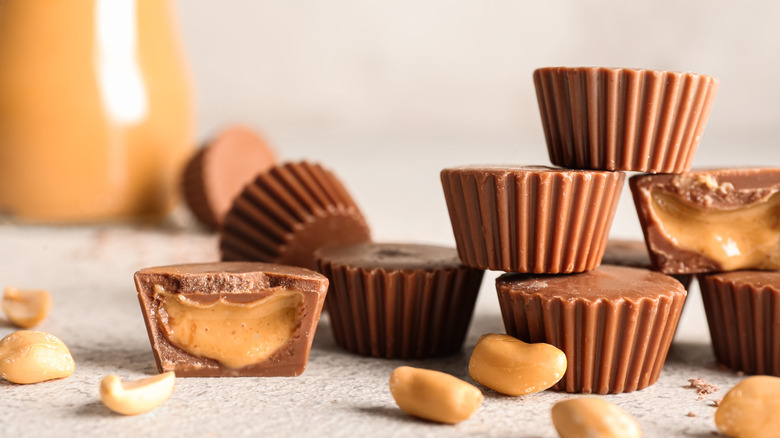
If you are of the mindset that Reese's has gone downhill in recent years, you'll be happy to know that you can make your own peanut butter cups using an array of simple pantry staples, namely peanut butter, powdered sugar, and chocolate.
A good mold is critical for this candy; you can find silicone options, like these mini molds and full-sized sets. Once you have a clean mold, add a layer of melted chocolate to the bottom, freeze the mold, spoon in your peanut butter mixed with the sugar, and freeze again. You may need to gently tap the mold against the countertop to flatten the chocolate or peanut butter. Once chilled, add your final chocolate coating and return to the freezer to set. I love this simple recipe because you can add as much or as little powdered sugar as you want (for a more Reese's-like texture and sweetness, I recommend adding more); use milk, dark, or white chocolate, and add extra texture with chopped peanuts or crumbled Oreos.
13. Molasses taffy
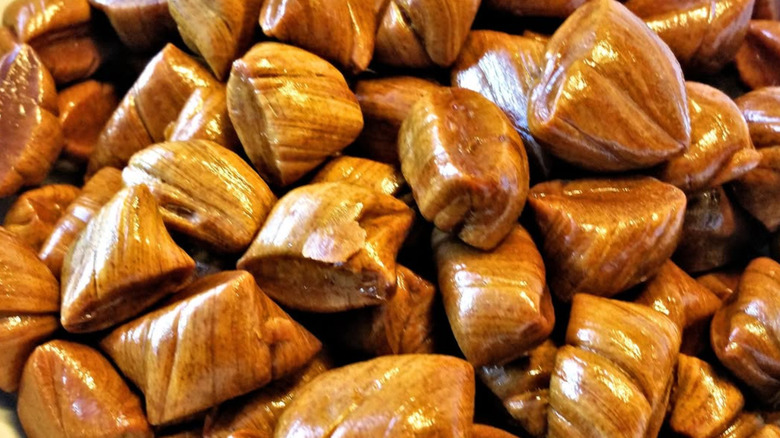
You may get the impression that molasses taffy is an old-school candy — and that's true. Molasses is a pantry staple, but most people only use it in cookies or gingerbread. However, this sweet confection may help you to understand how utilitarian molasses is.
This recipe combines molasses, sugar, water, baking soda, white vinegar, and butter. However, there are also variations made only with sweetened condensed milk and molasses. If you're sticking with the classic recipe, cook all the ingredients, sans butter and baking soda, on the stove until they reach the hard-ball stage. Once the butter and baking soda are stirred in, transfer the mixture to a baking sheet. Then the fun comes in. This taffy, regardless of the recipe you follow, must be stretched (only after it's cool enough to handle, of course) to work air into it. Once the confection has reached the perfect golden-brown color and resists being pulled, it's ready to be sliced and enjoyed.
One important thing to note about this recipe is that, as its "taffy" name suggests, it's quite sticky. You can use butter or oil on your hands to prevent it from sticking. We recommend wrapping it in pieces of wax paper, as its coating helps prevent sticking.
14. Chocolate-covered candies
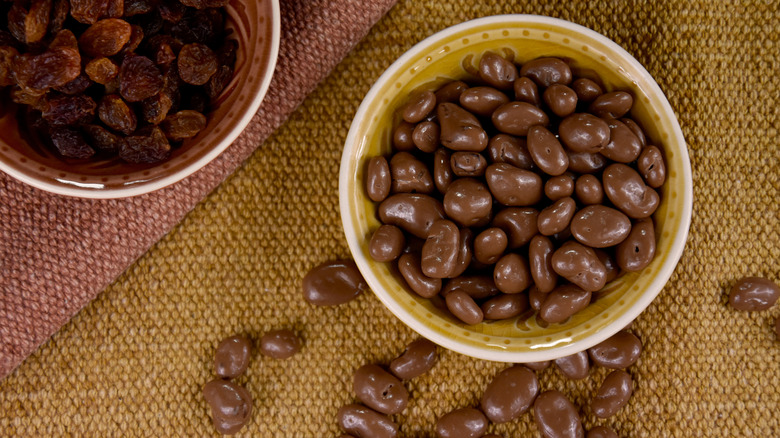
Chocolate-covered candies are perhaps the easiest confection to make on this list. All you need to do is melt the chocolate, dip your desired filling into it, and let it harden on a wire rack or baking sheet. The options for fillings are endless, limited only by what's in your pantry. Raisins and dried cherries are perfect for someone with a sweet tooth, while nuts like almonds, peanuts, and cashews are bound to satisfy. Snacks, such as potato chips, Ritz crackers, and the aforementioned saltines, are also excellent when covered in a layer of chocolate, giving you the ideal salty-sweet contrast, while Oreos, shortbread, and peanut butter cookies are perfect for anyone with a sweet tooth.
You can also add other ingredients and coatings to your chocolate-covered confections. One example of this is puppy chow, which can be turned into the perfect party snack. Toss the melted chocolate-, peanut butter-, and powdered sugar-covered cereal pieces with your favorite candies, like candy corn for Halloween and crushed peppermints for Christmas. And if you prefer a more sophisticated version of puppy chow, nix the peanut butter and use tahini instead.
15. Haystacks
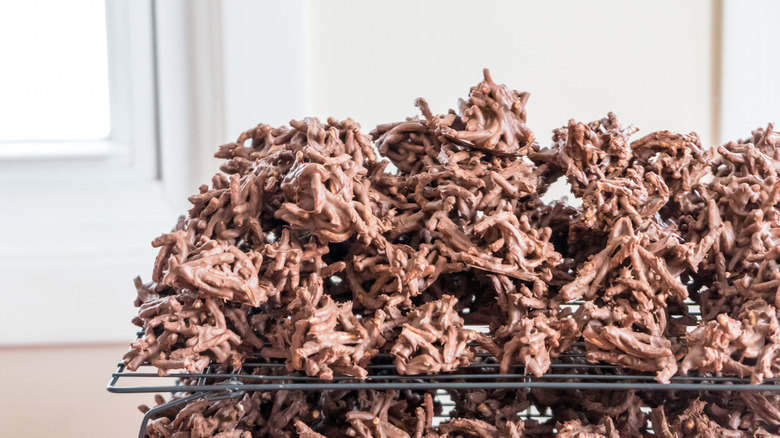
Haystacks may not look as aesthetically pleasing as other treats on this list, but they are just as simple to make. Chow mein noodles are the star of butterscotch haystacks candy, and there are plenty of ways to dress this recipe up or down depending on the occasion. Gently melt your favorite creamy peanut butter with butterscotch chips. Once the chips are melted, toss in the crispy chow mein noodles, add peanuts (if you prefer), and set them on a lined baking sheet to set.
If you prefer a more chocolatey endeavor, try swapping out the peanut butter for melted chocolate, or drizzle your set haystacks with it. Or, if you are making haystacks during the spring or for Easter, make a little well in the center of the haystack, like a nest, and add Whopper Robin Eggs or Cadbury Mini Eggs.
16. Lollipops
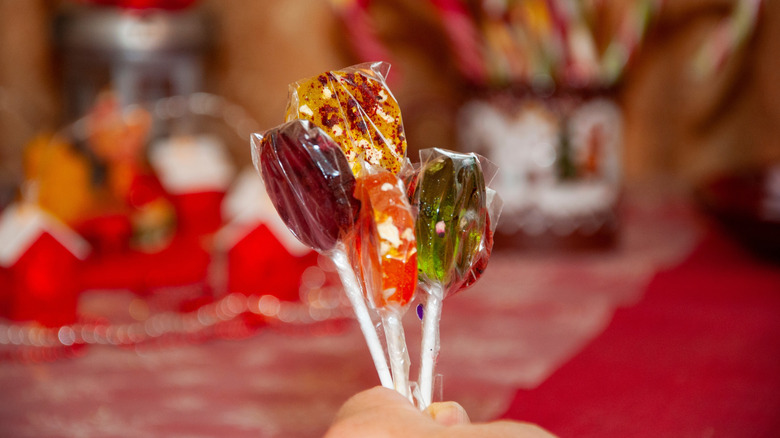
If you always grab a Dum-Dum on your way out of the doctor's office, you may want to try making homemade lollipops. Sugar, corn syrup, water, and flavoring come together on the stovetop until the mixture reaches the hard-crack stage. From there, you can add flavoring and food coloring to the pops, then pour the mixture into a special lollipop mold and insert sticks.
As with any sugar-based treat, you need to be very careful when working with molten sugar. Pay attention to the temperature on the candy thermometer, and have all your tools ready ahead of time. You may also want to take a peek at the weather, as humidity can delay the hard-crack stage and make candy-making more difficult.
17. Truffles
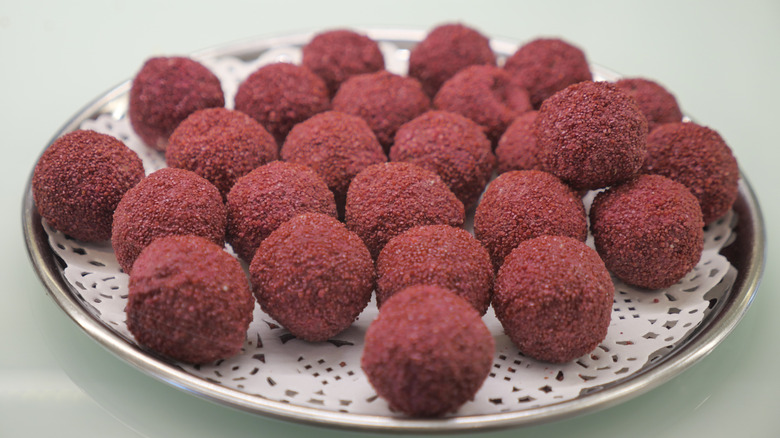
Truffles are luxe sweets. Recipes vary, but you can find plenty of homemade renditions made with pantry staples. Take this three-ingredient pumpkin spice truffle recipe, which mixes crumbled gingerbread cookies with canned pumpkin and white chocolate. The rolled truffles are rife with fall flavors and can be made even more beautiful with a drizzle of white chocolate and crumbled cookies. You can also make them with store-bought cake mix: cook butter and canned sweetened condensed milk on the stove, then stir in the cake mix and roll into chocolate balls. It's like a cross between a cake pop and a truffle, and their perfectly poppable size only adds to their appeal.
Another variation worth trying combines store-bought frosting with melted chocolate. Or, grab a container of frosting, crush up some Oreos, roll the balls in melted chocolate, and let them set before enjoying.
18. Maple candy
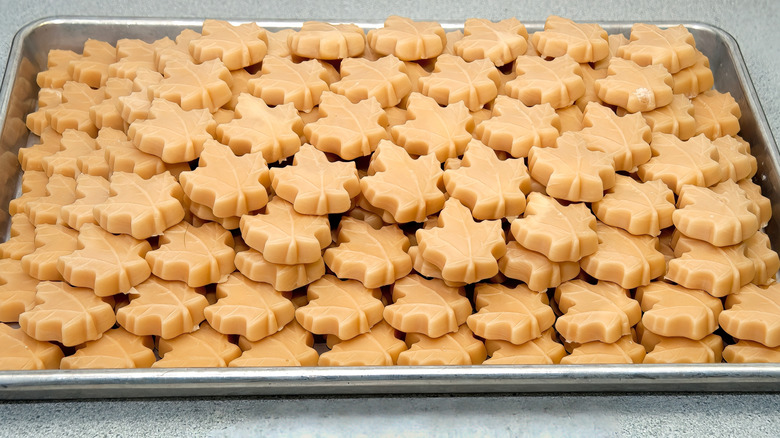
New Englanders are likely no strangers to maple candy. I've found it at general stores, farmers' markets, and tourist traps throughout the region. However, even if you are outside the land of sugar maples, you can make maple candy at home with just one ingredient.
That ingredient is, of course, maple syrup, which has been heated until it reaches the soft crack stage. From there, the candy needs to cool and be whipped with air before it can be transferred to a silicone mold (use these maple leaf molds for maximum effect) and left to set. Some people will add chopped walnuts or pecans to these candies, but I personally love to suck on them as is. They're creamy, sweet, and rife with maple flavor.