

All You Need Is 3 Ingredients To Make This Ancient Candy Everyone Ate In The Victorian Era
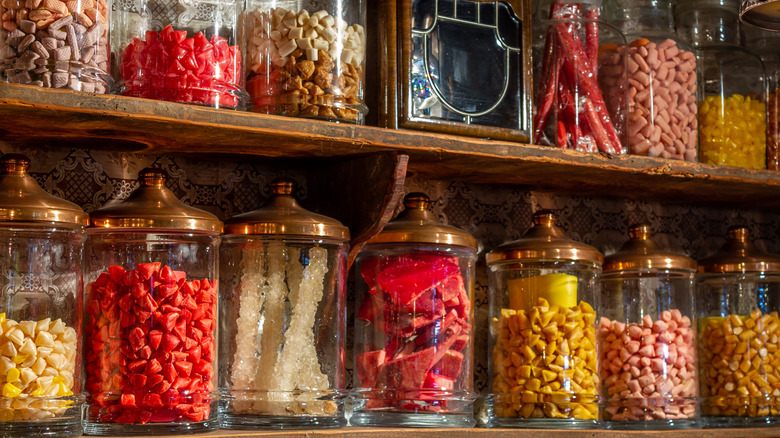
The Victorian era ran roughly from the early 19th century to the early 20th century, and it's interesting to ponder how different life was for home cooks back then. Kitchens had coal- and wood-burning stoves, so most cooking happened over fire, and foods were chilled in an icebox. While much was different, there's one truth that connects many of us today with those from eras past: a love of sweets, including rock candy. This historic treat made in a glass jar requires only water, sugar, a bit of flavoring if you're feeling fancy, and time — this sweet-meets-sour lemon rock candy recipe from Tasting Table is a great place to start.
Rock candy was simple, delicious, and readily available in the Victorian era, but it's much older. The sweet stuff is one of humanity's earliest confections, dating back thousands of years to India. It also took hold in East Asia, as ancient Chinese candy makers are widely credited as the first to mass-produce the treat. Over time, it made its way to Europe and the United States, where it gained popularity for medicinal purposes. During the Victorian era, people often used rock candy as a home remedy, especially mixed with whiskey. You can still find rock candy in tons of old candy shops around the United States, but there's something especially satisfying about making it yourself at home. Luckily, this simple, time-honored sweet is easy to whip up, as long as you know what to expect.
Tips and tricks for making rock candy from scratch
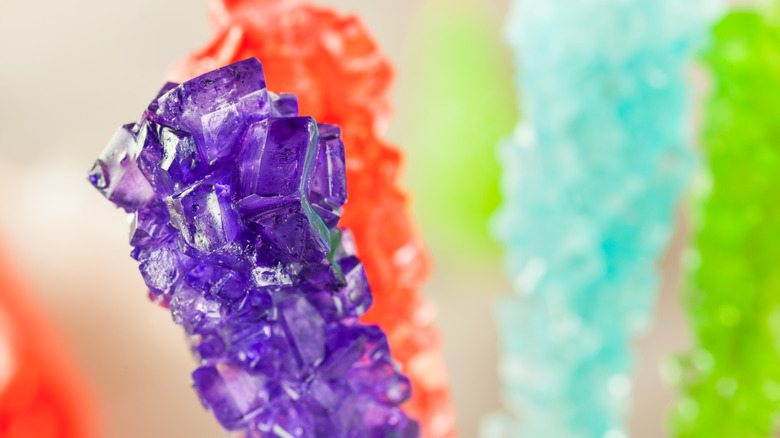
Making rock candy creates a ton of anticipation (making it especially fun if you've got little ones at home), so you want to take care to avoid disappointment. Consider a few key details to ensure you end up with crunchy, beautiful rock candy that everyone will love: For starters, wet your skewers and coat them in sugar before you let them sit in the syrup that will eventually become hard candy. This gives the sweet liquid something to cling to as it crystallizes.
While it can be tough (especially for curious kiddos) to abstain from poking and prodding, it's best to leave the jars undisturbed as the crystals form. Accidentally bumping them — or picking them up to move them to a new location — while the crystals are developing can hinder crystallization. Also, keep in mind that this tasty experiment takes patience. You'll only need a few minutes of actual work, but it can take three days to a week for crystals to fully form, with larger ones generally taking longer.
While the lemon version is delicious, you don't have to stop there. You can also try other interesting flavors, including lavender (the flowers are edible), maple, or vanilla. This timeless, three-ingredient recipe is perfect for when you want to create a classic confection that looks impressive and tastes fantastic.
Static Media owns and operates Chowhound and Tasting Table.