

12 Best Meats To Grill For Beginners
We may receive a commission on purchases made from links.
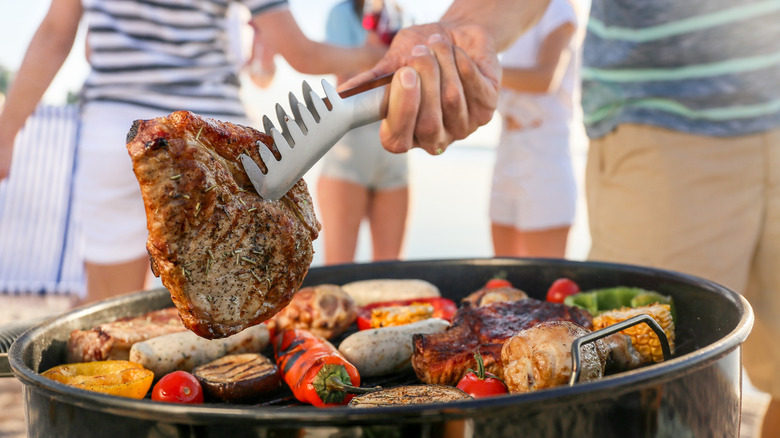
Wouldn't life be wonderful if we were innately good at everything we do the first time we do it? While incrementally developing our skills, especially in the kitchen, can be a real test of character and bring us joy in learning, it can also be downright frustrating to see something done on an Instagram reel or cooking show, only to try it ourselves and flop. This is especially true when it comes to grilling, which, for all intents and purposes, is actually much harder than it looks.
You'll learn things along the way, such as how to preheat your grill, the difference between direct and indirect heat (and how to use each), and how to adapt your cooking routine for outdoor cooking. But you could inadvertently make learning more difficult by choosing cuts that are not beginner-friendly. Sticking to more forgiving cuts and proteins (including both conventional meats and seafood) will help you build confidence, all while laying the groundwork for cooking more complex recipes later on. Oh, and you'll still make a delicious main course out of it.
In order to find out which cuts are perfect for budding grillmasters, we spoke to two meat experts: Jess Pryles, founder of the Hardcore Carnivore barbecue line and author of "Prime Cuts: The Complete Guide to Choosing, Understanding, and Cooking Meat," and Nicole Johnson, grilling guru and owner of Or Whatever You Do. Both of them shared their favorite beginner-friendly cuts and seafood, as well as tips for a positive grilling (and learning) experience.
1. Chicken thighs
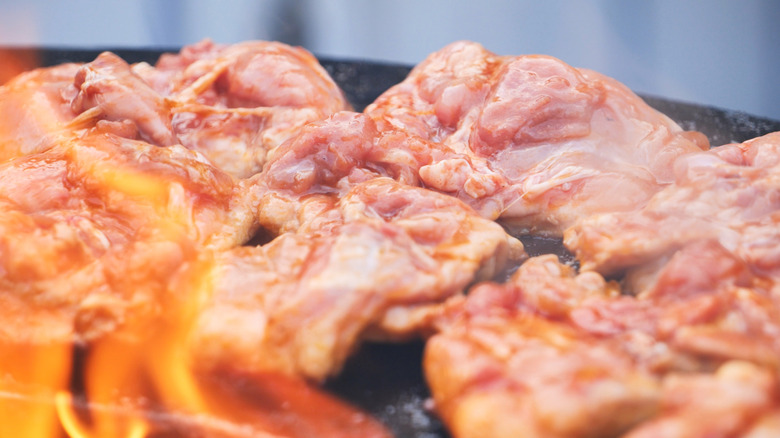
Chicken is one of the most likable meats. It's versatile, can be coated with almost any sauce, and is perfect for budding grillmasters to make at home, per our experts. Cookbook author Jess Pryles says chicken thighs, specifically, are a much better option than chicken breasts because they're forgiving. "Chicken thighs have more fat and connective tissue than chicken breasts, which makes them much more forgiving. Breasts are lean and often unevenly shaped, so the thin end can dry out before the thicker end is cooked," she says, noting that chicken thighs can also go beyond the safe temperature of 160 degrees Fahrenheit and still retain their juiciness. Recipe developer Nicole Johnson says that beginners can still cook chicken breasts, but it may require some extra work; she suggests slicing the pieces into separate thin and thick sections or pounding them to standardize their thickness.
Besides choosing between thighs and breasts, you also have to consider whether to go skin-on or skinless. Luckily, there is a safe answer for novice grillers: skinless. "Skin-on chicken is delicious, and the skin helps protect the meat, but it needs more attention because the fat can drip and cause flames," says Pryles. Johnson agrees. "If people are eating grilled skin-on chicken, they expect it to be crispy. That can be harder than you'd think without overcooking the meat," she says, suggesting that folks sear the skin on their thighs if it isn't up to their liking.
2. Burgers
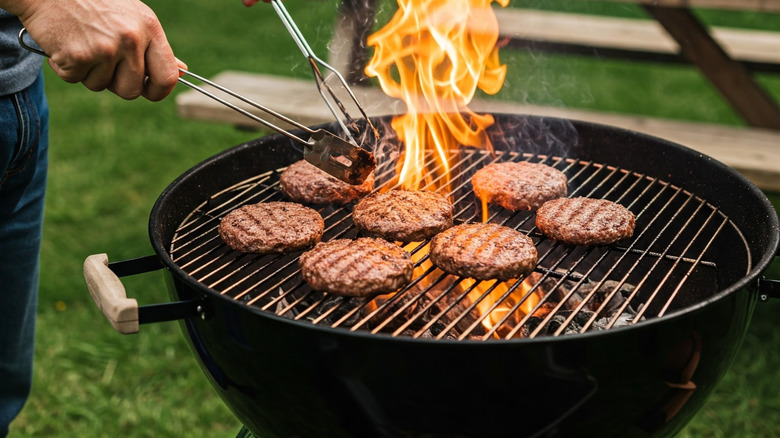
There is a reason that there are so many burger tip guides out there — and it's not just because they're delicious. While there are some mistakes you can make when grilling burgers, these iconic sandwiches tend to be among the easier ones for folks to master. "Even if they do overcook a bit, all of the burger toppings are an easy way to mask that," says Nicole Johnson, who recommends that folks use 80/20 blends for juicier burgers and avoid making the patties too thick.
Jess Pryles agrees. "Burgers are forgiving because the fat is distributed throughout the meat. That helps keep them juicy and flavorful," she says. She also suggests using the same lean-to-fat ratio as Johnson and offers a few more tips for novices learning to master burgers, including dimpling the patties, seasoning them before putting them on the grill, and avoiding smooshing out their moisture with the back of a spatula. If you are wary of flare-ups or worried about dropping the patty through the grill grates, you can also cook your burgers on a grill pan or cast-iron skillet; these surfaces allow your patty to render its own fat and ensure a crispy crust on the outside.
3. Whole chickens
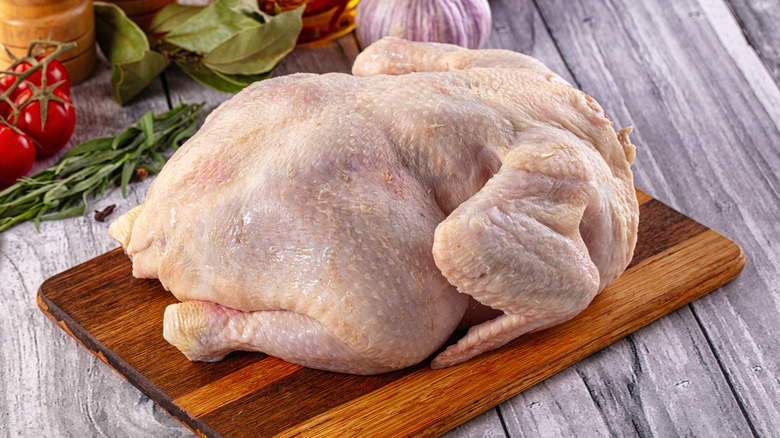
The last thing you're probably thinking about grilling is a whole chicken. And it's probably at the bottom of the list of "easy" things to grill, right? Well, maybe the humble bird deserves a second thought. "It sounds counterintuitive, but cooking a whole chicken on the grill is actually very easy, and always comes out great," says Nicole Johnson.
Johnson makes her whole chicken on a pellet grill, though she notes that it can also be made on a charcoal grill. To prepare, she ties the chicken's legs together, douses the whole thing in oil (because who doesn't love crispy chicken skin), and grills it uncovered for about an hour, or until the thermometer reads 165 degrees Fahrenheit. Once the bird has rested briefly, it can be sliced and served.
This is a great dish to make, especially if you don't feel like heating up your whole house by making a whole roasted chicken in the oven. But it's also excellent for beginners because you don't have to worry about adjusting, moving, or fiddling with it in any way. As such, it would also be a great item to cook on the grill, allowing you to focus on your sides indoors. May we suggest old-fashioned potato salad or crispy Brussels sprouts with a pomegranate glaze?
4. Pre-brined meat
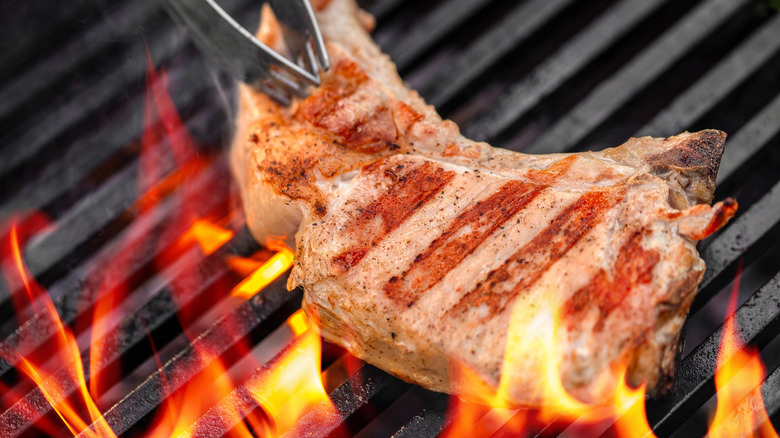
If you peruse the grocery store's meat aisle, you may come across several labels that are difficult to decipher. "Enhanced," "in a solution," or "pre-brined" are some of them, and they generally mean similar things, according to Jess Pryles: the meat (often poultry or pork) has been packaged in some sort of solution to make it more tender.
Now, home grillers may scoff at this suggestion, but pre-brined meat is not too odd of a recommendation for someone who is just getting their footing with their grill. "While purists sometimes look down on them, they were actually scientifically developed to improve the consumer experience by ensuring the meat stays juicy, even when cooked at higher temperatures or slightly past its target," says Pryles. If your brined meat is waterlogged, you should follow Nicole Johnson's suggestion and dry it thoroughly before cooking. "The key is to drain all of the marinade off and then pat the meat dry with paper towels. Liquid is the enemy of browning, so you want to get it as dry [as] possible," she says.
It's important to note that pre-brined meat is not the same as marinated meat, which our experts caution against grilling. "They can be harder, especially if the marinade, glaze, or sauce contains sugar. Sugar burns quickly over direct heat, so a cut can look dark or even burnt before the inside is cooked properly," says Pryles, who suggests adding sauces and glazes toward the end of the cooking process.
5. Ribeye
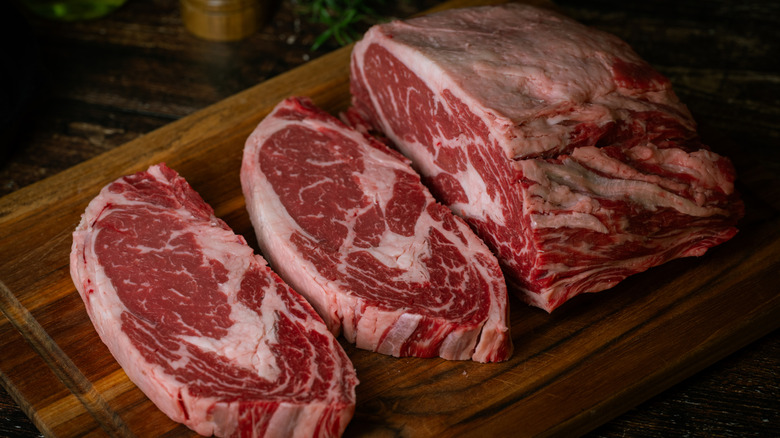
Grilled steak is an absolutely unmatched dinner idea. You get a juicy, umami-rich, fatty cut, paired with the smoky undertones of the grill and a perfectly charred crust. If you're a beginner, take our experts' advice and go for ribeye.
"The undisputed king of forgiving steaks is the ribeye. It sits at the perfect intersection of tenderness and indulgence because of its consistent marbling," says Jess Pryles. She suggests buying a thick-cut steak for grilling, and for ribeye specifically, looking for a well-marbled cap (spinalis dorsi). Aside from drying the meat well before cooking, which will prevent you from steaming your steaks on the grill, Pryles recommends her signature "just keep flipping" method, which basically means just flipping your steak every 30 seconds or so over intense heat to ensure that it cooks completely on both sides and develops a good crust. Other experts have offered similar tips for ribeye steak, including searing it in a cast-iron pan (which can also be adapted to the grill) to trap the drippings and ensure that it cooks evenly.
The other benefit of ribeye is that it tends to be a thick cut, which our experts note is more forgiving than a thinner one. "Generally, thicker cuts are easier for beginners because they give you more time to develop a good sear without overcooking the center," says Pryles.
6. Lamb loin chops
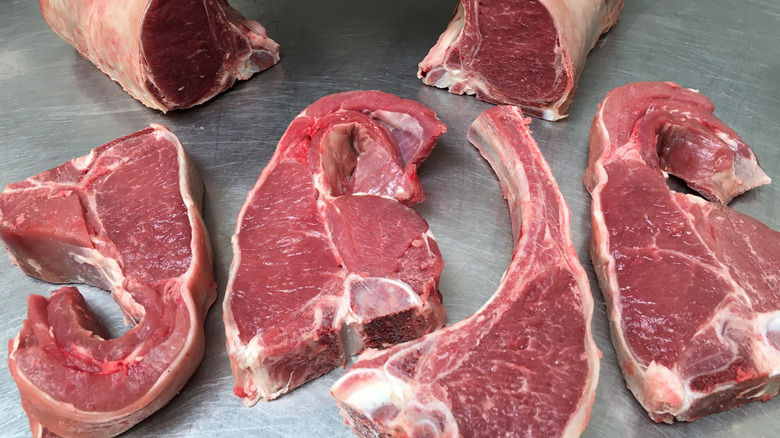
Lamb may not be one of the items that you reach for when grilling, but it should be. This type of meat is especially tasty when grilled, but you have to know which cut to choose to have the best possible experience. "Lamb loin chops are probably the most approachable because they're tender, quick-cooking, and familiar in shape to people who already grill steaks or pork chops. They basically just look like a miniature [T-bone] steak," says Jess Pryles.
That's not to say that lamb chops are a hands-off endeavor, though. Although you do have to do some babysitting for this premium cut, the flavor that you get from grilling them will be more than worth it. "Cut [them] into single chops, season well, and sear them for a few minutes on each side," suggests Nicole Johnson. "Lamb chops are lightning fast, and you don't want them to go past medium-rare for the best bite." Likewise, Pryles explains that bone-in cuts, like lamb loin chops, can slow the cooking process; there is always the risk that the meat will cook unevenly near the bone, so keep this in mind when preparing any bone-in cut on the grill.
7. Pork shoulder
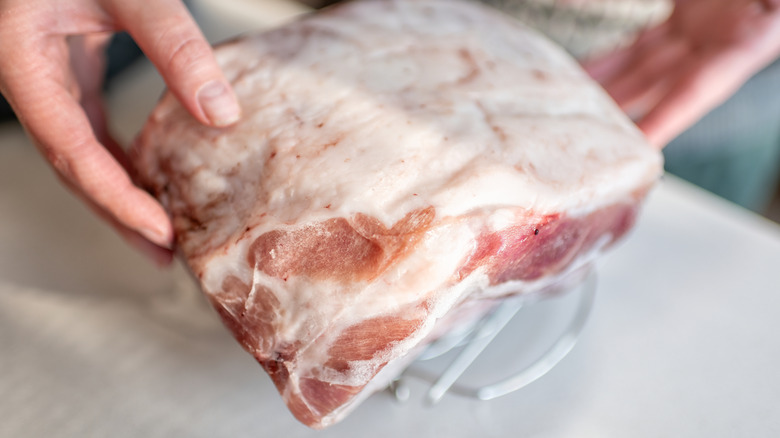
Aside from brats (more on that later), pork is a forgotten meat for grilling. However, since this protein deftly toes the line between red and white meat, you get the best of both worlds. Our experts recommend that beginners try grilling two pork cuts in particular, one of them being pork shoulder.
Pork shoulder also goes by picnic shoulder or picnic roast (and is not the same as a Boston butt, which is sourced from higher up on the hog). Jess Pryles recommends beginners try cooking pork shoulder because it is very forgiving if it's overcooked. "It is very difficult to overcook a pork shoulder," she says. "The ideal finished temp is high ... 204 [degrees Fahrenheit] usually, or until the roast is tender when poked with a fork and shreddable." Nicole Johnson is partial to pork shoulders for meal prepping, especially if you're firing up the grill anyway. "[A] big pork shoulder roast takes forever, but it is worth the effort and can be made into 20 different things, depending on your mood," she says. Low and slow is the best thing for this cut, and it's a great choice if you need a show-stopping main dish for your next barbecue.
8. Sausages
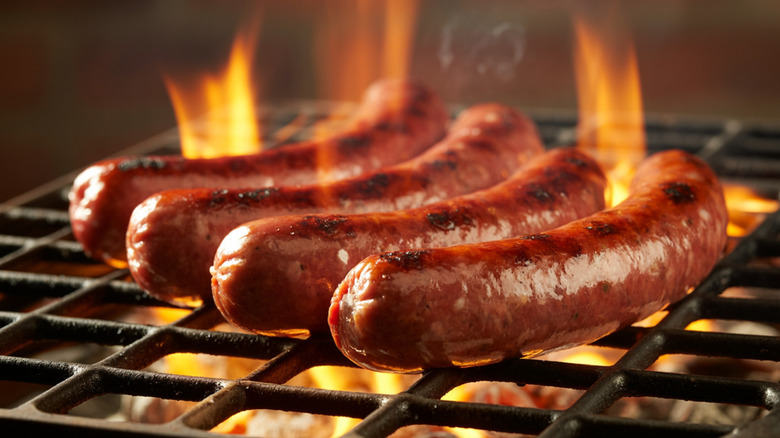
Sausages are a wide and wonderful class of meat. There are so many different types (and they span the entire globe), but what makes them great for grilling overall is their high fat content (since fat equals flavor) and relative ease of cooking.
"Sausages can be an easy win for the beginner griller," says Nicole Johnson. However, they are not without their tricky bends, which both of our experts noted. "The trick is picking the right heat level. Start them over medium or indirect heat so the inside cooks through gently, then finish over direct heat for color," says Jess Pryles. Pryles warns against poking holes in sausages, as the moisture can quickly escape, causing flare-ups, splitting, or a dry consistency.
You also may want to pay attention to your ingredients, as not all sausages can be grilled the same way. Johnson cautions against overcooking pre-cooked sausages (like hot dogs, which are already cooked), and suggests taking a temperature reading before pulling your sausages off the grill to ensure that they're cooked thoroughly. While it might be easy to see a crust forming on the outside of a steak or a color change on a burger patty, it's harder to tell when sausages are properly cooked, which is where an internal thermometer comes in handy.
9. Ground lamb
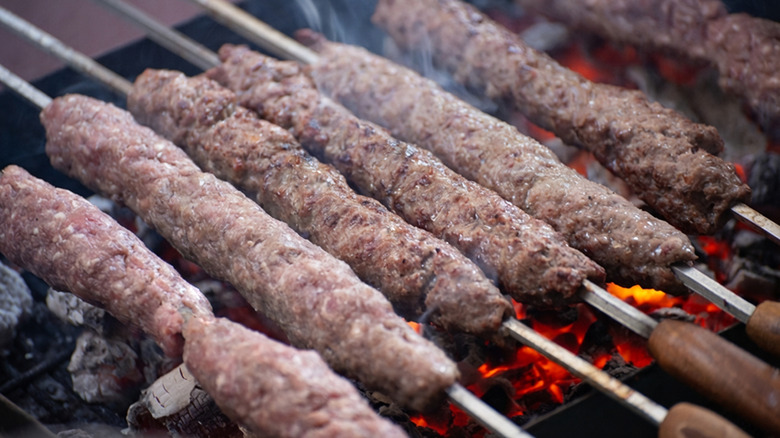
Of all of the ground meats that you may have experimented with over the years, ground lamb may not be one of them. However, this is an extremely underrated meat product that novice grillers will come to love, especially if they enjoy Middle Eastern food. "Ground lamb is another great entry point, especially for burgers or kofta-style skewers," says Jess Pryles. Kofta (which can technically be made with beef, though lamb is more common) is meat folded around a skewer and grilled. Charcoal will give it great color and flavor, and the char plays well with a creamy yogurt sauce.
Like the ground beef used for burgers, ground lamb is forgiving and knows how to take a joke. It's gamey and offers more depth than other ground meats, but is still approachable. Plus, you won't have to worry about connective tissue as you would with lamb shoulder chops, which is one of the reasons Jess Pryles cautions beginners against taking on the latter.
10. Pork tenderloin
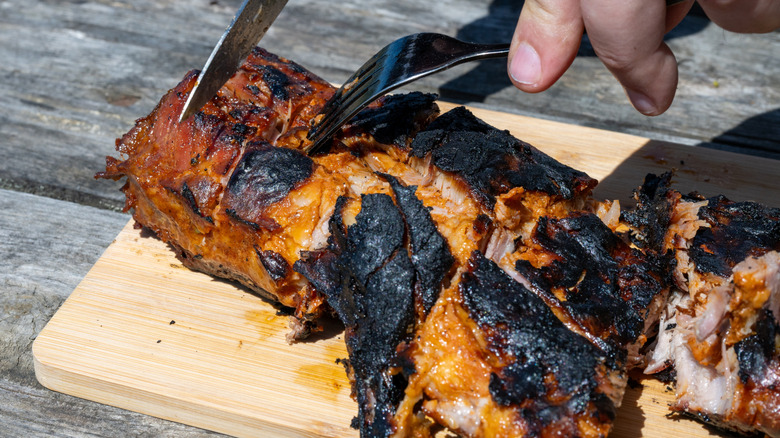
Nicole Johnson is on team pork tenderloin, and once you consider the moisture and texture this cut offers all grillers — not just budding grillmasters — you might add it to your barbecue repertoire. "Cook up a couple of these, and it'll feed your whole family for relatively cheap," Johnson says, noting that the tenderloin only requires a half-hour on the grill (and shouldn't require much more, as it has a tendency to overcook). When she makes her pork tenderloin on a Traeger, she just rubs it with oil and seasonings, throws it on the grill, and shuts the lid. Like roast chicken, this is an incredible hands-off cut that cooks super fast, and you can use the leftovers for a stir-fry the next day.
She also recommends tenderloin above chops for beginners, since lean pork chops can dry out quickly. "Even grilling experts struggle to make a decent pork chop," she says. Jess Pryles also recommends a tenderloin over thin chops.
11. Salmon
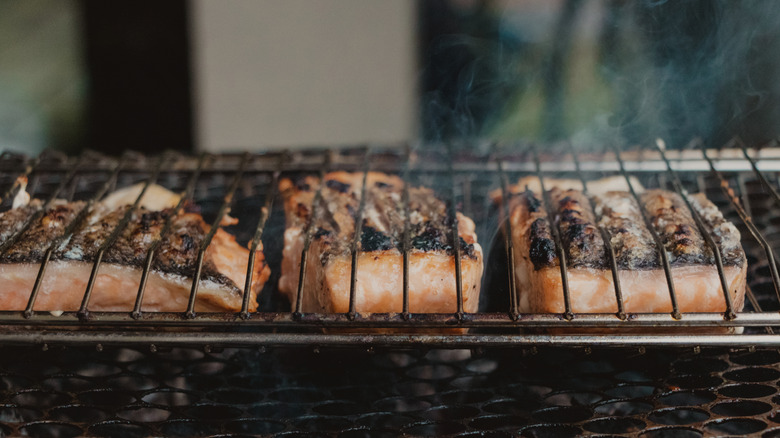
Maybe we're biased here when we say that grilled salmon is one of our favorite foods and deserves a place in every grillmaster's repertoire. It's one of the more beginner-friendly seafood options, per Jess Pryles, because it's hearty. "They're firm enough to handle the grill and don't fall apart as easily," she says, grouping them into the same class as tuna and swordfish steaks. They're also a better option than fragile white fish, which tends to stick, tear, and overcook, especially when placed in novice hands.
Nicole Johnson is admittedly wary of cooking fish on a grill, though notes that "the payoff is worth it." She recommends using non-stick foil to both prevent the fish from sticking and to let you add butter to finish it without making a mess on your grill (and creating yet another cleanup headache). Salmon is versatile and can be upgraded with an array of seasonings, so you'll have no shortage of flavor ideas (nor ways to pair it).
12. Shrimp
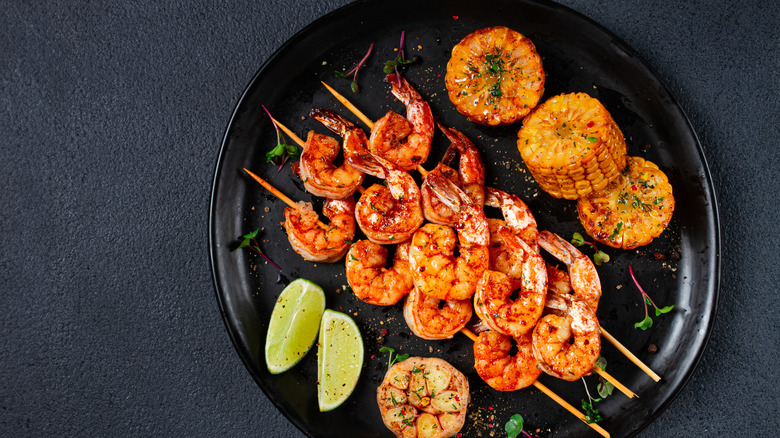
Shrimp is a food that's hard not to love. It's surprisingly juicy and can be appropriated for a ton of different dishes, including homemade shrimp lo mein. These tiny crustaceans also take to grilling well, as their shells act as a buffer against heat and lock in moisture. This, by nature, makes them a forgiving protein for grilling. "Shrimp is a very beginner-friendly seafood to start with. I like using skewers so they are easier to flip," says Nicole Johnson. Johnson uses a fan-favorite teriyaki seasoning for her shrimp, though a classic garlic butter or spicy Cajun rub could also work. You can add flavor to your shrimp by coating them with sauce as they grill, or marinating them ahead of time (since they're fragile, you don't want to marinate them for too long, as it can cause the shrimp to break down and get mushy).
Grilling shrimp perfectly is easy, and you'll appreciate that you can use both frozen and thawed shrimp here. We recommend using two skewers here, especially if you're working with exceptionally large shrimp, as the extra support will reduce the risk of skewers breaking. Shrimp cook fast (it helps that they're small!), so you can have a simple grilled protein on your table, in your tacos, or on top of your pasta in no time at all.