

13 Popular Side Dishes From The 1960s Your Grandparents Used To Love
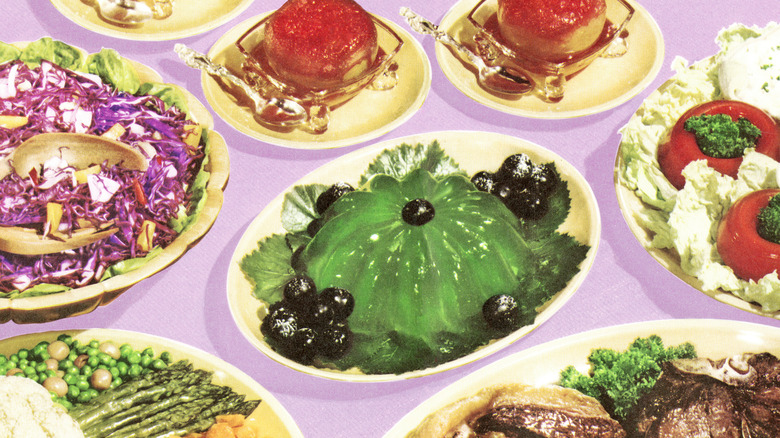
The 1960s were a fun time for food. With the hardships of the Depression and wartime rationing in the rearview mirror, more people had the means to invest in new cooking appliances, equipment, and ingredients. Julia Child was making waves with her television cooking show "The French Chef," where she offered helpful cooking tips for home cooks, and magazines like Good Housekeeping were promoting new recipes and products every month. Plus, entertaining and dining out were all the rage. This led to unique 1960s cooking trends and creative dishes, including a wide range of side dishes.
While side dishes in previous decades may have been simple affairs like roasted veggies or mashed potatoes, the Swinging Sixties were all about embracing both convenience and creativity. Home cooks combined pantry staples, canned ingredients, and new packaged products to create everything from creamy casseroles to colorful molded salads. Restaurants also experimented with fun new creations. Some of those side dishes were nothing if not eccentric, and later fell out of favor. However, others still endure today as nostalgic classics. If you're looking to put together a 1960s-style spread, these are some side dishes that your grandparents might have served back in the day.
1. Crab Louie
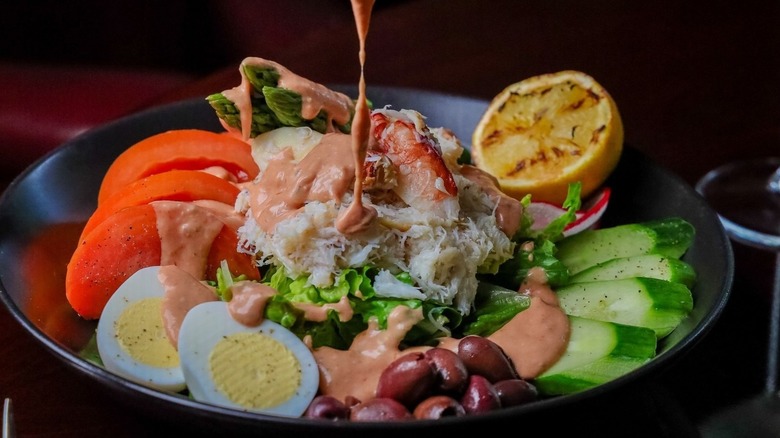
If you dined out at a nice restaurant on the West Coast in the 1960s, there's a good chance Crab Louie (aka Crab Louis) would have been on the menu. This colorful salad typically features shredded or lump crab meat on a bed of lettuce with tomatoes, hard-boiled eggs, and a creamy dressing similar to Thousand Island dressing. There are many variations, with some cooks using shrimp instead of crab and adding ingredients like avocado, cucumber, and asparagus. With its refreshing nature and complementary mix of textures and flavors, it's easy to see why the salad is still popular today.
Crab Louie salad has a somewhat mysterious history, with multiple claims about where it was invented. Some say it was created at the Olympic Club in Seattle, Washington, sometime before 1909. Others cite San Francisco, California, as the birthplace, but even then, many debate whether the dish first appeared at Berger-Franz's Old Poodle Dog restaurant or at Solari's. Yet others claim that the dish was born in Portland, Oregon. Regardless of when or where it came to be, we do know that by the 1960s, it was very much in vogue.
2. Scalloped corn
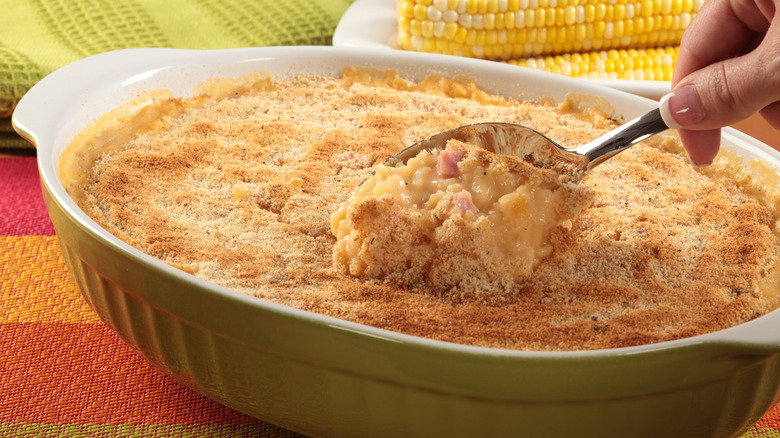
While some 1960s side dishes were fancy creations often served in restaurants or at dinner parties, others were more low-key affairs. Case in point is scalloped corn, a comforting casserole-style dish that can be whipped together with just a few ingredients. At its most basic, the dish features canned, creamed, or frozen corn mixed with milk, butter, eggs, and seasonings. That gets poured into a casserole dish, topped with crushed crackers, and baked until bubbling and golden. Some recipes from the 1960s also call for ingredients such as cheese, olives, and even oysters.
One of the great things about scalloped corn is its versatility. You can jazz it up with more vegetables for extra pops of color and nutrition. Add sliced potatoes, and you have a mash-up of scalloped corn and scalloped potatoes. You can also get creative by adding fun chips and crackers for your casserole topping and zesty sauces to the corn mixture. And while scalloped corn makes for a great side dish, there's nothing to say you can't turn it into a main dish by adding hearty proteins like chicken, ground beef, or tuna.
3. Seven-layer salad
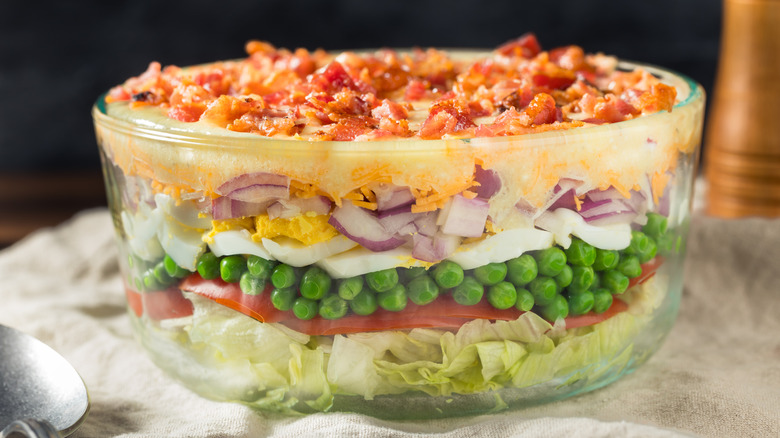
Few 1960s side dishes were as over-the-top as the seven-layer salad. Fun, colorful, and abundant, it first appeared in the 1950s and became a wildly popular item at church picnics, community dinners, family gatherings, and backyard barbecues throughout the 1960s. As the name suggests, it has at least seven layers (sometimes more), and it's typically served in a large glass bowl so that all of those layers are clearly on display. Adding to its appeal, it can be made ahead of time and popped into the refrigerator until ready to serve.
Recipes for the seven-layer salad vary, but a classic version typically includes lettuce, green peas, hard-boiled eggs, bacon, cheddar cheese, tomatoes, and a creamy salad dressing made with mayonnaise and sour cream. Additional ingredients can include diced white onions, green onions, chopped cauliflower, and Parmesan cheese. The order in which the ingredients go into the dish is important, as you want the veggies to stay crisp and to ensure that each scoop gives you a little bit of everything. The lettuce typically goes on the bottom, followed by the other veggies and eggs, then the bacon and cheese, and finally the dressing.
4. Pickled beets
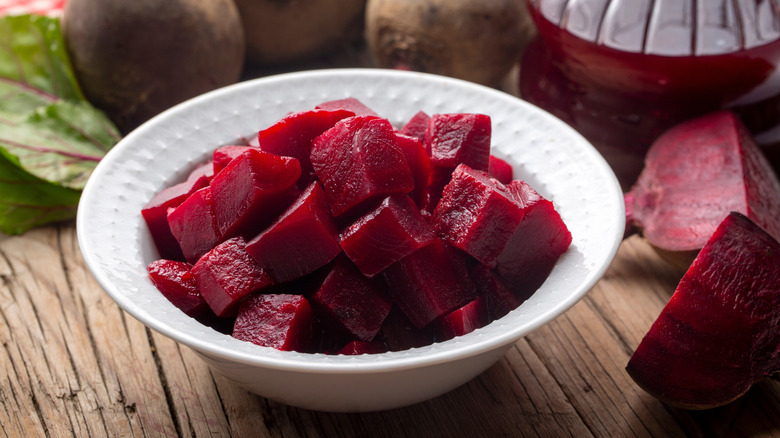
Although convenience foods like instant mashed potatoes and canned and frozen veggies were popular in the 1960s, some home cooks still relied on traditional methods for preparing side dishes. Take pickled beets, which are not only quick and simple to make but also a great way to preserve fresh beets so that they last longer. An easy quick pickle process involves boiling the beets, then adding them to jars with a brining solution of vinegar, salt, sugar, and whichever herbs and spices you want to throw into the mix.
Pickled beets work well as a side dish with mains like pork and beef because the acidity helps cut through the fattiness of the meat. The tanginess of the pickled beets can also help balance out the richness of creamy, cheesy dishes. You can also slice them and add them to other side dishes like salads and veggie dishes. In addition, they work well on burgers and in sandwiches. Then again, you can always eat them on their own for a tasty and nutritious snack.
5. Green bean casserole
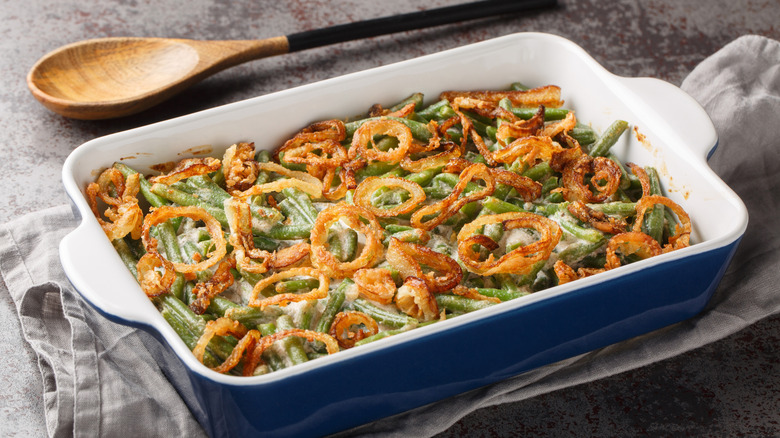
Casseroles were nothing new in the 1960s. They stemmed from European baked dishes, but really took off in America in the latter part of the 19th century when canned foods became readily available. They were among several humble foods eaten during the Great Depression because they were affordable and helped stretch ingredients further. By the 1960s, there were numerous casserole dishes appearing on dinner tables, and one that rose to popularity during that time (and still endures today) is the green bean casserole.
The credit for the first green bean casserole recipe goes to Dorcas Reilly, a Campbell's employee who created the dish in the company's test kitchen in 1955. Called "Green Bean Bake," it consisted of green beans, a can of Campbell's Cream of Mushroom soup, soy sauce, milk, black pepper, and fried onions. When Campbell's put the recipe on the label of its soup cans in the 1960s, the dish was an instant hit. It would go on to become a must-have dish for many Thanksgiving dinners. Over the years, countless cooks have put their own spin on the dish, adding items like cheese, crumbled bacon, and potato chip toppings.
6. Jell-O salads
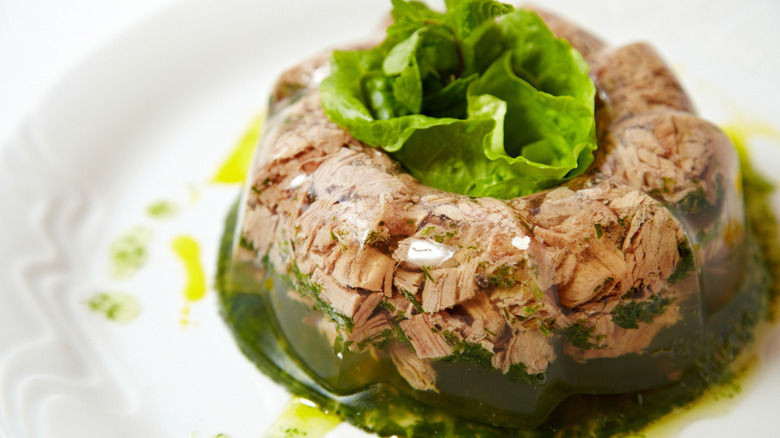
One of the more bizarre food trends of the 20th century (at least according to many folks today) was the proliferation of Jell-O salads. Interestingly, the practice of suspending foods in gelatin goes back to medieval times. Back then, the process of making gelatin involved boiling down animal bones and other parts, a labor-intensive task that was often assigned to kitchen staff. As only the well-off could afford kitchen help, gelatin salads were considered a sign of wealth. When Pearle B. Wait created Jell-O in the late 19th century, it became much easier to create jiggly creations by simply adding gelatin powder to water.
Many point to the "Perfection Salad" as the dish that ignited the Jell-O salad craze. It was created by a woman named Mrs. John E. Cook, who entered it in a competition held by Knox Gelatin and Better Homes and Gardens in Pennsylvania. It featured cabbage, celery, green olives, and red pepper in a gelatin mold. The dish won third prize, and inspired many home cooks to concoct their own wobbly creations using veggies, fruits, nuts, and meats. Jell-O salads remained popular all the way through to the early 1970s.
7. Casserole Marie-Blanche
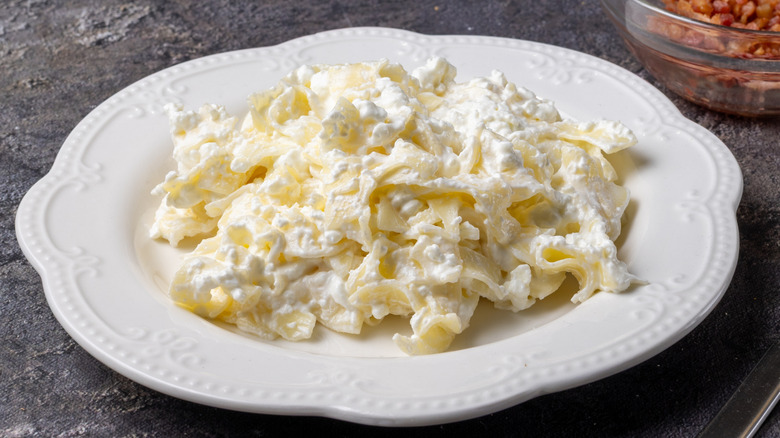
When John F. Kennedy became president in 1961, First Lady Jacqueline Kennedy set out to modernize many aspects of presidential entertaining. She took a keen interest in state dinners and hired French chef René Verdon to oversee the White House kitchen. She streamlined state dinners to four or five courses and was known for keeping things elegant but affordable. One dish that's still associated with Jackie Kennedy today is a four-ingredient casserole with a French twist called Casserole Marie-Blanche.
Mrs. Kennedy first served Casserole Marie-Blanche at a dinner for Prince and Princess Radziwill (the latter being her younger sister) in March of 1961. Simple but sophisticated, the dish features egg noodles tossed with cottage cheese, sour cream, and chives, then baked in a casserole dish. The mild flavors of the casserole make it a great match for a wide array of dishes, including lighter dishes. Kennedy served it with salmon mousseline, Poulet à l'Estragon, grilled tomatoes, and mushrooms with herbs. Of course, if you want to jazz up the casserole, there's nothing stopping you from adding flavor enhancers like bacon or other proteins, veggies, and additional fresh herbs.
8. Carrot raisin salad
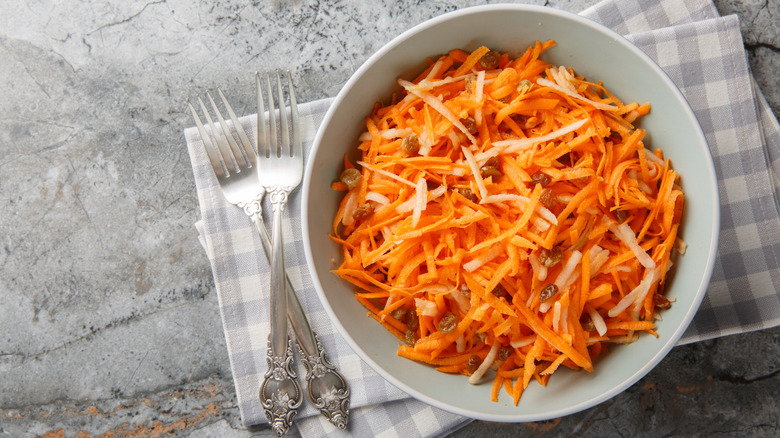
Carrots make for a sensible side dish because they're affordable and easy to prepare, but plain old roasted or boiled carrots can be a bit boring. In the early part of the 20th century, many cooks found a way to make them more appealing by turning them into a crunchy, creamy salad with pops of sweetness. Throughout the 1960s, carrot raisin salad appeared in numerous cookbooks, and many folks remember their parents or grandparents making the dish for family meals. Some people even recall school cafeterias serving the dish in the 1950s and 1960s.
A basic carrot raisin salad consists of shredded carrots tossed with mayonnaise and raisins. Some recipes from the 1960s also added shredded cabbage to make it more like coleslaw and a squeeze of lemon for acidity. Then there is the famous Chick-fil-A version, which was on the menu for nearly four decades until the chain quietly discontinued it a few years back. It included shredded carrots, crushed pineapple, raisins, mayo, sugar, and lemon juice.
9. Creamed onions
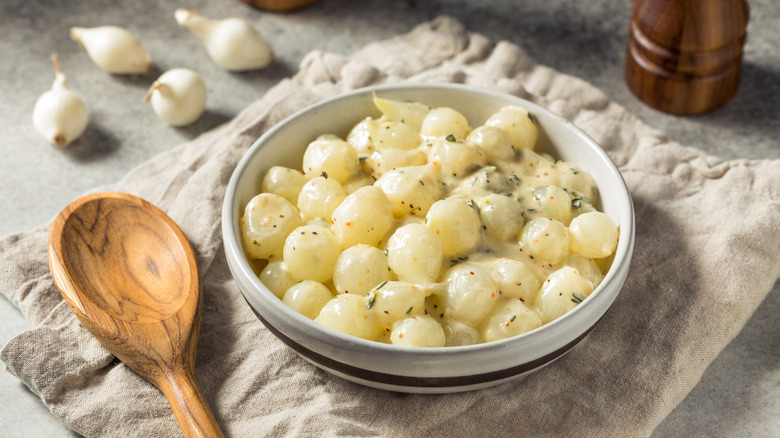
Once served in restaurants across the country and at many family dinners, including celebratory meals like Thanksgiving, creamed onions is another side dish that was popular during the 1960s but has fallen off the radar a bit since then. The dish actually dates back centuries. Records dating back to the 1700s show that people were boiling onions and mixing them with milk and butter to create a savory sauce for meats. Over time, the dish evolved to include additions such as flour, sugar, salt, and pepper, and came to be served as a side dish rather than a simple sauce.
By the 1960s, many recipes for creamed onions called for canned pearl onions. For those not familiar with pearl onions, they're bite-sized onions that have a delicate, sweet flavor when cooked. Other key ingredients for a classic creamed onion dish include butter, flour, cream or milk, and seasonings like salt, pepper, and nutmeg. You can simmer everything in a pot on the stove or bake the onion mixture in a dish in the oven. You can also add ingredients like a splash of wine or sherry, fresh or dried herbs, and a crunchy breadcrumb crust.
10. Waldorf salad
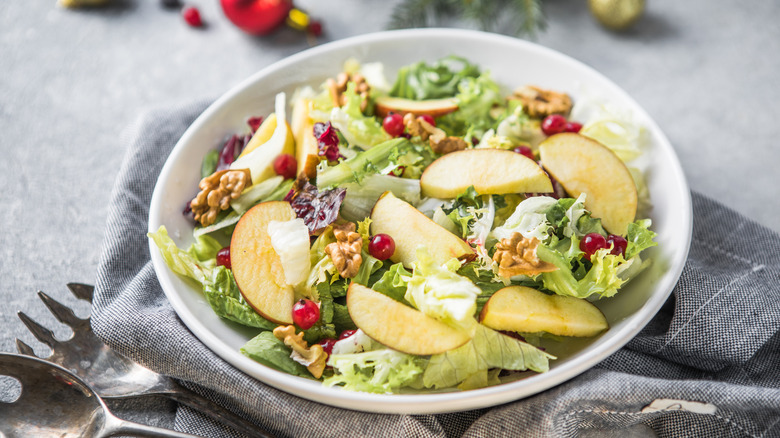
The Waldorf salad has a lengthy history that spans over 100 years. Its creator was Oscar Tschirky, a maitre d' at the Waldorf Hotel (now the Waldorf Astoria) in New York City. Legend has it he created it for a large dinner at the hotel in 1893. The original recipe included chopped red apples and celery tossed with mayonnaise. The salad was such a success that numerous chefs in the following decades would emulate it, adding items like grapes and walnuts. By the middle of the 20th century, it wasn't uncommon to see additions like raisins, marshmallows, and gelatin.
The Waldorf Salad remained popular throughout the 1960s and well beyond, thanks to its fresh flavors and the contrast between crunchy and creamy textures. In fact, the Waldorf Astoria still serves the salad today, albeit a modernized version with celery root remoulade, walnuts, and pea shoots. You can also find plenty of modern takes on the salad that lighten it up with yogurt instead of mayo and add greens, grains, or protein. And if you want to a unique twist, consider transforming your Waldorf salad into a sandwich by adding chicken or turkey and piling it onto bread.
11. Soufflés
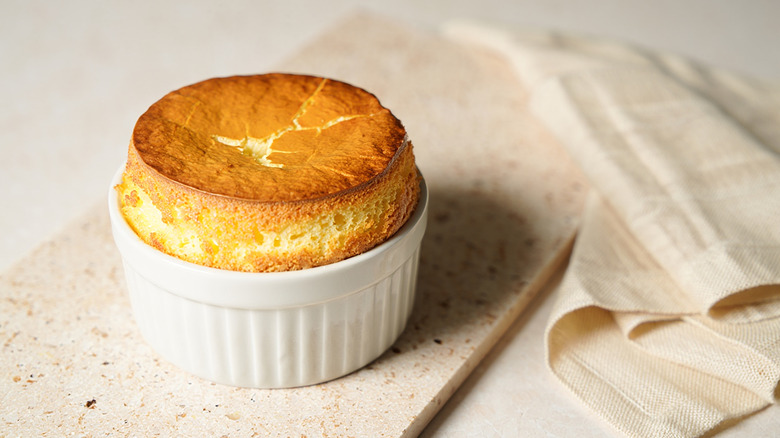
Light and airy, with a puffy top that extends well beyond the dish it's in, the soufflé has pleased diners since the 1700s. Most historians credit the French chef Antoine Beauvilliers with popularizing the dish at his fine-dining restaurant, Grande Taverne de Londres, in Paris. It took some time for the dish to gain traction in the United States outside of fancy French restaurants, but by the 1960s, it was well and truly everywhere. That may have had something to do with James Beard and Julia Child, both of whom drew attention to the dish in the 1950s and 1960s.
At its essence, the soufflé is a baked egg dish where egg whites are whipped separately to create a meringue, then folded into the yolks. The air in the mixture allows the soufflé to puff up and gives it that delicate texture. Soufflés can be sweet or savory and served with sauces, jellies, whipped cream, or ice cream. During the 1960s, cheese soufflés were all the rage, although cookbooks also included recipes for soufflés with ingredients like lobster, spinach, peaches, and chocolate pudding.
12. Pear salad
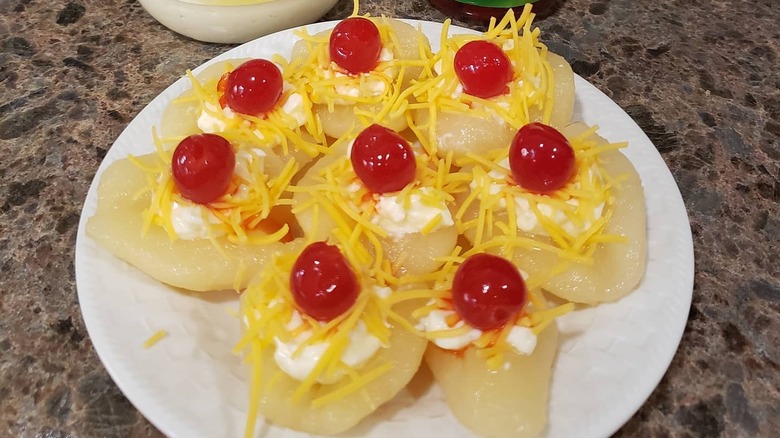
For many Southerners, pear salad is a taste of pure nostalgia. Traditionally, the dish is made with canned pears topped with a dollop of mayonnaise, a sprinkling of cheddar cheese, and a maraschino cherry. Some people also serve the pears on greens. It may sound odd to those who didn't grow up with it, but it's a dish with a long history in the South and still shows up in many places today, including at family dinners, picnics, and potlucks.
Recipes for pear salad have been around since the 1800s. However, many of those early recipes called for fresh pears and sweet ingredients like syrups and cherries. It wasn't until canned fruit became readily available around the beginning of the 20th century that the dish evolved to include canned pears. Around that time, savory ingredients also started to appear in recipes, such as cream cheese and salad dressing. By the 1960s, the dish had taken on the form many people know today, with tangy cheddar cheese and creamy mayo (sometimes swapped for cottage cheese).
13. Stuffed tomatoes
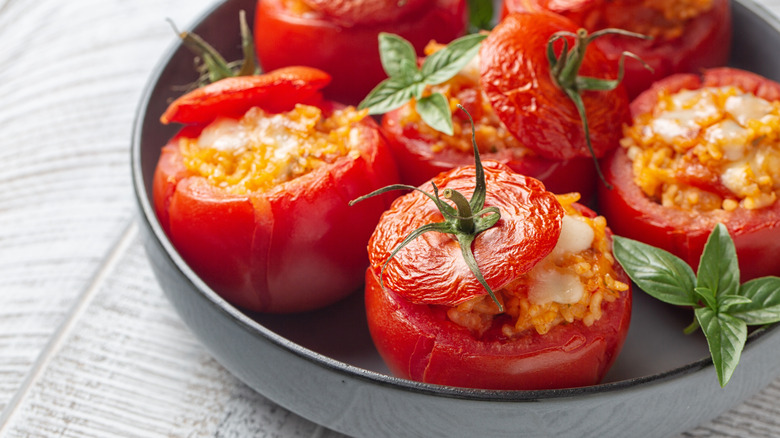
In the 1960s, more Americans were open to trying global cuisines than ever before thanks to an increase in international travel, exposure to immigrant food traditions, and television personalities who encouraged home cooks to experiment with recipes from beyond U.S. borders. One dish that was popular during the decade was stuffed tomatoes, which has its roots in Mediterranean cuisine. In Greek and French recipes, the tomatoes are often hollowed out, stuffed with rice or ground meat, and baked. But in America, the dish took on several new and interesting twists.
Imagine all the different things you can stuff tomatoes with, and there's a good chance someone was attempting it in the 1960s. Cookbooks from that time featured everything from bare bones versions to decadent creations. In some, the tomato innards were mixed simply with breadcrumbs and butter and baked. Other recipes called for chicken livers, shrimp salad, and even luxury items like lobster and crab. And, given that this was the golden age of gelatin, there were plenty of tomato aspic recipes floating around that suggested stuffing or topping jellied tomatoes with salad ingredients like olives, green peppers, and cucumbers.