

Argentinian Picadillo Beef-Stuffed Bell Peppers Recipe
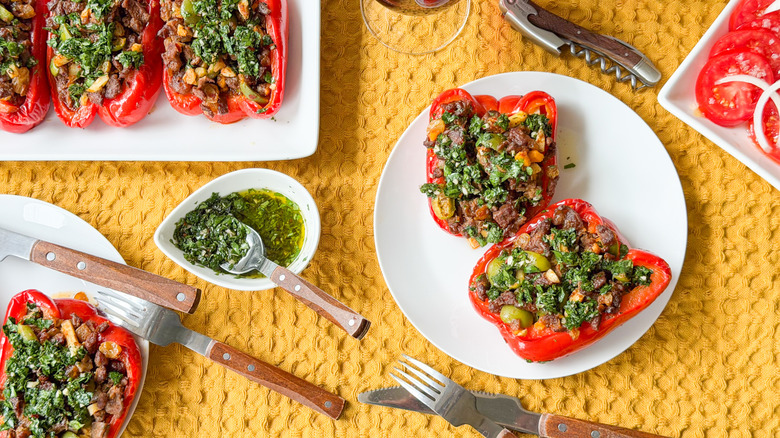
1960s home cooks had a penchant for "stuffed" preparations – deviled eggs, cabbage rolls, tuna salad-stuffed tomatoes, and classic stuffed peppers. The American-style stuffed pepper traditionally contained ground beef, rice, seasoned tomato sauce, and a healthy topping of melted cheese. Stuffed peppers are not unique to American cuisine, however, as versions are found around the world with a variety of colorful and satisfying fillings that take inspiration from local ingredients.
One such filling is picadillo, which is a hearty mix of minced beef, savory vegetables, and pungent spices. Recipe developer Julie Kinnaird wanted to translate her favorite version of picadillo from Argentina, which she first had encased in empanadas at the base of the Andes mountains. Kinnaird says that she loved the texture of the chopped Argentinian beef combined with buttery Castelvetrano olives, sweet golden raisins, and the surprising and delightful addition of tender hard-boiled egg. Our Argentinian picadillo beef-stuffed bell peppers capture the essence of this popular empanada filling in a colorful and hearty presentation that is perfect for entertaining or cozy nights at home.
Kinnaird says that she learned the secret of Argentinian beef picadillo from an empanada chef in Salta, who taught her the "Cuchillo" technique for slicing the beef. This involves lightly freezing the meat so that it can be sliced and diced very thin, allowing for a better texture than machine-ground meat. You will learn how easy this is to do and what a difference it makes in your finished filling!
Gather the Argentinian picadillo beef-stuffed bell peppers ingredients
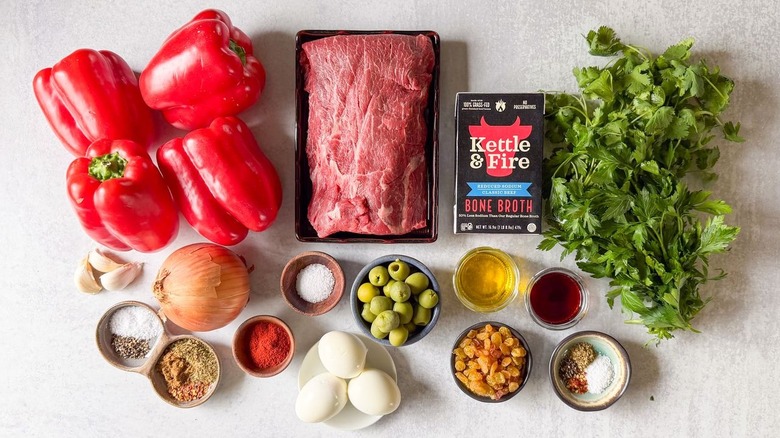
When selecting your bell peppers for this recipe, look for red ones on the larger size, or that are at least consistent in size, so that you will have uniform vessels for serving. Find a nice cut of flatiron steak to be the base of your pepper stuffing. To this, you will add yellow onion, golden raisins, smoked paprika, dried oregano, ground cumin, crushed red pepper flakes, freshly cracked black pepper, beef bone broth, pitted Castelvetrano olives, and hard-boiled eggs. You will need olive oil for cooking parts of the stuffing, oiling the baking dish, and for your chimichurri sauce. To make the sauce, you will need fresh Italian parsley and cilantro, garlic cloves, red wine vinegar, more dried oregano, crushed red pepper flakes, and black pepper. Kosher salt is used throughout for seasoning.
Step 1: Preheat the oven
Preheat the oven to 400 F.
Step 2: Place the steak in the freezer
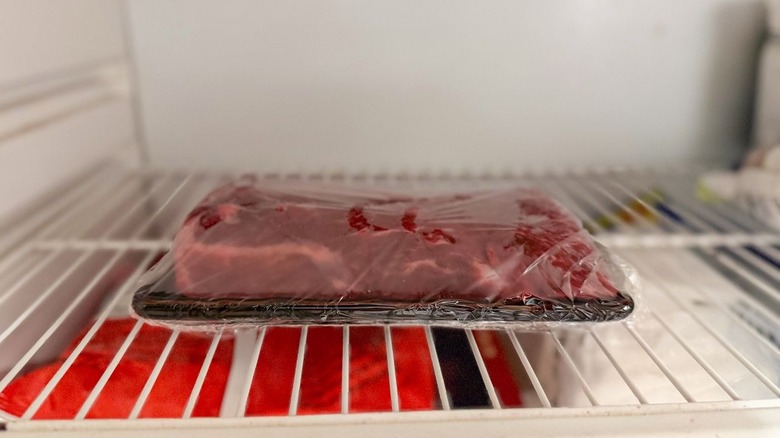
Place the steak in the freezer for 20 minutes until firm but not frozen.
Step 3: Soak the raisins
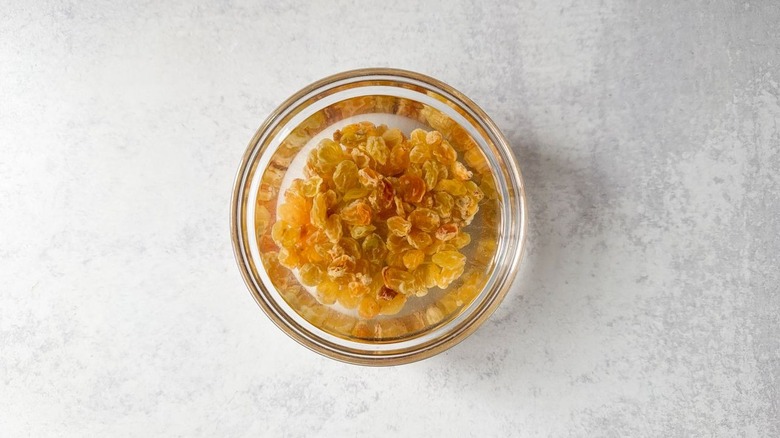
While the steak is chilling, place the raisins in a bowl and cover them with hot water to soften for 10 minutes.
Step 4: Drain the raisins
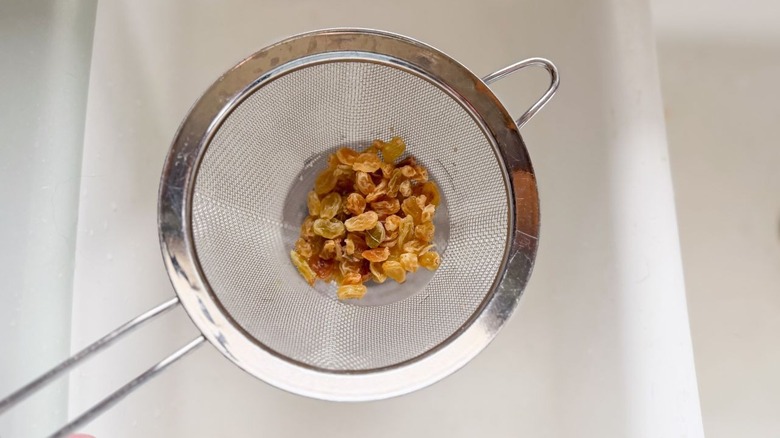
Drain the raisins and set them aside.
Step 5: Place the steak on a cutting board
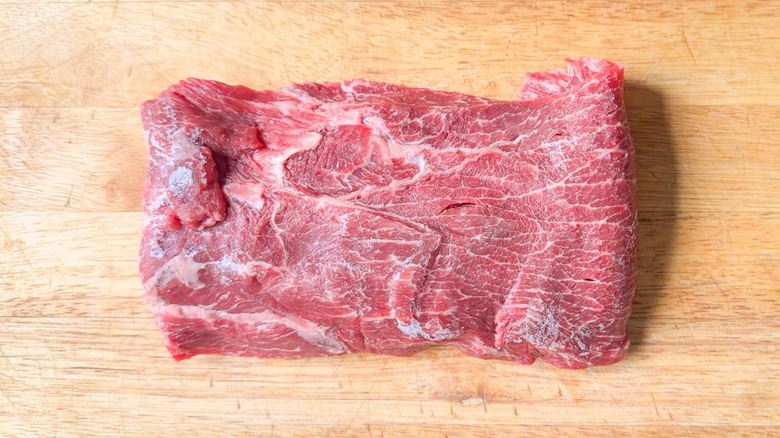
Remove the steak from the freezer and place it on a cutting board.
Step 6: Thinly slice the steak against the grain
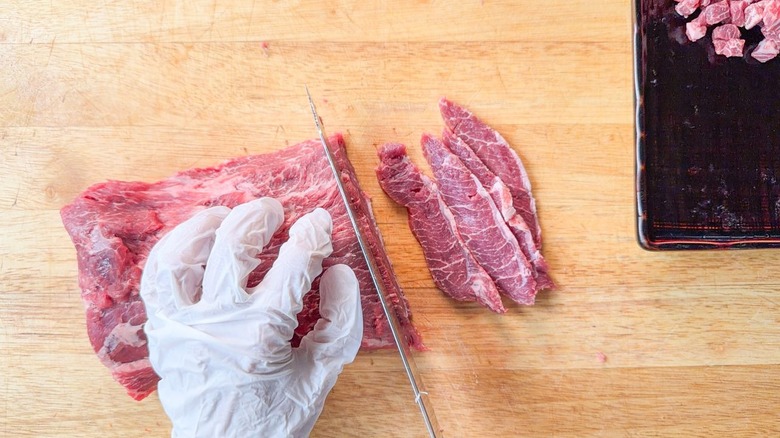
Slice the steak against the grain into thin strips.
Step 7: Cut into matchstick widths
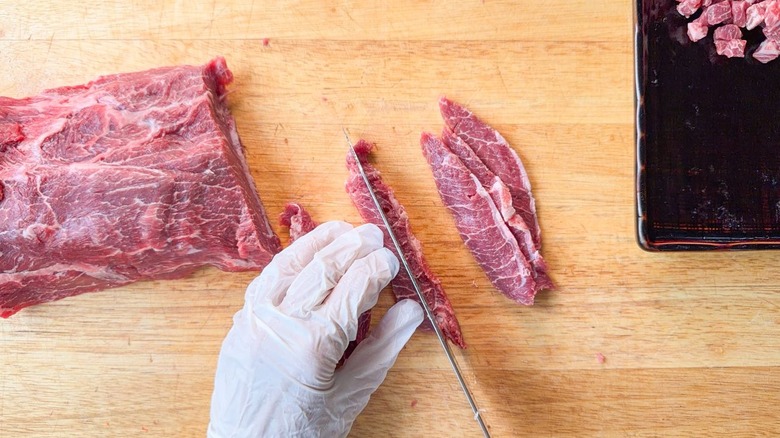
Cut these pieces into matchstick widths.
Step 8: Cut the slices into small cubes
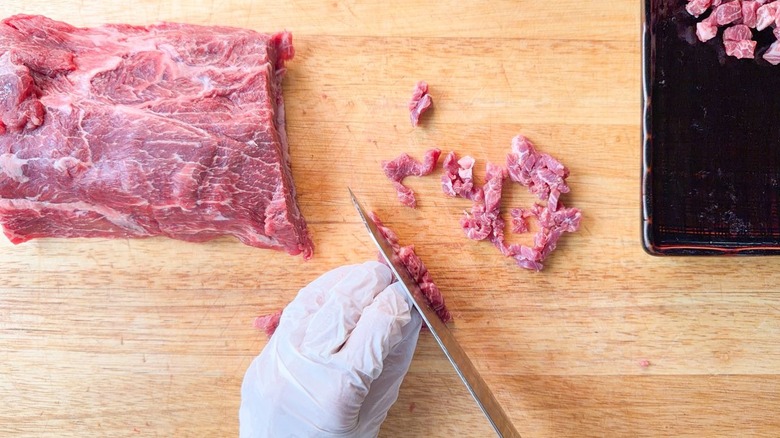
Turn the strips and slice again to form small, uniform cubes. Set aside.
Step 9: Heat the olive oil in a skillet
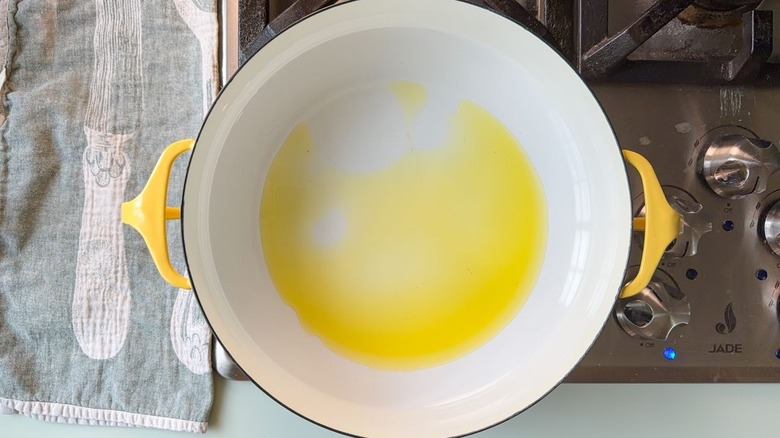
In a large skillet or Dutch oven, heat 3 tablespoons of the olive oil over medium-low heat.
Step 10: Add the onion
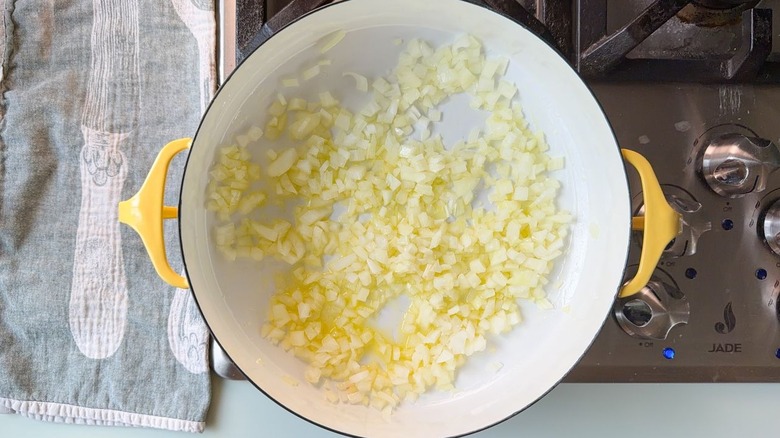
Add the onion and ½ teaspoon of salt.
Step 11: Cover the pan and cook
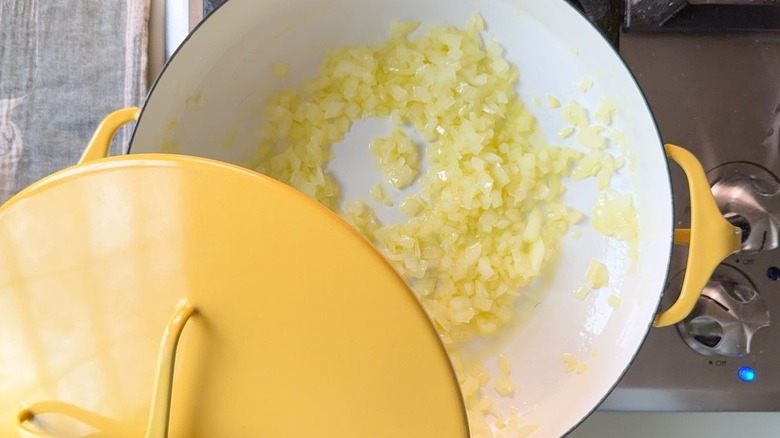
Cover the pan with a lid, and cook, stirring frequently, until the onion is very soft and translucent, but not brown (about 10 minutes).
Step 12: Add the beef
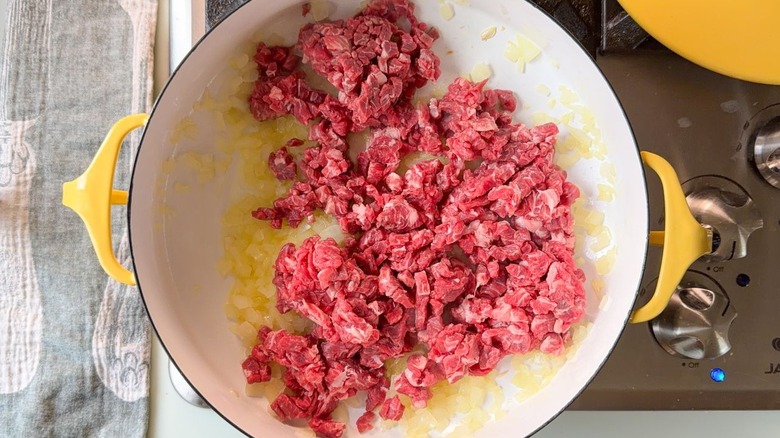
Increase the heat to medium-high and add the beef.
Step 13: Cook and stir
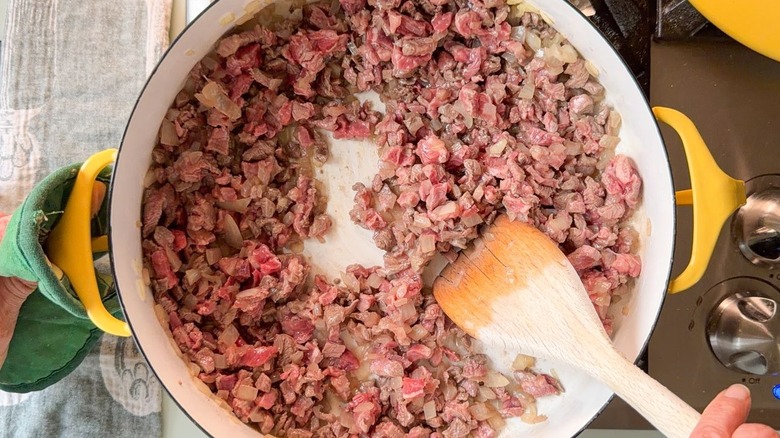
Cook and stir constantly for about 3 minutes until the beef is just turning brown.
Step 14: Add the seasoning
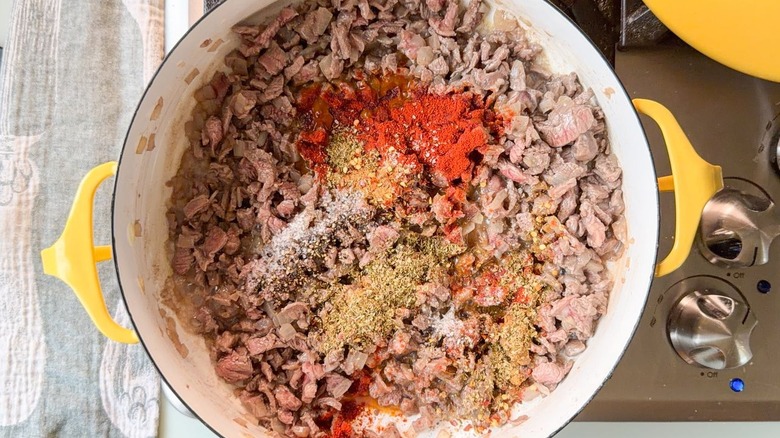
Add the paprika, oregano, cumin, red pepper flakes, pepper, and remaining teaspoon of salt.
Step 15: Cook and stir for 1 minute
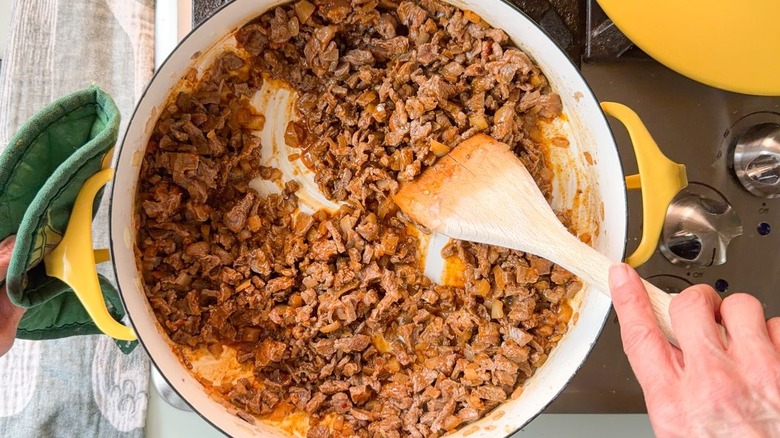
Cook and stir for 1 minute.
Step 16: Add the beef broth
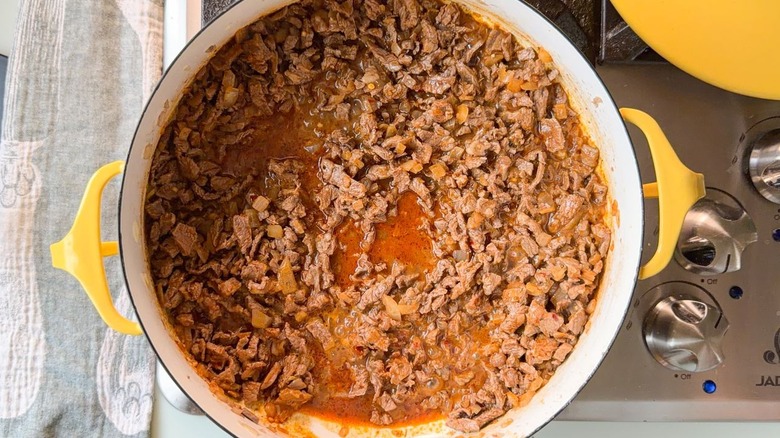
Add the beef broth and simmer for about 5 minutes until the liquid has reduced and the beef mixture has thickened.
Step 17: Stir in the olives and raisins
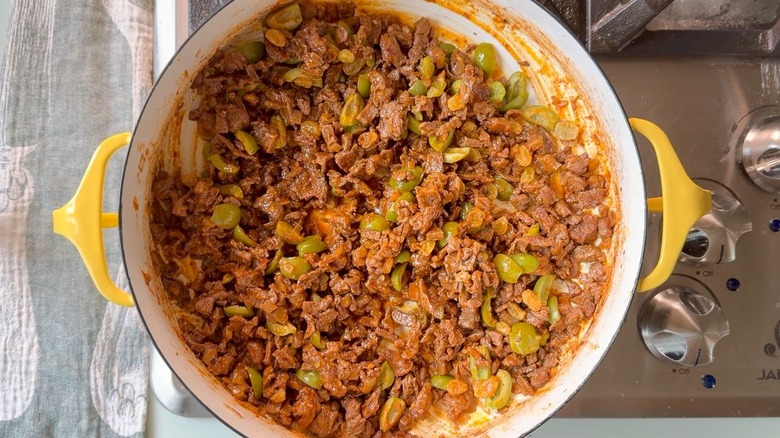
Turn off the heat and gently stir in the olives and raisins. Remove the pan from the burner and cool for about 20 minutes.
Step 18: Brush a baking dish with olive oil
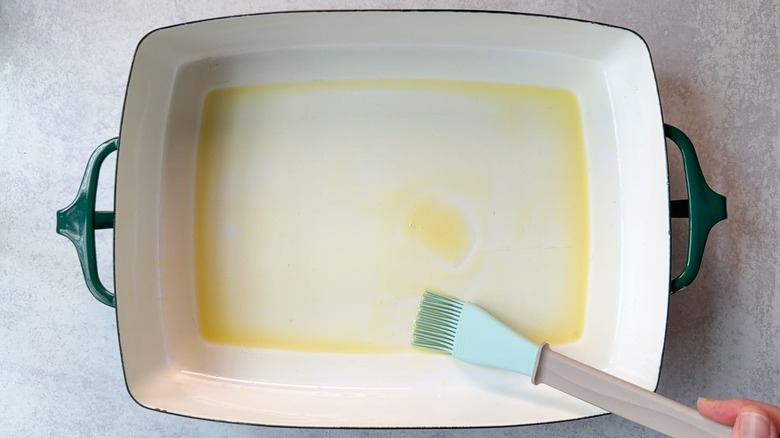
Brush a 13 x 9-inch baking dish with 2 tablespoons of olive oil.
Step 19: Prepare the bell peppers
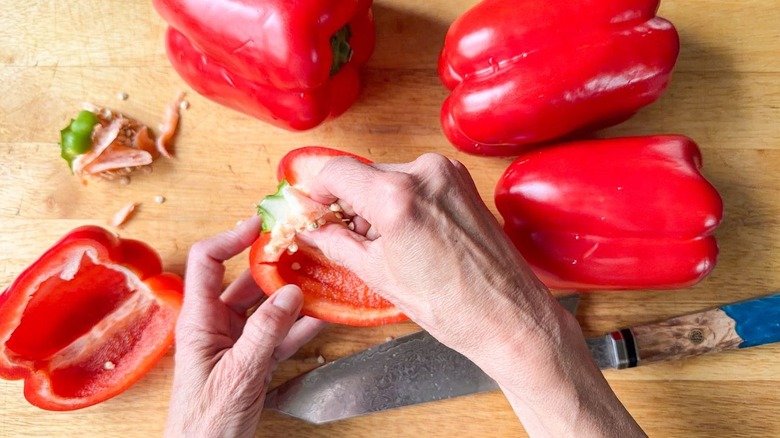
Cut the bell peppers in half lengthwise and remove the stems and seeds.
Step 20: Rub the pepper halves with olive oil
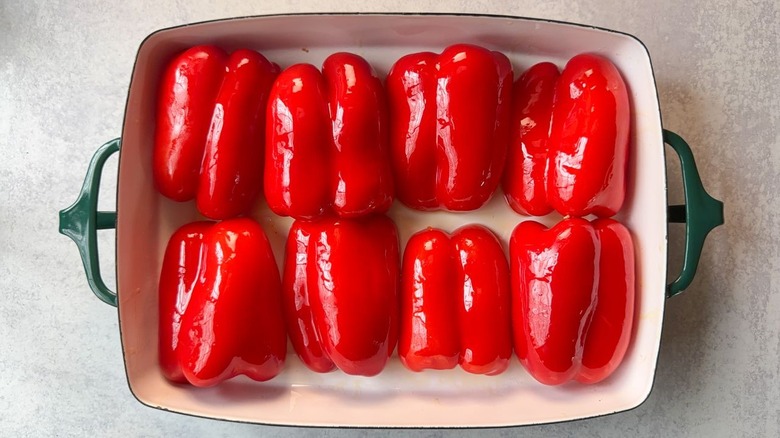
Rub the remaining tablespoon of olive oil on the peppers and place them cut-side-down in the baking dish.
Step 21: Roast the peppers
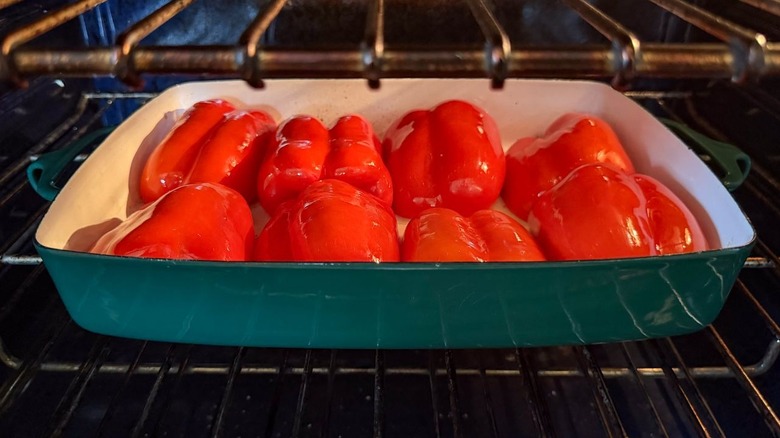
Roast the peppers for 15 minutes, then remove them from the oven.
Step 22: Fold the chopped egg into the beef
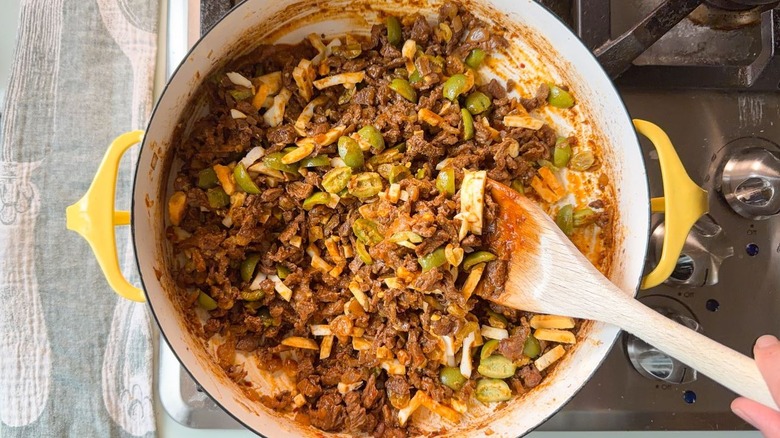
Carefully fold the chopped egg into the cooled beef filling.
Step 23: Flip the peppers in the pan
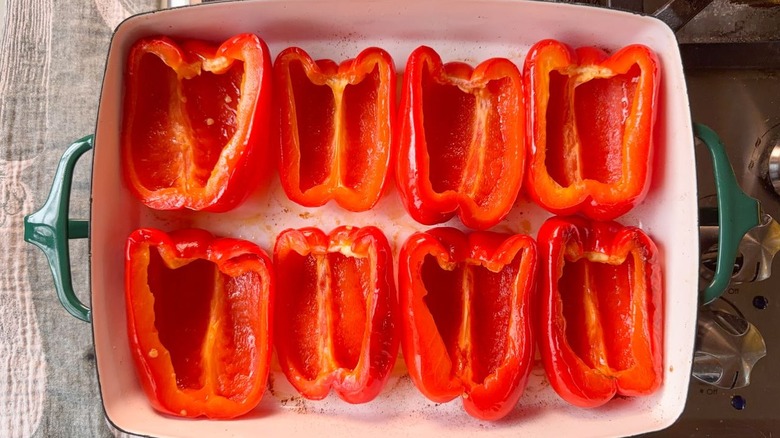
Flip the pepper halves so they are cut-side-up.
Step 24: Fill the peppers with the picadillo beef
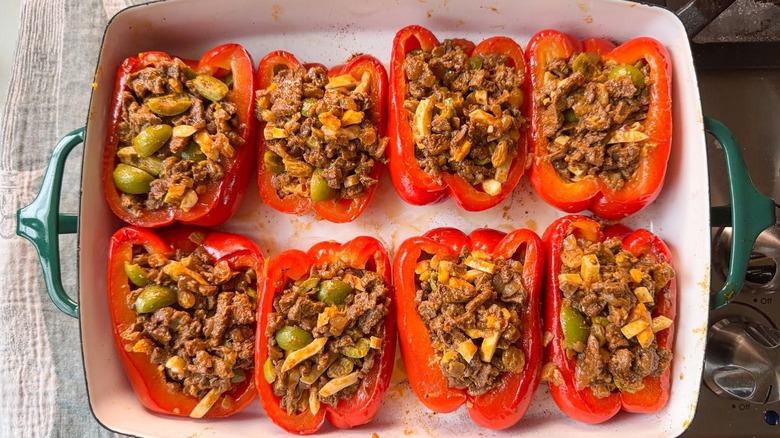
Fill the halves with the beef mixture, gently pushing it into the cavities of the peppers.
Step 25: Bake the peppers
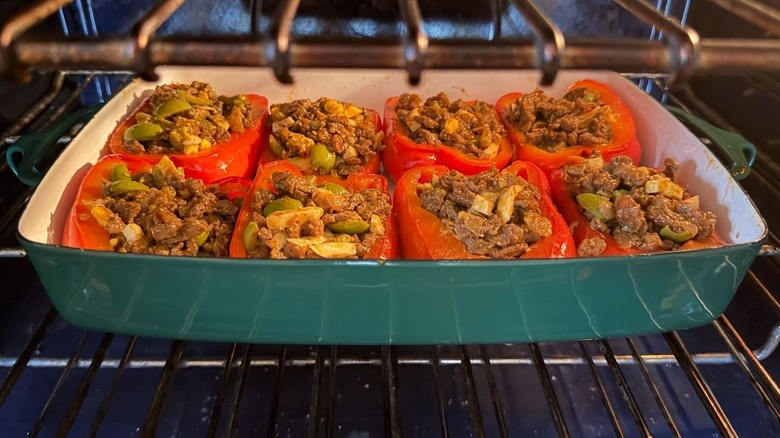
Bake the stuffed peppers for 15 minutes.
Step 26: Start the chimichurri
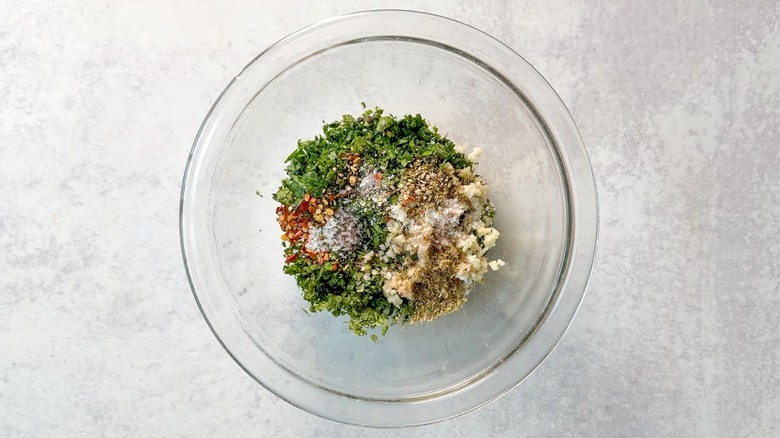
While the peppers are baking, combine the parsley, cilantro, garlic, red wine vinegar, salt, oregano, crushed red pepper, and black pepper in a large bowl.
Step 27: Whisk in the olive oil
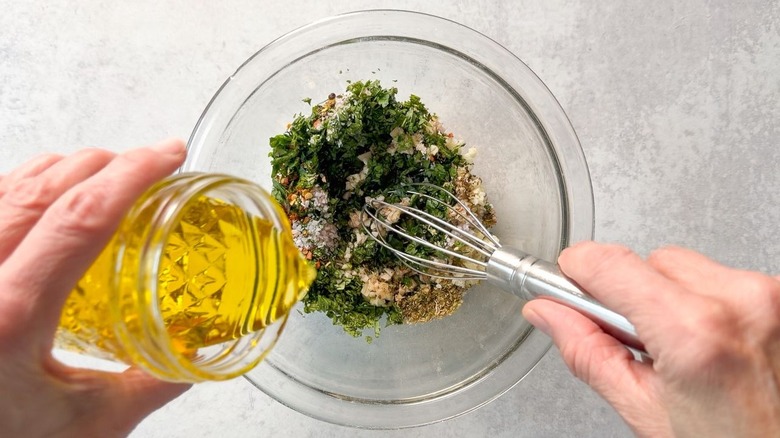
Whisk in the olive oil until combined.
Step 28: Drizzle the peppers with the chimichurri and serve
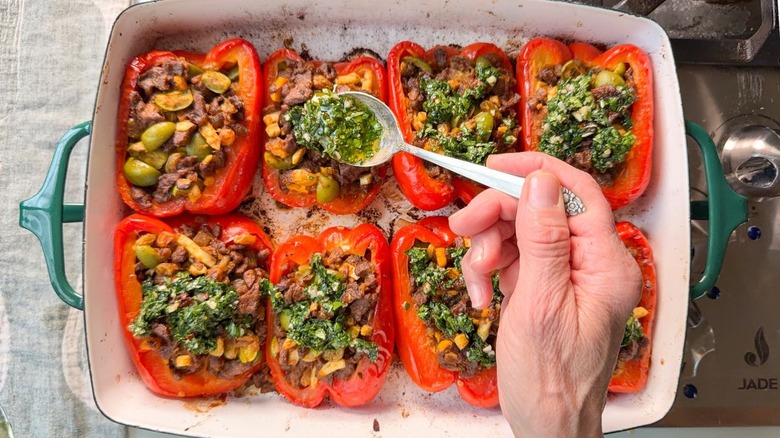
Drizzle the baked peppers with some of the chimichurri sauce and serve immediately with the remaining sauce on the side.
What pairs well with picadillo beef-stuffed peppers?
Argentinian Picadillo Beef-Stuffed Bell Peppers Recipe
Argentinian-style beef is combined with Castelvetrano olives, sweet golden raisins, and a tender hard-boiled egg in our picadillo beef-stuffed peppers.
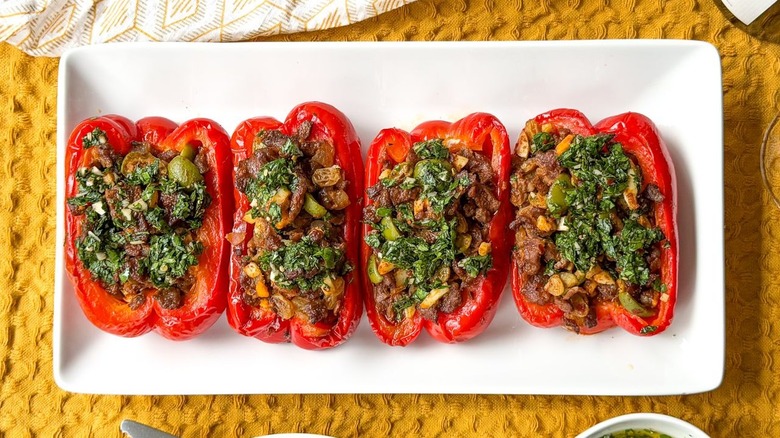
Ingredients
- For the stuffed peppers
- 1 ½ pounds beef flatiron steak
- ⅓ cup golden raisins
- 6 tablespoons olive oil, divided
- 2 cups finely diced yellow onion (1 large onion)
- 1 ½ teaspoons kosher salt, divided
- 1 tablespoon smoked paprika
- 2 teaspoons dried oregano
- 1 teaspoon ground cumin
- ½ teaspoon crushed red pepper flakes
- ½ teaspoon freshly cracked black pepper
- ½ cup beef bone broth
- ½ cup pitted Castelvetrano olives, sliced
- 4 large red bell peppers
- 3 hard-boiled eggs, chilled , peeled, and diced
- For the chimichurri sauce
- 1 cup Italian parsley leaves, finely chopped
- ½ cup cilantro leaves, finely chopped
- 3 large cloves garlic, minced
- 3 tablespoons red wine vinegar
- ½ teaspoon kosher salt
- ½ teaspoon dried oregano
- ¼ teaspoon crushed red pepper flakes
- ¼ teaspoon freshly cracked black pepper
- ½ cup extra-virgin olive oil
Directions
- Preheat the oven to 400 F.
- Place the steak in the freezer for 20 minutes until firm but not frozen.
- While the steak is chilling, place the raisins in a bowl and cover them with hot water to soften for 10 minutes.
- Drain the raisins and set them aside.
- Remove the steak from the freezer and place it on a cutting board.
- Slice the steak against the grain into thin strips.
- Cut these pieces into matchstick widths.
- Turn the strips and slice again to form small, uniform cubes. Set aside.
- In a large skillet or Dutch oven, heat 3 tablespoons of the olive oil over medium-low heat.
- Add the onion and ½ teaspoon of salt.
- Cover the pan with a lid, and cook, stirring frequently, until the onion is very soft and translucent, but not brown (about 10 minutes).
- Increase the heat to medium-high and add the beef.
- Cook and stir constantly for about 3 minutes until the beef is just turning brown.
- Add the paprika, oregano, cumin, red pepper flakes, pepper, and remaining teaspoon of salt.
- Cook and stir for 1 minute.
- Add the beef broth and simmer for about 5 minutes until the liquid has reduced and the beef mixture has thickened.
- Turn off the heat and gently stir in the olives and raisins. Remove the pan from the burner and cool for about 20 minutes.
- Brush a 13 x 9-inch baking dish with 2 tablespoons of olive oil.
- Cut the bell peppers in half lengthwise and remove the stems and seeds.
- Rub the remaining tablespoon of olive oil on the peppers and place them cut-side-down in the baking dish.
- Roast the peppers for 15 minutes, then remove them from the oven.
- Carefully fold the chopped egg into the cooled beef filling.
- Flip the pepper halves so they are cut-side-up.
- Fill the halves with the beef mixture, gently pushing it into the cavities of the peppers.
- Bake the stuffed peppers for 15 minutes.
- While the peppers are baking, combine the parsley, cilantro, garlic, red wine vinegar, salt, oregano, crushed red pepper, and black pepper in a large bowl.
- Whisk in the olive oil until combined.
- Drizzle the baked peppers with some of the chimichurri sauce and serve immediately with the remaining sauce on the side.
Nutrition
| Calories per Serving | 861 |
| Total Fat | 66.9 g |
| Saturated Fat | 14.0 g |
| Trans Fat | 0.6 g |
| Cholesterol | 227.6 mg |
| Total Carbohydrates | 28.9 g |
| Dietary Fiber | 6.5 g |
| Total Sugars | 17.3 g |
| Sodium | 1,263.0 mg |
| Protein | 41.8 g |

What is picadillo and where did it originate?
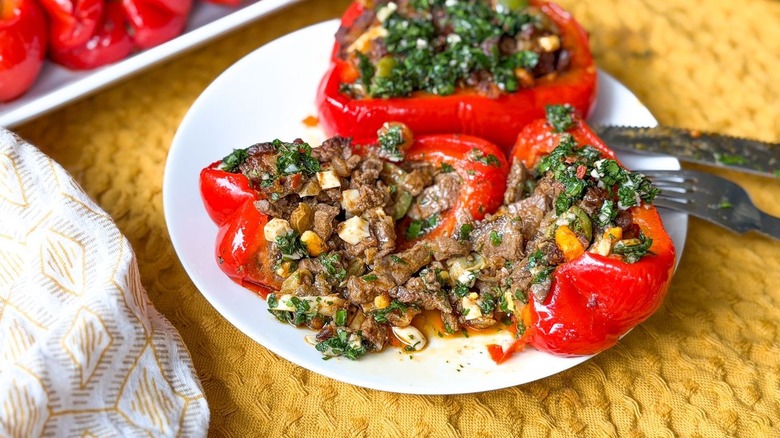
Versions of picadillo are found in Cuba, Mexico, numerous South American countries (like Argentina), and even the Philippines. It is likely that picadillo originated in Spain and was then passed on to Spanish colonies in the aforementioned countries. The word picadillo is rooted in the Spanish verb "picar," which translates as "to mince." Variations on picadillo range from inclusions of potato, tomatoes, corn, squash, peas, and a variety of cheeses. It is often served as a stew with rice or starchy vegetables, but frequently stuffed into a vessel, such as a pepper or an empanada dough. Regardless of where it is from, picadillo is considered to be a comforting dish, incorporating humble or local ingredients to make a satisfying meal.
Kinnaird says that what she loves about picadillo is that it is easy to put together with ingredients you have on hand in your refrigerator or pantry. She also recommends making the picadillo filling in advance, as the flavors actually improve with a few days of marination in the refrigerator. Picadillo can also be frozen in individual containers for easy weeknight meals.
How can I switch up these stuffed peppers?
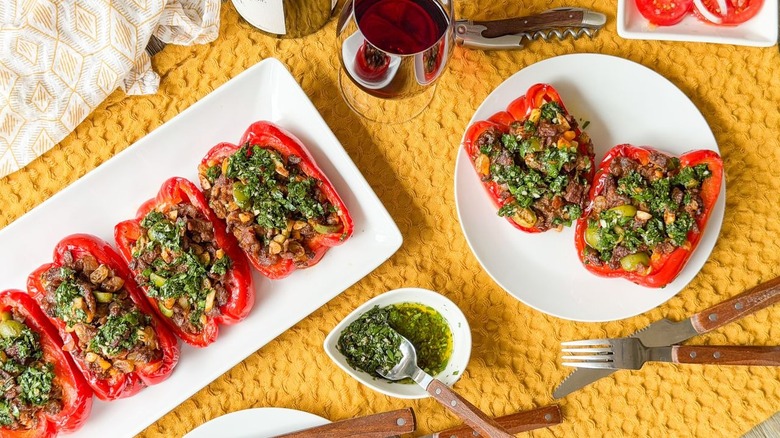
There are plenty of delicious ways to switch up these Argentinian picadillo beef-stuffed bell peppers, starting with the peppers themselves. Any color of bell pepper will work, just keep in mind that red, orange, or yellow peppers will have a sweeter flavor profile than green, which have a more vegetal flavor. You can also try using poblano peppers, which have a smoky and somewhat spicy taste. For the beef, if you don't have the time to hand-mince your steak, ground beef is a time-saving alternative. Substitute an equal amount of lean ground beef for the steak and proceed with the instructions. Different types of olives can be used, such as pimento-stuffed Manzanilla or pitted Kalamata. If you want to boost the piquant aspect of the filling, add a bit of the olive brine. Currants are a tasty substitute for raisins, and adding some slivered almonds gives the filling a bit of crunch. If hard-boiled eggs are not your thing, mix in or top your peppers with some cheese. Mozzarella, feta, or manchego would add a melty richness and help bind your filling together.
As for the chimichurri, Kinnaird suggests only small deviations so that the essence of the sauce stays intact, rather than becoming pesto-like. You can leave out the cilantro and use a bit of mint or fresh oregano in place of the dried. If you want to bump up the heat, add some fresh minced Fresno chilies instead of red pepper flakes, or a bit of smoked paprika for an additional depth of flavor.