

10 Ways To Use Up That Bag Of Lemons Before They Go Bad

Forget girl math, we're here to talk about lemon math: Your cocktail recipe calls for one lemon (Is that a large? Small? Two medium?), and that cheesecake recipe you've been meaning to try calls for one lemon's worth of juice (but what if it's not a particularly juicy lemon?). Wow, lemons are expensive, you think, as you decide that it's more economical to buy a whole bag of lemons than two or three single fruits in the produce section. In no time at all, your countertop is filled with the two or three lemons you needed for these recipes, along with three others that you didn't need but got for "free" anyway. It's a consumerist and mathematical conundrum if we do say so ourselves, and one that we've faced more times than we'd like to admit. The result? A lot of head-scratching and wondering about how we're going to use those leftover lemons before they go bad.
If you only have one lemon on hand, you could probably find a way to add it to some recipe without much thought. But we're talking about enough lemons to fuel a lemonade stand on a busy suburban street corner, so you're going to have to get those creative juices flowing — quite literally — and find ways to put that citrus to good use. But you know what they say ... when life gives you lemons, you read a piece about the most creative ways to use up a ton of lemons at once.
1. Preserve them

Canning and food preservation might be the first thing your mind jumps to when you're thinking about how to use up all those leftover lemons. While preserving citrus will change its texture and flavor, there is a lot of whimsy to be had in this Moroccan style of preservation. Essentially, this recipe involves submerging whole lemons in a jar with salt and pickling seasonings, like peppercorns and bay leaves. The fruits are pressed in the jar to expel their juices, which mingle with the salt and the seasoning to produce a flavorful brine that slowly softens the lemons. When you're ready to use the lemons (just note that the curing process can take several weeks), simply pull the fruits out and give them a rinse.
This ancient lemon preservation method is popular in Middle Eastern and North African dishes, but there are tons of other ways to use preserved lemon besides just those cuisines. For one, you can use pieces of the lemon in your lemonade or alcoholic cocktail; even if you rinse some of that brine off, the salty undertones will still be the predominant flavor note. The tangy and salty flavor is also an excellent match for heavy sauces and recipes, including pasta dishes and soups. That's not to say that it won't shine as an addition to your salad dressing, either; pair it with bright, summery, and Mediterranean-inspired ingredients like quinoa and feta.
2. Roast them with your favorite proteins

There is a reason why citrus is often paired with proteins, including fish and chicken: The acid helps draw attention to the salty and savory flavors of the protein and whatever other ingredients it's paired with. There are myriad ways to go about this, from adding a splash of lemon juice to your marinade to roasting whole lemons with your protein of choice. As such, it's kind of like a choose-your-own-adventure-style dish.
If you want to use the juice from a couple of lemons, you may consider a citrus-forward spin on a whole roast chicken recipe. Create a basic seasoning liquid with lemon juice, oil, salt, and pepper, and smear it on your chicken before roasting it. If you want to drive home that citrusy flavor even more, though, you may want to take things up a notch and stuff the cavity of your bird with whole lemons. Puncture the citrus with a fork before carefully sliding it into the cavity of your bird. Gently truss the legs, as you don't want to put any undue pressure on the lemons or the chicken and cause a citrusy explosion in your oven. As the bird cooks, the lemons will soften and release their oil into the chicken, flavoring it and offering up their tart and sweet notes.
Fish and seafood also pair exceptionally well with lemons. Grill salmon directly atop lemon slices for added flavor, or create a lemon-infused butter to drizzle on your haddock filets or lobster tails.
3. Use them to clean your kitchen
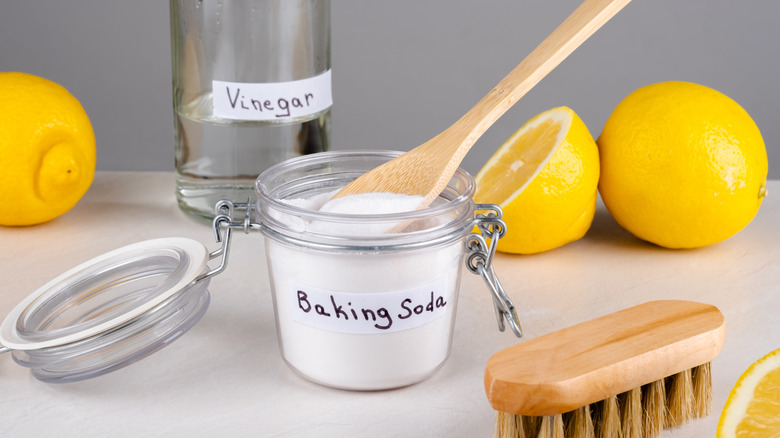
We would be remiss not to mention the lemon's cleaning powers in this roundup. Not only can you use squishy or visually unappealing fruit to clean your kitchen, but it will leave your space looking and smelling fresh in no time.
There are many genius hacks to try, and their mechanics all boil down to the idea that lemons are acidic, and when combined with something alkaline, like baking soda, they can effectively break down grease and grime. However, the lemon's acidity is also one of the reasons why you need to be cautious about using it for DIY cleaning hacks; if you use them on marble or other natural stones, for example, you could be setting yourself up for a very costly disaster.
So what can you safely use lemons on? Well, you could halve your fruit, add a bit of dish soap, and use them as a sponge replacement for cleaning the inside of your sink. The softness of the lemon won't scratch the metal, and it's bound to leave it sparkling with just a few passes. You can also use a lemon to clean your oven; simply slice up the fruit and add it to an oven-safe baking dish with water. As the oven heats, the lemons and water will release steam that helps to loosen any grime inside your appliance. Once the oven is cool, you can wipe up all that grease and stuck-on residue with a cloth; it should come off much more easily than if you skipped the hack entirely (plus, it'll leave your kitchen smelling like a citrus grove).
4. Turn them into a lemony dessert

If you are a home baker, you probably already know the value that a tart ingredient like lemon can have in a recipe. Not only does the acidic component help interact with leaveners like baking soda, but it can also be used as a tenderizer, staving off gluten formation in things like pie crusts and pastry. Plus, the tartness can offset a sweet dessert, adding a restorative and balancing flavor to counteract any cloyingness.
You can either go with a subtle lemon addition in something like a vanilla-forward cheesecake or white cake, or go all-out in a lemon-centric dessert. If you have pounds and pounds of lemons on hand, chances are you're going to want to go with the latter. Your options are endless, from tasty and portable lemon bars that offer the right degree of tanginess and sweetness to lemon-centric Bundt and pound cakes that pair a lemony sponge with a tart and zesty lemon-infused glaze. Lemon also plays well with others, such as in a fruity, berry-forward dish. Try making a batch of soft blueberry muffins with a lemon-flavored drizzle to really channel those homey yet bright flavors.
You don't have to just add the lemon juice to your batter to get the full effect of this flavor. Rubbing sugar with lemon zest will really harness those aromatic and flavor compounds in the oils; try rolling the tops of your muffins in it for a sweet and lemon-forward crunch.
5. Transform the fruit into a simple syrup

Lemons can be hard to work with as an ingredient because their juice, zest, or whole-fruit form doesn't work for every application. For example, lemon juice alone can make the flavor of a cocktail or NA sipper too watery or sour. In this instance, using a lemon-infused simple syrup may be a better alternative.
To make it, you'll essentially want to swap the water you'd normally use in a simple syrup recipe with lemon juice and cook it down with the sugar and peels until it's thick and syrupy. After the mixture has cooled, you can store it in a bottle — sieving out the peels as needed — and keep it in the fridge. It keeps for several months, but you'll have more than enough ways to use it that it may not even be in there for that long. French 75s, which are normally made with lemon juice and simple syrup, could benefit from this 2-in-1 addition, as could a lemon drop martini. Berry-forward drinks, like those made with muddled strawberries or blueberries, or herbs like mint, thyme, and basil, could also benefit from this citrusy syrup.
Aside from cocktails, lemon simple syrup also shines in baked goods. It's sticky, which is why you could use it to soak your sponge cakes in. Swipe some onto freshly baked white sponge cakes with a pastry brush to stave off staling and add a complementary — but not overwhelming — dash of flavor.
6. Make a batch of homemade lemon curd

If you haven't tried making your own lemon curd before, consider this your sign. This sweet, tangy, and jelly-like spread is an incredibly versatile ingredient in dessert recipes. It can be drizzled atop ice cream, smeared between layer cakes, and stuffed into donuts — but there are also other ways to use it to upgrade snacks and even meats like roasted chicken.
Lemon curd also shines at breakfast time alongside overnight oats and in yogurt bowls. You can certainly pair it with warm ingredients — like classic stovetop oatmeal — but when used cold, it maintains its texture, offering the perfect degree of creaminess and a zesty, lemony flavor. Try pairing the curd with fresh blueberries or seasonal fruit and a honey-flavored Greek yogurt for a simple yet decadent breakfast.
Making lemon curd is easier than you may think. Heck, you could even use your microwave to make a simple version of it. It's essentially a lemon-flavored custard, meaning you need to carefully mix and cook the egg yolks, lemon juice, and sugar without the mixture scrambling. As long as you take things slow, you should have no problem developing a thick, creamy custard that's primed for a pat of butter. Once the mixture has cooled, you can store it in your fridge and use it throughout the week.
7. Turn lemons into lemonade

Is making lemonade out of a leftover bag of lemons low-hanging fruit (pun intended)? Well, call us old-school, but there is something to be said about transforming a bag of lemons into a massive pitcher of lemonade to enjoy throughout the week. It's the king of simple beverages — requiring just water, lemon juice, and sugar — but relegating lemonade to these three ingredients would be doing it a disservice.
Some of the best lemonade-making tips elevate the OG components without making things too complicated. Rubbing sugar and lemon peels together, for example, and using it in lieu of a conventional sweetener will really make the lemon flavor pop. You can also use different types of sweeteners in your recipe; granulated sugar is great and all, but kind of boring when you consider that you could use maple syrup or honey to bring those flavor nuances — be it oakiness or florality — in every glass.
Once you have a great lemonade recipe, build it out with herbs, flavorings, or other creative spins. We love muddling a few fresh mint or basil leaves in our lemonade before pouring it; the tang of the lemon contrasts well with the vibrant, organic flavor of the herbs. You could also add frozen fruit to the glass instead of ice to keep things cold and infuse the flavors of strawberries, blueberries, or blackberries into your lemonade.
8. Candy the fruit

If you like to take a walk on the sweet side, you're going to love using candied lemon peels for all of your baked treats (we won't blame you if you snack on a few of them straight from the pan, either). As their name suggests, candied lemon peels are prepared by candying — meaning boiling the rinds in a sugar water mixture — to remove any lingering bitterness. Once prepared, the limp peels are tossed in even more sugar to give them a crunchy texture and beautiful shine.
Candied lemon peels are a really mild and approachable way to use up lemon scraps. You can use them as a garnish on your favorite lemon-themed bakes — like lemon poppyseed muffins, lemon cake, or a lemon meringue pie. They are as visually striking as they are tasty, and who doesn't like an edible garnish?
You're not just relegated to candying the peel, either. Thinly slice the whole fruit before blanching the slices in cold water, then boiling them away on the stove and candying them as you would the peels. These whole slices are even more visually striking and would look excellent in place of a lemon twist on a cocktail glass.
9. Add them to your favorite soups

Even brothy soups, which don't have much by the way of savory, hearty mix-ins like meats, pasta, and potato chunks, can be overwhelmingly rich. Luckily, there's a secret ingredient that you can use to balance the richness of your favorite soup: lemon. Sure, it might not seem out of place in a lemony chicken orzo soup, but when was the last time you added a hint of acidity to your classic chicken noodle or tomato bisque? Lemon juice can be a balancing ingredient and counteract an overtly heavy or salty broth. Ideally, you'll want to add the lemon juice at the end of the cooking process, after you've pulled it from the heat, so that you can taste and add more as needed. You don't want to add so much that the recipe becomes sour; rather, just enough that the other flavors come more into focus.
If you're down for a larger soup undertaking, consider turning extra lemons into a soup. Simmer the peels in the soup broth to extract their flavor — just be sure not to let them sit for too long, as it can cause the flavor to become over-extracted or bitter. Pair it with complementary ingredients — like fish or seafood, chicken, or veggies — and allow that lemon flavor to take center stage.
10. Freeze lemon ice cubes for your favorite beverages
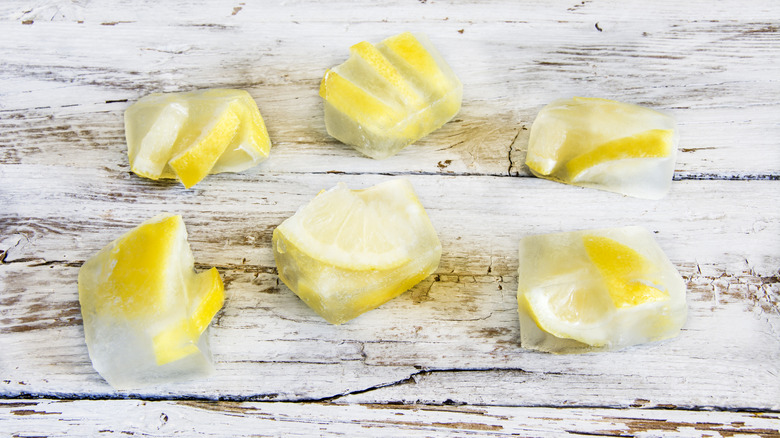
Water with a couple of pieces of lemon floating around in it is all fine and dandy, but why not freeze some cubes ahead of time to lock in the freshness and keep your glass of water, iced tea, or lemonade chilled? This hack is incredibly practical, as you can prepare the cubes and freeze them in a separate bag until you need them, and it's a great way to make use of a whole bag of lemons before they spoil.
The key is to cut the lemon pieces into small sections so that they can easily fit into your ice cube tray. If you are after looks, use a large silicone ice tray and fold up the thinly sliced lemon wheels like rose petals. They can stick out above the fill line; you'll find that this has to happen with smaller ice trays. When you add your water, freeze, and pop them out of the mold, you'll get a beautiful — and flavor-packed — addition to your drink. Besides the whole lemon slivers, you can also customize your cubes with herbs like oregano, thyme, basil, and rosemary, or fresh fruits like berries. The freezing process will lock in their color, offering both a vibrant aesthetic and flavor-packed addition to your favorite refresher.