

10 Types Of Chowders, Explained
We may receive a commission on purchases made from links.
Whether it's a hot summer day, a blustery winter night, or something in between, it's always chowder season. But when you think "chowder," does your mind go straight to the clam kind — the white one — and stop? If so, you're missing out on a world of chowder possibilities, and not just "the red one." If you think the word "chowder" is always preceded by "clam," well, prepare to have your mind blown.
Let's start with the definition. According to Merriam-Webster, a chowder is "a soup or stew of seafood (such as clams or fish) usually made with milk or tomatoes, salt pork, onions, and other vegetables (such as potatoes)." Even the dictionary people have suffered a failure of imagination. Have they never heard of corn chowder? Also, a chowder isn't really a soup, although they're both liquid-based. Chowders are chunky, like a stew, but they're not stews, either; it may sound obvious but a chowder doesn't stew. A chowder is its own thing, often but not always creamy, but we'll get to that.
The origin of the word "chowder" may be French – "chaudière" for cauldron — or English — "jowter" for fishmonger. The point is, chowder has been around for a few centuries; people have strong feelings about it; and it's a delicious one-pot meal. So, dear chowder-curious, pull up a spoon as we introduce you to the world of definitely-not-soups-or-stews, beginning with the O.G., New England clam chowder.
1. New England clam chowder
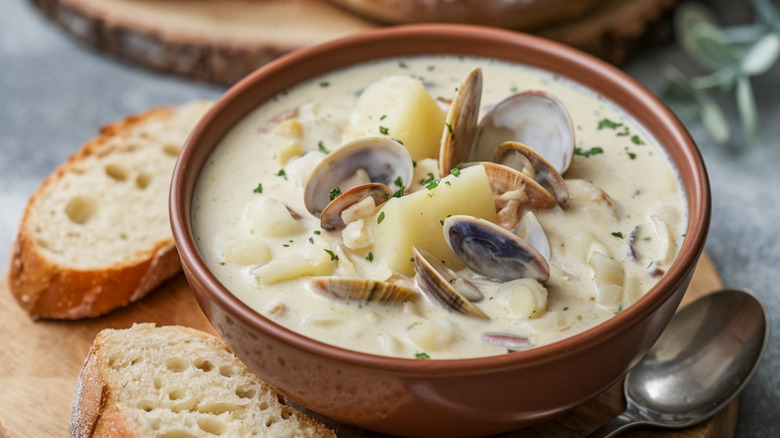
New England or Boston clam chowder is the unofficial king of chowders. It's certainly the best-known, despite the fact that it's not even the only chowder from New England. When people say "New England clam chowder," however, they're always talking about "the white one," the milk or cream-based icon studded with chunks of potato, onion, bacon or salt pork, and celery (sometimes), all floating in a briny clam broth with, of course, clams.
About those clams: If you're a New Englander on your home turf, you don't want canned clams in your chowder pot. Hard-shell clams are an indispensable ingredient of authentic clam chowder. Local, if you can get them. Think littlenecks, cherrystones, or, preferably and somewhat obviously, chowder clams, which are meaty northern quahogs that tend to be tough and are, therefore, relegated to the chowder pot.
You can find plenty of tips for cooking New England clam chowder, including some controversy over whether or not a roux is required to thicken it. Cookbook author and critic James Beard himself called this chowder his "oldest love," and the recipe on the James Beard Foundation site doesn't call for a roux. Some may take that as gospel. Still, a New England clam chowder should be thick, rich, and briny, with the added tang of bacon or salt pork.
2. Manhattan clam chowder
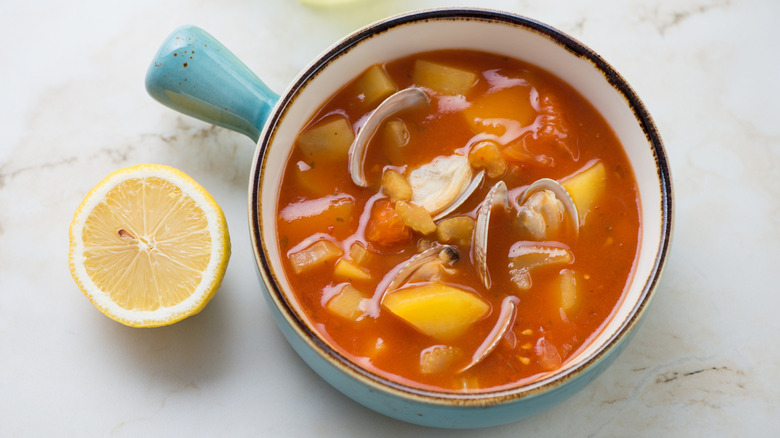
Manhattan clam chowder — the red one — is tomato-based, brothy, and provocative. James Beard said, "[It] resembles a vegetable soup that accidentally had some clams dumped into it," (via What's Cooking America). Not true. Manhattan clam chowder is briny and acidy, thanks to the tomatoes. It uses more vegetables than "the white one." Onion, celery, and potatoes go in the pot, of course, but this chowder sometimes includes green peppers, carrots, garlic, and red pepper flakes, for a bit of heat.
How did this alt-clam chowder come about? In the late 19th century, Manhattan clam chowder was also known as Coney Island clam chowder and Fulton Market clam chowder. William H. Winters, a late-19th century fishmonger with a shop on Manhattan's Fulton Street has claimed responsibility for "the red one." According to The New York Times, his grandson, Austin Phelps Winters, explained, "Clam chowder used always to be made with milk, but they decided that was too expensive, so they started substituting tomatoes and called it Manhattan clam chowder." Sounds entirely possible.
Some New Englanders have a vehement dislike of the whole idea, though. In fact, in 1939, Maine state representative Cleveland Seeder hated Manhattan clam chowder so much that he proposed a bill banning the use of tomatoes in clam chowder. The pro-clam, anti-tomato politician told The Lewiston Daily, "If a clam could vote, I would be elected President." We suspect that clam would vote for the candidate who didn't want to eat him.
3. Long Island clam chowder
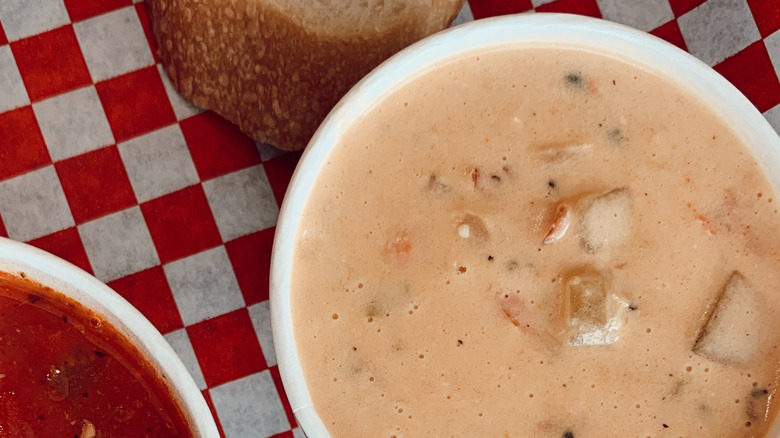
What comes after "the white one" and "the red one?" The pink one, obviously. Meet Long Island clam chowder, sometimes called "New Manhattan clam chowder," "Connecticut clam chowder," or even "Rhode Island Red." Call it what you want, but if you are a chowder purist, you may want to brace yourself, because this chowder is a hybrid of the other two. Before you roll your eyes, remember how delicious cream of tomato soup can be, and give the idea a chance.
Long Island clam chowder isn't a regional classic like many of the others on this list. It's more of a niche offering, a geographical nod to the fact that Long Island is located between New England and Manhattan, so why shouldn't its chowder follow suit? If white versus red constitutes the Chowder Wars, consider this chowder the peace treaty.
The key to making this dish sing is — obviously, but it can't be stated often enough — the quality and freshness of the clams. Nor should you stint your tomatoes and tomato paste. Chowders aren't chock-full of ingredients, so what you include makes a difference. While we're at it, this one needs heavy cream.
One caveat: On his blog, "Fearless Eating," the "New England Soups From the Sea" author, Craig Fear, reported visiting a restaurant that simply ladled the two chowders together into one vessel to create this dish. Please don't. "The pink one" is a separate recipe and worth a proper try.
4. Rhode Island clam chowder
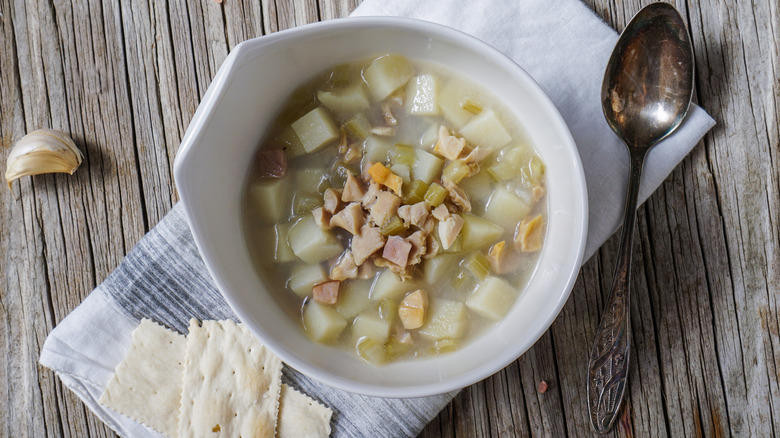
Rhode Island clam chowder has a clear broth, but don't let that fool you. It's briny and flavorful, if more delicate than the more popular New England and Manhattan varieties. The ingredients are mostly the same, minus those controversial tomatoes: clams, clam broth, bacon or pork, potatoes, onions, celery, maybe carrots, and herbs that might include thyme and bay leaves, for a start. Some cooks like to strain the broth so it's perfectly clear; others actually add a touch of cream to turn up the heartiness, but not so much that this chowder can be mistaken for New England-style.
Rhode Island clam chowder is a clam-lover's delight as, without the addition of milk or cream, the flavors of the clams themselves come through more strongly. Of course, cooks can zhuzh up the clam factor by using fresh clams and a more concentrated broth.
Rhode Island clam chowder is no mere substitute for the big two. It's a different chowder altogether. According to Matunuck Oyster Bar owner Perry Raso, "[It's] the purest way of eating chowder. It lends a lot more to someone with a palate for layers of flavor. The creamy chowder is delicious but the flavor of the clams is somewhat masked," (via USA Today). So if you like the taste of the sea, this may be your chowder. Also, this is a good choice for any chowderhead who is lactose- or nightshade-intolerant.
5. Corn chowder
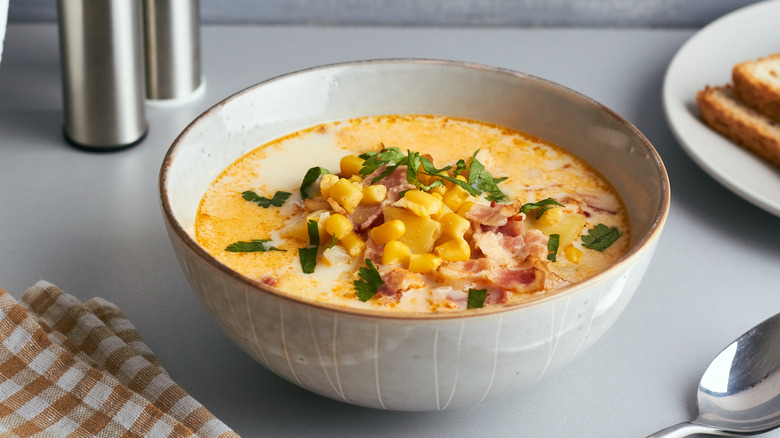
Let's talk corn chowder, which more than just clam chowder for the landlocked states. In "50 Chowders," Jasper White calls corn chowder "the indisputable king of farmhouse chowders." It originated in corn country, the Midwestern and Southern United States, likely during the 1800s when all the necessary ingredients would have been homegrown: corn, potatoes, salt pork, a little milk, and fresh herbs like thyme. (A little butter doesn't hurt, either.)
It's comforting as a chowder should be, and now that it's the 21st century where most of us don't grow our own food, it's one of those dishes you can cook low and slow in your crockpot while you do other things. Canned corn, frozen corn, or even fresh corn cut right off the cob all work in corn chowder, although fresh summer corn offers the best flavor hit, as seasonal ingredients do. If you want to give fresh corn a try, but don't have a clue how to strip it off the cob, there are handy gadgets out there to make it easier.
The corn makes this chowder sweet and creamy, and the richness can be enhanced by puréeing some of the chowder before serving. If you want to get a little adventurous, try adding a little tequila to your next batch of corn chowder to bring out the flavor. If you're vegan or otherwise dairy-free, there are ways to skip the dairy and still get creamy corn chowder, including plant-based milk and even tofu.
6. Potato chowder
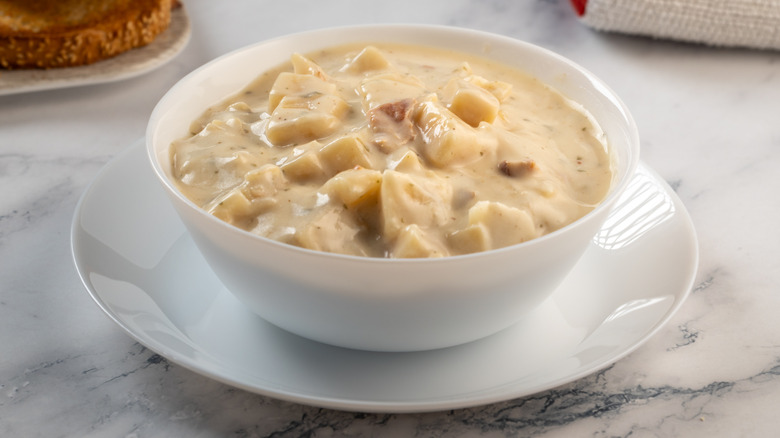
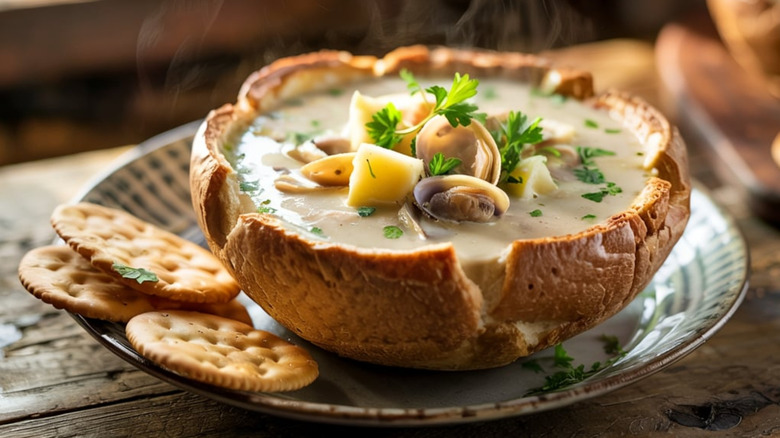
The humble potato is the epitome of comfort food, so imagine how cozy and satisfying it can be to eat a bowl of potato chowder. Don't confuse potato soup with potato chowder, though. The latter achieves ultimate creaminess with milk, half-and-half, or even heavy cream, along with, of course, onions, potatoes, and maybe some celery and carrots to add a little texture to the dish. If you're feeling really decadent, you can melt some cream cheese into the pot or even stir in some sour cream for a bit of extra tang. Add bacon, and you're looking at a liquid version of a loaded baked potato. Get fancy and serve it in a bread bowl, and you've got yourself a comforting carbapalooza.
Another possibility is potato corn chowder, which is heavy on the heartiness and light on the wallet. Get creative with this one. And be fearless. This is one chowder that doesn't inspire arguments, duels, or congressional intervention.
7. Finnan Haddie chowder
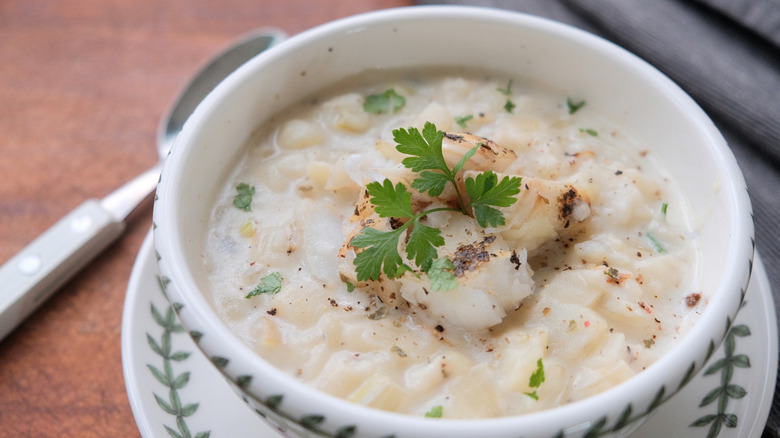
What the heck is finnan haddie? It's Scottish for smoked haddock, originally lightly salted and slow-smoked over peat fires, originally by 18th and 19th century fishwives — the wives of the fishermen who caught said haddock. Finnan haddie is the smoked, and therefore preserved, fish. Finnan haddie chowder, also known as Cullen skink – because it hails from Cullen on the northeast coast of Scotland — is the hearty, smoky fish chowder that features it. Some fans argue that Cullen skink could KO clam chowder in a fistfight, but we say to each their own chowder. (If you'd like to judge for yourself, plan a trip to source, the March 2026 Cullen Skink World Championships, now in its 27th year.)
While New England Clam Chowder gets its flavor from bacon or pork and clams, finnan haddie chowder gets its smoky brininess from one ingredient: the fish. That fish is the hero of this dish. But there's no need to smoke your own. Finnan haddie is available at specialty shops, although you may have to search for it.
As for the ingredients in this chowder, there are no surprises: fish, potatoes, onions, milk, and butter, but in this particular chowder, mashing the potatoes thickens the broth and gives it that rich creamy texture. Sprinkle in a little parsley for color and freshness, maybe some thyme and a splash of white wine, even some corn kernels. But remember: the fish is the hero of this chowder. Don't overpower it.
8. Irish fish chowder
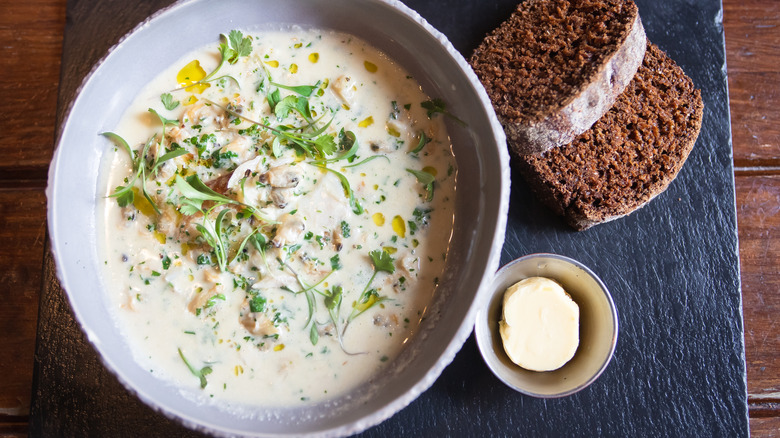
The Irish are not about to be shown up by the Scots in the chowder department. Irish fish chowder — often called Irish seafood chowder — is a slightly milky but still thin broth containing all the usual suspects, including potatoes, celery, and onions — maybe sweet leeks, perhaps a touch of fennel, and butter — preferably Irish, plus cream — not too much. The difference with this chowder is that it contains a wider selection of seafood: fresh and smoked fish as well as shellfish. As with all the other selections on this list, there are relatively few components to this chowder, which means, in order to make a good one, you should source the best available ingredients. This is one of those dishes where having a good relationship with your local fishmonger can be a big help.
Chowder has a reputation as a poor man's food. But this chowder can go as high end as the cook wants, from mussels to prawns to lobster, and lots of it. As with all the chowders on this list, the recipes tend to reflect the available seafood of the particular region of the country. What they all seem to agree on, though, is that Irish Seafood Chowder is best served alongside a hearty Irish brown or soda bread with, once again, unsalted Irish butter.
9. Bermuda fish chowder
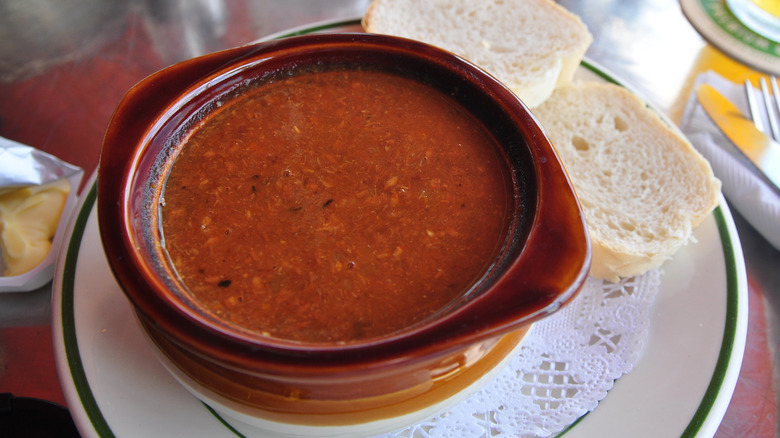
Bermuda fish chowder is the national dish of Bermuda, but if you're looking for a definitive recipe, let that idea go immediately. All Bermuda fish chowders are tomato-based, spicy, and on the thinner side, but after that, each cook has their own recipe, and most of them aren't sharing. Rockfish is plentiful in Bermuda, so it's a chowder staple, but snapper and porgy will do, as well. This isn't a chunky chowder; the ingredients are finely minced. As for the vegetable components, Bermudians go beyond the potato, onion, and celery combo of more Northern chowders to include carrots, turnips, green peppers and what some people think is a vegetable: ketchup. The big difference with this chowder is in the spices. There's thyme and bay leaf, of course, but you'll likely also find warmer spices like cinnamon, curry powder, and cloves that give this dish that island kick.
Another difference with Bermuda fish chowder is that it takes time for the flavors to develop, from several hours to a couple of days, depending on the chef. You can ask, but don't expect an answer. These recipes are often closely guarded family secrets. Nothing is wasted, however; fish heads and tails are used to make the stock. And most finish off their chowder with a dash of black rum and a hit of a super spicy local condiment: sherry pepper sauce, made from fiery indigenous bird peppers steeped in sherry.
10. Smoked salmon chowder
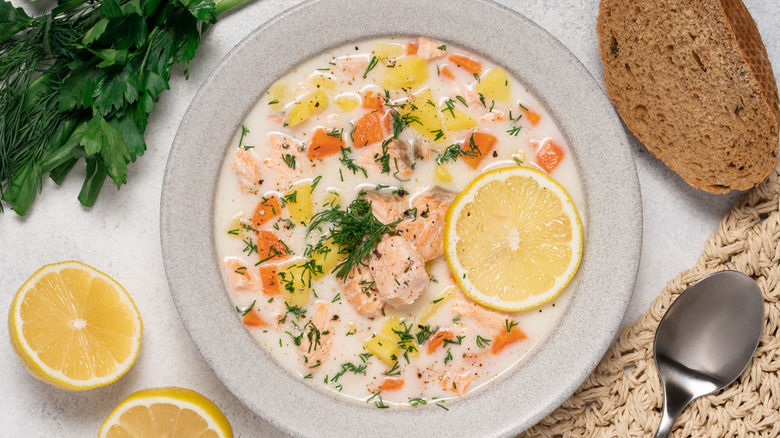
So far, all the chowders on this list have come from east of the Mississippi River, but the Pacific Northwest has some serious chowder game of its own. Let's talk smoked salmon chowder. Once again, the ingredients in this dish are similar to the others: a little whole milk plus potatoes to thicken the broth, onions, maybe some corn, but, in this case, you might find dill and paprika in the mix.
This chowder calls for hot smoked salmon, which cooks as it smokes and flakes in your dish, as opposed to cold smoked salmon, which is raw and eaten in thin slices. Think lox. Now think about lox in soup. It doesn't sound appetizing. On the other hand, adding bacon to this chowder only makes it sound better. At Seattle's famous Pike Place Market, this chowder is a beloved staple, with a recipe that contains — along with the hot smoked salmon and de rigueur potatoes — capers and cream cheese. They describe it as "lox-and-bagels without the bagel." And if any of you newly-converted chowderheads happen to be in the Seattle area, you can stop by Pike Place and order a four- or eight-chowder sampler. They'll even ship, if you're feeling inspired.