

Miso And Maple-Glazed Ham Recipe
We may receive a commission on purchases made from links.
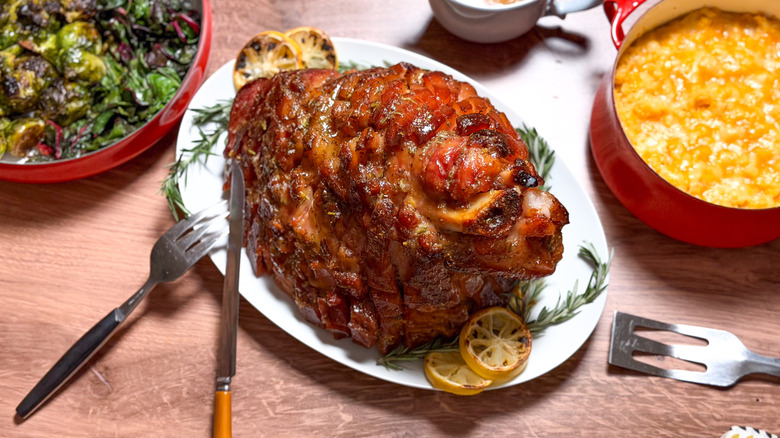
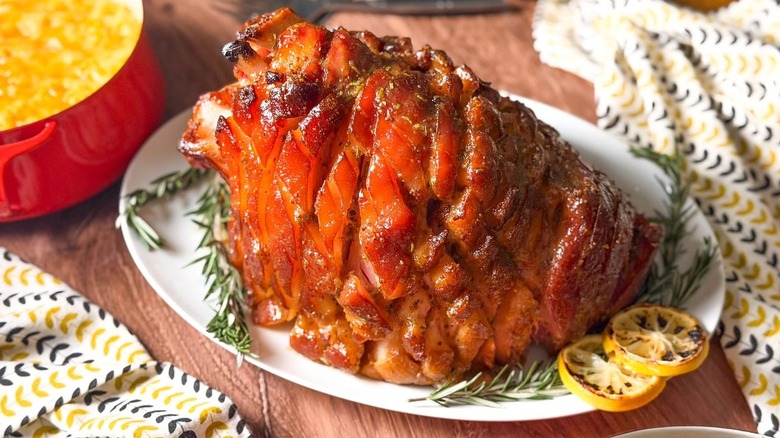
A glistening baked ham is often the centerpiece of a holiday table or buffet. There is something so celebratory about the crispy exterior encasing the savory, juicy meat inside. Ham lends itself to so many flavors and preparations, which is likely part of the broad appeal. This miso and maple-glazed ham recipe, courtesy of recipe developer Julie Kinnaird, features a bone-in smoked half-ham, slow-roasted until the skin is crispy, then lacquered with an umami-packed miso and maple glaze that features Japanese sake, whole-grain mustard, and fresh rosemary. The combination of salty, sweet, earthy, and herbaceous components really makes this ham sing in an unconventional way — one that will surely delight your guests.
The miso and maple glaze for this ham can be prepared up to three days in advance, and even the ham itself can have the initial bake the day before festivities, then be brought to room temperature and finished in the oven shortly before serving. The pan drippings and juices are used to make a sauce that captures all of the ham and glaze goodness to be served alongside the finished ham. Leftovers can be sliced and used in sandwiches or chopped for an excellent addition to hash or fried rice.
Gather the miso and maple-glazed ham ingredients
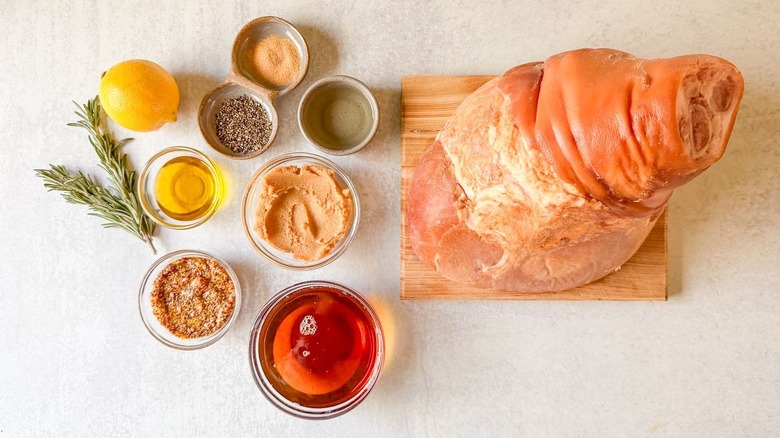
This recipe uses a smoked, bone-in half-ham. You can use either the butt or shank half of the ham (shank pictured here). The shank tends to be a bit more lean than the butt and has the most generous bone, making for an impressive presentation. You will need a bit of olive oil for coating the roasting pan so that the ham does not stick. The miso and maple glaze is made from white miso paste, amber maple syrup, whole grain mustard, Japanese sake, fresh rosemary, lemon zest, roasted garlic powder, and freshly cracked black pepper. Salt is not necessary as the miso has a very concentrated salty flavor.
Step 1: Preheat the oven

Preheat the oven to 325 F.
Step 2: Blot the ham dry
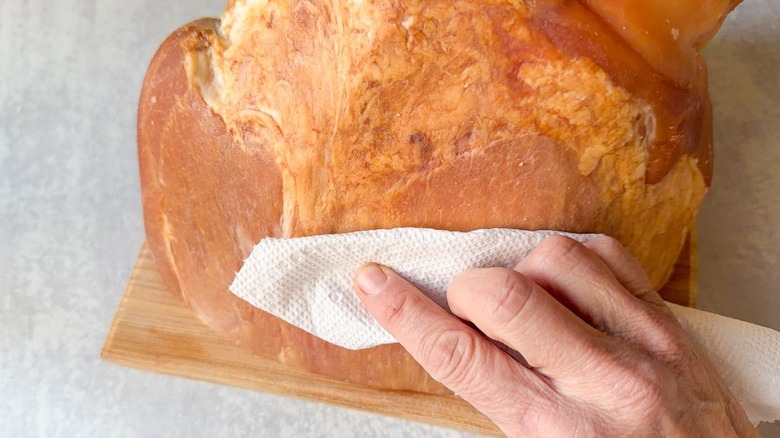
Pat the ham dry with paper towels and place on a cutting board, cut side-down.
Step 3: Score the ham
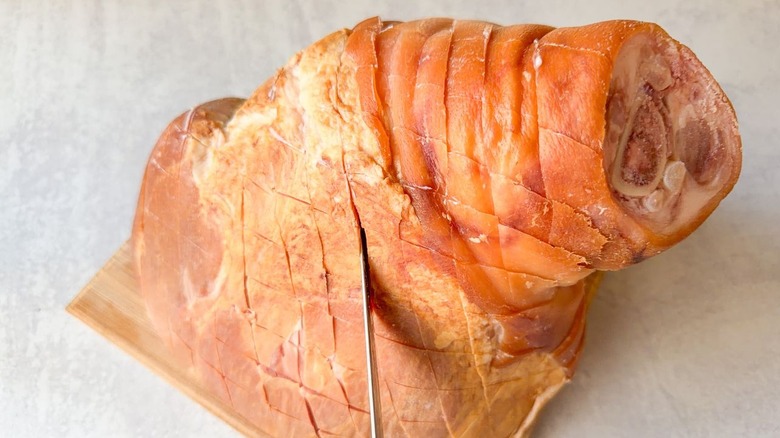
Score the ham in a criss-cross pattern using a small, sharp knife to cut about ¼-inch deep.
Step 4: Oil a roasting pan
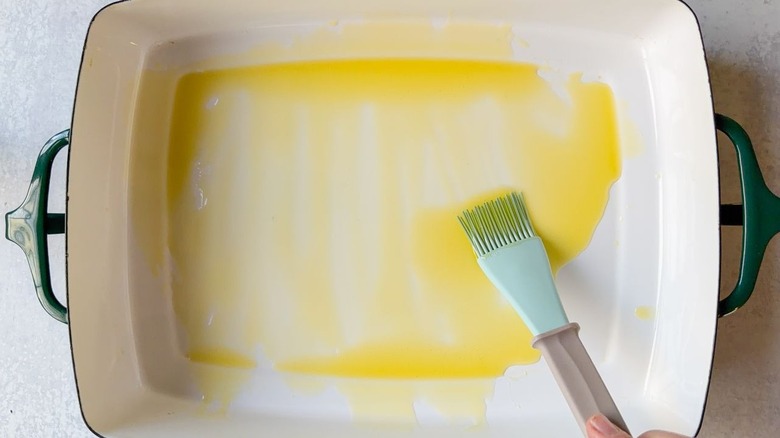
Coat the bottom of a roasting pan with the olive oil.
Step 5: Place the ham in the roasting pan
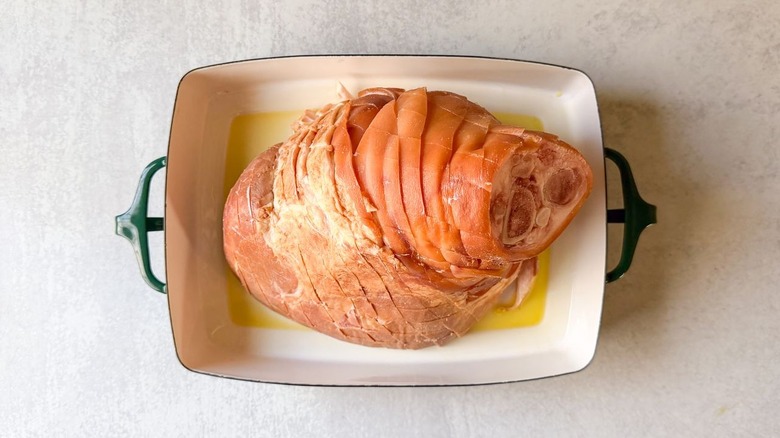
Place the ham cut side-down in the roasting pan.
Step 6: Place the ham in the oven
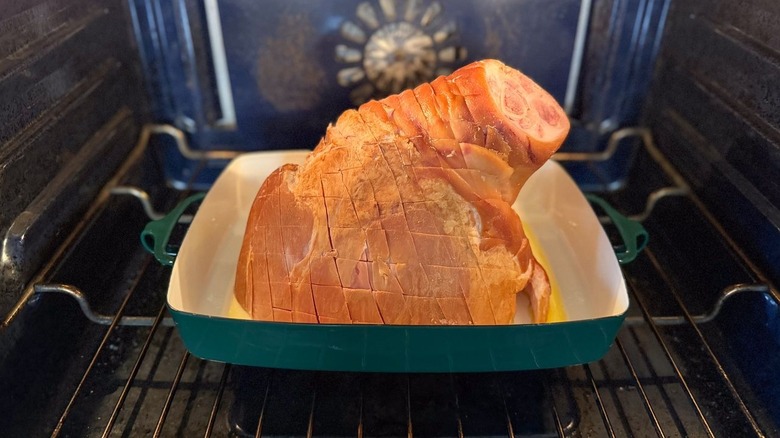
Transfer the ham to the bottom rack of the oven and roast, uncovered, for about 2 hours. Baste the ham occasionally with any juices that have accumulated on the bottom of the pan.
Step 7: Make the miso maple glaze
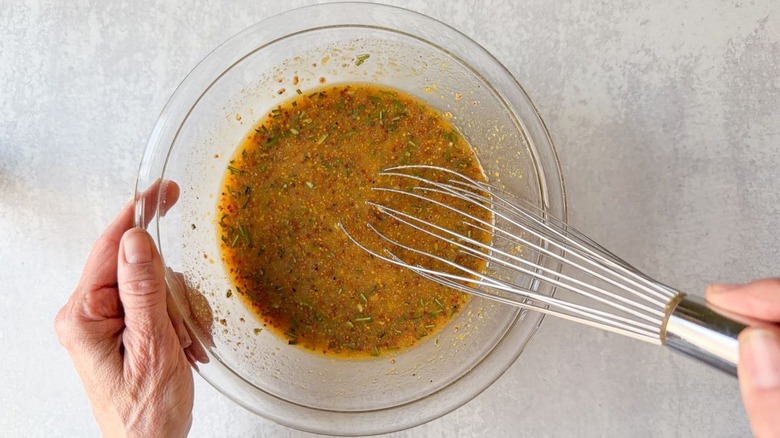
While the ham is roasting, whisk together syrup, miso paste, mustard, sake, rosemary, lemon zest, garlic powder, and black pepper in a medium bowl to make the maple-miso glaze.
Step 8: Take out the ham and increase the oven temperature
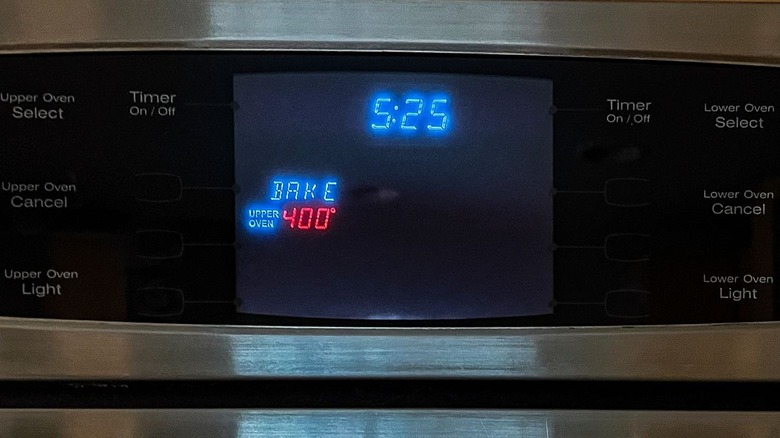
Remove the ham from the oven and increase the oven temperature to 400 F.
Step 9: Brush the glaze on the ham
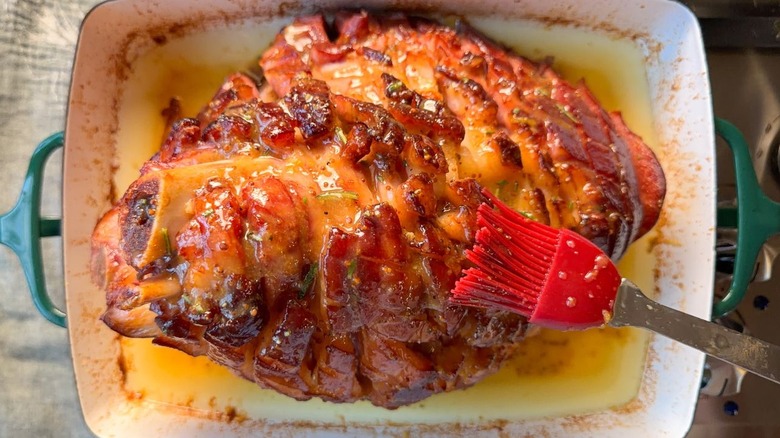
Brush the maple-miso glaze all over the surface of the ham.
Step 10: Return the ham to the oven
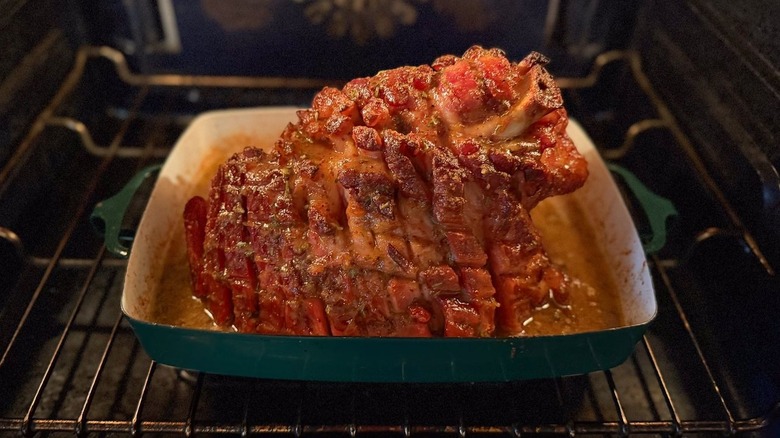
Return the ham to the oven and roast for an additional 20 minutes, until the glaze is browned and the internal temperature reaches 140 F.
Step 11: Rest the ham
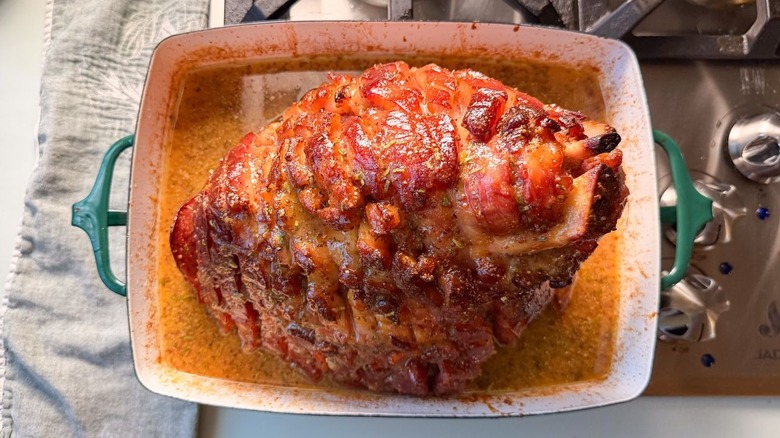
Allow the ham to rest for 10 minutes in the roasting pan.
Step 12: Strain the pan drippings
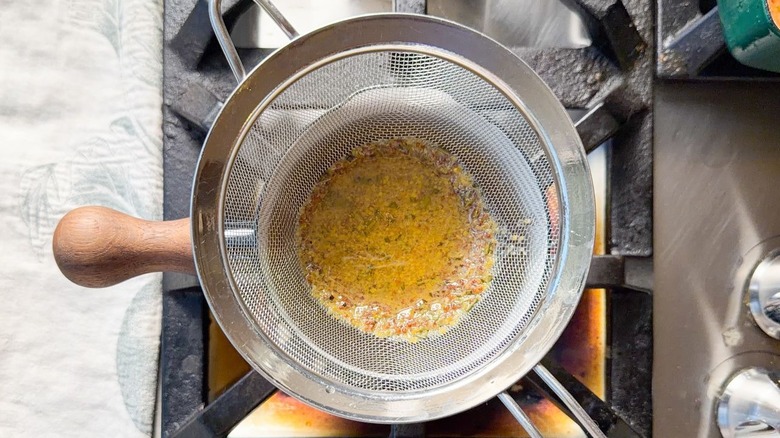
Transfer the ham to a serving platter or cutting board and strain the pan drippings and liquid through a fine mesh strainer into a saucepan.
Step 13: Skim the fat from the pan juices
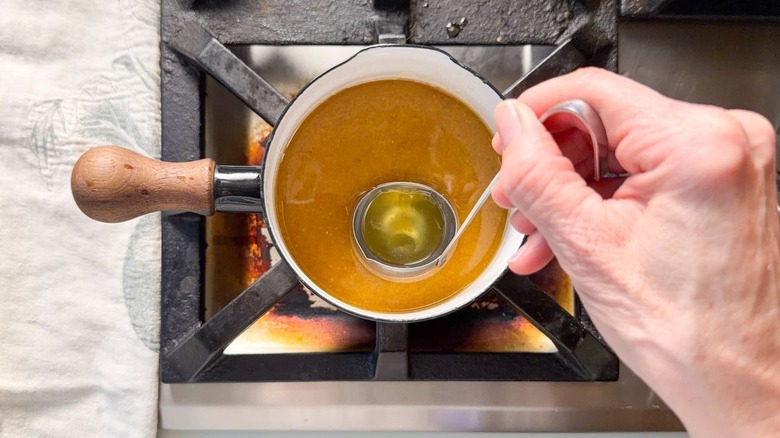
Use a ladle to skim fat from the surface of the drippings and discard.
Step 14: Simmer the sauce
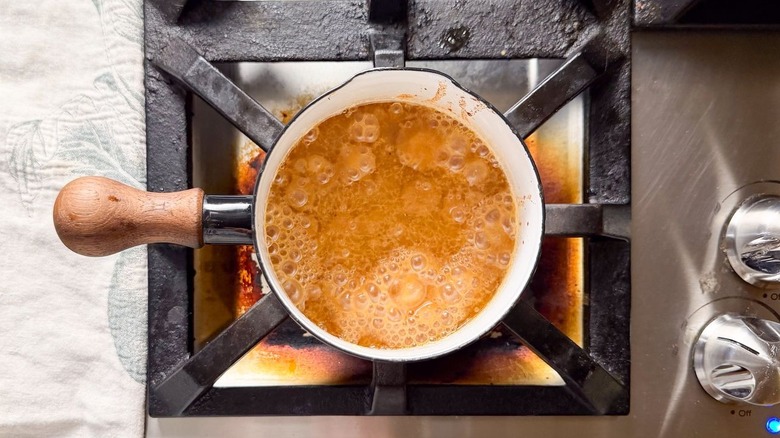
Bring the sauce to a simmer and cook until slightly thickened, about 5 minutes.
Step 15: Serve the ham with the sauce
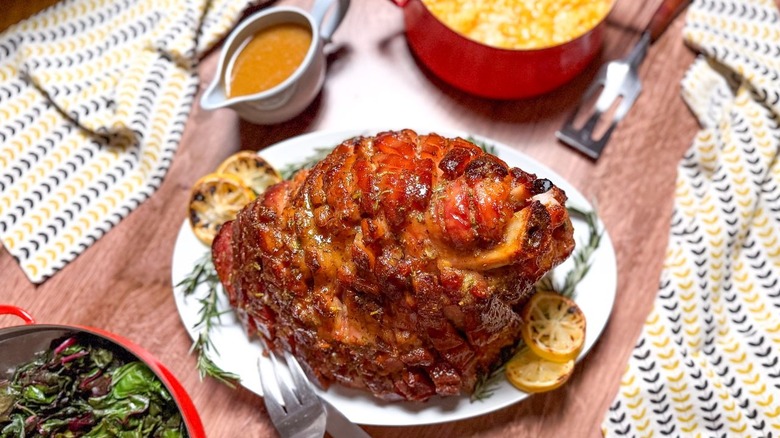
Transfer the sauce to a gravy boat and serve with the ham.
What to serve with miso and maple-glazed ham
Miso and Maple-Glazed Ham Recipe
If you're looking for a showstopper dinner entree for the holidays, this miso and maple-glazed ham recipe hits just the right sweet-salty, deeply savory notes.
Ingredients
- 1 (10-pound) bone-in, smoked, fully-cooked ham
- 2 tablespoons olive oil
- 1 cup maple syrup
- ½ cup white miso paste
- ¼ cup whole-grain mustard
- ¼ cup sake
- 2 tablespoons fresh rosemary leaves, chopped
- 1 tablespoon finely grated lemon zest
- ½ teaspoon roasted garlic powder
- ½ teaspoon freshly cracked black pepper
Directions
- Preheat the oven to 325 F.
- Pat the ham dry with paper towels and place on a cutting board, cut side-down.
- Score the ham in a criss-cross pattern using a small, sharp knife to cut about ¼-inch deep.
- Coat the bottom of a roasting pan with the olive oil.
- Place the ham cut side-down in the roasting pan.
- Transfer the ham to the bottom rack of the oven and roast, uncovered, for about 2 hours. Baste the ham occasionally with any juices that have accumulated on the bottom of the pan.
- While the ham is roasting, whisk together syrup, miso paste, mustard, sake, rosemary, lemon zest, garlic powder, and black pepper in a medium bowl to make the maple-miso glaze.
- Remove the ham from the oven and increase the oven temperature to 400 F.
- Brush the maple-miso glaze all over the surface of the ham.
- Return the ham to the oven and roast for an additional 20 minutes, until the glaze is browned and the internal temperature reaches 140 F.
- Allow the ham to rest for 10 minutes in the roasting pan.
- Transfer the ham to a serving platter or cutting board and strain the pan drippings and liquid through a fine mesh strainer into a saucepan.
- Use a ladle to skim fat from the surface of the drippings and discard.
- Bring the sauce to a simmer and cook until slightly thickened, about 5 minutes.
- Transfer the sauce to a gravy boat and serve with the ham.
Nutrition
| Calories per Serving | 1,149 |
| Total Fat | 79.5 g |
| Saturated Fat | 28.2 g |
| Trans Fat | 0.0 g |
| Cholesterol | 267.6 mg |
| Total Carbohydrates | 25.6 g |
| Dietary Fiber | 1.2 g |
| Total Sugars | 42.7 g |
| Sodium | 5,983.3 mg |
| Protein | 76.9 g |

What are the different types of miso paste?
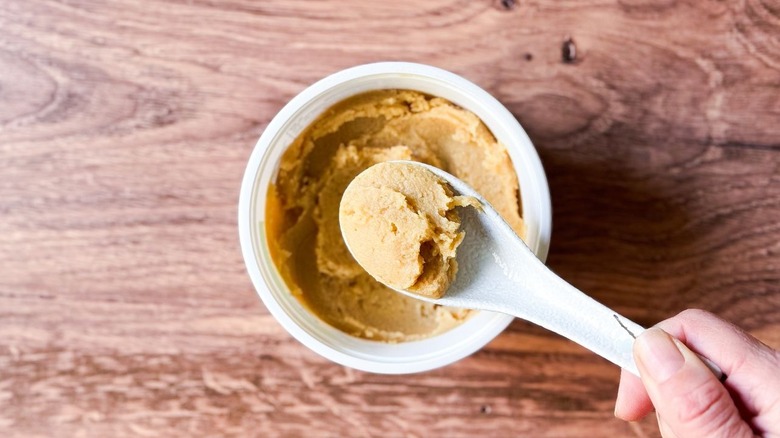
The umami-laden fermented soybean condiment known as miso paste has a range of colors and flavors and is comes in over a thousand varieties in Japan and beyond. Miso paste can be found in Asian or mainstream grocery stores in both refrigerated or shelf-stable options. Miso paste is typically sorted into three color categories: white, yellow, and red. White miso is the most mild variety and very versatile for using in everything from miso soup to baked goods. As the color deepens moving from yellow to red, the flavor intensifies due to a longer aging time. Red miso is typically used in the heartiest preparations, such as stews and with game meats.
When choosing a miso paste to use in a recipe, consider your ingredients and the desired outcome. If you don't want the miso to overpower delicately flavored ingredients, go with the milder white variety. Yellow miso is a nice middle-of-the road option that works well with poultry, seafood, and sauces with a bit more spice or richly-flavored ingredients. Red miso really packs a flavor punch, so reserve that for preparations that have ingredients with the intensity to match.
Can I use another type of ham in this recipe?
Most of the half or whole hams we find in a local grocery store today are of the city ham variety, meaning they have been cured by a wet brine method and lightly smoked to finish. Country ham, on the other hand, is a version that is popular in the southern United States and is cured with a salt and spice rub before smoking, then aged. This results in a less juicy, yet intensely flavorful ham to add to any number of dishes. For this recipe, a country ham would not be the best choice, as the miso already packs a salty punch.
If you prefer not to carve your own ham, a spiral sliced variety makes for easy serving. With a spiral ham, you will want to check the temperature earlier on in the baking process, as the increased surface area from the slicing allows heat to penetrate more quickly, yet also can lead to drying out the meat. Make sure you choose a ham that does not already have a glaze or coating that could conflict with the flavors in the recipe.