

10 Expert-Approved Tips For Decluttering Your Kitchen
We may receive a commission on purchases made from links.
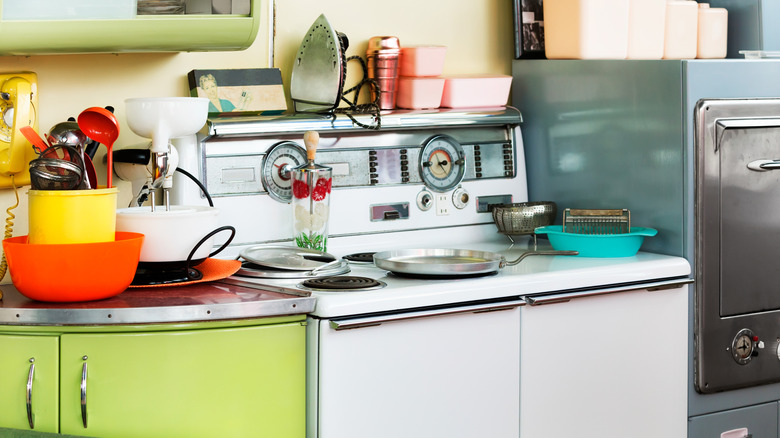
The only place in your house that receives more activity than the bathroom is the kitchen. It's the place where you prepare meals, brew your morning cup of coffee, sit down and linger with friends and guests, and more. As such, it's also the place where messes tend to accumulate — including in the form of "clutter."
"Clutter" is an umbrella term that can mean a whole host of different things. It's generally associated with untidiness, messiness, and a disturbed space. In a kitchen, that can look like a discombobulated spice rack, an overflowing junk drawer, countertops crowded with every appliance that Williams Sonoma sells, and more. Regardless of what your version of clutter is, it can inspire the same feelings of anger, shame, and disorganization. Not to mention, it's not fun to pull out every single drawer in your kitchen trying to find the one gadget that you need.
Despite the overwhelming feeling of uncontrollability that comes with clutter, clutter is actually something that you can actively manage — good news for your mental clarity and anyone who has to search for something in your cabinets. We spoke to organization expert and founder of Nola Organizers, Olivia Parks, to get her top tips for getting the upper-hand on kitchen clutter and create a more cohesive-looking, functional, and junk-free kitchen.
1. Cut back on duplicate tools
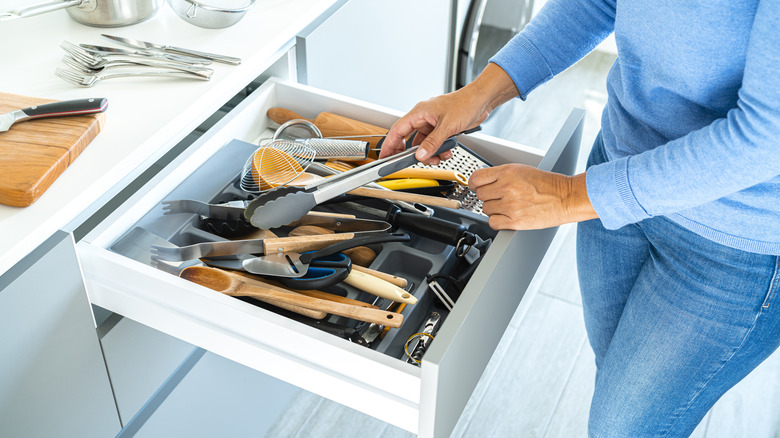
One of the first questions we asked Olivia Parks, founder of Nola Organizers, was what the top contributor to kitchen clutter was. Her answer was not only simple, but also relatable: duplicate cooking utensils. "These pile up over time and take up a lot more space than people realize," she says. After all, how many times have you needed a very specific kitchen gadget for a recipe only to turn over every corner of your kitchen trying to find it and promptly buying a new one, only to find the original one a few days later? These duplicate utensils can take up valuable real estate in your kitchen cabinets and contribute to clutter.
The best way to avoid buying and housing duplicates is to keep your kitchen organized in the first place (yeah yeah, easier said than done). Dedicate some time to combing through your cabinets, drawers, and pantry to dig out all the utensils you own, categorize or organize them based on purpose, and then decide what you want to toss (or even better, donate). You can also make a shopping list of the utensils you need to purchase based on these gaps, as well as which items may need to be replaced. That way, when you see that Williams Sonoma or IKEA are having a sale on kitchen items, you know what to buy and what you really don't need.
2. Declutter a small part of your kitchen before scaling upwards
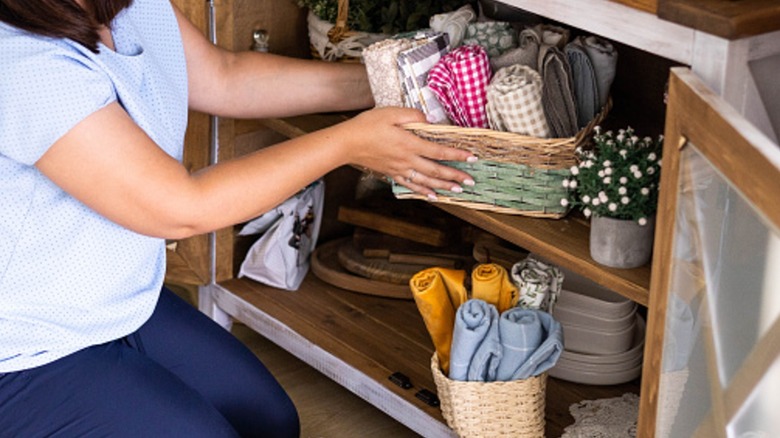
The key to tackling any big task? Start small. "One of the biggest mistakes people make when trying to declutter their kitchen on their own is trying to tackle the whole kitchen at once, which can be quite overwhelming," says Olivia Parks. Instead, Parks recommends organizing a small space — like a cabinet or drawer — at a time. "This will be more manageable, less overwhelming, and less stressful," she says.
There are many techniques that you can use to dedicate time to cleaning out one cabinet at a time. One of the best ones is to find idle time — like when your coffee is brewing, you're waiting for your food to finish in the microwave, or some other short bit of time — when you can tackle a drawer. Parks explains that one of the reasons why kitchens are so difficult to declutter is because of the sheer number of cabinets and drawers — in all different sizes and shapes. When you dedicate idle time to cleaning one cabinet in its entirety at a time, you'll make the task more manageable.
However, if you are the kind of person who prefers to, what we call, rage clean — meaning you get so fed up with how dirty, cluttered, and disgusting your space and cannot function until it's clean — then try following the Pomodoro method: Clean intently for 25 minutes, then take a five minute break (called a pomodoro). This will give your brain a "reward" from cleaning and help you to better focus on the task at hand.
3. Clean out your mug and bottle cabinet first
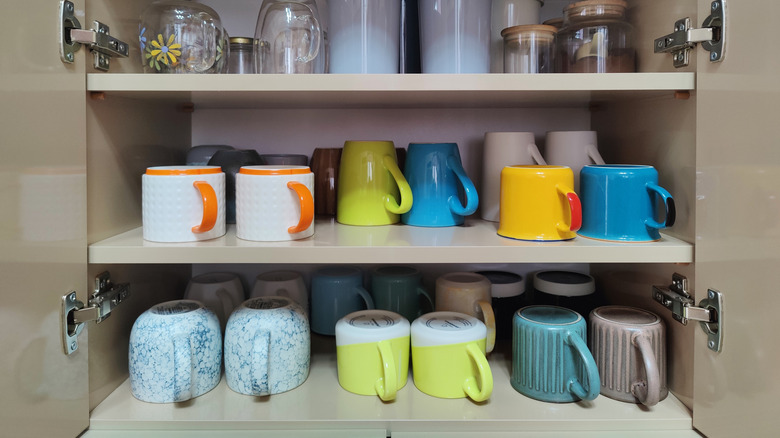
Raise your hand if you somehow always manage to pick up another mug at the thrift store or on your Target run for "just the essentials." Well, it turns out those "it's just one more mug" moments can contribute to a ton of clutter.
"One commonly overlooked area of the kitchen that people should declutter first is their coffee mug and [water bottle] cabinet," says Olivia Parks. Not only can cleaning out this cabinet cut down on clutter, but it also means that you can access some of your favorite mugs from the back of your cabinets. If your mugs are precariously stacked on one another, like a house of cards waiting for a gust of wind, you may want to invest in a creative mug storage solution, like adding hooks to the inside of your cabinets or adding a multi-tiered mug shelf to keep your cups from clattering and chipping. If you're a little more Becky Home-ecky, you may want to consider a DIY mug display near your coffee station or on your wall.
That being said, one of the easiest methods to declutter this cabinet in particular is to find new homes and uses for your coffee mugs. Rather than leaving them cluttered in your cabinets, where they never see the light of day, turn them into plant stands, decorations, terrariums, and more.
4. Utilize lazy Susans to maximize corner space
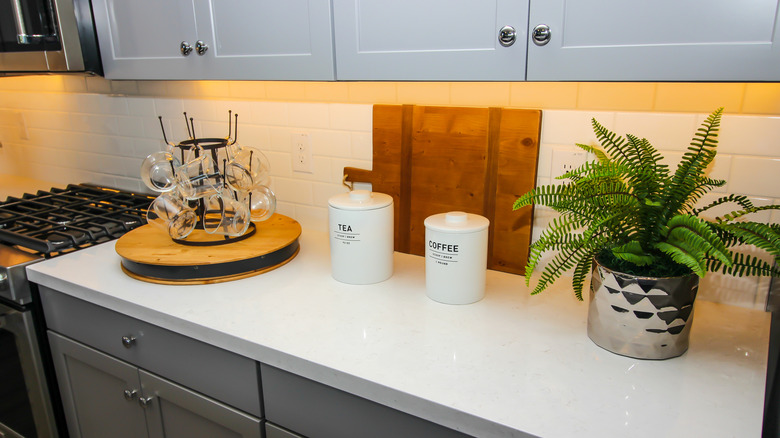
Lazy Susans may be a kitchen item that you remember your parents and grandparents having, but we can assure you that they never really go out of style. "I wish more people used lazy Susans," says Olivia Parks. "Instead of digging in the back of the cabinet to find something, you can just spin the lazy Susan and easily grab what you need." Besides making use of small and tight spaces, lazy Susans can also cut down on buying extras of things, as you can easily give the board a whirl when you need to see if you have a unique spice or condiment. You can also use a fancy wooden lazy Susan as a vignette on a countertop. We recommend buying one that has a lip or an edge to prevent everything from toppling off or scattering when you go to spin it. Using a lazy Susan as a vignette gives you limited space for items, disincentivizing clutter, so be sure to only put things on it that you use regularly or add to your kitchen's visual appeal.
As such, these relatively inexpensive turntables are a must-have for all of those corner cabinets where fitting appliances, bottles, and dry goods just aren't practical. However, that's not the only place that you can use them. "I like to use them in kitchen cabinets, under the sink, in pantries for condiments or kids' snacks, or spices," says Parks.
5. Use dividers to keep your junk drawers tidy
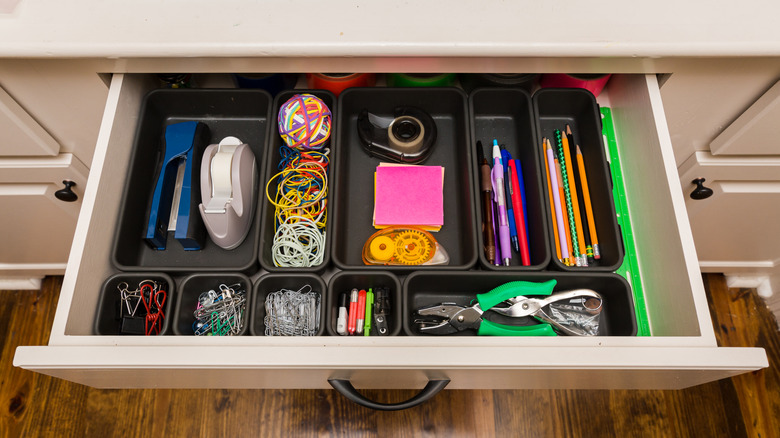
Let's address the elephant in the room ... or the junk drawer in your kitchen. We all have a cabinet that we shove literally everything into, be it that vintage kitchen gadget you got at a Yankee swap, extra packets of soy sauce from your Chinese takeout meal, or just odds and ends that don't have a spot in any of your other cabinets. The drawer is purposefully full of clutter. That said, it can be helpful to have a spot for all these misfit toys, but the trouble comes down to organizing them within the cabinet. If you neglect to properly categorize the contents, you could end up with a drawer you can't open, or even more clutter because you can't find the specific tool you need. Luckily, Olivia Parks has some tips.
"To keep junk drawers organized, I would suggest using drawer dividers, wood or clear, whichever is your preference. These keep items in their categories and create easy, maintainable systems for everyone to follow," she says. You can take a trip to Dollar Tree to pick up a hardware organizer for all those small bits, bolts, and batteries, and a larger organizer to keep your drawer clutter-free. Regularly scheduling time to clean out your junk drawer will prevent the clutter from building up and will open up more space for the items you actually want to keep on hand, though just can't find a place for them.
6. Don't always decant your items
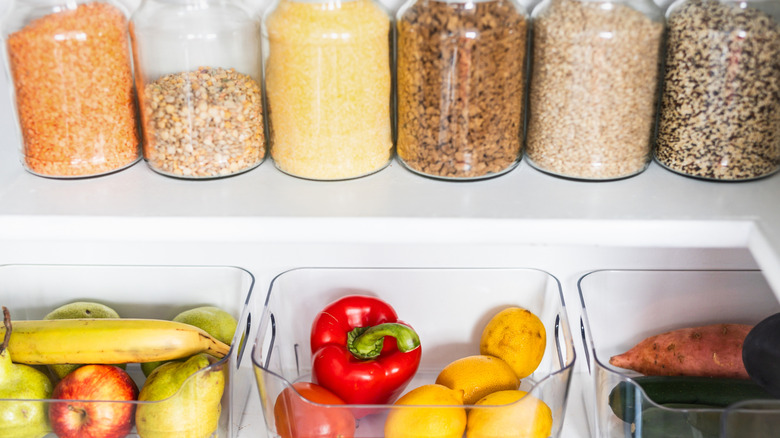
Listen: Those TikTok videos of people decanting and restocking kitchen items into other containers are very satisfying. And, who doesn't want to have a pantry like it just walked straight off your For You page? Olivia Parks, however, cautions against this method of organizing. Introducing all of these new containers and shapes can actually do more harm than good. "When you buy bins before decluttering, you end up trying to store items you don't even need, and the bins take up more space," she says.
There are some instances where decanting your food may be ideal. Bulky liquid containers — like gallon jugs of milk and beverages — can take up valuable real estate in your fridge and make it look even more cluttered. Transferring them to more narrow and stackable containers may be ideal if you're short on space. If you buy in bulk or are trying to make your pantry more kid-friendly, you may also want to decant some things into smaller containers that everyone in your home can access. However, things that can go stale — like snack foods, crackers, bread, and chips — really should stay in their original container for maximum freshness. If you are decanting, be sure to label your containers with product names, expiration dates, and cooking instructions.
7. Consider how much you use items when deciding where to store them
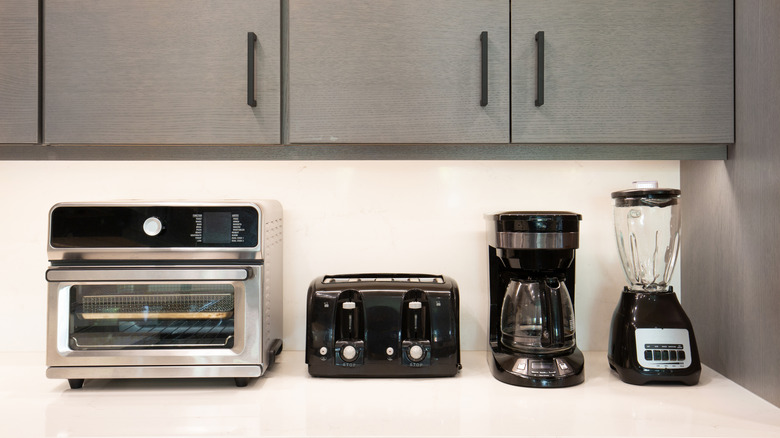
Should it stay or should it go (into storage)? That's one of the biggest questions of kitchen organization. If you use a handheld blender for your smoothies a few times a week, is it worth leaving out on your counter or tucking it away into a pantry? Do you really need to display four different spatulas — and what if you need them all for a single recipe? These are some major considerations you'll need to make in deciding which types of clutter should be hidden away from eyesight.
We'd all love to have a clean kitchen counter free from everything — like a model home would — but it's not practical to lug your espresso maker in and out of your cabinet every time you want a cappuccino. "In my opinion, it makes total sense to keep appliances you use every day out on the counter," says Olivia Parks. "Everything else should be stored in a cabinet or drawer so the counters stay open and clear, and your kitchen feels less cluttered."
When you're starting the decluttering process, make a mental (or physical) list of all of the items you use daily, and make a decision on whether to leave it out or not. There is also a middle ground option: appliance garages. They can hide large gadgets from sight, and you won't have to lift a heavy blender or toaster oven out of a high or low cabinet when you want to use it.
8. Do 5-minute tidies to keep your space neat
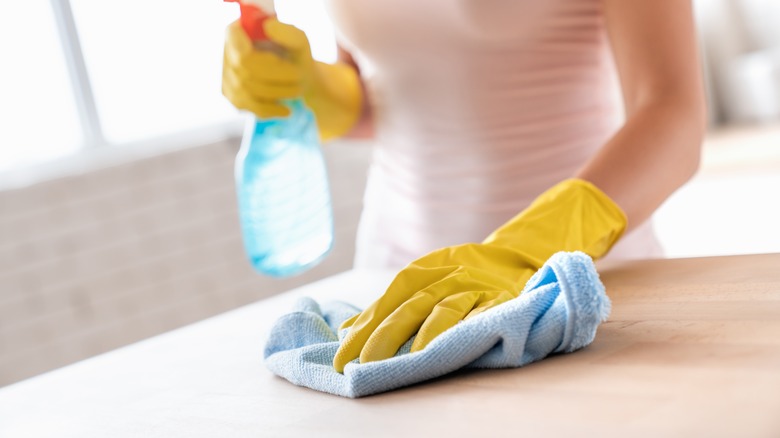
Cleaning can be an overwhelming task, but one of the best things that you can do to stay on top of it is to dedicate time every day to do a five-minute tidy. "My [five-minute] tip to tackle kitchen clutter would be to wipe down the counters, put dishes in the sink or dishwasher, and do a quick sweep of anything that doesn't belong in the kitchen," says Parks. "Even just [five] minutes can make your kitchen feel cleaner and lighter." One tip that we've found works particularly well is to carve out this time before bed, work, or some other task. So, you can't go to bed until the counters are clean and clear and there are no dishes in the sink. Not only does this have benefits for the overall appearance of your kitchen, but doing a quick disinfecting at the end of the night can also help kill off germs and viruses and cut down on the amount of time that you have to spend deep-cleaning your space, as you're already a step ahead on grime.
That being said, cleaning and organizing your space daily doesn't mean that you can neglect deep-cleaning entirely. The deep-cleans, which can be done weekly, will address all of the spots in your kitchen that you forget about: the trash can, the backsplash, the bottom of the oven, and the like.
9. Organize your cabinets by zones
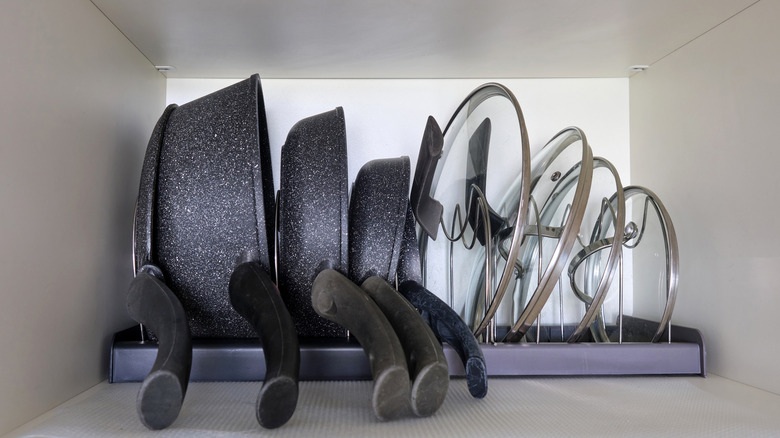
Reducing clutter in your kitchen isn't just about finding new ways to stack your dishware or making a trip to Goodwill with all of the glasses that you don't use — it's also about rethinking the way you cook to maximize efficiency and make your cooking experience more enjoyable — hence why Olivia Parks recommends establishing zones in your kitchen. "Creating zones in a kitchen helps tackle clutter because everything has a home or a place based on where and how it's used," she says, giving the example of bakeware. You shouldn't have to rifle through three drawers before you find the 10-inch cake pan that you need.
Establishing these storage zones, of course, is dependent on the size of your kitchen. "In a small kitchen, it can be a little harder to create zones because of the limited storage space, but it's still definitely doable," Parks says. "Just designate cabinets or drawers to specific categories and keep those categories intentional; that's all a zone really is." Start by creating zones for the essentials: prep (cutting boards, mixing bowls, parchment paper, knives, and odd slicing utensils), cooking (spatulas and pans), cleaning (cleaning products and sponges), storage (meal prep containers), and serving (dinnerware, fancy linens, and silverware). Then, you can build outwards from there and even design your pantry with zones in mind (like for snacking, flours, and baking essentials), making it easy to find the ingredient that you need.
10. Be thoughtful with your shelving and displays
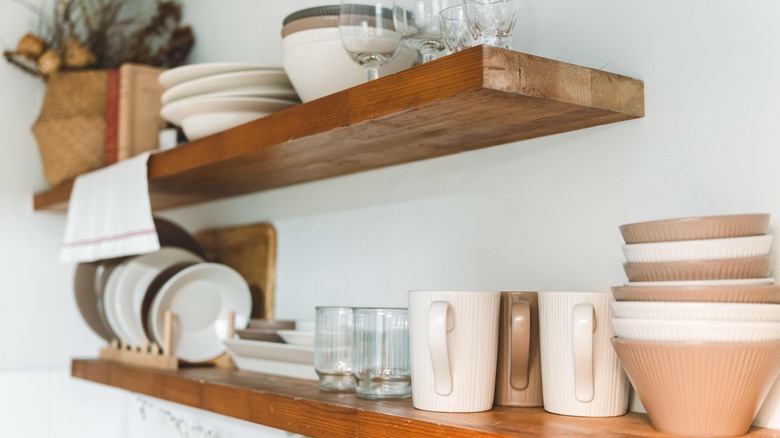
Open and floating shelves can be a really beautiful and sophisticated part of a kitchen — plus, they can make use of wall space that is otherwise underutilized. However, you need to be very careful and very diligent when deciding what to place on your shelves, as it's very easy for them to look cluttered or overly busy. "Think display shelf, not storage shelf," says Olivia Parks. She suggests only filling these shelves with items you use on a regular basis — like mugs and plates — or things that you really enjoy. Matching and color-coded shelf decor can add to the finesse of the space and make things look more cohesive. The goal of this spot is to not look cluttered, but to look crafted and intentional.
If you have glass-front shelves and want to avoid the contents being visible to guests, you can always try installing frosted or opaque glass instead. You can also use bins to organize small items, like spices and condiments. Wicker and wire baskets can add to the kitchen's aesthetic, while controlling clutter in cabinets or on shelves. Try to find a balance between functional and decorative to make the most of floating shelves and open cabinets.