

8 Vegetables To Avoid Buying During The Fall
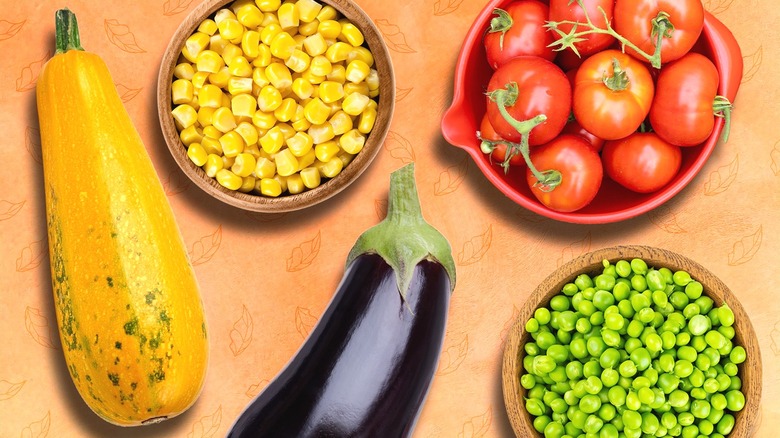
As autumn approaches, the moment has come to trade in our summer produce. Sturdy greens or root veggies (here's your reminder that there's a difference between turnips and rutabagas), our cold weather menus earn a coziness that makes cooking so pleasurable during these months. Perhaps you're unsure what vegetables will carry over in the fall, assuming the thought ever occurred to you. You've never struggled with finding a zucchini in November — why would there be an issue now?
Availability in the produce aisle isn't always the best indication those veggies are ripe, as it turns out. "There are certain vegetables best left off your fall shopping list, as they're past their peak and won't deliver the best flavor or texture," asserts Chef Nuwan Karunarathna of Broad Table Tavern, a farm-to-table enterprise at The Inn at Swarthmore in Swarthmore, Pennsylvania. Buying out of season can cost you money in the long run, too, and isn't compatible with the natural rhythms of our environment. "[Seasonal veggies] taste better, they're more affordable, and naturally have a lighter carbon footprint," comments Matthew McClure, the executive chef presiding over the Woodstock Inn & Resort in Woodstock, Vermont.
Whether you've been disappointed by starchy peas, or wonder about the corn cobs still kicking at Christmas, knowing what to avoid at the supermarket can be the first step. With help from the experts, read for the 8 vegetables you should avoid in the fall.
1. Peas
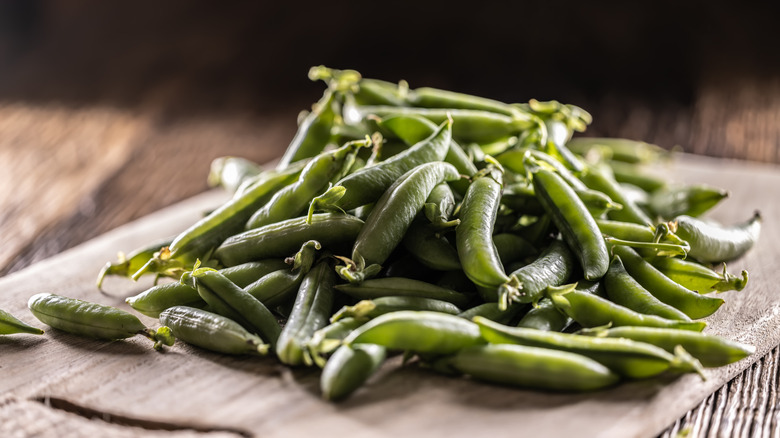
Here is one of the first veggies experts warn against buying out of season. Snap peas, snow peas (a great addition to a tasty shrimp and eggplant stir-fry, by the way), and sweet garden peas tend to peak in the spring and early summer. Even with a second wave in the early autumn, peas decline once the spring season passes. This climate is very beneficial for peas to grow, since "by fall, they tend to lose their signature sweetness and crispness," according to Nuwan Karunarathna. Cassidee Dabney, a chef overseeing The Barn at the Blackberry Farm resort in Walland, Tennessee, agrees. "English peas are terrible in the fall. They have a chalkiness and bitter flavor."
As far as the U.S. goes, it's the Northwest that produces a large chunk of the nation's pea output. Out of the 18 million tons grown in 2023, according to World Population Review, Montana alone grew about half at 9.9 million, with North Dakota and Washington following in productivity. Some parts of the East Coast might see an autumn bounty, but otherwise, the veggies starts phasing out.
If you wanna do your taste buds a solid, definitely take peas of your rotation. Plenty of high-protein vegetables which you might be overlooking exist year-round, giving you a better shot of scoring top-tier produce at the supermarket. As Matthew McClure tells Chowhound, pay attention to seasonality: "It's good for the plate, but the pocket and the planet."
2. Sweet Corn
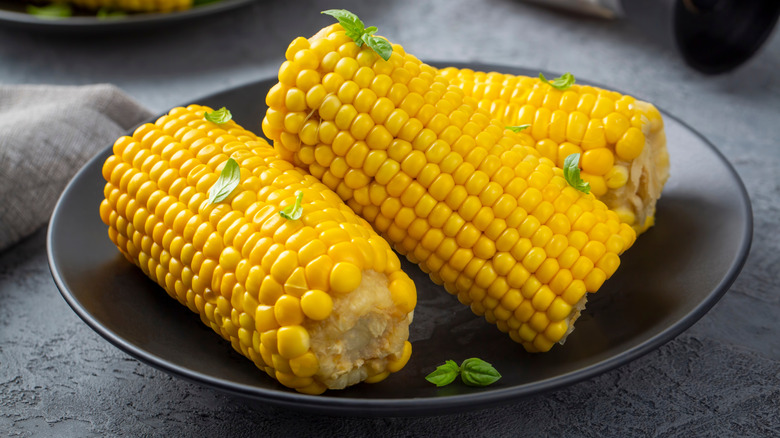
When it comes to summer, corn-on-the-cob has to be up there with potato salad and watermelon. This lazy corn-husking hack takes only five minutes, giving you the star side dish in a snap. Yet we advise getting your fill before the sun sets on the season. This is because sweet corn is a summer specialty through and through, and those crisp kernels just won't translate to the chilly days on the horizon. Generally, you'll find the freshest corn starts hitting the farmers' market circuit in May, lasting until September. But when that four-month spike ends, husks turn flavorless and tough.
Five states are credited with growing a majority of the country's sweet corn crop: Minnesota, Washington, Wisconsin, Florida, and Oregon. The vegetable is pretty much accessible from coast to coast, but will boast the majority of ripened stock in those areas, respectively. Although we associate the Midwest with the crop, the region actually isn't responsible for the type we eat at the dinner table. To clarify, the Heartland produces "field corn," also called "dent" or "flint" corn, that's manufactured for farming purposes — such as livestock feed — but it also shows up in our day-to-day lives, such as cooking oil or gas.
3. Asparagus
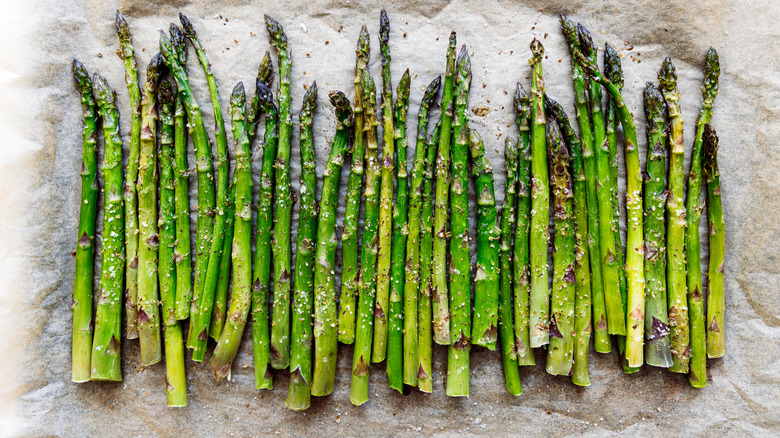
Asparagus, hearty and rustic, seems like a fitting vegetable for fall. Often, you'll see it paired with salmon, or rounding out a quick sheet pan dinner. But between the sources Chowhound spoke with, most were adamant on skipping the stalks come autumn. The reason is simple. "By fall, those crops aren't coming from local farmers," explains Matthew McClure. "They've traveled a long distance to get to you, and you lose both freshness and flavor along the way." Cassidee Dabney agrees, chiming in on its textural slump. "Asparagus is woody and lacks flavor in the fall."
Per the USDA, the asparagus stocked in American grocery stores has been imported from abroad, primarily Peru and Mexico. One's proximity to in-season asparagus boils down to geography, but stalks really hit their stride between April and May. Unless you reside around Michigan, Washington, and California where the freshest local produce is on hand, grabbing it outside the peak window will be a gamble.
Until the next go-around, it's a good idea to say farewell to the perennial veggies. And what better send-off than trying them in different recipes? Wrap your asparagus in cured meats or seaweed for a surprising appetizer. Or, do the foil packet method on your gas grill for a scrumptious cookout side.
4. Eggplant
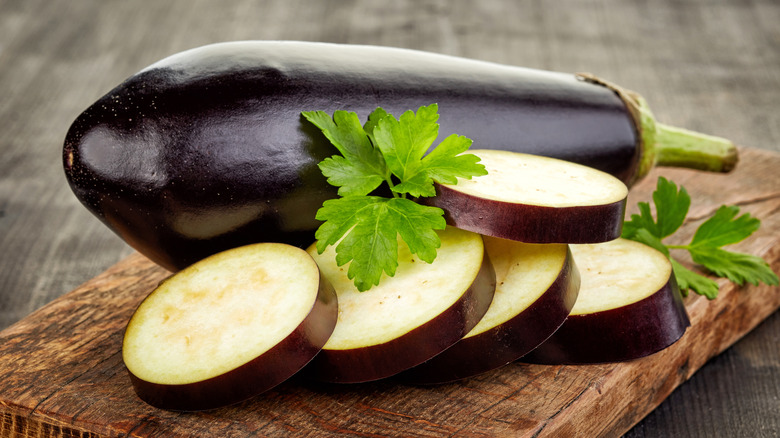
Few veggies demonstrate flexibility like the eggplant. Whether it's charring them on the grill or roasting for the dreamiest homemade baba ganoush, the nightshade you grab should be plump, supple, and slightly aromatic. None of those traits, unfortunately, cross over into the fall. As it turns out, the eggplant really thrives in warmer conditions: temperatures need to straddle 70 degrees Fahrenheit and 85 degrees Fahrenheit to fuel the vegetable's growth. And assuming they're planted in a timely manner, they're usually ready for gathering in June. Domestically, the freshest eggplants are from New Jersey, but pockets of the Southeastern United States plant them too, including Georgia and Florida.
Admittedly, these elegant nightshades are available through October. You'll typically see "globe" or "Black Beauty" eggplants, on display at your neighborhood store. But we have to remember that summer doesn't wrap up until late-September — if anything, the riper aubergines will be long gone at that point. Offloading your extra eggplants to a dynamite concoction can let you appreciate them until they're in season again. Have you tried adding a rich vodka sauce to eggplant Parmesan, or perhaps swapping them in as the bread to a sandwich? Give those a spin now.
5. Tomatoes
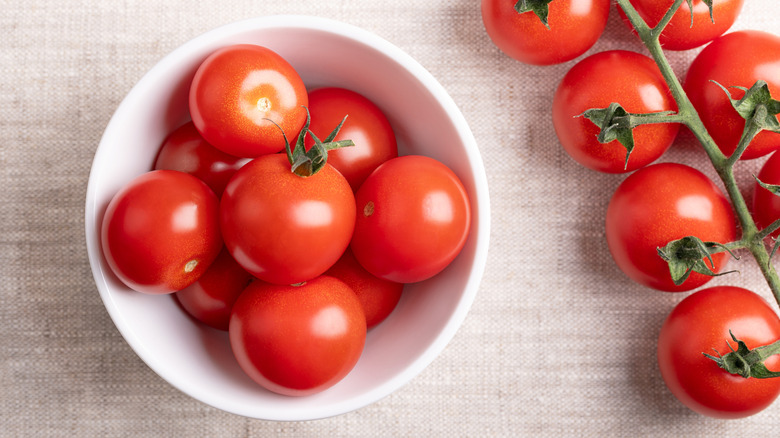
Does it get any better than slicing a juicy tomato, plucked straight off the vine? In the summer, homemade pico de gallo or a BLT sandwich earns an artisanal flair thanks to this ruby gem. In the autumn? While technically available, they won't be any good — advice you can take from Cassidee Dabney's experience. "Tomatoes, in late fall, are mealy and flavorless out of season." Nationwide, California and Florida dominate on vine-ripened tomatoes. Beyond those two tomato-plentiful states, shoppers around the country will have to make do with imports, as China and India shoulder the burden of global production.
So, when you browse the plum or cherry tomatoes, ask yourself: Are these locally-sourced or were they shipped from afar? That largely varies by your area, but by fall, the average supermarket probably won't be carrying the cream of the crop. Those beefsteaks sold around Halloween will likely go wayside once the leaves turn. "We see fall as a time to highlight the unique vegetables of this season," attests Robert Smith, hence why leaving them behind is a must. Your fall cooking efforts will thank you.
6. Cucumbers
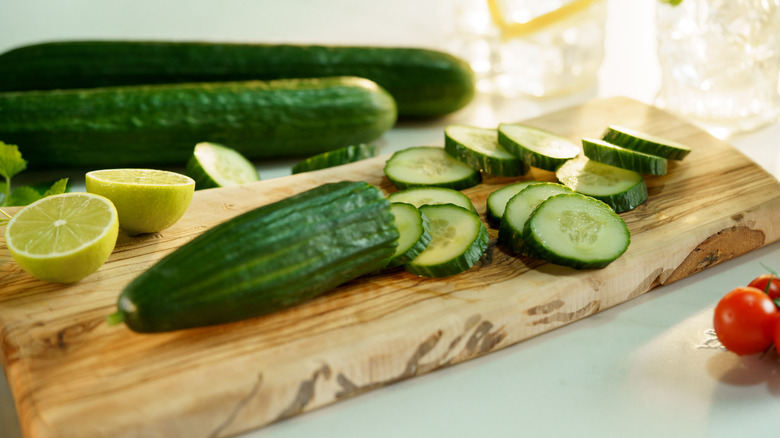
With a cucumber and hummus, cheap and easy snacking has never been easier. However, just don't ruin the combo by buying lackluster cucumbers, which crop up in the autumn with staggering certainty. Think about it. In America, supermarkets mainly carry Mexican cucumbers. Imported produce will lose its luster with that kind of travel. When grown locally, bet on the perfect cukes appearing at market stands in May. This means the freshness will be taking a nosedive — a good deterrent against buying come fall.
Robert Smith, whose eatery Marlena specializes in lively Mediterranean cuisine out in Long Beach, California, advises keeping your thumb on the pulse of what's growing near you. "Visit your local farmers' markets and note which vegetables are in season and use this knowledge when at your grocery store to inform your decisions. too." If you're not ready to part with your cucumbers, don't fret. Nuwan Karunarathna came in clutch with some suggestions. For one, preserving. Your cucumbers can last for future use by prepping them for long-term storage. "A few effective methods include freezing, canning, and pickling," Karunarathna says. "These methods help retain both flavor and nutritional value, allowing you to enjoy your favorites year-round." You really can't go wrong with trying your hand super-crunchy pickles — which in this case, can be munched on regardless of the season.
7. Green beans
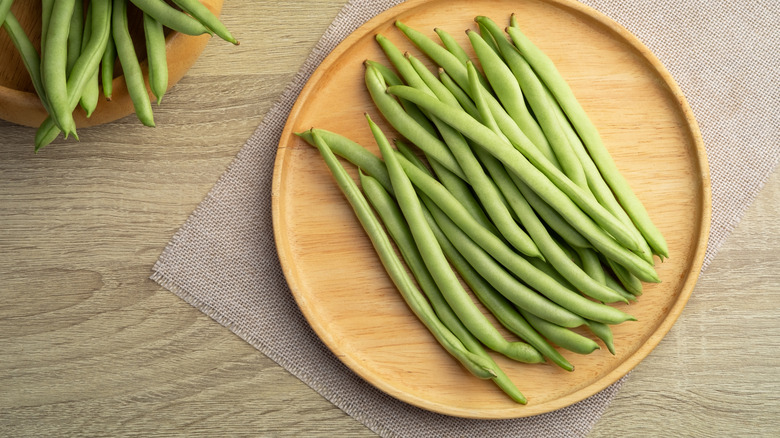
For some, passing on green beans in the fall might sound counterintuitive. Fall ushers in Turkey Day, where the all-American green bean casserole reigns supreme at every holiday table nationwide. That might be true, but we're talking about garden-fresh legumes, and the verdict shows they're much better in the summer. For one, they need to soak in plenty of sun rays to fully grow — about six to eight hours per day. Only summer can produce the concentrated stream of sunlight green beans rely on, a factor that won't apply to some of us, depending on where we live.
If the veggies at your local store generally look "bad" — wilted stems, dull coloring — don't bother putting them in your basket. Instead, scout out a seasonal alternative. Comments Robert Smith, "grab something that reflects the seasons and seek out fun recipes that highlight these special choices and have fun." A few of his recommendations include the standards — spuds and onions, of course — but leafy options, too. "There are a lot of fresh salad greens and herbs that are grown year-round in warmer local climates and greenhouses," he says. A helping of kale sautéed in garlic and butter can hit the same notes as its stringy counterpart.
8. Summer squash and zucchini
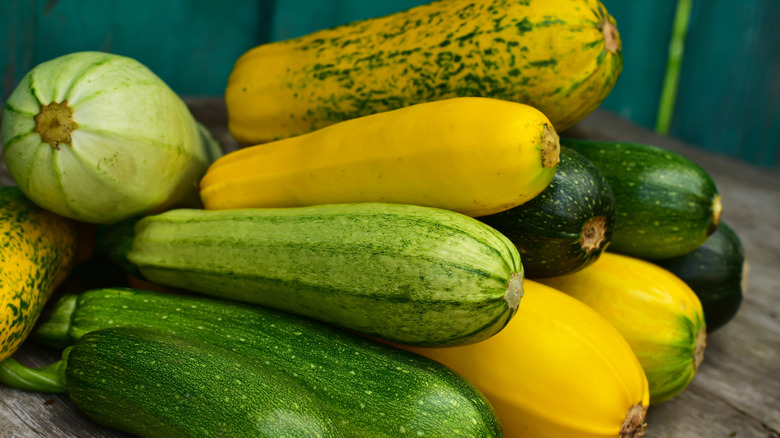
Venture out to any farmers' stand on a summer day, and what do you see? Stalls bursting with zucchini. Considering there's a boom during the months of June, July, and August, summer squash largely tastes the freshest during this period. "These vegetables really shine in the warmer months," according to Chef Nuwan Karunarathna."Out of season, they're likely to be bland and watery with a mushy texture."
When shopping, it's crucial to inspect your produce outside the preferred season. Examine the squash for the following — a firm consistency that slightly "springs" when you grasp it with your hands, and a deep, smooth sheen, signals it's ripe for the picking. When this isn't the case, it's likely you've caught them at the tail-end of their peak. Moral of the story? Stick to a substitute and skip the zucchini.
In the meantime, why not make the most of your squash bounty as autumn approaches? There are loads of ideas out there that aren't just zucchini bread — for instance, leftover squash would come in handy for making a sweet relish. Another piece of advice is pragmatic. Take advantage of this nifty freezer storage trick to stretch your stash.