

11 Prohibition-Era Cocktails That You Can Still Order Today
We may receive a commission on purchases made from links.
Prohibition may have outlawed the manufacture, sale, and transportation of alcohol in the United States, but that didn't mean people weren't imbibing. After the Eighteenth Amendment went into effect in 1920, it gave rise to a myriad of bootleggers, bathtub liquor distillers, and speakeasies. And for those who wanted to go the legal route, doctors could prescribe medicinal whiskey. Plus, there was always the possibility of traveling to other countries where alcohol flowed freely. All the while, bartenders were creating some pretty creative cocktails both at home and abroad.
Throughout the 1920s and 1930s, there were several cocktails that were all the rage thanks to their quirky names and creative flavor combinations. Many featured ingredients that would mask the harsh taste of homemade spirits, such as tangy citrus juice and sweet grenadine or honey. There were also drinks that paid homage to their birthplaces with ingredients like rum and fruit juices from the Caribbean and European liqueurs and bubbles. And while some of those drinks fell out of fashion after Prohibition ended in 1933, others became mainstays on cocktail menus. Here are 12 Prohibition-era drinks you can still order today, nearly a century after they first became popular.
1. Mary Pickford
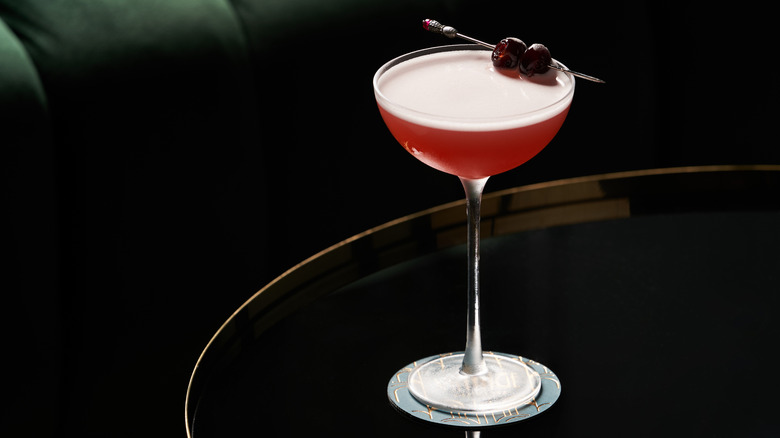
When Prohibition hit, numerous bartenders in the U.S. became redundant, so many decided to set sail for more booze-friendly places. Cuba was a top choice because it was just a short boat ride away and had no shortage of spirits and fun mixers. A popular Cuban-born drink that came out of this era was the Mary Pickford, a vibrant pink drink named after one of the most popular actors of the time.
The origins of the Mary Pickford cocktail are slightly murky. Some say it was created for Mary Pickford when she visited Cuba with her husband Douglas Fairbanks to make a movie in the 1920s. However, historians point out that the couple never filmed in Cuba while they were married, so it's more likely the drink was simply named in her honor. Fun fact: the couple is also credited with introducing fettuccine Alfredo to America.
The first recorded recipe for the Mary Pickford appeared in the 1928 book "When It's Cocktail Time in Cuba" by Basil Woon. It calls for white rum, fresh pineapple juice, and grenadine, shaken until icy cold and strained into a cocktail glass. Today, some recipes also add maraschino liqueur and Luxardo cherries as a garnish. The end result is an ultra-smooth drink with a sweet tropical twist.
2. Sidecar
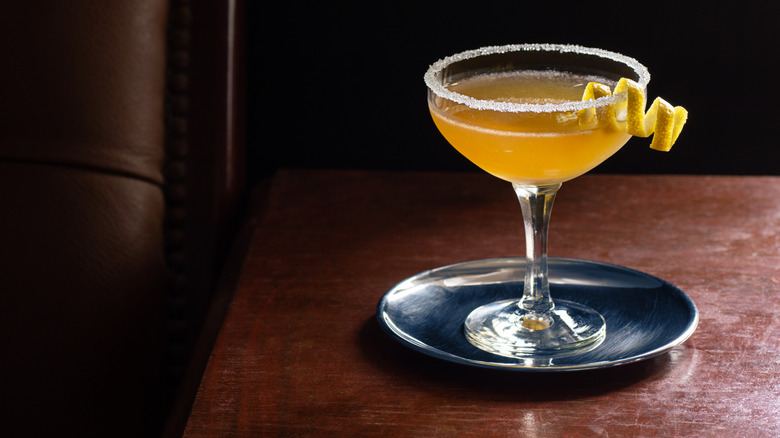
Europe was another hotspot for bartenders during the Prohibition era, and that led to a great deal of experimentation with European liquors and mixology methods. Some of the cocktails created during that time have since become classics, like the Sidecar. Simple but elegant, it features just three ingredients: cognac, orange liqueur, and lemon juice. It's typically shaken with ice and strained into a glass with a sugared rim.
The Sidecar is another cocktail with a somewhat mysterious origin story. According to various sources, its birthplace could have been Buck's Club in London, Harry's New York Bar in Paris, or the Ritz Paris hotel. As for its name, some say it was created for an American soldier who often traveled in a motorcycle sidecar. Others theorize that it may have been named after a shot called a sidecar that's typically made with leftovers from a cocktail shaker.
What we do know for sure about the Sidecar is that it started to appear in cocktail books around the early 1920s. It's easy to see why it became so popular and how it managed to endure for over a century. Not only is it easy to make with ingredients most bars always have on hand, but it also gives a beautiful balance of sweet, sour, and rich vanilla-spice flavors.
3. Twelve Mile Limit
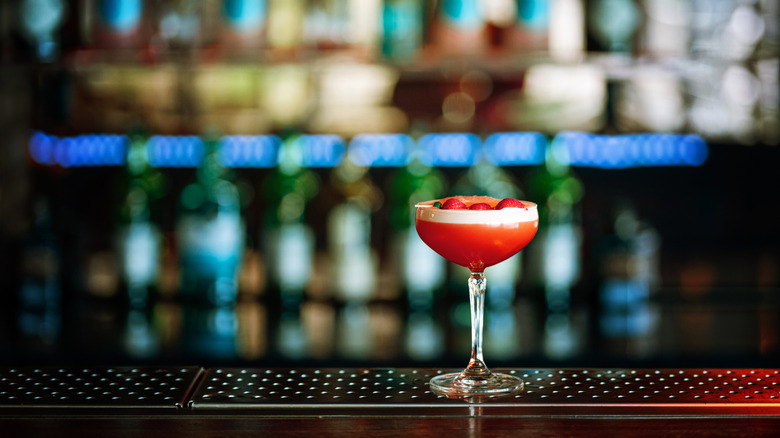
The Twelve Mile Limit is a cheeky cocktail that was created during the Prohibition era and directly pokes fun at it. The name refers to a loophole where people would travel into international waters to drink. When Prohibition began, that distance was just three miles offshore, so boat parties and rum runner activities were pretty common. In response to that flagrant flouting of the law, the U.S. government proposed extending the territorial limit to twelve miles.
In his book "Vintage Spirits and Forgotten Spirits," Ted Haigh (aka Dr. Cocktail) credits journalist Thomas Franklin Fairfax Millard as the creator of the Twelve Mile Limit. Millard undoubtedly got the idea from the Three Mile Limit cocktail, which referenced the three-mile maritime jurisdiction and included a mix of rum, brandy, lemon juice, and grenadine. The Twelve Mile Limit ups the ante with the addition of rye whiskey.
Most recipes for the Twelve Mile Limit call for white or silver rum, cognac, and rye whiskey with fresh lemon juice and a dash of grenadine. The ingredients are shaken with ice and then strained into a chilled glass with a skewer of Luxardo cherries as a garnish. The drink definitely packs a punch, but the tart lemon juice and sweet pomegranate-flavored grenadine help temper its booziness.
4. Bees Knees
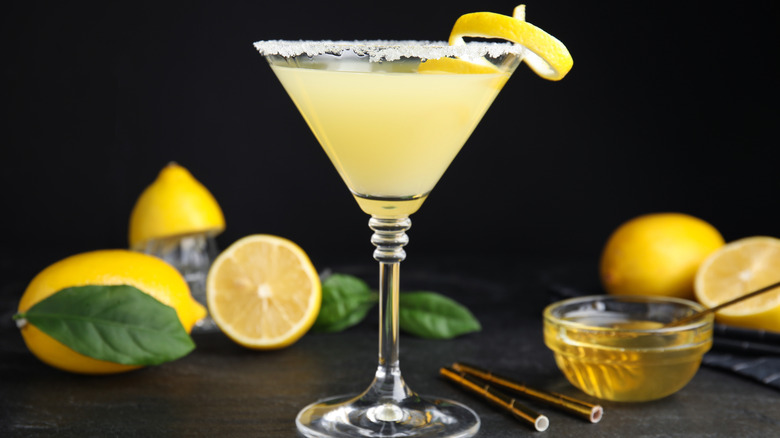
If you could go back in time to a 1920s speakeasy, you'd probably hear some pretty colorful slang being flung around. One popular expression was "the bee's knees," which basically meant "cool" or "the best." That's where the Bees Knees cocktail got its name, and it's pretty fitting for a drink that combines gin, lemon juice, and honey in a simple but very tasty concoction.
There are two stories about how the Bees Knees cocktail came to be. One states that American socialite and Titanic survivor Margaret Brown invented the drink, while the other credits a bartender named Frank Meier who worked at the Ritz Paris. Whichever version is correct, the cocktail was already making the rounds in the 1920s and became one of the better-known tipples of the time.
During Prohibition, gin was often made at home using whatever ingredients and equipment people had on hand. The term "bathtub gin" came to describe these homemade versions, and they could be pretty rough. The Bees Knees was the perfect solution because the sweet honey and sour lemon were a great way to cover up the harsh flavor of the gin. Today, quality gin can make a huge difference in creating a truly bright and refreshing cocktail.
5. Monkey Gland
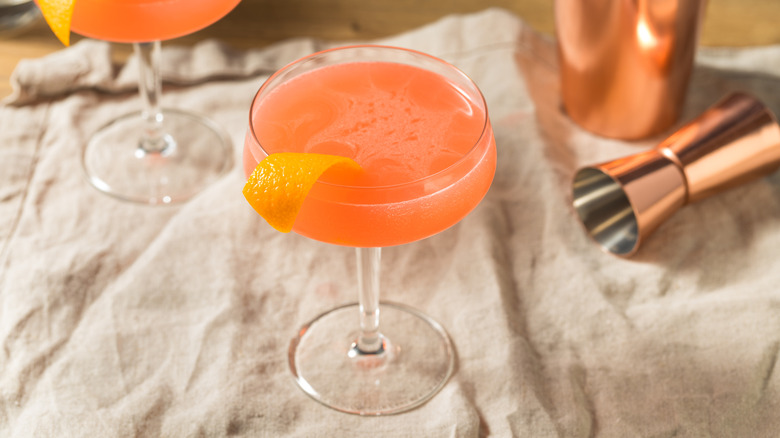
It's hard to talk about Prohibition-era cocktails without mentioning Harry MacElhone, the legendary bartender behind Harry's New York Bar in Paris. While behind the bar there, he created a slew of legendary cocktails and popularized even more in his book "Harry's ABC of Mixing Cocktails." One of his more unusual creations was the Monkey Gland, a cocktail with an intriguing mix of ingredients and an even more intriguing inspiration story.
The Monkey Gland consists of equal parts gin and orange juice with a spoonful of grenadine and a dash of absinthe. Everything goes into a cocktail shaker with ice, and the drink is strained into a cocktail glass. Many bartenders also garnish it with a twist of orange. The flavor is sweet and fruity, but also herbaceous with just a hint of licorice.
So why is it called the Monkey Gland? Well, the name is a nod to Dr. Serge Voronoff, who made a name for himself in 1920s Paris for a very controversial procedure. The doctor believed testosterone was the key to a vital life, so he performed procedures where he grafted monkey glands onto men in an effort to restore their vitality. MacElhone aptly saw it as an opportunity to give his colorful cocktail an equally colorful name.
6. Gin Rickey
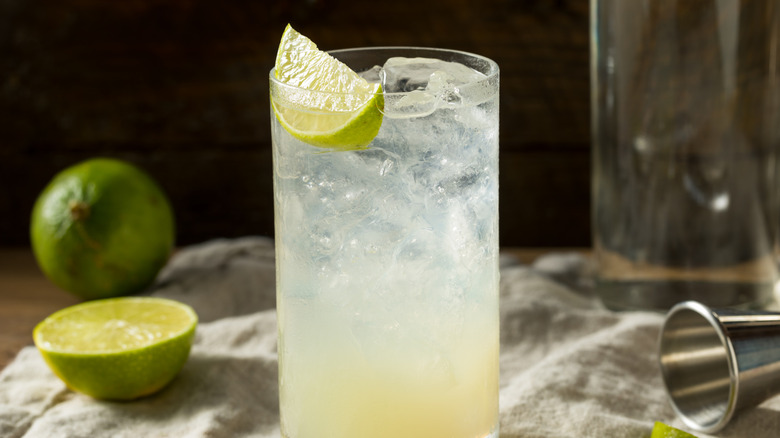
If you're looking for a refreshing drink to quaff on a hot summer day, it doesn't get much better than a gin rickey. Not only is it light and refreshing, but it's a drink any bartender can make, as it consists of just three basic ingredients: gin, lime juice, and soda. It doesn't even need any shaking or stirring, as all of the ingredients simply go into a cocktail glass with ice, and it's good to go.
The original Rickey cocktail dates back to the 1880s. Legend has it that a lobbyist named Colonel Joe Rickey created it at a bar called Shoomaker's in Washington, D.C. when he added lime juice to his bourbon and seltzer cocktail. The drink started to gain traction, and not long after, people were adding lime and soda to all sorts of spirits, including gin.
Although the Gin Rickey was around before Prohibition, it really took off during the era thanks to the proliferation of bathtub gin. That and the fact that the ingredient list was so basic, made it a practical choice for a minimally stocked speakeasy or home bar. In fact, the drink was so popular that F. Scott Fitzgerald even paid tribute to it in his wildly popular book "The Great Gatsby."
7. Scofflaw
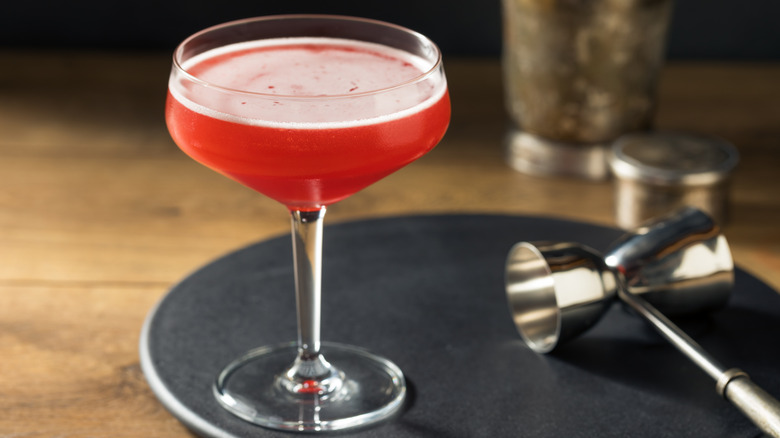
It's hard to find a better name for a Prohibition-era cocktail than the Scofflaw. The word was coined in 1924, when the Boston Herald held a contest asking readers to come up with a term for a person who broke the law by drinking illegal alcohol. The winning entry combined "scoff" and "law," which was a pretty apt description for the tipplers who had little interest in following the rules of the Eighteenth Amendment. That same year, the Scofflaw cocktail made its debut.
According to Harry MacElhone's book "Barflies and Cocktails," a bartender by the name of Jock created the Scofflaw Cocktail at Harry's New York Bar in Paris. The original recipe calls for rye whiskey, dry vermouth, lemon juice, grenadine, and a dash of orange bitters. The drink is typically shaken with ice and strained into a cocktail glass. Some bartenders also serve it with an orange twist.
MacElhone mentioned in his book that the drink was wildly popular with American expatriates, or as he called them, "Prohibition dodgers." The name alone was a nice jab at the lawmakers back at home. Plus, the drink has plenty of character to back up its rebellious name. You get a spicy base from the rye, herbal notes from the vermouth, and the sweet, citrusy flavors of the lemon, orange bitters, and grenadine.
8. French 75
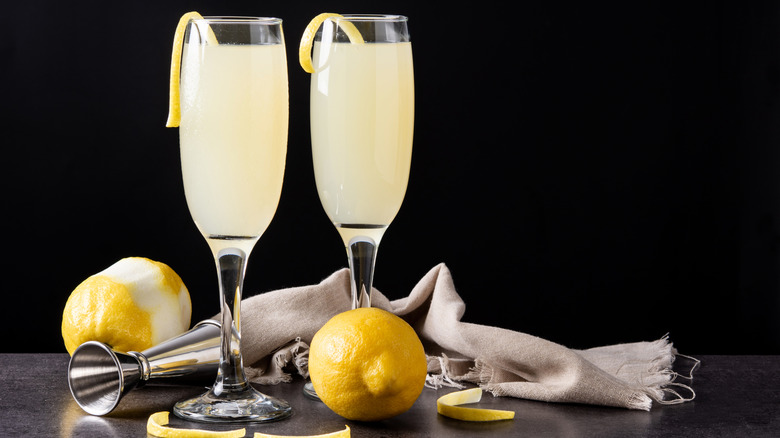
Cocktail origin stories can sometimes get muddled, and one that's particularly convoluted is the story of the French 75. There's no disputing that the cocktail got its name from WWI, specifically the powerful French 75-millimeter field guns the Allies used. But the legend that the drink was created by Allied soldiers using ingredients they had on hand and that it was served in artillery shells probably isn't true.
A much more likely origin story is that the French 75 was created by a bartender named Henry Tépé of Henry's Bar in Paris sometime in the 1910s. The drink was originally called the Soixante-Qunize ("75" in French), and it contained gin, apple brandy, lemon, and grenadine shaken over ice and strained into a cocktail glass. Apparently, the name referred to the kick the drink had.
In the 1920s, the recipe for the French 75 changed to include gin, lemon juice, sugar, and champagne. During that time, the drink was typically served in a tall glass with ice, much like the strikingly similar Tom Collins cocktail, which uses club soda instead of champagne. Today, your bartender is much more likely to serve you a French 75 in a champagne flute with a twist of lemon.
9. Leap Year
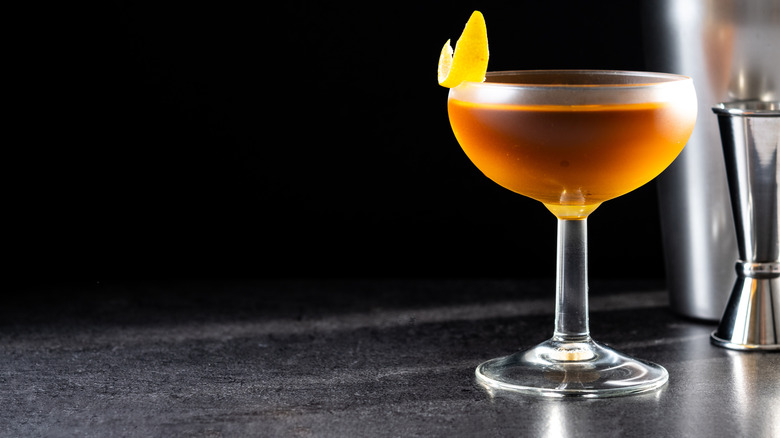
Prohibition may have put a damper on the bar scene in the U.S., but it didn't stop talented bartenders from making a name for themselves. One of the most famous was Harry Craddock, an American who made his way to Europe after Prohibition went into effect and landed at The American Bar in London's Savoy Hotel. During his time there, he crafted many unique cocktails, like the Leap Year created specifically for February 29th, 1928.
Craddock published the recipe for his Leap Year cocktail in his 1930 book "The Savoy Cocktail Book" with a note that read, "It is said to have been responsible for more proposals than any other cocktail that has ever been mixed." That's a pretty big claim, but there might be something to it. The drink is elegant with its beautiful amber hue and nuanced citrusy, herbal, sweet, and bitter flavors.
The original recipe for the Leap Year calls for two parts gin, one part each of Grand Marnier and Italian (sweet) vermouth, and a dash of lemon juice. Everything is shaken well and strained into a cocktail glass. The final touch is a squeeze of lemon on top for an extra pop, and many people like to add a twist of lemon for flair.
10. Hanky Panky
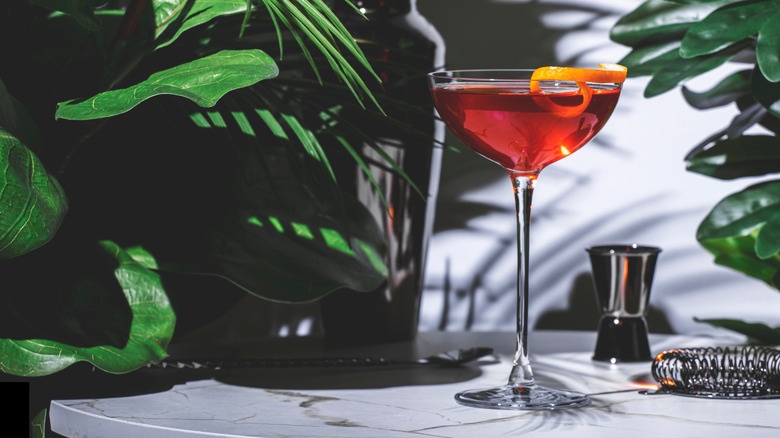
While many of the bartenders who rose to fame during the Prohibition era were men, Ada "Coley" Coleman was a notable exception. She was the first female head bartender at The American Bar in London, and it was a position she held until 1926, when Harry Craddock took over. One of her most famous creations was the Hanky Panky, which would go on to become one of the most iconic three-ingredient cocktails of the time.
Legend has it that Coleman created the Hanky Panky for actor Sir Charles Hawtrey one day in the early 1920s when he requested something that would liven him up. She whipped together a simple but balanced concoction of gin, sweet vermouth, and Fernet Blanca. According to numerous sources, the drink was christened when Hawtrey took a sip and declared, "By Jove, this is the real hanky-panky!"
The secret to a good Hanky Panky is all about the proportions. Most recipes call for an ounce and a half of both gin and sweet vermouth and just a quarter ounce of Fernet Blanca. That way, you get a nice bloom of botanicals from the gin, sweet fruitiness and spices from the vermouth, and just a hint of herbal bitterness from the Fernet Blanca. An orange twist as a garnish also adds nice citrus notes.
11. El Presidente
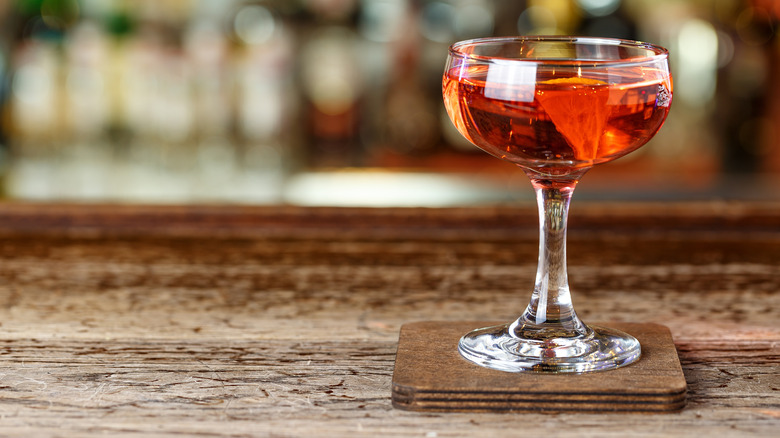
Cuba has given the world several legendary cocktails, including the Mojito, Daiquiri, and Cuba Libre. But during Prohibition times, the cocktail that everyone was talking about was the El Presidente. Unlike Cuba's other famous creations, it doesn't rely on mixers like soda or fruit juice. Instead, it features mostly spirits with a base of rum and white vermouth, plus dashes of grenadine and curaçao (an orange liqueur) for sweetness.
It's not entirely clear who created the El Presidente cocktail, although some sources point to either an American bartender named Eddie Woelke who moved to Cuba when Prohibition went into effect or Constantino Ribalaigua of Havana's famed El Floridita bar. What we do know is that the cocktail became popular around 1915 and was likely named in honor of Cuban president Mario García Menocal. In addition, it was highly sought after throughout the Prohibition era in both Cuba and the United States.
There are several variations of the El Presidente, but most include rum, white vermouth, and grenadine. Some recipes call for white rum, while others suggest aged rum. Several bartenders also suggest using white vermouth that is slightly on the sweet side, as dry vermouth can make the drink bitter. Curaçao is a common addition, and some folks also add bitters for extra depth.