

14 Ingredients That Used To Dominate Boomers' Kitchens
We may receive a commission on purchases made from links.
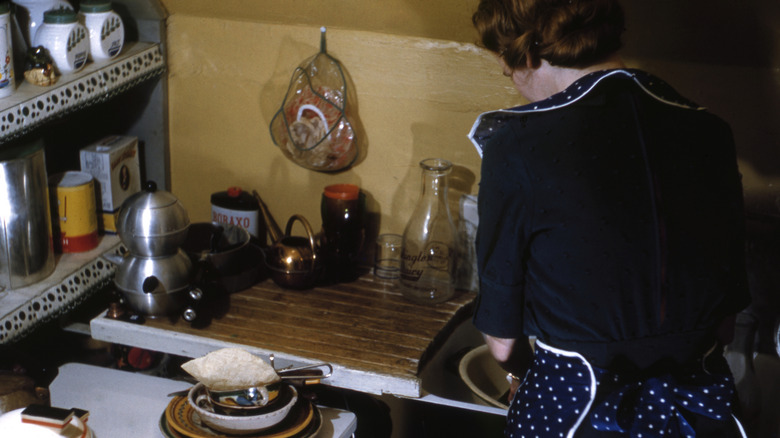
If you want to know what a particular food era was like in America, one of the best things you can do is to reflect on what kitchens looked like at that time. The types of products people purchased, the meals they created, and the kinds of dishes that were popular can tell you a lot. For example, you may be shocked to take a look back and see what many boomers — meaning the group of people born between 1946 and 1964 – had in their kitchens, and may be even more surprised to find that some of the same foods that we enjoy today appeared as early as the '50s and '60s.
Broadly speaking, the foods most boomers grew up with can be framed in the context of the post-World War II era and the rise of consumerism. Not only was America emerging from wartime, but women (who had traditionally been responsible for running the household and preparing meals) were increasingly joining the workforce. At the same time, new affordable consumer goods reshaped dinner tables, while advances in food technology fueled the rise of convenience foods.
Although there is immense diversity in the foods that boomers and their families stocked their pantries with, all of those items are deeply tied to these themes. Here's a look back at some of the ingredients that filled their kitchens, why they were popular, and what folks who grew up during this era remember about them.
Tapioca pudding
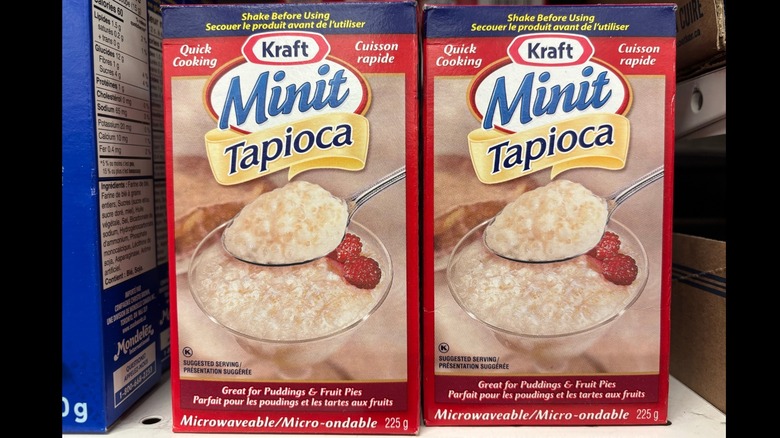
Tapioca pudding walked so boba could run. Though both are sourced from the same ingredient — the cassava root — I reckon most boomers will recognize tapioca pudding mix more readily than the boba drinks that are popular today.
Your grandparents may not have liked tapioca, but it was still a fixture in boomer homes both during and after the post-war period. Many boomers will recall their parents making homemade pudding with small pearl tapioca, combined with a sweetened, milky custard base. "In the 60s I used to use the recipe on the back of the red tapioca box (I never questioned what it was, but seems like that was Minute tapioca)," said one Reddit user, who was reminded of the fact that the box had to be shaken before the pudding could be prepared.
Although the traditional variation (and the one my mother made for my family growing up) was made with custard, Redditors share that this was far from the only recipe. "It's very like my mom's except mom would separate the eggs, add in the yolks, beat the whites to soft peaks, then fold them in. I think she called it something like tapioca dream," another Reddit user recalled.
Farina
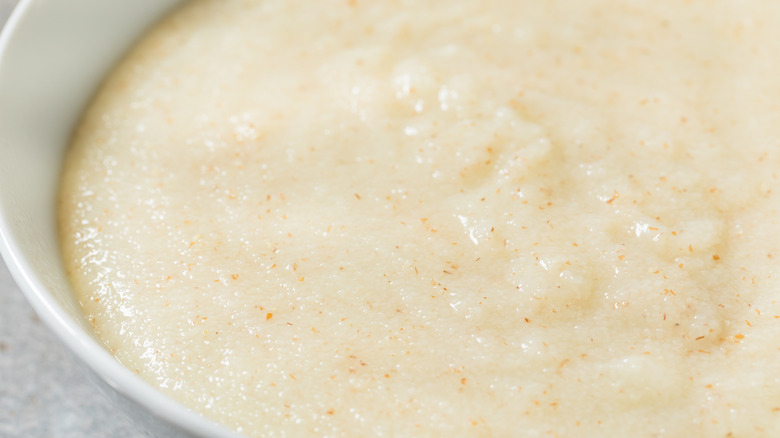
Farina was a food my dad grew up eating, but it's one my mom has expressed vehement hatred for. Farina, also known by the brand name Malt-O-Meal, is one of the foods that boomers may remember eating for breakfast. It's made with ground wheat, and when mixed with hot water and salt, it takes on a very thick, porridge-like consistency.
This food may have become popular with boomers and their families due to its high nutrient content; it's enriched with iron and folate. Plus, it could be made easily in the microwave (which was invented during the boomer era) or on the stovetop due to its "instant" nature.
Although it was touted as a good-for-you food (and nutrition was an important field of study after World War II), not all boomers liked eating it. "My mother used to give it to us kids every so often. Talk about nasty," one Facebook user said. "I actually loved Farina, better than grits or oatmeal, but mom made it thick, had a pat of butter and a sprinkle of brown sugar," said another commenter, who clearly didn't mind it.
Jell-O mix
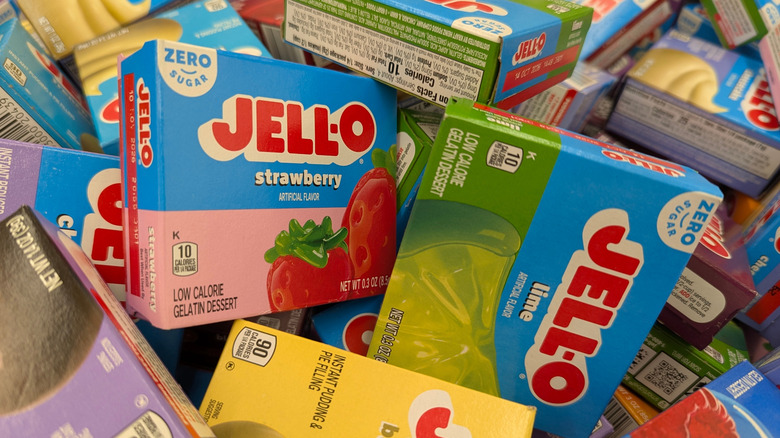
Nothing says "entertaining" like food in a Jell-O mold! Say what you will about this jiggly food, but it was clearly popular in boomer households — as was anything "instant" and "boxed." Although Jell-O was introduced to Americans in the early 20th century, it took until the post-war era to gain traction. Gelatin desserts are traditionally made with sheets of gelatin, though thanks to pre-sweetened box mixes, it just needed to be combined with hot water and left to set in the fridge. From an economic stance, the expansion of packaged Jell-O products made sense, as it could be prepared by housewives or women who had entered the workforce during and after World War II and didn't have time to spend on elaborate desserts. During the boomer generation, and up until the 1980s, gelatin desserts, including those encasing tuna, vegetables, and other savory items, were quite popular.
This may also have something to do with the idea that Jell-O-encased foods looked very hip and elegant. "Aspic molded luxury salads were the height of haute cuisine. The Boomers' grandparents [gushed] about these salads. And then Jell-O said, 'Oh? This is freakin' easy. Let's show you how it's done,'" explained one Redditor.
Crisco
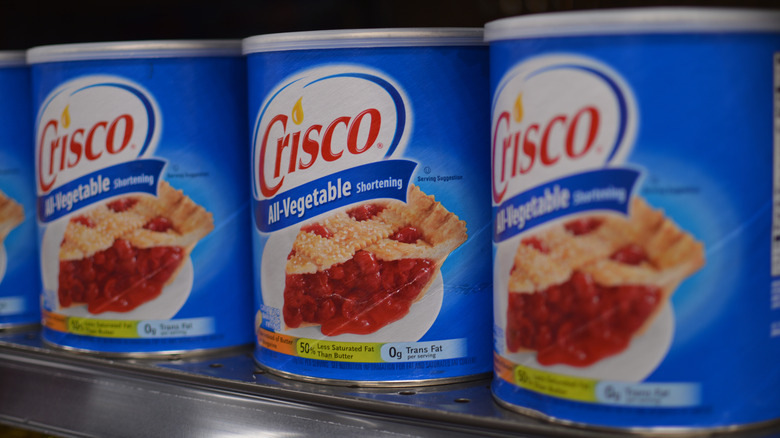
My mom always baked with Crisco vegetable shortening — as did her mother. Using shortening in pie crust is a baking tip many boomers used, likely because of how this product was promoted.
Crisco entered the market in the 1910s as an alternative to lard, a pork-based fat that had, up until then, dominated the market. Crisco marketed itself as having no trans fats, and also less saturated fat than butter, which appealed to health-conscious folks not only during the boomer generation, but also well into the '80s. Besides eating foods made with Crisco, many boomers also say that the cans were quite the household fashion statement and were used for everything from storing grease, screws, nails, and kitchen waste.
Powdered milk
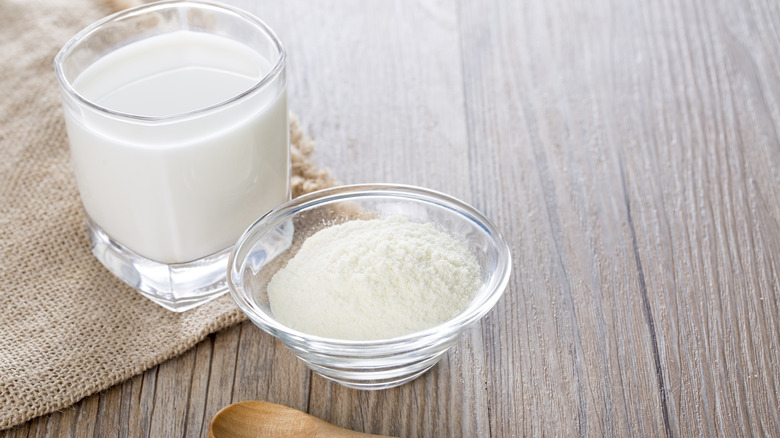
Bakers today know that milk powder can elevate an array of treats and is the secret ingredient for plenty of home-cooked recipes. However, the boomer generation just knew it as a pantry staple that could be rehydrated to make milk. This ingredient has roots as far back as the 19th century, though its shelf-stable properties became an advantage during wartime and the post-war eras.
Some people born in the era recount that they only had powdered milk in their homes growing up, presumably because it was cheaper than fresh milk. "Growing up, my parents didn't have a lot of money, so powdered milk went a long way, didn't taste very good, but they did the best they could to provide for us," said one Facebook commenter on a thread about how boomers feel about powdered milk. Others recounted mixing prepared milk with actual milk to stretch it even more. Another said that their lunch in the 1950s was comprised of buttered bread and powdered milk.
Canned cream soups
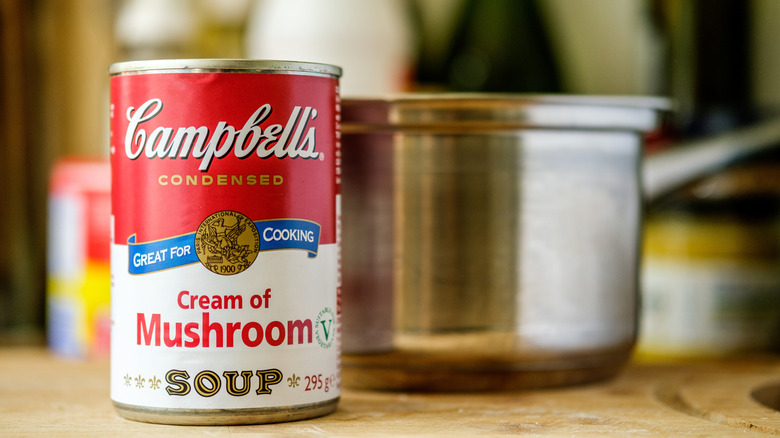
Boomers likely grew up with quite the array of canned foods in their homes. Soups, including cream of mushroom, chicken, and tomato, could not only be used as standalone meals, but also as binding ingredients in other popular dishes of the era, including hotdishes and casseroles. Post-war economic booms made dishes like tuna noodle casserole popular, and since they required few ingredients and minimal culinary know-how to prepare, they were popular among busy families and housewives.
Canned soup's legacy has lived on long after the boomer generation. In one Reddit thread about beloved boomer and silent generation dishes people are keeping alive, tomato soup and grilled cheese came up frequently, with folks saying its budget-friendly nature makes it very appealing. "I have delivered actual lectures to my children about how this is the best way to eat grilled cheese sandwiches," said one Redditor.
Canned meat

Spam: To know her is to love her. There are so many flavors of Spam now (which our taster tried and ranked), but most boomers are familiar with the classic recipe, which dotted breakfast plates during the post-war era. Over 150 million pounds of Spam were deployed during the war effort, and even after troops returned, it remained a feature of many diets. Boomers have shared countless ways they've used this ingredient on social media, including as a breakfast staple alongside biscuits and grits, diced up in scrambled eggs, or pan-fried until crispy.
Of course, Spam wasn't the only popular canned meat of the generation. Boomers reminisce (perhaps not so happily) about eating potted meat and Vienna sausages — though some report eating Vienna sausages straight from the can. "My Dad kept MREs, Spam, liverwurst, canned hash, and Vienna sausages on hand," said one Reddit user in a Gen X Reddit forum. I would be remiss not to mention canned tuna here as well — which propelled many tuna noodle casseroles, Tuna Helper, tuna salad, and even gelatin desserts during the post-war era. These canned proteins were cheap, had a long shelf life, and could be used in many dishes, making them a popular ingredient in boomer kitchens.
Powdered drink mixes
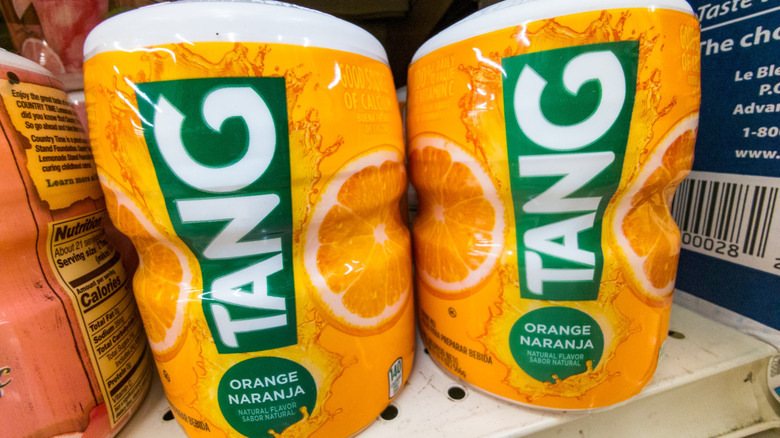
The post-war era (and really, up into the '90s) was all about powdered drink mixes. Even since its inception, products like Kool-Aid were seen as an affordable luxury, allowing busy families to spice up plain water with fun, fruity flavors. The Kool-Aid Man first made his wall-busting entrance in the 1950s and has remained an advertising icon even today.
Kool-Aid wasn't the only brand that folks were flocking to. Another orange drink had kids and adults in a chokehold: Tang. This orange-flavored drink mix really peaked in the '60s and was tied to space exploration. The first Tang products were actually used during space travel by astronauts (and dare we say its flavor was out of this world?).
In one Boomer thread on Facebook, folks were keen to share their memories of Tang. "It was awful, but because the astronauts drank it, we all loved it," said one person, while others shared that they didn't like its flavor very much — unless it was made into a milkshake with vanilla ice cream and milk, of course.
Rice and pasta mixes
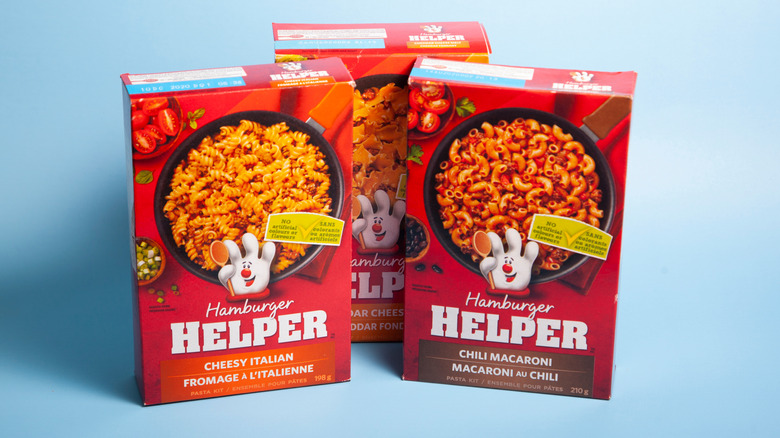
During the post-war era, families were relying on convenience foods to help get dinner on the table faster. This is precisely why pre-packaged meals, including Rice-a-Roni and Hamburger Helper, found favor among boomers and their families. Rice-a-Roni, the famous "San Francisco treat," was first produced in the '50s. Up until then, there weren't many packaged side dishes. Rice-a-Roni expedites the process of getting dinner on the table, which is likely why it caught on so fast.
I would also be remiss not to mention Hamburger Helper (now called "Helper," as there are many non-beef-containing options), which I enjoyed frequently in a household helmed by boomer parents. This General Mills brand didn't get its start until 1971 — after the boomer generation (born between 1946 and 1964, for reference). But Helper was able to ride on the coattails of Rice-a-Roni, and fit neatly into the folds of American life. It allowed ground beef, which was still an expensive item during this time, to be stretched across several meals, which was a must for many then-working and middle-class boomer families. "I used to make it for myself, but I would jazz it up because it was pretty bland by itself," said a Facebook user who reported that their working parents made it for them when they were growing up.
Ovaltine
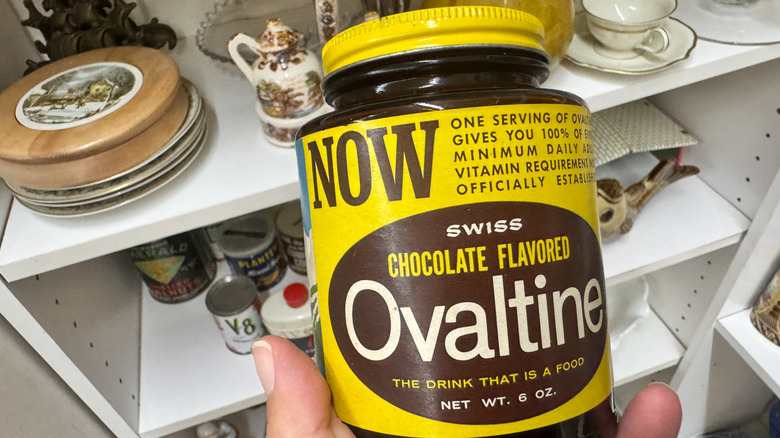
Now, not every ingredient in the boomer household was nutrient-dense. Ovaltine, for example, inspires boomers to think back on memories of old-timey advertisements. "I drank Ovaltine at least once a day as a kid up until I was 18 or so," said one Reddit user, while others shared that Ovaltine was the only chocolate milk they were allowed to drink growing up.
Don't just think of Ovaltine as powdered chocolate milk, though. This malty, chocolatey powder — sold under the Nestlé umbrella today — was made with barley malt, milk powder, sugar, whey protein, and eggs. You may also hear it called "Ovomaltine" — which combines "ovo" ("egg") and "malt." Despite being popular among kids, this Swiss drink was actually created to curb malnutrition. In fact, in Switzerland during World War II, consuming the powder was touted as a patriotic endeavor. It helps, of course, that it tastes good — though some boomers swear allegiance to other chocolate syrup brands, like Bosco.
Frozen orange juice
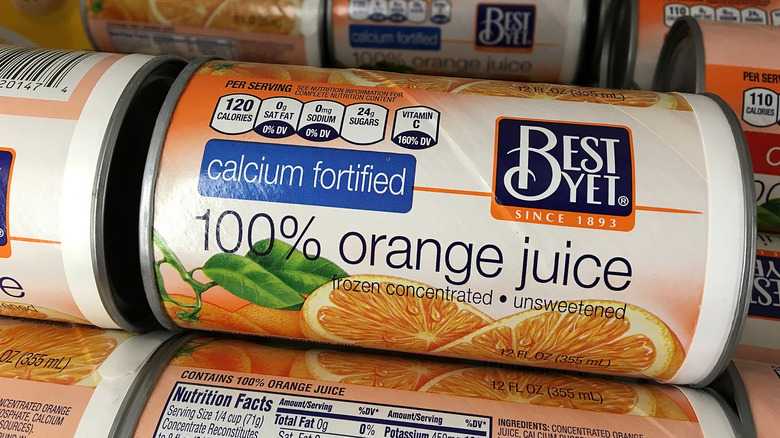
Boomers will be happy to know that frozen juice concentrate is still alive and well — and I happen to think it makes a tasty batch of orange juice. In multiple Reddit responses, folks say that frozen juice is one of the ingredients from their younger years that they still use today. One individual even said that their family's purchase of frozen orange juice "accounted for 90% of [their] household blender usage." And surprisingly, this seems to be one boomer ingredient that didn't attract many naysayers.
"Frozen concentrated orange juice is always much higher quality and much tastier than so-called fresh squeezed orange juice," said one Reddit user. It's thrifty, tastes good, and as Redditors point out, makes one heck of a screwdriver. During World War II, from-concentrate juices helped stave off nutritional deficiencies among soldiers, so it's easy to see how it could adapt to boomer breakfast tables on the home front.
Orange juice was not the only frozen juice product getting love. Folks in the same thread report frozen limeade as being one product they are still keeping alive. While frozen juices may not get the same amount of love as they once did — likely due to a misunderstanding around what "from concentrate" means — they remain a beloved product of a bygone era (and one of my personal favorites).
Mayonnaise
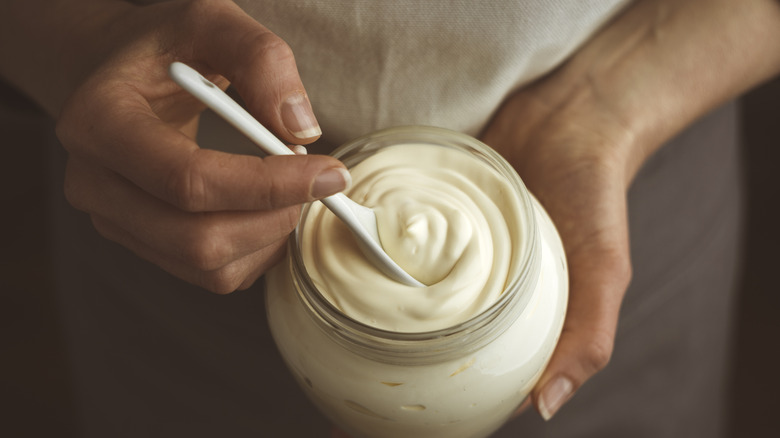
Why did boomers have a weird love affair with mayonnaise? That is a very complicated question, and as someone who's dad eats mayonnaise sandwiches (a slice of folded bread with just mayonnaise), I would like to know the answer. This divisive condiment was invented long before boomers, but was popularized as a convenience product. Plus, the condiment could help stretch foods (like canned tuna), and make them more palatable (and hide any signs of spoilage or poor quality in the process). Mayonnaise was spread in sandwiches, used in baked goods (it's especially good in chocolate cake), and added to salads — many of which we still eat today. It was also popular in its lighter form, Miracle Whip, which some describe as being sweeter than the original recipe.
While mayonnaise remains a grocery store staple today, it's fair to say that we're not as collectively obsessed with it as the boomers were. The love of mayo arguably ended with the boomer generation, as many younger folks can't seem to appreciate its texture in the same way.
Cheez Whiz
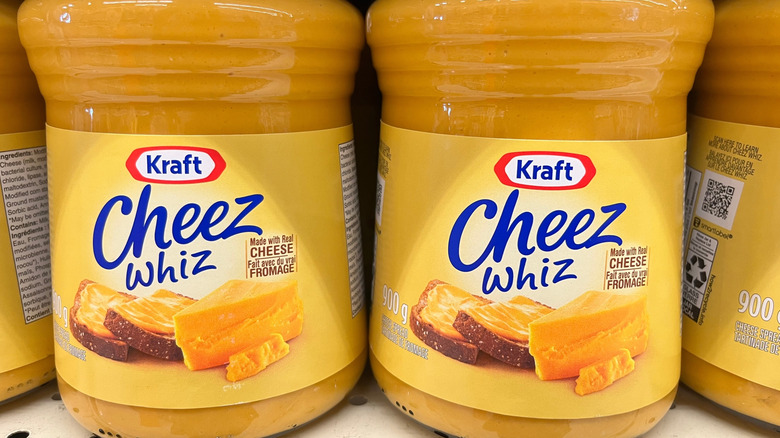
Before you curl your lip at the thought of canned cheese, remember that this was the era when convenience foods were put on a pedestal. It was prime time for Cheez Whiz to step onto the scene and inspire folks to change up how they cooked. Okay, maybe that's giving this processed cheese product a little too much credit, but it was certainly a novelty.
Cheez Whiz wouldn't have been introduced into the U.S. if World War II hadn't occurred. Kraft had originally developed it for Welsh rarebit, and after it saw success in U.K. markets, the influx of processed cheese from the war (which was more shelf-stable than fresh cheese) hit American shores. Households could now just reheat the cheese and spoon it onto whatever recipe they wanted, making it an easier-to-use alternative to fresh cheeses.
And there were a lot of recipes to be made with this creamy cheese spread. According to one Facebook post, it was a staple on crackers, strips of bread broiled with bacon on top, and, of course, on cheesesteaks.
Lipton soup mix
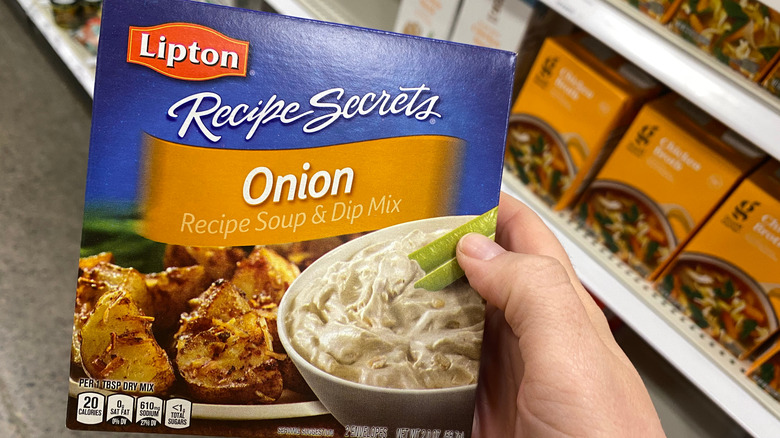
You may just have to pry onion soup mix out of boomers' hands. This soup mix, sold often under the Lipton brand, has been a staple of pantries from the boomer era into the 21st century. Soup mixes were sold in the '40s and gradually gained popularity. However, it wasn't until 1952 that Lipton, a brand previously known for its tea, entered the dried soup market and started printing recipes for the product in newspapers. Folks started using this soup mix in everything — and not just its intended soup use. "The Joy of Cooking," one of the vintage cookbooks that paved the way for modern home cooking, specifically encouraged people to add the soup mix to casseroles, another popular dish during the era.
The prepared dip was just one popular use of this onion soup mix. "Everyone knows that dip, if you're a boomer hahaha," said one person on a Reddit thread. Per a 1969 ad for the soup mix, the prepared dip was also known as California Dip. It even came with recipes for California dip-inspired deviled eggs, chicken and olive sandwich spread, and salad topping. The soup mix was versatile, inexpensive, and shelf-stable — three things it has in common with the other boomer staples on this list.