

7 Childhood Breakfasts Boomers Will Remember
We may receive a commission on purchases made from links.
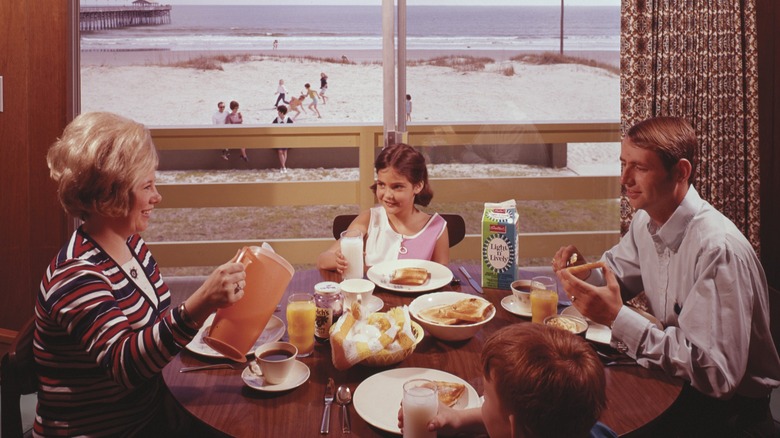
While the first meal of the day may generally have looked like bacon and eggs since the 1920s, when a PR specialist shilling for bacon made "heavy breakfast" the gold standard, people actually tend to change it up. Breakfast is a shapeshifting meal, arguably more subject to the whims of trends than lunch or dinner. Decades of morning tables have held grapefruits, granola, bran muffins, Pop-Tarts, protein shakes, influencer smoothies, and countless iterations of avocado toast. The same goes for the foods we feed children. Case in point: a.m. fuel for the baby boomers. These kids ate some stuff for breakfast that we just don't see anymore. Some boomers still partake of them for nostalgia, but for the most part, you won't find younger consumers seeking these out.
Any millennial knows there are certain meals you grew up eating if you have boomer parents, but there are also meals you were fed if you spent a lot of time with the Greatest or Silent Generations, which are the parents of boomers. I spent a ton of time at my grandparents' place as a child. With my grandmother cooking many, many breakfasts for me, I like to say I experienced a culinary hybrid of boomer and millennial meals. I can personally speak to having eaten most of the items on this list of childhood breakfasts guaranteed to ring the bell for boomers. One of them I hadn't even heard of (nor had my parents), but even that semi-obsolete product invokes nostalgia in plenty of other older folks.
1. Ovaltine
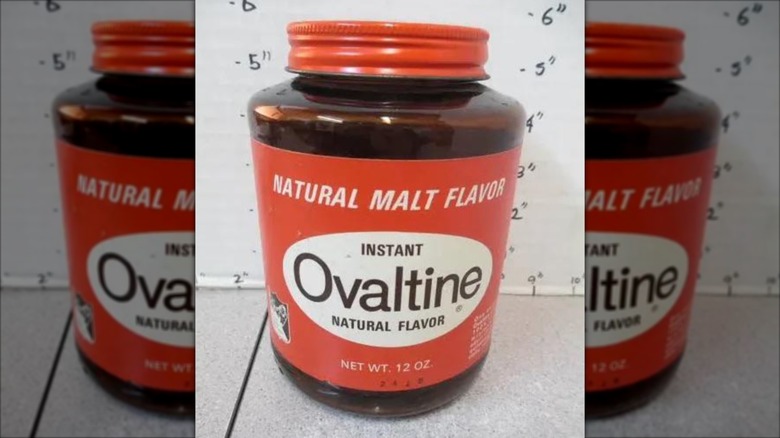
Ovaltine, a chocolate drink powder from Switzerland, first showed up in the United States in the 1920s. Right away, it had a reputation for being serious food. Ovaltine's creator, a pharmacist, began developing it in the 1860s as a dietary supplement in an effort to combat the malnutrition and high child mortality rates plaguing Europe at the time. The powder, with its base of malt extract, also contained vitamin D, phosphorus, eggs, milk, and, of course, cocoa.
The parents of Boomers grew up knowing Ovaltine as a kind of semi-panacea; ads claimed it could help you sleep better if consumed at night, and you'd wake up rarin' to go in the morning. It could make children healthy, strong, and calm their nerves. It could even make your kid less gassy if uncontrollable flatulence happened to be an idiosyncrasy of their system. How Ovaltine professed to accomplish this with its inclusion of milk and eggs (common culprits behind tummy trouble if you have intolerances) is anyone's guess.
By the time boomer kids were being served their Ovaltine, it was more likely to hit their palates as a kind of unfun chocolate drink rather than chocolate milk. Some boomers recall it fondly. Others employ unfortunate words like "nasty" and "eeeyuck." I drank it a few times in my early years and would describe it as "meh." You can still buy Ovaltine today, and there's vitamin C, copper, and a lot more in it now. Still, it's not on everyone's shopping list anymore like it used to be.
2. Spam and eggs
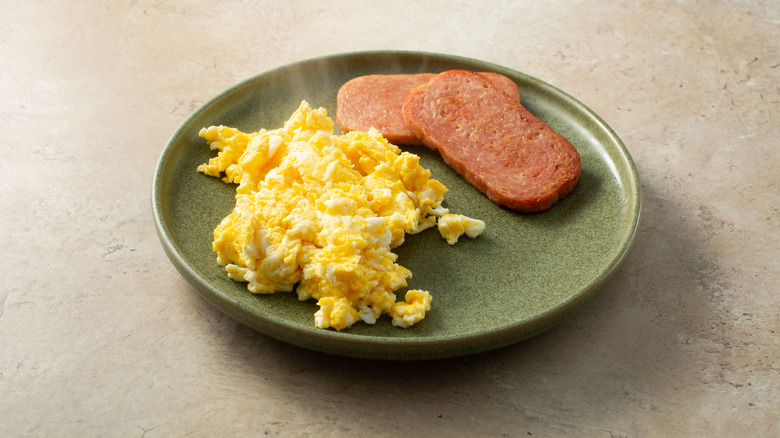
Few foods inspire as much emotion as Spam, and nostalgia is one of them. This canned pink meat, invented in 1937 in Minnesota, isn't just popular in Hawaii as musubi or in Korean budae-jjigae (meaning "army base stew"). If you were to peer into the hearts of certain baby boomers, you would find a can of Hormel Spam nestled there.
A wonder meat to the midcentury palate, Spam made perfect sense any time of day. Fried up, it made regular appearances on sandwiches (a favorite meal of my grandfather). For my Boomer dad, the biggest Spam fan I know, Spam with pork 'n beans and instant mashed potatoes was a delight for lunch or dinner. For breakfast? Fried up with scrambled eggs and biscuits, of course. And my father is not alone in that opinion. The internet is rife with Spam stans born between 1946 and 1964 who wax poetic about the joy it brought to the breakfast (or any) table. All it took was peeling back that lid and plunking that gelatinous pink mass onto a plate or frying pan. And they're still doing it. Sometimes, I'm tempted to say, "Hey, you don't need to add oil when cooking Spam," but why stand in the way of comfort food?
And unlike some of the breakfast items on this list, Spam's not going anywhere. Just as folks were buying it up during the 2008 financial crisis, Spam is once again seeing a resurgence in sales. Let's see what the youths do with it at breakfast. As for myself, I ate enough back in the day to last a lifetime.
3. Cream of Wheat
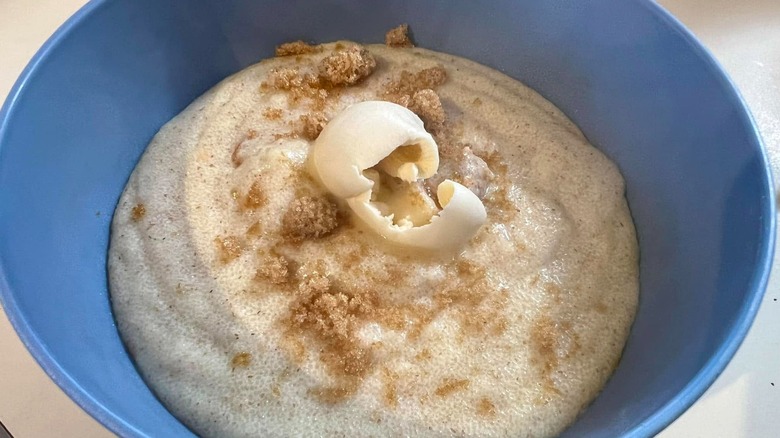
Cream of Wheat, a hot cereal made of ground wheat middlings (farina), was a common childhood breakfast for many boomers, some of whom loved it, while others ... not so much. It was a classic in my grandmother's kitchen, and I can testify that there was a lot about Cream of Wheat that a youthful palate — no matter the generation — might not appreciate. It's a fairly bland-tasting porridge, for one thing, which is why you'll often find boomers reminiscing about it in a zhuzhed-up state. Typical kid-friendly add-ins were sugar (white or brown), butter, and cinnamon. This is how my grandmother served it to me, and that's probably why I recall enjoying it. More than one baby boomer also recalls the addition of egg — not a bad idea, given the low protein content of the cereal if not prepared with milk. Bobby Flay does a sweet and savory Cream of Wheat with peanut butter and jelly, but honestly, the simple, old-school boomer ways are your best shot for enhancing its flavor.
Alas, no matter what you put in Cream of Wheat, texture stood a good chance of being an issue. The cereal has a mouthfeel similar to grits, and it can get a bit thick and lumpy. With these combined textural quirks, it can veer perilously close to the word "gruel." But some boomer kiddos — and myself — loved a good, thick, hot cereal that you had to chew and kind of scrape off your bowl once it started to harden.
4. Malt-O-Meal
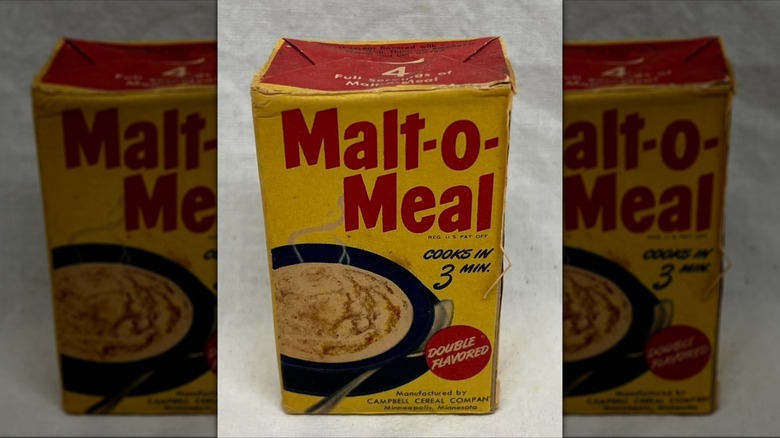
Made of both farina and toasted malt, Malt-O-Meal is kind of the cooler cousin of Cream of Wheat. While it doesn't show up as frequently as the latter among pages dedicated to boomers' breakfast memories, it still makes many appearances. This hot cereal's marketing team went at it full tilt starting in the 1920s, sponsoring radio shows and toy giveaways to increase the cereal's reach. By the time World War II had ended, Malt-O-Meal had some robust sales. In 1961, the company came out with a chocolate version of the product. This was one of my favorites as a kid when served up by my grandmother, and actual boomers apparently agreed with me, as the new product was a success for the company.
While chocolate Malt-O-Meal is good, the original is unbeatable. It's truly "double-flavored," as the cereal's marketing slogan put it. That inclusion of malt yields toasty, nutty notes that require no adornment, though you can certainly enhance the cereal. My grandmother served it to me the way she did to my boomer mom — with butter, brown sugar, and syrup. And as with Cream of Wheat, Malt-O-Meal is extra toothsome when made super thick (if you're the type, like me, who likes hot cereal so chunky that it's one degree removed from a cookie).
5. Tang
![vintage paper ad for Tang breakfast drink with text reading "more vitamin c than orange [juice]"](https://www.chowhound.com/img/gallery/7-childhood-breakfasts-boomers-will-remember/tang-1784662151.jpg)
Besides coffee, there are few beverages more classically "breakfast" than orange juice. Tang, which is still around, isn't OJ, though; it's a powdered, sweet, orange-flavored instant drink mix. But upon its release in 1957, it was heavily marketed as containing more vitamin C than orange juice (as well as more vitamin A). While this health-centric approach probably appealed more to parents or grandparents than the little boomers at the time, the kids themselves — all grown up now — tend to recall the beverage for its connection to space and astronauts.
In 1965, when Gemini IV set off for its four-day space flight, Tang was on board in special zero gravity-friendly packaging. Its purpose was to improve the flavor of the vehicle's life support system water, but its presence on the spacecraft would also serve as mega-marketing back on Earth. By 1966, boomer kids were graced with at least one Tang commercial showcasing how astronauts prepared the drink in space. This may be the source of the myth that NASA invented Tang or that the drink was developed especially for the space program. As one commenter on a Facebook thread jokingly said several years back, "I drink it every day because even at age 64 I still want to be an astronaut someday."
6. Maypo
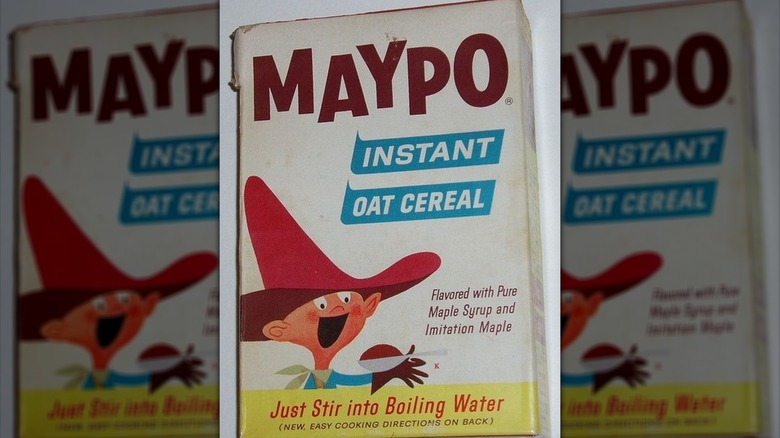
Maypo, a maple-flavored oatmeal developed by the Maltex Corporation in 1953, is the only breakfast item on this list that I've never heard of nor consumed, and neither have my parents. But my, are we outliers. Loads of baby boomers loved Maypo. Sure, some disliked it, as with any breakfast food we've covered here. But even then (and even if they never tried Maypo itself), there's a good chance they still remember the commercial and slogan that debuted in September 1956: "I want my Maypo!"
The Maypo mascot who takes many boomers down memory lane is Marky Maypo, a cartoon child of four years old or so who wears a giant cowboy hat. Marky was created at a period when Maypo sales were falling. The brand recruited the talents of John Hubley, an animated film director with a substantial portfolio that included a number of Disney flicks and "Mr. Magoo." To produce an authentic vocal rendering of a real child, Hubley trailed his own four-year-old son around with a microphone. The lines Marky Maypo speaks in the commercial are those genuine, unedited recordings. They are, at least in this writer's opinion, stinkin' adorable, and it's no surprise that at least one boomer child begged their parents to buy them Maypo. Whether it's the flavor of the oatmeal or the nostalgia that inspires many boomers to still buy it to this day is unclear, but I'm almost curious enough to try it myself. Still, it's not the easiest product to find now — and after all, you could always just make maple oatmeal from scratch.
7. Life Cereal
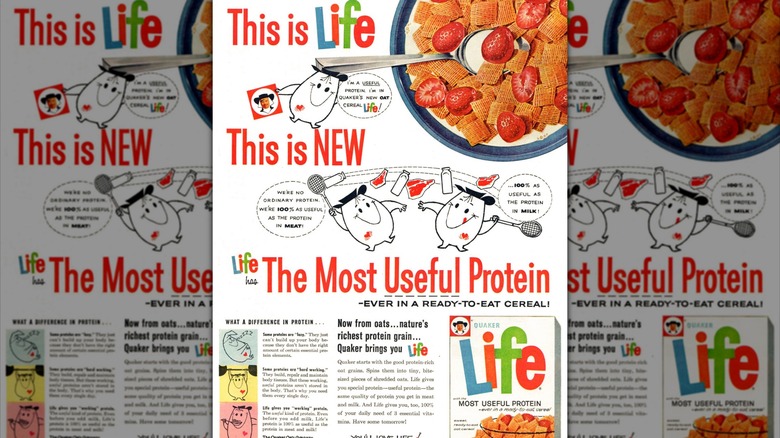
Besides Spam, Life Cereal may be the most recognizable boomer breakfast item covered on this list, no matter your age. It's always on grocery store shelves, and as of this writing, you can buy single boxes of Life Cereal on Amazon for roughly the same price you'd pay at Walmart — no obligatory two- to 12-pack bundles, as is the case with Maypo Oatmeal. But that doesn't mean Life's poured into kids' bowls nationwide anymore at the rates it would have when boomers were knee-high. Cereal sales have been falling since at least 2012, due in part to inflated prices, a preference for portability, and a general move toward minimally processed foods.
That's why it's so interesting that back in the boomers' salad days, Life's selling point on its 1961 release was its protein content; "The most useful protein ever in a ready-to-eat cereal," went the tagline. Health was the angle, but not even Don Draper of AMC's "Mad Men," tasked with creating an ad for the brand, thought that approach would work. He was right. In reality, Life's health-slash-protein angle didn't really take off, and it was supplanted in the early 1970s by "Mikey likes it," a tagline so successful that it was eventually resurrected in 2024 to revive the dying brand. As long as there's marketing, pricier cereals, and nostalgia, Life ... uh ... will find a way. One Walmart reviewer sums up the compromise behind Life's modern appeal, saying, "If healthier cereals were cheaper, I'd buy Life cereal just for a nostalgic feeling once in a while, but if it was healthier, we'd just keep this cereal forever."