

Sizzling Steak Fajitas Recipe
We may receive a commission on purchases made from links.
Fajitas are a Tex-Mex staple, a staple that we might consider a more modern culinary creation —especially with so many fajita varieties available on so many menus. The original concept of the humble fajita dates back several decades, when South Texas ranch workers used whatever scraps of beef they were given to make a meal of (often the tougher, less desirable beef cuts). Those beef cuts were typically skirt or flank steaks, marinated and grilled to tenderized perfection — not so far off to how we might enjoy fajitas in present day.
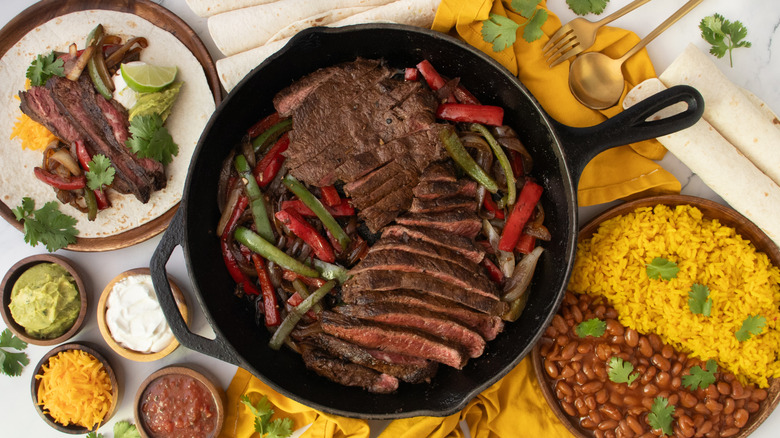
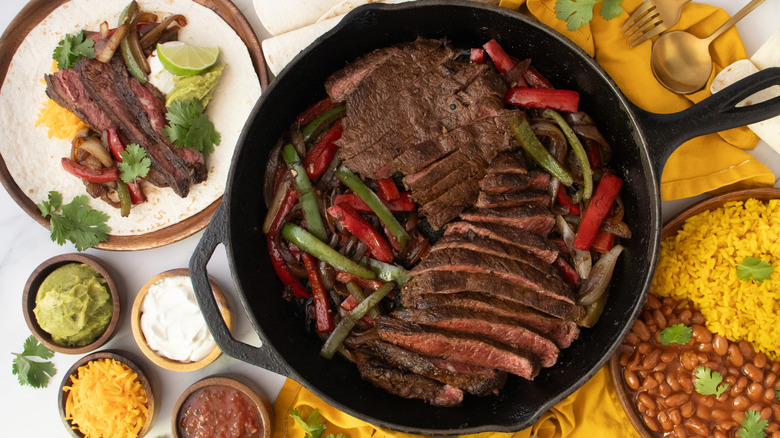
In this sizzling steak fajitas recipe, I wanted to merge the modern with the historic for a tried-and-true, classic final product. For the modern consumer, I made sure to include the usual accompaniments of bell peppers and onions, served sizzling in cast iron. To honor the historic elements of this dish, I opted for a thoroughly marinated skirt steak with an almost crackling sear.
I specifically chose a carne asada marinade for this recipe — that acidic combination of citrus juice and vinegar quickly tenderizes, allowing for the aromatic components of garlic, cumin, coriander, and chili powder to thoroughly infuse. I also picked my favorite combination of fajita toppers: grated cheddar cheese, salsa, sour cream, guacamole, and fresh cilantro for tasty tortilla fodder.
Gather the sizzling steak fajita ingredients
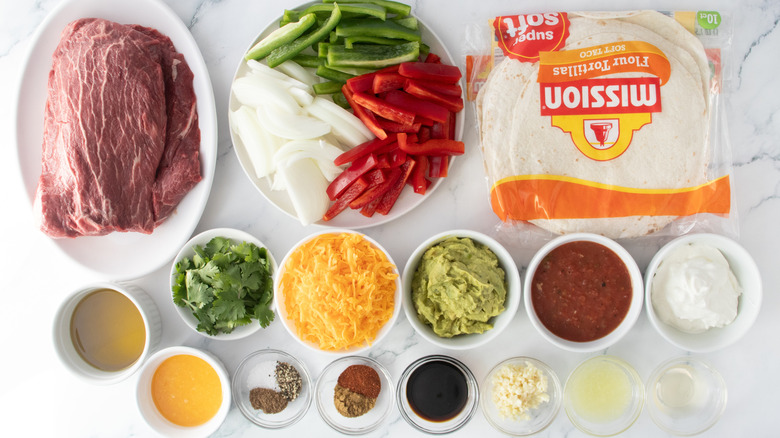
For the carne asada marinade, you will need olive oil, orange juice, lime juice, soy sauce, apple cider vinegar, garlic, cumin, coriander, salt, and pepper. I used fresh citrus juice and full-sodium soy sauce for maximum flavor infusion. This amount of marinade is perfect for 2 pounds of skirt or flank steak, as well as the reserved marinade that we use for creating that sizzling effect.
For the fajita accompaniments, you will need red bell pepper, green bell pepper, yellow onion, taco-sized flour tortillas, cheddar cheese, salsa (fresh or jarred), sour cream, guacamole (homemade or store-bought), and fresh cilantro leaves.
Step 1: Combine the marinade ingredients
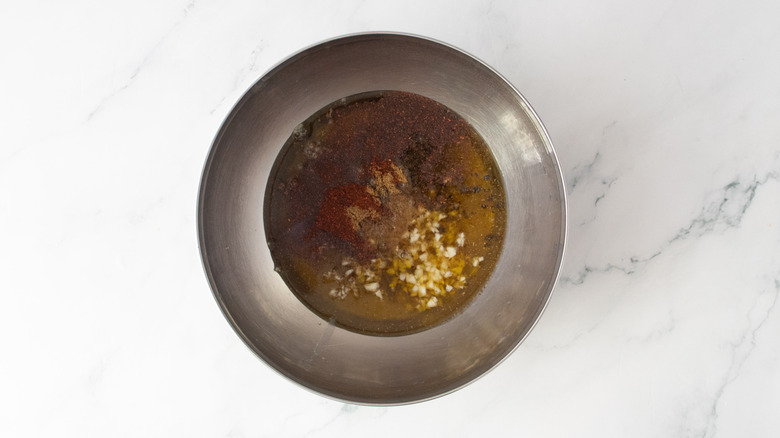
To make the marinade, place ⅓ cup olive oil, orange juice, lime juice, soy sauce, vinegar, garlic, cumin, chili powder, ground coriander, salt, and pepper in a medium bowl.
Step 2: Whisk to combine
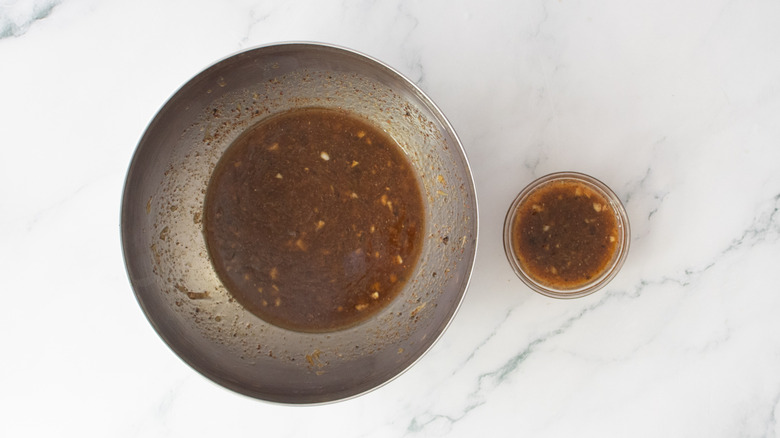
Whisk to combine the marinade. Remove ¼ cup of the marinade, cover, and refrigerate for use later.
Step 3: Prep the steak
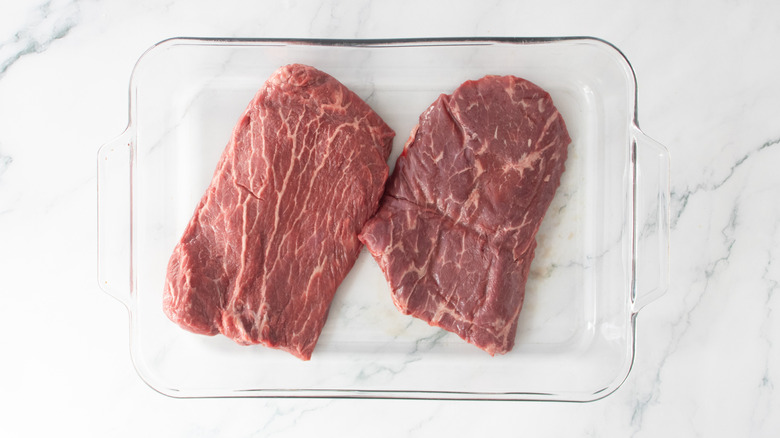
Place the steak(s) in a casserole dish.
Step 4: Marinate the steak
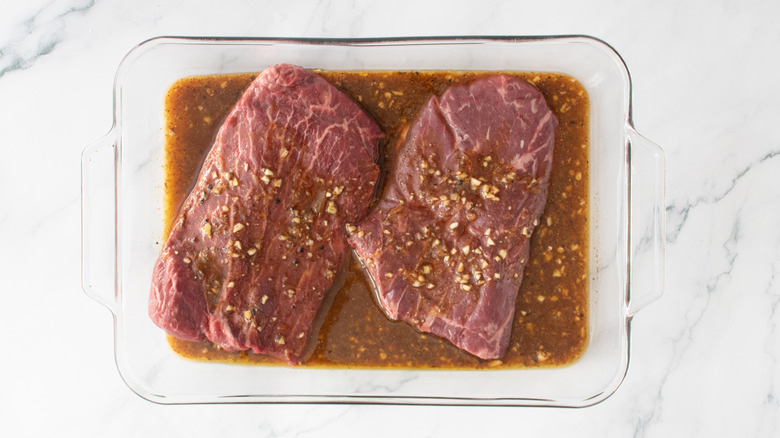
Coat the steak in the marinade, cover the casserole dish with plastic wrap, and refrigerate for 4 hours.
Step 5: Remove steak from marinade
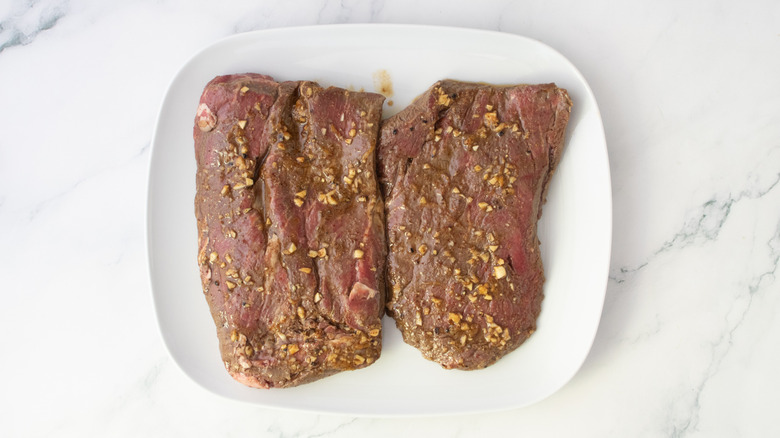
Once marinated, remove the steak from the casserole dish, letting any excess marinade drip off.
Step 6: Heat olive oil
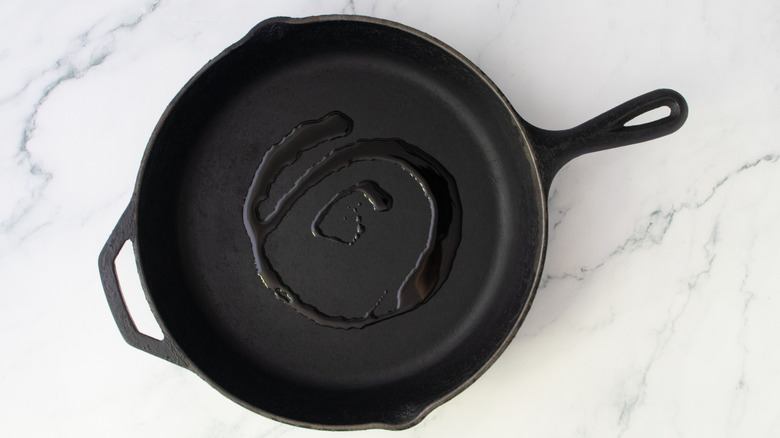
Heat 1 tablespoon of olive oil in a large cast iron skillet over high heat.
Step 7: Sear the steak
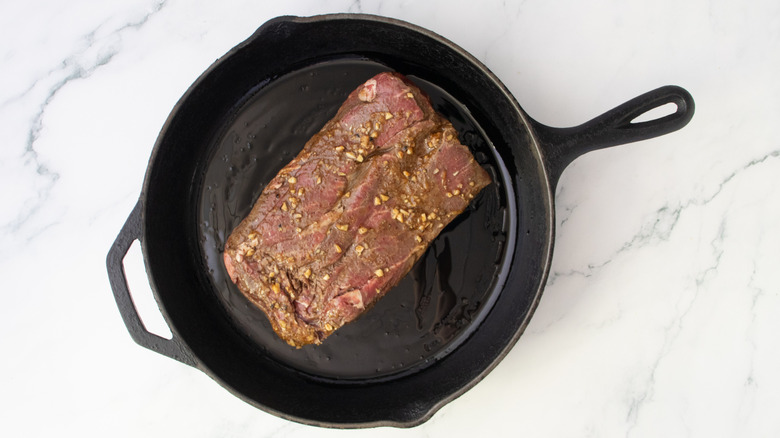
Once hot, working in batches if necessary, place the steak in the skillet, and sear for 3 to 4 minutes per side until deeply browned (for medium-rare).
Step 8: Remove the steak
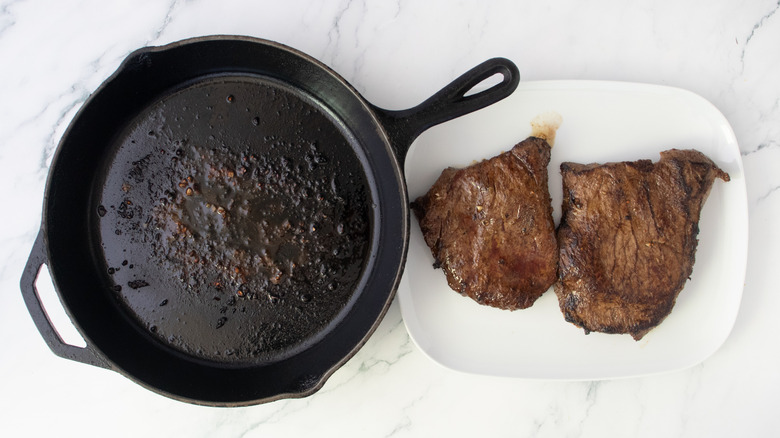
Remove the steak from the skillet and set aside to rest on a clean plate.
Step 9: Heat the remaining olive oil
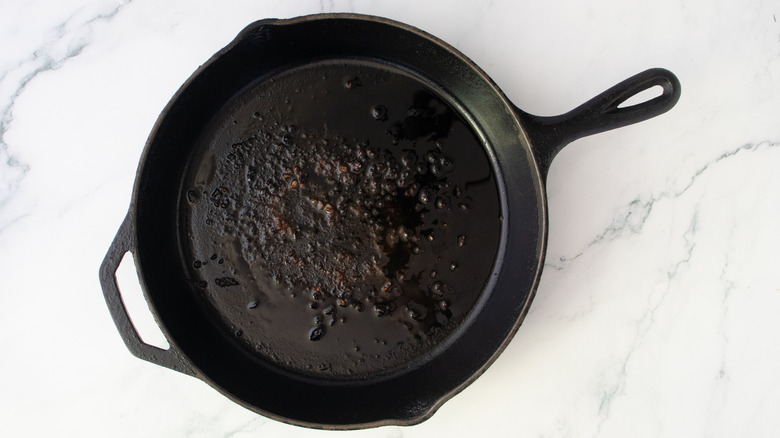
Add the remaining 1 tablespoon of olive oil to the skillet and reduce the heat to medium.
Step 10: Add the bell peppers and onion
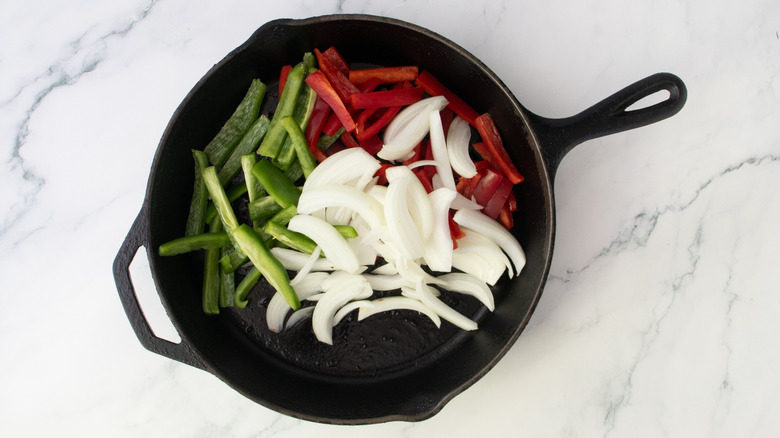
Add the bell peppers and onion to the skillet, stir to combine, and saute for 5 to 6 minutes or until tender.
Step 11: Deglaze with reserved marinade
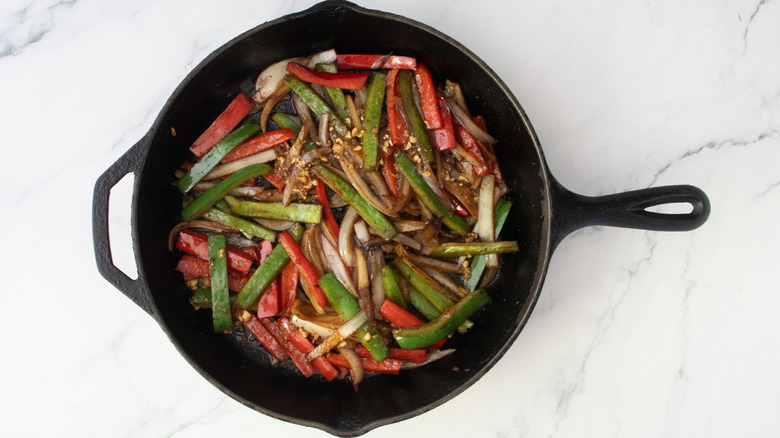
Deglaze the skillet with the reserved marinade to kickstart the sizzle.
Step 12: Slice the steak
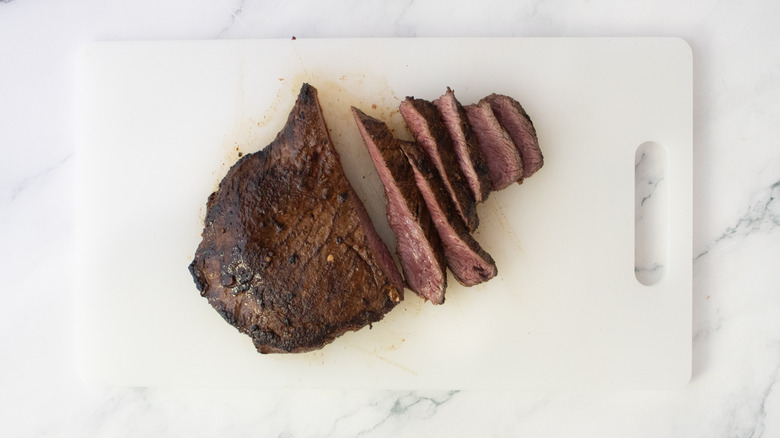
Slice the steak into strips and return to the skillet.
Step 13: Transfer sizzling skillet to serving area
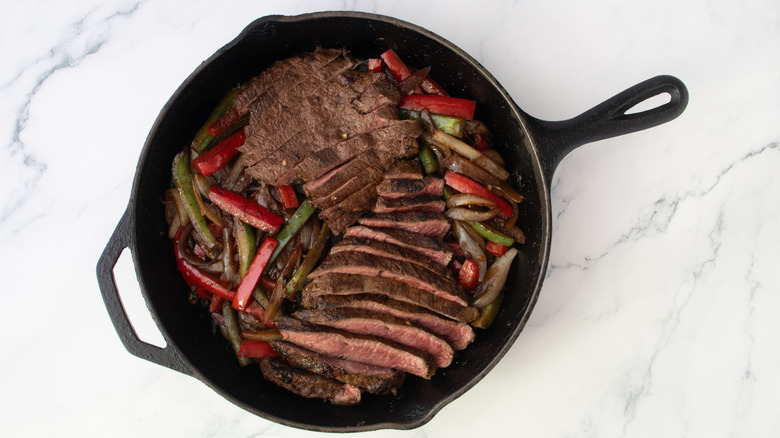
Immediately transfer the sizzling skillet to your serving surface (making sure to place the skillet on a trivet).
Step 14: Serve the sizzling steak fajitas
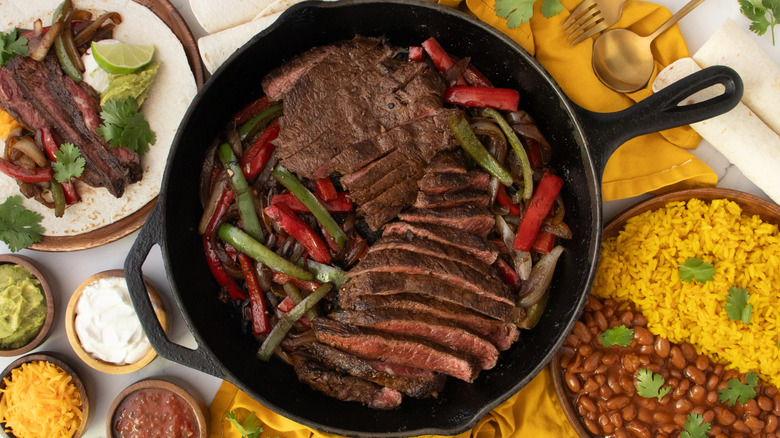
Serve your fajita steak and veggies with flour tortillas, cheddar cheese, salsa, sour cream, guacamole, and fresh cilantro.
What to serve with sizzling steak fajitas
Sizzling Steak Fajitas Recipe
This sizzling steak fajitas recipe features tender, marinated skirt steak and sauteed peppers and onions for the ultimate Tex-Mex feast.
Ingredients
- ⅓ cup + 2 tablespoons olive oil, divided
- ⅓ cup orange juice
- 2 tablespoons lime juice
- 2 tablespoons soy sauce
- 1 tablespoon apple cider vinegar
- 6 garlic cloves, peeled and minced
- 1 teaspoon ground cumin
- 1 teaspoon chili powder
- 1 teaspoon ground coriander
- 1 teaspoon salt
- 1 teaspoon black pepper
- 2 pounds skirt or flank steak
- 1 red bell pepper, sliced
- 1 green bell pepper, sliced
- 1 medium yellow onion, peeled and sliced
- 12 taco-sized flour tortillas
- 1 cup grated cheddar cheese
- ½ cup salsa
- ½ cup sour cream
- ½ cup guacamole
- ¼ cup fresh cilantro leaves
Directions
- To make the marinade, place ⅓ cup olive oil, orange juice, lime juice, soy sauce, vinegar, garlic, cumin, chili powder, ground coriander, salt, and pepper in a medium bowl.
- Whisk to combine the marinade. Remove ¼ cup of the marinade, cover, and refrigerate for use later.
- Place the steak(s) in a casserole dish.
- Coat the steak in the marinade, cover the casserole dish with plastic wrap, and refrigerate for 4 hours.
- Once marinated, remove the steak from the casserole dish, letting any excess marinade drip off.
- Heat 1 tablespoon of olive oil in a large cast iron skillet over high heat.
- Once hot, working in batches if necessary, place the steak in the skillet, and sear for 3 to 4 minutes per side until deeply browned (for medium-rare).
- Remove the steak from the skillet and set aside to rest on a clean plate.
- Add the remaining 1 tablespoon of olive oil to the skillet and reduce the heat to medium.
- Add the bell peppers and onion to the skillet, stir to combine, and saute for 5 to 6 minutes or until tender.
- Deglaze the skillet with the reserved marinade to kickstart the sizzle.
- Slice the steak into strips and return to the skillet.
- Immediately transfer the sizzling skillet to your serving surface (making sure to place the skillet on a trivet).
- Serve your fajita steak and veggies with flour tortillas, cheddar cheese, salsa, sour cream, guacamole, and fresh cilantro.
How do I know when my steak is properly marinated?
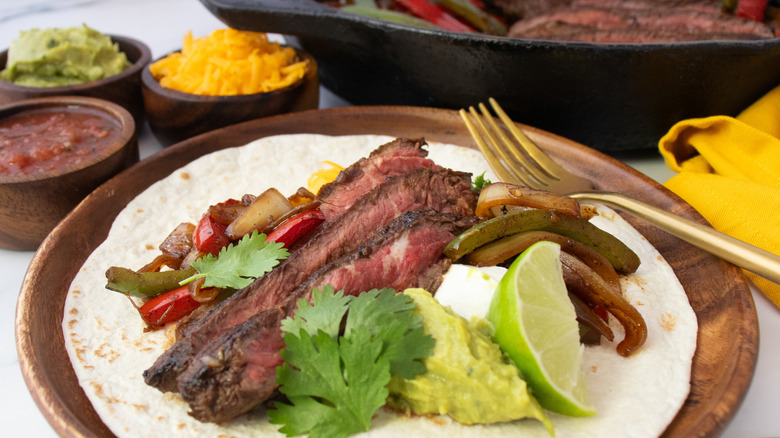
Marinades typically fall into three culinary categories: acidic, enzymatic, and fat or oil-based. Our carne asada marinade falls into the acidic category, being that we are using a trio of acids to infuse flavor and tenderize (lime juice, orange juice, and vinegar) our thinner skirt steak. Acidic marinades are pretty powerful, breaking down tougher proteins into tender juicy morsels. Skirt steak is tough stuff, and those dense muscle fibers require some coaxing. All that said, it is still possible to overdo it, and marinating for the wrong amount of time is one of the biggest steak marinating mistakes you could make.
Skirt or flank steak only needs a few hours under acidic marination to properly tenderize. In this recipe, I only marinate for 4 hours, and I do not recommend going over that time limit. Letting this steak marinate for upwards of 6 (or more) hours might result in either a mushy texture or, worse, having those same muscle fibers we were hoping to relax, rebound and toughen. Depending on the thickness of your steak, I do recommend flipping the steak midway through that marinating time for even coating and saturation.
Do I have to use a cast iron skillet to make fajitas?
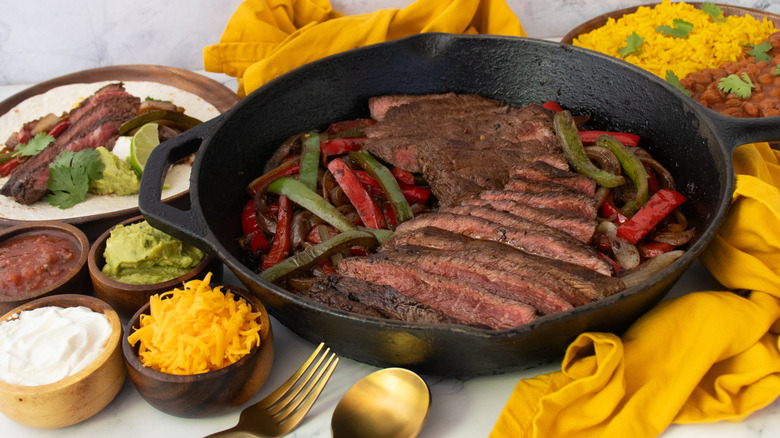
If you want "big sizzle" on your steak fajitas, then yes, a cast iron skillet really is the way to go. I love this style of skillet. They are my go-to pans for just about everything that I cook. For fajitas, you can't beat cast iron's heat retention quality, resulting in longer, more satisfying sizzle action. Most fajita-serving restaurants use a shallow cast iron skillet for just that reason. Cast iron is a great heat conductor as well, evenly distributing the temperature for a uniform cook surface and unbeatable sear. Unlike stainless steel (or non-stick pans), cast iron doesn't drastically cool when food is added.
That heat retention does require a few more safety precautions. Make sure that when you serve your fajitas, you place the skillet on top of a trivet or protective surface. It can cause burn damage to tabletops or countertops (trust me, I've scorched a surface or two), so take precautions to avoid that. Handles will also retain that heat, so I like to tie a heavy-duty kitchen towel around my cast iron skillet handles to prevent folks from accidentally grabbing.