

Sweet And Spicy Gochujang Pork Riblets Recipe
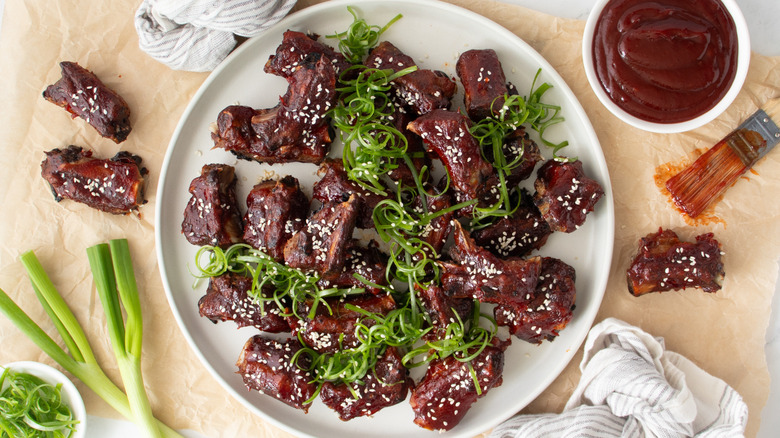
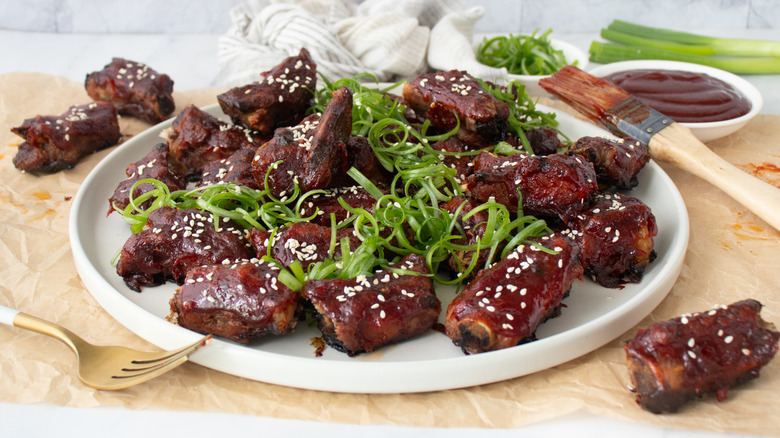
There's nothing quite like feasting on a rack of ribs as a main course. Riblets, on the other hand, are the appetizer-appropriate equivalent. They're smaller, bone-in, bite-sized portions taken from the larger, meatier pork spare rib — and you can see them in action (and in all their glory) in this sweet and spicy gochujang pork riblets recipe. The tender pork riblets are basted and baked in a barbecue sauce reminiscent of the sticky-sweet Kansas City-style barbecue sauce (an iconic sauce with big rib appeal). To balance those sweeter KC-inspired elements, I reached for my tub of gochujang.
Gochujang is a staple ingredient in Korean cuisine, an intensely savory, umami-rich, and slightly spicy condiment. I love cooking with the condiment (hence the earlier "tub" reference, I buy my gochujang in bulk), as it offers a tantalizing, salty-fermented flavor with this punchy, piquant heat. That combination of flavors plays nicely on the palate with the brown sugar-sweetness of our homemade barbecue sauce.
Don't knock the sweetness! I come from a region dedicated to vinegar-based barbecue sauces, so sweeter-tasting ones are not always my go-to. But, brown sugar serves dual purposes in this recipe. First, of course, as a seasoning component. Second, as a seasoning infuser. As the sugar cooks and caramelizes to the surface of our riblets, it locks in all those other ingredients and their individual flavoring contributions.
Gather the ingredients for your sweet and spicy gochujang pork riblets
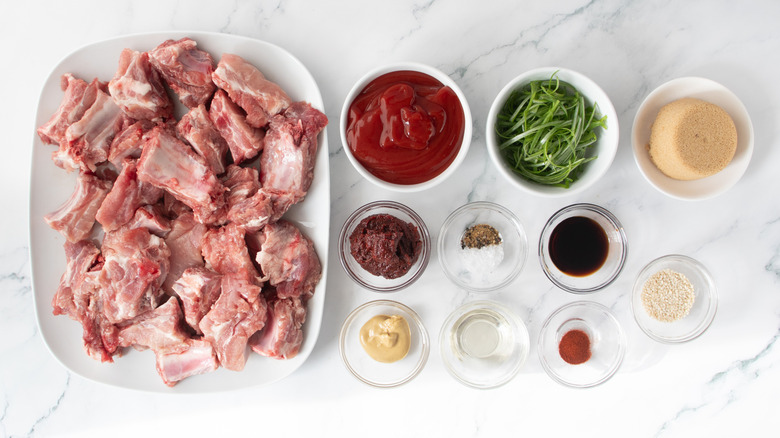
For the gochujang barbecue sauce, you'll need ketchup, brown sugar, gochujang, low-sodium soy sauce, rice vinegar, Dijon mustard, and smoked paprika. Gochujang is often sold as a shelf-stable ingredient and can vary on heat level. Most containers will call attention to how spicy their contents are, and I used a medium heat level gochujang to make this recipe.
In addition to the pork riblets, you'll need salt and pepper for initial seasoning. I included white sesame seeds and fresh chopped scallions as a tasty and texturally pleasing garnish option.
Step 1: Combine the ingredients for the barbecue sauce
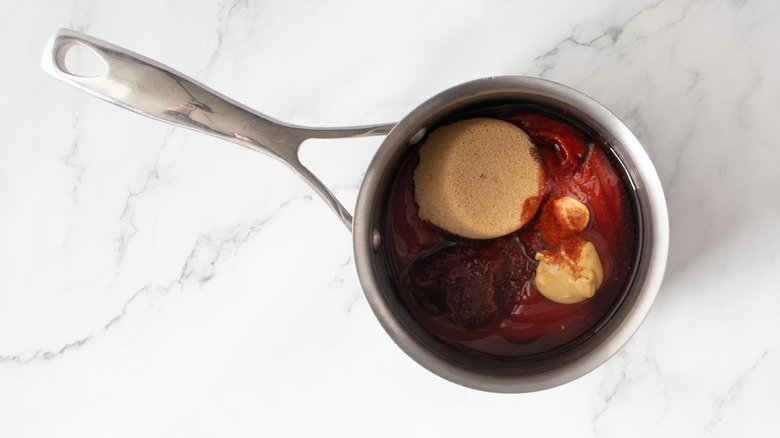
To make the barbecue sauce, place the ketchup, brown sugar, gochujang, soy sauce, rice vinegar, mustard, and smoked paprika in a small saucepan.
Step 2: Whisk and simmer the barbecue sauce
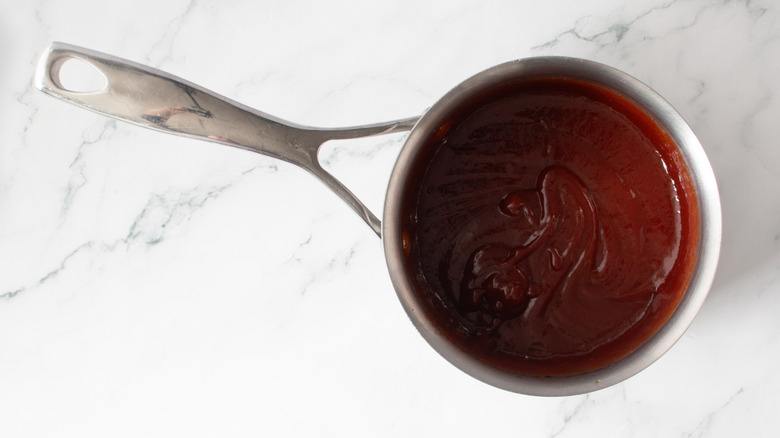
Whisk to combine and bring to a low simmer over medium-low heat.
Step 3: Cook the barbecue sauce
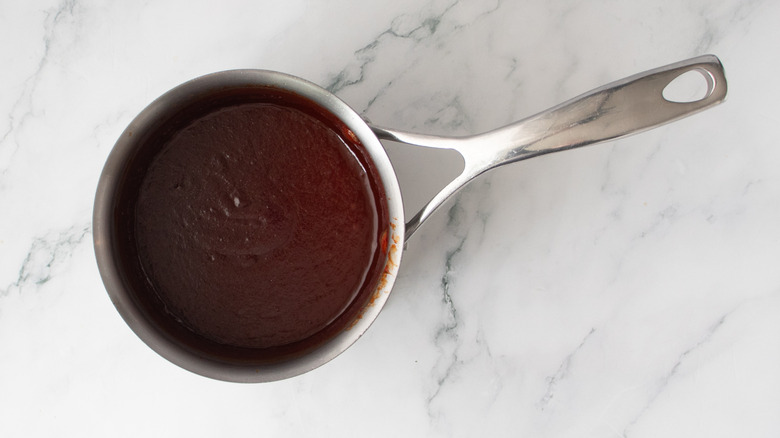
Cook for 5 to 8 minutes, whisking constantly, until the sugar has dissolved. Remove from heat and set aside.
Step 4: Turn on the oven
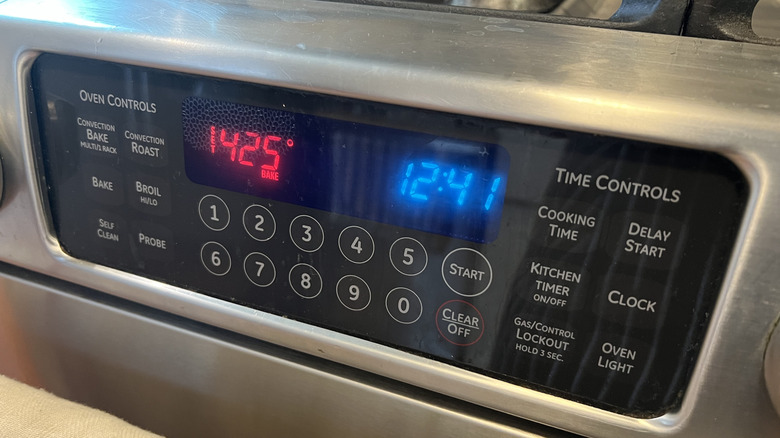
Preheat the oven to 425 F.
Step 5: Rinse the riblets
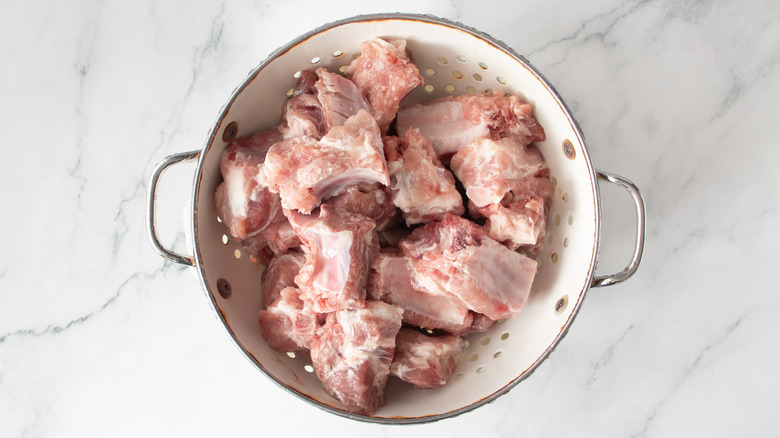
Rinse the riblets under cold water (to remove any loose bone bits) and thoroughly drain.
Step 6: Dry the riblets
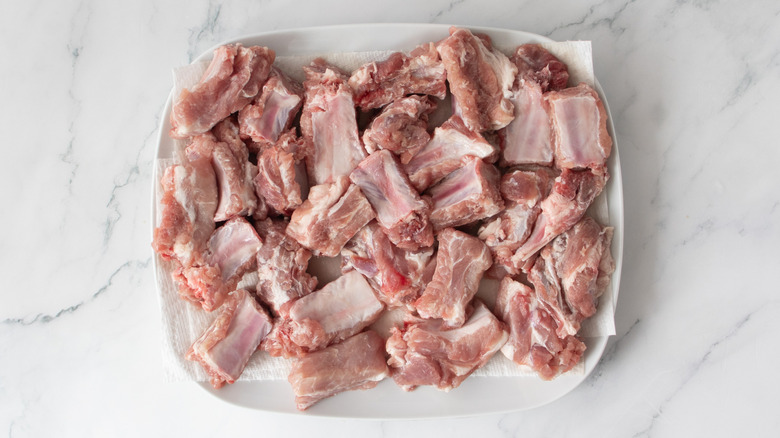
Pat the riblets dry with paper towels.
Step 7: Put the riblets on a baking sheet and season
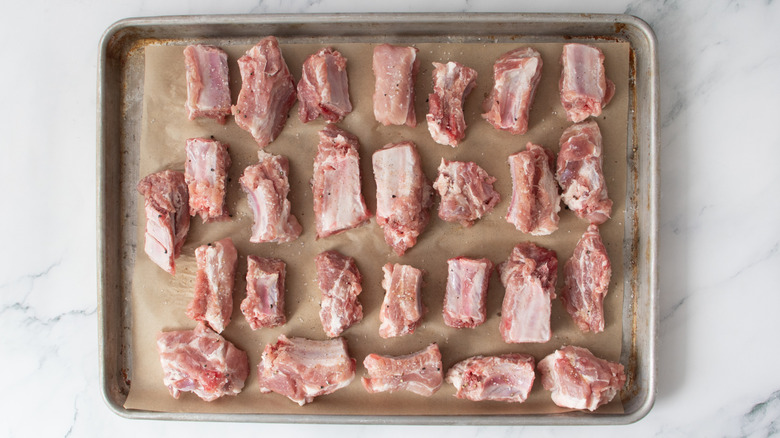
Place the riblets on a parchment-lined baking sheet, spread out in an even layer, and season with salt and pepper.
Step 8: Parbake the riblets
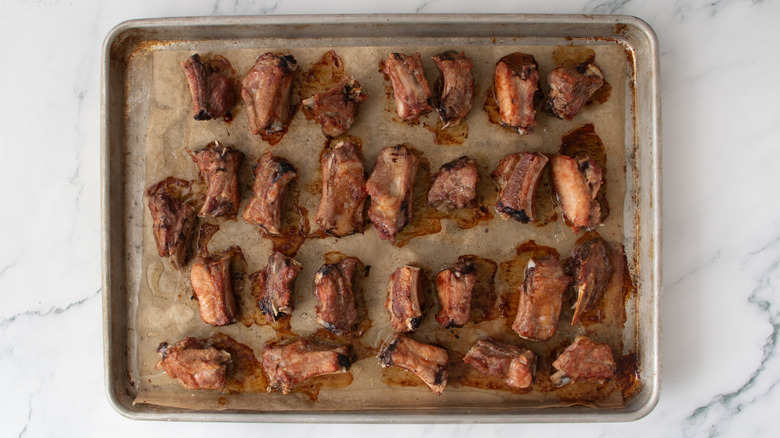
Place the baking sheet in the oven and bake for 1 hour, flipping the riblets halfway through.
Step 9: Reduce oven temperature
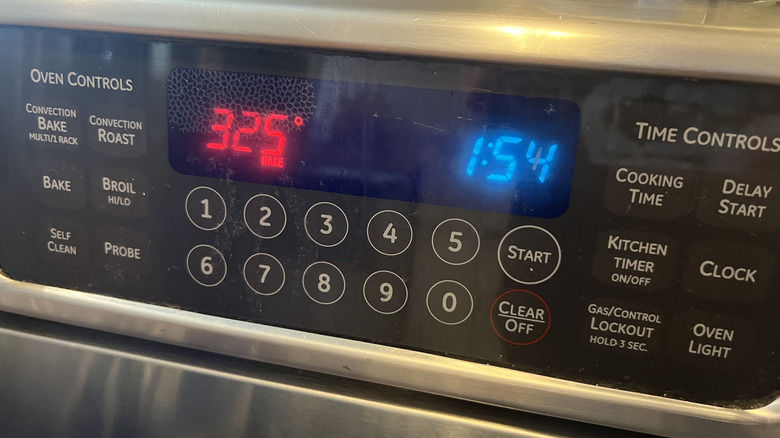
Reduce the oven temperature to 325 F.
Step 10: Brush riblets with barbecue sauce
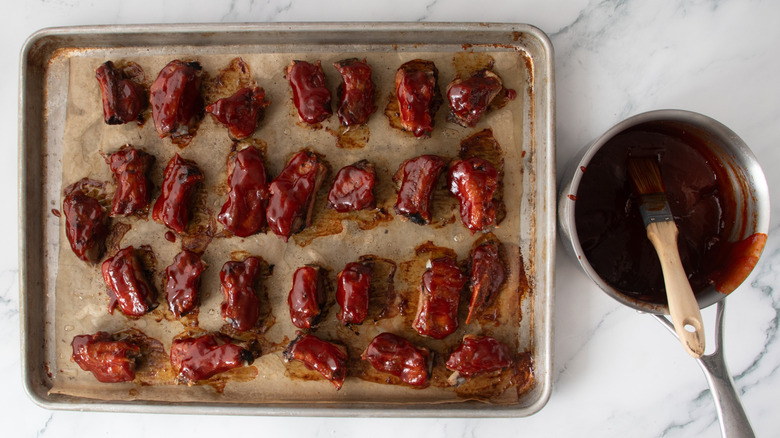
Generously brush the riblets with the barbecue sauce, return to the oven, and bake for 30 minutes.
Step 11: Flip riblets and apply more barbecue sauce
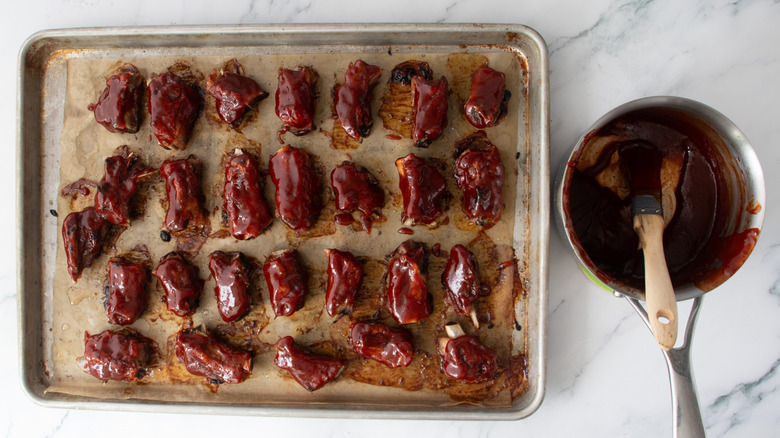
Remove from the oven, flip the riblets, and brush again with the remaining barbecue sauce.
Step 12: Bake the riblets again
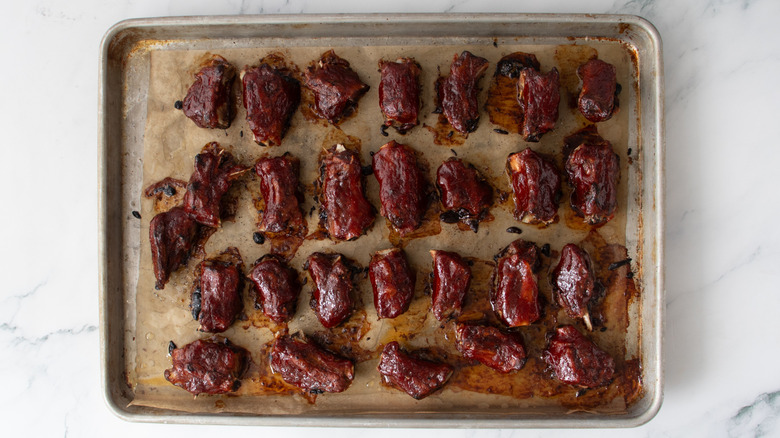
Return to the oven and bake for another 30 minutes, or until the riblets are tender and moderately caramelized.
Step 13: Sprinkle the riblets with sesame seeds
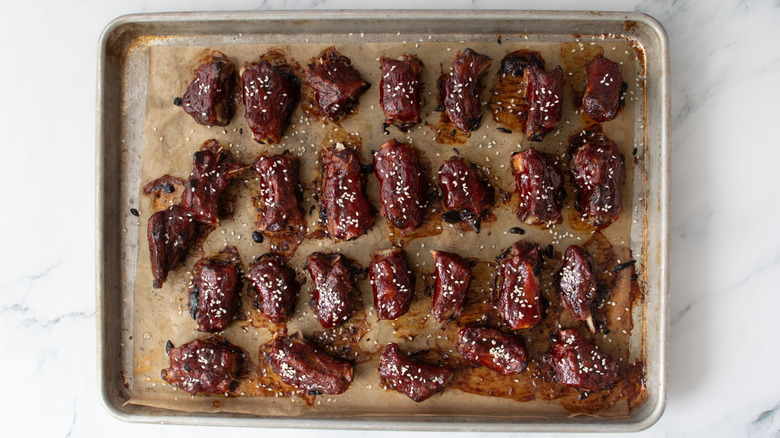
Remove the riblets from the oven and sprinkle with sesame seeds.
Step 14: Garnish riblets with scallions and serve
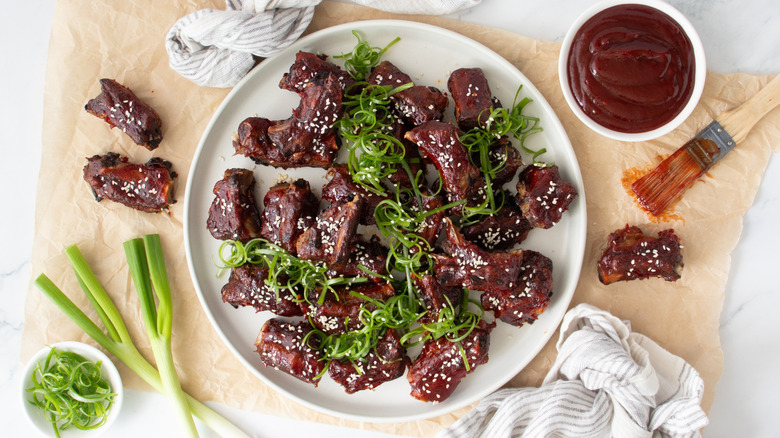
Transfer the riblets to a serving platter and garnish with scallions before serving.
What to serve with sweet and spicy gochujang pork riblets
Sweet and Spicy Gochujang Pork Riblets Recipe
This pork riblets recipe features slow-cooked riblets that come slathered in a sweet, spicy, and sticky homemade gochujang BBQ sauce.
Ingredients
- For the gochujang barbecue sauce
- 1 cup ketchup
- ½ cup brown sugar
- ¼ cup gochujang
- 1 tablespoon low-sodium soy sauce
- 1 tablespoon rice vinegar
- 1 tablespoon Dijon mustard
- ¼ teaspoon smoked paprika
- For the riblets
- 3 pounds pork riblets
- ½ teaspoon salt
- ¼ teaspoon black pepper
- 2 teaspoons white sesame seeds
- ½ cup sliced scallions
Directions
- To make the barbecue sauce, place the ketchup, brown sugar, gochujang, soy sauce, rice vinegar, mustard, and smoked paprika in a small saucepan.
- Whisk to combine and bring to a low simmer over medium-low heat.
- Cook for 5 to 8 minutes, whisking constantly, until the sugar has dissolved. Remove from heat and set aside.
- Preheat the oven to 425 F.
- Rinse the riblets under cold water (to remove any loose bone bits) and thoroughly drain.
- Pat the riblets dry with paper towels.
- Place the riblets on a parchment-lined baking sheet, spread out in an even layer, and season with salt and pepper.
- Place the baking sheet in the oven and bake for 1 hour, flipping the riblets halfway through.
- Reduce the oven temperature to 325 F.
- Generously brush the riblets with the barbecue sauce, return to the oven, and bake for 30 minutes.
- Remove from the oven, flip the riblets, and brush again with the remaining barbecue sauce.
- Return to the oven and bake for another 30 minutes, or until the riblets are tender and moderately caramelized.
- Remove the riblets from the oven and sprinkle with sesame seeds.
- Transfer the riblets to a serving platter and garnish with scallions before serving.
Nutrition
| Calories per Serving | 1,125 |
| Total Fat | 81.6 g |
| Saturated Fat | 25.9 g |
| Trans Fat | 0.8 g |
| Cholesterol | 272.2 mg |
| Total Carbohydrates | 40.5 g |
| Dietary Fiber | 1.9 g |
| Total Sugars | 31.8 g |
| Sodium | 1,655.1 mg |
| Protein | 56.6 g |

How do I prepare the riblets if I can only find a full rack?
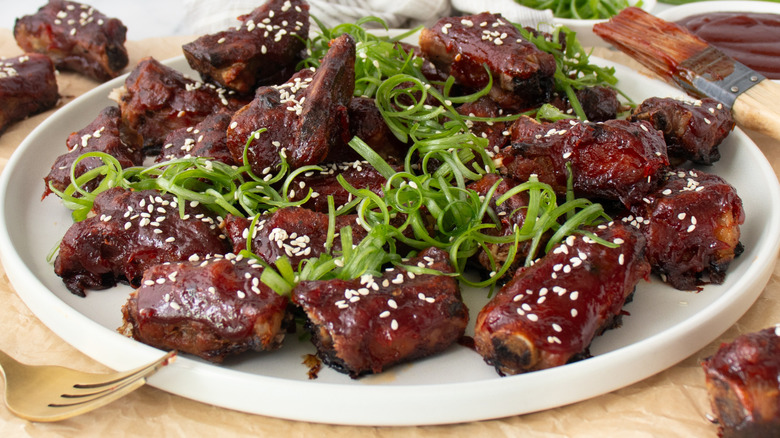
Riblets are made by cutting or portioning pork spare ribs into smaller, semi bite-sized pieces. Why spare ribs and not baby back ribs? Spare ribs are the larger, flatter, and more succulent rib. Making them easier to portion into smaller pieces as well as having a nice meat-to-bone-to-fat ratio. That distribution of meat, bone, and fat allows us to have smaller, still meaty, pieces without running the risk of drying out.
Depending on your location, riblets might be listed under another name. Look for 'pork brisket bones', 'button bones' or 'rib tips' if you are not seeing 'riblets' exclusively. If you are still struggling, ask your butcher to halve a rack of spare ribs. When you get home, simply slice between the bones to create the riblets. I do not recommend halving or cutting the rib bones at home. These are thick bones that will give even a meat cleaver a hard time. Butchers have special equipment that will safely and effectively cut these ribs down to size.
Why do I need to cook the riblets for so long?
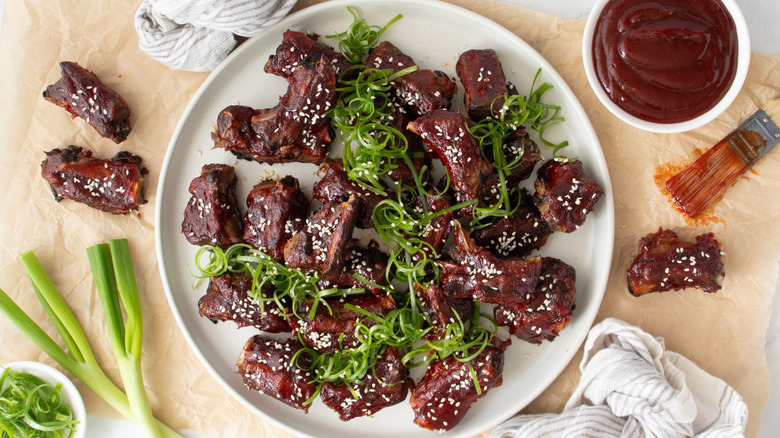
Even though we are working with smaller rib pieces, we will still need to cook our riblets for, what I like to call, a "slow and low" time. That initial high temperature oven-sear is to caramelize the outside of our ribs, allowing all those tasty juices to stay locked inside. The reduced oven temperature cooking session allows our riblets to bake, in those locked-in juices, without running the risk of drying out or burning our barbecue sauce. That time also allows the barbecue sauce to infuse into the meat of the riblets. The result? Tender and well-seasoned riblets, bite after bite.
If time is a concern, there are other methods of cooking your riblets. Pressure cooking riblets is most certainly the fastest way to cook them. Place the riblets in your pressure cooker, cover with beef broth, and cook for 20 to 35 minutes. Release the pressure, sauce the ribs, and high-heat bake or low-heat broil for 10 minutes. You can also air-fry your riblets. Dry fry for 30 minutes at 400 F, flipping the ribs halfway through. Sauce the riblets and air fry for an additional 2 to 3 minutes.