

Simple Classic Fried Chicken Recipe
We may receive a commission on purchases made from links.
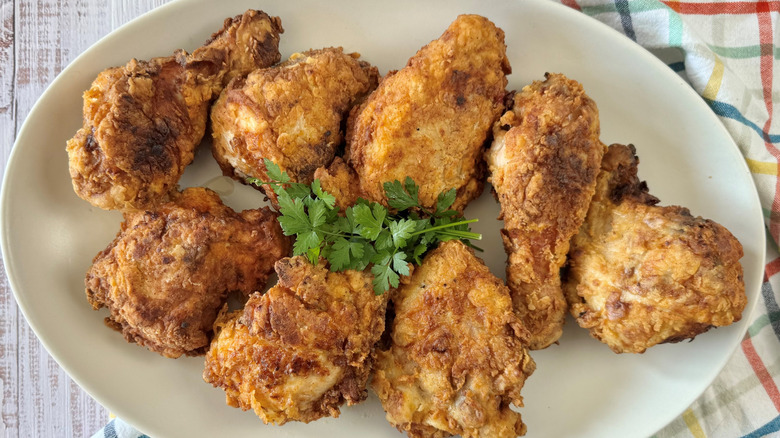
There are certain classic recipes out there that every home chef should keep readily available in their back pocket, and fried chicken is one of them. There are countless little tweaks one could make to their fried chicken recipe, like incorporating buttermilk or adding cayenne pepper to the flour coating for a spicy kick. Recipe developer Julianne De Witt keeps things nice and classic with her fried chicken recipe, though she does manage to pack in a whole lot of extra richness (not to mention crispiness) thanks to one distinct ingredient choice: lard.
While many fried chicken recipes may call for simply frying the chicken in vegetable oil or shortening, De Witt specifically opted for lard here to give a classic recipe that little extra oomph. "I went with using lard over vegetable shortening for frying because I felt that the richness of the lard would add more flavor and crispiness to the chicken over shortening," she explains. "The result was an extra-crispy coating (helped in part by the double coating of flour) and juicy, tender, perfectly seasoned chicken." If you've been in the market for a go-to fried chicken recipe that delivers impeccably crispy results each and every time, you've met your match with this one.
Gather the ingredients for simple classic fried chicken
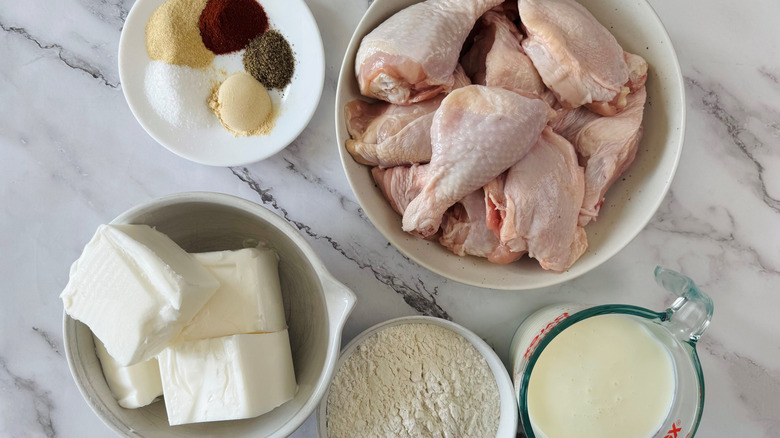
The base for any good fried chicken recipe comes down to the chicken itself: breasts, thighs, and drumsticks. De Witt notes that if you have the patience to cut it up, purchasing a whole chicken will be your cheapest route. "To save on time and make this recipe a little easier, I decided to use chicken already cut into pieces rather than cutting up a whole chicken for this recipe," she says, so if you're looking to save a little bit of time as well, follow her lead.
Aside from the chicken, you'll need buttermilk, salt, pepper, onion powder, garlic powder, smoked paprika, and flour to coat and dredge the pieces. Then, you just need a whole lot of lard to fry up all of the chicken.
Step 1: Preheat the oven
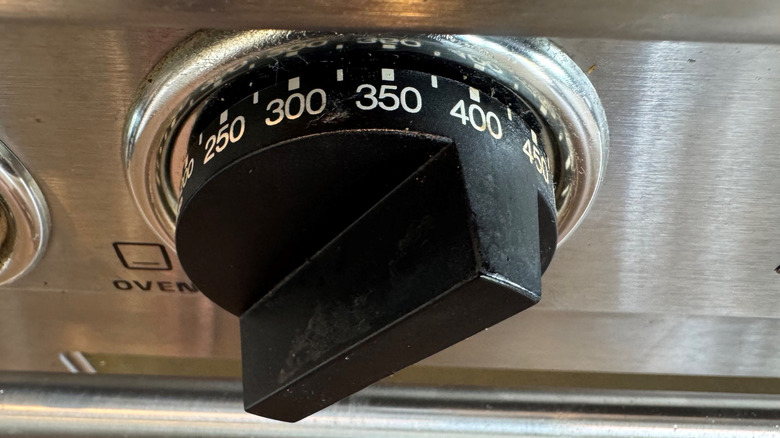
Preheat oven to 350 F.
Step 2: Add lard to a skillet
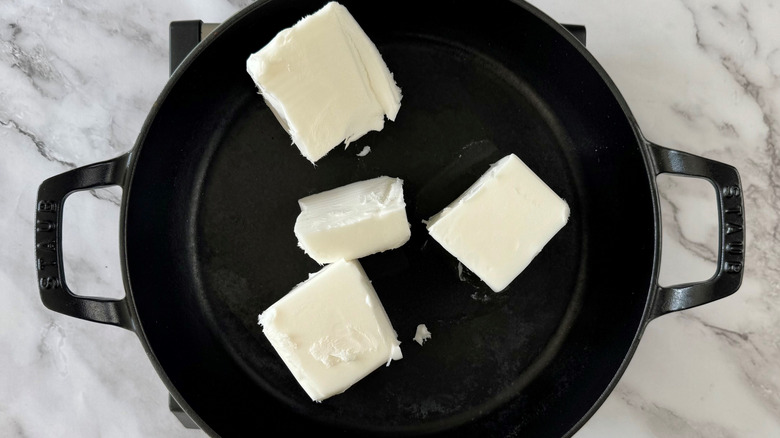
Place the lard in a deep cast iron skillet over medium heat.
Step 3: Mix the seasonings
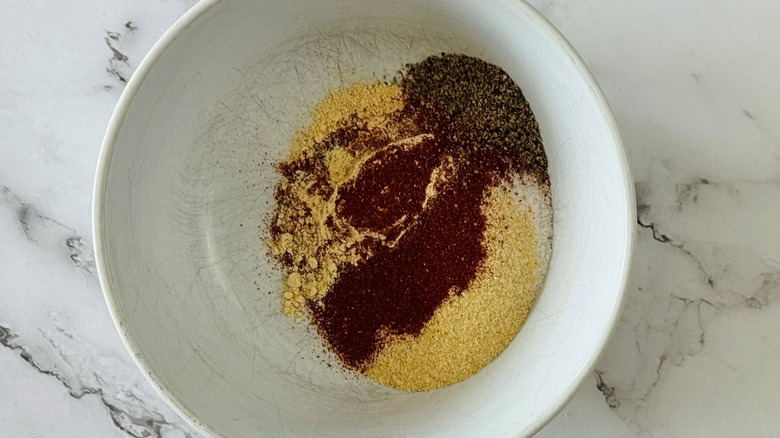
In a small bowl, mix the salt, pepper, onion powder, garlic powder, and paprika.
Step 4: Season the chicken
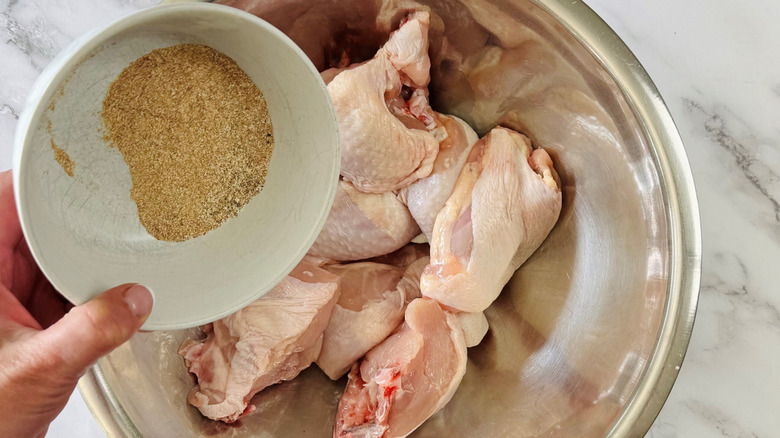
Add half of the spice mixture to the chicken pieces.
Step 5: Rub seasoning into the chicken
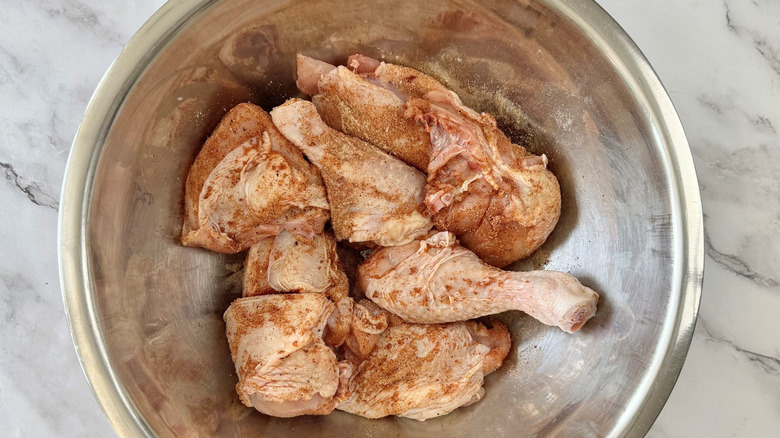
Gently rub the spices into the chicken.
Step 6: Season the flour and prep the buttermilk bowl
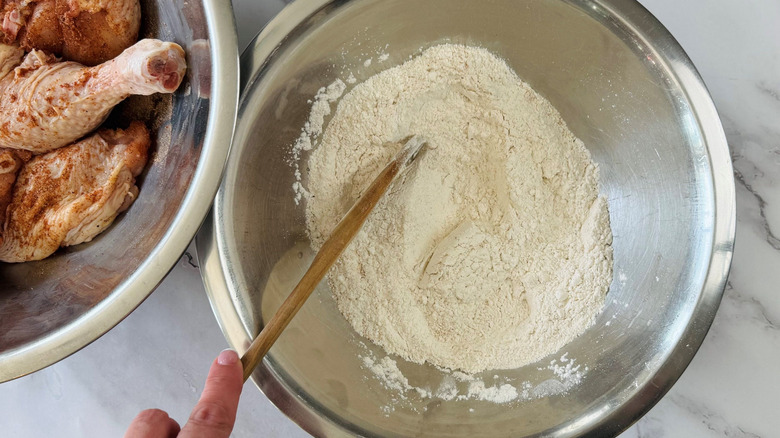
Add the flour to a medium bowl then add the remaining spices and stir. Add the buttermilk to a medium bowl.
Step 7: Dip the chicken in flour
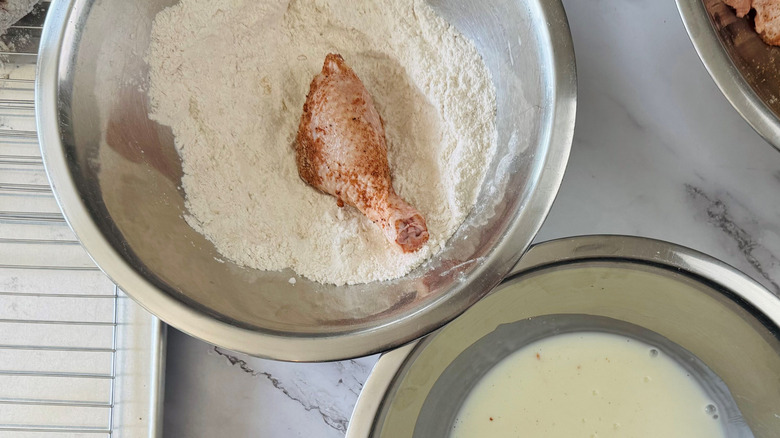
Dip the chicken pieces one at a time in the flour mixture.
Step 8: Dip the chicken in buttermilk
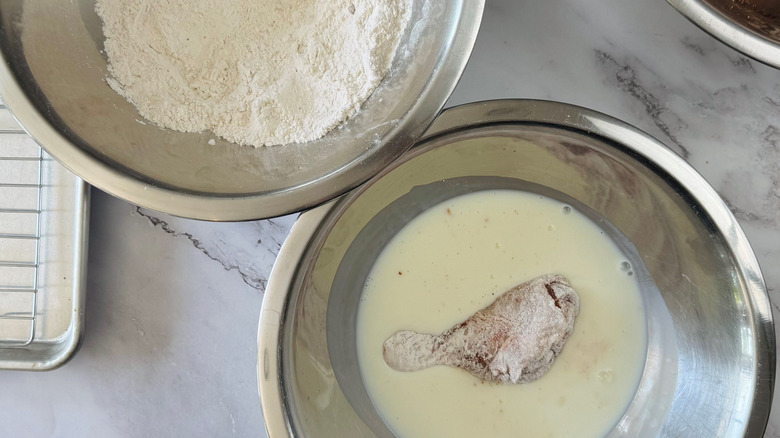
Dip the chicken in the buttermilk.
Step 9: Dip the chicken in flour again
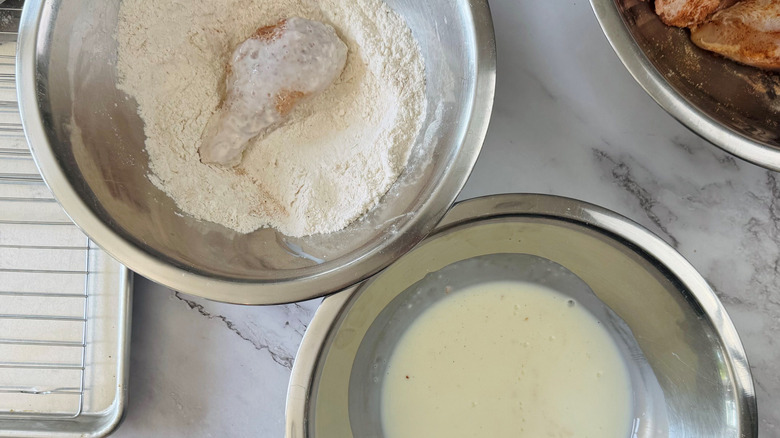
Dip the chicken back into the flour.
Step 10: Begin frying the chicken breasts
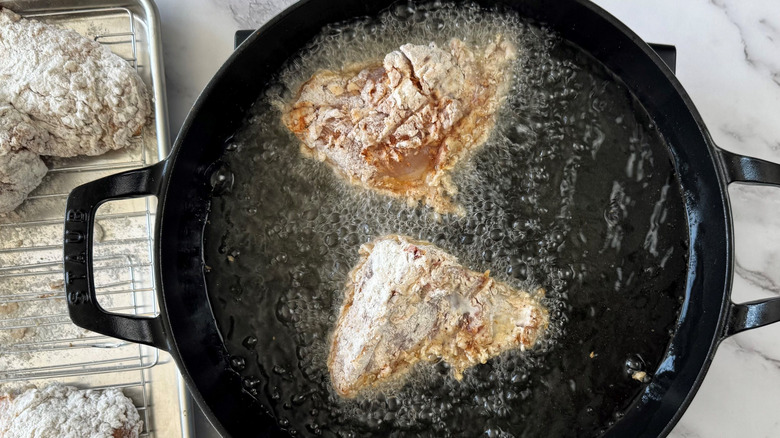
When the lard reaches a temperature of 350 F, cook the chicken batches, starting with the larger breast halves skin side down.
Step 11: Flip and continue cooking the chicken breasts
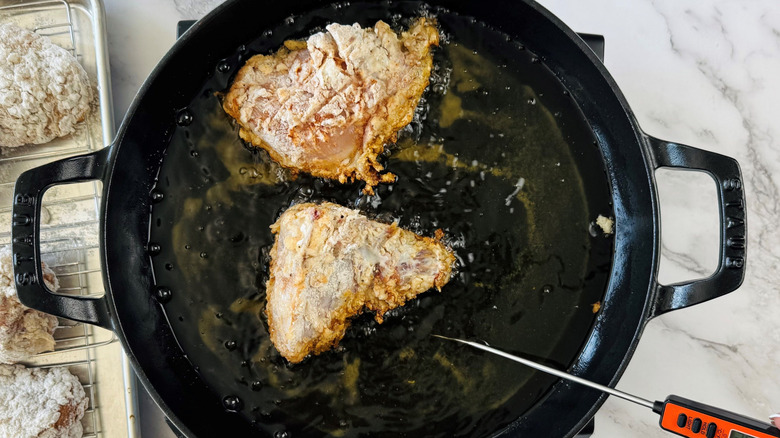
Cook the breasts for 3-4 minutes until golden, then flip. Cook for an additional 10 minutes, flipping a few times to ensure even browning, until the chicken reaches an internal temperature of 165 F.
Step 12: Keep the chicken warm in the oven
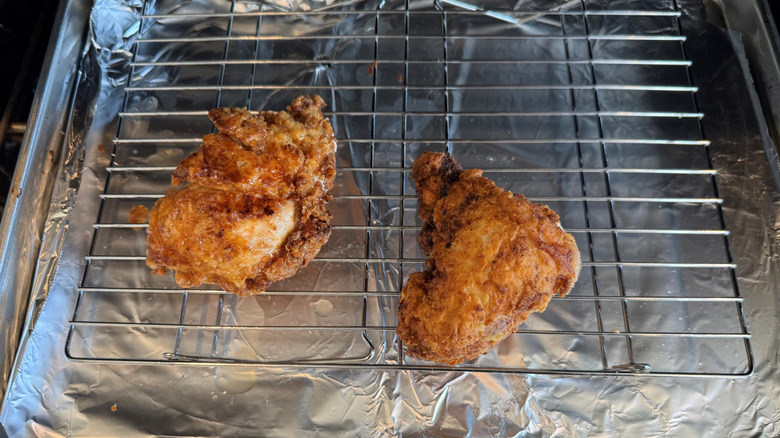
Remove the chicken and place it on a baking sheet lined with a rack. Place the chicken in the oven to keep warm.
Step 13: Fry the remaining chicken before serving
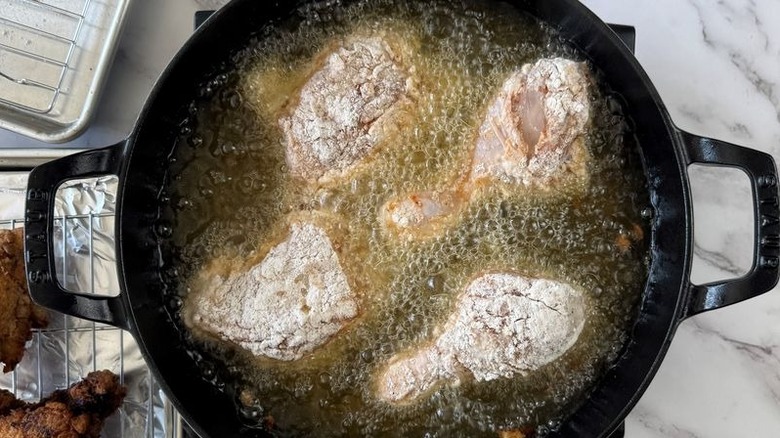
Cook the remaining chicken pieces in two batches and serve.
What can I serve with fried chicken?
Simple Classic Fried Chicken Recipe
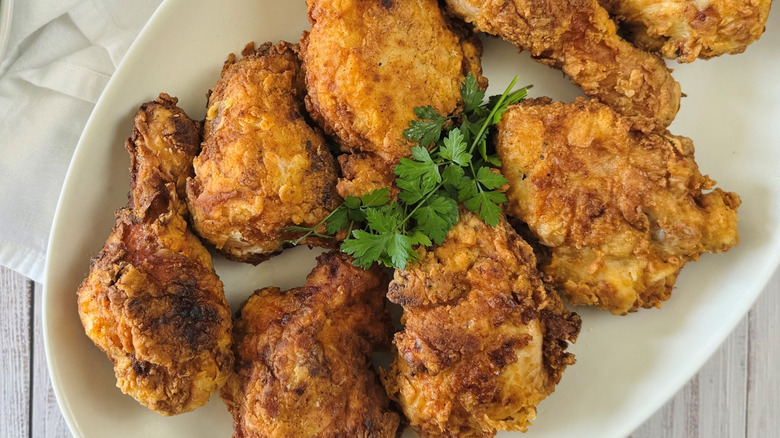
There's nothing quite like classic buttermilk fried chicken, and in our recipe, we fry the chicken in lard for the crispiest results every time.
Ingredients
- 3 cups lard
- 1 tablespoon kosher salt
- 1 teaspoon ground black pepper
- 1 tablespoon onion powder
- 1 tablespoon garlic powder
- 1 teaspoon smoked paprika
- 2 bone-in chicken breasts (each cut in half crosswise)
- 2 bone-in chicken thighs
- 2 chicken drumsticks
- 2 cups flour
- 2 cups buttermilk
Directions
- Preheat oven to 350 F.
- Place the lard in a deep cast iron skillet over medium heat.
- In a small bowl, mix the salt, pepper, onion powder, garlic powder, and paprika.
- Add half of the spice mixture to the chicken pieces.
- Gently rub the spices into the chicken.
- Add the flour to a medium bowl then add the remaining spices and stir. Add the buttermilk to a medium bowl.
- Dip the chicken pieces one at a time in the flour mixture.
- Dip the chicken in the buttermilk.
- Dip the chicken back into the flour.
- When the lard reaches a temperature of 350 F, cook the chicken batches, starting with the larger breast halves skin side down.
- Cook the breasts for 3-4 minutes until golden, then flip. Cook for an additional 10 minutes, flipping a few times to ensure even browning, until the chicken reaches an internal temperature of 165 F.
- Remove the chicken and place it on a baking sheet lined with a rack. Place the chicken in the oven to keep warm.
- Cook the remaining chicken pieces in two batches and serve.
Nutrition
| Calories per Serving | 1,440 |
| Total Fat | 101.3 g |
| Saturated Fat | 36.6 g |
| Trans Fat | 0.1 g |
| Cholesterol | 328.6 mg |
| Total Carbohydrates | 57.7 g |
| Dietary Fiber | 2.5 g |
| Total Sugars | 7.0 g |
| Sodium | 1,305.8 mg |
| Protein | 69.5 g |

What is the difference between lard and shortening?
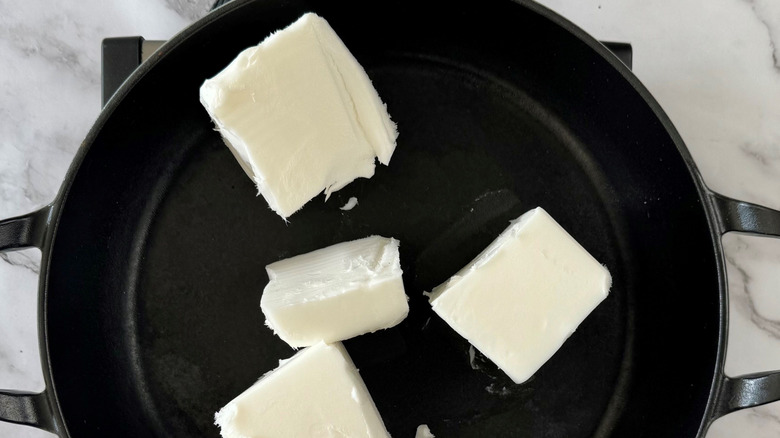
When it comes to frying chicken (or any food for that matter), you've got a few options as to what to fry it in. De Witt specifically opts for lard in her fried chicken recipe, not only because it adds a certain richness to the chicken, but because it ensures that the chicken's coating gets as crispy as possible. Of course, all of this talk of lard and shortening and oil brings up an important question: What is the difference between lard and shortening?
A short and simple answer is that lard is an animal product, whereas vegetable oil or shortening comes from seeds. Technically, any solid fat can be considered a type of shortening, but pig lard and vegetable shortening certainly aren't the same. "Lard is made by rendering the fat from pigs and has been a cooking and baking staple for centuries," De Witt explains. On the other hand, "Vegetable shortening is made from hydrogenated vegetable oils such as soybean or cottonseed. It has a similar texture to lard but is flavorless."
While there are slight nutritional differences between the two, ultimately, they're both types of fat that have their respective places in the cooking world. As for which one you go with for this recipe, that comes down to what you have on hand, but we encourage you to give the lard a try to really take your fried chicken to the next level.
What are some tips for making perfect fried chicken?
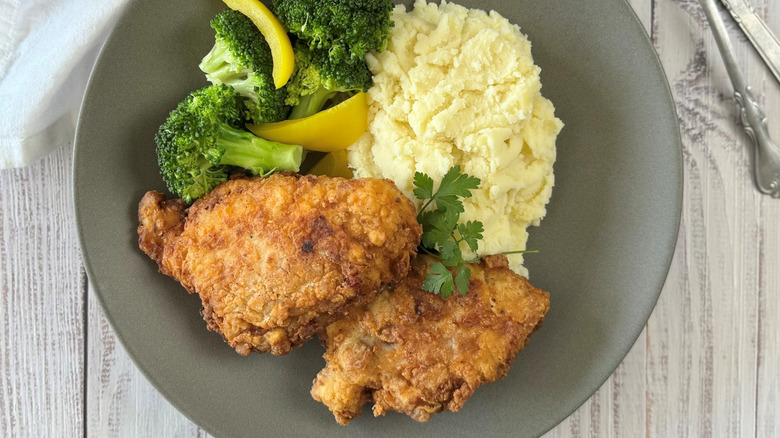
Fried chicken might seem hard to make at home, but we have some tips for making perfect fried chicken to avoid any pitfalls. The first tip to achieving absolutely perfect fried chicken is to make sure that you don't skimp on the seasoning. "Season the chicken, then season the flour," De Witt advises. "This will ensure adequate seasoning that permeates into the meat." Another important flavor-maker is the buttermilk, and while this recipe only calls for it in the dredging process, you could also soak the raw chicken in buttermilk overnight to help tenderize it.
When it comes time to coat the chicken in the flour-buttermilk-flour dredging order, make sure to do so right before you plan to fry the chicken to avoid potential sogginess or, worse yet, the breading falling off the chicken after frying. And, if you happen to have one, use a cast-iron pan or skillet to fry the chicken. "It distributes the heat well so that chicken browns evenly, and it can withstand cooking at high temperatures," De Witt explains. Make sure that you've got about 1 to 2 inches of melted lard in the skillet once you're ready to begin frying, and make sure that the temperature of the lard stays around 350 F as you fry. The easiest way to make sure your oil isn't the right temperature is to use a deep fry thermometer.