

16 Clever Ways To Use Cocktail Sauce Other Than On Shrimp
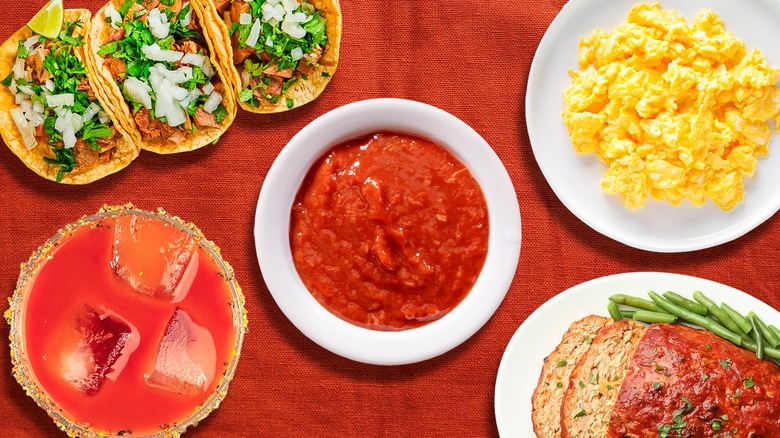
There are some condiments out there that receive more than enough time in the spotlight, including the fan-favorite ketchup, divisive (yet still versatile) mayonnaise, and the bright, acidic mustard. But where is the love for one of the most unique condiments of them all: cocktail sauce?
This condiment, despite its longstanding ties to one of the most popular appetizers ever made, the shrimp cocktail, is not one that people often add to their grocery carts. If you're serving up a plate of shrimp at your dinner party, cocktail party, or event (no matter how formal), you might add it to your grocery list, or you could try making a three-ingredient version yourself with ketchup, horseradish, and lemon juice. The only downside (read: opportunity) is that you may end up with some leftovers.
Sure, cocktail sauce isn't as ubiquitous as ketchup or as easy to pair as mayo, but it does offer a much more unique and complex flavor profile than nearly any condiment out there. Once you learn how to use it and pair it with your favorite foods, you'll never have to worry about tossing a half-full container of it out ever again. Here are some of the most surprising and tasty ways to use this delicious condiment.
1. Stir it into your bloody mary

Bloody marys may seem like the black sheep of the breakfast cocktail world. While mimosas and Bellinis often get the credit for being like springtime in a glass, bloody marys are about all things savory. You'll see recipes that utilize a whole host of creative ingredients, including everything from anchovies and fish sauce to Flamin' Hot Cheetos and pickle brine. Cocktail sauce is right at home in a bloody mary because it will amp up the heat and umami. Cocktail sauce usually has some of the same components already found in a bloody mary, including tomato, lemon juice, and Worcestershire sauce. The horseradish component of the condiment adds a beautiful layer of sinus-clearing flavor to your drink and makes it more complex.
As with any of these creative uses for cocktail sauce, expressing restraint over the amount you're adding to your drink is key. It's easy to make your cocktail a little too spicy and overwhelming, so start with just a dash and add more as needed. Top things off with cocktail shrimp for a drink that tastes and looks like it came right from a seafood bar.
2. Add it to your scrambled eggs
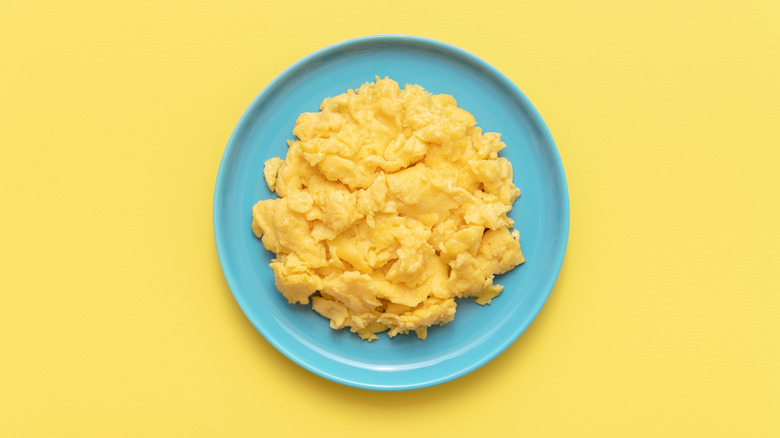
For all of the things that scrambled eggs are (nutrient-dense, filling, and easy to make), there are many things that they are not, including flavorful. Sure, you can add other tasty and luxurious ingredients to your scrambled eggs, but cocktail sauce might be the best one to try. Eggs crave umami and savoriness, and a dash of your favorite cocktail sauce will certainly deliver this. And when you consider that Chinese tomato egg stir-fry is a thing and that ketchup is a common pairing for both plain eggs and eggs stuffed into a breakfast sandwich, it might not seem that odd.
The horseradish-filled condiment is an excellent pairing for both the yolks and the whites of your eggs. It's spicy enough to cut through the richness of the yolks while also adding body to the whites. It can easily replace the ketchup and hot sauce that you'd normally pair with eggs.
3. Incorporate cocktail sauce into your deviled egg recipe
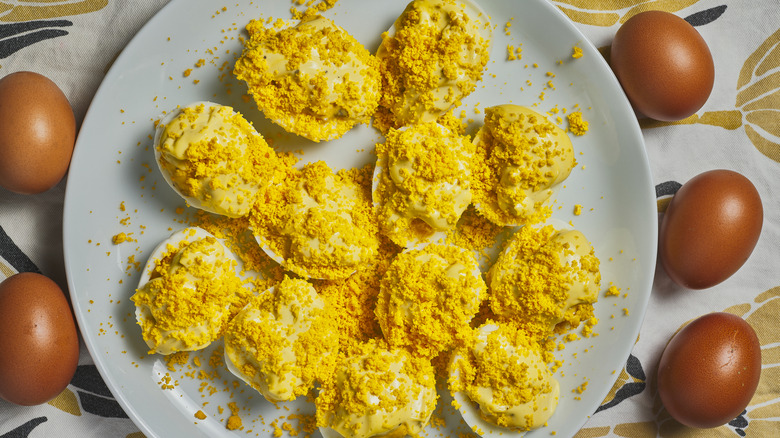
Cocktail sauce isn't just a one-trick pony when it comes to eggs. Besides using it for a basic scramble, you may also want to consider adding a dash to your batch of deviled eggs. Deviled eggs can be a very heavy and fat-laden appetizer between the yolks themselves and the creamy mayonnaise that binds the filling together. The cocktail sauce helps balance that flavor and also offers a hint of heat and warmth to an otherwise relatively bland dish. Cocktail sauce is an especially tasty addition for occasions where you're serving the eggs alongside other ocean-themed apps, like shrimp cocktail, crab dip, and the like.
Some people add ingredients to their deviled eggs like mustard, hot sauce, and something acidic (like lemon juice or vinegar), so cocktail sauce can act as a bit of a shortcut. Taste your filling before spooning it into your hard-boiled yolks so you can add more salt, pepper, or spice if you'd like. You could even infuse your deviled egg filling with a seafood twist, like with crab meat or a petite cocktail shrimp on top.
4. Use it as a sandwich spread
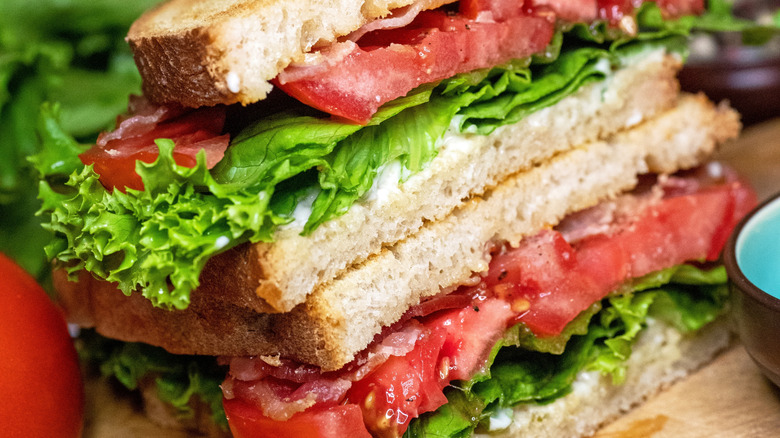
Cocktail sauce is incredibly versatile because of its mashup of flavors. Savory, salty, umami, and heat come together to create a delicious condiment that can adorn an array of sandwiches. Are all sandwiches going to be great fits for cocktail sauce? Of course not, but there are many popular ones that could be elevated by a dash of it. BLTs are a great example. You already have the flavor of the sliced tomatoes, and adding the cocktail sauce to the bread before assembling will just heighten those umami notes even more. It won't fight with the salty bacon nor the rich mayonnaise. It would also work well in an egg salad sandwich, as the condiment would slice through the richness of the egg yolks and mayo, while a basic grilled cheese can benefit from its zingy flavor.
Although not entirely unexpected, cocktail sauce is also a great addition to seafood sandwiches. Shrimp po'boys, fried fish sandwiches, and even ones stuffed with crab cakes can benefit from its punch of horseradish and distinctly savory bite.
5. Add it to your marinade recipe

Marinating is a key part of preparing many different types of meat. It serves several purposes, including both tenderizing the meat by breaking down its proteins and infusing flavor into it. Cocktail sauce is a great ingredient to add to your marinades because it can perform both of these functions. It will add an umami flavor and sharpness from the combination of horseradish and lemon juice, making for a deliciously savory and balanced bite.
There are numerous meats and proteins that could benefit from a cocktail sauce being added to the other marinade ingredients or used as the sole marinade. Shrimp is one of them. The key to marinating this particular protein is to avoid letting it marinate for too long. Otherwise, the acid can denature the protein too much and cause the texture to become mushy. Stick to marinating it for no more than a half-hour. Other more robust proteins, like chicken and pork, can stand to be marinated for a few hours.
6. Use it as a ketchup substitute on your meatloaf
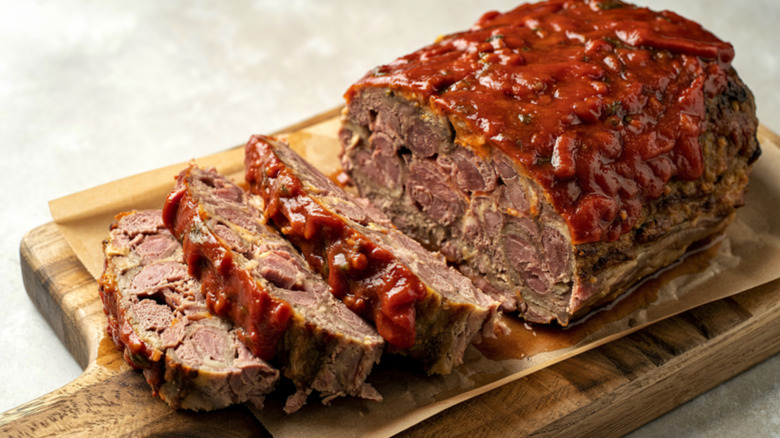
We're not saying there's anything wrong with your grandma's classic meatloaf recipe, but we are saying that there are ways you can upgrade its flavor, including by adding cocktail sauce to the top of it. Typically, meatloaf is adorned with a thick layer of ketchup. As the loaf bakes, the sugars in the ketchup caramelize, imparting a sweet, tomatoey flavor on your loaf. Cocktail sauce contains tomatoes, but it doesn't taste as sweet as ketchup, especially after it's baked. When you let the cocktail sauce caramelize, you'll get some sweetness, but more profound savory and sinus-clearing notes instead, thanks to the horseradish and Worcestershire sauce in the cocktail sauce.
If you aren't ready to abandon that sweet topping on your meatloaf, you can try mixing together the two condiments to create a salty, umami, and sweet spread. Cocktail sauce is an especially tasty addition for beef and pork-based meatloaf because it can slice through the fatty richness and balance out the flavor notes.
7. Swipe it on your burger
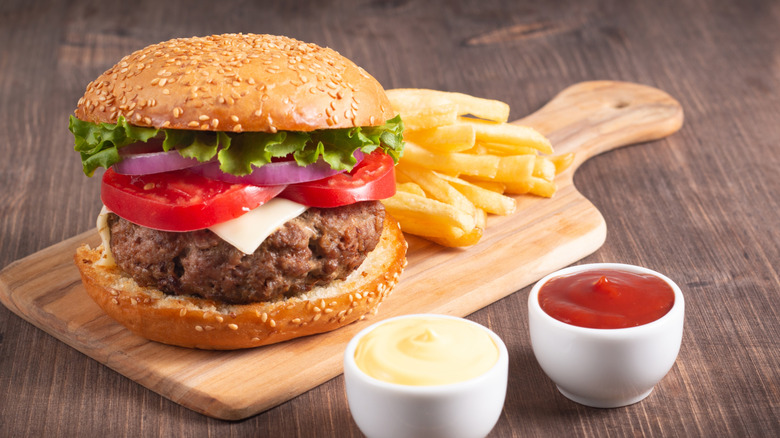
We're always on the lookout for fun sauces and condiment combinations to add to our burgers. While nothing is wrong with the classic ketchup, mayo, and mustard triad, the condiment shelf of your fridge can open up a world of possibilities and opportunities to experiment with many different flavors. Cocktail sauce is sharp and biting, and when it's used to top a very rich patty, like a classic beef burger, it can make every bite compelling. It's an excellent alternative to a classic ketchup or barbecue sauce and may be especially useful for burgers where you aren't looking specifically for a sweet add-in.
Another excellent place to use cocktail sauce is on a salmon burger. Salmon naturally has a briny and tinny flavor, and the horseradish and Worcestershire sauce do a great job of balancing out the patty's flavor. Add in a little bit of lemon juice, and you've got a sandwich that tastes just like the one you'd get from your favorite local seafood joint.
8. Pair it with your favorite meatball recipe

Meatballs are a food beloved by many. It's hard to say no to a plate of them smothered in a tasty sauce. While much of the appeal is the flavor of the meat itself, a sauce can make or break your meatballs. Don't just opt for an average, store-bought marinara. Instead, get creative and consider making one that features cocktail sauce as a star ingredient. Cocktail sauce is an ideal meatball pairing, especially for folks who prefer their appetizer with a little bit of an edge.
While you can smother your meatballs with an entire jar of cocktail sauce, this is not generally recommended. The piquancy of the sauce can shift the balance of your meal off-kilter. Instead, if you're working with a meatball recipe, try replacing the chili sauce with cocktail sauce. Cocktail sauce has its own sort of edge to it, though it will fill in the gaps as far as heat goes. You'll also want to make sure you provide some support as far as sweetness goes. Grape jelly or even lingonberry preserves can offer a supplemental flavor that complements not only the cocktail sauce, but also the protein you're working with.
9. Stir it into your sloppy Joe mix
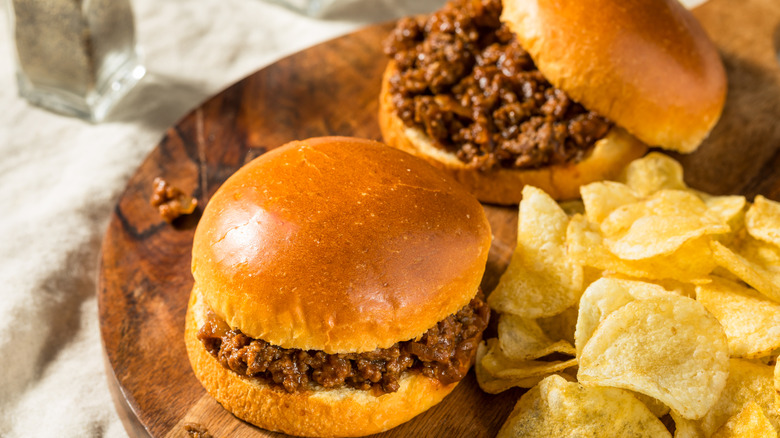
Sloppy Joes were a childhood favorite of ours, both in the elementary school cafeteria and for busy weeknight meals. It's a great way to use up ground beef when you're not craving tacos or burgers, and all you need to do is combine your ground protein of choice with canned sloppy Joe sauce. The sauce is very sweet, so if you prefer something a little more balanced, you may want to reach for a jar of cocktail sauce, too. The cocktail sauce is bright and spicy, and it will vibe with the flavors in the sloppy Joe sauce, as well as your ground meat. The Worcestershire sauce component will offer a delectable savoriness to complement the other sauce's sweetness, perfect for when you want to elevate this from a cafeteria classic into a sophisticated meal.
You'll only need to add a few tablespoons of the cocktail sauce to your meat along with your sauce; put too much, and you'll upset the entire balance of the sandwich. Taste a little, and add more as needed.
10. Use it as a salad dressing
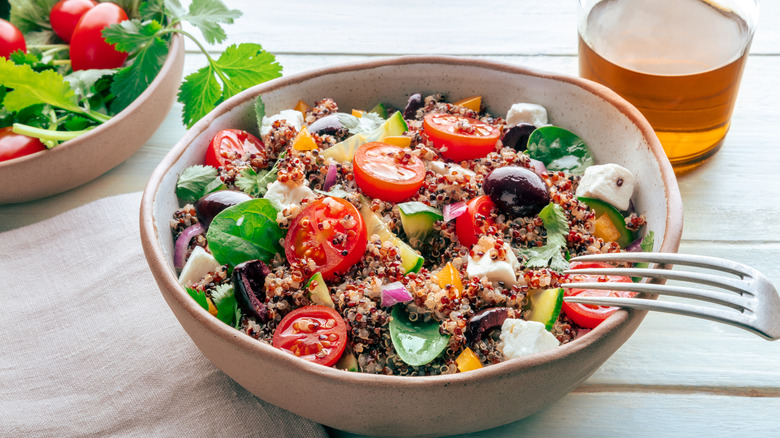
Store-bought salad dressing will work in a pinch, but it's far from the only thing you can use to dress your bowl of greens or oven-roasted veggies. So, avoid buying this condiment from the store and using it plainly when you could instead add your own personal spin on a ho-hum salad dressing by sprucing it up or fully making it yourself. Cocktail sauce is a great ingredient to add to your dressing because it brings an unexpected piquancy that draws your attention to it. Too often, dressing is an afterthought. But when you add a splash of cocktail sauce to it, its savoriness, umami, and heat level will all be amped up.
Try adding some cocktail sauce to a basic vinaigrette. The oil will help thin out its spiciness, while the vinegar will add to its puckering quality. Stick to the cocktail sauce's roots, and add a drizzle of this dressing to a shrimp cocktail salad, adorned with juicy shrimp, avocado, tomato, and the like.
11. Dip crab legs into cocktail sauce
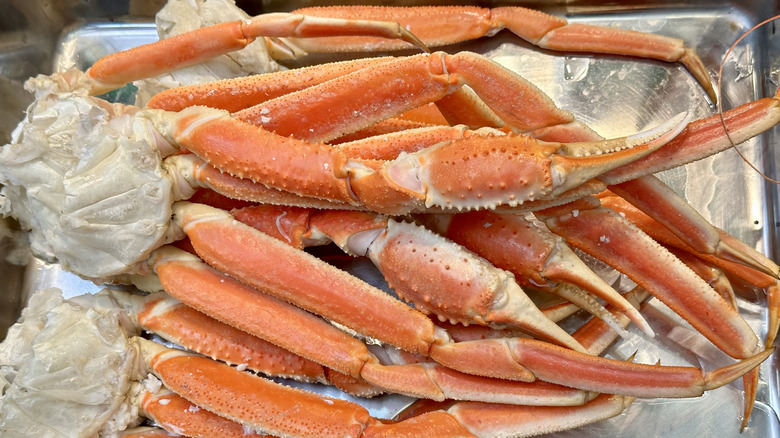
Cocktail sauce is a go-to pairing for shrimp because the sharpness of the sauce is the perfect foil to the slightly salty crustaceans, but they're far from the only ocean critters worth pairing with this unique sauce. Try serving a ramekin of cocktail sauce with your next batch of crab legs. It's one of the best dipping sauces for this seafood dish because the savoriness of the sauce matches well with the salty and slightly sweet meat. It's an excellent alternative to other sauces when you're craving something light and want to keep your bite fresh rather than drowned out with drawn butter.
There are many types of crab that you can pair with cocktail sauce. Dungeness crab is a particularly succulent option; its nutty undertones are a good match for the heat and boldness of a quality store-bought cocktail sauce. Snow crab is another popular variety that can work with cocktail sauce; its flavor is much lighter and less punchy than Dungeness crab.
12. Drizzle it on your tacos
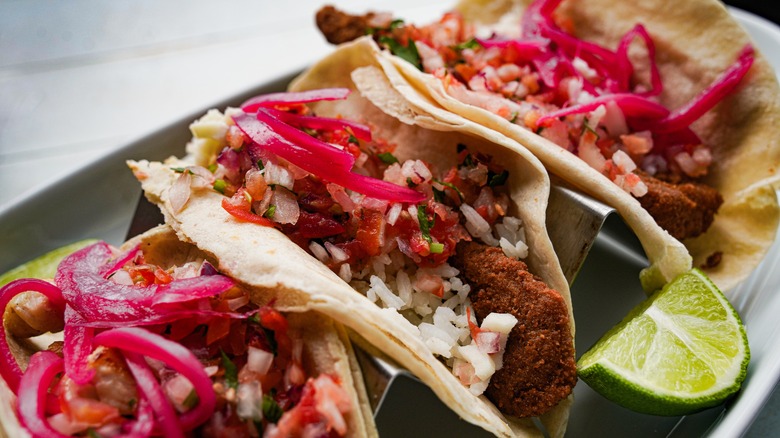
What's a taco without hot sauce? This versatile topping is a must-have for taco nights, and it can almost seem like the tacos themselves are a vehicle for its flavor. If your interest in what used to be your favorite hot sauce brand is waning, try swapping it out for cocktail sauce instead. While it won't deliver the unadulterated punch of heat that you may be accustomed to, it will offer a unique brightness and lightness to your taco filling and standard accompaniments, including avocado, chopped veggies, and pickled red onions. Cocktail sauce's acidity is its secret weapon, and it will elevate even the heaviest of taco fillings.
One great place to start is with fish or seafood tacos. The briny taste of the protein, which can include shrimp (surprise, surprise), fried fish, lobster, and more, will work well with the subtle tang of the sauce. It could even be used as a replacement (or complement) to salsa or pico de gallo, as the two have the same tart yet bright profile.
13. Pair it with mayo for a tasty spread
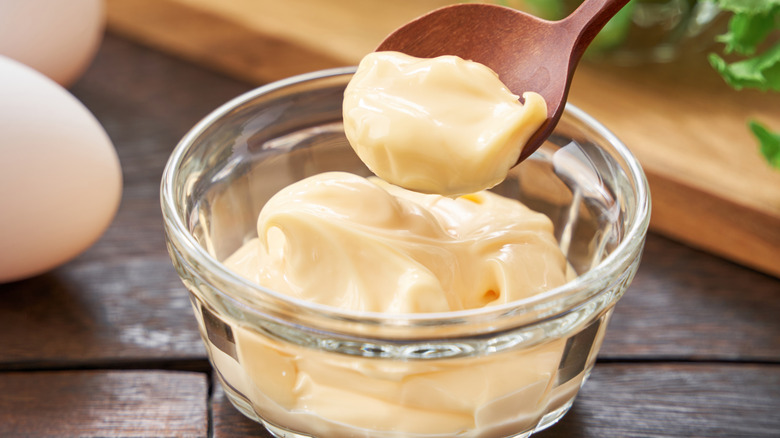
Sometimes the taste of cocktail sauce isn't the issue; it's its consistency. Rather than just adding a drizzle of cocktail sauce to your sandwich, breakfast burrito, or the like, try mixing it with a little bit of mayonnaise to make it extra rich and creamy. Not only will this help prevent the dish you're using it in or on from getting too watery, but the fattiness of the mayonnaise will also help counter the distinct horseradish flavor.
Another benefit of combining these two sauces is that you can tweak the ratio so that it suits the dish you plan on using it for. If you want the meat and cheese to shine in your breakfast tacos or burritos, for example, you may want to use a little more mayo than cocktail sauce. But if you're using the two as a dip, you may want to be more heavy-handed with the cocktail sauce. Use it as a spread for sandwiches, dipping sauce for fried clams or french fries, and more.
14. Serve it with baked potatoes
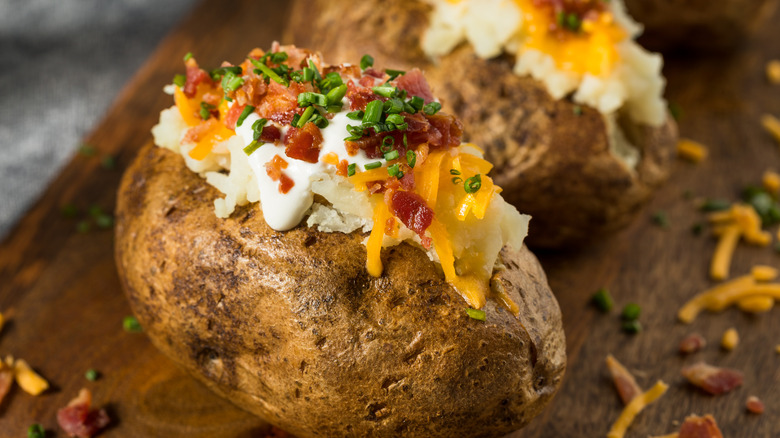
Baked potatoes tend to get the short end of the stick when it comes to sides. French fries (in any and all forms) get all the attention, while baked potatoes are relegated to dated steakhouse chains. But it's time this versatile spud gets some airtime. Instead of just sticking to basic toppings, like cheese, sour cream, and chives, try adding a drizzle of cocktail sauce to your freshly baked (or microwaved) potatoes. The cocktail sauce will soak down into the spud, infusing it with an acidic and punchy flavor that will cut through its carby richness with ease.
If you like to have something creamy to go with your potato, stick with a dollop of Greek yogurt or sour cream, paired with the cocktail sauce. These creamy condiments are great conduits for the cocktail sauce's flavor and will only add to its acidity. You can also hit your potatoes with a green onion garnish for both a color and flavor contrast.
15. Eat it with kielbasa

If you grew up in a Polish household, you've probably had your fair share of kielbasa. This Polish sausage is smoked and comes in a U-shape. It's sold already cooked (and it's really good cold, if we're being honest), but many people will also fry it up in a skillet or on the grill and eat it with eggs. The casing on it is snappy, while the filling inside is very porky. This fatty sausage craves a hint of acidity, which is just what cocktail sauce provides.
Growing up, we ate kielbasa with ketchup. The two were practically inseparable, so swapping the condiment for cocktail sauce isn't too far off. The smoky undertones of the meat are a good complement to the brightness of the condiment. Try bringing out this duo for a tailgate; people won't even notice the shrimp is missing.
16. Garnish your oysters with it
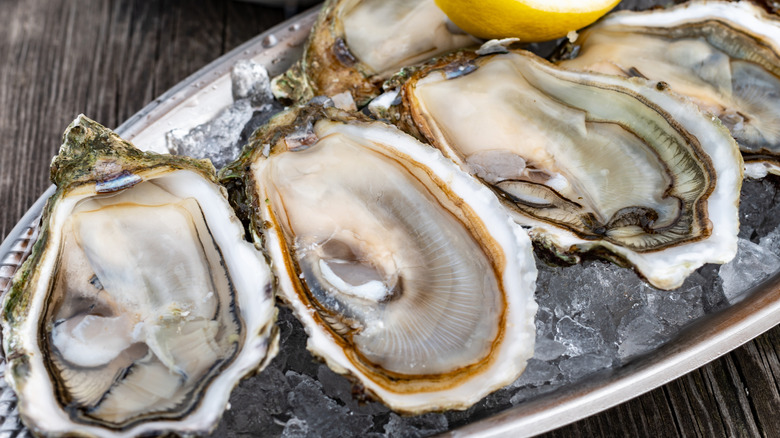
Cocktail sauce and oysters might seem like an odd pairing, given that the flavor of the mollusk is very nuanced. But oysters actually laid the groundwork for the shrimp cocktail, so we think it's worth going back to this iconic dish's roots.
The condiment has a bright lemony flavor, which will draw attention to the briny flavor of the oysters. The horseradish also supplements the flavor of the mollusk by giving it a delectable warmth and helping it slip down a little easier. Another great thing about this duo is their textural differences. Oysters are, for lack of a better word, slimy, meaning they work well with a chunkier and thicker cocktail sauce. But we won't blame you if you add just a dribble of juice to the top before throwing one back. One component doesn't eclipse the other, making it a match made in seafood heaven.