

10 Ingredients That Instantly Improve Your Store-Bought Mashed Potatoes
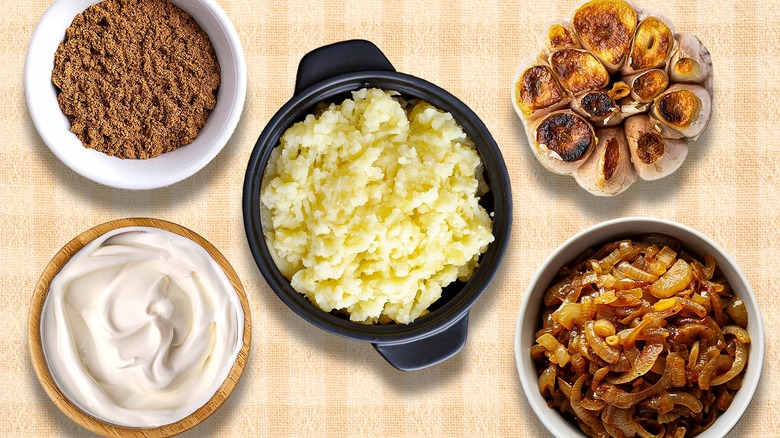
It's almost impossible not to like mashed potatoes. They're creamy and filling, and when you get them in the same room with a whole turkey, cranberry sauce, and meaty gravy, well, it's nothing short of a party in your mouth. Making mashed potatoes from scratch is relatively affordable and easy enough (especially if you follow these great tips when cooking mashed potatoes). Boil the potatoes in water, mash them, add your fat and seasonings, and serve — how easy is that? But what if we told you there was an easier option lurking in the prepared foods section of your local grocery store?
Store-bought mashed potatoes can be a lifesaver when you're running short on time or need to feed a crowd. Stores sell varying portion sizes, from small containers to Costco-sized bins of potatoes. And the one thing these products have in common, generally speaking, is that their flavor can be a little worse for wear at times. You shouldn't be expecting restaurant-quality mashed potatoes from your local grocery store, and if you want to reach that threshold, you're going to have to put in a little bit of elbow work. We curated a list of some of the tastiest flavor, texture, and aroma enhancers for your store-bought mashed potatoes, some of which require nothing more than a purge of your spice cabinet or the crisper drawer of your fridge. Even if you're sticking with a homemade mashed potato recipe, chances are you can find ideas for tasty add-ins on this list, too.
1. Brown butter
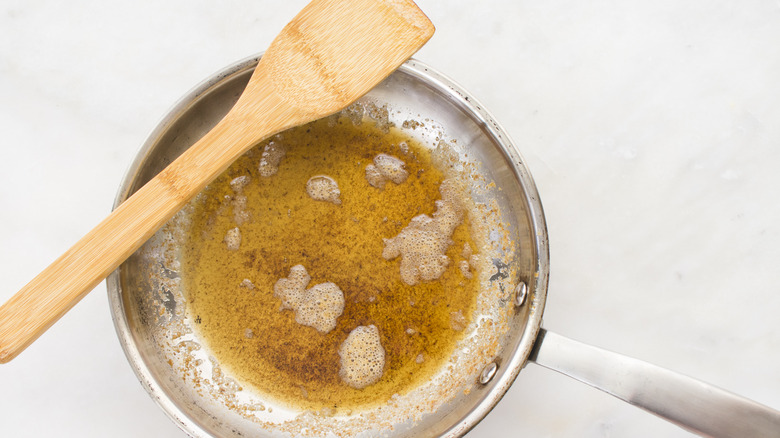
There are few things brown butter can't fix. While you can always add butter to your store-bought mashed potatoes to enhance their richness and improve their flavor, brown butter is a far better option because its flavor is more complex and nutty, and it will better cut through the starchiness of the spuds. Brown butter is made by essentially cooking down the fat until the milk solids start to toast and some of the water evaporates. On the nose, brown butter smells like hazelnuts, and its flavor has a similar nutty quality. You can make it on the stove; you can tell brown butter is done cooking when its color starts to darken and its aroma becomes more prominent.
You don't need to add too much brown butter to your mashed potatoes — either store-bought or a homemade recipe — for it to have an effect. In fact, you don't want to make your side dish too rich, as it can upset the flavor balance of other things on your plate, like grilled or roasted chicken or turkey. You may only need a stick of butter for every pound or so of potatoes (this may seem like a lot, but remember that some of the water will evaporate from the butter as it cooks). You might need potentially even less, if your mashed potatoes already include fatty and rich ingredients like heavy cream, half-and-half, or plain butter. Brown butter also plays well with other mashed potato additions, including garlic, herbs, and spices.
2. Roasted garlic
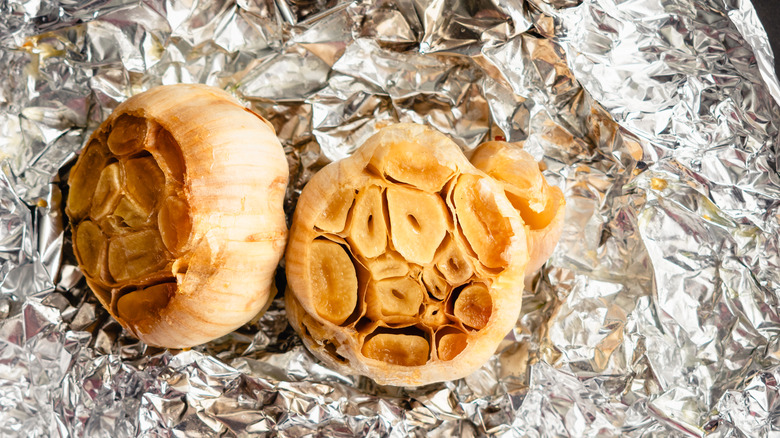
The simple way to improve any dish? Add more garlic. Even if the recipe only calls for a few cloves — or, in this case, your store-bought mashed potatoes already contain a fair amount of garlic — you can easily improve their flavor by adding more. Raw garlic is sharp and punchy and will give the starchy, flavorless spuds a bit of an edge, but if you want something that leans sweeter and more fragrant, roasted garlic is the way to go. If you have extra, you can always add garlic to store-bought gravy and serve it alongside your spuds.
The classic (and likely most commonly used) way to roast garlic is in tin foil in the oven. While this method works, you can also try roasting your garlic head in a pan instead. Using a pan will cut your roasting time down significantly, which is perfect for when you're in a rush to get your homemade-ish potatoes onto the dinner table. With the pan method, you'll want to separate your cloves, peel off the papery skin, and submerge them in a pan with oil. This method essentially poaches the cloves in oil, softening their texture and turning their flavor from something sharp and biting into something more mellow, sweet, and complex — which will pair well with your spuds.
The exact amount of roasted garlic you add to your mashed potatoes will really depend on your tolerance for the allium and how prominent you want its flavor to be. In order to ensure that your cloves are well distributed, we recommend blitzing them in a food processor, with a fork, or a mortar and pestle until they're pasty and easy to spread.
3. Grated cheese
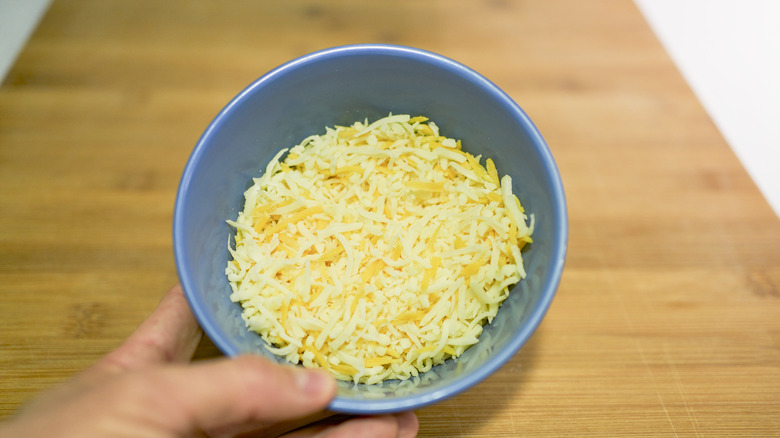
Shredded cheese is an easy way to add not only richness to your store-bought mashed potatoes but also saltiness. When the cheese mixes with the warmed spuds, it will add a gooey richness to every bite. Plus, cheesy mashed potatoes pair with pretty much everything — just like normal mashed potatoes.
The key to adding cheese to your mashed potatoes is to always select a variety that works with your spuds rather than against them. If you're after richness in your mashed potatoes but don't want to venture too far out of your flavor comfort zone, for example, you may reach for a little bit of whipped cream cheese, mild cheddar, and fresh Parmesan. The cream cheese will offer fat, richness, and body, while the mild cheddar and Parmesan will help out in the savory and umami department. For a bolder flavor, look for a sharper cheddar — you can also opt for a yellow one or an orange one, depending on how noticeable you want the color to be in the final dish. If you feel a little more ambitious, you may opt for another rich melting cheese, like nutty Gruyère, fontina, or raclette. Melting is important here, as you want the cheese to distribute well throughout your spuds.
On the subject of melting, another tip that we have for adding cheese to your mashed potatoes is to always grate it yourself. We won't deny that bagged, pre-shredded cheddar and Parmesan are convenient, but pre-grated cheese can be loaded with fillers that don't allow it to melt perfectly.
4. Smoked paprika
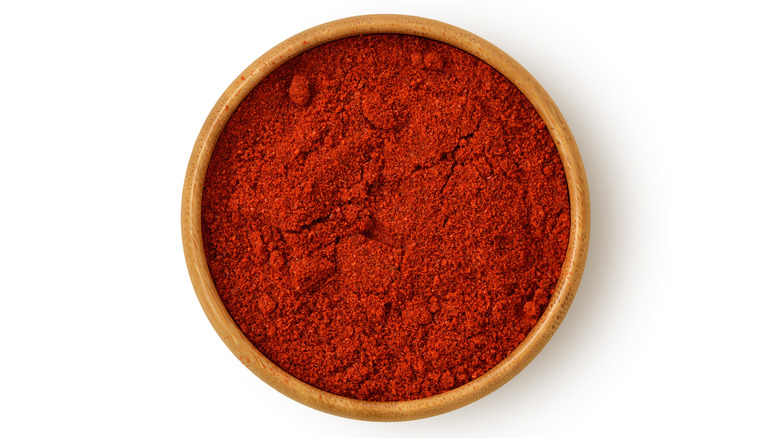
Smoked paprika is one of our favorite spices to work with for many reasons. If you've ever tasted a particularly delicious barbecue sauce and been entranced by its warming — but not spicy — mouthfeel, you may have had one made with smoked paprika and not even realized it until now. We love adding it to potato recipes because it adds dimension without shifting the entire bite toward something too spicy or too savory.
Unlike some of the other suggestions on this list, you can add smoked paprika to your recipe and upgrade its flavor instantly — you don't have to worry about turning on your oven or searching through your kitchen drawers for leftovers. You won't need more than a teaspoon of paprika for your potatoes; just make sure to stir it in well before serving. However, a little sprinkled on top (like you would for a deviled egg) would still add a delectable color contrast to the otherwise nude-colored spuds.
There are many other additions on this list (and beyond) that pair well with paprika in your mashed potatoes. Roasted garlic, for example, will offer a bit of sweetness and robustness that will complement both the starch and the spice, while sharp cheddar will offer a creamy mouthfeel that can stand up to the paprika and serve as a rich vehicle for its flavor. A sprinkle of salt and freshly cracked pepper, alongside the paprika, can upgrade even the saddest of store-bought mashed potatoes.
5. Crispy bacon or pancetta
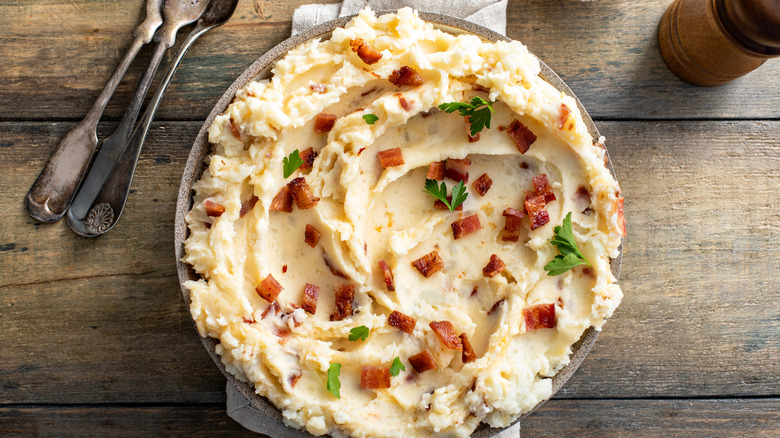
If you're feeding your store-bought mashed potatoes to carnivores, you're going to want to pay attention here. Crispy bacon, or, for a milder, less smoky flavor, pancetta, can take your mashed potatoes to the next level. These meats are packed with not only fat, which will make the mouthfeel all the more decadent, but also a salty flavor that will round out the spuds and make them the star of any plate. This addition is an excellent way to use up leftover bacon — or an excuse to make a whole lot of it so you can pepper it into your meals throughout the week.
The key here is to use crispy bacon, not soft, soggy bacon. You want there to be a clear textural distinction between the creamy spuds and the crunchy, meaty bits. The easiest way to store your bacon so that it stays crispy is to layer paper towels in the storage vessel and wait until it's cool before you store it. Once you're ready to use your bacon, take it out of the fridge and break it up into small, bite-sized fragments so that it is distributed well and flavors each and every bite.
Bacon and pancetta can certainly be paired with other ingredients in your mashed potatoes, like garlic, spice, and cheese. However, since the meat is often very salty, you'll want to make sure you give your store-bought side a taste before you add a ton of extra salt via bacon and any other add-ins.
6. Infused olive oil
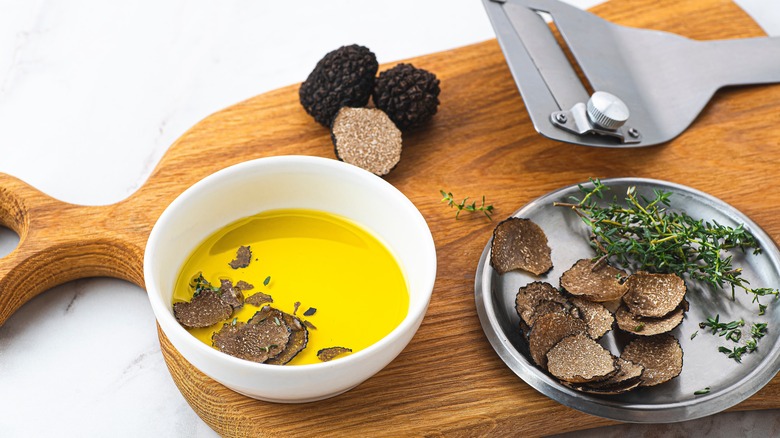
Fat equals flavor. But in the case of infused olive oil, fat equals flavor — and then some. If you don't like eating mashed potatoes with "stuff" in them (meaning the thought of skin-on mashed potatoes makes you cringe), an infused oil may be a better way to go. Whatever is being infused, be it truffles, herbs, or spices, is removed before the oil is bottled, so you don't have to worry about pieces or chunks of anything in your creamy, fluffy mashed potatoes.
There are endless ingredients you can infuse into oil, and many of them will work with the flavor of the mashed potatoes. If you like herbs, you might try sage-, rosemary-, or thyme-infused oils. Or, if you're after something woodsy and earthy, mushrooms are among the best infusions to try. You can find many infused olive oils in stores or try making them yourself at home. Just be sure to follow a recipe if you go the latter route, as incorrectly making and storing infused olive oil can put you at risk for botulism.
Once you have your oil, you don't need to add a ton of it to your mashed potatoes to impart them with flavor. In fact, adding too much may lead to an overly oily mouthfeel and a distraction from the heartiness of the spuds. Start with a light drizzle, and add more as needed after you taste it.
7. Fresh herbs
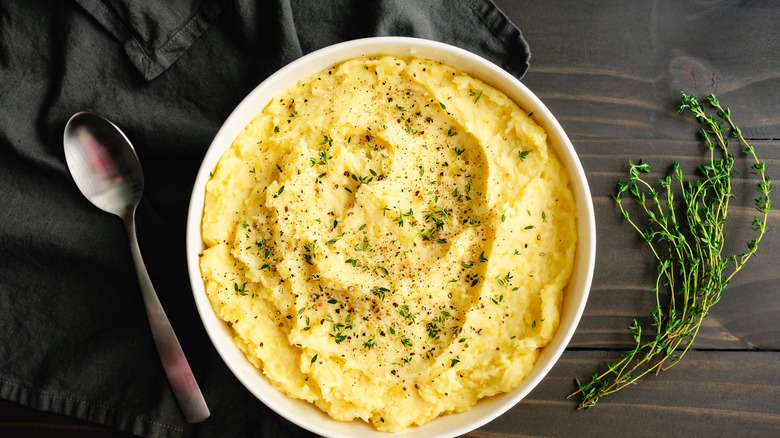
Herbs are the secret to unlocking lightness, brightness, and flavor in any dish. Since mashed potatoes tend not to have a strong taste on their own, there are seemingly endless options for the types of herbs to experiment with in your store-bought spuds. If you're looking for an allium profile without the sharpness of onion powder or chopped onions, turn to chives. Not only will they provide a pop of color, but their grassy flavor will also work well with buttery, top-of-the-line store-bought spuds or a grocery store rendition that's in need of a little TLC. Just make sure to chop them finely, since you don't want to end up with a wad of them on your fork.
Classic French spices, including rosemary, thyme, and tarragon, are also excellent options, especially if you're planning on serving your spuds alongside a classic French protein or something like a roast chicken, which can be seasoned with similar spices. They will add a small but still noticeable pop of green, and their aromas and flavors will work together to create an inviting, tantalizing bite that sends everyone at your table back for seconds. Complement these herbs with a little bit of butter and roasted garlic to elevate their flavor even more.
Regardless of which herbs you're using, one way to intensify their flavor more before stirring them into your potatoes is to sauté them with a little bit of oil. Fried herbs offer a stronger aroma and flavor than their fresh counterparts and take very little time at all to prep.
8. Sour cream
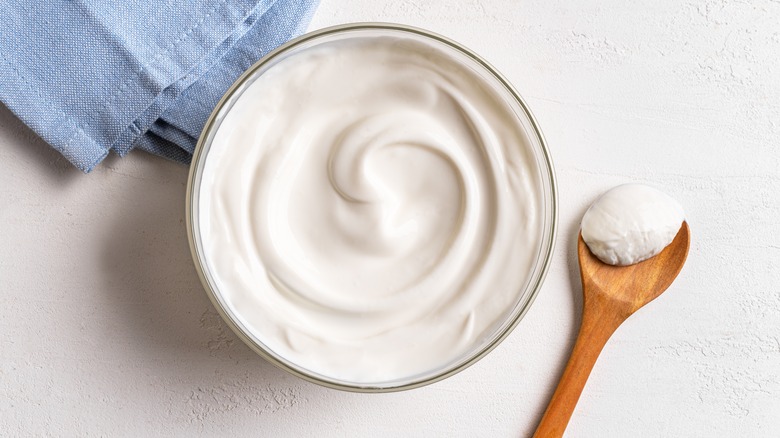
When you want to add fat to mashed potatoes, which ingredients do you reach for? For many people, it's butter or cream. Instead, take a page out of the baked potato's playbook and opt for an even more flavorful ingredient: sour cream. Full-fat sour cream is the secret to delectable mashed potatoes. Not only does it offer the fat that you need to make the mouthfeel extra creamy, but it also offers just enough acid to cut through the richness of the potatoes and make each bite super refreshing and balanced.
You'll only need to add a couple of tablespoons of sour cream per pound of potatoes, though you can always taste it and decide whether you want to add more. Since sour cream doesn't really make your mashed potatoes heavier, there is very little chance that other tasty add-ins, like butter, roasted garlic, and bacon will upset the bite and overshadow the sour cream. Full-fat sour cream will give you the most bang for your buck, as it has the creamiest texture, though you could substitute in a reduced-fat version in if you absolutely have to.
9. Caramelized onions
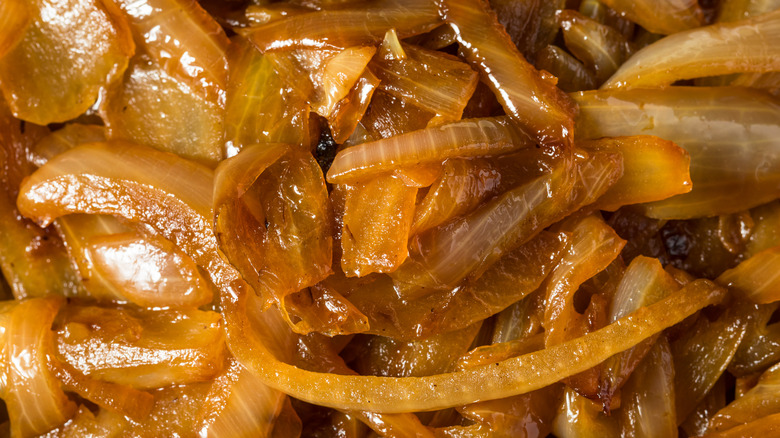
We wish we could write a love letter to caramelized onions. They're sweet, flavorful, and very much unlike the biting, raw onion flavor that we've come to detest over the years. If you added chopped white — or even worse, red — onions to your mashed potatoes, you'd risk overwhelming their flavor entirely and end up with crunchy bits in an otherwise creamy sea of spuds. But, when you use caramelized onions, you'll get a much sweeter and more complex flavor that will work with your mashed potatoes rather than against them.
We're not going to lie to you. Caramelizing onions takes a long time. Sure, you might be able to cut off a little bit of time by steaming the onions, but don't trust a recipe that promises you perfectly caramelized onions in under 10 minutes. Take the time and let your onions cook down until they're golden in color and super sweet. Once the onions are finished cooking, you can chop them up into smaller pieces and fold them into your mashed potatoes. Caramelized onions are in good company with similar woodsy, sweet, and rich flavors; think roasted garlic, sage, and thyme.
10. Nutmeg
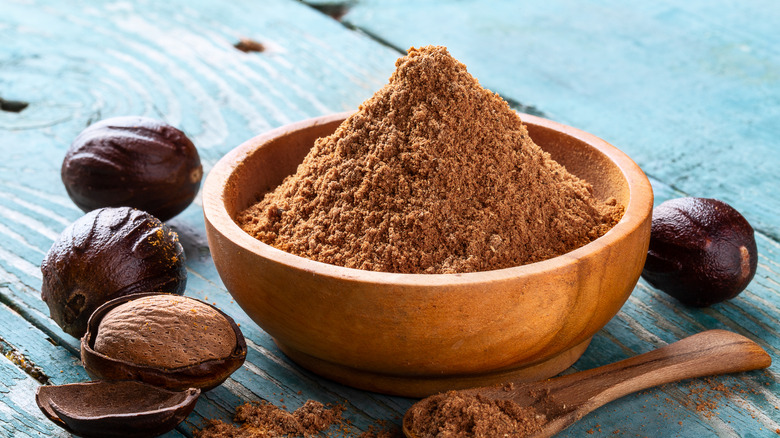
You may be familiar with nutmeg if you've tried your hand at a batch of homemade eggnog before. But it turns out this spice, which is often added to baked goods and béchamel sauce, can do a whole lot for mashed potatoes, too. The key here, though, is to only add a pinch of it; you don't really want its flavor to be super pronounced. That way, the spice will add a subtle warmth to your spuds without making their flavor sweet. You want enough for your guests to say, "Oh, what is that?" rather than so much that they're turned off by its flavor — and this is a spice that it's really easy to go overboard on.
Since nutmeg doesn't hog the flavor stage, you can still experiment with other additions for your store-bought spuds. A little decadent cheese, like Gruyère or Parmesan, or a sprinkle of thyme can give your mashed potatoes a distinctly European profile and also complement the flavor of the warming nutmeg quite well. Freshly grated nutmeg will give you the boldest flavor and fragrance, though ground will also work in a pinch (and only a pinch).