

12 Kitchenware Items You Should Never Buy Cheap
We may receive a commission on purchases made from links.
Wanting to save money is a universal life experience, especially in a time when the cost of living seems to be increasing every single day. And cooking, for the most part, is a thing where it's perfectly okay to be thrifty, like by buying more underrated (and usually cheaper) cuts instead of premium steaks and skipping the fresh produce in favor of canned and frozen items. But when it comes to kitchenware, there are some instances where cutting corners and buying cheaper options can end up costing you more in the long run. While the sticker price of a cheaper appliance may be like music to a thrifty shopper's ear, its quality, durability, and ease of use can require more frequent replacement — and put even more strain on your wallet.
To get some insight into which kitchen items — including gadgets, tools, and appliances — are worth spending more on upfront, we spoke to the experts: Odette D'Aniello, CEO of Dragonfly Cakes; professional chef and "Chopped" champion Clara Park; and Chris Melder, executive chef of the Hilton Shreveport. After talking with them, we firmly believe that whoever said "money can't buy happiness" has never used a Vitamix.
1. Espresso machines
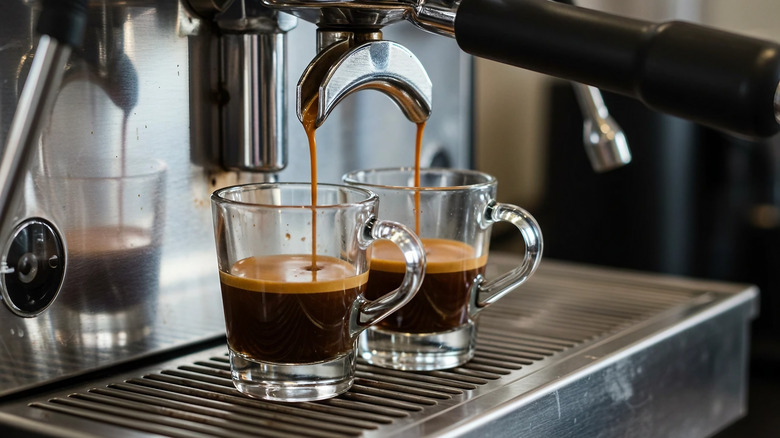
The espresso machine is the one appliance that gets used every single day in our kitchen. And if you too are reliant upon it for your caffeine fix, you may have enough reason to splurge on one. "For espresso lovers, precise temperature control, a built-in grinder, and a good steam wand can make preparing your favorite drinks at home easier," says Odette D'Aniello of Dragonfly Cakes. Chef Chris Melder agrees. "Premium machines (Breville, higher-end Saeco, etc.) usually have better pumps, more consistent temperature control, and parts you can actually replace. They hold up better in a busy kitchen or a household that runs through coffee all day. Cheap ones leak, clog, and the plastic bits crack," he says, though he notes that folks who are just making drip coffee or French press coffee may be able to get away with something cheaper.
Aside from the added bells and whistles on the machine itself, you may want to also consider other factors when setting your budget for a new model. "In general, I would also look at the warranty, repair options, and how easy the machine is to clean," says D'Aniello. You'll also want to find a model that fits your needs and isn't more "machine" than you can handle. "My tip is to do research on what functions you want for your machine and wait until it goes on sale," says chef Clara Park. While she says she can't entirely describe what sets a $1,000 and $5,000 machine apart, she does highlight that more expensive models tend to come with better warranties — and for a machine with so many moving parts, it's worth looking into.
2. Knives
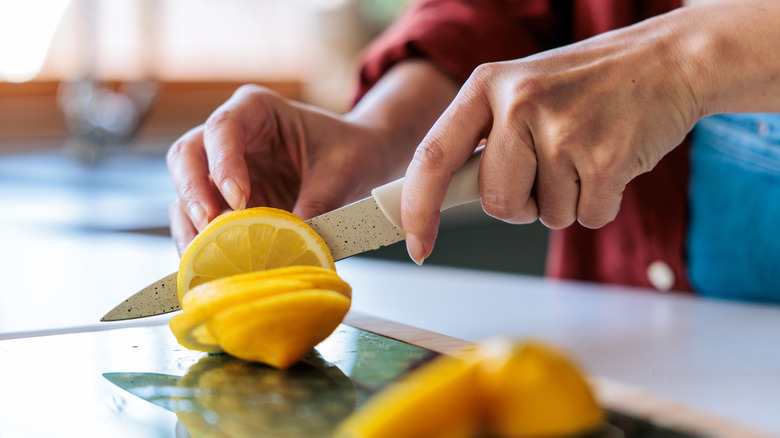
Your kitchen knives are put through all sorts of challenges, from chopping produce to delicately slicing through meat and sinew. Considering how often you use this kitchen essential, a poor-quality and cheap knife is going to show its flaws very quickly. This is especially true in regard to the chef's knife, which is known for its utility. "A good chef's knife is worth investing in because you use it for so many tasks," says Odette D'Aniello. "Better knives can offer more consistent heat treatment, good edge geometry, and a comfortable, balanced handle. Those qualities influence how easily the knife cuts and how well it holds its edge."
Chris Melder is a fan of premium brands, including Japanese- or high-end German-made ones, which he says maintain their edge and offer better balance. He highlights some of the major drawbacks of very inexpensive knives, including slippery handles, bolsters that pack food, and chipping or rolling edges. "They feel like toys in your hand," he says. "After years of prepping cases of onions and shrimp, you can feel the difference immediately."
You don't have to spend several hundred dollars on a knife set, especially considering that our experts recommend having a smaller selection — including a chef's knife, paring knife, and bread knife — rather than an entire collection. "You can get excellent performance without spending a fortune — look for good mid-range brands — but avoid the absolute cheapest sets," Melder says.
3. Dutch ovens
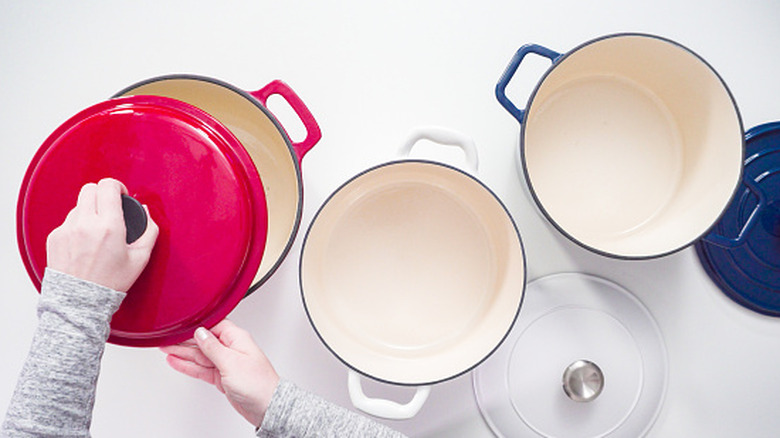
What can't your Dutch oven do? You can prepare a homemade no-knead bread in it, and it's the secret to effortless and juicy roasted chicken. Since it sees a lot of use in the kitchen, this is one item our experts recommend spending a little extra on.
"I would consider a premium one if it's something you use constantly and you value its finish, comfortable handles, warranty, and overall design. I have one [Le Creuset] Dutch oven that I absolutely love and use all of the time from soups to baking bread in," says Odette D'Aniello. Indeed, it seems like Le Creuset was a popular pick among our experts. "Le Creuset and Staub are nicer — thicker walls, better heat retention, prettier colors that don't chip as easy, and the lids fit tighter. If you're cooking every day and want something that'll last decades and look good on the table, splurge," says Chris Melder. All of these qualities, compounded with the matchy-matchy aesthetic — mean that these high-end Dutch ovens can be passed down from generation to generation.
However, Clara Park counters this claim that you have to buy a high-end Dutch oven in order for it to work. "No Dutch oven is going to be 5-7 times better than the cheaper one. I have the fancy Dutch ovens and they chip and rust as well," she says. Melder is a fan of the Lodge Dutch ovens, which he says "will get the job done without the guilt when it eventually chips."
4. Food storage containers
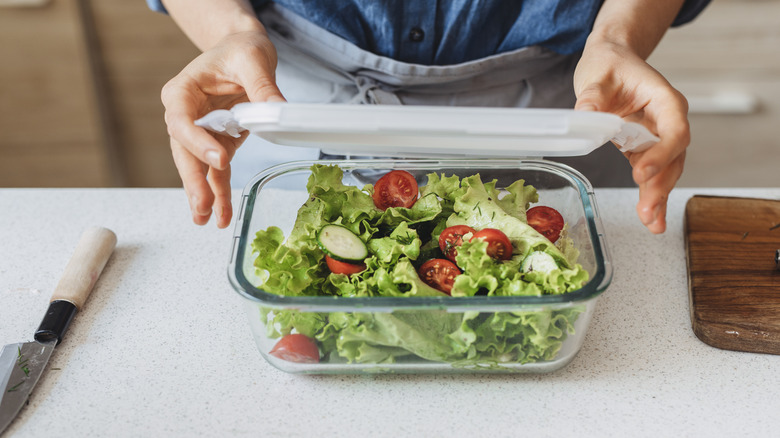
Food storage is often left out of the kitchenware equation, as many home cooks would arguably rather spend the money on gadgets, tools, and appliances that help them cook better or more efficiently. However, after you put so much work into a recipe, the last thing that you're going to want to do is store the leftovers in a container with a faulty seal or one that leaches plastics into your food.
"Glass storage containers will always last longer than cheap plastic and should not get foggy or scratched or melt like their plastic counterparts," says Clara Park. She recommends specifically looking for ones made from tempered glass with easy-to-clean lids. Chris Melder agrees. "Cheap thin plastic warps in the dishwasher, stains with tomato sauce and turmeric, and the lids stop sealing after six months." He specifically calls out Pyrex, Anchor Hocking, or high-quality plastics like Rubbermaid Brilliance as being worth buying.
Aside from material, you also want to consider the overall construction and durability of the container when deciding which ones to buy. "I'm willing to spend a little more on containers with dependable seals, sturdy construction, and replacement lids. A container stops being useful very quickly if its lid cracks or no longer closes properly," says Odette D'Aniello.
5. Scales and thermometers
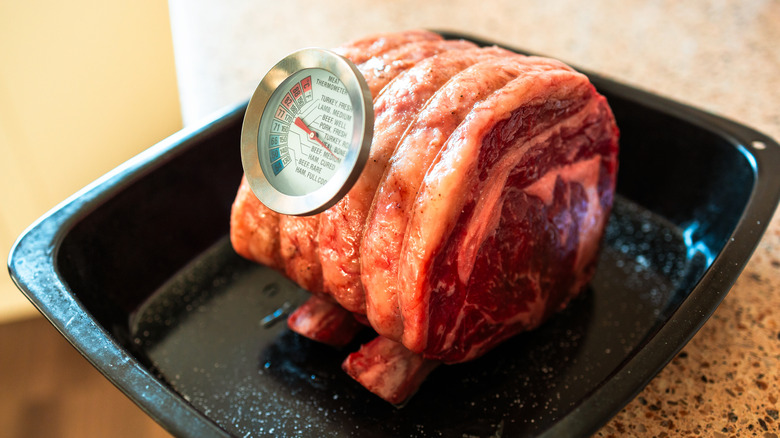
You will be paying a premium price for accuracy. Although it seems like a given that any scale, thermometer, or measuring device should be calibrated and correct every single time (as it's their only job), it is one promise that cheaper tools usually fall short on. "The cheapest instant-reads can be slow or inaccurate. A good ThermoWorks or similar is noticeably faster and more reliable," says Chris Melder, noting that accuracy is particularly vital for anyone looking to make candy or deep-fry. Odette D'Aniello agrees, highlighting the importance of accuracy for baking. "In baking, accurate measurements make a big difference. You can follow a recipe carefully, but if your scale gives inconsistent readings, your results can still vary," she says.
Melder also highlights other shortcomings of scales besides just accuracy, including small platforms, poor battery life, or buttons that stop working. "A decent $20–$40 scale with a big platform and tare function is worth it for baking and portioning," he says. D'Aniello also recommends avoiding thermometers without a clear accuracy specification or without manufacturer support.
Like the espresso machine example, not everyone needs every single high-end function. "As for thermometers, I don't need one that I can read or control from my phone. It has one job: to take the temperature, and there are plenty of great ones for under $30," Clara Park says.
6. Cutting board
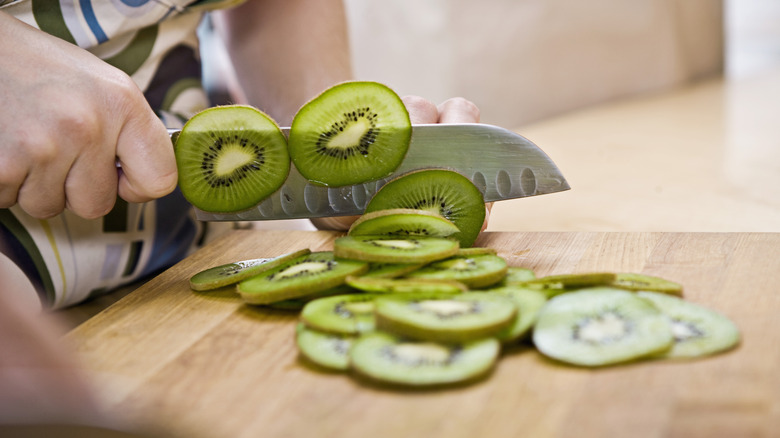
Cutting boards quite literally take a beating in your kitchen. Not only should you be replacing them relatively often (you'll know it's time when they start to flake and discolor), but you should be replacing them with high-quality, and often premium-priced ones.
"A sturdy, well-made cutting board is worth spending a little more on because it's something you use almost every time you cook. I look for one that sits flat, stays in place, and gives me plenty of room to work. A flimsy board that slides around makes prep really frustrating," says Odette D'Aniello. Not only is it frustrating to have to readjust the board, but it also isn't safe, as a sliding board and a sharp knife is never a good combination. Sliding is a particular issue for plastic boards, according to Chris Melder. "Thin cheap plastic warps, gets deeply scored (and hard to clean), and slides around. Wood feels better under the knife and is gentler on edges," he says. Clara Park is also a fan of wooden boards, noting that the plastic can end up in your food — one of the reasons why many people stop using plastic cutting boards — and get smelly.
Make no mistake: Wooden cutting boards will still need to be replaced, and they will require care (per Melder's recommendation, never leave them to soak). Though you may be spending more on a wooden board, compared to a cheap plastic board from Ikea or Walmart, it'll be worth it.
7. Stainless steel skillets or sauté pans
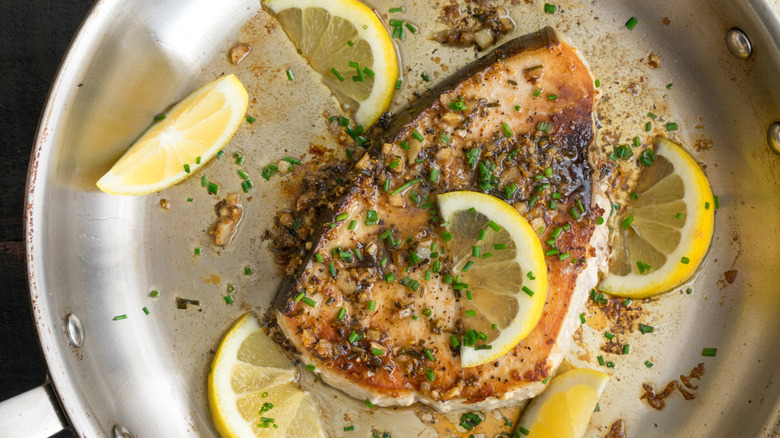
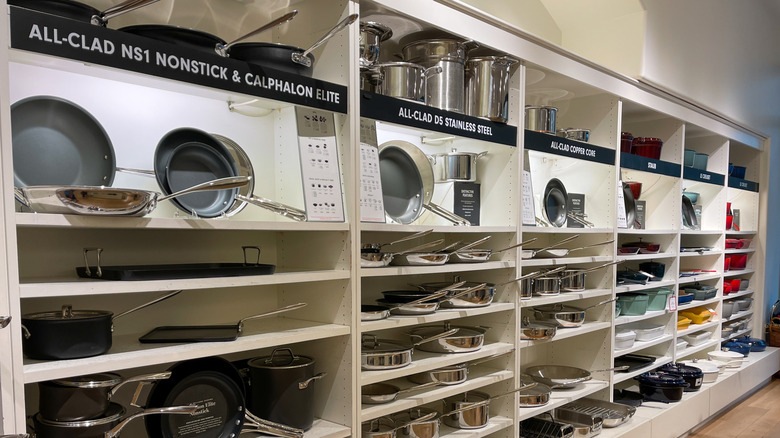
Stainless steel pans are a home kitchen essential. As long as you master all of the secrets to cooking with stainless steel, you can quite literally cook anything in it (including eggs ... if you dare). This is one item that our experts encourage you to splurge on.
"I would spend more on an everyday stainless steel skillet or sauté pan with good heat distribution, sturdy handles, and a flat base. That's a pan you can use for a wide range of meals," says Odette D'Aniello. Chris Melder recommends All-Clad, or something in a similar class, and says that this is one kitchenware item that "will outlive you if you treat [it] right." Consumer Reports thought favorably of OXO's Mira stainless steel pans, so it's good to know that you can still find quality stainless steel without having to shell out $100 for a pan.
Clara Park says that, if you're looking to save some money, you can pick and choose which stainless steel items you buy. "The only cheap pot that I think is ok is a small saucepan and lid because you don't really do much with it but boil water or reheat soups," she says. In our experience, stores like TJ Maxx and HomeGoods offer affordably priced single pans, which is great if you're looking to build your collection but don't want to cheap out and buy a stainless steel pan you'll need to replace within a year.
8. Tongs, spatulas, and whisks
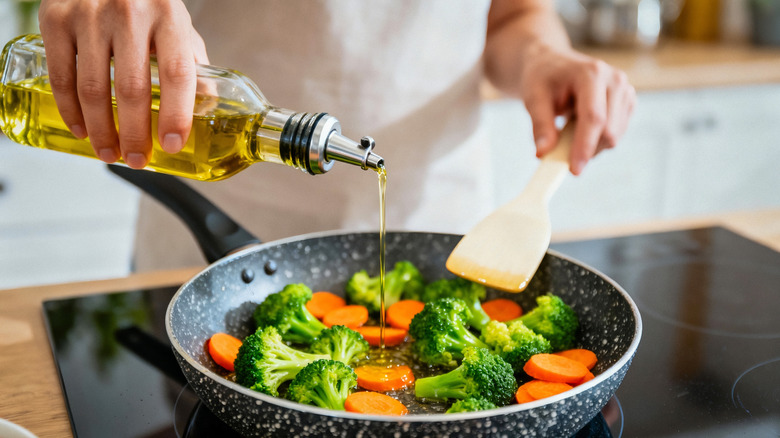
Utensils — a broad class of kitchenware that includes tongs, spatulas, whisks, and scrapers — are a category where you'd think you could spend less, seeing as the tools are just being used to stir things or transfer food. However, our experts note that premium utensils see big returns, especially when it comes to durability and frequency of replacement.
"Cheap silicone spatulas melt or tear. Cheap whisks bend, or the wires come loose. Cheap tongs have weak springs and slippery grips," says Chris Melder. This translates to more frequent replacements, which can add up over time. "Spatulas that are made from cheap plastic will melt and get scuffed up really easily," adds Clara Park. This is particularly important, as no one wants silicone or plastic flecks falling into their pasta sauce as they stir it.
Although Melder notes that the quality gap between cheap and expensive utensils isn't big, it's still considerable. "Spend a little more on solid stainless or good silicone-handled tools from a reputable brand, and you'll notice they feel better in the hand and last longer. Not life-changing, but after 30 years of flipping and stirring, your hands will thank you," he says.
9. Blenders and food processors
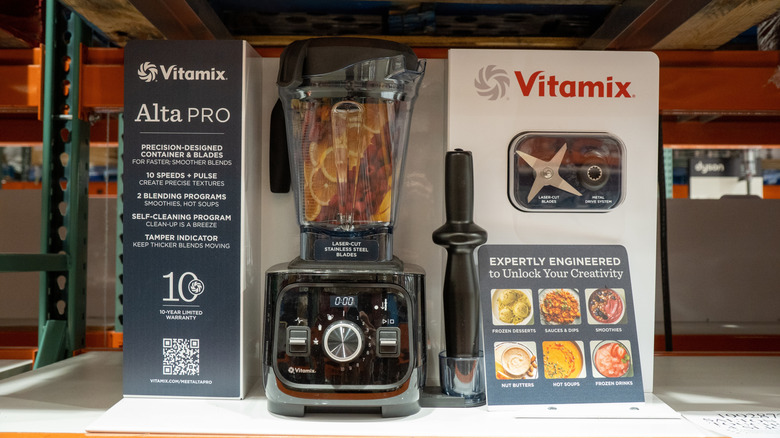
Maybe we're biased here because we swear by our Vitamix. But even our experts note that spending more on a blender or food processor is important, especially if you want something that will outlast you. Per Odette D'Aniello, premium blenders and food processors are especially good buys if you regularly mix thick batters and doughs, as they can strain the appliance. "Food processors with weak motors and thin plastic bowls struggle with dough or hard vegetables and the blades dull fast," says Chris Melder, who recommends Vitamix and high-end Cuisinart models because they can "handle daily abuse for years." "I have had my [Vita-Prep] blender for over 10 years and it shows no sign of wear," adds Clara Park.
D'Aniello also looks at the other, non-functional perks of a quality brand, like warranties, repairs, and the cost of replacement parts. "Some premium blender warranties cover parts, labor, and shipping, which is a tangible benefit to compare when shopping," she says. In the end, it may be less hassle to buy a high-end blender or food processor than to have to try and track down parts and repair a cheaper model.
10. Dishwashers
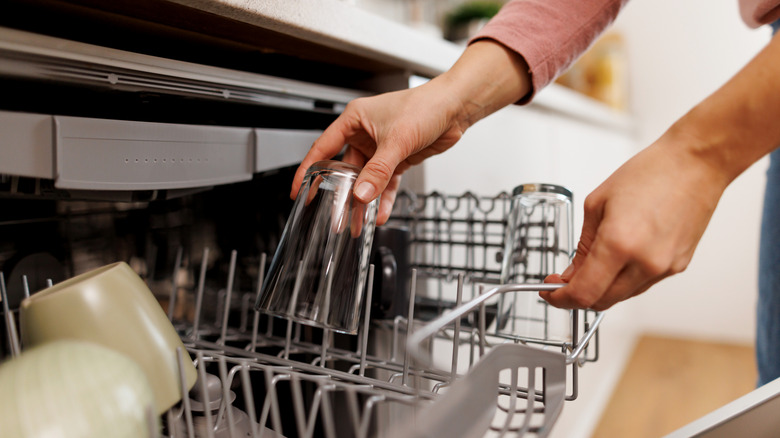
In this day and age, who has time to re-wash dishes? Your dishwasher is entrusted with an important and time-saving job in the kitchen, which is precisely why you don't want to cheap out. "I think if you don't want to pre-rinse your dishes, you need a fancy dishwasher. If you want to throw your dishes into the dishwasher with reckless abandon, you'll probably need a more expensive model," says Clara Park. Although it's true that you shouldn't even pre-rinse dishes before adding them to your dishwasher, you do want something that can actually clean your dishes, rather than send them back for another cycle.
Chris Melder highlights some of the other perks of more premium models: "Better motors, quieter operation, stronger spray arms, and more durable racks." He explains that cheaper machines tend to take longer to run, and the plastic parts inside of them crack often. From a durability standpoint, a more premium machine is the way to go, even if the upfront cost is daunting.
11. Stand mixers
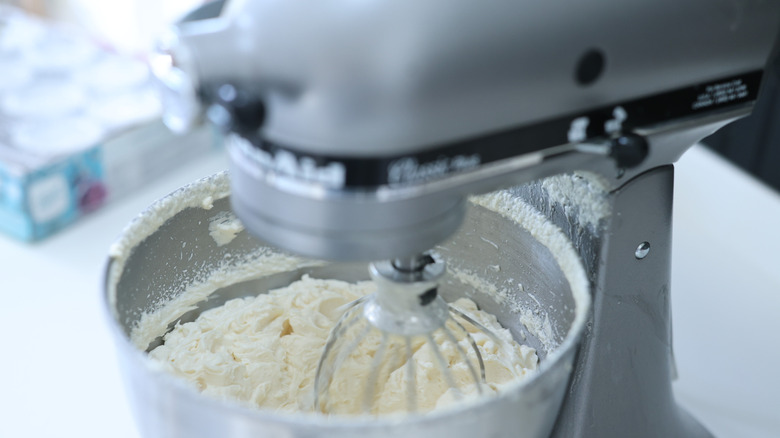
Is this another instance where we can wax poetic about our KitchenAid stand mixer? You betcha! This appliance is the workhorse of the kitchen, and although it can set you back several hundred dollars, the model is beloved by reviewers and worth every penny. But don't just take our word for it; our experts also recommended shelling out extra cash for a quality stand mixer. "A basic KitchenAid will last a long time if you don't abuse it, but the cheaper no-name or entry-level models struggle with heavy doughs and the plastic gears strip," says Chris Melder, who also highlights that the smaller motors, weaker gears, and flimsy bowls and attachments in cheaper models make them worth avoiding. "If you're really putting it to the test, it's going to die out quicker than a higher quality mixer," says Clara Park.
Odette D'Aniello also says it's worth considering what you plan to use the mixer for when deciding how much you want to spend. "In my opinion, most budget mixers are better suited to occasional cake batter or whipped cream than frequent bread dough," she says. "Even an expensive mixer can struggle if you overload it, and it's important to pick a stand mixer that can handle what you'll be working on." In short, take care of your stand mixer, and it will take care of you.
12. Baking pans
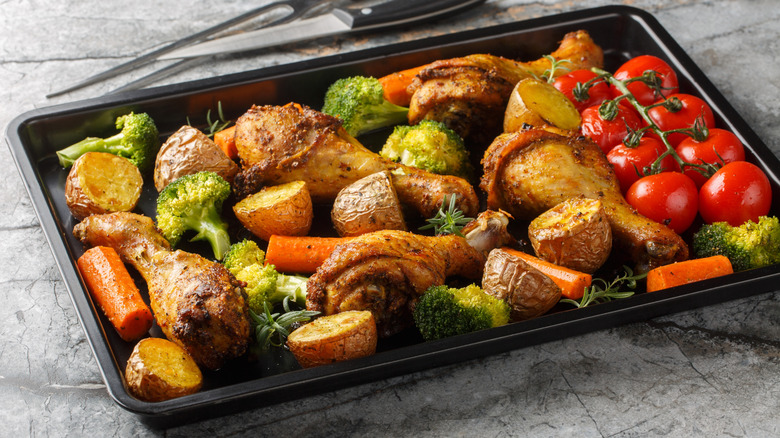
Have you ever baked a sheet pan meal in your oven and heard a, frankly terrifying, popping sound coming from your oven? That is likely the sound of your pan warping, and it's a common occurrence for cheap and flimsy baking pans. Chris Melder says that thin metal and rapid temperature changes are the reason for warping, noting that cheap half-sheet pans are usually made with light-gauge aluminum. The warping isn't just an awful noise to listen to, but it can also affect your cooking. "Warped pans give you uneven browning and are a pain to store," he says and suggests heavier-gauge commercial sheet pans instead. We recommend buying these pans at baking supply stores, as you can get commercial-grade pans (as well as other items) for a fraction of the cost.
Of course, a pan — no matter the price — is no use if you don't take care of it. This is why Odette D'Aniello recommends always cooling baking pans before you wash them, as it circumvents the rapid temperature change that causes warping.