

10 Ina Garten Salad Tips We Didn't Know We Needed Until Now

We may receive a commission on purchases made from links.
If there's anyone who knows how to put together a good salad, it's Ina Garten. She built her career on creating easy-going dishes that focus more on fresh, flavorful ingredients than fancy techniques. Yet, at the same time, she also has a knack for taking something as simple as a salad and elevating it into something elegant. Over the years, she's shared countless recipes and tips to help home cooks improve their craft, including several pointers for making stellar salads.
What stands out about Garten's approach to salads is how she focuses on details that most people overlook. Much of her knowledge comes from trial and error, as she tests her recipes up to a whopping 25 times to ensure every element is on point. From that, she's learned how much the basics matter, like ensuring your greens are properly dried and your dicing is just right. She's also discovered several hacks that can cut back on time and make a big difference in how a salad tastes and looks.
In an effort to step up our salad game, we turned to Garten for tips on everything from leafy greens to warm grains and creamy pasta and potato salads. We pored over the Barefoot Contessa's iconic cookbooks, re-watched episodes of her television shows, and combed through social media posts where she shared invaluable advice. These are some of her suggestions for making salads that stand out.
1. Go to town with the salad spinner
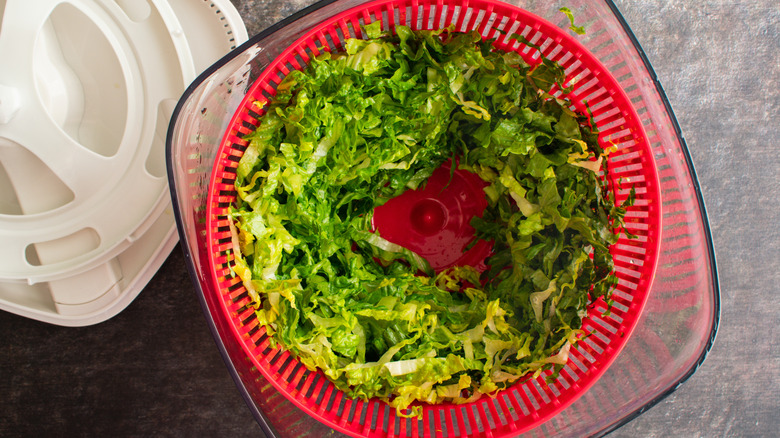
Whenever you're working with leafy greens, it's always good to give them a rinse first to remove any dirt and other impurities. The only problem is that water tends to gather in the crevices, and that can result in a soggy salad where the dressing just pools at the bottom of the bowl. In an episode of "Barefoot Contessa" (via YouTube), Ina Garten said, "The key is to make sure they're really dry and then the dressing really sticks to it."
The easiest way to thoroughly dry your greens is with a salad spinner, as the centrifugal force whisks away the water with just the push of a button or pull of a cord. But if your leaves are too big to throw in the spinner (or you don't have a spinner at all), Garten has a hack for that. She suggests placing the leaves in a kitchen towel, pulling up the corners to create a tent, then holding the corners together and spinning the whole thing in fast circular motions to shake all the water off.
Garten also puts her salad spinner to other uses. On the "Ask Ina" page of her website, she said, " To make herbs last a few days in refrigerator, I wash them, dry them well in a salad spinner, and place them in a plastic storage bag with a slightly damp paper towel." You can also use your salad spinner to drain canned foods, remove excess oil from homemade fries, and separate seeds from canned tomatoes.
2. Match your knife to your ingredients
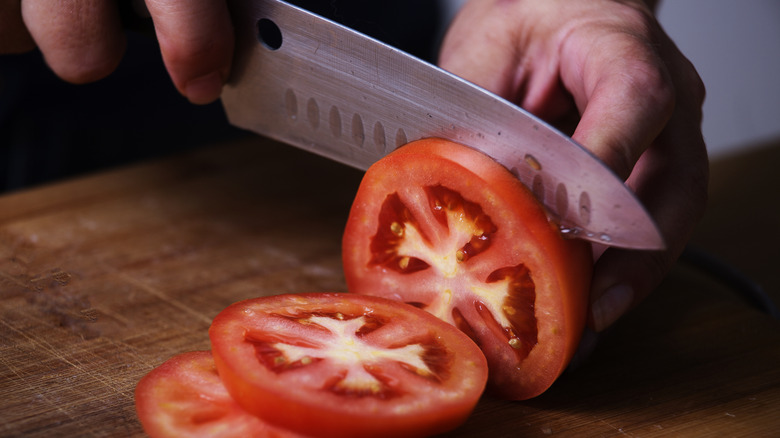
If you've been using the same kitchen knife to chop all your salad ingredients, you might not be getting the best results. In an Instagram post, Ina Garten writes, "The most important tool every home cook should have is a great set of knives." That's because different knives have specialized blades that are meant to tackle various foods. The four main knives Garten suggests having are a chef's knife, a slicing knife, a bread knife with a serrated blade, and a paring knife.
Once you have the right knives, you can match them to your ingredients. For example, Garten uses a small, serrated knife to cut tomatoes because the jagged edges of the blade help grip the slippery surface and slice through without squishing the tomato or tearing the skin. A chef's knife is ideal for harder items such as onions because it's sharp enough to slice through cleanly. A paring knife is great for cutting small items such as fruit, and a slicing knife is perfect for carving meat.
As for the make of knives, Garten swears by a German knife brand called Wüsthof. She's particularly fond of the Wüsthof Classic line, which includes all of the above-mentioned knives as well as fillet knives, steak knives, utility knives, and even special tomato knives that have serrated edges and forked tips to help pick up slices. She said on Instagram of the Wüsthof knives, "They're an investment, but if you take care of them, they'll last a lifetime!"
3. Be consistent with the size of your ingredients
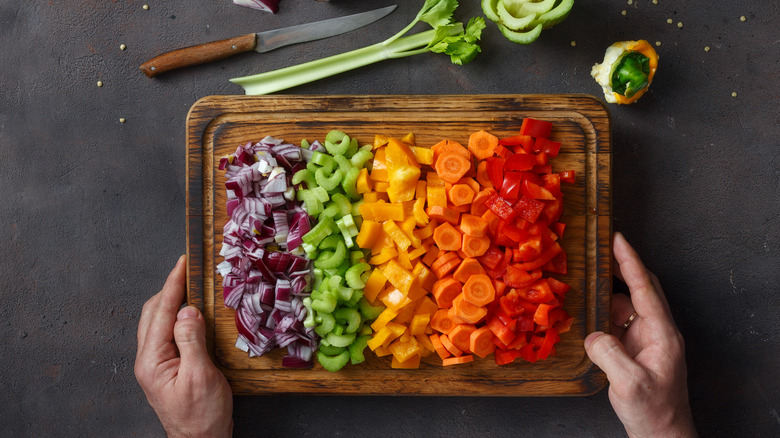
Having hosted numerous parties and catered many events while she was operating the Barefoot Contessa specialty store, Ina Garten knows a thing or two about creating dishes that not only taste great but also look appetizing. One way that she makes her salads more visually appealing is by being consistent with the size of the ingredients. As per the Food Network, Garten said, "If everything is cut exactly the same size it looks like a really refined salad even though the ingredients are very simple."
While some people like to finely dice and slice salad items, Garten is a big proponent of cutting her ingredients into big bite-sized pieces. "I don't like things minced up like baby food," she said on an episode of "Barefoot Contessa" (via YouTube). On another episode via YouTube highlighting a roast chicken Cobb salad, she said she cut up avocados like "big dice because when I'm making an assembled salad, I want everything to be really clear."
Beyond just the aesthetics, there are a few reasons why larger, consistently sized ingredients work so well for salads. For one, it makes the items easier to pick up with a fork. Plus, keeping everything roughly the same size helps each bite feel balanced, so you're not getting a forkful of just lettuce or only one ingredient at a time. It also allows the dressing to coat everything more evenly, rather than just clinging to smaller pieces and leaving the larger ones under-seasoned.
4. Roast your proteins instead of poaching
If you're planning on bulking up your salad with some protein, chicken is a natural choice because the neutral flavor is a great match for a wide array of ingredients and dressings. However, it can also be a tad bland, especially if it's simply poached. On an episode of "Barefoot Contessa" (via YouTube), Ina Garten said, "Chicken has so much more flavor when it's roasted than it does when it's poached. There's something about the water that just takes all the flavor out of it."
When it comes to chicken for salads, Garten has said that the method she uses most is roasting bone-in, skin-on chicken breasts. She just adds olive oil, salt, and pepper and pops them in the oven until cooked through. The skin prevents the meat from drying out, and the bone helps the heat distribute more evenly, so you get juicier, more tender meat. Once the breasts come out of the oven and have cooled, Garten often shreds the meat by hand to get nice chunks.
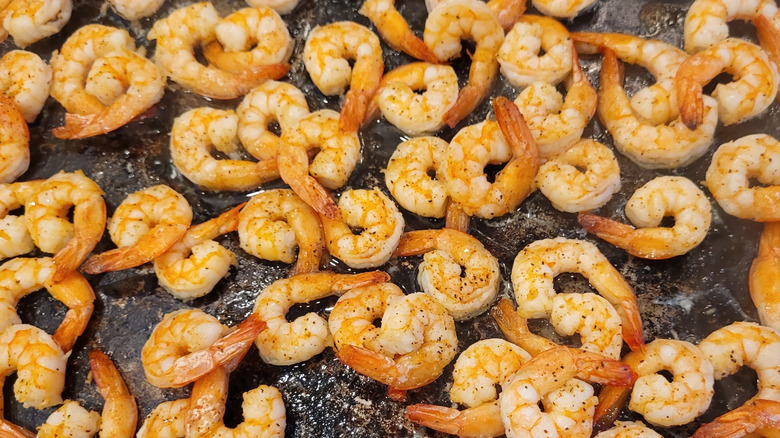
On another episode of "Barefoot Contessa" (via YouTube), Garten revealed that she uses the same method for her shrimp salad. She explained that when she owned her specialty shop, she and her team used to prepare the shrimp in big pots of boiling water. Garten said, "I never really thought it added any flavor to the shrimp." Now, she simply tosses the shrimp in olive oil, salt, and pepper and roasts them until pink and firm.
5. Quality olive oil and vinegar are the keys to a great dressing
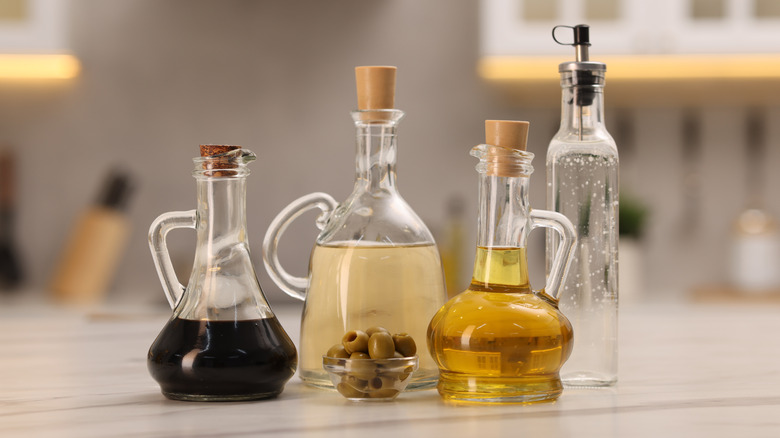
Making a vinaigrette from scratch might sound intimidating, but it's actually quite easy. All you need are a few simple ingredients such as olive oil, something acidic such as vinegar, perhaps some mustard, and seasonings such as salt and pepper. For example, Ina Garten's super-easy lemon vinaigrette contains just olive oil, lemon juice, salt, and pepper. However, as Garten pointed out on an episode of "Barefoot Contessa" (via YouTube), "The key to making a really good vinaigrette is using really good ingredients."
If you're a "Barefoot Contessa" fan, you may have noticed that Garten often suggests using quality olive oil for many dishes. When a fan asked her to elaborate on "Ask Ina," she replied, "By 'good' olive oil I mean buy the best oil that your budget allows. It certainly doesn't need to be the most expensive! I use Olio Santo olive oil from California because it's flavorful, fruity and not heavy." Ideally, you want the olive oil to add subtle flavor without overpowering your other salad ingredients.
Good vinegar is also important. Garten recommends stocking up on several varieties so that you can pair them with different salads. For example, if your salad contains apples, you may want to use apple cider in your vinaigrette to enhance those flavors. Garten also uses apple cider vinegar in a butternut squash salad to add a sweet and sour component. She's also a fan of balsamic, champagne, red wine, and white wine vinegars.
6. Don't dirty more dishes than you need to
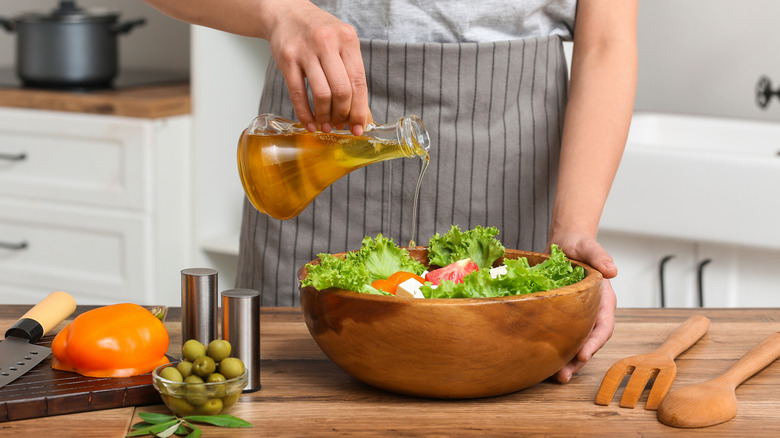
One of the great things about Ina Garten is that she not only shares cooking tips but also kitchen hacks for doing things quicker and more efficiently. And when it comes to salads, her hack for making salad dressing without any extra mess is simple but genius. Instead of mixing your ingredients into a bowl or cruet, just pour them all into a measuring cup and mix them directly in there. That way you have an easy vessel for drizzling your dressing and fewer dishes to clean up later.
Then again, there are times where you might not even need a measuring cup at all. In "The Barefoot Contessa Cookbook," Garten shared a recipe for grilled salmon salad where she suggests skipping the vinaigrette-making step altogether. She said, "At Barefoot Contessa we often just toss all the ingredients together and get the same delicious flavor with less work and fewer bowls."
Keep in mind that the "mix-everything-in-one-bowl" approach works best if you're planning on serving the salad right away or if the ingredients can handle sitting in the dressing for a while. Think heartier bases like pasta, potatoes, and proteins. However, leafy greens and porous veggies may go limp and become oversaturated if you wait too long to serve the tossed salad.
7. Go easy on the dressing
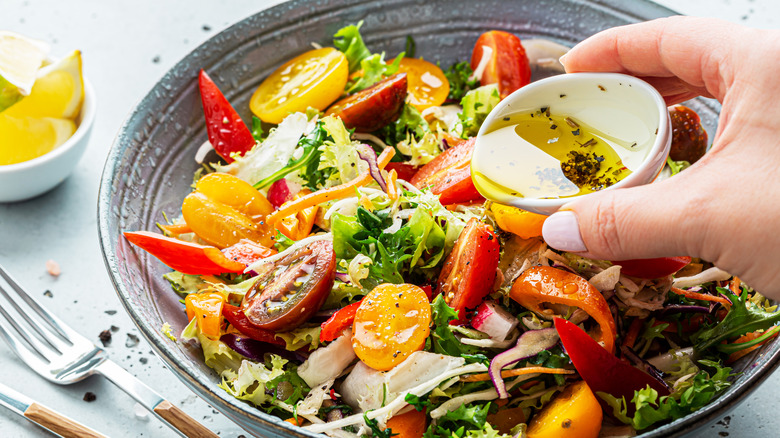
How many times have you poured dressing onto your salad thinking you're amping up the flavor, only to end up with a watery or gloopy mess? That's why Ina Garten often advises using a light hand when it comes to salad dressing, particularly salads with leafy greens. She suggests adding just enough dressing to moisten the leaves, but not so much that it drenches them.
In some cases, Garten suggests really dialing back the dressing in the early stages. On an episode of "Barefoot Contessa" (via YouTube) where she demonstrated how to make a tarragon potato salad, she said, "It's kind of my habit to put half the dressing in and then half later when I'm done. You just never know how much it's going to absorb. I hate when it's just soggy."
Garten also has another clever trick for when you want to make salad in advance but don't want it to soak up too much dressing. She said on Instagram, "I take the vinaigrette and I pour it into a big salad bowl, and I put the lettuce right on top, but I don't mix it." From there, you can either refrigerate the salad or simply set it on the table, and then when you're ready to eat, you just toss all the salad ingredients together.
8. Dress warm salads right away
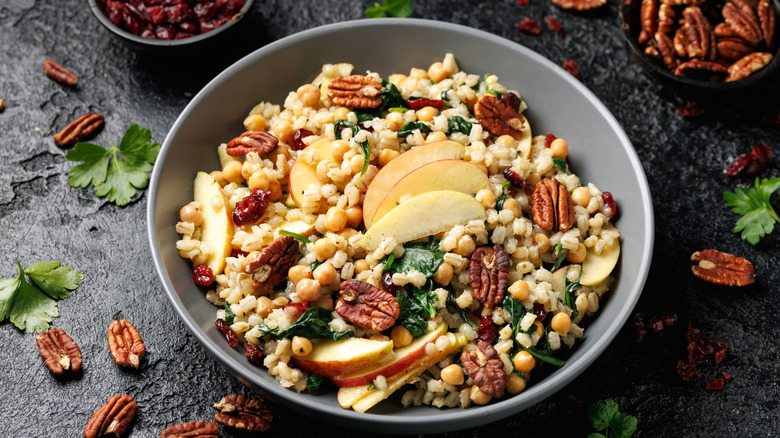
Many of Ina Garten's salads incorporate warm ingredients, like her favorite farro salad side dish as well as pasta salad, chicken salad, and potato salad. The only problem is that those base ingredients tend to be a little bland. You might think that the solution would be to kick the flavors of the dressing up a notch or to simply add more dressing, but then you might end up overwhelming the dish or ending up with a soupy salad. Garten's solution? Add the dressing when the ingredients are warm or hot.
Garten's reasoning for adding dressing to warm ingredients right away is that it helps them absorb flavors better. As she explained on an episode of "Barefoot Contessa" (via YouTube), "Once it's cold, it's firmer, and it doesn't absorb the flavor so much." In that particular case, she was talking about roasted chicken for a chicken salad, but the same logic applies to any warm ingredient that absorbs moisture and flavors, such as grains, noodles, and starchy vegetables.
9. Let heavier dressings and salads sit for a while
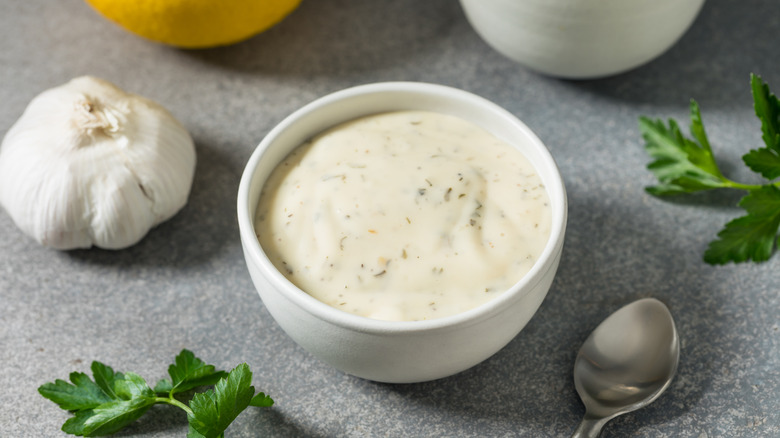
While some salads are best dressed right before eating, others actually get better if they're dressed and then left to hang out for a while. Ina Garten believes this is particularly true for heavier mayo-based salads, such as those containing protein, pasta, or potatoes. For example, on an episode of "Barefoot Contessa" (via YouTube) where she shared her recipe for tuna salad, she said, "Now, the secret to really good tuna is the flavors really develop if you let them sit for a little while in the fridge. They sort of blend together."
For salads with mayo-based dressings, Garten suggests letting the salad mixed with the dressing sit in the fridge for at least 30 minutes, or even a few hours if you have time to spare. This also extends to creamy salad dressings, which can benefit from some time in the fridge to let the flavors develop. These types of salads and dressings will typically keep in the fridge for about five to seven days, and you may just find that they taste even better a few days in.
10. Not all salads have to be complicated
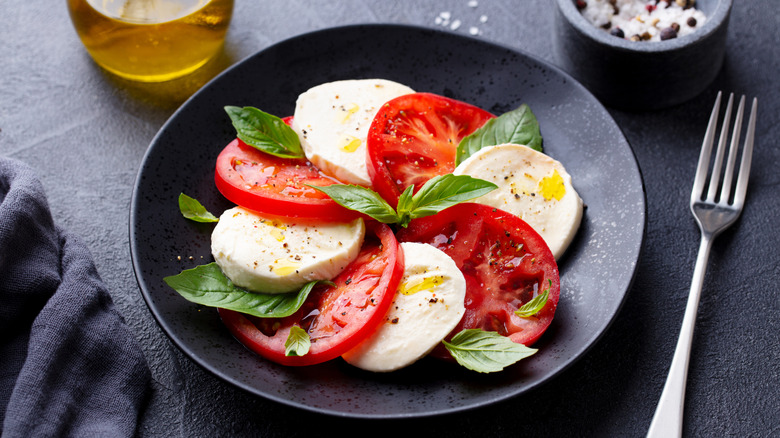
Sure, you can pack a ton of flavor into a salad by adding tons of gourmet ingredients and going all out with fancy homemade dressings. But Ina Garten often points out that it doesn't have to be that complicated. In fact, some of the best salads are made with simple ingredients that you can find at the grocery store, a farmer's market, or in your fridge or pantry.
Many of Garten's salad recipes feature just a few ingredients that balance each other out so that no one flavor overpowers the others. In fact, in her memoir "Be Ready When the Luck Happens," Garten revealed she has a three-flavor rule she sticks to for most dishes. "I don't think there should be more than three prominent flavors in any recipe," she wrote. "My brain just can't process more than that without becoming overloaded."
In addition to keeping the flavors in check, Garten also tries to keep the salad-making process streamlined. She's not averse to using handy kitchen tools such as a food processor to shred Brussels sprouts or grate Parmesan. She also doesn't fuss over having the exact right ingredients. For example, while making a Cobb salad on an episode of "Barefoot Contessa" (via YouTube), she said, "I actually love composed salads like this because you can really throw anything in that you like."