

Classic New England Clam Chowder Recipe

We may receive a commission on purchases made from links.
New England clam chowder dates back hundreds of years, starting with a soup the indigenous Americans made from shellfish. European settlers added ship's biscuits to thicken it and were also responsible for the name: a chaudière is a type of cooking pot, while "jowter" was a 16th-century word for fishmonger. One or the other (or possibly both) words evolved into the modern term for this type of soup, and dairy products like cream and butter eventually replaced the bread as a thickener. By the 19th century, potatoes had also joined the party.
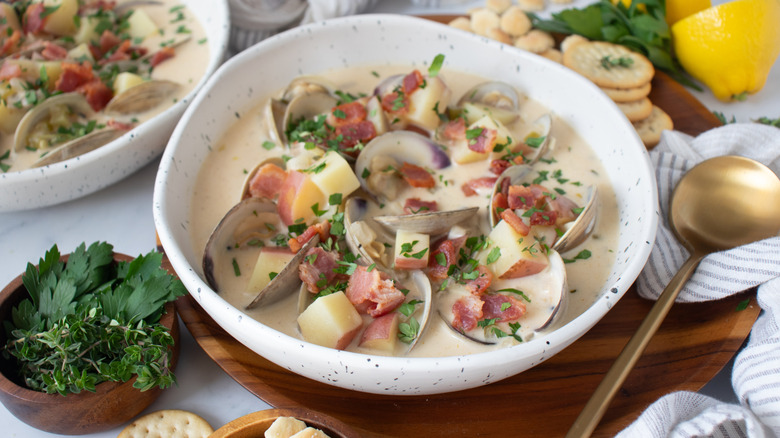
Recipe developer Patterson Watkins is a whole-hearted fan of chowders, and her classic New England clam chowder recipe pays homage to such a staple. "The richness, the warmth, [and] the cozy factor all [provide] the pertinent feels behind a good soup," she says. Classic New England clam chowder doesn't always include the shells, but Watkins opts to leave them on here. It not only makes for a striking presentation, but as she explains, "I wanted to extract as much flavor as possible from the ingredients — the clams, especially. They are responsible for the stock as well as being the star soup component." The whole clams, shells and all, provide flavor to the cooking liquid, some of which is subsequently used in the soup. The vegetables and seasonings also help to flavor the clams as they steam.
Collect the ingredients to make classic New England clam chowder
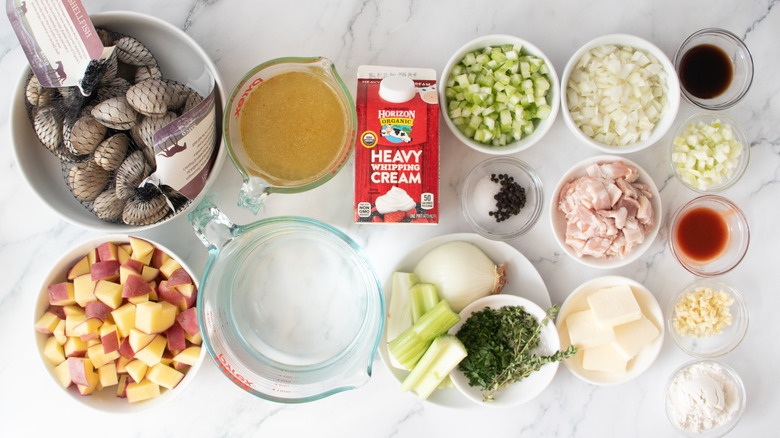
To cook the clams and build the broth, you'll need some littleneck clams and water along with an onion, fennel, celery, salt, and black peppercorns. Additional ingredients for the chowder include bacon, butter, onion, celery, fennel, garlic, flour, chicken broth, heavy cream, hot sauce, Worcestershire sauce, red potatoes, parsley, and thyme.
Step 1: Clean the clams
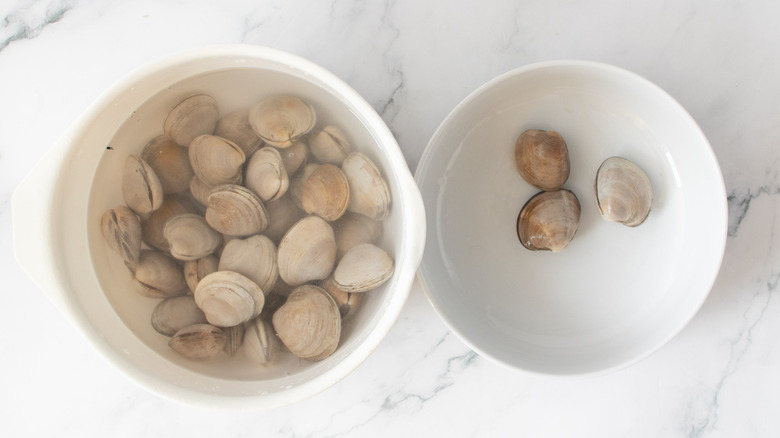
Rinse the clams in cold water and scrub to remove any dirt or sand.
Step 2: Simmer the clams with seasonings and vegetables
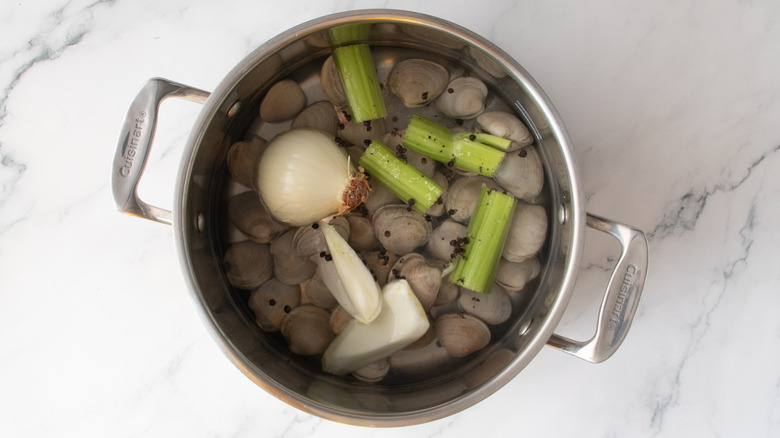
Place the cleaned clams in a large pot and cover with water. Add the onion, fennel, celery, salt, and peppercorns to the pot, stir to combine, and bring to a boil over high heat.
Step 3: Take the clams out of the pot
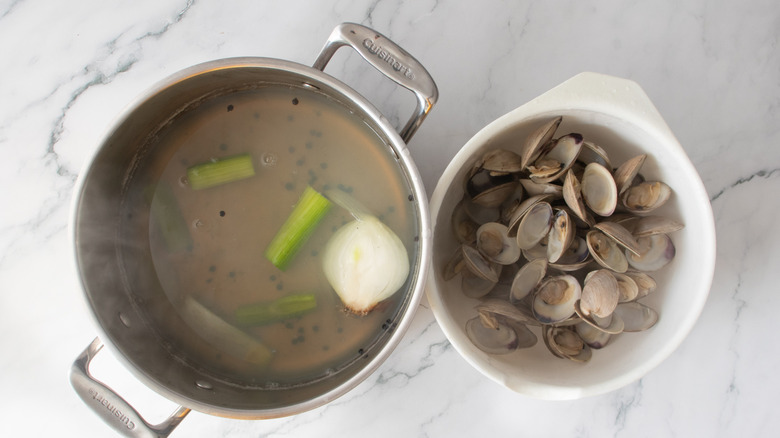
Once boiling, reduce the heat to low, and cook for 5 to 10 minutes or until the clams have opened (discard any unopened clams). Remove the cooked clams from the pot and set aside.
Step 4: Pour the broth through a strainer
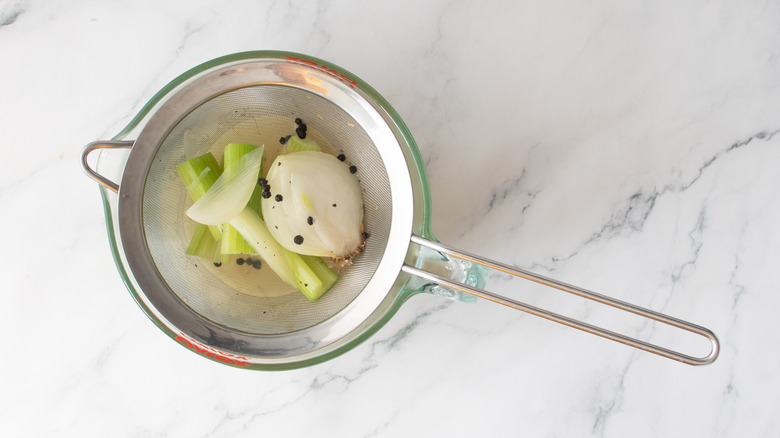
Strain the broth through a fine mesh strainer, discarding the veggies and peppercorns.
Step 5: Strain the broth again
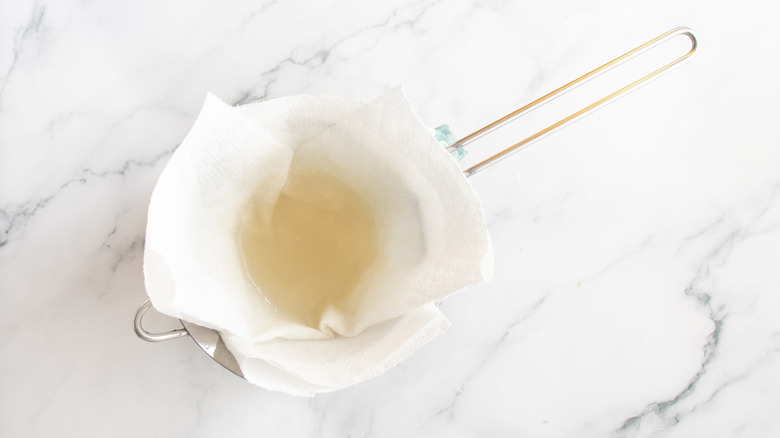
Strain the broth a second time through either sheets of paper towels or a coffee filter. Set aside.
Step 6: Fry the bacon
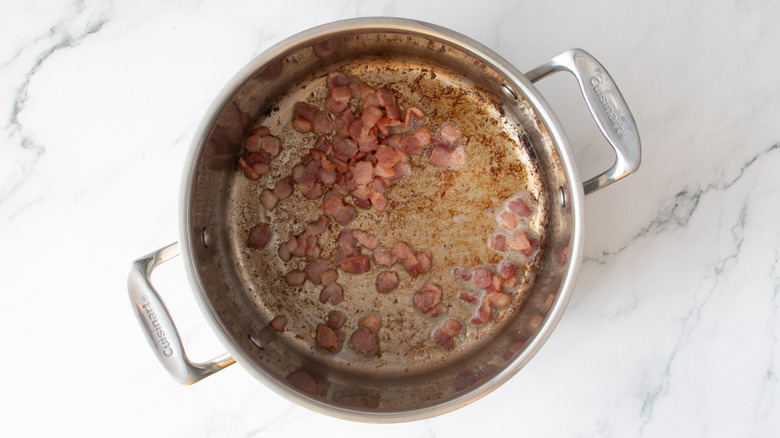
Cook the bacon in another large pot or Dutch oven over medium heat until crisp, about 3 minutes.
Step 7: Drain the bacon
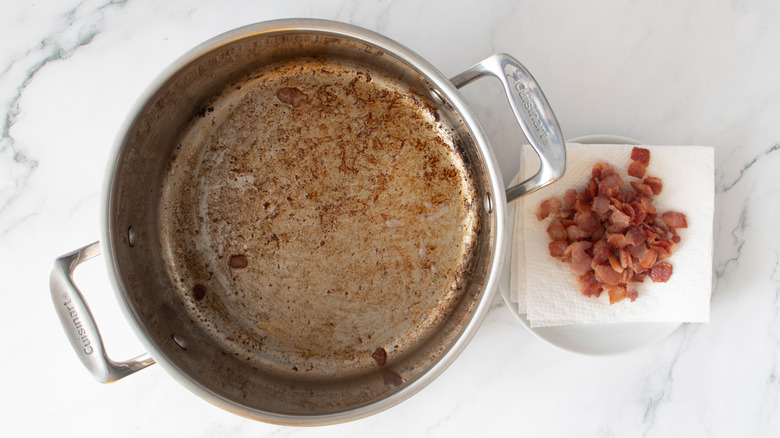
Remove the bacon from the pot using a slotted spoon and set aside to drain on paper towels.
Step 8: Melt the butter
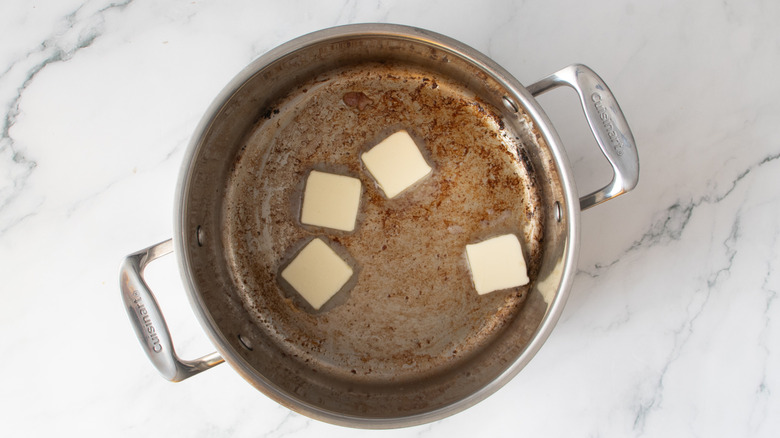
Add the butter to the pot and melt.
Step 9: Fry the additional vegetables
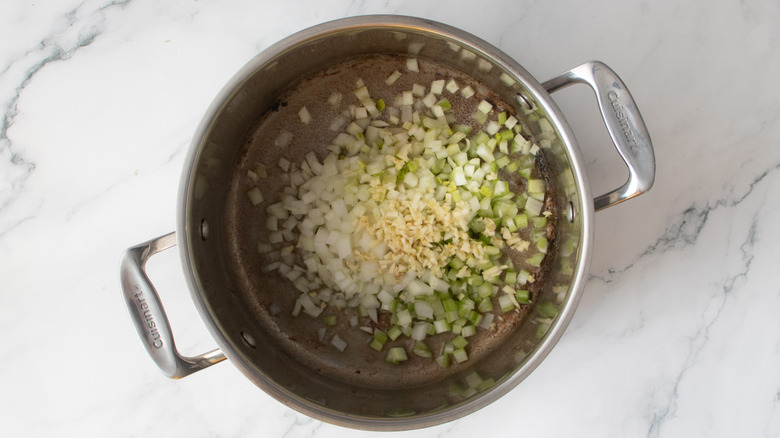
Once melted, add the diced onion, celery, fennel, and garlic to the pot, stir to combine, and saute for 3 minutes or until tender-crisp.
Step 10: Stir in some flour
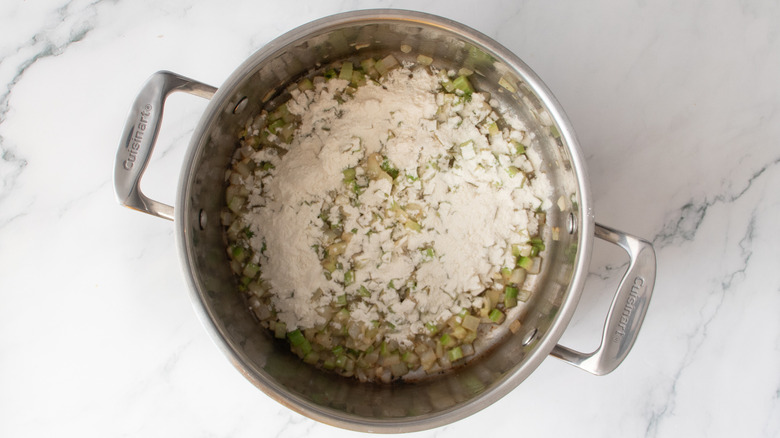
Sprinkle the veggies with flour and stir to combine the roux. Cook for 1 minute more.
Step 11: Pour in the liquids
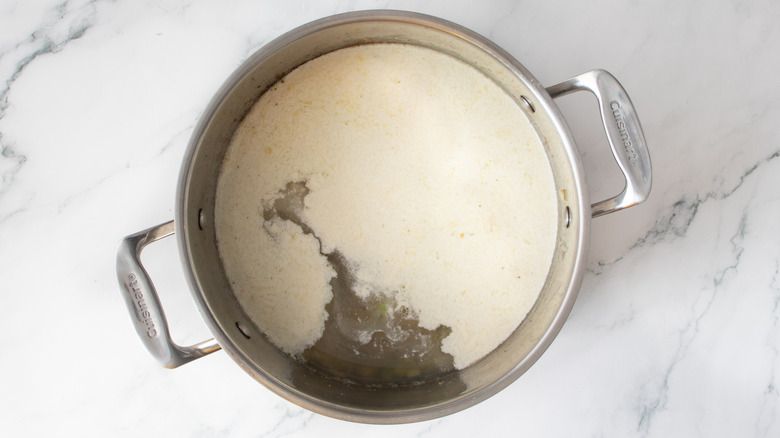
Add the chicken broth, heavy cream, and 3 cups of the clam broth, stirring to combine.
Step 12: Add the condiments
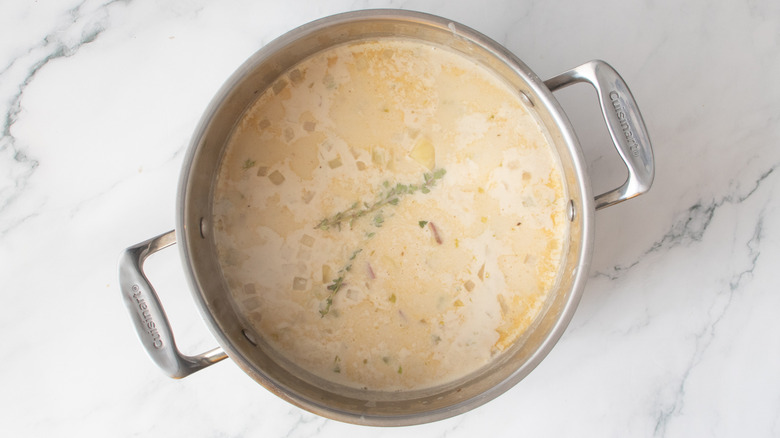
Season the liquid with hot sauce and Worcestershire sauce, stir to combine, and bring to a simmer.
Step 13: Put the potatoes in the pot
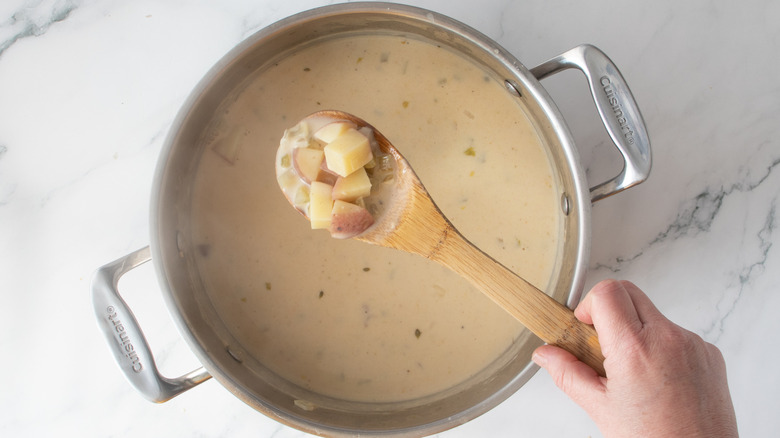
Once simmering, add the potatoes and thyme sprig to the pot, and stir to combine. Cook, stirring occasionally, until the potatoes are tender, about 15 to 20 minutes.
Step 14: Return the clams to the pot
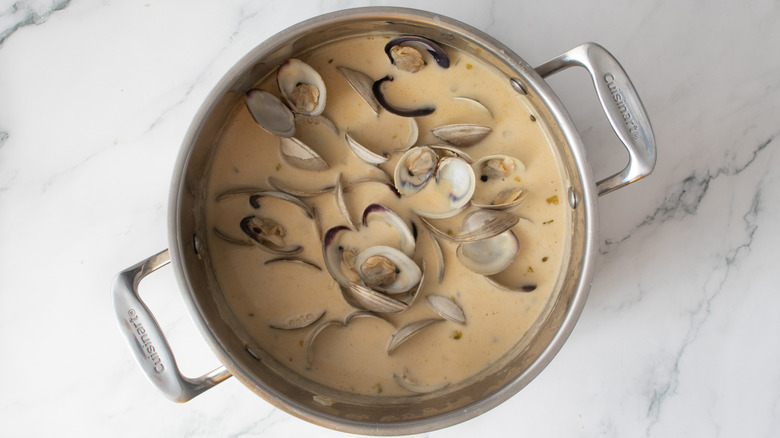
Return the cooked clams to the pot and gently stir to combine. Continue to cook for 1 to 2 minutes or until the clams have reheated. Season to taste with salt and pepper.
Step 15: Garnish and serve the clam chowder
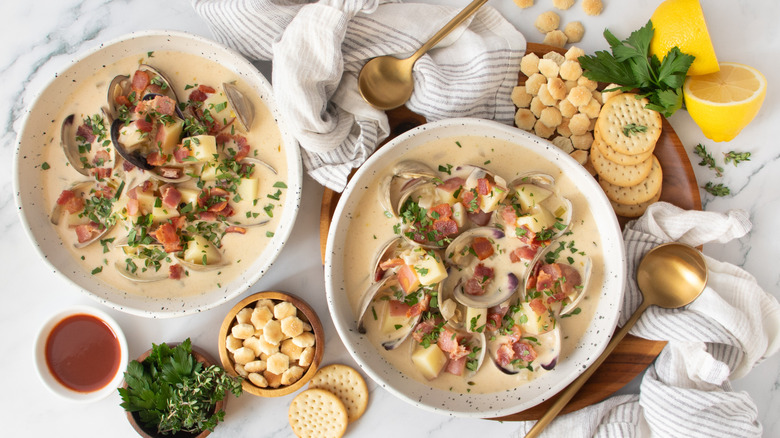
Divide the chowder between bowls and sprinkle with parsley, thyme, and cooked bacon before serving.
What to serve with classic New England clam chowder
Classic New England Clam Chowder Recipe
This classic New England clam chowder recipe features whole littleneck clams and a homemade clam broth for extra freshness and appeal.
Ingredients
- For the clams and broth
- 36 littleneck clams
- 3 ½ cups water
- ½ yellow onion, peeled
- ¼ fennel bulb
- 1 celery stalk, quartered
- 1 teaspoon salt
- 1 teaspoon black peppercorns
- For the chowder
- 4 bacon strips, diced
- 4 tablespoons salted butter
- 1 cup diced yellow onion
- 1 cup diced celery
- ¼ cup diced fennel
- 3 garlic cloves, peeled and minced
- 4 tablespoons all-purpose flour
- 1 cup chicken broth
- 1 cup heavy cream
- 1 tablespoon hot sauce
- 1 tablespoon Worcestershire sauce
- 3 cups large diced red potatoes
- 1 thyme sprig
- 2 tablespoons chopped fresh parsley
- 2 teaspoons chopped fresh thyme
Directions
- Rinse the clams in cold water and scrub to remove any dirt or sand.
- Place the cleaned clams in a large pot and cover with water. Add the onion, fennel, celery, salt, and peppercorns to the pot, stir to combine, and bring to a boil over high heat.
- Once boiling, reduce the heat to low, and cook for 5 to 10 minutes or until the clams have opened (discard any unopened clams). Remove the cooked clams from the pot and set aside.
- Strain the broth through a fine mesh strainer, discarding the veggies and peppercorns.
- Strain the broth a second time through either sheets of paper towels or a coffee filter. Set aside.
- Cook the bacon in another large pot or Dutch oven over medium heat until crisp, about 3 minutes.
- Remove the bacon from the pot using a slotted spoon and set aside to drain on paper towels.
- Add the butter to the pot and melt.
- Once melted, add the diced onion, celery, fennel, and garlic to the pot, stir to combine, and saute for 3 minutes or until tender-crisp.
- Sprinkle the veggies with flour and stir to combine the roux. Cook for 1 minute more.
- Add the chicken broth, heavy cream, and 3 cups of the clam broth, stirring to combine.
- Season the liquid with hot sauce and Worcestershire sauce, stir to combine, and bring to a simmer.
- Once simmering, add the potatoes and thyme sprig to the pot, and stir to combine. Cook, stirring occasionally, until the potatoes are tender, about 15 to 20 minutes.
- Return the cooked clams to the pot and gently stir to combine. Continue to cook for 1 to 2 minutes or until the clams have reheated. Season to taste with salt and pepper
- Divide the chowder between bowls and sprinkle with parsley, thyme, and cooked bacon before serving.
Nutrition
| Calories per Serving | 361 |
| Total Fat | 23.1 g |
| Saturated Fat | 12.6 g |
| Trans Fat | 0.6 g |
| Cholesterol | 78.9 mg |
| Total Carbohydrates | 23.5 g |
| Dietary Fiber | 2.6 g |
| Total Sugars | 4.4 g |
| Sodium | 899.3 mg |
| Protein | 15.7 g |

What makes this recipe a 'classic' New England clam chowder?
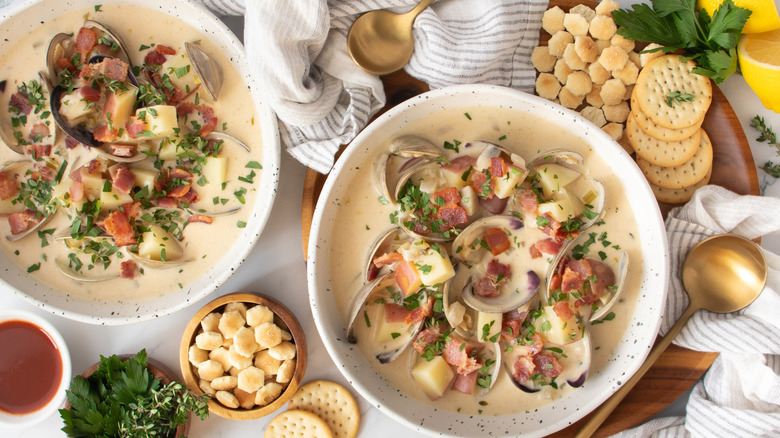
Classic New England chowder is creamy and made with potatoes, as is this one. It may also be made with salt pork, although here we're going with bacon because it's more of a kitchen staple. New England clam chowder often includes onions and celery, too, as does this one, although a bay leaf is more typical than thyme. (Feel free to add one if you wish.) The addition of fennel may not be traditional, but it is endorsed by Andrew Zimmern. Yet another way this recipe differs from the standard is that usually the clams are shucked and chopped, but the shells do add visual interest.
Chowders come in many varieties, but clarifying the difference between soup and chowder makes as little sense as specifying what makes fruit different from apples. Just as an apple is a type of fruit, so, too is a chowder a type of soup. What makes a soup a chowder is the chunky ingredients. Chowders are often, but not always, creamy — the difference between Manhattan and New England clam chowder is that the former has a tomato-based broth and doesn't contain dairy. Rhode Island clam chowder has a clear broth, while Long Island clam chowder includes both tomatoes and cream.
Among the different types of chowders are ones made with seafood. In addition to the aforementioned clam chowders, there are also mussel, scallop, fish, and oyster chowder. (The latter differs from oyster stew in that it typically includes potatoes and other vegetables along with a pork product like bacon.) There are also vegetable chowders such as corn and potato, as well as chicken chowder.
Can I use a different type of clam in this chowder recipe?
If you want to make this chowder with shell-on clams, then your best alternative to littlenecks is going to be cherrystones. These are similarly sized, and they also have hard shells. Steamer clams tend to have softer shells which might break apart while cooking, which is not only bad for aesthetics, but poses a risk to the unwary diner who might chip a tooth. You can certainly use these clams to make chowder, but you'll need to cook them separately and remove the shells before adding them to the soup. Larger clams like quahogs will also need to be steamed separately, then removed from their shells and chopped into smaller pieces.
If fresh clams are unavailable or you just don't want to put in all the effort of cooking them, you can certainly use frozen or canned clams. Some canned clams come pre-chopped, which might result in smaller pieces. The upside is that you'll get better distribution throughout the soup, but you might want to dice the potatoes smaller to balance things out. Bottled clam juice can also be used to enhance the flavor of the broth.