

Easy Pork Egg Roll In A Bowl Recipe
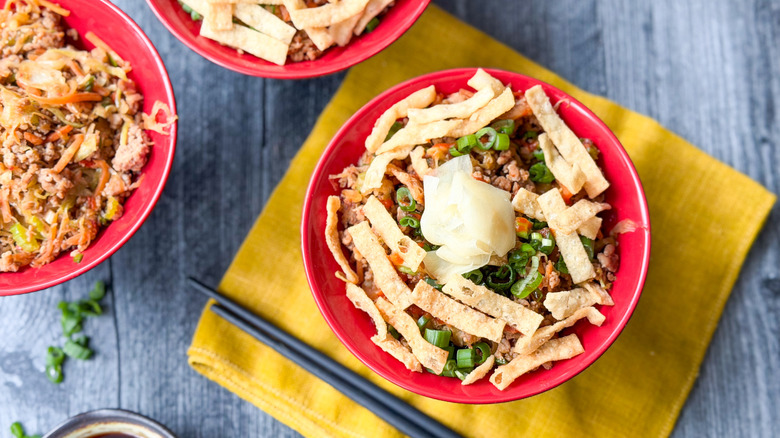
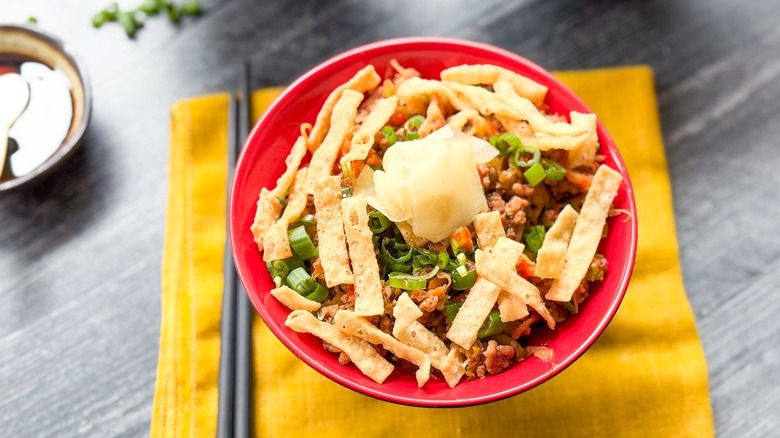
Egg rolls are a takeout favorite and a conveniently portable little hand-held snack or light meal. Biting through the crispy, bubbly fried shell into a bite of hot and savory meat and vegetables is comforting and satisfying all at once. Egg rolls seem to have come by their name not because they contain eggs in the filling, but because the dough includes eggs, which makes it a bit more sturdy for frying and enclosing filling. As wonderful as they are, egg rolls can also be a bit rich or heavy due to the deep-fry preparation. The alternative? Deconstructing the egg roll to emphasize the filling, rather than the shell. This easy pork egg roll in a bowl recipe — courtesy of recipe developer Julie Kinnaird – does just that. A generous amount of finely shredded green cabbage and carrots, scallions, fresh garlic, and ginger combine with juicy ground pork, sweet black soy sauce, sesame oil, and rice wine vinegar. Topped with a bit of sriracha for heat, sushi ginger, and crunchy wonton strips, this egg roll bowl has all the flavor and texture of an egg roll from your favorite restaurant, but with more of the filling to enjoy.
This recipe is best made in a wok for even cooking of the pork and vegetables, allowing them to brown and crisp rather than become steamed and soggy. If you don't have a wok, use the biggest skillet you have or cook the meat and vegetables in batches so that they are evenly cooked.
Gather the easy pork egg roll in a bowl ingredients
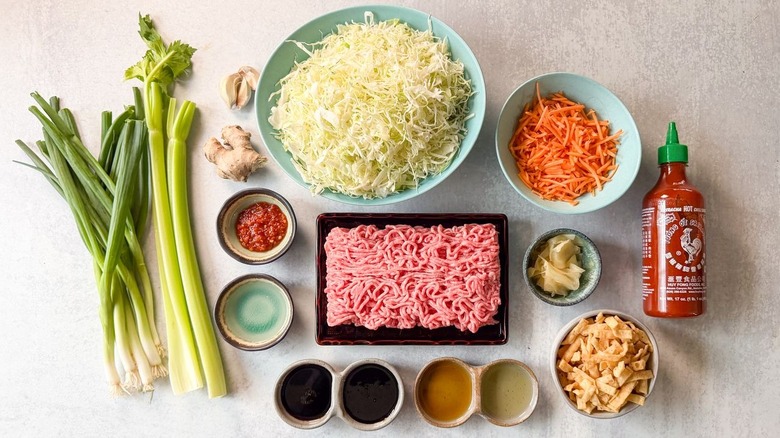
The construction of the "deconstructed" egg roll filling starts with ground pork. You will saute this in a combination of peanut and toasted sesame seed oils. You will need a large bunch of scallions, which you will separate into the white and green parts. The firmer white slices will be added to the pork along with thinly sliced celery, fresh garlic, and ginger root, and a bit of chili paste. You will then add finely shredded cabbage and carrots (bagged, pre-shredded will save on time), black and regular soy sauce, and rice wine vinegar to finish out the filling. For garnishing, you will need the scallion tops, sriracha sauce, more black soy, sushi ginger, and crispy wonton strips, which mimic the crunchy egg roll shells.
Step 1: Separate the whites and greens of the scallions
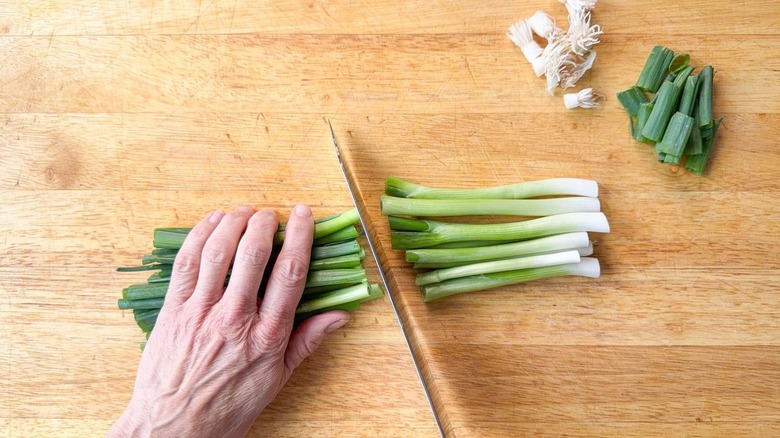
Remove the ends from the scallions and divide the white and green parts.
Step 2: Thinly slice the scallions
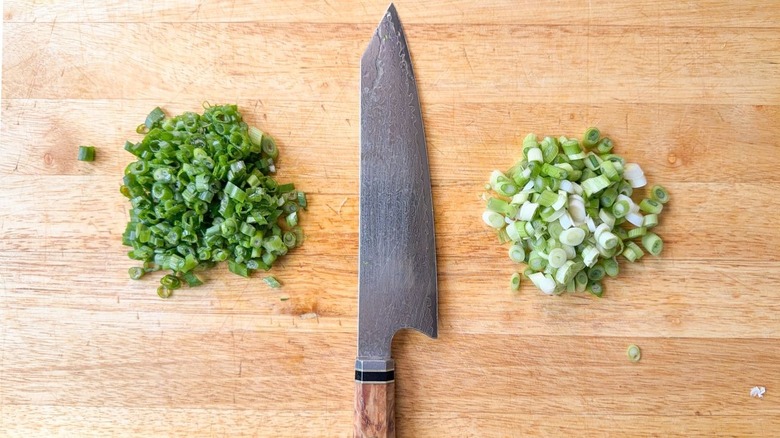
Thinly slice the whites and greens and set them aside.
Step 3: Trim and slice the celery
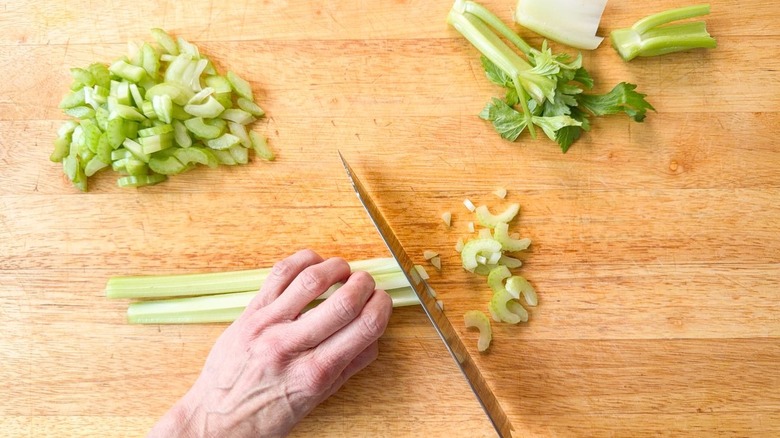
Trim the celery stalks and cut them on a very thin bias. Set them aside.
Step 4: Heat the oils in a wok
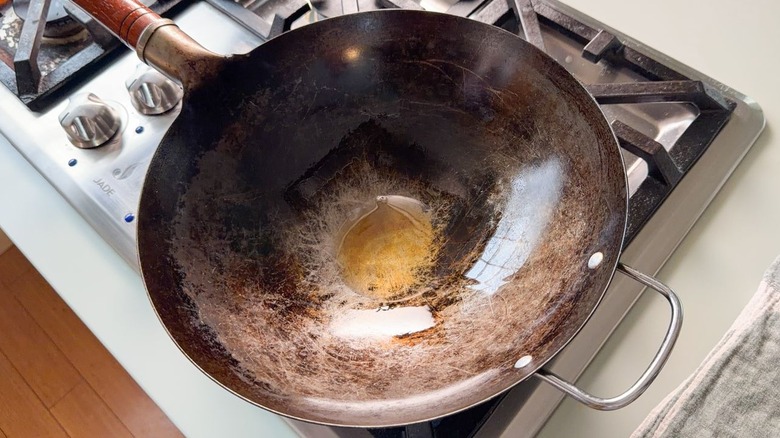
Heat the peanut and sesame oils in a wok or other large skillet over high heat.
Step 5: Brown the pork
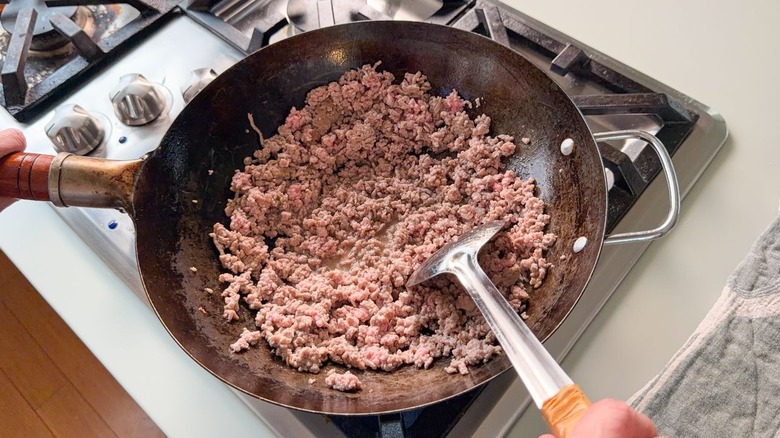
Add the pork and cook, breaking up the meat with a spoon into very small pieces, until browned and no longer pink in the middle.
Step 6: Add the scallion whites, celery, garlic, ginger root, and chili paste
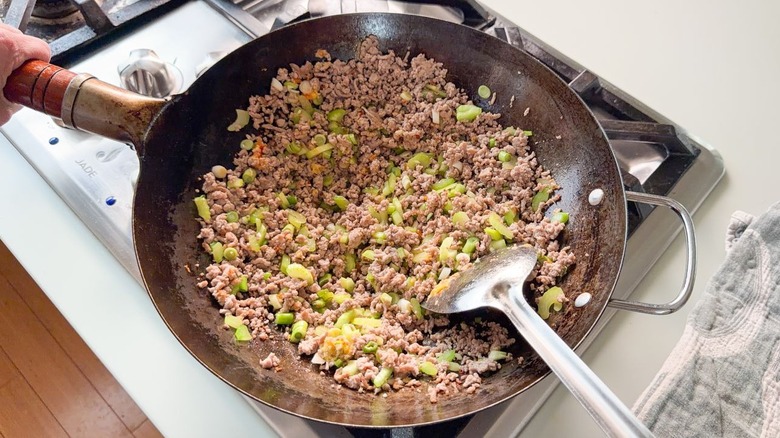
Add the scallion whites, celery, garlic, ginger root, and chili paste. Cook for 5 minutes, stirring occasionally.
Step 7: Add the vegetables, black and regular soy, and rice wine vinegar
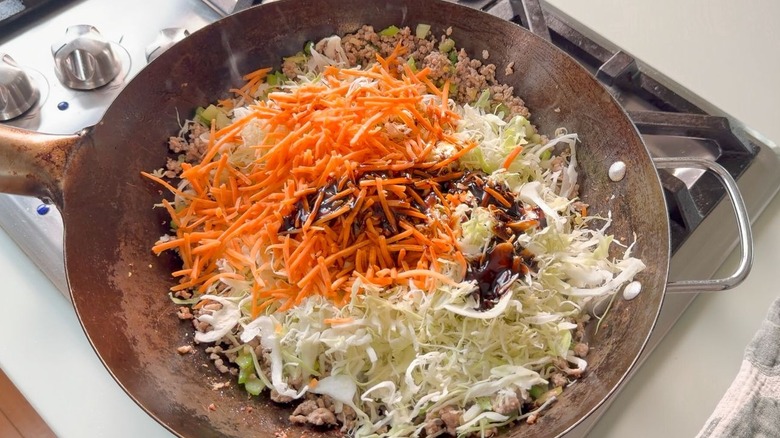
Add the cabbage, carrots, 2 tablespoons black soy, regular soy, and rice wine vinegar.
Step 8: Cook and stir until the vegetables soften
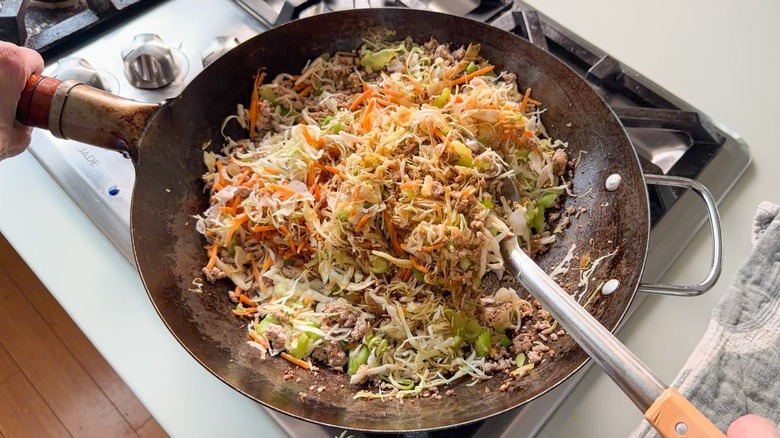
Cook and stir for about 5 minutes until the vegetables are softened and liquid is mostly absorbed.
Step 9: Add the pork mixture to bowls
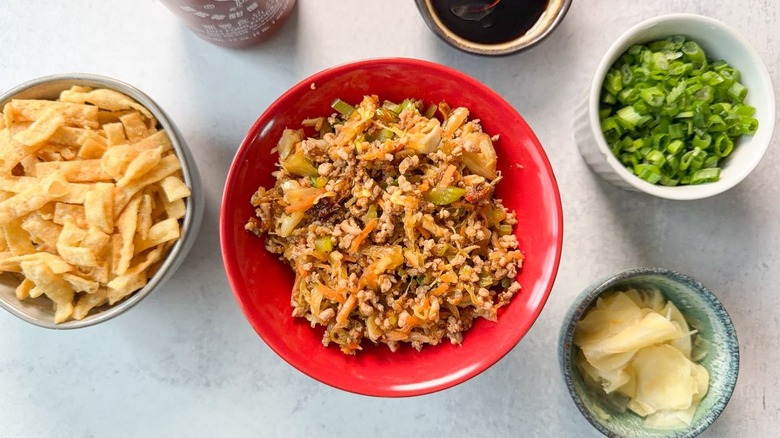
Spoon the pork mixture into serving bowls.
Step 10: Add the garnishes
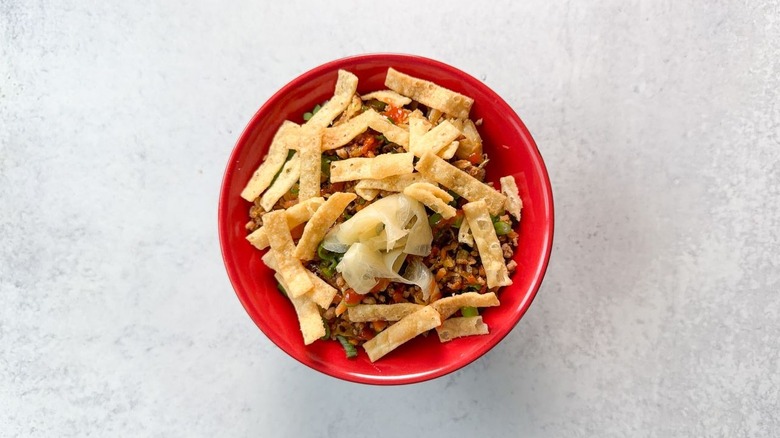
Top each bowl with the reserved scallion greens, a drizzle of sriracha, drizzle of the remaining black soy, sushi ginger, and the wonton strips.
What can I serve with this bowl?
Easy Pork Egg Roll In A Bowl Recipe
The traditional egg roll filling is the star of the show in our easy deconstructed pork egg roll in a bowl, featuring perfectly seasoned pork and vegetables.
Ingredients
- 8 scallions
- 2 large stalks celery
- 1 tablespoon peanut oil
- 1 tablespoon toasted sesame oil
- 1 pound ground pork
- 3 large cloves garlic, minced
- 1 tablespoon grated fresh ginger root
- 1 tablespoon chili paste
- 5 cups finely shredded green cabbage (10-ounce bag)
- 1 cup shredded carrots
- 3 tablespoons black soy sauce, divided
- 3 tablespoons soy sauce
- 1 tablespoon rice wine vinegar
- 2 tablespoons sriracha
- ¼ cup sushi ginger
- 1 cup crispy wonton strips
Directions
- Remove the ends from the scallions and divide the white and green parts.
- Thinly slice the whites and greens and set them aside.
- Trim the celery stalks and cut them on a very thin bias. Set them aside.
- Heat the peanut and sesame oils in a wok or other large skillet over high heat.
- Add the pork and cook, breaking up the meat with a spoon into very small pieces, until browned and no longer pink in the middle.
- Add the scallion whites, celery, garlic, ginger root, and chili paste. Cook for 5 minutes, stirring occasionally.
- Add the cabbage, carrots, 2 tablespoons black soy, regular soy, and rice wine vinegar.
- Cook and stir for about 5 minutes until the vegetables are softened and liquid is mostly absorbed.
- Spoon the pork mixture into serving bowls.
- Top each bowl with the reserved scallion greens, a drizzle of sriracha, drizzle of the remaining black soy, sushi ginger, and the wonton strips.
Nutrition
| Calories per Serving | 428 |
| Total Fat | 31.3 g |
| Saturated Fat | 10.1 g |
| Trans Fat | 0.0 g |
| Cholesterol | 81.6 mg |
| Total Carbohydrates | 14.1 g |
| Dietary Fiber | 4.3 g |
| Total Sugars | 5.2 g |
| Sodium | 1,637.7 mg |
| Protein | 23.5 g |

Can I make this recipe in advance? What is the best way to store leftovers?
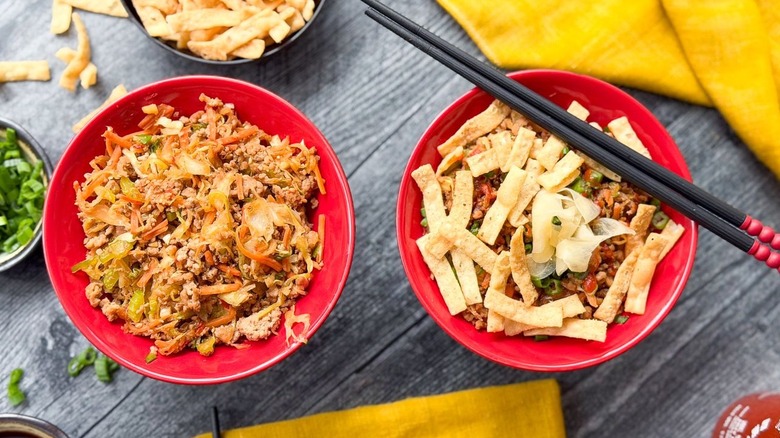
This is a perfect recipe for making ahead or meal prepping, as the cooked filling will store nicely under refrigeration for up to 5 days, as long as it is properly cooled. If you want to make the pork and veggie mix ahead, spread the cooked meat and vegetables out on a parchment-lined sheet pan to cool. Stir the mixture every few minutes to evenly distribute the temperature. This prevents the danger of ending up with a warm center, which might happen if the mixture is immediately stored in a deep container or bowl, where bacteria can easily multiply. After the mixture has cooled, transfer it to an airtight container or individual containers to heat and garnish later.
To store leftovers, you might want to consider removing any crunchy wonton strips, as they will quickly become soggy upon refrigeration. In fact, if you cook the entire recipe with the intent of having leftovers, only garnish what will be immediately eaten. This is not a recipe that freezes well, as the vegetables will release water upon thawing and make your tasty bowl more of a soup.
What is the purpose of the different sauces and oils in this recipe? Are there substitutions I can make?
With traditional egg rolls, a lot of flavor is packed into a small and tidy container. To authentically reproduce the flavors from both the filling and dipping sauce, Kinnaird uses ingredients that contribute sweetness, acidity, heat, and umami. Toasted sesame oil is a recognizable flavor in most egg roll fillings, but it is best to combine it with peanut oil for frying. Peanut oil has a high smoke point, meaning that it can be cooked at a very high temperature before it starts to break down. The peanut oil helps to carry the flavor from the toasted sesame oil and keep it from breaking down too quickly. Toasted sesame oil is packed with flavor, as toasting the seeds adds richness and intensity to the finished oil. A neutral vegetable oil could also be used in place of the peanut oil, if needed.
Kinnaird incorporates both black and regular soy sauce into the dish, along with Chinese chili paste and a touch of rice wine vinegar. These sauces replicate a sweet and sour flavor reminiscent of the popular dipping sauce for egg rolls. Regular soy sauce gives the meat and vegetables both a savory and salty umami boost, while the black soy has the consistency and sweetness of molasses. If you don't have black soy, molasses can actually be used in a pinch. The Chinese chili paste can be substituted with any favorite chili paste or sauce. Just make sure that you adjust the quantity to the level of heat you desire.