

17 Malaysian Dishes Everyone Should Try At Least Once
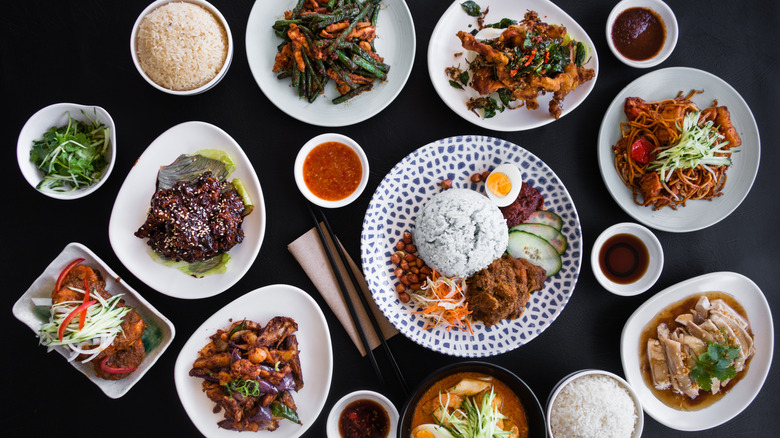
Malaysia has long sat at the crossroads of major trade routes, and that's reflected in the country's incredibly dynamic and delicious cuisine. Explore the country's markets, street food stalls, and restaurants, and you'll find a mix of Malay, Chinese, Indian, and European influences. From aromatic curries to flaky flatbreads and savory noodle dishes packed with meats and seafood, there are so many flavors to explore, making Malaysia truly a foodie's playground.
During the decade that I spent living in Southeast Asia, I travelled to Malaysia often. On each trip, I made it my mission to try a wide variety of dishes from various regions. I've eaten my way through bustling markets in Kuala Lumpur (often considered one of the best street food cities in the world), slurped back Sarawak laksa in Kuching, and indulged in ridiculously fresh seafood on the island of Langkawi. The food scene is huge, which can be a little overwhelming. If you're planning a trip or just curious about the cuisine, these iconic Malaysian dishes are a good place to start.
1. Nasi lemak
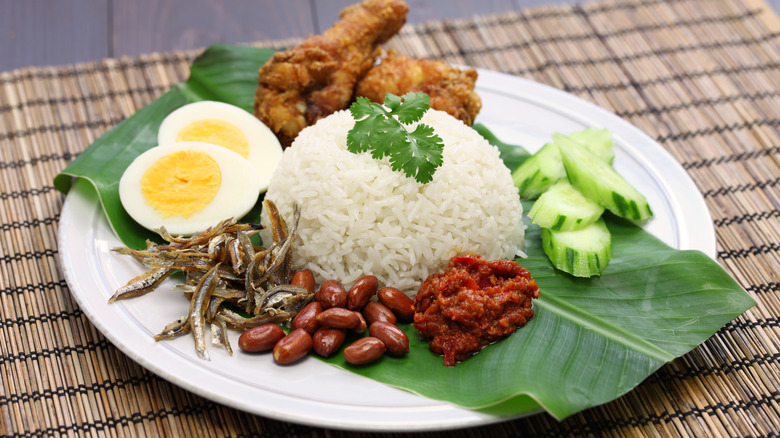
Often considered the official dish of Malaysia, nasi lemak can be found all over the country. Nasi means "rice" in Malay, and "lemak" means fat, which is a reference to the rich coconut milk the rice is cooked in. At the center of the dish, you get a mound of fragrant coconut rice. On the side, there will almost always be crispy ikan bilis (anchovies), crunchy roasted peanuts, sliced cucumbers, a hard-boiled egg, and fiery sambal (a condiment made with chillies and sometimes shrimp paste).
Part of what makes nasi lemak so appealing is its versatility. Additional sides can include fried chicken, slices of omelette, chicken or beef curry, barbecued fish, and water spinach. It's often eaten for breakfast, but you can get it any time of day. It's also sold in a wide variety of eateries, from street food stalls to sit-down restaurants. In fact, it's so common that it's even one of McDonald's international menu items.
2. Roti canai
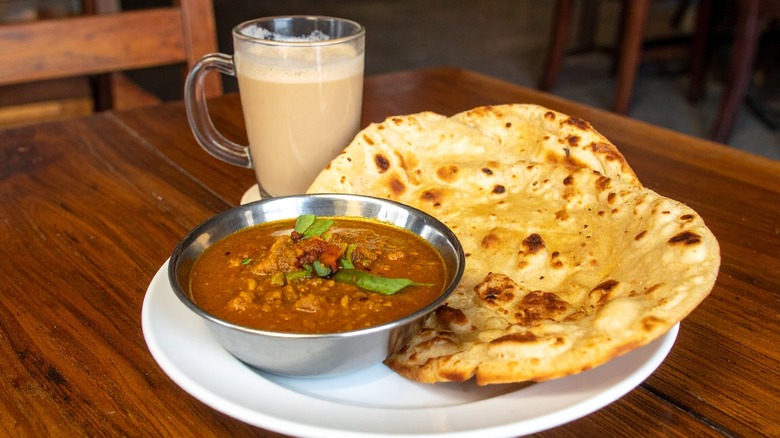
Roti canai has its roots in India, but it evolved in Malaysia. Its origin can be traced back to the waves of Tamil immigrants who made their way to Malaysia during British colonial rule in the late 20th century. They brought with them techniques for making flatbread and concocted this version using unleavened flour, water, and oil. Roti canai is unique in that the dough is tossed and spun in the air, then folded to create pockets of air before being griddled with ghee.
Tear apart a piece of roti canai, and you'll get a crispy exterior with fluffy, chewy insides. It's perfect for dunking into curry or scooping up dhal. You can also find it stuffed with ingredients like meat, onions, cheese, scrambled eggs, and sardines in tomato sauce. There are also sweet versions of roti canai stuffed with bananas or chocolate Milo powder. It can also be served with sweetened condensed milk either on the side or drizzled over the bread.
3. Laksa
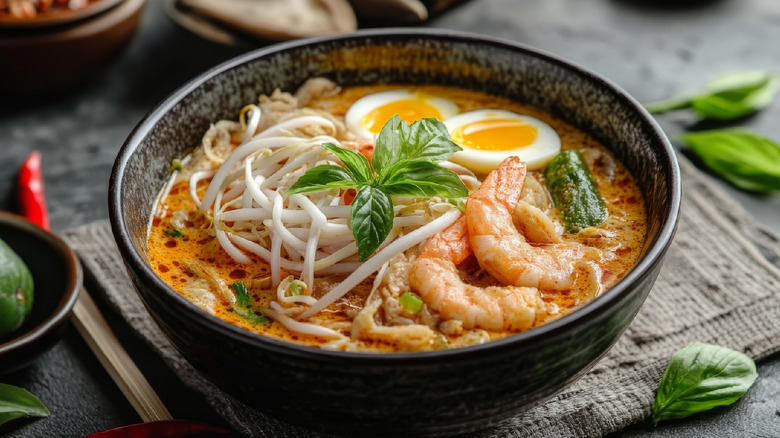
Laska is a spicy noodle soup that's a Peranakan classic. The Peranakan culture was formed when Chinese traders settled in the Malay Peninsula in the 16th century. They assimilated into local communities and created a unique cuisine that fuses Chinese cooking techniques with Malay ingredients like chillies, spices, and coconut milk. Laksa is a great example of this fusion, and it comes in many forms.
One of the most popular styles of laksa is curry laksa (aka laksa lemak), which features rice noodles in a rich broth made with curry paste and coconut milk. Garnishes can include shrimp, cockles, tofu puffs, and fish cakes. It's popular in Malaysia and considered one of the most iconic Singaporean dishes. Sarawak laksa is from Malaysian Borneo, and it swaps the curry paste for belachan (fermented shrimp paste). Laksa from Johor often features spaghetti noodles, and asam laksa features rice noodles and fish in a tart tamarind-infused broth with garnishes like cucumbers, fresh herbs, and pineapple.
4. Kolo Mee
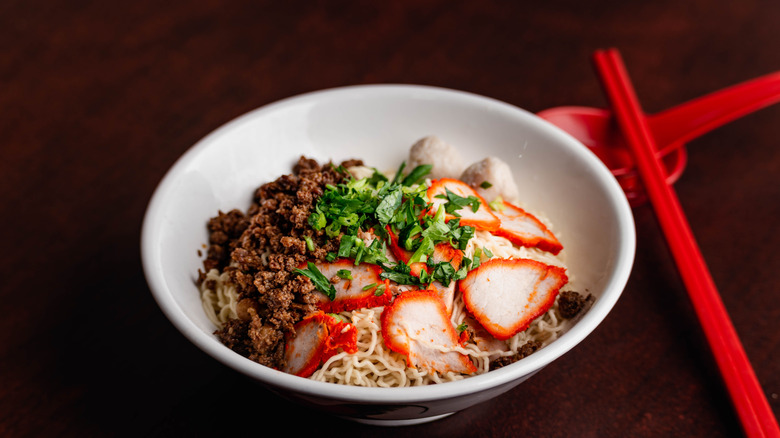
If you travel to the Malaysian states of Sabah or Sarawak on the island of Borneo, a popular breakfast dish that you'll come across is kolo mee. The name translates to "dry tossed noodles," and it typically features yellow noodles that are cooked until springy, then drained and tossed with sauce and topped with meats and veggies. It's often served with soup on the side and sometimes wonton dumplings.
In Sarawak, kolo mee is often made by tossing egg noodles in garlic oil, shallot oil, and lard, then topping them with char siu (barbecue pork marinated in red bean curd), minced pork, and chopped green onions. You can have your noodles as-is or with red char siu sauce or soy sauce. In Sabah, the noodles are a bit thinner, and they're often tossed in a dark soy sauce and topped with char siu and crispy pork belly. You can also find halal versions that feature toppings like seafood, duck, or beef.
5. Bak kut teh
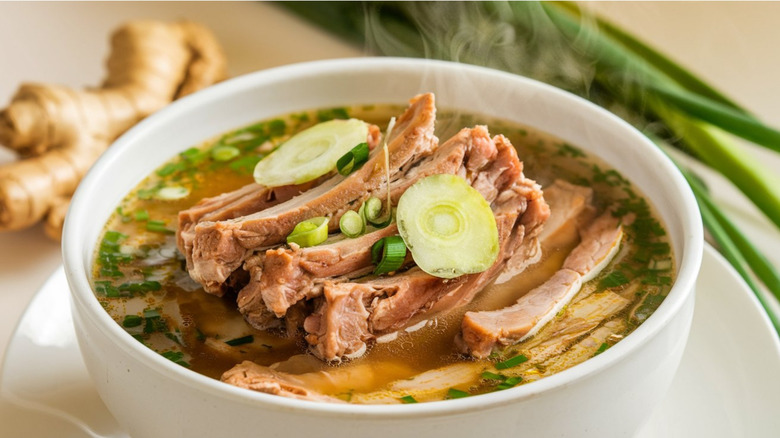
Popular in Malaysia and Singapore, bak kut teh is a hearty soup featuring various cuts of pork in an herb-infused broth. The name translates to "pork bone tea." Although it's unclear exactly where it was born, many agree that it was likely created by Hokkien immigrants, most likely laborers who needed a hearty meal that would fuel them up for work. There are three styles of bak kut teh: Hokkien, Cantonese, and Teochew.
Hokkien bak kut teh typically has a rich brown broth made with dark brown soy sauce. The Cantonese style is more herbaceous, and the Teochew version has a lighter broth made with garlic, soy sauce, and white pepper. Most versions feature a mix of pork parts, like spare ribs, pork belly, and shoulder meat. The soup can be garnished with mushrooms, cabbage, and tofu skins, and it's often served with rice or you tiao (fried dough fritters) for dunking, as well as Chinese tea.
6. Teh tarik
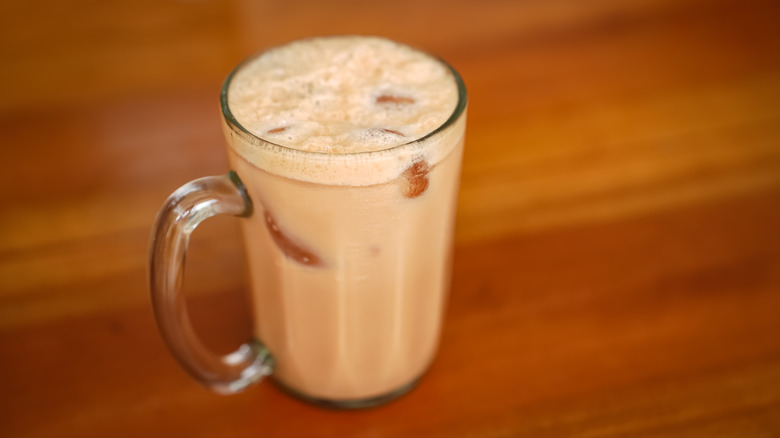
It's hard to find a drink that's more quintessentially Malaysian than teh tarik. This frothy concoction consists of black tea and sweetened condensed milk, and it's wildly popular all over the country. It was created by Indian Muslim immigrants, also known as mamaks, who arrived in the country during the British occupation. Today, you can find teh tarik at street stalls, local coffee shops called kopitiams, and mamak restaurants selling dishes like roti canai.
There are a number of things that set teh tarik apart from your typical sweetened, milky tea. For one, it's made with black tea dust, which is stronger than regular tea leaves. The tea dust is brewed with hot water and condensed milk, then poured back and forth between two containers in a pulling motion, hence the name, which translates to "pulled tea." The pulling method makes the sweetened tea frothy, softens the bitterness of the tannins, and cools the tea down.
7. Mee rebus
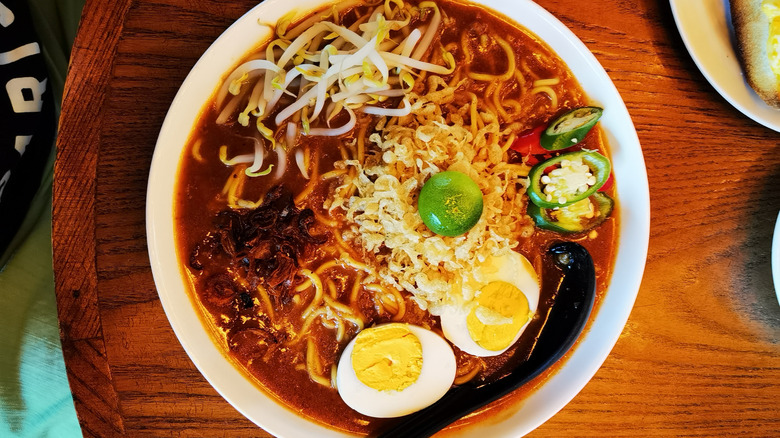
Mee rebus is another dish that we can thank the Malaysian mamak community for. Many believe that Indian Muslim vendors in Penang first began selling this savory noodle dish, and then it spread to other parts of the country, where it took on various forms. It typically consists of yellow noodles in a rich gravy that gets its flavor from a fragrant mix of shrimp, lemongrass, shallots, ginger, coriander, and dried chiles. It's also thickened with mashed sweet potatoes.
There are numerous ways to dress up mee rebus. Some vendors add proteins like prawns, mutton, and hard-boiled eggs. It can be drizzled with dark soy sauce and garnished with crispy fried shallots, bean sprouts, and fried bean curd. A squeeze of lime can add brightness and acidity to cut through the richness of the gravy, and sliced chillies can kick up the heat level. Some people also add shredded lettuce or chopped celery leaves for a touch of greenery.
8. Apam balik
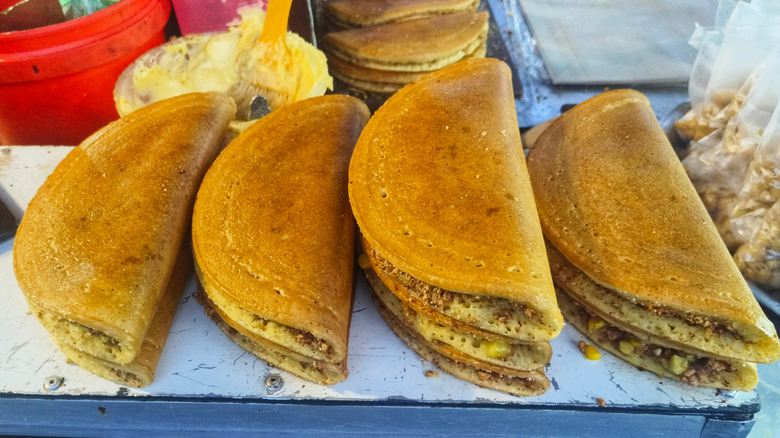
Sweet, spongy, and stuffed with crunchy bits for textural variation, apam balik is a beloved street food snack in Malaysia. It's basically a pancake that's griddled, topped with sweet and savory ingredients like peanuts and sweet corn, then flipped over into a half-moon shape. The pancakes are often thick and fluffy inside, but you can also find thin, crispy versions. The fillings can also vary, with options like bananas, chocolate, and cheese.
Legend has it that apam balik was created in Fujian, China, by military leader General Tso (namesake of General Tso's chicken) sometime in the mid-19th century. Apparently, scallion pancakes were a popular local dish in Fujian, but Tso didn't want to deprive the locals of their food supplies, so he tweaked the dish for his soldiers, using peanuts and cane sugar, both of which were more accessible locally. The dish eventually spread to the Malay Peninsula, and it's now popular in numerous countries in Southeast Asia, where it goes by various names.
9. Nasi kerabu
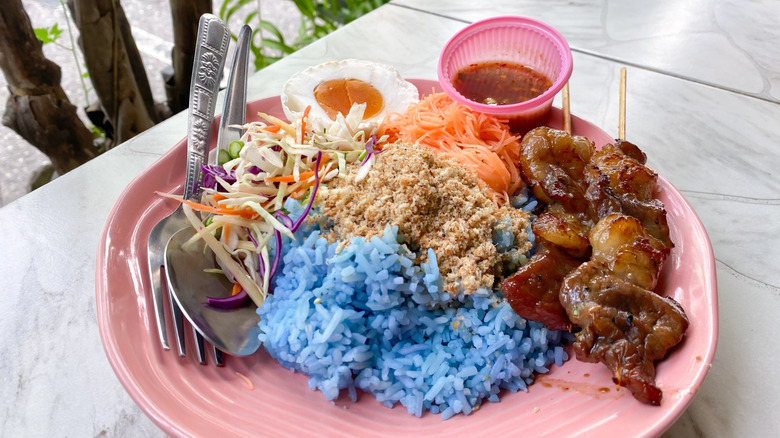
At first glance, nasi kerabu might look a bit off-putting to those who aren't familiar with the dish, thanks to its mound of pale blue rice. But take a bite, and you'll find that the rice actually has a very mild, subtle floral character. That's because it's colored with butterfly pea flower petals, which act as a natural dye. That gentle flavor contrasts nicely with the side dishes, many of which are fresh, crunchy, and herb-forward rather than rich or heavy.
Nasi kerabu comes from the eastern Malaysian states of Kelantan and Terengganu, regions that are influenced by neighboring southern Thailand. As a result, the dish tends to balance salty, sour, spicy, and herbal notes. Kerabu refers to a style of salad, so you'll find plenty of raw vegetables like bean sprouts and long beans, along with herbs such as torch ginger flower and mint. Common additions include crispy fish or chicken, salted egg, prawn crackers, pickled vegetables, and coconut sambal.
10. Hokkien mee
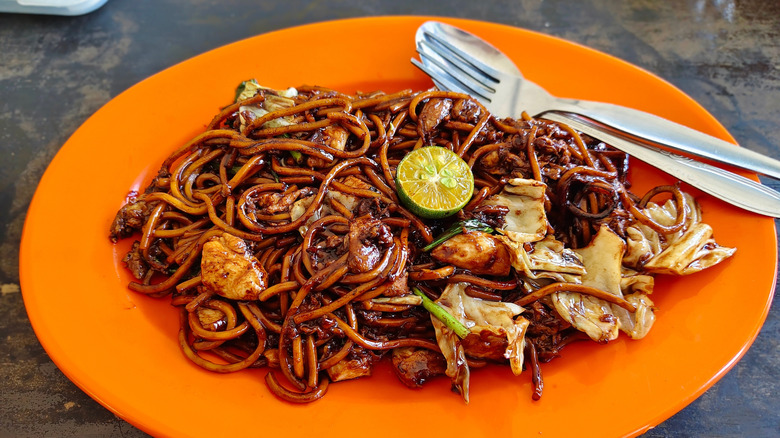
Hokkien mee likely originated in Singapore, but it's also a wildly popular dish in Malaysia, where there are two very different styles. Visit the capital city of Kuala Lumpur, and you'll find street vendors whipping up plates of stir-fried Hokkien mee with thick yellow noodles in a rich gravy that gets its flavor from pork and prawn stock and dark soy sauce. The noodles are typically tossed with pork, prawns, cabbage, and fried pork lard.
Order Hokkien mee on the island of Penang, and you'll get a bowl of soup consisting of yellow noodles, rice vermicelli, sliced pork, and prawns in a reddish-orange, slightly spicy broth. The broth is usually made by simmering prawn shells, pork bones, and chili paste until the broth is intensely flavored. Garnishes can include hard-boiled eggs, bean sprouts, and water spinach. The soup is usually eaten in the mornings, while the Kuala Lumpur version of Hokkien mee is often eaten later in the day.
11. Kari kapitan
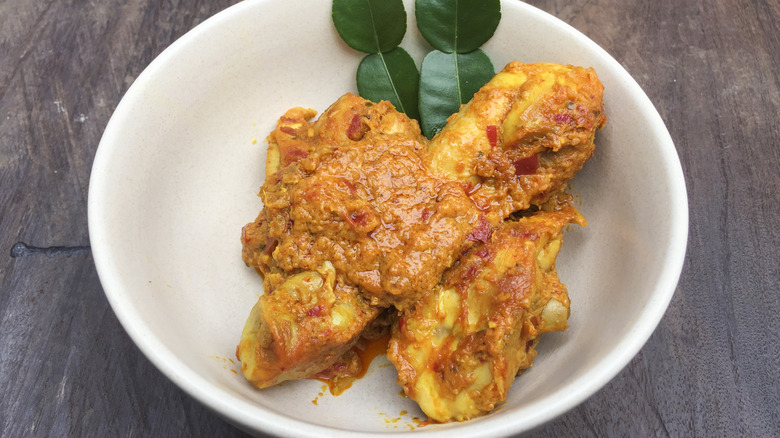
You can find numerous international curry styles in Malaysia, including Thai-style red and green curries, Indonesian rendang, and Indian-style fish curry. However, one curry that's unique to Malaysia is kari kapitan. It's unclear where the dish originated or when, but some speculate it was named after the captains or "kapitans" the Portuguese appointed after occupying Malacca in the 16th century. Regardless of where it came from, it's now deeply ingrained in Peranakan culture and cuisine.
Although recipes for kari kapitan vary, it typically features chicken drumsticks that are marinated in turmeric and salt, then cooked with a spice paste made with herbs and spices like lemongrass, galangal, ginger, chillies, garlic, and candlenuts. Coconut milk and water go into the pot or wok, along with additional ingredients like kaffir lime leaves, tamarind paste, belachan, and cane sugar. Some people also add potatoes. Everything is simmered until the curry is thick and fragrant. It's often topped with crispy fried shallots and served with rice.
12. Ramly burger
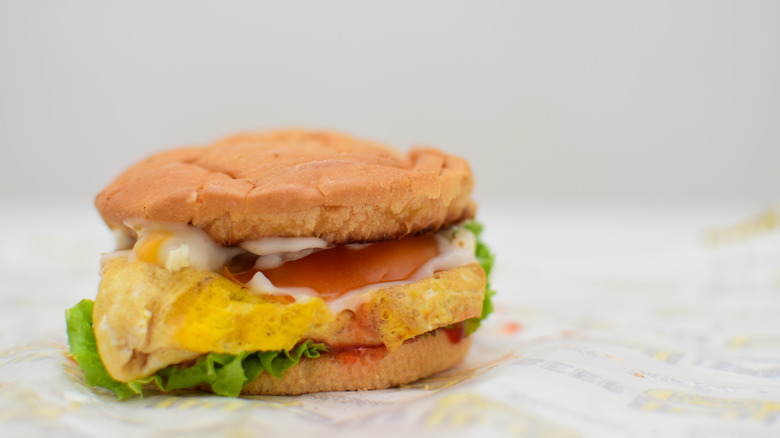
Burgers are popular around the globe, but Malaysia's Ramly burger is very much its own thing. It's both a style of burger and a brand of burger patty used by countless burger vendors who sell the creation in Malaysia and abroad. It all started in 1979 when a butcher named Haji Ramly Monki saw a gap in the market for burger patties made with halal meat. Fast forward to today, and the Ramly Group produces over one million burger patties a day.
It's not just the halal meat that sets the Ramly burger apart; it's also the way it's cooked. It starts with a beef or chicken patty that's cooked on a griddle, then an egg is cracked onto the griddle and spread thin. The burger is wrapped in the egg and sandwiched in a bun with toppings like lettuce, tomato, and cheese. Popular condiments include Worcestershire sauce, Maggi sauce, mayonnaise, and chili sauce.
13. Nasi kandar
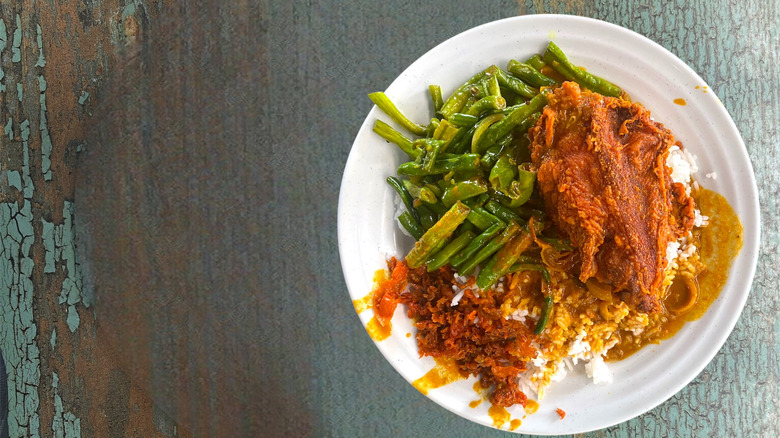
Born in Penang, nasi kandar means "pole rice," and it refers to the way South Indian vendors would carry buckets filled with rice and curry balanced on a pole. Some sources say the practice dates back to the 18th century and that the nasi kandar was particularly popular with workers looking for a quick meal to start their day. The wooden buckets imparted a distinctive flavor to the rice, and vendors would add different proteins and veggies to the curry to amp up the nutritional value.
Today, nasi kandar is mostly sold at cafes and restaurants, and many places still steam the rice in wooden containers to impart extra flavor. There are countless styles to choose from, including hearty beef curry in a dark gravy, spicy and sour fish curry, and creamy chicken curry with turmeric and tomatoes. Your plate might also include sides like fried anchovies, hard-boiled eggs, pickled vegetables, and bitter melon. You can also kick up the heat with a dollop of spicy sambal.
14. Asam pedas
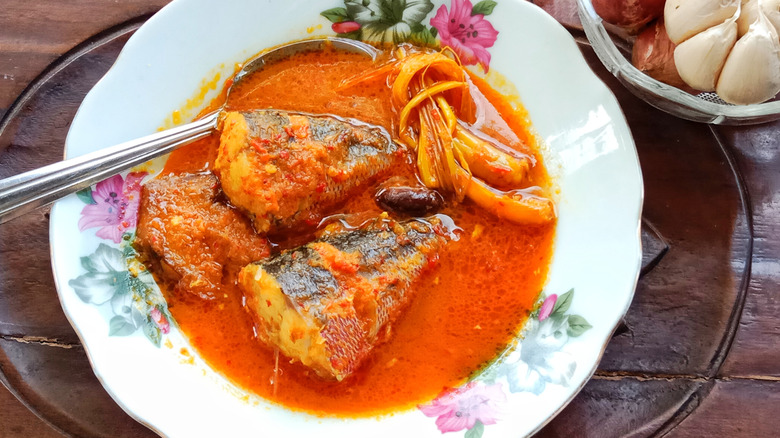
Asam pedas translates to "sour spicy," and that's exactly what you get with this dish, along with rich umami flavors. Typically made with fish, it's like a cross between a soup and a stew, and it's a complete flavor bomb. It blends Chinese and Malay cooking techniques and flavors, as well as ingredients that were introduced by the Portuguese, like chillies and tamarind. It likely originated in Sumatra and then spread to Malaysia and other Southeast Asian countries.
Like many Malaysian dishes, asam pedas starts with a vibrant spice paste. Common ingredients include chillies, lemongrass, garlic, shallots, turmeric, and belachan. The spice paste is fried in oil, then tamarind juice is added to the pan and brought to a boil. Then, a whole fish like pomfret, mackerel, or snapper is added to the mix and gently simmered. Some cooks also add tomatoes, okra, and torch ginger flowers. The spicy-sour fish is typically served with rice to soak up all the sauce.
15. Buah melaka (onde-onde)
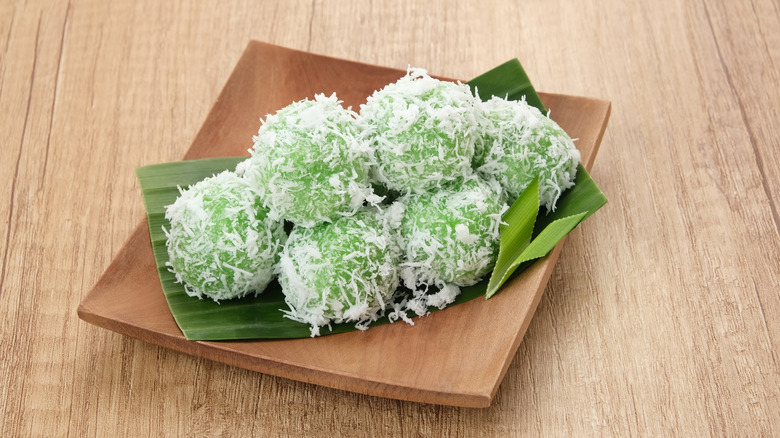
The first time I tried buah melaka (aka onde onde), I underestimated it. One bite into the chewy exterior, the palm sugar filling burst out, and I immediately understood why people buy them by the box. These round, pale green treats are made with glutinous rice flour infused with pandan. The rice flour dough is packed with palm sugar, sealed up, boiled, and rolled in shredded coconut to add extra texture and flavor.
Evidence suggests that buah melaka originated on the island of Java in present-day Indonesia during the Majapahit era, which began in the 13th century. That makes sense considering the ingredients are all native to the region. The sweets are still popular in Indonesia today, although they're called klepon there. Interestingly, onde onde is another style of Indonesian sweet that's also made with glutinous rice, but filled with sweet bean paste and rolled in sesame seeds. However, in Malaysia, onde onde always refers to the coconut, sugar-filled snack.
16. Banana leaf rice
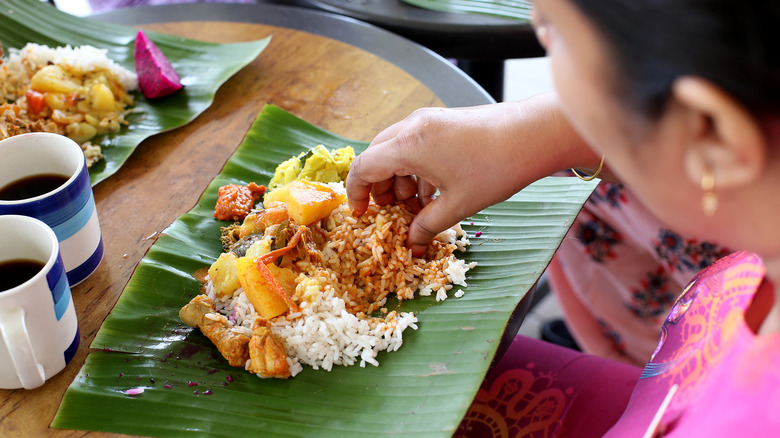
South Indians brought banana leaf rice to Malaysia, and now it's a big part of the food culture. As the name suggests, you get rice served on a banana leaf, along with your choice of curry or dhal, and an array of sides like raita, rasam (sour soup), poppadum, and pickled veggies. Other dishes can include fried chicken or fish, crispy squid, or fried bitter gourd.
One thing to know about banana leaf curry is that it's meant to be eaten by hand. I've had numerous Southeast Asian friends tell me that food just tastes better when eaten this way, and I tend to agree. Be sure to use your right hand, as restaurant etiquette in many countries dictates that the left hand is unclean and reserved for bathroom business. Also, be sure to fold the banana leaf inwards at the end of the meal to show you enjoyed it. That is, unless you're at a funeral, in which case leaving it unfolded is a sign of respect.
17. Char kway teow
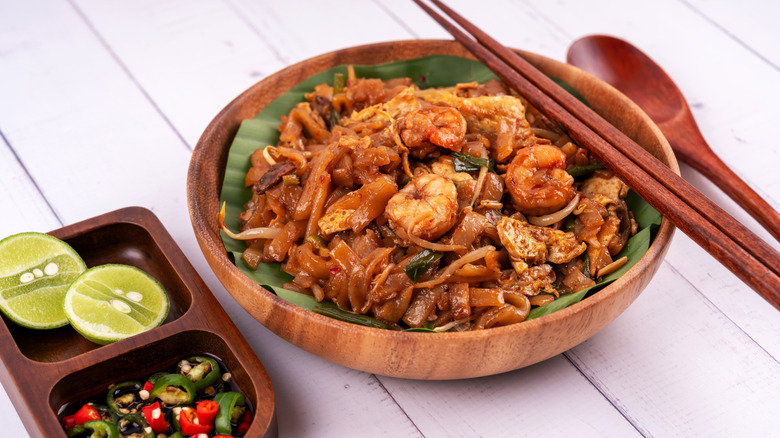
Char kway teow (also sometimes spelled char koay teow or char kuey teow) can be found in many Southeast Asian countries, but it originated in Penang, Malaysia, where many Teochew immigrants from China settled. Char means "stir-fried" and kway teow is a type of flat rice noodle. It may look like a simple stir-fry noodle dish, but there's an art to getting its textures and flavors just right.
A good char kway teow starts with a screaming hot wok. Garlic and sometimes salted radish are fried in lard, then slippery cooked rice noodles are added, along with a sauce made with ingredients like soy sauce, oyster sauce, fish sauce, and sugar. Once the noodles are coated and slightly charred, other ingredients go in one by one, including bean sprouts, chives, egg, shrimp, possibly some pork or Chinese sausage, and cockles. The result is a dish that's smoky, savory, salty, chewy, soft, and crunchy all at the same time.