

16 Tips And Hacks For Ordering Pizza Everyone Should Know
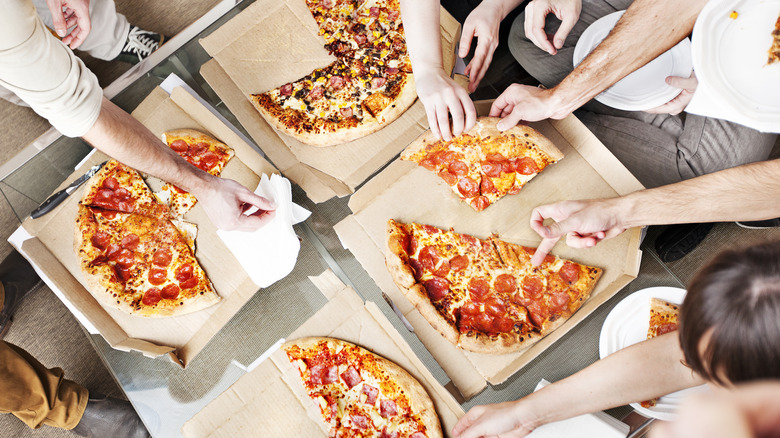
I eat a lot of delivery pizza. I've got two small kids, and I live in a neighborhood full of friends with similar families. Whether it's a small get-together with one other family or a large birthday party, an assortment of pizzas is often on the table.
We're not alone. According to the USDA, about 1 in 8 Americans eats pizza on any given day. Most of this — 59% — is eaten in the home, and it's safe to say that not all of that home-eaten pizza is made from scratch. Ordering pizza for pickup or delivery is an easy, affordable, crowd-pleasing meal that's simple to customize. Kids and other picky eaters are happy with cheese and pepperoni, and the variety of pizza styles and toppings on offer today mean adventurous adults can also be satisfied.
But there are tips and tricks to maximizing your pizza order, no matter who you're feeding. Here are 16 things to keep in mind.
1. Order the pizza unsliced
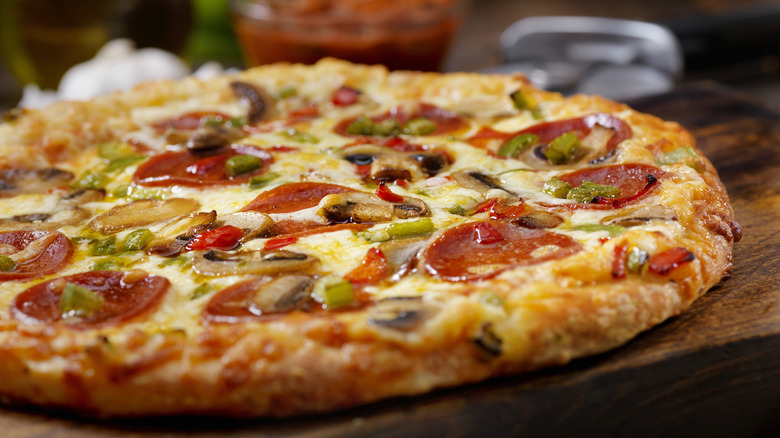
No matter if you're ordering a Domino's combo deal or an artisanal pizza from your local farm-to-table restaurant, the number one way to improve take-out pizza is to order it unsliced. Cutting the pizza into slices — while critical for actually eating the pie — releases moisture and oils from the cheese, sauce, and toppings. All of this moisture and oil then makes its way through the slices underneath the crust, turning the whole thing soggy. Keep the pizza intact, and the moisture stays in the toppings and sauce where it belongs. Another bonus? This hack also makes it easier to slide the pizza into the oven to reheat it if needed before serving.
When you're ready, slice it into as many pieces as you'd like. A traditional rolling pizza cutter works fine if you've got one, but a pair of scissors easily snips through all of the different textures of a well-topped pizza.
2. To estimate number of pies, use the ⅜ rule
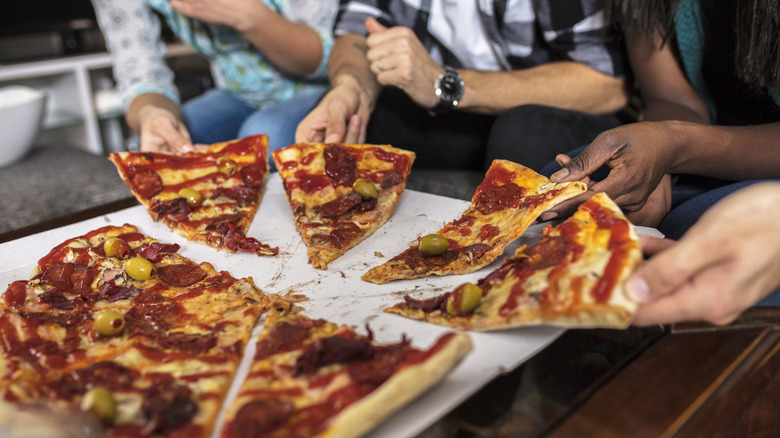
Serving a crowd or just tired of dealing with too many leftovers? Instead of randomly making a guess at how many pizzas you'll need, you can do a simple calculation, called the ⅜ rule, to hit the right number. Sounds like hard math, but it's simpler than you may think. On average, an adult eats three slices of pizza, and large pizzas usually have eight slices. (That's where the three and the eight come from.) Multiply the number of people at the party by ⅜ and then round that result up to the nearest whole number. For example, if you're feeding 10 people, you'll order 4 pizzas (10 x ⅜ = 3.75, which rounds up to 4).
For hungry eaters, say a group of teenagers or runners after a half-marathon, increase the estimated number of slices to four, multiplying by 4/8 a.k.a. ½. If you're feeding lighter eaters such as young kids, decrease the slice estimate to 2, multiplying by 2/8 a.k.a. ¼.
And if you really, really don't want to open up your calculator app, you can also use an online pizza calculator, such as this one from Instacart. (Although it's really not that much easier than multiplying fractions.)
3. Know your pizza styles and what works best for delivery
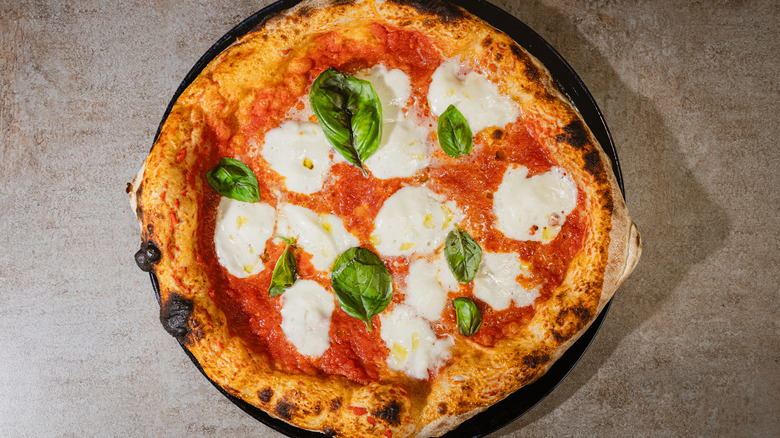
There are numerous styles of pizza available for takeout, each with different styles of crust and types of toppings. But while they're all delicious in their own way, they don't all work equally well for delivery. Some are best eaten immediately after they come out of the oven, or they take a long time to cook, so it's best to know the style you're ordering.
I prefer New York-style pizzas for delivery. They have sturdy yet relatively thin crusts and come in large sizes that are perfect for sharing. They don't take an extended amount of time to cook, so the time from order to eating is relatively short. On the other hand, Neapolitan and Neapolitan-style pies, which have very thin and floppy crusts, fresh toppings, and a relatively wet sauce, don't hold up well when packed in a box and driven across town. Chicago-style deep-dish pizzas and Sicilian pizzas have the opposite problem — their thick crusts and even thicker layers of toppings mean they can take up to an hour to bake. While this isn't a no-go for delivery, you'll want to keep this time in mind when ordering.
4. Balance the flavors on each pizza
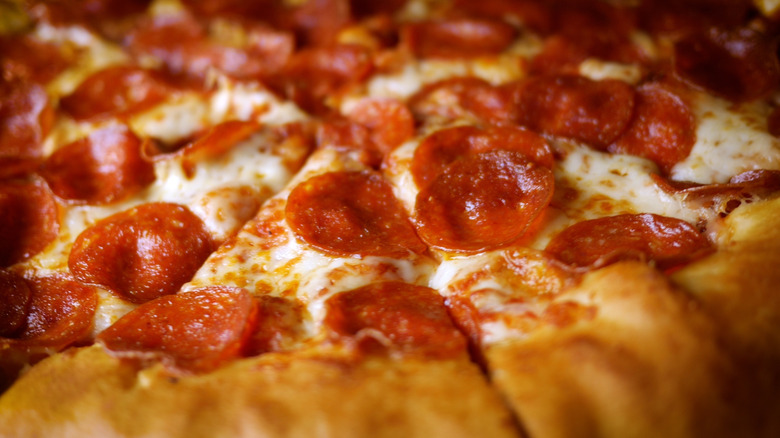
When it comes to toppings, it's best not to go overboard. Instead of loading down each pie with a mountain of toppings, which can muddle flavors and make the pizza hard to heat, pare your list down to two or three. If you really want a pizza, such as a meat lovers or veggie pizza, with more toppings than that, order the pizzeria's specialty pies; they'll likely be more harmonious than a creation of your own design.
Include a mix of sweet, spicy, and savory ingredients — most of us don't want a pizza with hot peppers, pepperoni, chili flakes, and hot honey. Similarly, aim for a variety of textures, some crunchy (like red onion) and some soft (like black olives). And avoid common mistakes, such as overpowering delicate flavors like earthy mushrooms or mildly grassy green bell peppers.
Keep in mind the guests you're serving. Make sure vegetarians and meat eaters get equal attention, and remember that the average American ordering pizza isn't as adventurous as some independent pizzerias assume. According to the 2025 pizza industry trends report in Pizza Today, the top 20 pizza toppings in 2025 stick to classics like pepperoni, sausage, onions, and extra cheese.
5. Add variety with multiple sauces and crust styles
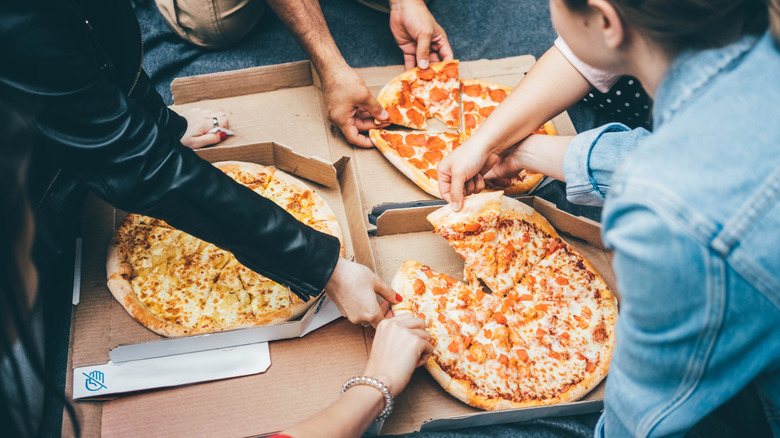
Similarly, if you'd like to sample the most a pizzeria has to offer, try different toppings and sauces by ordering several very different pizzas, rather than a plethora of ingredients on each pie. Many pizzerias offer a variety of sauces in addition to classic tomato sauce. Pesto and Prosciutto? Delicious. Alfredo and grilled chicken? Sure, I'll take a pasta dish on pizza dough. Skip the sauce for an extra drizzle of olive oil? Let those toppings shine! Likewise, choose a sampling of various crust styles. A stuffed crust, a garlic crust, and a traditional crust each bring variety to the meal and, in my experience, lead to less food waste. After all, a flavorful crust is less likely to be left on the plate.
Consider also stocking up on fresh toppings at home to upgrade your takeout order. Fresh herbs, salad greens like arugula, or even just a drizzle of nice olive oil will elevate the array of pies. And each person can customize their pizza to suit their own taste.
6. Consider the 211 rule for toppings
If all of these ideas leave your head spinning — or if you're feeding picky eaters — don't worry about a deep menu analysis. Keep it simple with the 211 rule. Yes, that's another numerical rule, but this one doesn't involve any math at all.
The 211 rule for pizza is to order two pepperoni, one cheese, and one veggie. This spread covers anyone who must have meat, along with vegetarians and picky eaters who won't touch anything other than red sauce and mozzarella. I am usually feeding a bunch of small kids, so I most often tweak this order to include two cheese pizzas, one pepperoni, and one veggie. I still have the meat eaters covered, but have more plain pies for the kiddos. I'll put out a jar of red pepper flakes and (if I've got it) sliced deli salami for adults who want to spice up their plain slices. And if you want to add some more variety, order medium pizzas and throw in a specialty pie or two.
7. If the pizzeria is known for dipping sauce, get extra
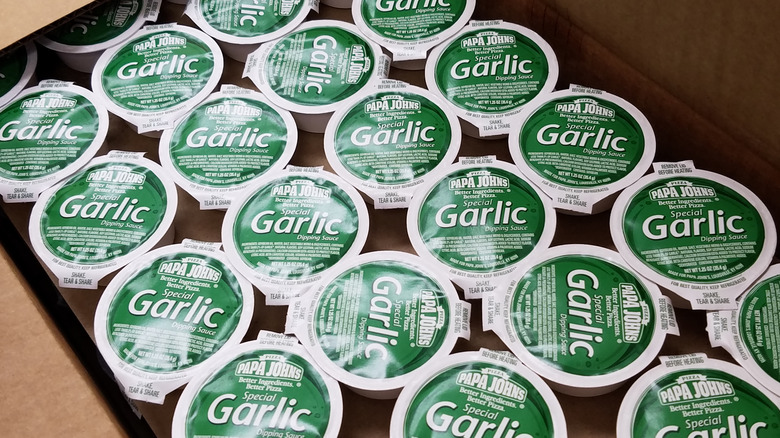
If you're anything like me, you will only eat your pizza crust if it's stuffed with cheese or — more often — dipped into a flavor-packed sauce. I like tangy ranch dressing as my dipping sauce of choice, but I won't say no to warm marinara from Pizza Hut or garlic sauce from Papa Johns. And while this practice may have originated at chain restaurants, plenty of independent pizzerias, like Atlanta's Glide Pizza, pride themselves on their dipping sauces.
Whatever the sauce, if it's a specialty of the house, order extra. The last thing you want is to run out. You'll want plenty on hand for dipping and drizzling. If you have more containers of sauce than you'll eat that day, it's even better. Leftover dipping sauce will, of course, pair well with leftover pizza, but it can also be used as a pasta sauce, salad dressing, or, if you've made a Papa Johns order, even made into compound butter.
8. If ordering from a new-to-you pizzeria, check out photos online

We've all done it: gotten excited about a new restaurant only to lose interest once we've fallen into the rabbit hole of user-generated reviews. There are seemingly infinite opinions online, and, in my experience, there are far more negative reviews than positive. And many of those negative views have nothing to do with the food itself; perhaps a delivery was late, or the pizzeria left off a topping.
Instead of relying solely on written reviews, take a look at the photos you see. These are far more likely to show you what you're going to receive with your order. What should you be looking for? The crust should look like it contains air, there should be a balance of ingredients on top, the cheese shouldn't be burned, the mozzarella shouldn't be greasy, and the tomato sauce should be bright red. And if, for some reason, you haven't tried the four major American fast-food pizza restaurants, consult this ranking before making your order.
9. Order large pizzas — most of the time
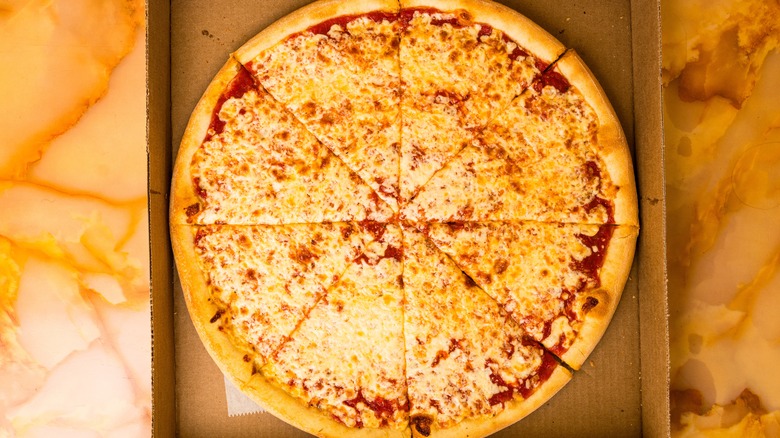
My family is a regular at a brewery-based pizzeria near my home in Atlanta. They've always only sold one size of pizza; these used to be around a standard large size with eight slices. However, over time, the pizzas have shrunk closer to a medium size, and the price has only gone down a few bucks per pie. We've gone from feeding our family with a single pie to needing to order two pizzas in order to ensure everyone is full. It's a large increase in cost for not much more food.
So, as long as the pizzeria offers it, avoid smaller pizzas and choose larges to get the best value. If you're concerned about variety and value, you can usually order certain toppings over half of the pizza.
The exception to this rule is, of course, if you find a deal when ordering multiple mediums. For example, Domino's usually offers combo deals for medium pies.
10. Check for coupons and loyalty programs online first
Prices for pizza continue to rise. According to Slice.com, these rising prices are due to many factors: in addition to ingredient costs, rising minimum wages and delivery costs also contribute. Taking a few extra minutes to search out a deal can save you a lot. Checking for coupon codes online first is a no-brainer, and so is looking at loyalty programs. Yes, yes, there are loyalty programs for everything these days. But if you order pizza regularly — especially if you have a preferred pizzeria — they are totally worth it. Depending on the restaurant, you can get discounts on each order, earn points for future savings, and receive free items on your birthday or other special occasions. Some have membership tiers that offer more rewards the more frequently you order.
Loyalty programs are becoming more common as pizzerias move from phone-based ordering to online systems. The pizza industry trends report from Pizza Today says that 78% of operators use some form of rewards program, and it's a quick move from a simple form to one with such a program built in. Indeed, national chains offer loyalty programs, as do third-party delivery companies, and even smaller chains like Southeastern U.S.-based Johnny's pizza.
11. If you like lots of toppings and a thick crust, order well-done
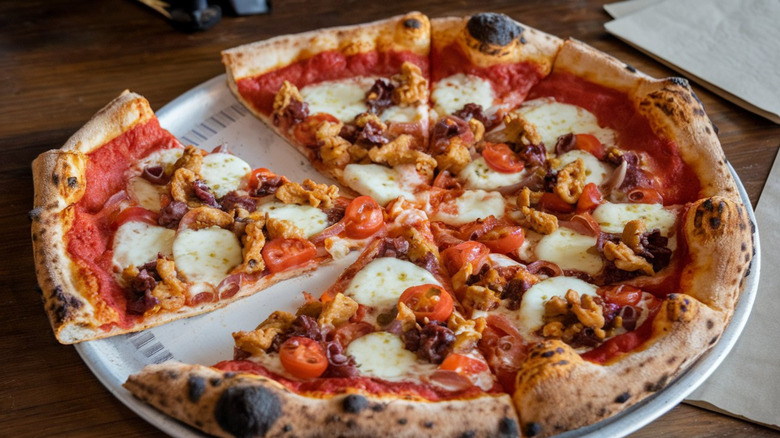
Soggy bottoms aren't just for pastries. Delivery pizzas with lots of toppings and thick crusts can turn out soft on the bottom if they're not cooked thoroughly. To avoid the problem, ask for your pizza to be cooked well-done. Even pizzaiolos do this; Daniel Gutter of Philadelphia's Circles+Squares told Philadelphia Magazine that he prefers well-done pizzas because he "want(s) the slices to stand up ... [and doesn't] want the cheese to slide off." You can ask when calling in an order or, on certain sites, like the Papa Johns website, manually select for it.
However, it is important to note that some pizzerias already prepare their pizzas thoroughly cooked. Adding a well-done request to your order may result in burned crust. As mentioned above, consult online images if you're ordering pizza from someplace new; if you see char on the crust in all of the pictures, don't ask for a well-done pie.
12. Order ahead during busy times
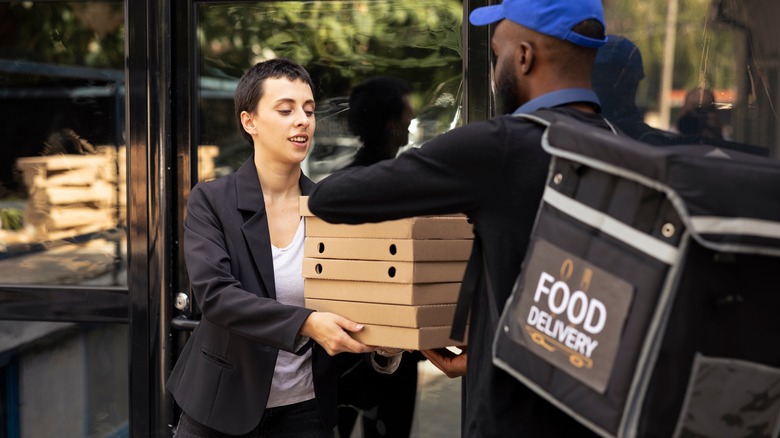
Especially if you're hosting an event or craving pizza on a weekend evening, you'll want to order ahead instead of at the last minute. According to a Civic Science survey, Fridays are the most common pizza-ordering days, followed by Saturdays. Is this common sense? Probably. Likewise, Uber Eats drivers report that peak delivery hours (in other words, when your food will likely take the longest) are between the hours of 11:30 a.m. and 2:00 p.m. and again between 5:30 p.m. and 9:00 p.m. Can you always avoid ordering food during this time? Absolutely not, but if you're having a party, try to time the delivery early so that it arrives on time. Nothing ruins a pizza party more than ... no pizza.
I like to say that any order larger than two pizzas deserves to be scheduled ahead of time, especially during peak delivery times. Also consider early orders during large events like major football games or holidays. You can always reheat the delivery pizza when it's time to serve.
13. Give clear delivery instructions

Picture this: You've invited a group of friends to your apartment for a pizza party. You've planned ahead and ordered your pizza with a scheduled delivery exactly at dinnertime. You've tracked the order on the delivery app and watched as the pizza made its way to your home, right on time. But at the appointed time, the pizza isn't there. You wait five minutes, 10 minutes, and it hasn't arrived. On the app, you see the driver circling the area again and again, finally showing up with the pizza 20 minutes late. And cold.
There's an easy fix for this problem. When ordering delivery to a large apartment complex or dormitory, be sure to give clear directions and, if needed, meet the delivery driver out front. Apartment complexes often require codes to get into gates and can be vast mazes of identical buildings. Provide delivery information in the order notes and, if your complex is especially large, ask the driver to call you when they have arrived.
14. Order directly from the pizzeria if possible
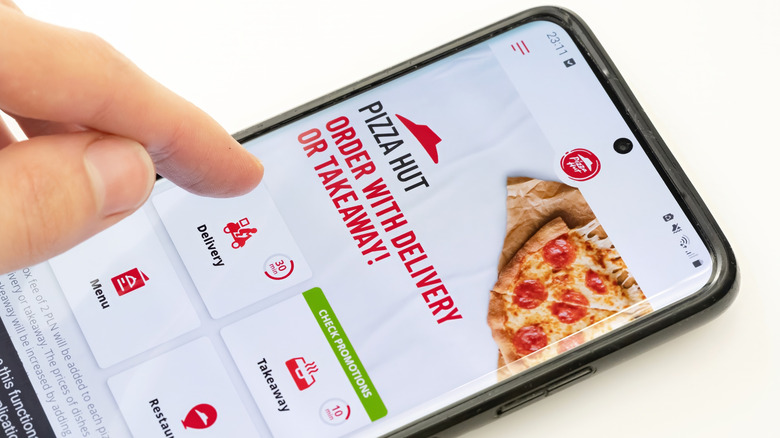
I am guilty of always opening up DoorDash the minute a pizza craving hits. But this, and other third-party delivery apps, aren't always the only option for delivery. Many independent pizzerias and small chains have joined the national chains with their own proprietary online ordering systems. And it may go against every bone in my millennial body, but some restaurants even take orders over the phone.
Third-party apps add additional fees to cover their expenses, and these aren't present when you order directly from a restaurant. In addition, according to a survey by NCR Voyix (a restaurant commerce platform), 58% of customers prefer direct ordering, as this process is more convenient, makes it easy to customize orders, and offers the opportunity for loyalty programs. You also have the peace of mind that all of the money you're paying for the pizza is going directly to the restaurant and its employees.
15. Tip in cash
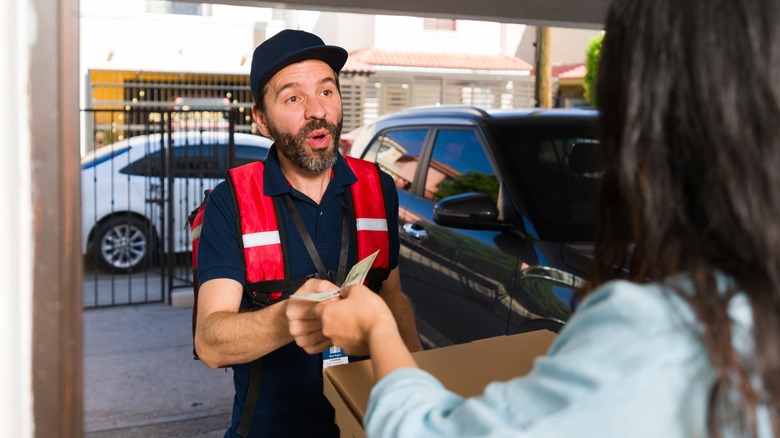
If you've got it, tip in cash instead of your credit card. Servers and delivery drivers make income from tips, and if you hand them cash, you know that a portion of it isn't going to the credit card company or delivery app. As Derek Deaver, a restaurant owner in St. Louis, told St. Louis Magazine: "Cash tips are great and appreciated by the staff as they can use it immediately rather than waiting for a credit card tip to be added to their weekly check."
However, do make sure that you're not shorting the pizzeria or driver with a cash tip. If you don't have enough cash on hand to tip your usual percentage, pocket it and switch to the credit card. A small tip in cash isn't better than a generous one on a card.
One trick I like to keep in mind? Keep an envelope on the fridge specifically for delivery tips. Whenever you've got a spare dollar or two in your wallet, move it to the tip envelope. Over time, you'll collect enough cash in one place for a generous tip.
16. Pick up in person

While I am not (quite) old enough to remember the existence of Domino's "30-minutes-or-it's-free" campaign, the idea still lives rent-free in my head. It just makes sense. Food delivery should only take 30 minutes, right?
But realistically, if you consider the time it takes to cook a pizza, get it into a delivery vehicle, and drive through traffic, it is a huge challenge to get food to your door in half an hour. And that's part of the reason the company scaled back its promise. (Plus severe injuries due to speedy, unsafe driving.) I usually expect delivery to take at least an hour from pressing confirm on the order to opening the pizza box on my table.
If you need pizza more quickly than that, it's best to pick it up in person. You'll still have to wait for it to be made, of course, but you'll save the time it takes for the delivery person to pick up the order and (potentially) deliver other pizzas on their way to your home.