

19 Clever Tips To Cut Costs While Dining Out
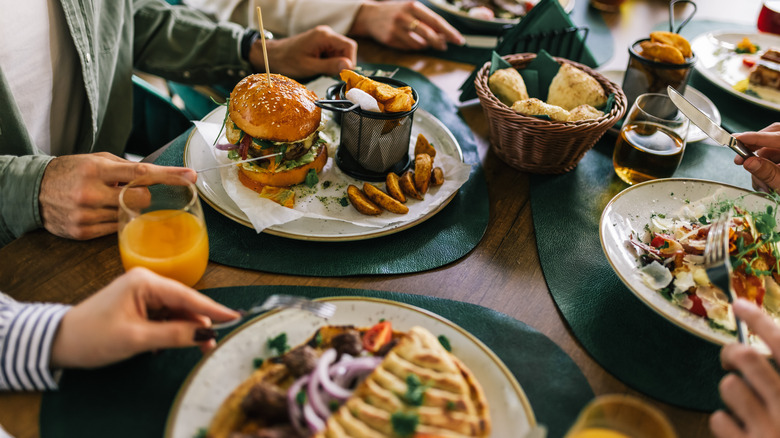
Dining out can be expensive, and the bad news is that it has gotten more and more expensive in recent years. Not only are the costs of running restaurants increasing and being passed on to customers, but customers also have to worry about rising living costs, making eating out less and less practical for many. But the good news is that you don't have to forego occasional trips to your favorite local dives as long as you find inventive ways to cut down on how much you spend there.
In order to aid the thrifty diner, we curated a list of some of our top tips for saving money when dining out. Many of them can be applied to your favorite spots, whether they're fast food chains, mom-and-pop restaurants, or higher-end dining experiences.
1. Skip the alcohol and soft drinks and order water instead
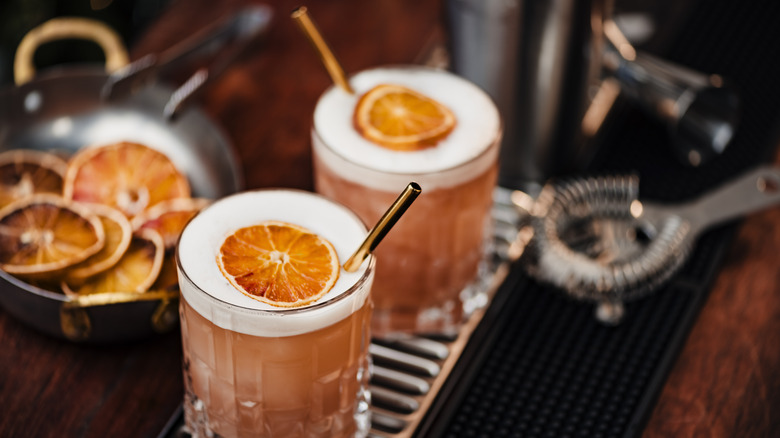
Make no mistake: All of those cute little bevvys add up. Restaurants make a lot of money on beverage sales; ToastTab estimates that bars, on average, make an 80% profit margin on alcohol — which is far more than what is made on food. Customers may be paying upwards of $10, or even $15, per drink at higher-end restaurants, and you can probably make those same beverages at home for a couple of bucks. Sodas are also not immune to this markup; Ziosk estimates that the return on soft drinks can be between 85% and 90%.
The best solution if you're looking to save? Limit your beverage consumption and stick to water. If you don't want to miss out on the buzzy experience, try pre-gaming cocktails at home before heading out to eat.
2. Keep your eye out for lunch and happy hour specials
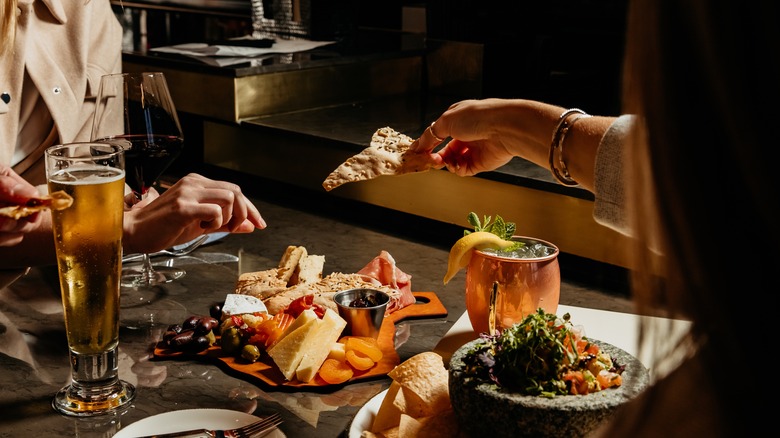
If you want to save money when eating out, you have to be smart about when you visit. Many restaurants, including large chains and smaller establishments, offer discounts on lunch and happy-hour plates. These tend to be lower-traffic times, and restaurants offer small incentives — be it BOGO deals, drink discounts, or meal specials — to help get more customers through the door.
The key to getting the most out of these deals is first to know the full price of the entree or dish, and then what the price is after discounts. After all, you don't want to visit a restaurant and get offered a happy hour special that would cost the same as if you ordered it during a prime-time dinner rush. Keep in mind that, for chains like Olive Garden, lunch-sized portions may be smaller than dinner-sized ones, and the price reflects that.
3. Ask about potential membership discounts when the check arrives
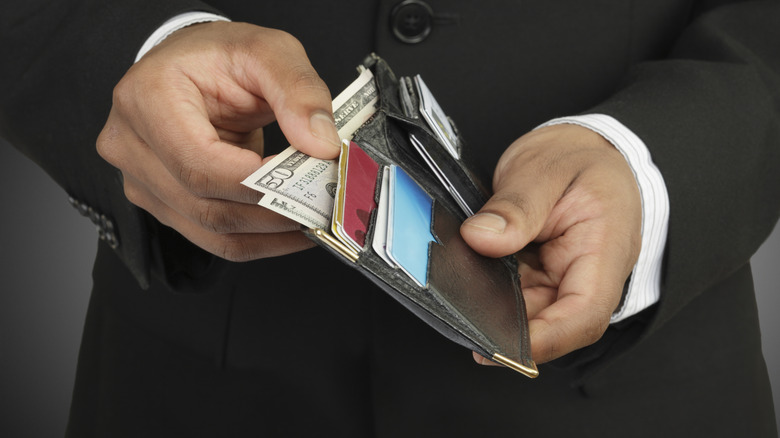
If you have an AARP card lurking in your wallet, now might be the prime time to take it out. Restaurants tend not to flaunt that they offer discounts, like AARP, but if you're a smart diner, you know to ask about it when you get your bill. AARP members, for example, get 10% off at Moe's, Cinnabon, and more.
Besides national membership associations, like AARP, you may also get student, teacher, nurse, or military discounts at certain restaurants. For example, military members and servicepeople (including police, firefighters, and EMS) can get 10% off at Outback Steakhouse with a valid ID. Local, non-national chains sometimes also offer discounts for certain groups, so be sure to inquire when the waitstaff asks if you're ready for your check.
4. Check for discounts on social media
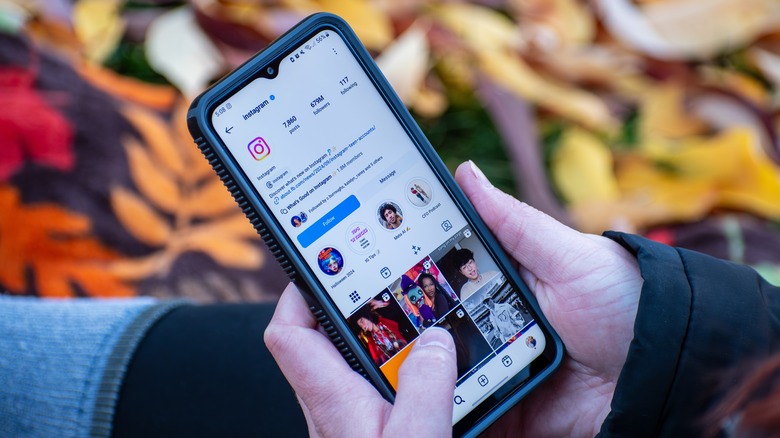
Have you ever been bombarded with Chipotle texts and social media updates about flash deals? If so, you may be entitled to financial compensation — in the form of discounts and potentially even free burritos.
It pays to follow some of your favorite restaurants (both chains and local) on socials to see what kinds of deals you can score. Although a restaurant might not always have a regular happy hour, for example, it might run a drink promo that only folks who see an Instagram story will know about. You can also use social media to sign up for text or email alerts about discounts and promos — though we recommend subscribing at your own risk, as getting constantly pinged about them can get annoying.
5. Dine out on weekdays rather than weekends
Not only do some restaurants offer lunch discounts or happy-hour specials, but they may also drive traffic to their restaurant by offering all-day promos on the quietest days of the week. Experts recommend stopping in on Mondays and Tuesdays; since weekends tend to be peak traffic for restaurants, you may be more likely to get deals on a quieter day, since restaurants are trying to unload unsold product before it goes bad. Look for deals on appetizers and desserts, especially.
The existence of deal days also implies days when you may want to consider staying home. Fridays and Saturdays are especially busy days for restaurants, meaning you may not be able to get as many discounts or promos as you would on other days.
6. Visit restaurants that are known for large portion sizes
The key to cutting costs when dining out is to try to get the most bang for your buck. There are many chains known for their massive portion sizes, including Olive Garden, Texas Roadhouse, and Cracker Barrel. While they may not be the best deal for a single meal, if you can split it across two — potentially even three — meals, you could have a great offer on your hands.
One of the best tips for this is to set aside a portion to take home as soon as your food arrives. That way, you won't feel inclined to keep eating, even when you're not hungry, for the sake of not wanting to waste food.
7. Check for coupons in the mail
We all know how annoying it can be to rifle through your mail only to find junk and bills — at this point, we can't really tell what's worse. But that junk mail you immediately throw out may be hiding coupons and great deals; you just have to snag them when you see them.
Restaurants, especially chains, may put coupons in weekly circulars during the slow season, when they're looking to move product or reach potential customers who have just moved to a new area. Taking a couple of minutes to leaf through these papers before inevitably tossing the circular in the recycling bin can potentially save you a couple of bucks here and there; just make sure that you pay attention to the expiry dates.
8. Visit an all-you-can-eat buffet
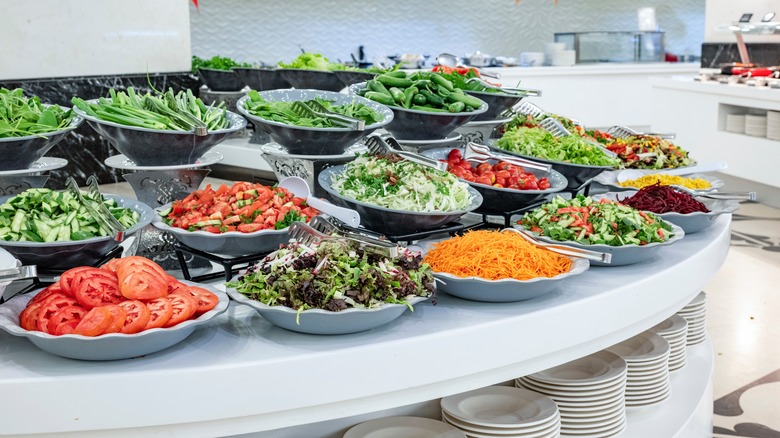
Buffets may quite possibly be the most bang-for-your-buck dining situation out there. Unlimited food and a set price ... what could go wrong? Well, the good news is that buffets can be very lucrative for customers, but only if you know what to add to your plate and understand the shady practices that buffets employ to try to keep costs down for themselves and to encourage customers to eat less, like filling the line with cheap, carb-heavy options before you get to the higher-end items, including the seafood and proteins. Know which foods you should avoid eating so that you can make the most of your buffet experience.
Another tip for maxing out your experience at a buffet is to actually eat before you arrive. If you come in starving, you may load up on the filling options at the start of the line rather than pacing yourself. Light, small meals before arriving are key, as they will keep your digestion running smoothly. For a more balanced plate, you should also survey all of your options before loading up at the first three trays you see.
9. Review the bill for auto gratuity before paying

Are you the kind of person who doesn't look at the check when it arrives at the table and instead slides your card in, hoping that the waitstaff didn't mess up your bill? Well, neglecting to read between the fine lines can end up costing you quite a bit. Besides just catching staff miscalculations and incorrect items, more and more restaurants are shifting away from conventional tipping systems in favor of auto-gratuity, meaning a tip or service charge is automatically added to your bill. Some restaurants do this for larger parties, as they tend to require more attention than smaller ones, while other restaurants don't want to deal with customers who may or may not tip.
While you can't decline to pay auto-gratuity, as it's a service charge, you may be able to inquire whether that added amount includes a tip or if you're expected to add more on top of that. You may also want to read up on service charges beforehand, especially if you're dining with a large party, so you know what to expect before the bill arrives.
10. Utilize discount apps for better deals
It might seem like the days of Groupon are long behind us, but there are more apps out there designed to help you find deals than you may think. OpenTable, one of the larger reservation platforms used by restaurants, offers an excellent rewards program. Enrollment is free, and you can get points at different restaurants, which can be redeemed for dining credit and Amazon gift cards.
Seated is another app you can earn rewards on; it offers customers gift cards, including to Amazon and Starbucks. All you need to do is make a reservation through the app, take and upload a photo to verify that you hit a certain spending amount, and then receive those gift cards.
11. Skip the appetizers
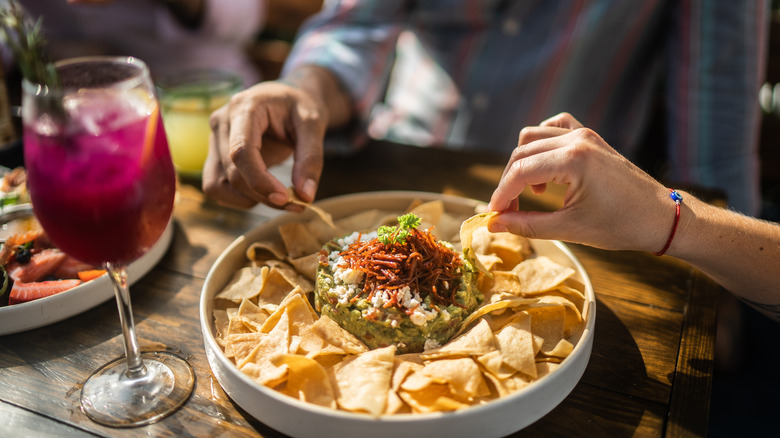
We're going to hold your hand extra tight when we tell you this: You don't need to order the party-sized tray of chips and guac every single time you go to your favorite local Mexican spot. While appetizers are delicious, they tend to come in small portions and can be quite expensive. Some of the worst offenders? Guacamole and edamame — both of which are made with simple and relatively inexpensive ingredients, but that diners seem to love.
The easiest way to avoid spending money on appetizers is simple: don't order them. Staff members may try to persuade customers to order by inquiring or giving personal recommendations before you place your order; try your best to hold firm and stick to your original order. Your wallet will thank you.
12. Order off the kids' menu, if possible
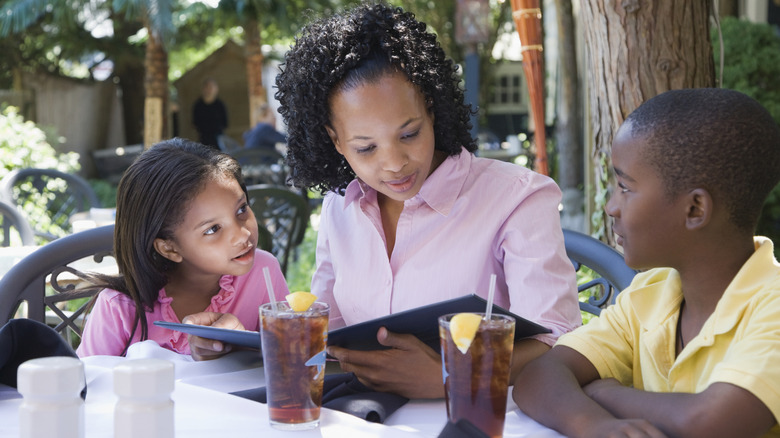
We have great news: The kids' meal isn't just for kids anymore. Some consumers order off this menu to save money. While the portion sizes may be smaller, you don't end up paying nearly as much as you would if you ordered off the regular menu. And, some of the items may be similar to what's on the regular menu, especially if you're looking to order sliders or burgers, pasta with meatballs, and other kid-friendly dishes.
Another way some customers may try to save money is to bring their own food for their kids instead of ordering from the kids' menu. While this might seem smart, given that kids tend not to eat the whole portion they order, it is usually perceived as rude by restaurant staff.
13. Sign up for rewards programs
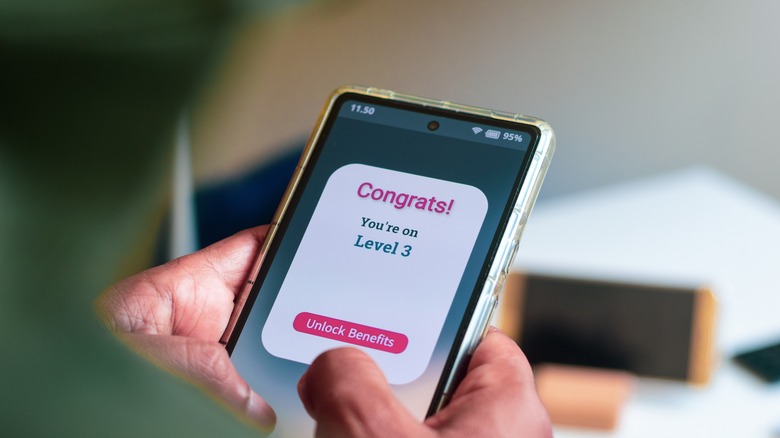
Rewards programs are a great way to save money at a restaurant, and there are numerous ways to sign up for them, depending on where you're dining. There may be a rewards website link or QR code that you can find at the bottom of your restaurant receipt. They let you earn points with every purchase, which you can redeem for deals like complimentary appetizers and desserts. And since many of these reward programs are free to join, they require very little effort on your part to make them worthwhile.
Some of the best chain loyalty programs include Firehouse Subs, Chili's, and P.F. Chang's. Panera also has a particularly great rewards program, and joining and using it is one of the best hacks to save money at the chain — you'll even get a free bakery treat on the day you sign up.
14. Get dessert elsewhere
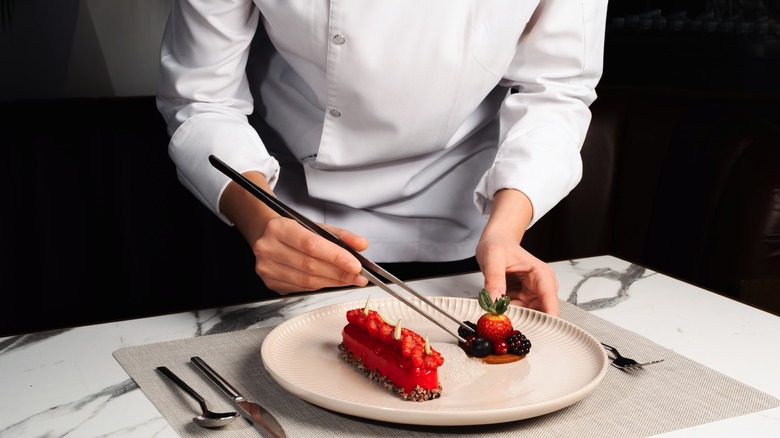
We know: It can seem like that chocolate cake is just calling your name. But you could end up paying a whole lot more than you intended by adding that extra dessert to your bill. While the profit margins on desserts are usually regarded as being thinner than on things like appetizers and drinks (and are instead used as a tool to drive sales), you could still be forking over extra cash for a treat that's not even made in-house. Dessert prices are also on the rise; according to data from Technomic Ignite Menu (as reported by Restaurant Business Online), there has been a 3.2% average increase in dessert prices on menus between 2023 and 2024. That means you could be paying even more for that slice of pie or decadent chocolate molten lava cake than before.
If you're still saving room for dessert, consider taking a walk, grabbing an ice cream cone, or stopping by a local bakery and picking up something to take home with you. And even if your restaurant staff is trying to upsell you, remain strong and ask for the check instead of something sweet.
15. Utilize birthday deals

Does anyone like the outrageous and downright embarrassing birthday ceremonies at chain restaurants? Probably not, but it may be worth it to get that free scoop of ice cream or slice of cake. Cashing in on birthday rewards — even if it involves the restaurant's rendition of "Happy Birthday" — is a great way to get free food. Many fast food chains offer birthday freebies: Chipotle offers free guac, Auntie Anne's offers a free pretzel if you've made a purchase within the year, and Panera offers a free birthday treat or bagel. However, to receive many of these perks, you have to be a loyalty program member and make a purchase that day or earlier.
Some less-corporate restaurants may not have defined loyalty or rewards programs, but may offer a dessert on your birthday — provided that you ask. Obviously, it's probably not morally correct to cheat the system and say it's your birthday when it's not, but we'll leave that up to you.
16. Visit a BYOB restaurant
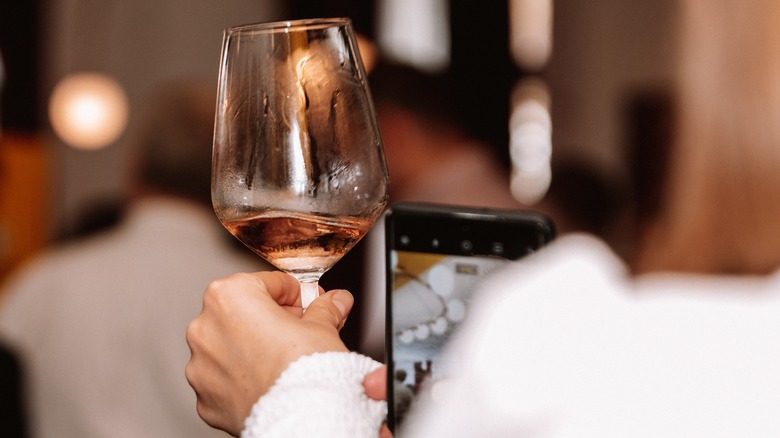
Knowing that restaurants may make so much money on alcohol may make you feel inclined to pick up a bottle of your own on your way over. After all, if a restaurant stocks $40, $50, and even $100 bottles, buying a $20 bottle you already know you like seems like a slam dunk. While you may be saving on the bottle itself, you should also be aware that many restaurants charge a corkage fee for parties that bring their own alcohol.
This system is generally regarded as a win-win — restaurants still get diners coming through the door spending money on food (even if they don't make an alcohol sale aside from the corkage), and diners get to spend less on booze and still enjoy the experience of dining out. That said, it's important to ask about BYOB and corkage policies before you visit a restaurant — and before you make a pit stop at the liquor store.
17. Order takeout, if possible
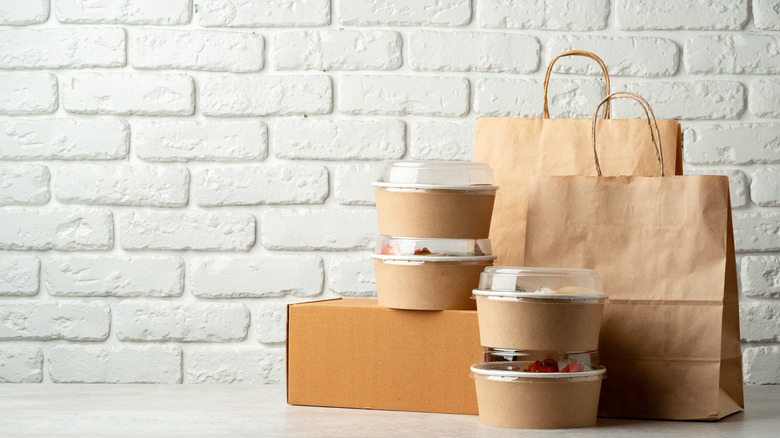
Tipping culture has gotten extremely out of hand, and the easiest way to avoid it while still getting to eat your favorite curry, is just to order takeout. You won't feel like you have to pay a tip because you're taking up space in a restaurant or taking up the waitstaff's time, and you still get to indulge in great food, all while making restaurants some money.
However, there are some caveats here. Not all food tastes good as takeout (namely, fried food and pasta dishes), so you may have to settle for lower-quality fare depending on your order. You may also be hit with tons of delivery fees if you order through third-party apps, like DoorDash or Grubhub. Brave the cold to order and pick up your takeout from the restaurant, and supply your own drinks and desserts to save even more.
18. Split small plates with your party
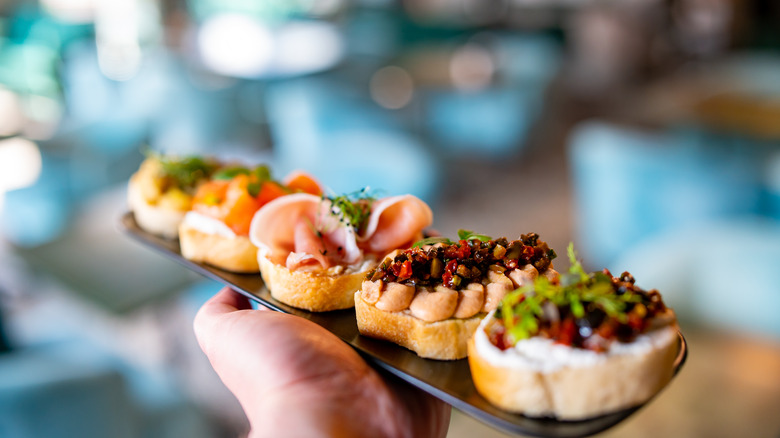
Tapas is one of our favorite styles of food: small plates, made for sharing. You don't have to be locked into a massive plate of pasta or a whole pizza when you can take small bites of many different dishes. Whether you're looking to save money or explore a diverse array of dishes, ordering small or regular-sized plates and sharing with your party is the way to go. Many diners have already caught on to this trend, though, and so have restaurants.
As such, restaurants have tried to discourage sharing by increasing the cost of small plates and appetizers and by serving smaller portions (which may be conducive to sharing but still end up costing people more). Some restaurants will also charge diners a fee for splitting plates.
19. Skip the after-dinner drink and coffees
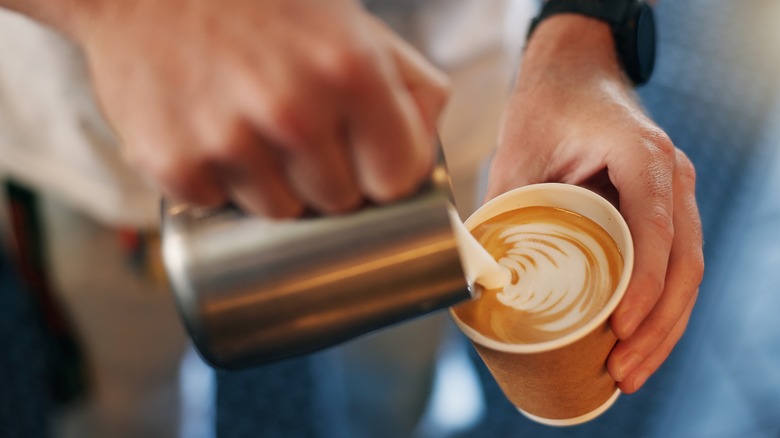
Okay, we'll let the delicious chocolate cake order slide this one time. But what goes better with chocolate cake and conversation than coffee? A cappuccino or some sort of digestif, if you prefer something stronger, may be in order. But if you're trying to save money, skipping your after-dinner drink may be the way to go.
For one, most restaurants aren't known for having good coffee, so you'll end up paying café-level prices for a coffee that tastes like it was brewed in a Keurig. Plus, we know that restaurants make a ton on drink sales, and buying a coffee or after-dinner cocktail in addition to a dessert may just be contributing to their high margins. Instead, stick with water or opt for a cheap, plain coffee over an expensive milky one.