

8 Old-School Pizza Chains That Sadly Had To Close Their Doors Forever
There's no disputing that pizza is one of the most beloved foods in the United States. You can find incredible pizza restaurants in every single state, serving up everything from authentic Neapolitan-style pies to New York slices, Sicilian squares, and Chicago deep dish pizzas. Then there are the ubiquitous pizza chains that make it easy to order up pies with just the click of a button. The pizza space is a pretty crowded place, so it's not surprising that several chains have come and gone over the years, including some old-school spots that were once all the rage.
Today, it's hard to imagine a world where you wouldn't have access to a myriad of pizza chains right at your fingertips. However, it wasn't always that way. Around the turn of the 20th century, Italians brought their recipes for pizza with them when they immigrated to the United States. Gennaro Lombardi was the first to apply for a license to sell pizza in New York City in 1905. From there, pizza shops started to proliferate along the East Coast and eventually spread across the country. By the 1950s, pizza had well and truly taken hold of America.
Some of the early old-school pizza chains looked nothing like the Domino's or Little Caesars you see today. Some pizza parlors entertained guests with organ music, others offered all-you-can-eat buffets, and some even had animatronics that put on shows for kids. Over time, many of these early chains struggled to keep pace with changing tastes, rising operating costs, and competition from bigger national brands. Sadly, many had to close their doors forever. If you're in the mood for a blast from the past, these are eight old-school pizza chains that we'll likely never see again.
Pizza Haven
Prior to the 1940s, pizza was a pretty foreign concept in Seattle. When brothers Frank and Julius Daverso opened Palace Grill in 1948, they actually had to give their pizza away just to get people to try it. People eventually took to it, though, and within a decade, there were several pizza restaurants in the city. Most were pizza parlors styled like East Coast "red sauce" spots with red and white checkered tablecloths and full sit-down service. Pizza Haven flipped the script on the traditional Seattle pizza parlor, and that may be why it expanded so much further than other spots and lasted much longer.
Pizza Haven was founded in 1958 by Kent Heaps, Elmer Howard, Ronald Bean, and Jack Schneider. The entrepreneurs were smart to open their pizza joint close to the University of Seattle's Greek Row of frat houses, and even smarter to offer something no other spot was offering — delivery. It also offered "smorgasbord Wednesdays", an all-you-can-eat deal that people loved. The concept was such a hit that the company was able to expand to 42 locations within the U.S. and places as far as Russia, the Middle East, and Poland.
So, with all that going on, what exactly happened to Pizza Haven? While it's not entirely clear why the chain began its steady decline, it's likely that pressure from other big chains made it difficult to compete. Pizza Hut had opened the same year in Wichita, Kansas, and would go on to use the same delivery model. Little Caesars was founded the following year, and Domino's a year after that. In the 1990s, Pizza Haven filed for bankruptcy. It managed to hang on for a few years, but in 2012, the last Seattle outpost shut down for good.
Cap'n Galley's Pizza & Pipes
As history has taught us, you don't have to reinvent the wheel to create a wildly successful restaurant chain. Look at McDonald's, which began as a barbecue restaurant, but changed when founders Dick and Mac McDonald realized that hamburgers were selling better than anything else. Glen Bell originally opened a hamburger stand, but saw that Mitla Cafe across the street was doing a roaring trade in tacos, which led to the founding of Taco Bell. The once wildly popular Cap'n Galley's Pizza & Pipes followed a similar path.
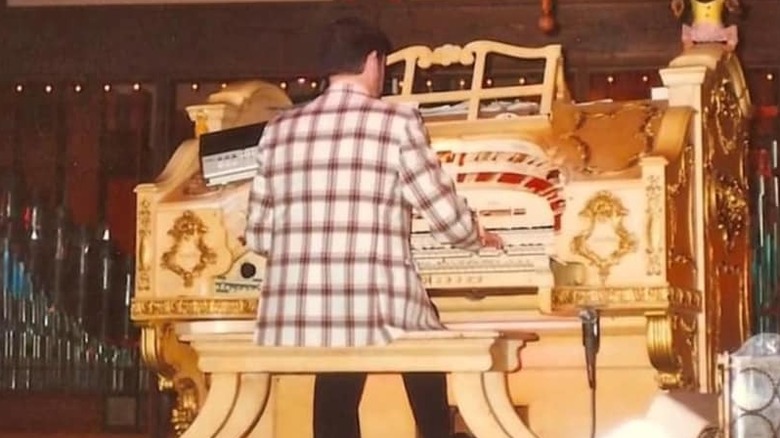
In the 1960s, restaurateur Bill Breuer owned several restaurants in California's Bay Area, but one location in Santa Clara was failing. He knew of a popular pizza parlor in the area that entertained diners with a pipe organ, so he decided to give it a whirl in his restaurant. He revamped his struggling location into a pizza joint, tracked down an organ and organist, and renamed the restaurant Cap'n Galley's Pizza & Pipes. It was a huge hit, and he and his siblings would open several more, each with Wurlitzer organs and some even designed with huge windows to specifically showcase the pipes.
At its peak, Pizza & Pipes spanned nine locations along the West Coast, and people loved the chain for the entertainment value that came along with the meals. It spawned many copycats and even inspired Nolan Bushnell to create Chuck E. Cheese. Sadly, that may have been what led to Pizza & Pipe's downfall. Customers' tastes changed, and the old-school organs lost footing to games and animatronic characters. Bad luck also played a role, as one location burned down and another was ousted to make way for a new road. By 2010, all of the original Pizza & Pipes locations were defunct.
My Pi Pizza
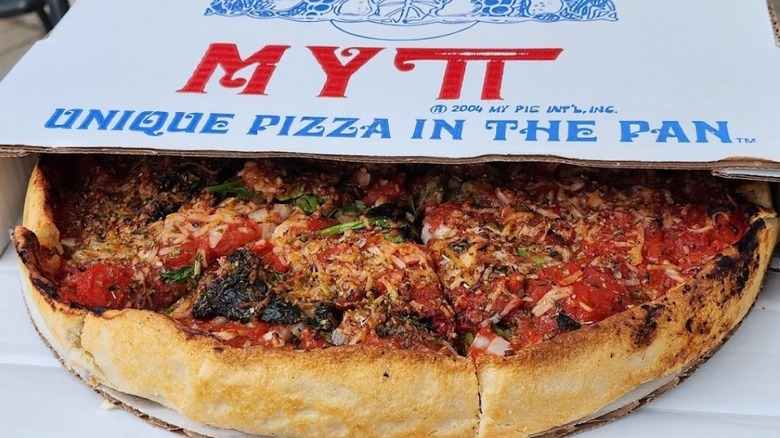
Chicago native Larry Aronson loved cooking, and one of his favorite things to make was deep dish pizza. He spent years perfecting his recipe, using California tomatoes for a sweeter, less acidic sauce, Wisconsin cheese, and handmade dough. In 1971, he had the opportunity to open a pizzeria, and My Pi was born. It was a success, and soon Aronson was able to expand the chain to other states, making it the first Chicago-style deep dish pizza restaurant to open outside the state of Illinois, eventually growing to 20 locations.
My Pi did well all the way through to the late '80s, but legal disputes caused Aronson to dial back on the franchises. In the meantime, his son Richard had completed studies in restaurant management and a stint at the Culinary Institute of America. He went on to work in fine dining, but later partnered with his father on some restaurant businesses in the mid-1990s. In 2000, he decided to open his own My Pi in Chicago's Bucktown neighborhood. When the flagship location in Rogers Park closed, the Bucktown spot became the last remaining My Pi restaurant.
Sadly, the final My Pi location shuttered its doors in June of 2025. The main issue was too much competition. Richard Aronson told Block Club Chicago that the troubles started after the recession in 2014, when many restaurateurs lost their businesses and pivoted to pizzerias. My Pi had a bit of relief during the pandemic when takeaway orders soared, but when things returned to business as usual, the shop just couldn't make ends meet. The Aronson family still owns the trademark, but is open to someone else picking up where they left off.
Pistol Pete's Pizza
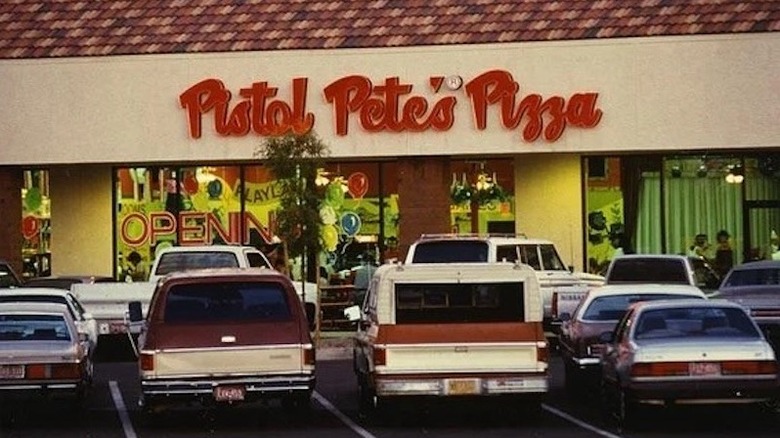
By the 1970s, many chain restaurants were marketing heavily toward families, and kids in particular. In 1971, McDonald's created the fantastical McDonaldland with Ronald, Grimace, and pals. Chuck E. Cheese was also right around the corner. Pistol Pete's Pizza was another early pioneer in the kid-centric restaurant game. The first restaurant opened in Lubbock, Texas, in 1974 with a Western theme and promises of family-size pizzas, old-time movies, and free gifts for kids. It would go on to have locations in California, Arizona, Nevada, Texas, and New Mexico.
Many people have fond memories of cavorting at Pistol Pete's as a kid: playing skee-ball and whack-a-mole, chowing down on cheese pizza, and drinking sodas out of boot-shaped mugs. The atmosphere of the restaurants could be chaotic, and that's exactly what kids loved about it. The chain did everything it could to excite young people, including sending out staff dressed in animal mascot costumes, installing roller coaster-style rides, and adding teenager-friendly video games. As you can imagine, it was a wildly popular place for pizza parties.
Pistol Pete's had a good run, lasting all the way up to 1995, when it was acquired by its competitor, Peter Piper Pizza. The latter was pretty similar in that it offered tons of games for kids along with hot pies, so it was pretty easy to rebrand the Pistol Pete's locations without making too many changes. Today, there are no longer any Pistol Pete's in any state. However, Peter Piper Pizza is still up and running with locations in California, Arizona, New Mexico, and Texas. There are also several locations in Mexico. And yes, there are still games on offer, including arcade games and air hockey.
ShowBiz Pizza
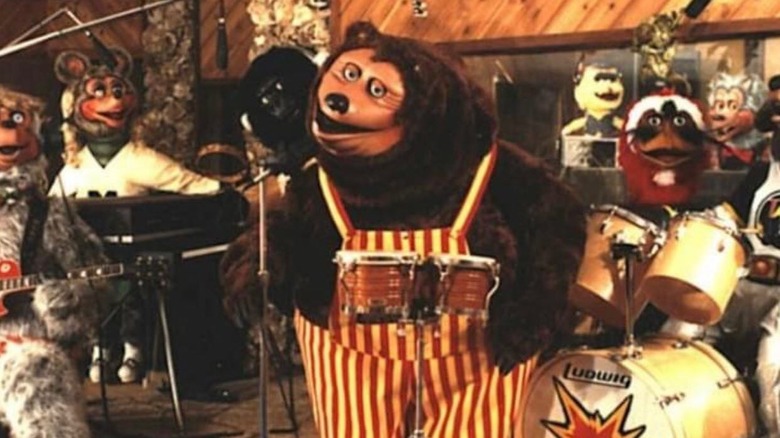
If you grew up in the 1980s, there's a good chance you remember eating pizza while watching old-school animatronics shows at Chuck E. Cheese. Then again, you may have enjoyed those shows at a copycat version of the famous kid-friendly pizza chain. ShowBiz Pizza was also a popular spot that featured animated puppets like wolves and bears performing music and either delighting or terrifying kids, depending on the audience's disposition. The rise and fall of ShowBiz Pizza is an interesting tale that's rife with drama.
It all started when Noah Bushnell (one of the founders of Atari) opened Chuck E. Cheese's Pizza Time Theater in San Jose, California, in 1971. Not long after, Bushnell signed a development agreement with hotelier Robert L. Brock to open more locations, and that's where things took a twist. Brock saw the potential that this new form of entertainment had, and he decided to create a rival company. The first ShowBiz Pizza opened in Kansas City, Missouri, in 1980, and introduced what would become the famous Rock-afire Explosion show.
Obviously, Bushnell was not impressed with Brock's new business idea, so he sued. ShowBiz Pizza was later demanded to pay a portion of its profits to Pizza Time Theater. For a while, both businesses saw steady growth, but by 1984, Pizza Time Theater was floundering and had to file for bankruptcy protection. ShowBiz Pizza stepped in, and the companies merged. There was a great deal of restructuring over the next decade, and in 1994, the company rebranded as Chuck E. Cheese's, later dropping the possessive in the name. Today, there are over 460 Chuck E. Cheese restaurants across the United States, although most have phased out the animatronics in favor of video games, trampolines, and dance floors.
Eatza Pizza

Eatza Pizza may have seemed like a good idea when it first opened in Phoenix, Arizona, in 1997. After all, all-you-can-eat buffets were still going strong throughout the decade, and seeing as how pizza was wildly popular at the time, you can see how it all made sense to the founders. The deal was pretty good for diners, too. For just $3.99, you could stuff yourself silly with pizza, pasta, and salad. Sadly (and somewhat predictably), though, Eatza Pizza would become one of the many chain restaurant buffets that we'll never see again.
Eatza Pizza did well in the early years, expanding into multiple states. It got an even bigger boost when founders Berne and Ronda Fleming and Tom Jones sold it to Barry Smith, who was formerly vice president of operations at Shakey's Pizza, a beer and pizza chain that was popular on the West Coast. Eatza Pizza got a major revamp, adding over 18 types of pizza to the menu, alongside dishes like pasta, fried chicken, and its signature Zatos (crispy fried potato bites). The company expanded rapidly in the early 2000s to over 100 restaurants, but troubles were on the horizon.
By 2011, Eatza Pizza was embroiled in not one, but two lawsuits. A restaurant supply company alleged the pizza chain hadn't paid its bills, and a landlord for one location said the company skipped out on the property before the lease was up. Stores began to shutter, and the chain was eventually sold to International Franchise Associates. Despite IFA's best efforts, Eatza Pizza was too far gone, and it ended up fading into obscurity. Some speculate that it was in the cards anyway, as the profit margin for buffet restaurants is often notoriously low.
Pizza Cucinova
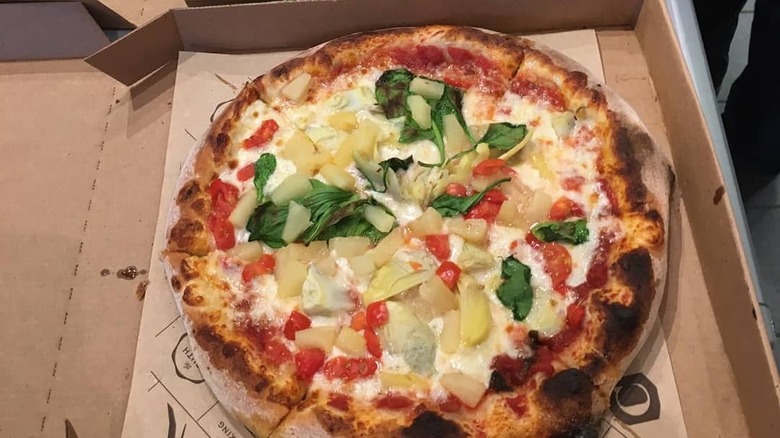
There was a time when you could almost guarantee you'd find a Sbarro in any given mall food court or airport. Interestingly, the chain began as a family operation. In 1956, Naples natives Carmela and Gennar Sbarro opened a salumeria in Brooklyn, New York, and it became famous for Carmela's grab-and-go pizza slices. The couple expanded to other locations in the 1970s, including a shopping mall. The mall location was a huge success, and Sbarro would go on to open hundreds of locations in more malls in multiple countries. Later, the chain would experiment with new concepts, like the now-defunct Pizza Cucinova.
The 1980s and 1990s were glory days for Sbarro, as malls were all the rage and people loved the convenience of being able to grab individual slices on the go. However, by the 2000s, malls were starting to fall out of fashion, and there were more big players in the quick-service pizza game. In 2013, Sbarro filed for Chapter 11 bankruptcy, and the change-makers in corporate knew they needed to pivot to keep up with the times. The solution was a spin-off fast-casual chain called Pizza Cucinova that specialized in Neapolitan-style pies.
Sbarro launched Pizza Cucinova in 2013, with two locations in Columbus, Ohio, which was also where the new headquarters had been moved to cut back on costs. The locations offered streamlined menus with pizzas made fresh in-house, salads, and simple desserts. At first, the chain did well, expanding to locations in Cincinnati, Houston, Paraguay, and Japan. But at the end of the day, Pizza Cucinova just didn't bring enough return on investment. Sbarro sold the chain off, and now there don't appear to be any locations left.
Uno Due Go & Uno Fresco
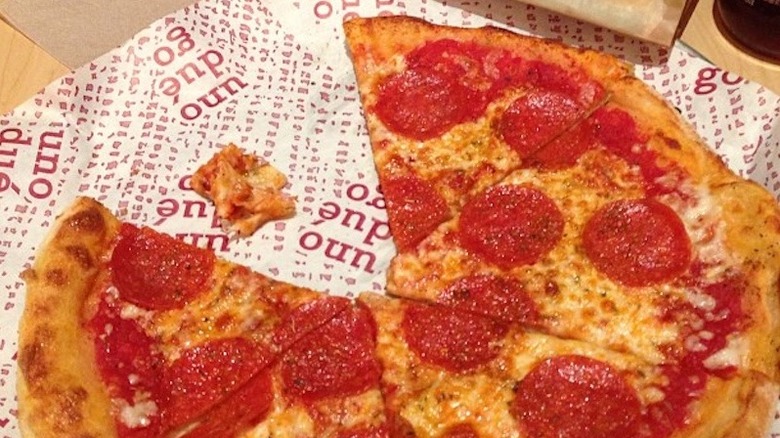
Uno Pizzeria holds a special place in the history of American pizza, as it was the birthplace of the Chicago-style deep dish pizza. Legend has it that Ike Sewell created the pizza in 1943, although some historians believe that may not be the entire truth. There's a good chance the original owner, Ric Riccardo, created it when the spot was called Pizzeria Riccardo. Some also say there's evidence that a cook named Rudy Malnati (or his son Lou) was the inventor. Regardless, Uno Pizzeria would become famous for its deep dish pizza and expand to multiple locations and spin-offs.
Expansion wasn't always in the cards for Uno Pizzeria. For the first 10 years of operation, there was only one restaurant. Then, in 1955, a second location opened a block away called Uno Due. It wasn't until a man named Aaron Spencer approached Sewell about franchising that the chain began to expand. In 1979, Spencer opened a Pizzeria Uno in Boston, and by the early 1990s, there were over 100 locations. In the early 2000s, the chain expanded further, launching the fast-casual concepts Uno Due Go and Uno Fresco.
The first Uno Due Go locations opened in 2008 in the Dallas-Fort Worth Airport. Then, in 2011, the company announced it would open 30 more locations across Texas. The chain was all about fresh food like pizzas, paninis, salads, and wraps that diners could enjoy in the restaurants or order for takeaway. Uno Fresco was a similar fast-casual brand. It's unclear what happened, but by 2015, all Uno Fresco locations abruptly closed. Uno Due Go also seems to have vanished. Uno Pizzeria still has multiple locations across the U.S. and abroad, although several have shuttered over the past few years.