

10 Reasons Why Loyal Shoppers Always Choose Costco Over Sam's Club
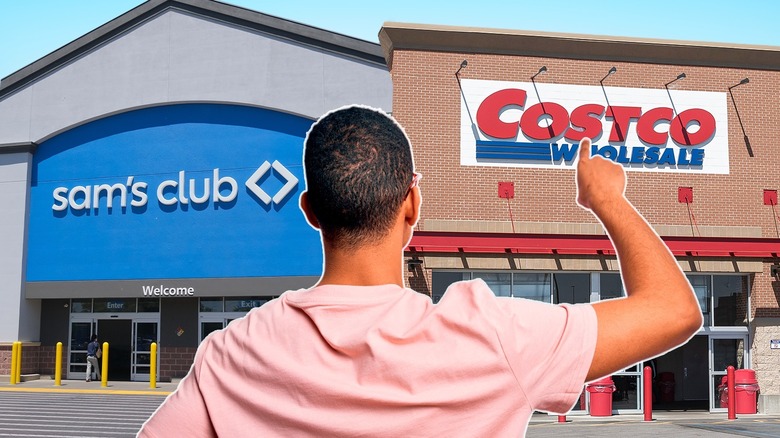
When it comes to big-box warehouse shopping, people usually fall into two camps: team Costco or team Sam's Club. Both offer great bulk deals and plenty of perks. But for many shoppers, there's one clear winner. As someone who's had memberships to both, I'm team Costco all the way. That's not to say Sam's Club doesn't have tons of things going for it, but there's just something about Costco's offerings, consistency, and even the vibe of the store that puts it ahead.
At first glance, the two warehouse clubs look pretty similar. Both offer a plethora of products, including fresh produce, pantry staples, fine wines, electronics, clothing, and even patio furniture. In addition, both offer extras like food courts, pharmacies, optical departments, and gas stations. But dig a bit deeper, and you'll notice some small but significant differences in the variety of offerings and the benefits you get.
If you're on the fence between the two clubs, I get it. I was once in the same boat, trying to weigh the pros and cons of each membership. For me, Costco just makes the whole shopping experience feel easier and more worthwhile. The Kirkland Signature products are surprisingly good quality, the return policy is pretty unbeatable, and the food court alone is worth a trip. Of course, every shopper's wants and needs are different. But if you're wondering what makes Costco stand out for many, here are some reasons loyal shoppers keep renewing their memberships year after year.
1. Costco has more locations worldwide
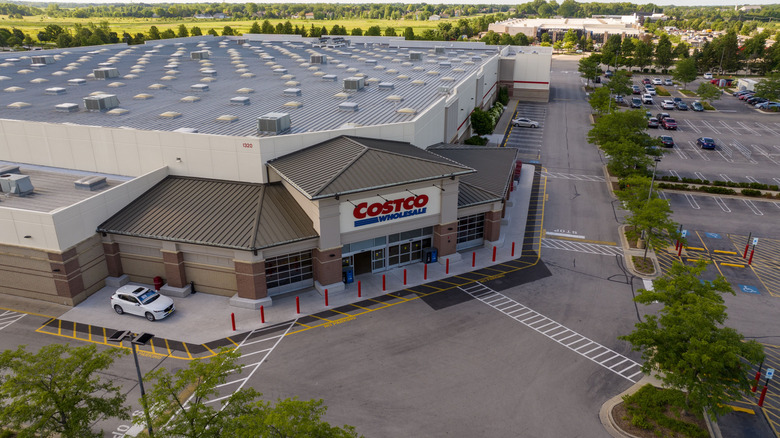
One of the pressing factors for many people when choosing between Costco and Sam's Club is whether there's a warehouse nearby. After all, if you have to drive for an hour or more just to do a bulk shopping run, it may not be worth the gas money and time. It's worth noting that both companies have a pretty big footprint with hundreds of stores across the United States and beyond. However, Costco edges out Sam's Club in that respect with more stores in more states and countries.
Costco has certainly come a long way since the first store opened in Seattle, Washington, in 1983. Today, the company has over 900 locations worldwide, including more than 630 in the U.S. alone — the only states that don't have a Costco are West Virginia, Wyoming, and Rhode Island. You can also find Costco warehouses in Canada, Mexico, Australia, Japan, China, Korea, Taiwan, the U.K., Spain, France, New Zealand, Sweden, and Iceland. Even better, you can use your Costco membership internationally at any location worldwide.
The first Sam's Club opened in Midwest City, Oklahoma, in 1983. Since then, the club has grown to 885 locations worldwide, about 600 of which are in the United States. However, if you live in Vermont, Washington, Alaska, Rhode Island, Oregon, or Massachusetts, you're out of luck because there are no Sam's Clubs there. Outside of the U.S., there are Sam's Clubs in just three countries: Mexico, China, and Brazil. And like Costco, Sam's Club allows you to use your membership at any warehouse in the U.S. and abroad.
2. You can earn more cash back per year at Costco
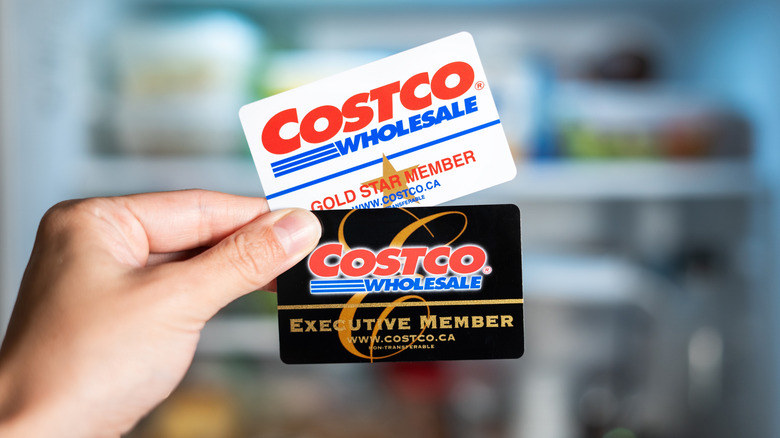
Money is another major factor for many people when deciding which warehouse club to join. Both Costco and Sam's Club offer memberships that allow you to shop in physical stores and online, as well as enhanced memberships that give you extra perks, including the opportunity to earn cash back on purchases. Overall, the Sam's Club memberships are slightly cheaper than Costco's, but Costco allows you to earn more cash back.
Costco's Gold Star membership costs $65 a year and gives you access to all the products and services the warehouse offers. The Executive membership costs $130 a year, but you get extra benefits like special shopping hours, exclusive discounts, and the opportunity to earn 2% rewards on certain purchases for a refund of up to $1,250 per year. If you're wondering how much you'd need to spend to make an Executive membership worth it, a spend of $6,500 on qualified purchases annually would earn you $130 (the cost of the membership).
The Club membership at Sam's Club costs $50 a year and allows you to shop for goods and services in-store and online. You can also download the Scan & Go app to scan items and check out, allowing you to skip the lines. For $110 a year, the Plus membership gives you all of that, and extras like early shopping hours, free shipping and delivery, and the chance to earn 2% cash back on select purchases — but only up to $500 per year. If you plan on doing a lot of warehouse shopping or making big purchases, Costco's Executive membership might be a better option.
3. Kirkland Signature products often rival national brands in quality
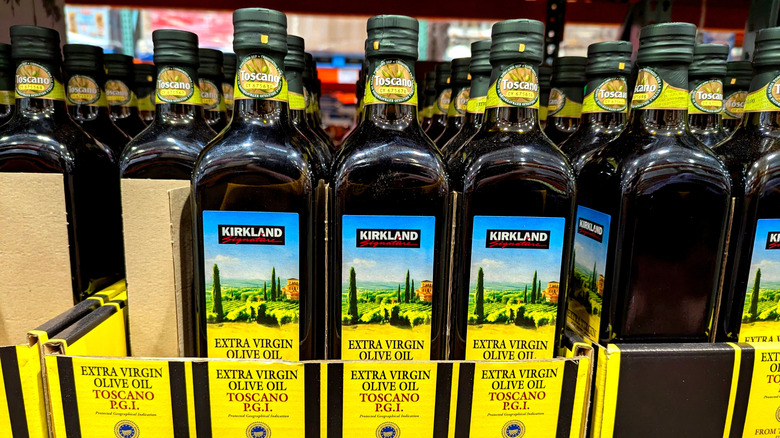
Both Costco and Sam's Club have their own private-label brands, essentially store versions of name-brand products. They're often just as good, and sometimes even better, because the companies work with leading manufacturers to create the products, but often offer them at lower prices. While the Member's Mark products from Sam's Club have their fans, it's pretty hard to top the quality and reputation of Costco's Kirkland Signature products.
Costco's Kirkland Signature brand was created in 1995 when Jim Sinegal, co-founder and CEO at the time, decided to consolidate all of the in-store labels into one private-label brand. He named it after the site of the company's former headquarters in Kirkland, Washington. Today, you can find everything from Kirkland Signature olive oil to coffee beans, paper towels, batteries, and dog food. The quality is pretty hard to beat, considering Costco works with manufacturers like Starbucks, Bumblebee, and Duracell to create them. With that in mind, it's not surprising Kirkland products account for one-third of the company's revenue.
Sam's Club introduced the Member's Mark brand in 1998, and by 2017, all of its private label brands were under that umbrella. The products are generally well-received by consumers, but they haven't gained the reputation that Kirkland Signature products have for quality. That being said, in 2020, Sam's Club started an overhaul of its in-store brand, tweaking products based on customer feedback and offering new items. The brand is definitely getting better, but many agree that Kirkland Signature still reigns supreme.
4. You can't beat the meat selection at Costco
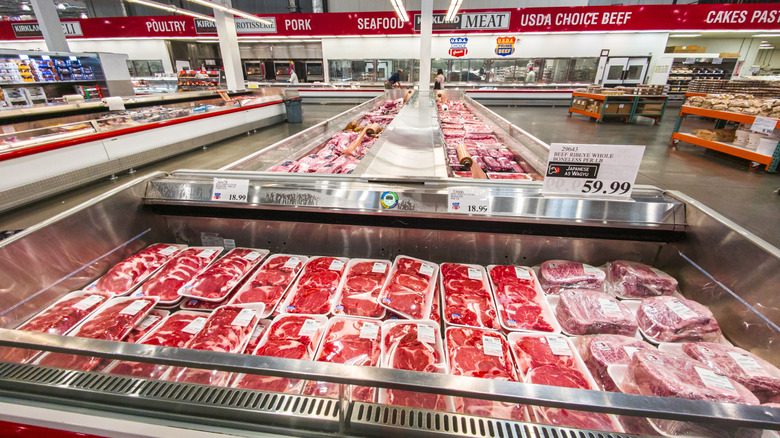
Warehouse clubs are great for stocking up on meat, whether you're buying in bulk to fill up the freezer or planning a big weekend barbecue. Sam's Club and Costco each have large meat departments offering everything from rotisserie chickens to ground beef, ribs, roasts, and seafood. You can score some good finds at both, but there are a few reasons why many say Costco is the best grocery chain for buying meat.
One fact about Costco's meat department that you might not know is that it has its own chicken farm and processing facility in Fremont, Nebraska. That gives the company total control over how the chickens are raised and processed. For other meats, Costco turns to certified suppliers and well-known names like Tyson, Perdue, and JBS Swift USA. The company also offers a wide range of quality seafood and organic meats, and prices competitively by capping the markup to around 10% to 15%.
Sam's Club also offers quality meats, including options like USDA Choice and Prime beef, Atlantic salmon, and organic chicken. However, the selection isn't as varied as it is at Costco. Mashed recently compared the meat departments at both warehouses and found that Sam's Club had far fewer options for beef, pork, and seafood, and no game meats at all. And considering the meat prices are similar at both warehouses, Costco wins the edge here for sheer variety.
5. Electronics come with extra warranty and support
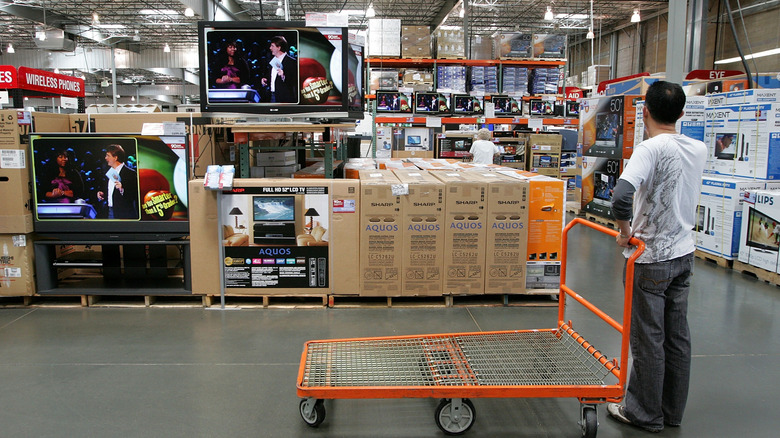
Step through the entrance of a Costco or Sam's Club, and the first things you see will likely be big-ticket items like televisions and kitchen appliances. It's a tactic that many warehouse clubs use to make sure that you get a gander of the flashy electronics before moving on to smaller items. Manipulative merchandising techniques aside, the warehouses actually offer great deals on electronics. And here's where Costco comes out on top again.
The main reason to always buy your kitchen appliances at Costco is the extended warranty on electronics. The company goes above and beyond the manufacturer's warranties by offering extended coverage for up to two years from the date you buy an item in-store or the date it was delivered to you for online purchases. This includes major appliances, televisions, projectors, and computers. In addition, you can purchase additional coverage on top of that through AllState.
You may be able to find many of the same big-ticket items at Sam's Club for similar prices, but you won't get that extra layer of security. The products will come with the manufacturer's warranty, but if you want extended coverage, you'll have to purchase that through AllState. Protection plans from AllState are only available for purchase within 30 days of the sale. It may not make a difference for smaller items, but for larger purchases, Costco's warranty policy offers better peace of mind, and it can potentially save you tons of money in the long run.
6. Costco has a seriously impressive alcohol selection
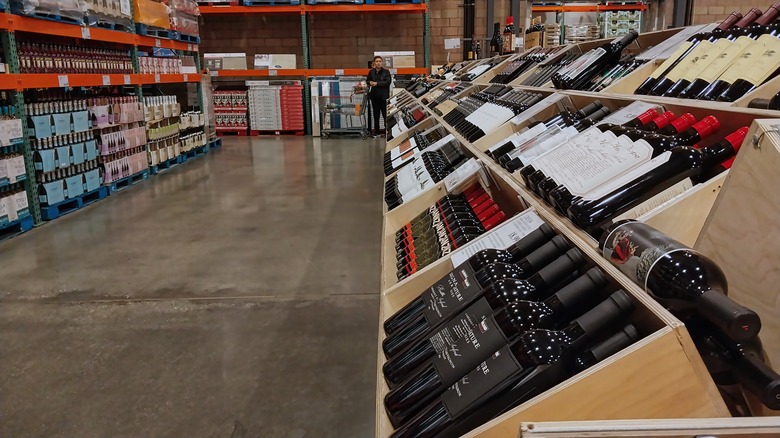
Warehouse clubs aim to make it easy to stock up on everything you could need and then some, and alcohol is no exception. Many Sam's Club and Costco locations have alcohol sections where you can buy beer, wine, and spirits. Both offer name-brand bottles along with their own private-label products. Although the offerings at both stores vary from store to store and region to region, many shoppers agree that Costco takes things up a notch when it comes to its alcohol selection.
In terms of variety, Costco often has Sam's Club beat by a mile with vast selections of wines from all over the world, multiple brands of beer and spirits, and even some rare bottles from time to time. In addition, one of the secrets of Costco liquor that long-time shoppers know and love is that the company partners with major wineries and distilleries to produce its Kirkland Signature products. As a result, many house-label bottles are on par with big-name brands in terms of quality. In addition, Costco marks up its bottles well below the industry average of 25% to 45%.
Sam's Club also produces wines and spirits under the Member's Mark label, and many of them earn top marks with customers and industry professionals alike. And like Costco, Sam's Club prices its brand-name and in-house bottles competitively compared to other retailers. However, more often than not, you just don't find the same variety of options as you do at Costco, particularly when it comes to higher-end bottles.
7. You'll find more organic products at Costco
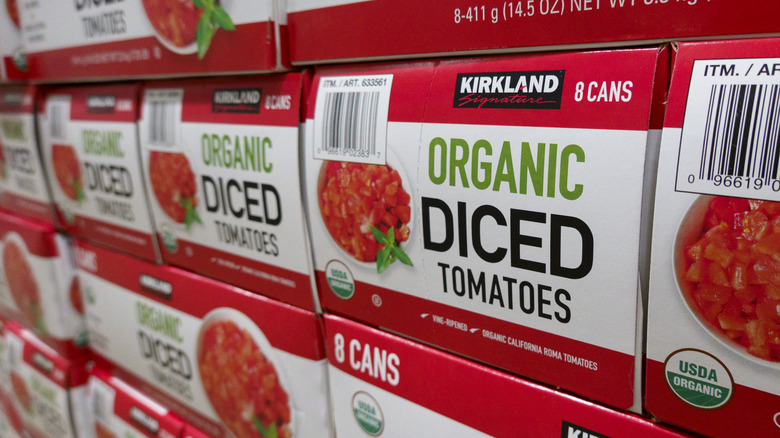
When shopping for organic foods, many people make a beeline to specialty grocery stores like Whole Foods or Sprouts. However, warehouse clubs can also be solid options. The top brass for businesses like Costco and Sam's Club are well aware that people are paying attention to what's in their food, and shelves are being stocked accordingly with more organic produce, meats, and packaged goods than ever before. Costco, in particular, has been on top of the organic food game for some time now.
You might be surprised to learn that Costco is the largest retailer of organic foods in the U.S. and that it took that title from Whole Foods as far back as 2015. The company made roughly $6.6 billion in natural food sales in 2024, which is a pretty good indication of how much customers love its organic products. Peruse the aisles of any warehouse and you'll find a huge selection of health-conscious goods, including organic olive oil, tomato paste, chicken stock, and coconut milk, not to mention fresh organic produce like fruits and vegetables.
Sam's Club also offers organic products, but nowhere close to the range that Costco does. That being said, the company has been on a mission over the past few years to elevate its Member's Mark line with quality products that are good for people and the environment. This includes offering products that meet its "Made Without" goals, meaning they don't contain ingredients like artificial colors and high-fructose corn syrup. Even so, for now, Costco still dominates with its organic food offerings.
8. Returns and refunds are a breeze
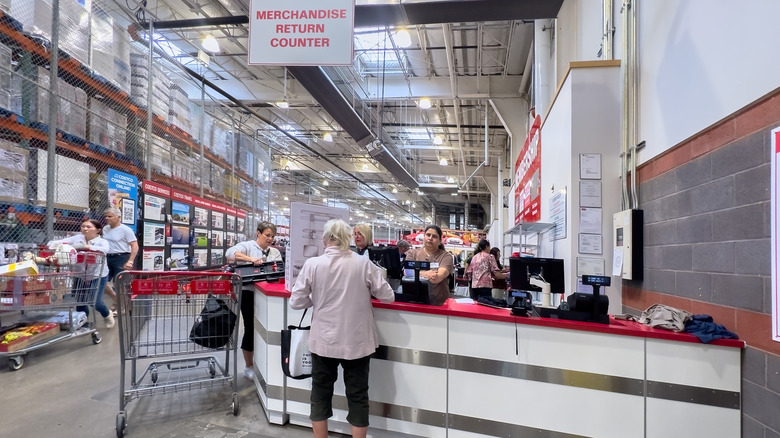
Part of the fun of shopping at warehouse stores is discovering new products. The selection is constantly changing, and you never know what you'll find on any given trip. But what happens if you go all in on a box of 60 granola bars only to find that they don't quite meet your expectations? That's where a good return policy comes in. Both Costco and Sam's Club have return policies, but Costco's is slightly more lenient.
If you're not happy with an item you bought at Costco, just take it to the returns counter of any warehouse or initiate a return on the website, and the company will refund you with or without a receipt. The risk-free 100% satisfaction guarantee applies to most products and even extends to your Costco membership. Exceptions include items like eyeglasses, gift cards, diamonds, cigarettes, and alcohol. In addition, electronics must be returned within 90 days.
Sam's Club offers a similar 100% satisfaction guarantee, allowing you to return most items bought in-store and online. However, if you're taking the product back to the store, you'll need to have your original receipt. In addition, the product should be in its original packaging; otherwise, the refund may be denied. While Sam's Club has a 90-day time limit for returns on electronics, it stipulates that heavy commercial equipment and motorsports items must be returned within 30 days, and cellphones within 14 days.
9. Costco's food court offers more variety
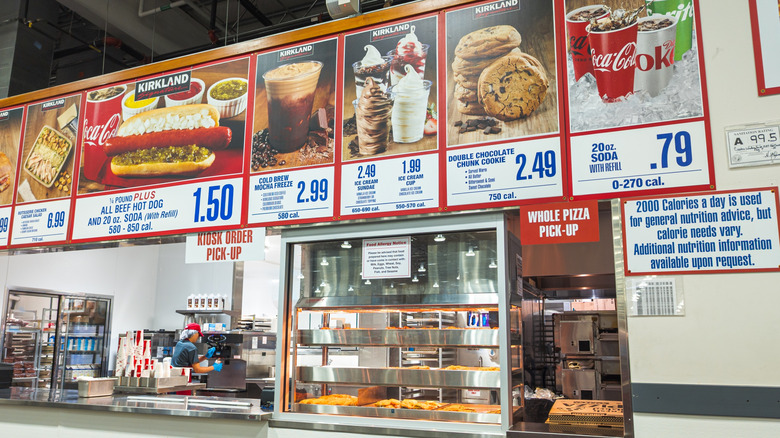
There's something about walking through a massive warehouse, dodging carts, and hauling bulk groceries that works up an appetite. Luckily, many warehouse clubs offer food courts where you can fuel up either before or after shopping. Sam's Club and Costco both provide enticing comfort eats like hot dogs and pizza at their food courts. And while taste is subjective, many agree that Costco is the winner in the great Costco vs Sam's Club food court debate simply because of the variety of items offered.
The first Costco food court was actually a hot dog stand that started operating outside a San Diego store in 1984. The concept took off, and the company eventually integrated actual food courts into its stores. Loyal shoppers love that the hot dog and soda combo has remained at $1.50 since the 1980s, and that the company is dead-set on keeping it that way indefinitely. Other enticing menu items include pizzas, chicken bakes, rotisserie chicken salad, chicken bacon sandwiches, ice cream, cookies, smoothies, frappe-style iced coffee, and fountain drinks.
Sam's Club also started offering hot dogs from carts in 1983. That would later transition into the Sam's Club Cafe that you can find at most warehouse stores today. The menus are slightly more limited than Costco's, with items like hot dogs, pizza, pretzels, sundaes, frozen yogurt, and sodas. To be fair, the food at the Sam's Club Cafes is reasonably priced and pretty tasty — you just have a few more options for different tastes at Costco.
10. Costco's gas is a cut above Sam's Club's
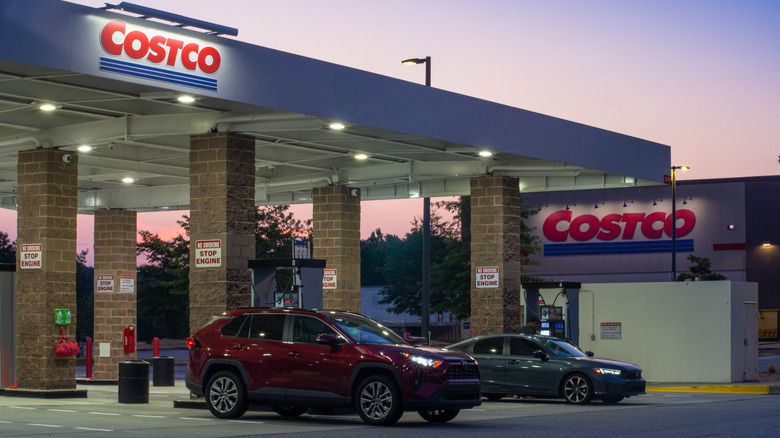
One thing that sets warehouse clubs like Costco and Sam's Club apart from your typical grocery chain or department store is that many have gas stations on site. Not only does that make it easy for you to check another thing off your to-do list, but the warehouse gas stations often give you a much better deal on gas than you'll find elsewhere. The rules, processes, and prices are similar at both Sam's Club and Costco, but Costco stands out for offering superior fuel.
Costco differs from Sam's in that it offers Top Tier gas, which is essentially fuel with engine cleaning detergents added. Top Tier gas is designed to prevent carbon build-up and keep engines running smoother and more efficiently. It seems to work, as a study by AAA found that cars using the gas had 19 times fewer engine deposits than cars using non-Top Tier gas after driving for 4,000 miles.
You'll need a membership to fuel up at either Costco or Sam's Club, and both will place a temporary hold on your card when you pay at the pump, usually for an amount slightly higher than your actual total, just to ensure the gas will be paid for once it's pumped. But there's one small workaround at Costco. You can use a Costco Shop Card (basically a gift card) to buy gas, even if you're not a member. It's a handy loophole for anyone who wants to take advantage of the lower prices without committing to a full membership.