

10 East Coast Delicacies You Should Try At Least Once
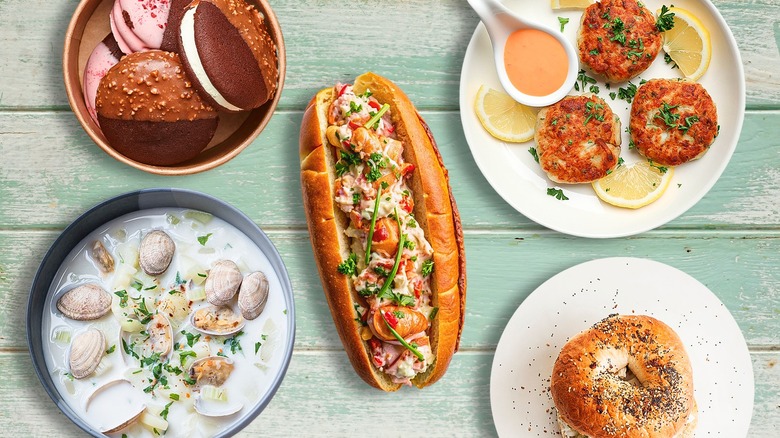
Being from New England is one of the parts of my identity that I take very, very seriously. I grew up in Connecticut, moved to Vermont, and moved back to Connecticut before settling in my now-home state of Rhode Island. What I have noticed about every single East Coast state that I've lived in along the way and have visited is that the food culture is very much ingrained into the fabric of the respective community. It's more than just the flavors, too — it's also a broader connection to the region's history and its people. Like many other East Coasters, I have fond memories of not just foods, but also the experience of eating them with people I love and feeling connected to the community when I eat them.
In learning more about the regional cuisine of New England and the East Coast, I've realized that place-based connections are what make its regional fare unique. In other words, while you might be able to find a Philly cheesesteak in Nebraska or a bowl of New England clam chowder on the menu at a steakhouse in Seattle, there's just something about enjoying these foods in the places where they are intertwined with regional identity that makes them all the more special. Whether you are planning a visit to the East Coast, or are homesick for some of your favorites, here are some of those well-rooted East Coast delicacies that everyone should try at least once.
1. Maryland crab cakes
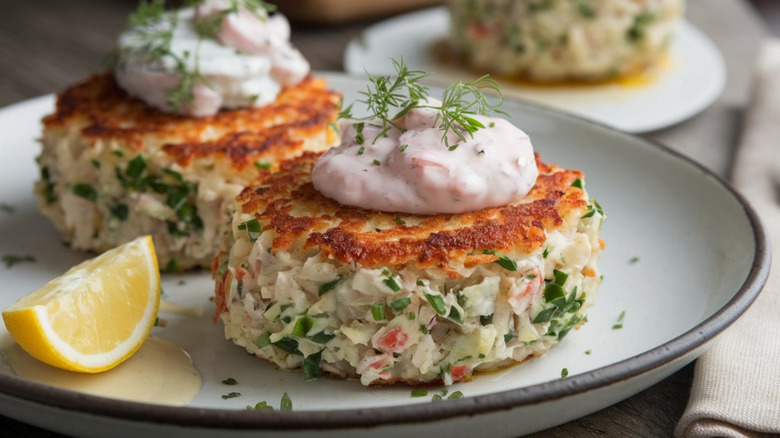
Due to the proximity to the ocean, you can expect to find that many of the tastiest East Coast delicacies contain seafood in some shape or form, as is the case with the iconic crispy Maryland crab cake. There's no fake or imitation crab here; the real seafood joints load up these crispy patties with an ample amount of fresh lump crab meat, often sourced from the native Maryland blue crab. The crab meat itself is usually left pretty chunky and is made with minimal fillers, unlike other types of seafood fritters, meaning every bite is coupled with juicy crab and juxtaposed by the crispy exterior. Another integral component of this seafood staple is Old Bay seasoning, as well as Worcestershire sauce, which gives the patties their savory edge. The exterior of the patties is usually composed of crushed crackers, like Saltines, though you may also see variations used with panko breadcrumbs for a finer texture. Crab cakes often served broiled or pan-fried, which helps preserve the crab's moisture and make this a decadent bite.
Crab cakes are as unfussy as they come, and some of the most memorable ones I remember eating came from rickety-looking roadside shacks that you wouldn't think about stopping in. Slather on the tartar sauce, grab a handful of napkins, and take in the smells, sights, and sounds of the Chesapeake Bay over yonder.
2. Lobster rolls
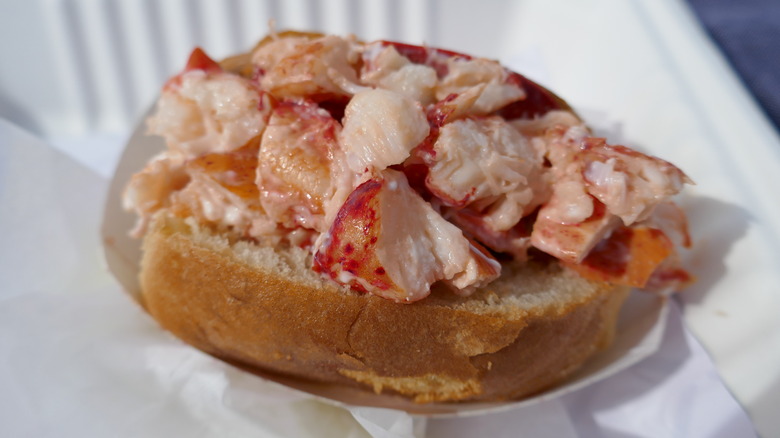
No trip to New England is complete without an obligatory stop at a lobster shack. If you're not from New England, seeing the price of lobster may make your eyes pop out of your head, but once you sink your teeth into a crispy, buttered hot dog roll stuffed with copious amounts of New Englanders' favorite crustacean, you will regret not ordering an extra for the road.
I can't mention lobster rolls without mentioning the flat-out war that goes on over the Maine- versus the Connecticut-style approach. Folks from the north love serving their lobster rolls cold and with mayonnaise, while folks in Connecticut serve it piping hot, sans mayo, with butter. Now, I won't make an authoritative claim as to which style is better, but I will say that people shouldn't travel to New England just to eat a cold, seafood salad (sorry, Maine).
The thing that I love most about lobster rolls is the feelings and ambiance associated with them. Aside from a cup of coleslaw and piping hot french fries, lobster rolls are kept very plain and very simple. On a hot roll, you might get a piece of lettuce on your bun, but the primary focus is on high-quality, often locally sourced lobster meat. I have fond memories of eating lobster with my dad as a kid, including at our family's favorite seafood shack. The feeling of the painted picnic table underneath sunburned legs and watching melted butter being drizzled across the sandwich brings back a sort of drool-inducing nostalgia for me, as I'm sure it does for other East Coasters.
3. Carolina barbecue
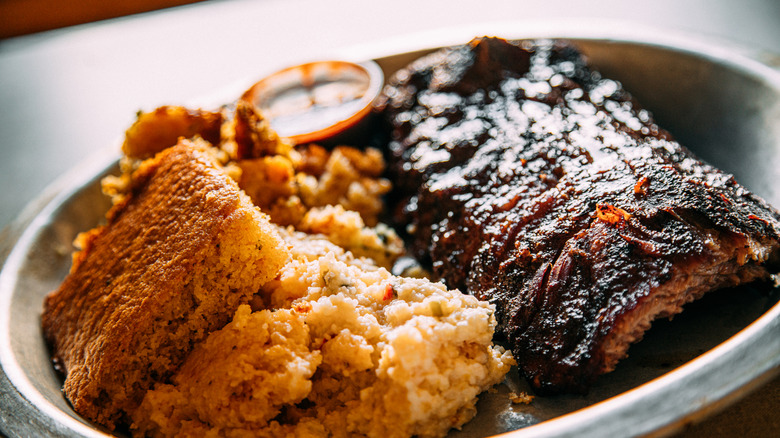
Every state has its own regional barbecue styles (and sauces). In Texas, you'll see a lot of smoked brisket and ribs, while burnt ends and hickory smoke reign supreme in Kansas City. If you're on a barbecue road trip across the country, you'll find great spots on the East Coast as well, including in the Carolinas. There is a lot of diversity within Carolina barbecue, and every part of the state does it differently. North Carolina barbecue is the epicenter of whole-hog cooking and often focuses on tangy, vinegar-based barbecue sauces that cut through the fattiness of the pork. Make a trip south and you'll find even more pork, but this time, with a greater emphasis on mustard-based sauces. Western South Carolina barbecue hones in on a sweet and umami flavor from tomato-based sauces, while the east brings peppery and piquant vinegar-based sauces to the table. The only way to know which style of them is the best? Well, I guess you'll have to make a trip and see for yourself.
Of course, like many of the East Coast delicacies on this list, eating Carolina barbecue isn't just about the barbecue itself. It's about going to a barbecue restaurant with a hog on the smoker out back and unfussy platters filled with all the fixins', from mac and cheese to hush puppies and coleslaw. You can't help but marvel at how the pit-masters of the region have honed their craft to bring you over-the-top plates and succulent pork.
4. New York system
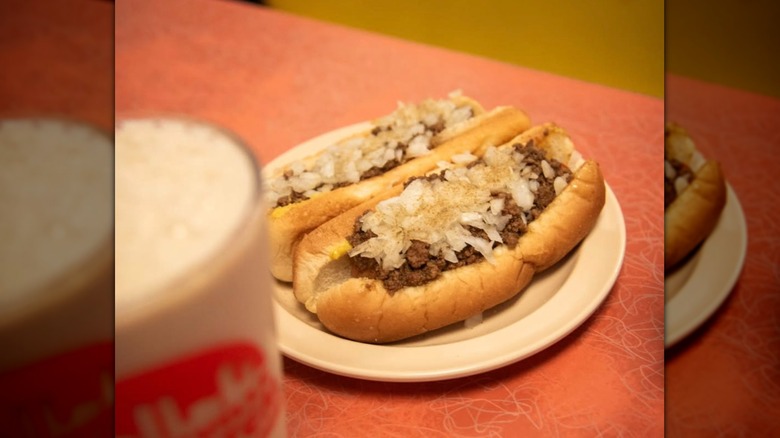
We're going to take a quick pit stop on this foodie tour of the East Coast not to New York, but to my now-home state of Rhode Island. The New York system is one of the best sandwiches to order in the state, and though it looks a whole lot like a hot dog, it is anything but a plain, unseasoned, and sad dog that you would get from a street cart. Rather, this hot wiener (as it's otherwise known) is loaded to the brim with a Coney Island-style chili, mustard, white onions, and celery salt. The wiener itself is even different from your classic beef frank; it's made with veal, pork, and beef, which gives it a slightly sweet flavor that contrasts the sharp bite of the onions and the tomatoey chili really well.
Part of the appeal of the New York system is that it's very niche and difficult to find outside of the state of Rhode Island. The best spot to grab one is Olneyville N.Y. System, with locations in Providence and Cranston. The menu at this Ocean State institution is painfully simple: fries, chili cheese fries, some sandwiches (though you might ask why anyone would order one), and the New York system. It's a sandwich best guzzled down with an iced-cold coffee milk: a beverage made by combining a sugary, coffee-infused syrup with milk.
5. New England clam chowder
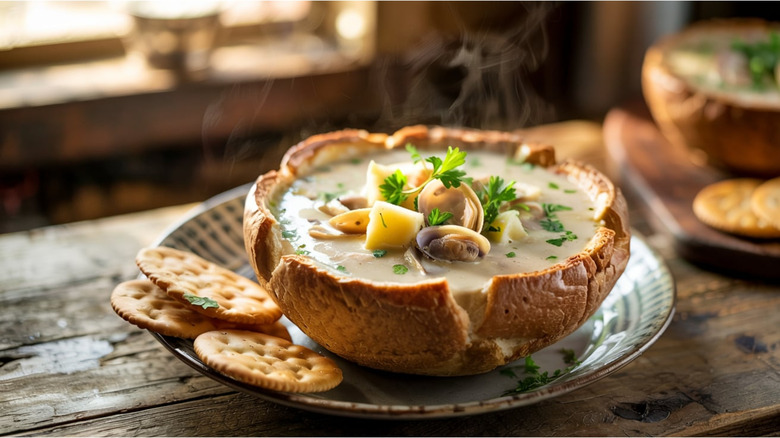
Let's test and see if you're a true New Englander: What does your face do when you hear the phrase "Manhattan clam chowder?" Do you make the same face when you think about the Yankees? If so, you're probably a New Englander.
Unlike its tomatoey relative, New England clam chowder is lauded for its thickness and copious amounts of cream or half and half. I don't like clams all too much myself, as I find them a little too stringy and chewy, but I love, love, love New England clam chowder. And while other regions of the country may try to throw it onto upscale steakhouse menus or try to make it themselves, nothing beats a bowlful with chunky clams, cubed red potatoes (with the skin left on for added texture), and potentially even bacon, if you want to add a meaty contrast to the seafood-based broth, enjoyed at a beachside seafood shack. This chowder is most often served with a side of oyster crackers, which are designed to be sprinkled on top of the chowder, rather than enjoyed as a side. However, some spots will also sell it to you in a bread bowl (which is my preferred method of eating it).
The broth should smell and taste strongly of clams, and the soup should be thick and creamy enough to make you feel full after just a couple of slurps. While its heaviness may lead you to think it would be good in the winter, the summer months (after a long day at the beach) are prime time to enjoy a bowl.
6. NY bagels and cream cheese
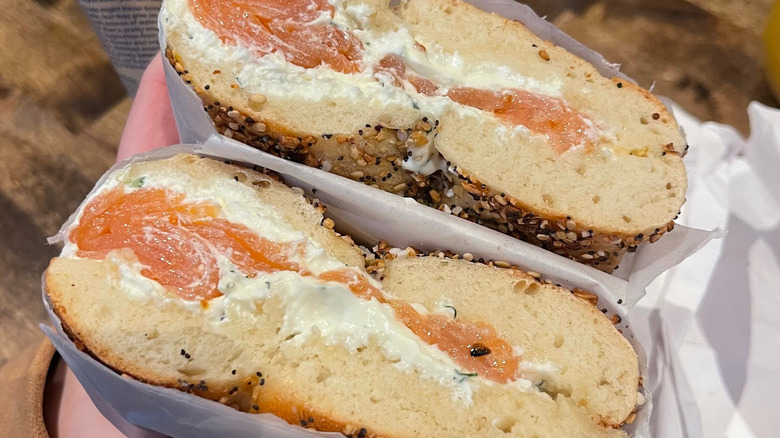
I am a New Englander down to my core. However, I am certainly not below taking the three hour train ride into New York City so that I can get my hands on a proper (and I mean proper) New York bagel and cream cheese.
For those who have never had the pleasure of ordering a bagel from a New York shop — and I'm not talking the hoity-toity spots selling $15 bagel-and-schmear — let me set the scene for you: It's dimly lit with a flickering light bulb on the ceiling, there's a whole lot of yelling for a Thursday morning at 9 a.m., and you're instantly starstruck by how many different kinds of whitefish and schmears can fit in a deli case. The bagel you order is about 50% cream cheese by volume and is encased in a bagel that is fluffy in the center, yet chewy and crusty on the outside. And taking a bite of that bagel just makes your eyes roll back in your head as the crisp, city air hits your face. It's an immaculate affair that I hope every person gets to experience at least once (or if you live within a few hours' train-ride, then as many times as that bagel craving strikes).
The borough's bagels are just built different. And some say it's the water, but I think it's the commitment to craftsmanship and years spent honing their bagel-making skills that makes all the difference.
7. Philly cheesesteak
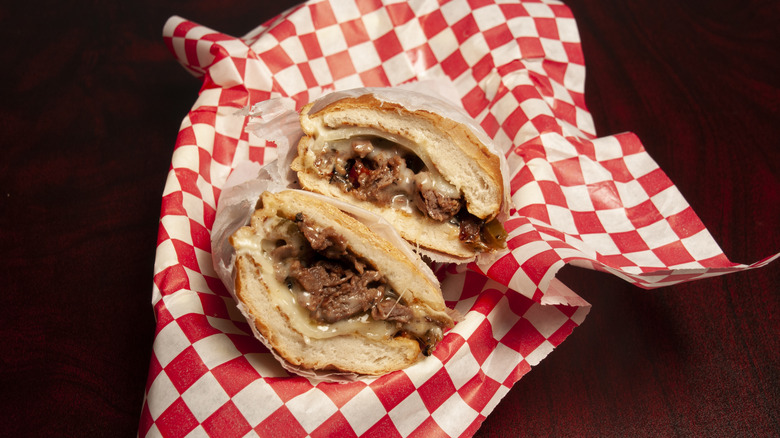
Before we return to New England, we have to make a quick pit stop in Philly to highlight the city's signature sandwich: the Philly cheesesteak. While it goes toe-to-toe with Chicago's beef sandwich as the most famous steak sandwich in the country, it's still an undeniable favorite among many who call the City of Brotherly Love home. We can thank hot dog vendor Pat Olivieri for creating this chopped steak and cheese sandwich; he came up with the idea in 1930. Interestingly enough, the first cheesesteak didn't even have cheese; it was made simply with chopped steak and onions on a roll. After this sandwich became better known by Philly's inhabitants, cheesesteak joints started popping up everywhere. While every spot does it differently, you'll usually see chopped, juicy steak atop a torpedo roll, usually with onions, and either provolone, American, cheddar, or — most divisively – Cheese Whiz, which supposedly sinks down into the steak and the bun, infusing everything with a cheesy, albeit plasticky, flavor.
Since the Philly cheesesteak has blossomed in popularity, you can expect to see it on menus everywhere, including at fast-food joints and casual dining spots. But can Subway really recreate the feeling of wrapping your hands around a hot cheesesteak on a blustery, cold day in Philly? No.
8. Whoopie pies
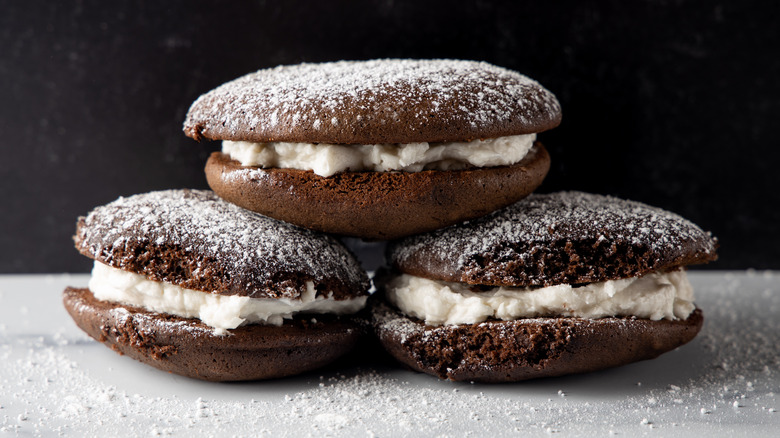
The only thing more obvious than the East Coast's connection to seafood is its love of all things sweet. From saltwater taffy bought on the Jersey Shore to frappes in Massachusetts, it's clear that East Coasters take their desserts very seriously, and that includes whoopie pies. A whoopie pie is like a cakey version of an Oreo. It sandwiches a light and fluffy frosting between two decadent cake rounds, which are often chocolate-flavored, but also come in other variations like red velvet and pumpkin. A good whoopie pie has a soft, supple, and structurally sound base with a filling that's soft and whipped cream-like, but still quite sweet. The best whoopie pies I've ever had feel very light on the palate, yet are still decadent enough to be a special occasion in and of themselves.
The whoopie pie has highly contested origins. Some believe it was the Amish who created the first whoopie pies, the name emulating the sound that schoolchildren would make when they saw this delectable treat packed into their lunchbox. However, Mainers also take a lot of credit for their popularization of the whoopie pie. You'll also see them crop up in other spots across the country, but there is something very special about the dessert's connection with the East Coast that makes it worth noting here.
9. Maple creemee
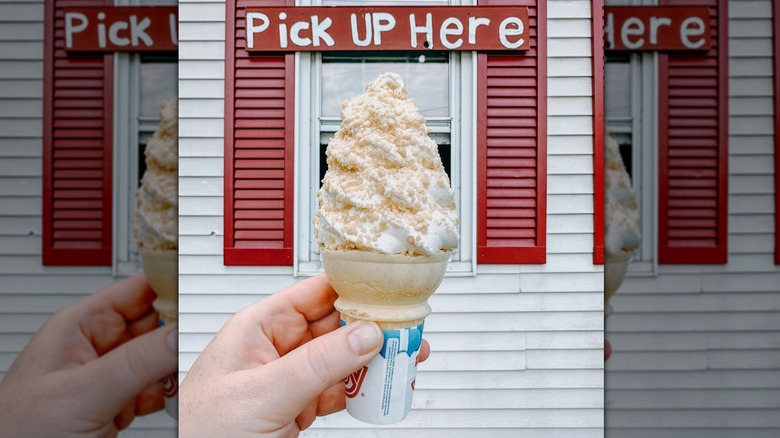
Before you ask, no, soft-serve ice cream is not inherently an East Coast delicacy, but the creemee is. Creemees are slightly different than soft-serve cones because they're made with a higher fat content, which gives them a richer mouthfeel. The most common (and delicious) flavor is maple, though you'll also see creemee windows and shops churning out everything from vanilla and chocolate to black raspberry. I'd recommend a black raspberry and maple swirl, or if you're visiting during the fall, stop by an orchard and get an apple cider donut or apple cobbler topped with a maple creemee.
The creemee's home is in Vermont, and it's so inextricably tied to the state that you won't find the frozen treat outside of its borders. Since it tends to be a summer food, you may only see creemee windows open from mid-spring to mid-fall — so get them while you can. Some of my favorite spots for these treats, as someone who lived in Vermont for three years, include Palmer Lane Maple in Jericho (add maple sprinkles for an extra sweet effect), Burlington Bay Market and Café (where the creemees are best enjoyed on a walk by the Lake Champlain waterfront), and Burlington's Little Gordo — hopefully you'll be lucky enough to find a Thai tea creemee on its menu when you visit.
10. Seafood boil
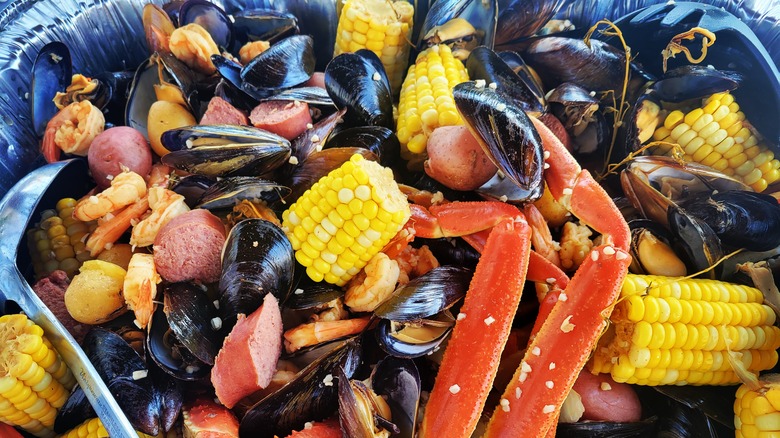
The East Coast really knows how to churn out unique recipes with seafood, including in bisques, stews, and soups. But one of the best ways to enjoy the East Coast's fresh bounty of seafood is in the form of a seafood bake. In coastal Connecticut and Rhode Island, these bakes usually look like clams, mussels, red potatoes, and corn on the cob — occasionally lobster and/or sausage will make an appearance — all steamed together over hot coals or rocks on the beach. The bake is served in a buffet-style format, in which folks can greedily fight over the lobster and clams. These bakes often done on a large scale, meaning the whole neighborhood or family is invited. In other words, one does not simply make a clam bake for three people.
Southerners also have their own form of seafood boil, though it usually incorporates regional ingredients like plump Gulf shrimp, andouille sausage, and Old Bay seasoning. Lowcountry boils bring together crab, shrimp, and sometimes even crawfish with red potatoes, and corn. Rather than being enjoyed on a beach like a New England boil, Lowcountry boils are often drained and spread on a newspaper-covered table, accompanied by sauces and butter. There are no plates involved, and part of the magic of this dish is chowing down on fresh seafood, potatoes, and corn with your hands surrounded by good company. It's just not something that can be replicated elsewhere in the U.S., making regional seafood boil a must-try East Coast delicacy.