

9 Best Vegetables For Juicing
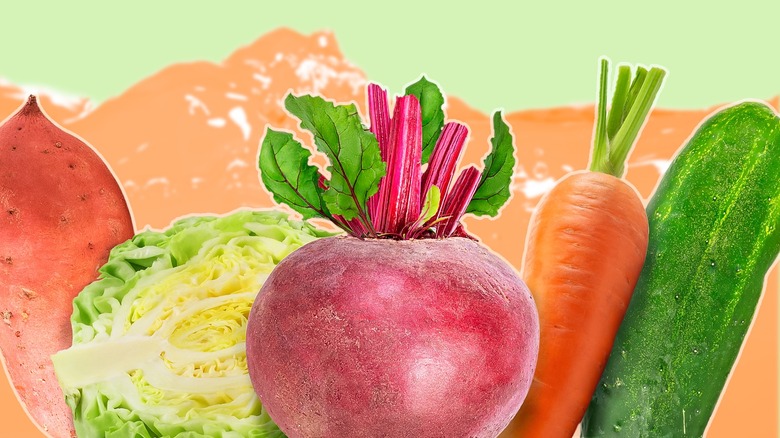
Love them or hate them, there's no denying that eating vegetables is good for your overall health. If getting veggies in on a regular basis feels like a dreaded chore, you might consider juicing. It can be an alternative way to get some of the important nutrients packed into veggies without having to actually cook your veggies or eat a bowl of salad.
Jeanette Shane, creator of Juicy Juicing J, says, "I find drinking my juice a great way to stay consistent as eating veggies is harder for me." In fact, she views her homemade vegetable juice as a daily vitamin. "I feel more energized and my body loves it," she adds.
If you have a juicer collecting dust in a cabinet, it's time to clean it off and put it to good use. Juicing is not just a portable way to enjoy your veggies on-the-go, but an effective tactic to score extra vitamins and minerals while saving your vegetables from the compost bin. Use this list as a starting point for some of the best vegetables to put through your juicer. They can be enjoyed on their own or experiment with different combinations of vegetables, fruits, and spices.
1. Carrots
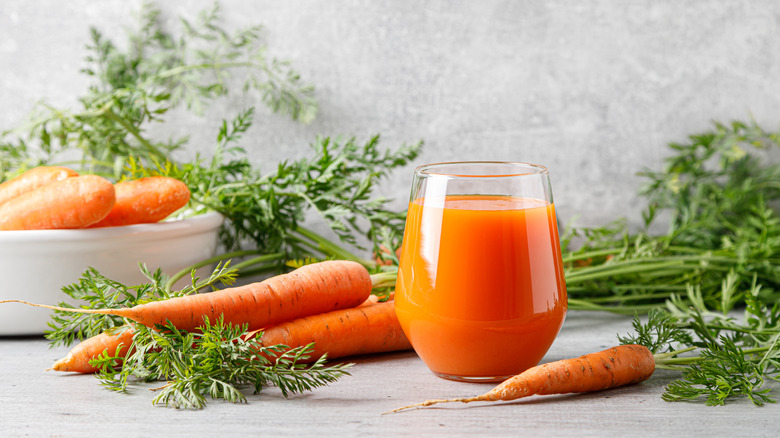
If you're wary of going all in and using a bitter vegetable in your first juice recipe, carrots are a beginner-friendly choice –- either on their own or paired with other veggies. "Carrots are a wonderful addition to many juices, since they add a subtle sweetness to complement earthier or more bitter vegetables," says Lizzie Streit, creator of It's a Veg World After All. What's more, adding these orange-hued root vegetables can give a sunny pop of color to your homemade juice recipe.
Not to mention, carrots also make a great vegetable for juicing because they provide a variety of good-for-you nutrients. Isabel Smith, owner of Isabel Smith Nutrition, explains that carrots contain skin-healthy beta carotene, lycopene that reduces oxidative stress, as well as lutein and zeaxanthin. These are all great for eye health. Carrot juice may also give your immune system a boost since it's rich in vitamins A and C –- something to keep in mind for the annual approach of cold and flu season.
2. Beets
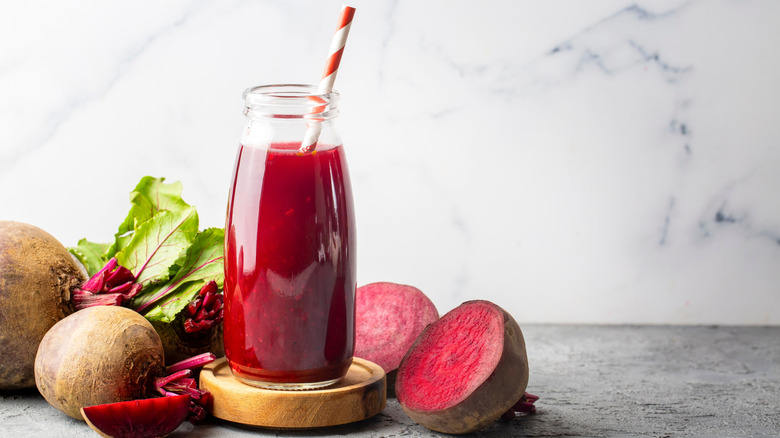
Beets are another root vegetable that is worth running through your juicer. "With their beautiful color and packed nutrient profile, beets are one of the best vegetables for juicing. Juicing them is as easy as trimming the leaves, scrubbing them clean, and pushing them through the juicer, which is less time-intensive than the long roasting, cooling, and peeling process," says Lizzie Streit. In case you encounter any beet juice as you prep them, there are plenty of easy tricks for easily removing beet stains from your skin so you aren't heading into work with pink-tinged fingers. The earthy flavor of beets makes a delicious juice on their own, but they also work well with citrus and apple, as well as spices like ginger.
Beet juice is also one of the most well-researched vegetable juices for its potential health benefits. For example, beet juice may lower blood pressure in those with high blood pressure (or hypertension) due to its concentration of nitrates, says Streit. It's also a popular beverage among athletes. Those same nitrates also offer potential benefits for athletes, as they can help muscles make nitric oxide and improve blood flow to muscle tissue, says Isabel Smith.
3. Cucumber
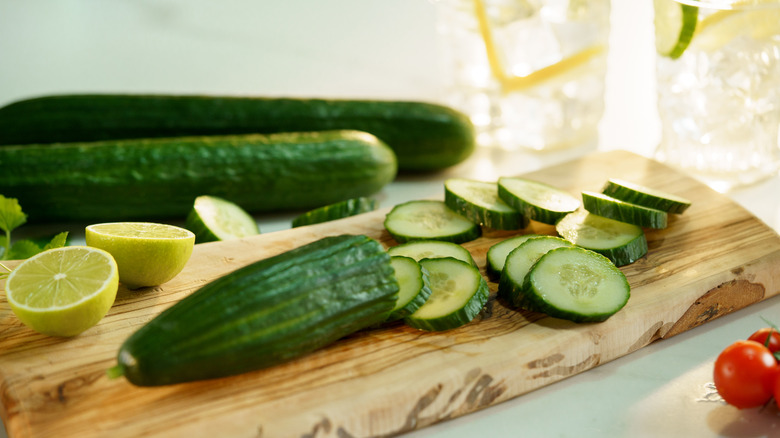
One way to level up your hydration game is to use cucumbers to create homemade juices. They have a naturally high water content that translates well to juicing since you'll get a higher volume of juice from one cucumber. Plus, they have a mild flavor profile that makes them a versatile option. In fact, Jeanette Shane says that cucumbers are the one vegetable that makes the best tasting juice. "It has a refreshing taste and keeps you hydrated, it's packed with electrolytes, and is soothing," she says. Cucumber also pairs well with a variety of other fruits. Shane says that one of your favorite combos is cucumber, pineapple, and ginger. Another refreshing cucumber juice drink that is perfect for summer is the cucumber lime agua fresca — cucumber juice can be a tasty addition to margaritas.
Even if you aren't enjoying your cucumbers in a salad, cooling off with a glass of juiced cucumber still provides potential health benefits. As Isabel Smith notes, cucumbers contain flavonoids like quercetin and kaempferol that have anti-inflammatory properties.
4. Green leafy vegetables
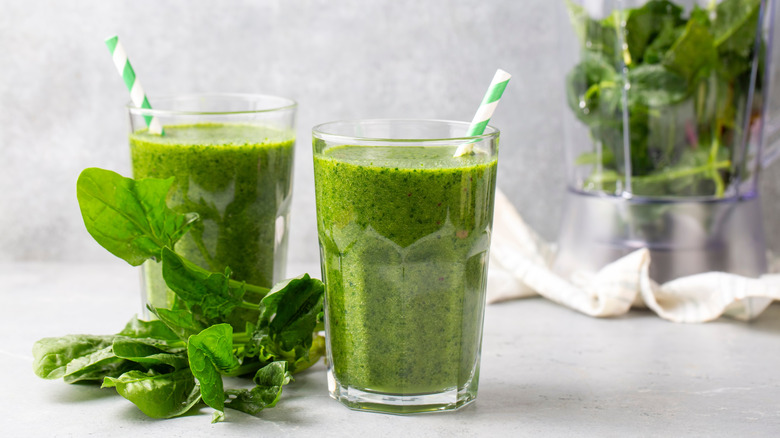
Got greens on the verge of going slimy in the crisper drawer? (It happens to the best of us!) Before you chuck them in the trash, try juicing them. Everything from romaine lettuce to spinach and kale can pass through a juicer. It's a great way to avoid food waste and still take advantage of the nutrients packed in those greens. Even better, juicing those raw greens into a tasty beverage may contain more nutrients than their cooked counterparts. "Since raw vegetables are typically used for juicing, those that are high in water-soluble vitamins that may get destroyed by cooking are particularly nutritious in juice form," says Lizzie Streit. Dark leafy greens like kale, spinach, and mustard greens are all excellent sources of vitamin C when eaten raw, she adds
For those who struggle to enjoy leafy greens in their whole form, juicing them can be an alternative. For example, kale is a great vegetable for juicing, says Streit, especially since kale juice is sometimes a more palatable way to enjoy it than a salad. While kale and spinach are some of the most common leafy greens in green juice, romaine lettuce is actually a favorite of Jeanette Shane. She explains that it makes a great base for juicing since its high water content yields bigger batches of juice. The neutral flavor profile also makes it easy to mix with other fruits and vegetables. Plus, romaine is often more affordable than other leafy greens.
5. Celery
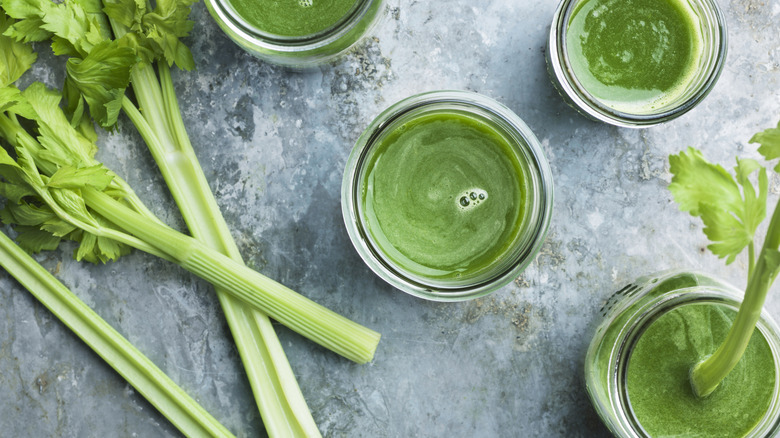
More often than not, recipes call for just a stalk or two of celery, but you can only buy them in a large bunch. One way to keep the rest of that celery crispy is to wrap it in aluminum foil before tossing it back in the fridge — then, put it to good use in a refreshing juice. While the celery juice craze has come and gone, this veggie still remains a good option for adding to a variety of homemade juice combinations. The bright vegetal flavor pairs well with things like cucumber, apple, and kale. You can also try stirring up a cocktail with your celery juice with mixers like tequila or gin.
Like romaine and cucumber, celery is also a vegetable that has a higher water content — about 95% of celery is water. As we mentioned before, these water-rich veggies make great options for juicing since you'll get a larger portion of juice out of each vegetable. Celery is also a natural source of potassium and sodium –- two nutrients that are essential for fluid balance and hydration.
6. Sweet potato

Sweet potatoes are a beloved starchy vegetable that can be prepared in an endless variety of ways from roasted whole to holiday casseroles and even desserts. It's probably safe to guess that juicing them isn't top of mind, but don't dismiss this tasty new way to enjoy the sweet potato. Per Isabel Smith, they deserve a spin in your juicer because they are rich and velvety. Also, they can be a nice swap for fruit in a juice since they are naturally sweet. Just give them a good wash and peel the skins before juicing — and don't worry, raw sweet potatoes are suitable for consumption. Unlike regular potatoes, they don't produce toxic solanine since they aren't in the same plant family.
While sweet enough to stand alone in a juice, you can also combine your sweet potato juice with other classic fall-inspired flavors like apple, pear, cinnamon, and ginger. Sweet potato juice isn't just a crave-worthy beverage. You can also score plenty of heart healthy antioxidants, as well as plenty of vitamin A and C, when sipping on your sweet potatoes. Sounds easier than turning on the oven.
7. Cabbage
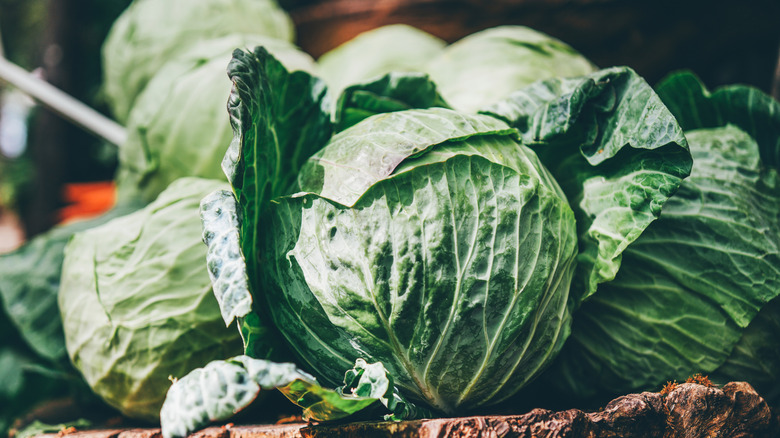
Juicing cabbage may not be for everyone, but this leafy vegetable is in fact juice-worthy. You can help balance the flavor by pairing your cabbage juice with fruits, like apple or pineapple, or by adding a strong-flavored spice like ginger. You can also lean into the savory flavor of the cabbage and use it as a mixer for a unique cocktail. With each sip of cabbage juice, you'll also reap its many health benefits. For example, it is a surprisingly rich source of vitamin C, which is not just important for immune function but skin health.
Don't be afraid to experiment with different cabbage varieties, too. Purple cabbage can be juiced to create a purple-tinged beverage that has heart health benefits, as this variety of cabbage is rich in anthocyanins. These are the plant compounds that give it its distinctive color.
If you're willing to be a bit adventurous, you can also try fermented cabbage juice, otherwise known as sauerkraut juice. Some are daring enough to drink this on its own, but you can also use it instead of pickle juice in cocktails, salad dressings, and more. What's more, the extra fermentation step also adds probiotics to give your gut health a boost.
8. Fennel
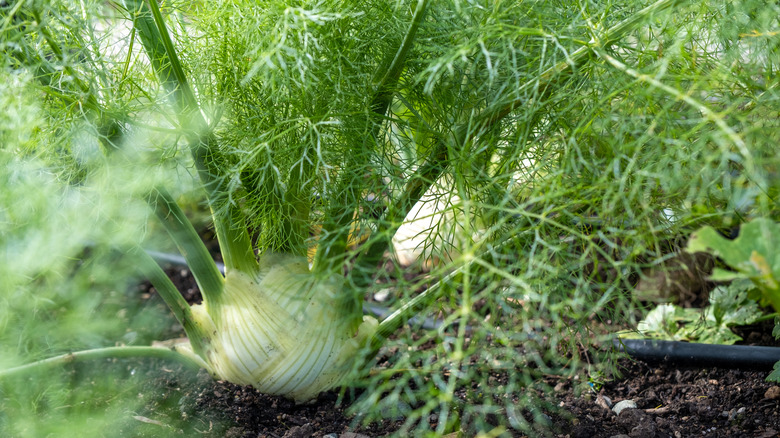
If you are looking for a vegetable to add a truly unique flavor to your homemade juice, try fennel. "Fennel is a great choice for juicing that doesn't get as much hype as other veggies," says Lizzie Streit. Even if you've never picked up a raw fennel bulb at the store, you may have encountered their seeds since they are commonly used in sausage or curry. "It offers a unique, licorice-like flavor along with potassium, folate, and a variety of other nutrients," says Streit. There is also some evidence that fennel may help alleviate common digestive woes like bloating and gas.
Combine your fresh fennel with other produce like apple, kale, pineapple, cucumber, or ginger to tame down the licorice flavor. "You can juice the stalks and fronds in addition to the bulb, preventing food waste," Streit adds. If you like to experiment with inventive homemade cocktails, fennel juice might be the one flavor that your next drink needs.
9. Broccoli
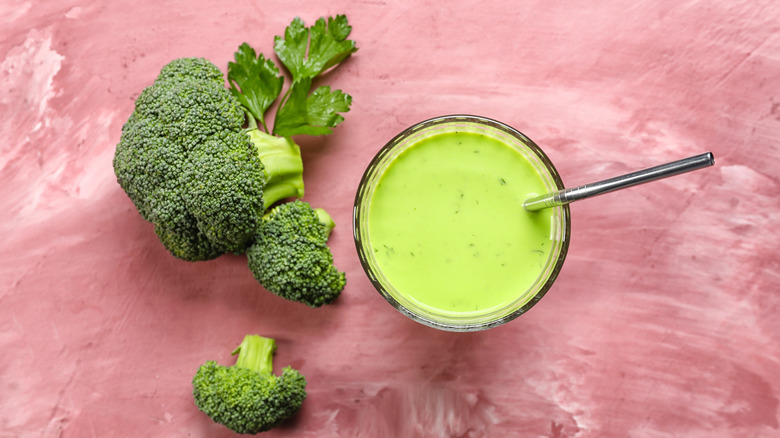
Juiced broccoli juice may not sound appetizing, but don't dismiss it just yet! Broccoli is a surprisingly water-rich food since it is 90% water in its raw form, so it lends itself well to juicing. To make it a little more palatable, try pairing it with some citrus and a fruit like pineapple or apple to tame the broccoli flavor. Sipping on just one glass of broccoli juice can help you meet your daily needs for a variety of vitamins like C and K, as well as minerals like potassium and iron.
You'll also score many of the healthful compounds that broccoli has to offer without having to bother with cooking it. In fact, there may be even more benefits to enjoying it raw rather than cooked. Lizzie Streit explains that the physical process of breaking down vegetables that occurs during juicing may lead to the formation of beneficial compounds. Juicing broccoli can prompt the reactions that form sulforaphane, a compound that is thought to have anti-cancer effects.