

10 Savvy Ways To Use Up Bread Ends And Crusts That Are Chef Approved
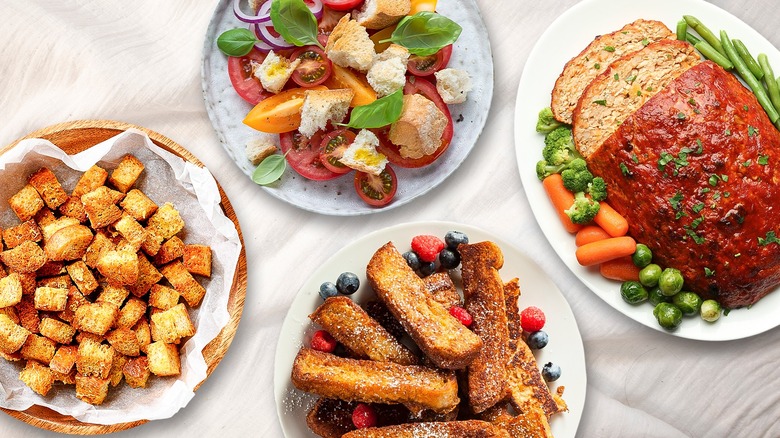
Food waste is a serious issue in the United States. According to the USDA, Americans waste between 30% and 40% of the food supply annually. The single most discarded food category in the U.S. is bread. Earth.org estimates that 240 million slices of this staple are dumped in the garbage every year, which is not only a huge waste of money but also a lost opportunity.
There are a number of ways to use stale bread and eliminate food waste. One part of this food source that we may take for granted is the crusts that many of us trim off when making sandwiches. Indeed, a lot of folks discard the ends or crusts of bread without thinking twice about the fact that these may be valuable resources in the kitchen.
As a professional chef of nearly 18 years, one of my primary jobs included reducing food waste and maximizing profit. This meant getting creative with edible scraps of all kinds, including unwanted bread ends and crusts. While some of these may be obvious, others are more savvy ways of using bread crusts up. If you are committed to eliminating food waste at home, you may want to start incorporating these into your culinary routine.
1. Turn them into bread crumbs
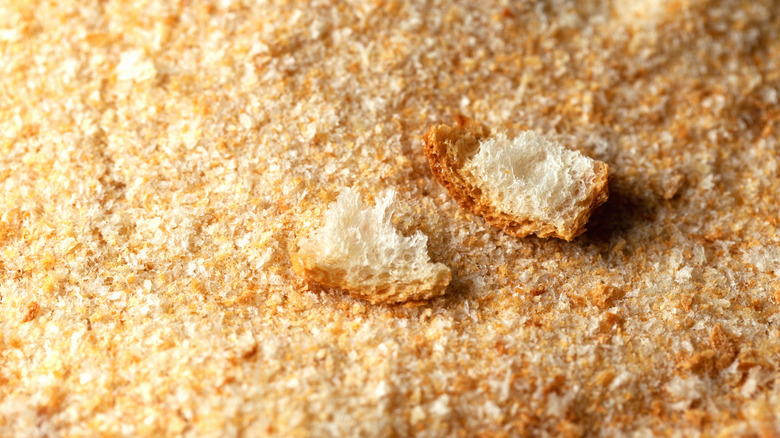
One of the best ways to use up bread ends and crusts is to transform them into breadcrumbs. Homemade breadcrumbs are superior to store-bought ones for a number of reasons. Not only do they have better flavor, but you can also control their coarseness, which is useful depending on what you plan to use them for. What's more, some commercially-produced breadcrumbs contain additives to help extend their shelf-life and keep them from clumping together. By making them at home, you can avoid these additives.
Though you can use any type, plain white bread is best for making breadcrumbs. Simply place pieces of stale bread ends or crusts into a food processor and pulse until the desired texture is achieved. If you'd like to dry the breadcrumbs, spread them out in an even layer onto a baking sheet and pop them into an oven set to 400 F for approximately 10 minutes, or until the crumbs are golden brown.
Fresh breadcrumbs can be kept in an airtight container in the refrigerator for up to a week or frozen for several months. Dried breadcrumbs are a little more hardy and can be stored in an airtight container in a cool, dry place for up to two weeks or frozen for several months. Frozen bread crumbs can be used straight from the freezer unless you plan on using them for breading, in which case you may want to thaw them slightly to eliminate excess moisture.
2. Transform them into French toast sticks
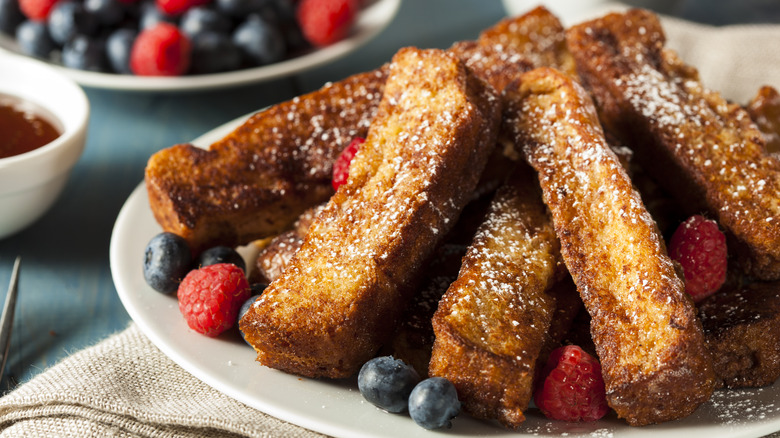
Another great use for stale bread is to turn it into French toast. Though the ends and crusts of bread cannot become a whole slice of French toast, these can be transformed into French toast sticks, which are the perfect breakfast finger food for children and adults alike. Those crusts your kids insisted you cut off their sandwich will be gobbled up in no time with just a little bit of culinary magic.
The key component of this magic trick is the batter used to soak the bread ends and crusts in. Start by combining 2 eggs with ¼ cup of whole milk, 1 teaspoon of pure vanilla extract, and a dash of pumpkin or apple pie spice. Soak the pieces of bread crusts or ends in the batter until they have just absorbed it, but don't disintegrate. Pan fry the pieces by placing them in a single layer in butter in a skillet over medium-high heat until they are golden brown.
Before serving the French toast sticks, toss them gently in cinnamon sugar or garnish them with powdered sugar. Serve these with your toppings of choice. Pure maple syrup, chocolate syrup, Nutella, whipped cream, and fruit spreads are all great options. You can also make them savory by swapping the spices with Italian seasoning. Once cooked, garnish with freshly grated parmesan cheese and serve with marinara sauce and pesto for a quick, easy, affordable, and fun appetizer.
3. Bake them into a bread pudding or a strata
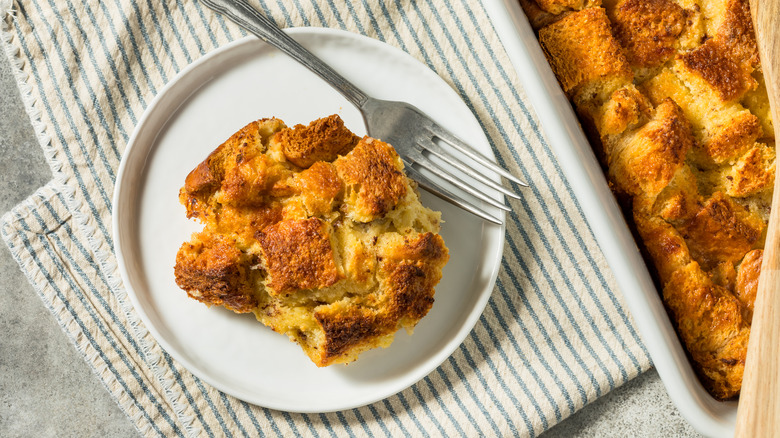
Bread pudding and strata are culinary cousins — the former generally served for dessert and the latter for breakfast — that both rely on stale bread for their base. Again, bread ends and crusts can be used in these recipes interchangeably. Simply cut or tear them into bite-sized pieces before soaking them in the custard batter and adding any remaining ingredients you'd like.
When assembling bread pudding or strata, there are a number of different types of bread you can use for top-notch results. Among my personal favorites are brioche, challah, and Japanese milk bread. The crusts of all of these types of bread are slightly softer than, say, sourdough or a hearty French or Italian loaf. This allows them to really absorb that custard thoroughly so that each bite has the maximum flavor.
For best results, I typically assemble my bread pudding or strata ahead of time and allow it to sit in the refrigerator overnight. This encourages every bit of custard to be absorbed by the bread, giving the finished product a slightly firmer, more hearty texture, rather than a looser, soufflé-like one. To serve the finished product, don't forget the garnishes. I enjoy crème anglaise or vanilla ice cream for the bread pudding, while crème fraîche or salsa are fantastic toppings for a strata.
4. Make them into croutons
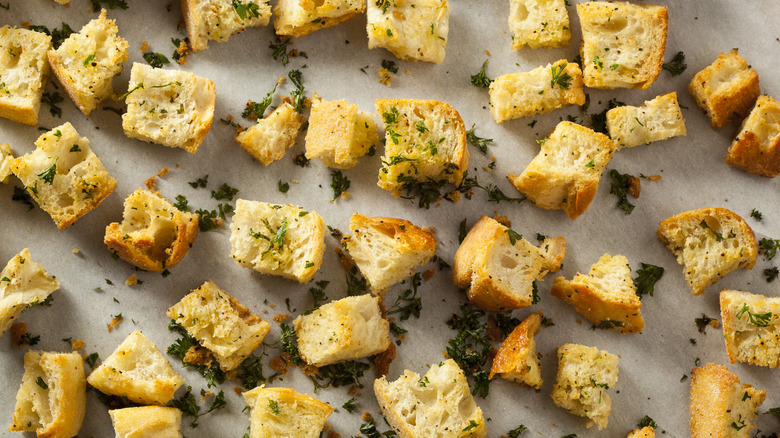
When it comes to croutons, I am a bit of a snob. I seldom eat ones that are served in a restaurant because they aren't made from scratch, and they often taste stale. For this reason, I prefer making mine homemade using stale bread. In the case of croutons, I actually prefer mine when they are made with the ends or crusts of the bread. I find these are crunchier and have a more robust flavor.
Again, while the ends and crusts of any type of bread can be used for making homemade croutons, producing them from sourdough adds a tangy twist to salads and soups. Croutons can be made in a number of different ways. They can be baked in an oven, made on the stovetop by frying them in butter or olive oil in a pan, or even tossed in an air fryer for the perfect crispy texture in half the time.
Though croutons do not necessarily require any type of seasoning, I find they are tastiest when they are jazzed up a bit. Some of the best spice blends to use on croutons include everything bagel seasoning, herbes de Provence, and Cajun or Creole seasoning. I also enjoy tossing hot croutons fresh from the oven or air fryer in finely grated parmesan cheese for added flavor and texture.
5. Whiz it into a gazpacho
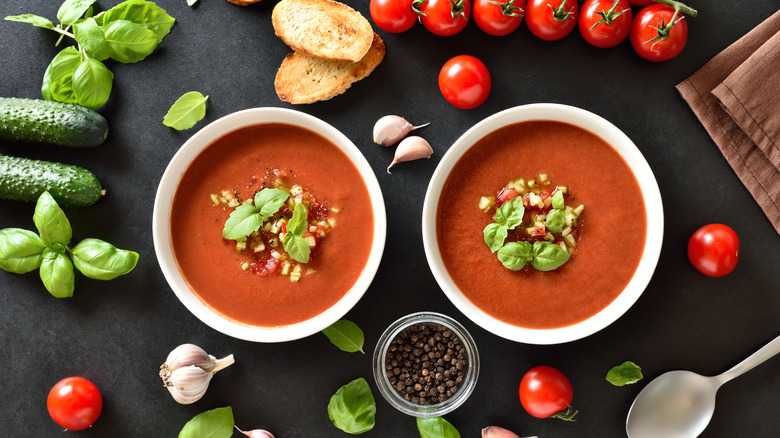
One of my favorite soup recipes to make and eat is a chilled Spanish specialty known as gazpacho. The word "gazpacho" comes from the Arabic term for "soaked bread," which refers to one of its key components. The recipe originated in 7th-century Andalusia, a region of the country where temperatures can get quite steamy during the summer. It is served chilled because it can be a great way to cool off on a stifling hot day.
A classic gazpacho recipe takes advantage of ripe summer vegetables, such as tomatoes, cucumbers, and peppers, and blends these together with spices, vinegar, and, you guessed it, bread soaked in water. The bread provides both flavor and produces a creamy texture that makes this soup endlessly craveable. While many recipes call for whole pieces of bread, you can easily use the ends or crusts to make this recipe. They may just require a bit longer to absorb enough moisture and soften to the right consistency for this soup.
While traditional gazpacho is perhaps more well-recognized, this soup also comes in a white iteration, which showcases the bread even more boldly. In this recipe, the soaked bread is combined with almonds, garlic, water, and sherry vinegar. The finished soup is typically garnished with grapes or melon for both color and flavor. Whether you prepare traditional or white gazpacho, those discarded bread ends or crusts are certain to become culinary works of art.
6. Thicken a sauce with it
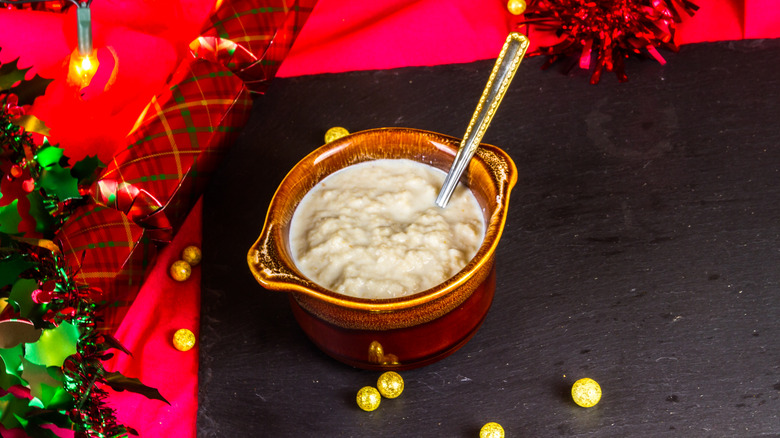
Many sauce recipes are thickened using flour, cornstarch, or puréed vegetables. That said, there are a handful of classic sauce recipes where bread features prominently as a thickener or as a stabilizer for the recipe. Among these are a traditional British bread sauce (a staple of a Christmas dinner in the United Kingdom), a Spanish romesco, and a rustic Italian dish known as salsa di briciole, which quite literally translates to "sauce made with morsels of bread."
The beauty of using bread versus other thickeners for sauce is that it is readily available and doesn't require any fancy preparation to use. It is essentially a rustic or "poor man's" thickener. Typically, chunks of stale bread or breadcrumbs are soaked in water, broth, or milk before they are added to the sauce and either left chunky or puréed together. Using bread ends or crusts is an even better way of eliminating waste and leaning into the humbleness of this fare.
There are a couple of keys to using bread ends or crusts as a thickener for sauces. First, though flavorful, the crusts of sourdough or other hearty breads may be too dense to disintegrate properly into a sauce, so it is better to stick with a plain white bread or another softer-textured loaf. Additionally, make sure not to overdo the amount of bread you add, as this can quickly give the sauce a pasty texture rather than a velvety one.
7. Save it for your holiday stuffing
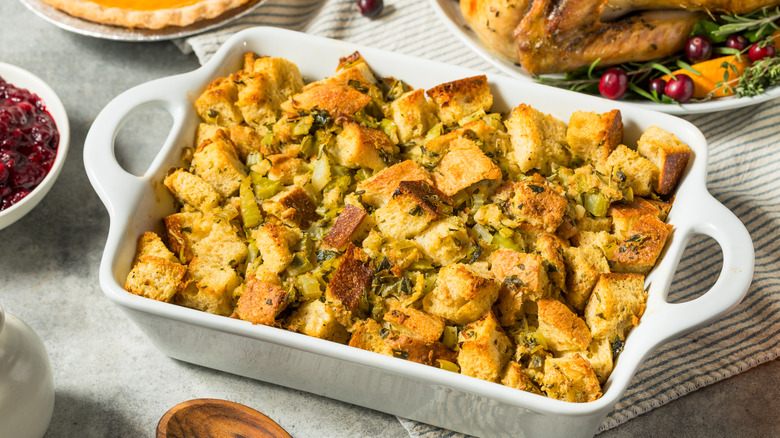
This particular application may be the most obvious of the recommendations I have for using up those discarded bread ends and crusts, but it is an important one. If you are fond of making stuffing or dressing for your Thanksgiving or Christmas menus, few resources are as valuable as excess bread in any shape. Not only do these recipes require a ton of bread, but they turn out better when the texture of the bread is slightly drier, which is the case with ends and crusts.
Recipes for stuffing or dressing often call for toasting stale bread before assembling the dish to help eliminate excess moisture and prevent the final product from becoming soggy or falling apart. Since the ends and crusts are already essentially toasted, this may eliminate the need for that extra step, saving you time and producing an even more flavorful and fluffy dish, which is a win-win all around.
As with croutons, seasoning is an essential component to transforming those bread ends and crusts into a flavorful stuffing. Not only does this mean leaning on spices and herbs, but other elements, like aromatics and even some condiments, can be helpful. Some of my favorites include mushroom powder, miso paste, and Worcestershire sauce, which will all amp up the savoriness of the finished stuffing or dressing.
8. Put them in a panzanella salad
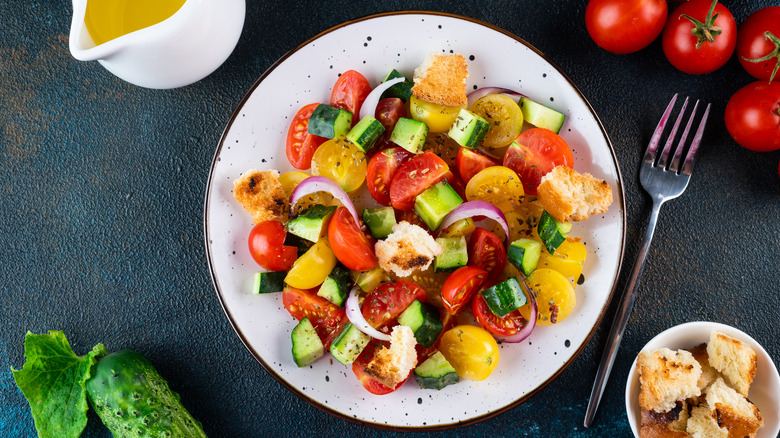
If you have never had a panzanella salad, you are missing out. This Italian salad is rustic, hearty, and a fantastic way of eliminating waste. In fact, it originated in the Tuscan countryside as a means for peasants to make use of excess vegetables and stale bread. As with many other recipes, bread ends or crusts would be perfectly serviceable and delicious in a panzanella recipe.
At its heart, a classic panzanella salad recipe relies on soaking slices of bread in water for about 45 minutes until they are soft and pliable. Once the bread is well-soaked, it is crumbled into chunks and stirred together with tomatoes, sliced onions, cucumbers, basil, wine vinegar, olive oil, salt, and pepper. It can be eaten alone or accompanied by grilled meat or fish, a bowl of soup, or a basic charcuterie board.
When making panzanella with bread ends or crusts, the method would be virtually the same. The only difference may be that the bread requires slightly longer to rehydrate sufficiently. This will likely depend on the type of bread used. Again, a basic white bread or other soft bread will be easier to resuscitate than one with a dense, crunchy crust, like sourdough or a baguette.
9. Stir it into a hearty Tuscan ribollita
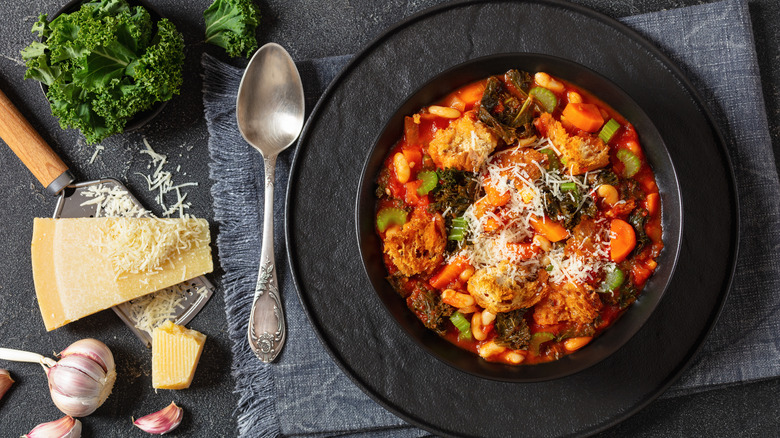
When it comes to authentic Tuscan recipes that feature bread, ribollita is a dish that is endlessly customizable and incredibly comforting. This is yet another recipe that evolved as a way of repurposing leftovers and eliminating waste. Literally translated to "re-boiled" in Italian, the authentic version of this recipe takes leftover minestrone and recycles it into a stew-like concoction by re-heating it with the addition of beans and stale bread.
The key to this soup is to use a dense, crusty bread, which is more well-suited to giving this stew the correct texture. The bread is used to help thicken the stew and make it more hearty. The more bread you add, the thicker the dish will become. In some cases, ribollita is thickened to the point where it is capable of being turned into a kind of pancake or fritter that can be fried, topped with cheese, and served garnished with a drizzle of olive oil.
Since crusty bread is a necessity for this recipe, using just bread ends and crusts is a natural fit for this dish. Again, while any type of bread can be used, the crusts and heels of a heartier loaf, like a rustic Italian or French variety, would be ideal and most traditional.
10. Mix it into a meatloaf
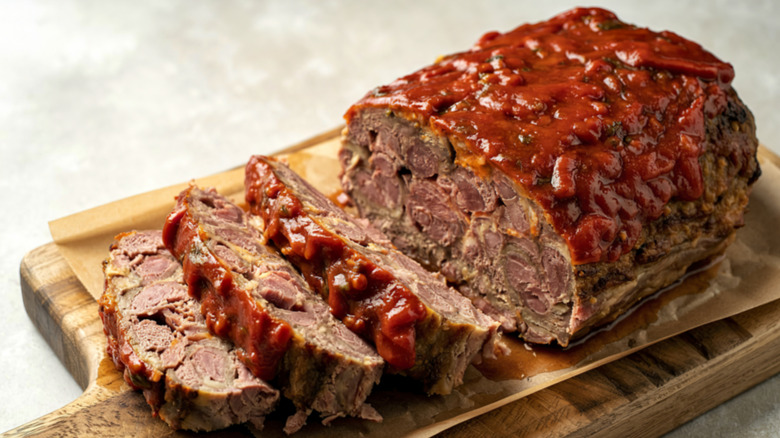
Despite appearing to be a relatively simple recipe, there are a number of common mistakes that can prevent you from making a perfect meatloaf. Among the biggest is using the wrong binding agent in incorrect proportions and incorporating these with the inappropriate method. This can result in a meatloaf that is dense, dry, and tastes more like a grain loaf than a meaty masterpiece.
The most common binding agents in meatloaf are breadcrumbs or bread. These are typically soaked in milk or water to prevent them from absorbing too much moisture from the meat, thereby drying out the finished loaf. This process, known as making a panade, can be done with just the ends or discarded crusts of bread for equally effective results.
To encourage these to absorb the liquid more rapidly, cut or tear the crusts or ends into smaller pieces and cover them with milk, broth, or water. Allow these to soak until they have fully rehydrated. You can squeeze out any excess liquid to prevent the panade from watering down your meatloaf. Remember, you only need enough binder to barely hold the meatloaf together. The binder should not overpower the flavor or texture of the meat or give it a gummy mouthfeel.