

17 Unique Hot Dogs You Can Find Around The World
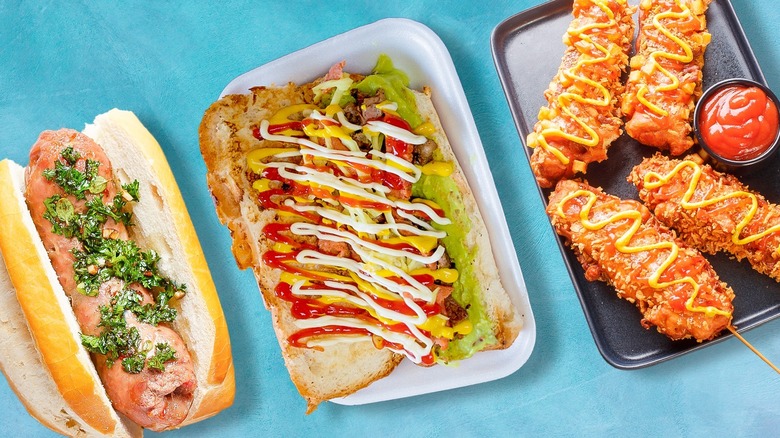
Frankfurters and wieners arrived in the U.S. with German immigrants, but it was here that they were tucked into buns and transformed into the hot dog we recognize today. In the late 1800s, vendors sold hot dogs from pushcarts and stands along the East Coast, and pretty soon they were popping up at ballparks and fairs. By the 20th century, regional hot dogs styles had emerged across the U.S., like the Chicago dog and the Coney Island dog. And just as hot dogs evolved across the U.S., they've also been reinvented abroad.
Hot dogs are just as beloved around the globe as they are in America, though you might find them topped with everything from chimichurri to mashed potatoes. Many countries put their own spin on the handheld snack, adding ingredients that appeal to local palates and even switching up the cooking style and presentation. If you're looking for delicious new ways to season your hot dogs or are just curious about how people in other places enjoy this classic comfort food, these are 17 unique hot dogs you can find around the world.
1. Steamie and toastie (Canada)
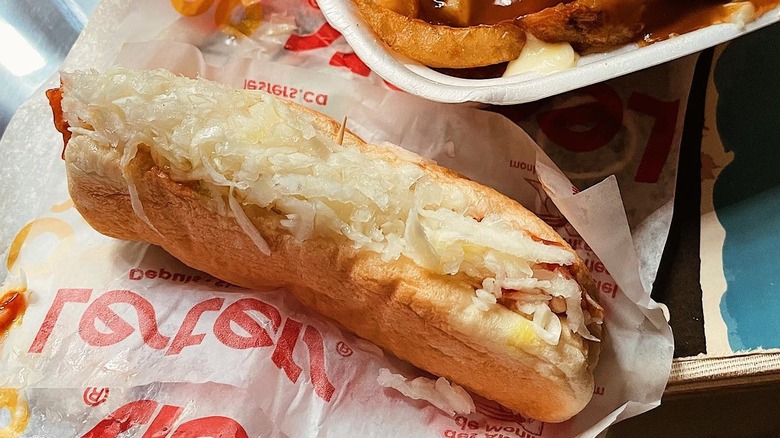
Montréal is a major foodie city in Québec, Canada, where you can find tons of iconic Canadian foods like poutine, Montréal-style bagels, and Montréal smoked meat. However, if it's a humble hot dog you're looking for, you'll find two main types: the steamie and the toastie. Order a steamie, (or steamé in French) and you'll get a steamed hot dog in a steamed bun, while the toastie (toasté in French) features a grilled hot dog in a toasted bun.
Many people liken the steamie to a New York dirty water hot dog with its soft bun and steamy sausage, while the toastie has a bit more snap to it and a slightly charred taste. Whichever one you go for, you can choose from a variety of toppings. If you opt to have your dog all-dressed, it will come with mustard, relish, diced onions, and a healthy layer of vinegary cabbage slaw.
2. Sonoran (Mexico)
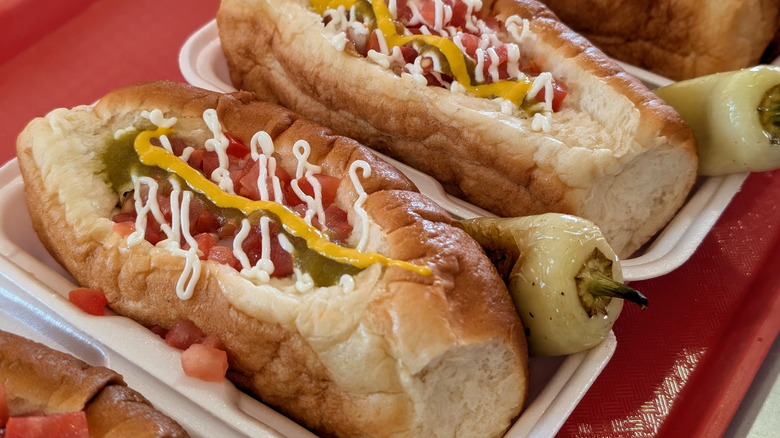
Many people assume the Sonoran hot dog is an American creation because it's so popular in the States, particularly in the Southwest. However, it actually comes from the state of Sonora in Mexico. It was born in the capital city of Hermosillo and spread to other parts of the state, eventually making its way north of the border to places like Tucson and Phoenix in Arizona, where it flourished.
A classic Sonoran dog starts with a bacon-wrapped hot dog that's grilled and nestled in a soft bolillo-style bun that has a touch of sweetness to it. Then, the dog gets topped with grilled and fresh onions, pinto beans, diced tomatoes, jalapeño salsa, mustard, and mayo. It's often served with a grilled yellow chile pepper on the side, which may or may not be stuffed with cheese. Although it's not standard, you may find some spots that serve Sonoran dogs with other add-ons like cheese and pickled radishes.
3. Gamja hot dog (Korea)
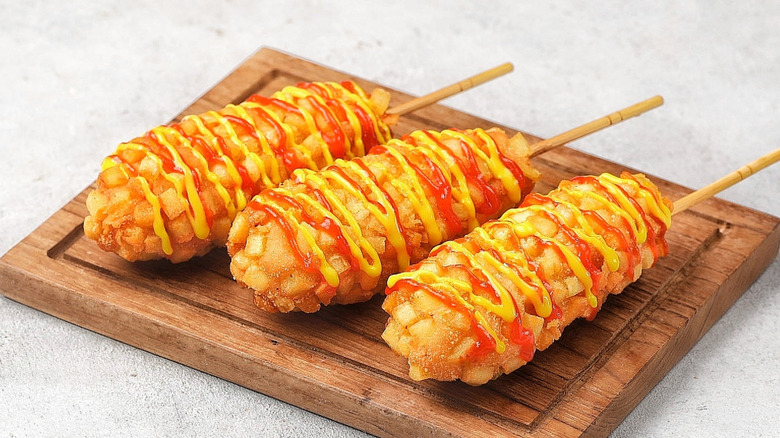
At first glance, Korean gamja dogs look like corn dogs, which are essentially sausages on sticks that are dipped in a cornmeal batter and fried. But look a little bit closer, and you'll realize that there are some interesting twists to the Korean versions like crunchy bits covering the outside and fun sauces. Some say that Korea perfected the corn dog by taking the humble snack and elevating it with different fillings, batters, and condiments.
Gamja dogs took off in South Korea in the 1980s, and now they're a beloved street food staple with numerous variations. Inside, they can include a sausage, cheese, rice cakes, or potato. The batter is typically made from rice or wheat flour and the dog may be rolled in panko bread crumbs, crushed ramen noodles, or diced potatoes. In addition, gamja dogs may be sprinkled with sugar or drizzled in ketchup, mustard, mayo, or sweet chili sauce.
4. Choripán (Argentina)
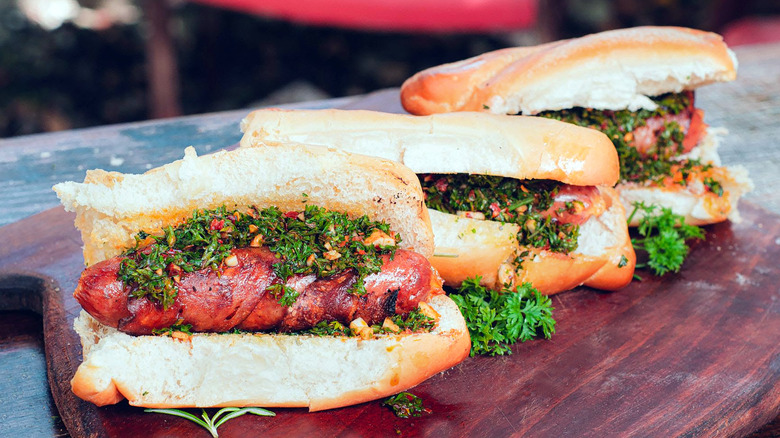
Few street snacks are as celebrated in Argentina as the choripán. There's even a Chori Fest in Buenos Aires dedicated to the sausage in a bun. What sets the choripán apart from your typical hot dog is that it's made with spicy chorizo sausage. In fact, the name is a portmanteau of chorizo and pan (which means "bread" in Spanish). The bread is slightly different as well, as it's crusty on the outside and soft on the inside like a baguette.
A classic choripán consists of a chorizo sausage that's grilled, then sandwiched in the bread. It's often topped with chimichurri, which is a vibrant green condiment made of chopped herbs, garlic, red wine vinegar, and oil. Some people also add salsa criolla, which is a relish made with bell peppers, tomatoes, onion, red wine vinegar, and oil. The tangy sauces are the perfect match for the spicy, fatty chorizo.
5. Pølse (Norway)
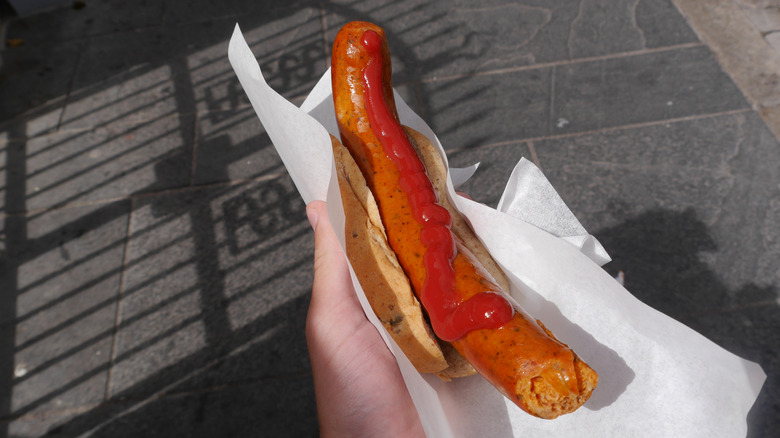
If any country can rival America's love for hot dogs, it's Norway. The Norwegians have a long history of eating sausages, but it was Americans who introduced the concept of eating them in buns after World War II. The handheld snacks took off like wildfire, and now you can find pølse everywhere from food stands to train stations and convenience stores. There are also several styles of pølse on offer, including a few that you don't see very often in America.
Standard hot dogs in Norway include the grillpølse, which is grilled or fried, and a wienerpølse that's boiled or steamed. These can be served in buns or wrapped in a lompe, which is a flatbread made with potato flour that resembles a tortilla. Common toppings include ketchup, mustard, fried onions, and raw onions. In addition, it's not unusual to see people topping their pølse with potato salad, shrimp salad, and cheese.
6. Cachorro quente (Brazil)
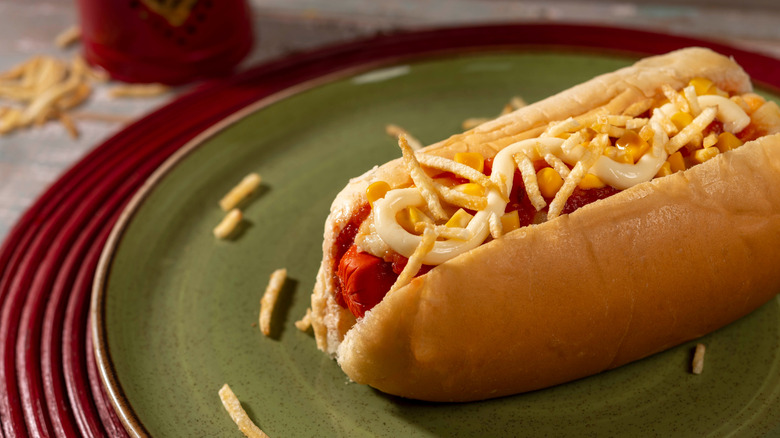
In many places, hot dogs are quick grab-and-go snacks that may be embellished with just a swipe of ketchup or mustard. However, Brazil has reinvented the hot dog into a full-on meal. The cachorro quente, which is a literal translation of "hot dog" in Portuguese, started to appear in cities like São Paulo and Rio de Janeiro around the middle of the 20th century. Over the years, vendors added unique twists like cooking the sausages in sauce and piling on an array of toppings that add extra flavor and texture.
Cachorro quentes vary from place to place, but they typically include sausages that are cooked in a savory tomato sauce with onion and garlic. The simmered sausages are laid in buns that may be lined with mashed potatoes. Then come the toppings, which can include everything from shredded cheese to potato sticks, green peas, corn, pico de gallo, diced ham, quail eggs, and farofa (crispy toasted cassava crumbs).
7. Filipino hot dog (Philippines)
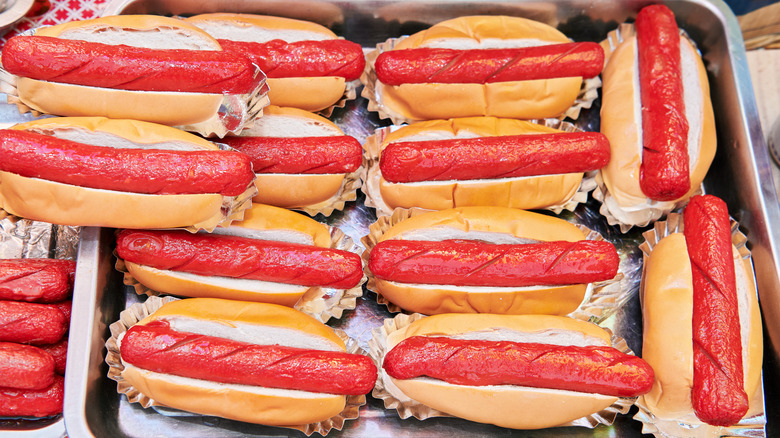
Hot dog wieners are wildly popular in the Philippines. They show up in a variety of dishes, including sliced up in spaghetti, cooked simply with onions and banana ketchup, and alongside fried rice and eggs in a breakfast dish called hotsilog. They're also served in buns much like they are in many other places around the world. However, there are a few things that set Filipino hot dogs apart from their international counterparts.
Most hot dogs that you come across in the Philippines feature bright red sausages that have slightly sweet notes. The sausages are fried in garlic oil to infuse them with a savory flavor, then nestled into fluffy buns. The go-to topping for many people is banana ketchup, which is exactly what it sounds like: ketchup made with bananas. Other add-ons can include crispy fried garlic and atchara, a slaw made with strips of green papaya and garlic pickled in vinegar and sugar.
8. Perro caliente (Colombia)
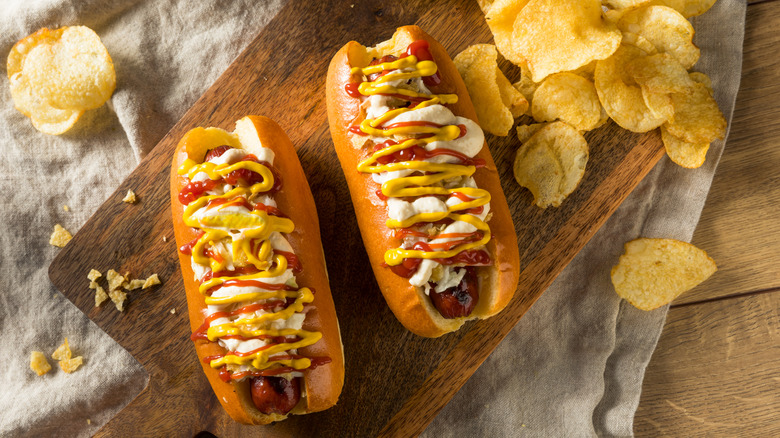
Colombia's take on the hot dog is anything but minimal. The perro caliente, which is a direct translation of "hot dog" in Spanish, comes buried under a mountain of toppings that are crunchy, creamy, savory, sweet, and salty. Vendors and home cooks across the country put their own spin on it, but the idea is the same — the more toppings, the better. That being said, you always have the option to choose the toppings you like best and leave out the rest.
The sausages for perros calientes are typically boiled and served in soft hot dog buns. Ketchup and mustard are pretty standard toppings, but that's where the similarities with American hot dogs end. In Colombia, your perro caliente can also come with additional toppings like pineapple sauce, mayonnaise, cheese, bacon, quail eggs, crushed potato chips, and a pink sauce called salsa rosada that's a mix of ketchup, mayo, and lime juice.
9. Ristet pølse (Denmark)
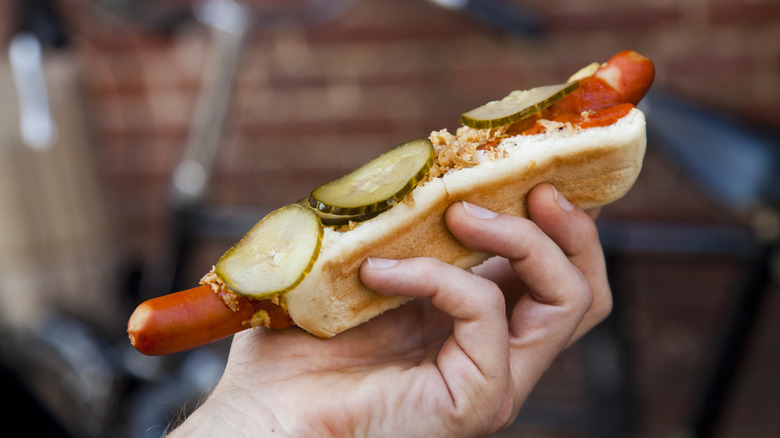
Denmark has a long tradition of hot dog stands, known locally as pølsevogn, which have been part of the country's street food culture since the 1920s. One of the most popular orders at these carts is the ristet pølse, or "roasted sausage." It starts with a sausage, often slightly longer than the bun, that's grilled and served in a soft sourdough roll. What makes it distinct are the toppings, which usually include ketchup, mustard, remoulade, raw onions, fried onions, and thinly sliced pickles.
The combination of snappy sausages with creamy sauces and crunchy veggies has become so iconic that ristet pølse is considered a national street food. It's commonly eaten as a quick lunch or late-night snack, and locals often have strong opinions about which hot dog stand makes the best one. While some of the toppings might sound familiar, the balance of tangy condiments and fried onions gives Denmark's hot dog its own identity, setting it apart from many other styles.
10. Snag (Australia)
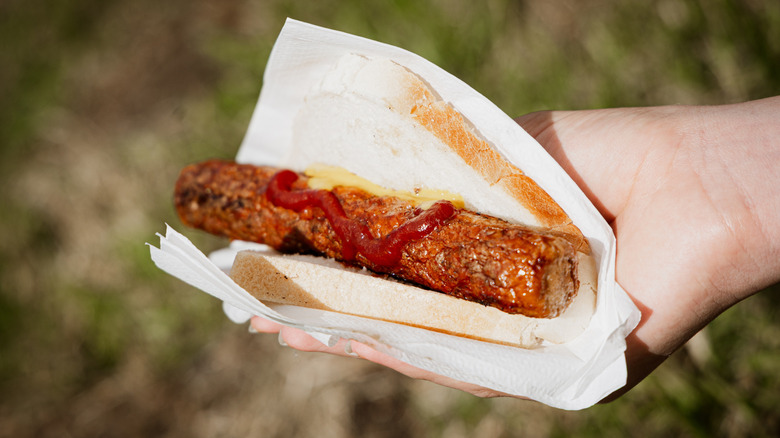
In Australia, the word "snag" is a casual term for sausage, and it's as much a part of the local food scene as the hot dog is in the United States. Snags are usually made from beef or pork, although lamb and chicken versions are also common. The sausages are typically grilled and served on a basic slice of white sandwich bread. Common toppings include grilled onions, mustard, barbecue sauce, and tomato sauce (the Australian equivalent of ketchup). Some people also add relishes featuring pickles or beetroot.
This simple snag is a staple at events known as "sausage sizzles," which can be informal gatherings with friends, fundraising events, or stands set up outside of polling places on election days. In fact, the snag has become so closely tied to voting day that the term "democracy sausage" is widely recognized across the country. Snags or "democracy sausages" are even offered at sausage sizzles outside Australian embassies in other countries on Australian election days.
11. Completo (Chile)
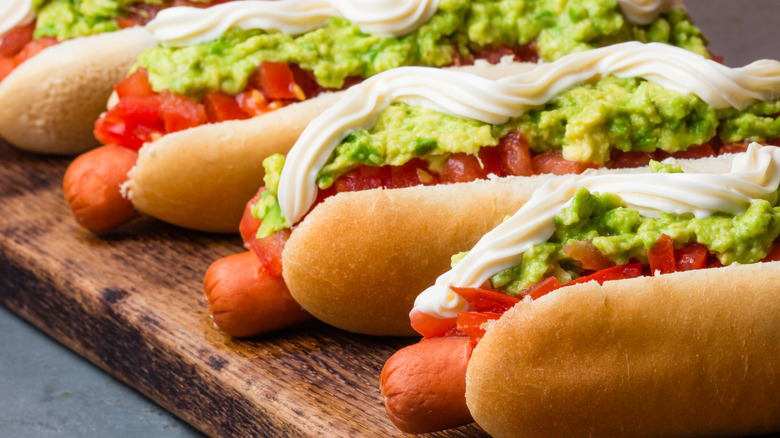
Like many Latin American countries, Chile goes all out with its hot dogs, which are called completos. Legend has it that the first person to sell hot dogs in Chile was a man named Eduardo Bahamondes Muñoz, who had gotten a taste for them in New York City. At first, the locals in Santiago weren't overly impressed with the humble hot dogs dressed simply with condiments like ketchup and mustard, so Muñoz improvised and began offering a plethora of toppings.
Order a completo in Chile today, and you'll get a classic hot dog piled high with ingredients like diced tomatoes, mashed avocado, sauerkraut, salsa verde, pickled vegetables (aka salsa Americana), mayonnaise, mustard, and ketchup. You might think that would be a lot for a simple hot dog bun to handle, and you'd be right. That's why the completo is typically served in a hefty bun with a crusty exterior to help hold all those toppings.
12. Sosis bandari (Iran)
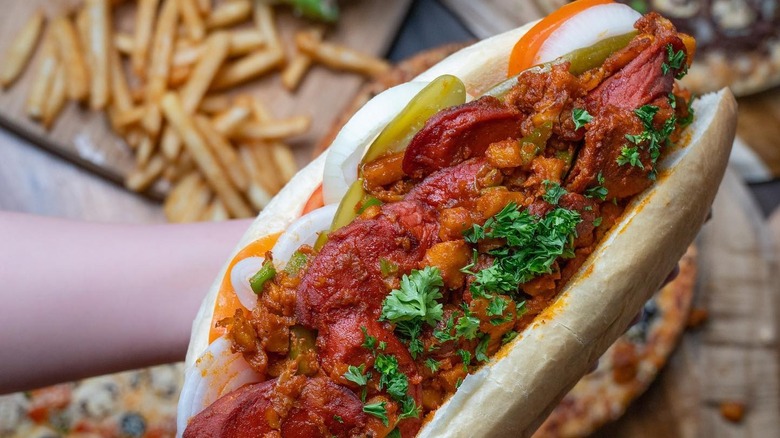
Hot dogs might not be the first thing that comes to mind when you think of Iranian cuisine, but the country does have a version of the handheld snack called a sosis bandari. Frankfurters arrived in Iran via Western Europe in the 1920s and spread throughout the country. Later, sailors entering port cities introduced a way to cook the sausages with spices, and that's how the sosis bandari was born. The name translates to "port sausage."
A typical sosis bandari consists of beef or chicken sausage sliced into bite-sized pieces and cooked with garlic, onions, tomato paste, turmeric, and chili powder. Some people also add spices like cumin and curry powder and throw in some diced potatoes. The saucy sausage mix gets piled into a bread roll along with toppings like lettuce, tomatoes, mayo, parsley, and pickled cucumbers. It's a little bit messier than your average hot dog, but it goes big on flavor.
13. Pylsur (Iceland)
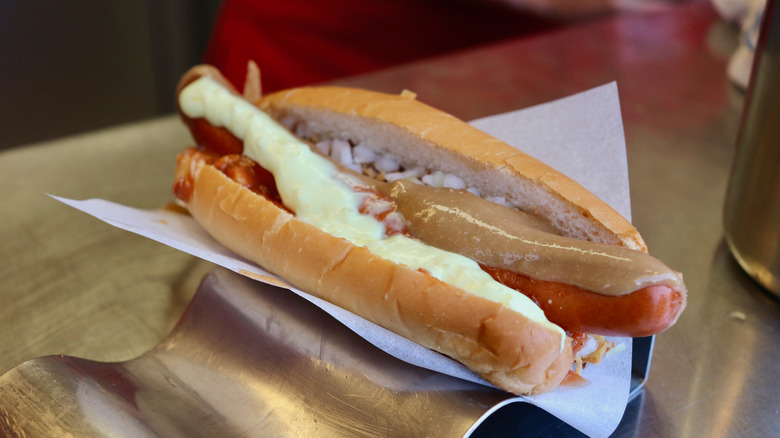
While many traditional dishes from Iceland are very seafood-centric, one of the country's most popular street foods is the pylsa, or Icelandic hot dog. They're so common that you can find them at gas stations, food stands, and cafés across the country. The sausage itself is different from the all-beef or pork franks many people are used to because it's made mostly with Icelandic lamb, which gives it a slightly richer and more distinct flavor.
What really sets Icelandic hot dogs apart, though, is the way they're dressed. The standard order is ein með öllu, meaning "one with everything," and it comes with raw onions, crispy fried onions, mustard, and a remoulade, and a brown mustard called pylsusinnep that's slightly spicy with a touch of sweetness. For the best hot dogs in the country, many say you can't beat Bæjarins Beztu Pylsur in Reykjavík, a spot that's been around since the 1930s and has hosted numerous celebrities.
14. Kuuma koira (Finland)
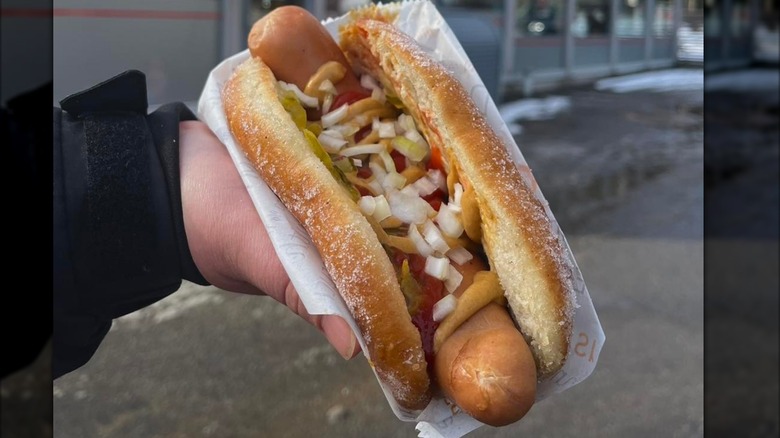
Head to the town of Nokia in Finland and you can sample a local delicacy called the kuuma koira, which translates to "hot dog." However, this isn't your usual sausage in a bun. It starts like many hot dogs do with a steamed sausage, but then the sausage gets wedged into a sugary donut. Add some Finnish mustard and pickle relish, and you have a snack that's sweet, savory, and tangy.
Legend has it that a restaurant owner named Teodor Leppänen invented the dish back in the 1960s. His usual offerings were meat pies with frankfurters inside. One night, Leppänen ran out of meat pies, so he had to think quick to come up with something to feed his hungry patrons. His solution was to combine the sausages and donuts he had on hand into one dish. Surprisingly, the dish took off and now it's a classic Nokia snack.
15. Japadog (Canada)
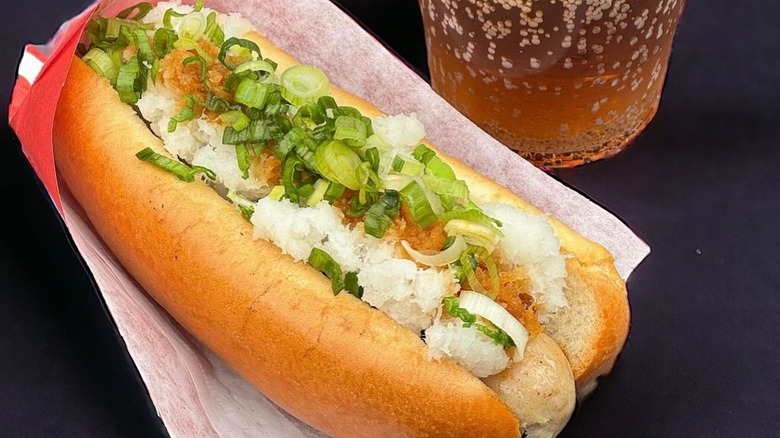
When Noriki Tamura and his wife Miki immigrated to Vancouver, Canada, in 2005, their plan was to open a food truck selling crepes. However, the city has some pretty strict laws about what types of street foods can be sold, so the couple had to pivot. Hot dogs were an option, so they decided to put a spin on the dish by drawing on their Japanese roots. Their unconventional hot dog toppings were a huge hit, and now there are multiple Japadog locations in Canada and the U.S., and countless imitators.
Japadogs are hot dogs topped with traditional Japanese ingredients. Take, for example, the Kurobuta Terimayo, which consists of a pork bratwurst sausage topped with grated radish, green onions, and soy sauce. The Spicy Cheese Terimayo features a spicy cheese smokie dog topped with seaweed, fried onions, teriyaki sauce, and Japanese mayo. There are also versions with chicken karaage, tempura shrimp, and croquettes instead of sausages.
16. Shuco (Guatemala)
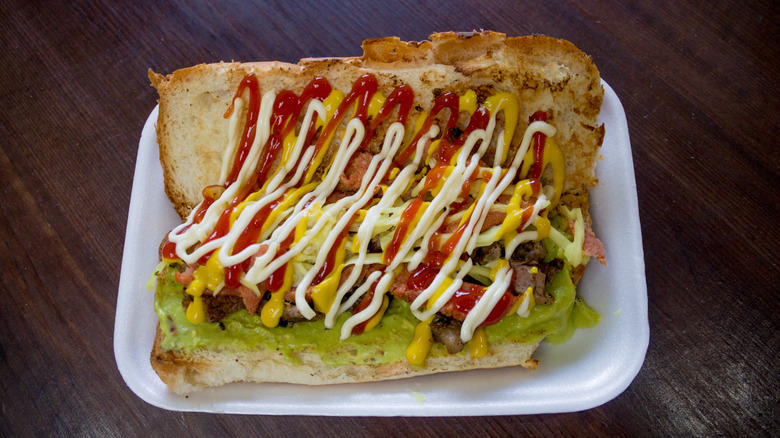
The name shuco doesn't do much for Guatemala's version of the hot dog, given that it's slang for "dirty". However, that doesn't stop people from flocking to shuco stands to get their hands on these vibrant hot dog-style sandwiches. Many sources say that shucos were first sold at a food stall called El Chino in Guatemala City, and that it was a favorite with students. Because shucos are loaded with toppings, eating them was a messy affair, so many believe that's why the students started calling them "shucos."
There are plenty of variations of shucos, but most consist of grilled sausages in toasted bread with toppings like guacamole, mustard, mayo, and ketchup. Some versions also include other meats like steak, chicken, and chorizo. The toppings also leave plenty of room for improvisation. You might find versions with cabbage slaw, spicy chiles, onions, and a sauce called chirmol, which is a salsa made with smoky charred tomatoes, cilantro, lime, and mint.
17. Tunnbrödsrulle (Sweden)
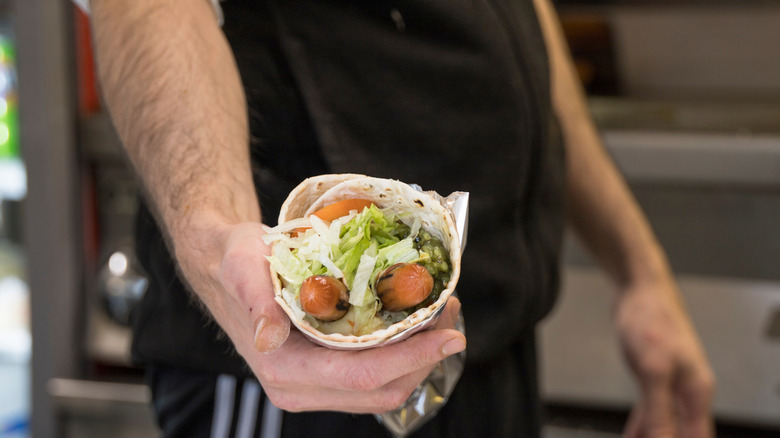
If you happen to stumble out of a bar in Sweden late at night and need something to pad your stomach, tunnbrödsrulle is a good bet. That's what Anthony Bourdain discovered when he visited Stockholm for an episode of "No Reservations" and got to try Sweden's version of the hot dog, which he called "a hideous load of goodness." It's basically hot dog wieners wrapped in flatbread along with a smorgasbord of other fillings.
Named after the bread that the hot dog is wrapped in, a typical tunnbrödsrulle starts with a piece of tunnbröd bread that's smeared with mashed potatoes and topped with a sausage that can be grilled, boiled, or fried. From there, you can add a variety of toppings, including ketchup, relish, sweet-spicy mustard, toasted onions, lettuce, and shrimp salad. Everything gets folded up into a neat package that you can devour on the go.