

10 Vintage Breakfast Dishes That Have Faded Away
These days, we have more breakfast options than ever. You can go with something quick and easy like a bowl of cereal or a muffin if you want to nibble on the go. If you have more time to spare, you might whip up something like avocado toast, a superfood smoothie, or a dependable plate of bacon and eggs. Then there are leisurely brunches where you can tuck into anything from eggs Benedict to breakfast sandwiches, huevos rancheros, and fluffy pancakes. But mornings didn't always look this way.
The way we eat breakfast has changed dramatically over the decades. If we look back 100 years, morning meals were often cooked from scratch and went heavy on proteins and starches. As food technology advanced and work schedules changed, convenience foods started to enter the picture. Then, there were shifting health trends that shaped the kinds of foods that people thought were ideal to start the day.
Some old-school breakfast dishes may seem strange now, but they either made sense at the time or were all the rage. Think toast soaked in milk for an economical meal, shelf-stable foods like Spam, and foods that were convenient and kid-friendly, such as chocolate-covered breakfast bars. While some of these vintage dishes might not make a comeback anytime soon (looking at you, bananas and ham hollandaise), they're still fun to look back on, and who knows — some might even be ripe for a retro-style revival.
1. Codfish
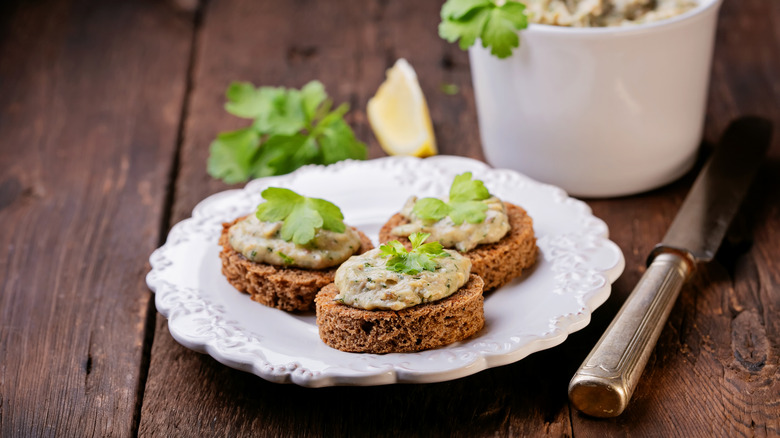
When Europeans made their way to the New World, they found the waters along the northern Atlantic Coast teeming with cod. The fish had long been a staple in both Native American and European diets, and the new settlers found that they not only had an abundant food source but also a wildly profitable product. With so much cod right on their doorsteps, it was inevitable that it would be incorporated into a wide range of dishes.
Several cookbooks from the 1800s and the early 20th century suggest using cod in breakfast dishes. For example, "A Practical Cookbook" from 1887 has a recipe for codfish that calls for soaking salted cod overnight, draining it, poaching it with cream, and topping it with a beaten egg, before putting it in the oven to brown. "A splendid breakfast dish," the recipe states. Codfish cakes, which were often stretched with mashed potatoes and fried until golden and crisp, were also a popular breakfast option.
By the end of the 20th century, codfish stocks had drastically diminished due to overfishing, which may be part of the reason you don't see codfish on breakfast tables as often as you used to. That and changing tastes. However, it can still make for a tasty breakfast dish if you're a fish fan. And, if you can't find cod, you can always use different white fish, like hake or sole, to whip up in a creamy egg and fish dish or make some crispy fried fish cakes with.
2. Kedgeree
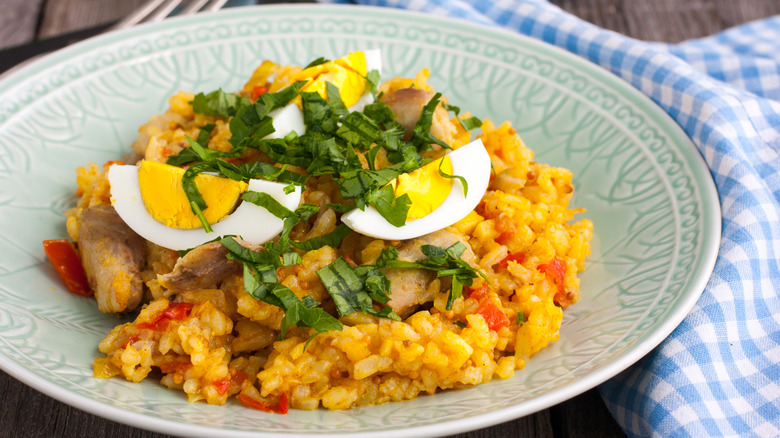
If you're looking for more ways to use fish for breakfast, kedgeree is a good bet. The dish dates back to the 17th century and has its roots in India when British East India Company officers were posted there. At that time, khichdi was a local dish that was often served at breakfast and consisted of lentils and spiced rice. British officers started adding hard-boiled eggs and fish, and eventually these ingredients replaced the lentils altogether. When the dish made its way back to the U.K., it was embraced by people from all walks of life.
Kedgeree took on many forms over the centuries. At its most basic, it was a homey dish made with leftovers like smoked haddock or kippers, eggs, and rice. At some point, people began adding spices like curry powder and cayenne pepper. By the time of Queen Victoria's reign in the 19th century, well-to-do folks were serving kedgeree as part of elaborate breakfast feasts. One of the queen's cooks even made a special version for Florence Nightingale, the founder of modern nursing.
Part of kedgeree's appeal is how adaptable it is. You can use any type of fish you like and simply flake it into rice with some hard or soft-boiled eggs and spices. Some people elevate it by poaching the fish in milk or adding butter and heavy cream. You can also add vegetables if you want some extra texture, pops of color, and nutrients.
3. Milk toast
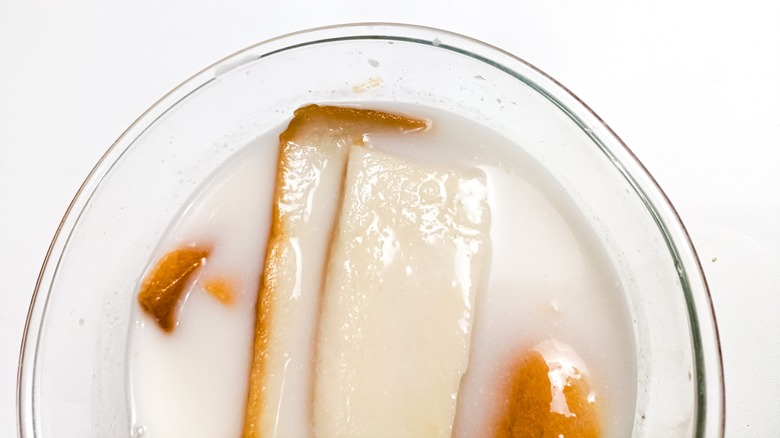
Not every New England breakfast was as hearty as codfish cakes. For those who were feeling under the weather or just in need of something mild, milk toast used to be the go-to comfort food. That's because in Victorian times, there was a belief that soft, unseasoned foods were good for sick people. Some particularly pious New Englanders (like the inventor of the Graham cracker, Sylvester Graham) also believed that eating bland, nutritious foods would keep you morally righteous. Milk toast ticked all those boxes.
It's hard to find a dish that's more bland than old-school milk toast. Back in the day, it typically consisted of lightly toasted bread served with warm milk poured over top to soften it up. Easy to eat and easy to digest, it was considered ultra-nourishing. Some people might have added touches like buttering the toast or sprinkling a bit of salt or sugar over the dish, but for the most part, it was kept as simple as possible.
Milk toast may sound pretty lackluster today, but it was very popular in the late 19th and early 20th centuries. So much so that it inspired a cartoon character called Caspar Milquetoast in the 1920s. The word "milquetoast" is now used to describe someone meek and timid. However, milk toast doesn't have to be boring or wimpy like the character. You can amp up the dish with sugar and cinnamon, throw some fruit in there, or even drizzle it with chocolate sauce or a dollop of marmalade.
4. Wheatena
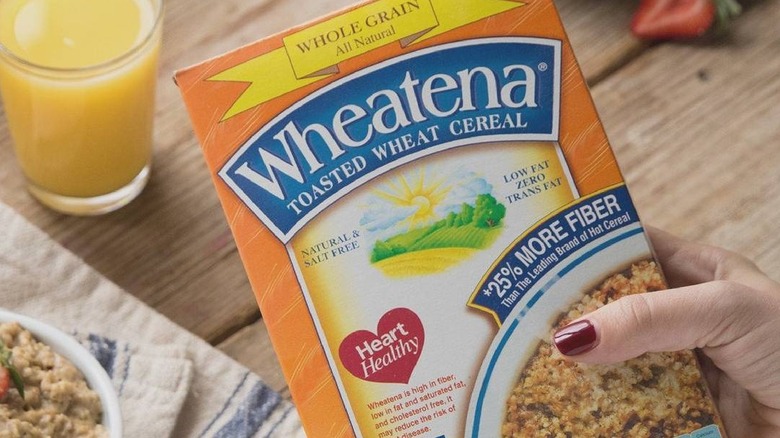
If you could travel back in time to see what breakfast looked like a century ago in America, there's a good chance you'd see steaming bowls of Wheatena on many breakfast tables. The hot cereal was created by a baker named George H. Hoyt in 1879. He took whole wheat kernels and roasted them, then ground them into a grainy consistency. From the beginning, it was touted as a health food that was rich in minerals and nutrients.
Wheatena would go on to become wildly successful, and part of that had to do with clever marketing. The company sponsored several radio shows in the 1930s that pushed the message that Wheatena would make you strong and healthy. According to current owner, HomeStat Farm, the company even sponsored several episodes of Popeye where the cartoon sailor swapped his signature can of spinach for Wheatena.
Despite its pop culture appeal and healthful message, Wheatena started to fade out of public consciousness around the mid-20th century when sugary cereals started taking over grocery store aisles. That being said, Wheatena is still around today and has fans who love it for its nostalgic appeal and the fact that it's a fiber-rich whole-grain cereal. It's also very easy to make, as all you have to do is add water and simmer it on the stove like you would with oatmeal.
5. Stewed prunes
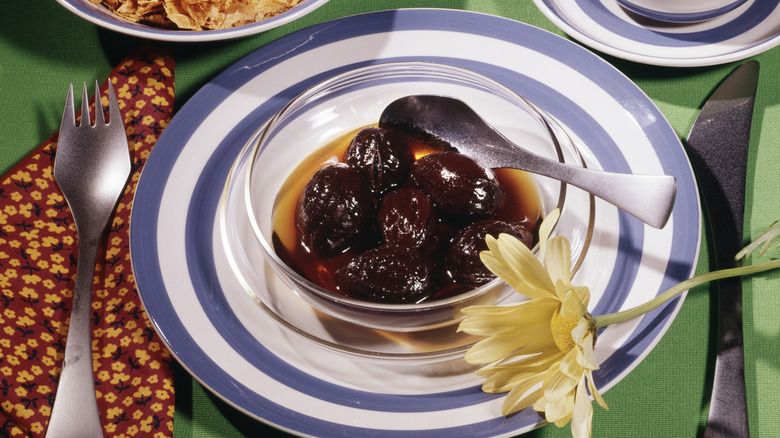
While prunes today are often treated as little more than a laxative in fruit form, they were once a respectable part of a balanced breakfast. Stewed prunes were particularly popular in the early 20th century, and it's easy to see why. First, drying fruits like plums was an economical way to preserve summer harvests for the colder winter months. Second, soaking them and simmering them in water was an easy way to create a sweet, warm, and comforting breakfast dish. And third, prunes are packed with vitamins, antioxidants, and fiber.
Another advantage of stewed prunes is that they're incredibly easy to make. All you have to do is soak your prunes overnight, then simmer them slowly until they're tender. Some old-school recipes recommend adding flavor enhancers like cinnamon sticks and orange or lemon slices. You can eat stewed prunes on their own or use them as a topping for cereal, oatmeal, or yogurt. They're also pretty tasty on toast.
If stewing prunes isn't your thing, there are still plenty of modern, creative ways to bring them to the breakfast table. For example, you could make a prune and bacon breakfast sandwich. The salty, fatty bacon pairs beautifully with the sweetness and softness of the prunes. You can also use prunes in smoothies to add extra fiber and flavor, make some breakfast parfait popsicles with other colorful fruits, or include them in baked goods like muffins or breakfast bars.
6. Creamed chipped beef on toast
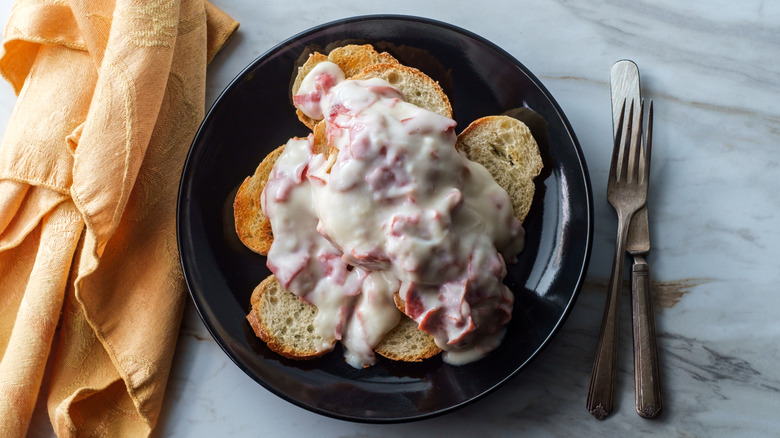
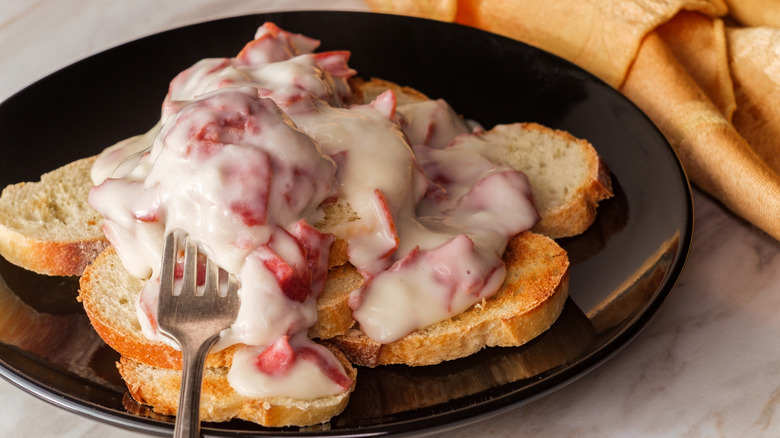
Some vintage breakfast dishes were created out of necessity, like creamed chipped beef on toast. It dates back to the late 1800s or early 1900s, and it was created by U.S. military personnel. It took on many names, the most popular of which was S.O.S. The letters stood for a number of phrases, including "same old slop," "save our souls," or "s*** on a shingle." That gives you a pretty good idea of what some people thought of the dish.
Like many military meals, creamed chipped beef on toast was made with simple ingredients that were easy to store and use in bulk. Old navy recipes often called for dried beef, milk, flour, fat, and pepper. The fat and flour were blended into a roux-like paste and stirred into boiling milk, then small pieces of the chipped beef were added along with the pepper. When the beef turned tender, the mixture was spooned onto slices of toast.
Creamed chipped beef may have been created as a military meal, but it was also one of the foods commonly eaten during the Great Depression because it was economical. That's also why it remained a staple on navy ships and in mess halls up until the Vietnam War. Since then, it's fallen somewhat out of favor, although you can still find versions of it around. Many modern takes on the dish include ground beef instead of chipped beef and extra ingredients to amp up the flavor like butter, parsley, and cayenne pepper.
7. Spam and eggs
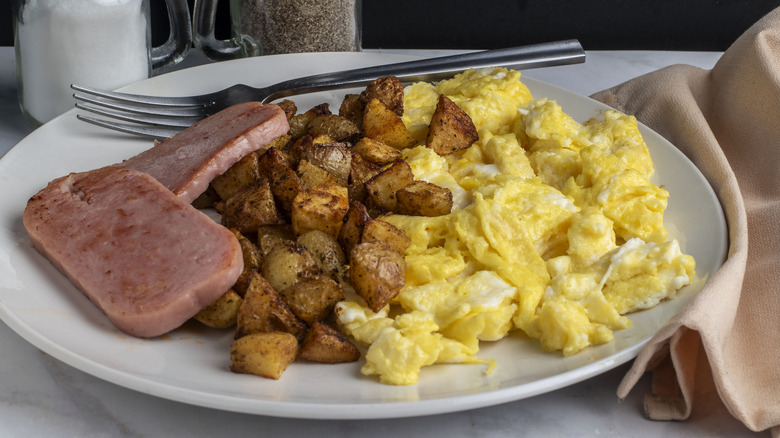
When Hormel Foods launched Spam in 1937, it was perfect timing for the product to really take off. Canned foods were already popular because of their convenience, and a canned meat that could stay shelf-stable for a long time and provide quick and easy protein appealed to many households. From the early days, Hormel Foods really pushed the marketing, advertising numerous ways to use Spam in recipes. One of its most logical uses was as a breakfast meat served alongside eggs.
Spam may look like it's made with a complicated assortment of mystery ingredients, but it's actually pretty simple. It consists of pork, ham, salt, water, potato starch, sugar, and sodium nitrate. Shimmy it out of its can, and you get a loaf that you can cut into slices like ham. With that in mind, it makes sense that the porky product pairs nicely with egg dishes, just like breakfast ham, sausages, and bacon all do.
While Americans were just warming up to Spam in the late 1930s, it really took off during World War II, when millions of cans were shipped to Allied soldiers overseas. It enjoyed a heyday in the United States during the 1950s and '60s, after which it began to lose a bit of its luster. However, Spam is still wildly popular in many places like Korea, the Philippines, and Hawaii. There you can still find it served with eggs, as well as in stews, sandwiches, stir-fries, and onigiri-style dishes like Spam musubi.
8. Ham and bananas hollandaise
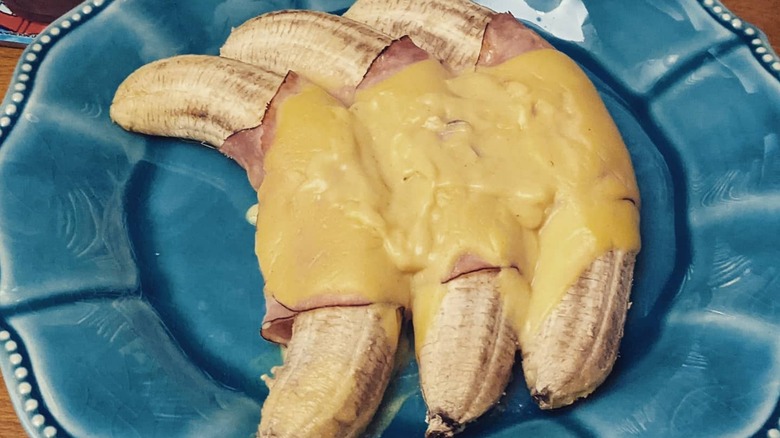
Ham and bananas hollandaise is one of those dishes that may make you pause and do a double-take. It showed up in "McCall's Great American Recipe Card Collection" in the 1970s, but the idea may have come from an earlier recipe in a 1940s Chiquita Banana cookbook for bananas wrapped in ham and smothered in a cheese sauce. Either way, it was part of a wave of mid-century recipes that took an "anything-goes" kind of attitude toward combining sweet and savory ingredients.
The basic dish involves wrapping bananas in slices of ham, baking them, and then topping everything with hollandaise sauce. Some people apparently liked it, but it never really caught on in a big way. These days, it mostly shows up in internet lists of questionable vintage recipes. And, to be fair, it's a strange combo. Salty ham, sweet banana, and a rich, lemony sauce don't exactly scream harmony.
Still, it hasn't been completely forgotten. A few chefs and food bloggers have tried to rework the idea by incorporating the ingredients in different ways, like breakfast casseroles with sliced bananas, ham, cheese, eggs, and heavy cream. Whether the original dish deserves a comeback or not is up for debate, but it's a good reminder of just how experimental American cooking got in the mid-20th century.
9. Carnation Breakfast Bars
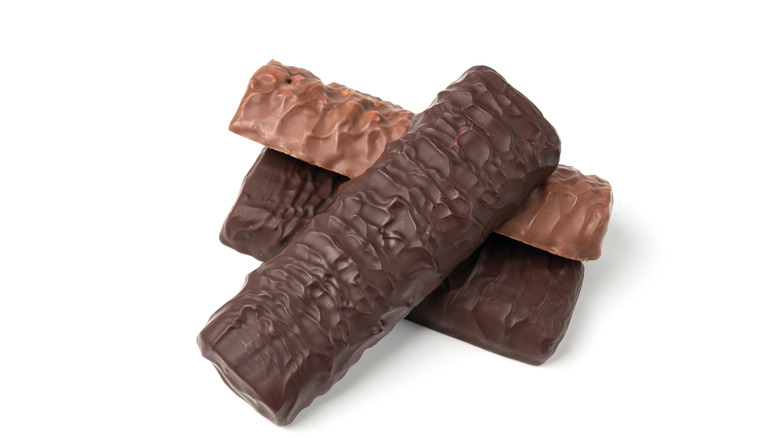
From the 1960s onwards, many Americans began to shift away from traditional breakfast foods like bacon and eggs and move towards convenience foods that could be eaten quickly and on the move. Carnation was at the forefront of the fast breakfast food movement with its Instant Breakfasts, which were released in 1966 and consisted of packets of powder that you could mix with milk or water. In 1975, the company released Carnation Breakfast Bars, and they were an instant hit.
Carnation Breakfast Bars were essentially granola bars covered in chocolate, and they came in a range of flavors. You could opt for chocolate chip, chocolate crunch, granola with raisins, cinnamon granola, or granola with peanut butter. Early ads promoted them as complete meals that would give you the same nourishment as a plate of bacon and eggs if they were enjoyed with a glass of milk. The bars were beloved by kids and adults alike because they were sweet, chewy, and easy to grab and go.
Popular all the way through the 1980s, Carnation's chocolate-covered breakfast bar sales began to decline during the 1990s, and they were discontinued in 1997. Die-hard fans were deeply disappointed, and many pushed for them to come back again. In 2014, Carnation decided to release a new version, but they were never as popular as the originals. By 2020, the Breakfast Bars were discontinued again, and it's unclear whether they'll ever make it back onto store shelves.
10. Sizzlean
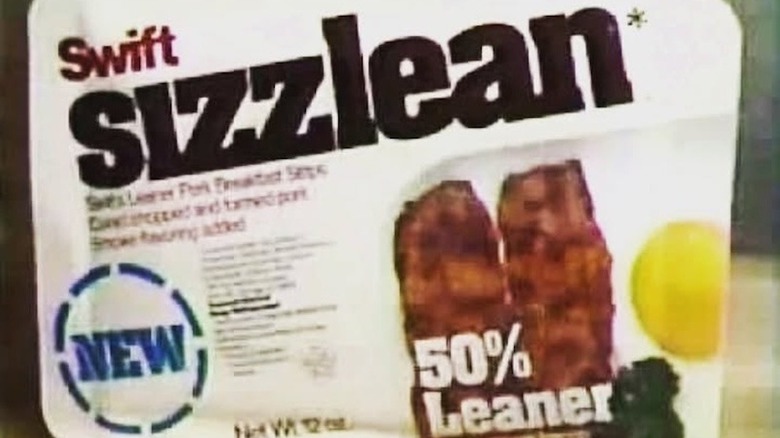
If you were born in the 1970s or 1980s, you may remember that there was a lot of buzz around health food. Many people were trying to be more mindful about what they ate, so fat-free foods and fad diets were all the rage. Swift & Co. capitalized on that craze with a product called Sizzlean that looked like bacon, but was made with pork shoulder instead of fattier pork belly. It's no longer around today, but many people remember it as one of the more interesting retro food trends of the '80s.
Swift & Co. went all in with the advertising for Sizzlean, producing quirky television commercials with catchy food jingles like, "Don't bring home the bacon. Think lean! Bring home the Sizzlean!" and "Move over bacon, there's something leaner — tasty Sizzlean!" The ads claimed that Sizzlean was 50% leaner than bacon and that it was "all real meat without all the fat." Ads from the 1980s also stated that you could get Sizzlean made from either original pork or tasty beef.
The ads seemed to work because Sizzlean remained on shelves for more than two decades. How much people really loved it is questionable, though. While it definitely had its online fans, others have compared it to "bacon-shaped Spam." Then there is the fact that it was discontinued in 2005. Perhaps it was the texture, the taste, or just that people were no longer so gung-ho about eradicating fat from their diets.