

10 Salad Greens With The Most Nutritional Value

Most people have a love-hate relationship with salad. Eating salads can feel like an obligation because you know getting vegetables in your diet is important for your overall health. But eating a salad shouldn't feel like a chore. There are plenty of low-effort ways to make your salads go from zero to 100. For example, making your own homemade dressing and serving your salad on a chilled plate are two restaurant-inspired hacks that can take your salad to the next level. Investing in a good salad spinner can also motivate you to make more salads since the prep work will be a breeze.
You can also bust salad boredom and add variety and interest to homemade salads by switching out your salad greens for something new. Spring mix and iceberg are just the beginning; there are so many varieties of salad greens to explore. Each type of salad greens has a unique flavor and texture profile as well as subtle variations in the nutrients they provide. Salad greens are packed with essential vitamins and minerals but low in calories. As you peruse this list, you'll likely notice a trend in the nutrients they contain; vitamins A, C, and K, folate, iron, potassium, and calcium are the most common nutrients in greens. In case you've ever wondered how different salad greens stack up nutrition-wise, read on to see how your go-to greens compare to others on the list.
1. Dandelion greens
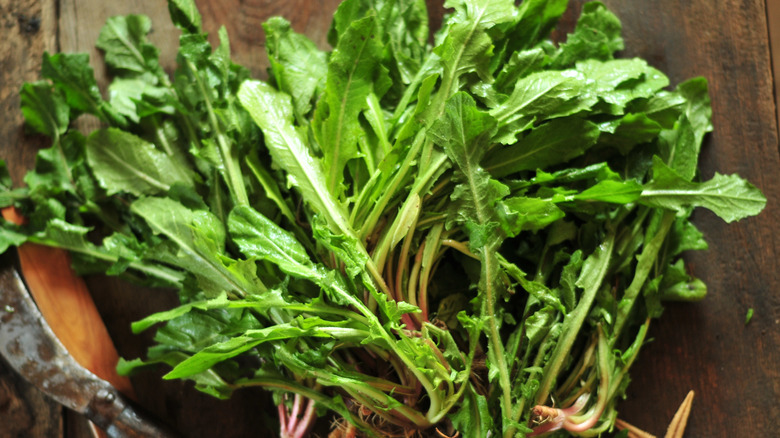
Dandelions aren't just a pesky weed that pops up on your lawn every spring. They are actually edible and can make for a tasty (and nutritious) salad base. In fact, after comparing the nutrients in dandelion greens to the rest on this list, surprisingly they were the clear winner! Here's why dandelion greens deserve their space on the table. Per the USDA, a 1 cup serving of raw dandelion greens is a great source of vitamins A and C since it provides more than 20% of each of these nutrients. However, the real winner is the vitamin K content, as dandelion greens provide a whopping 300% of your daily needs for this nutrient, which is important for blood clotting and the prevention of osteoporosis. Compared to other salad greens on the list, dandelions provided more iron, potassium, and calcium per serving. Tallied up, they were clearly the top salad green with the most nutritional value.
If you're curious about giving them a try in your next salad, here are a few tips to keep in mind. The flavor profile of dandelion greens is on the bitter side so make sure to pair it with other salad toppings that will either complement or tone down the bitter flavor. For example, Salade Lyonnaise is a French dish that pairs dandelion greens with warm bacon, croutons, and a vinaigrette made from the bacon drippings. When harvesting your greens, young leaves or shade grown greens are less bitter.
2. Spinach
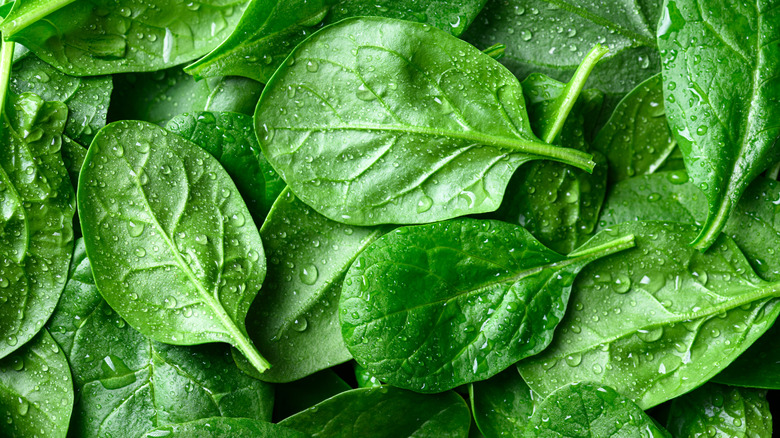
Although kale is a well-known nutrition superstar, spinach was shockingly the next in line when ranking based on nutritional value. The subtle flavor profile of spinach makes it a versatile option for the base of a salad. In fact, cup for cup, fresh spinach is much higher in vitamin K (120% of the daily value) than kale. Spinach also has an advantage over kale when it comes to vitamin A and folate, providing more than 15% of your daily needs for both of these nutrients. You can also score more iron by adding spinach to your plate since it provides twice the iron as kale.
When picking up spinach at the grocery store for your next salad, opt for baby spinach if they have it in stock. Since the leaves and stems are smaller and more tender, baby spinach is more salad-friendly than the mature leaves. The freshest spinach leaves should look damage-free. Once you get your spinach home, adding a paper towel to the package can help keep your spinach from getting slimy.
3. Kale
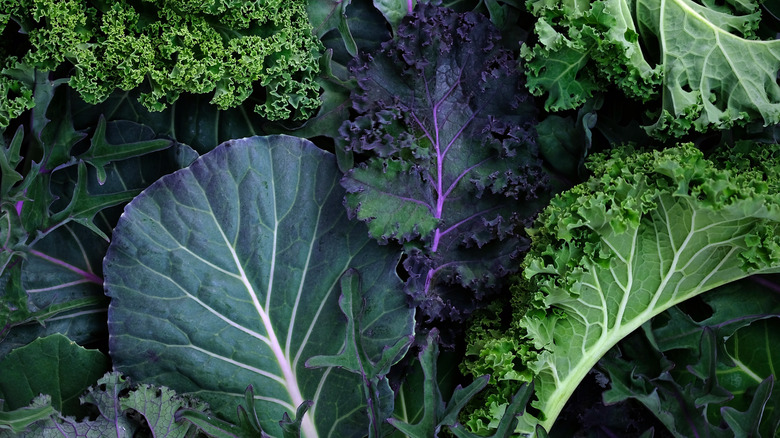
It's probably no surprise to see kale on this list. This dark leafy green has had plenty of time in the spotlight as a superfood, a nickname that it has justly earned. Just 1 cup of raw kale provides 21% of your daily needs for vitamin C — more than twice the amount in spinach. This vitamin not only helps maintain a healthy immune system, it is also a building block that's needed for collagen, a protein that is essential for strengthening skin, bone, and more. Kale is also a great source of vitamin K since a 1-cup serving contains up to 67% of your daily needs. Kale also offers smaller amounts of other nutrients like vitamin A and calcium.
When you make the switch to kale for your salad, make sure to choose the freshest bunch at the grocery. That means your kale should be sturdy with deep colors. Picking up the right variety of kale will also ensure your next kale salad is a success. Finally, chop your kale leaves small and give them a quick massage with oil so they are easier to eat.
4. Endive
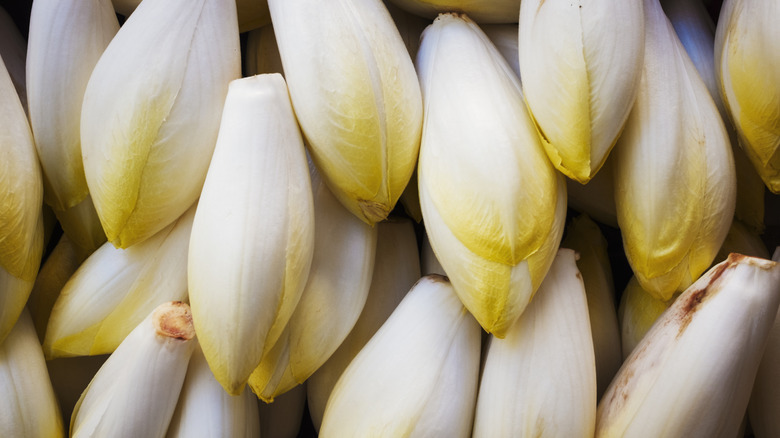
Endive is another not-so-common salad green that is actually packed with nutritional value. Many of the greens on this list provide one gram of fiber or less per serving. Endive is a bit higher with 1 ½ grams of fiber per 1 cup chopped raw endive. While that might not seem like much, every little bit counts when you're trying to reach your fiber goals. In addition, endive is another green that is rich in vitamin K — just one serving covers 85% of your daily needs. This green is also near the top of the most nutritious list since a serving provides as much as 18% of your folate needs, a vitamin that your body needs for building DNA and new red blood cells. Not to mention, you'll get a bit of vitamin A and potassium from an endive salad, too.
If you haven't had it before, endive has a slightly bitter flavor and crisp texture that pairs well with citrusy or sweeter salad components. Some varieties of endive have a pale yellow fringe on their leaves, while others are a deep purple. There is also a curly endive variety (also called frisée), which is the most common to use in raw salads. In addition to chopping up the endive leaves for salads, their boat-shaped leaves also work well for stuffing or scooping up dips.
5. Romaine
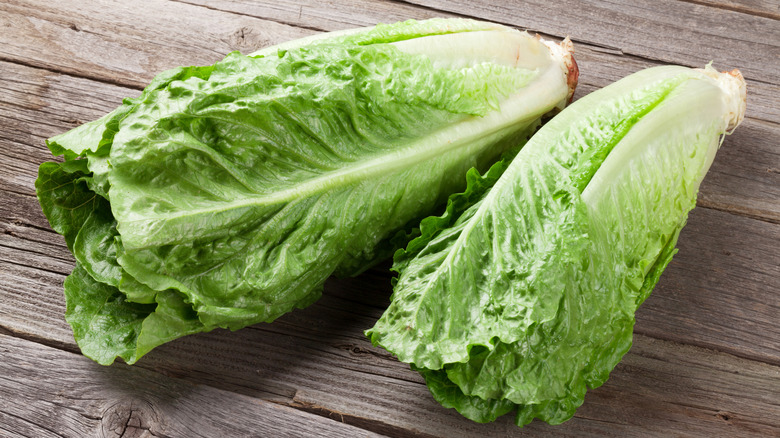
No classic Caesar salad is complete without a base of romaine lettuce. This popular crunchy salad green also has plenty to offer nutrition-wise. For starters, romaine has over 20% of your daily needs for vitamins A and C, both of which support your immune system, and over 40% for vitamin K. In other words, you'll get plenty of your fat-soluble vitamins in just one romaine salad. Like others on this list, romaine is also a good source of folate, providing 16% of the recommended daily amount.
Beyond the nutrients that romaine provides, this crunchy salad green with a mild, slightly sweet flavor that means it plays well with a variety of salad toppings and additions. If you want to elevate your romaine salad to the next level, try grilling it. It only takes a few minutes to grill a heart of romaine and it adds tons of smoky and caramelized flavor. Top with some corn, fresh tomatoes, and a tangy dressing and your grilled romaine salad is the perfect summer side to serve up alongside burgers or steak.
6. Butter lettuce
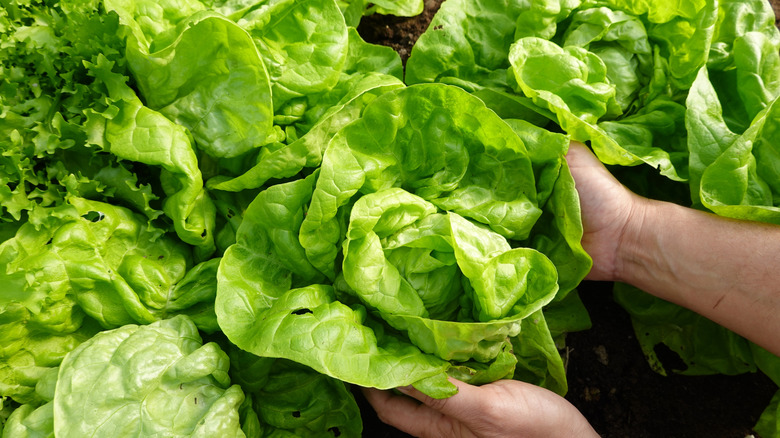
While romaine is all about the crunch factor, butter lettuce (aka Bibb lettuce) is the opposite. Just like the name implies, butter lettuce leaves are almost melt-in-your-mouth tender with a mild, sweet flavor that works well with a host of different salad add-ins. Some varieties are a rich green hue while others have a deep reddish-purple coloring to the leaves. Butter lettuce is comparable to romaine when it comes to its nutritional value as a salad base. This lettuce variety is a good source of vitamin K, providing almost half of your daily needs for this fat soluble vitamin. In addition, you'll cover 10% of your daily needs for vitamin A and folate with a butter lettuce salad. It also sneaks in about 4% of your daily iron and potassium needs.
When building your salad on a base of butter lettuce, opt for crunchy toppings to contrast with the tender leaves. You'll also want to skip creamy dressings like Caesar or blue cheese in favor of light and bright vinaigrettes. Beyond salad, butter lettuce is also great for lettuce wraps because the leaves are large enough to fill. Since butter lettuce is so delicate, washing them takes a little extra care – a water bath and a quick spin in a salad spinner usually ensures you aren't damaging them.
7. Radicchio
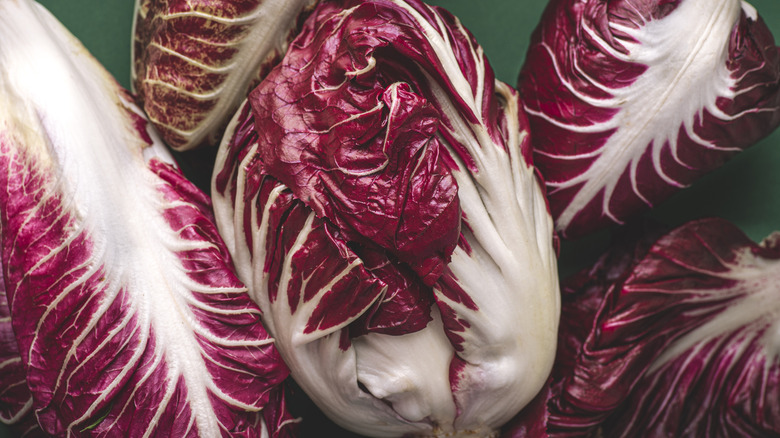
Next up on the list of most nutrition-packed salad greens is radicchio. Used often in Italian cuisine, radicchio is sometimes confused with colorful cabbage since it looks similar with white veins and deep reddish-purple leaves. However, unlike cabbage, radicchio grows with a more elongated head. It has a distinctive bitter and slightly spicy taste so it's often paired with other greens to mellow out the bitterness. That doesn't mean you can't experiment with it as a stand-alone base for salads. It can be a tasty base for hearty wintery salads alongside a sweet or citrus topping like segmented oranges, pear, or candied walnuts.
When it comes to the nutritional value of radicchio, it has plenty to offer. Like other greens on this list, radicchio packs a lot of vitamin K into its leaves. A 1 cup serving of raw radicchio provides as much as 85% of your vitamin K needs to support strong bones. In terms of other nutrients, it's not as well-rounded as others, but does provide some folate, potassium, and vitamin C.
8. Watercress
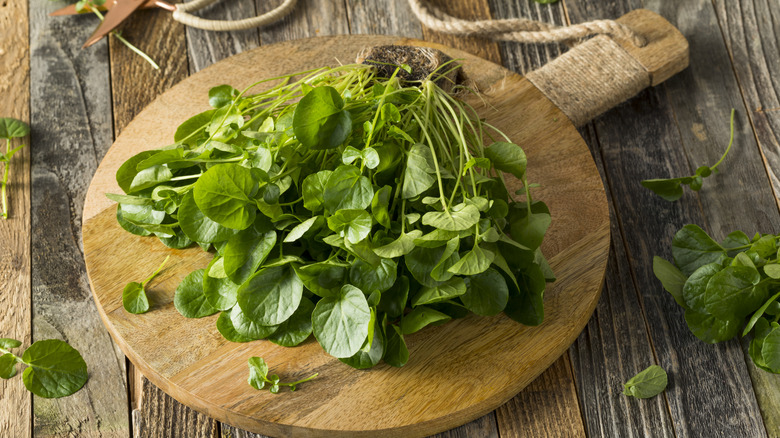
Watercress is another welcome addition to salads that don't slack on nutrients or flavor. This leafy green is in the same plant family as Brussels sprouts and broccoli. However, unlike its veggie relatives, watercress is actually an aquatic plant so it is commonly grown in hydroponic greenhouses. This salad green is also technically a microgreen with small to medium green hued leaves on crisp stems that are also edible. Many find that the flavor of watercress is similar to arugula; a little peppery and slightly bitter. When using watercress as the base for a salad, simple is best. Since it has such delicate leaves, lighter vinaigrettes are the way to go. Watercress has other applications, too; try it instead of lettuce on sandwiches, as a garnish for soup, or even mixed into mashed potatoes.
Nutrient-wise, watercress packs a lot into a small package. Eating a salad with a cup of watercress added will provide up to 16% of your vitamin C needs and 70% of your recommended vitamin K intake. You'll also get a little bit of potassium, too, which is a nutrient that does a lot for your body like helping to regulate blood pressure.
9. Leaf lettuce

Loose leaf lettuce includes several different varieties, including red leaf lettuce and oak leaf lettuce. Unlike other lettuce varieties like romaine, these lettuces don't grow in a tight head but in a loose and open way like a flower. Leaf lettuces can add great visual interest to salads with their curly leaves and rich colors. Texture-wise, they are less crisp than romaine, but not quite as tender as butter lettuce. When it comes to their nutritional value, loose leaf lettuces deliver. They provide as much as 15% of your daily needs for vitamin A and 38% for vitamin K.
Since loose leaf lettuce is tender and delicate, you'll want to add the dressing right before serving to prevent soggy greens. Crispy toppings like nuts, seeds, and fruit pair well with this type of lettuce since it isn't as crunchy as romaine. When you aren't using it for salads, loose leaf lettuce can add a pop of color to sandwiches, burgers, and wraps.
10. Arugula
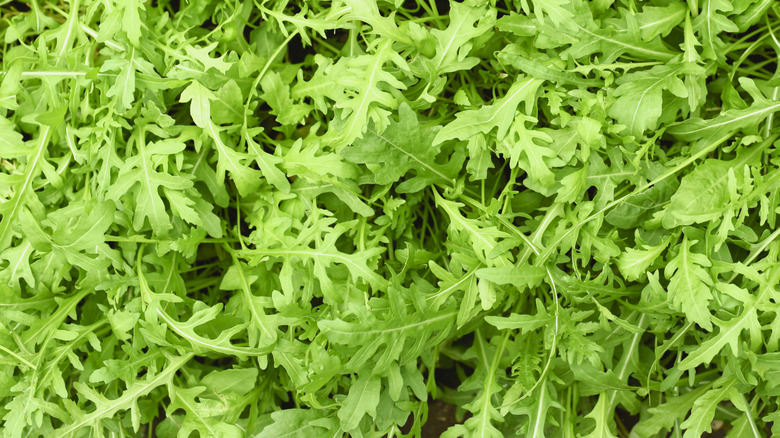
Despite its rich green color, arugula (also known as rocket) is surprisingly at the bottom of the list for nutritional value. Your favorite arugula salad that uses 1 cup of greens will provide about 18% of the daily value for vitamin K, 4% of your recommended folate intake and around 3% of your calcium and vitamin C needs. Of course, keep in mind that you are likely using more than 1 cup of arugula greens to build your salad so the nutritional value can double or triple depending on how hungry you are.
Arugula is beloved for its signature peppery flavor which pairs well with other strong flavors like balsamic vinegar or salty cheeses. What's more, since arugula already brings so much flavor to a salad you don't need to add a lot to make it feel complete. For example, Ina Garten serves up an arugula salad that is simply dressed with a vinaigrette made with fresh lemon juice and topped with shaved Parmesan as a light side dish to steak. Arugula isn't just for salads either, it makes a great pizza topping, too.