

11 Regional Mexican Street Foods Every Foodie Should Try Once
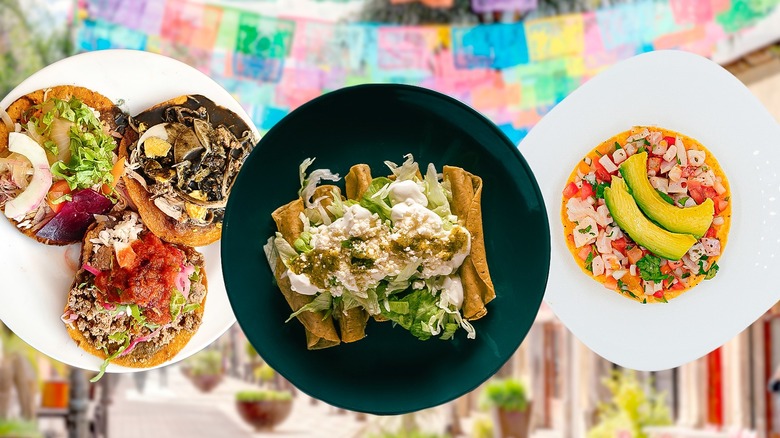
The word antojito translates loosely to "little craving," and across Mexico, these small, satisfying snacks are the lifeblood of the street food scene. Typically griddled on a comal or fried in oil or lard, antojitos are sold from corner stalls, bustling markets, and even residential kitchens, where vendors craft them fresh-to-order at an affordable price point. Like Spanish tapas, they are commonly eaten between meals, as a light breakfast or dinner on the go, or to accompany a night of drinking.
A humble food of the people, antojitos are also at the center of the modern Mexican fine dining movement, finding their place on tasting menus in Michelin-starred restaurants. Whether as a treat for a working family or a fancy expression of Mexican eating culture, antojitos represent a vibrant, democratic eating culture rooted in everyday life and shared memory.
At their core, antojitos are a celebration of Mexico's foundational ingredients: Corn dough (masa), tomatoes, beans, chiles, and local fish and livestock. These base elements, cultivated and refined over centuries by Indigenous communities and successive waves of immigrants, remain central to Mexican cooking and provide the canvas for endless regional variation. While masa is a unifying ingredient, the form and flavor of antojitos vary dramatically across the country, a testament to Mexico's extraordinary cultural diversity and culinary creativity. These simple delicacies are fast food with deep roots, delivering comfort, flavor, convenience, and a sense of place in every bite.
1. Flautas or tacos dorados
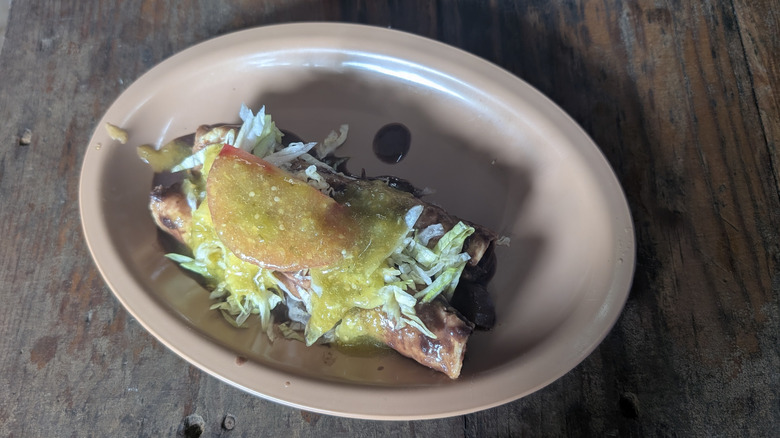
Crisp, golden, and endlessly adaptable, flautas (sometimes known as tacos dorados or "golden tacos") are among the most beloved antojitos across Mexico. At their simplest, flautas consist of a tortilla wrapped tightly around a filling — often shredded chicken, potato, or beans — and fried until visibly browned and audibly crunchy. Served three or four to a plate and topped with lettuce, crema, salsa, and crumbly cheese, flautas strike a perfect balance between texture and flavor.
Though similar to the Tex-Mex taquito, the Mexican flauta is part of a much older and broader tradition of corn-based street fare. Unlike their Americanized cousins, which tend to rely on pre-seasoned beef and gooey cheese sauces, Mexican flautas tend to highlight the clean flavors of simple shredded chicken, lettuce, queso fresco, and an accompanying tomatillo salsa. Likewise, their role in home kitchens is both practical and celebratory — ideal for repurposing yesterday's hard tortillas and stewed leftovers into a hot meal. Their simplicity also makes them a common offering at botaneros, local bars that serve food in a similar style to tapas, in which small plates are provided, free of charge, with the purchase of drinks. Whether bought from a corner cart in Mexico City, shared during a family meal in Zacatecas, or provided as a free snack in a local cantina in Puerto Escondido, flautas remind us that some of the most enduring culinary pleasures are also the simplest.
2. Empanadas
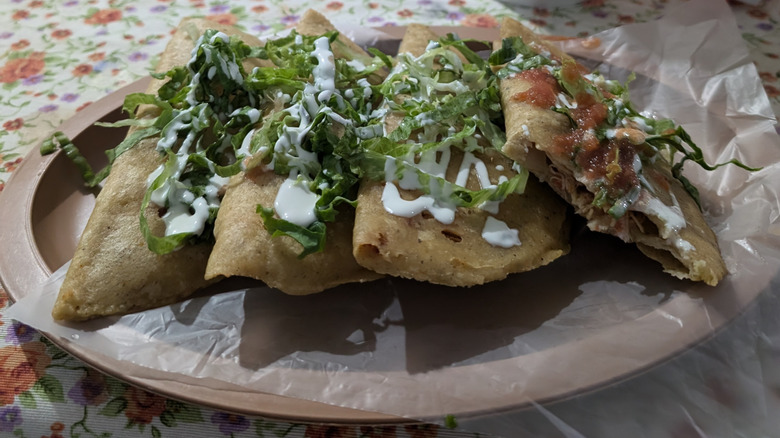
Empanadas may be widely associated with Argentina or Colombia, but in Mexico, this humble turnover takes on a character all its own. Made not from wheat but corn, Mexican empanadas are fried, not baked. They're typically made with masa, the same nixtamalized corn dough used for tortillas and tamales, giving them an earthy depth and rustic texture that sets them apart from their South American cousins. The technique of nixtamalization, in which corn is treated with alkaline minerals to enhance its nutrition and texture, is ancient and foundational in ancestral cooking across the Americas, giving us hominy in the U.S. and masa in Mexico and Central America.
Prepared throughout the country but with distinct regional variations, Mexican empanadas are often filled with savory ingredients that reflect local tastes and traditions. On the Gulf Coast, for example, empanadas might be stuffed with minilla or zaragaya, a tangy, spiced shredded fish salad. Further inland, fillings can be more daring, such as sesos (cow brains), which offer a rich, creamy interior that contrasts beautifully with the crispy fried exterior. Cheese, mushrooms, stewed chicken, and picadillo are also common, allowing vendors to adapt the recipe to whatever is fresh, available, or affordable.
More than a snack, empanadas function as edible snapshots of regional culture. They are a go-to offering at fairs, street stalls, and family gatherings, where their portability and ease of preparation make them ideal for sharing and improvising. Unlike baked versions, which can feel formal or heavy, Mexican fried empanadas are quick, satisfying, and deeply connected to daily life.
3. Tostadas de ceviche
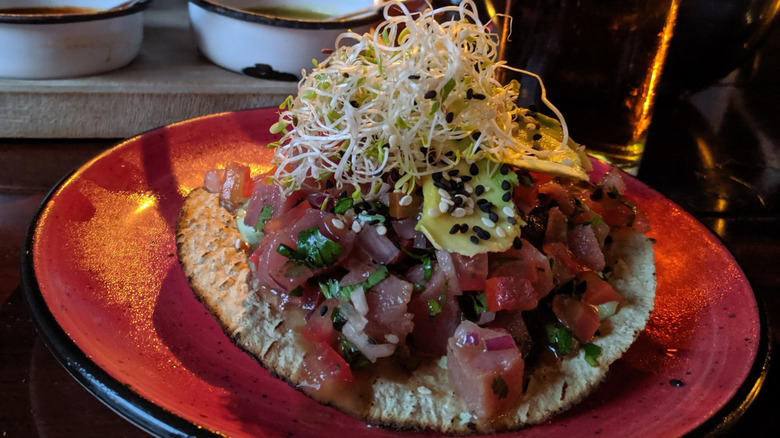
Sun-soaked and sea-splashed, tostadas de ceviche are the definitive antojito of Mexico's Pacific coast. Built on a crisp, fried corn tortilla, these snacks feature chopped seafood marinated in a citrus-based bath (most commonly lime juice) until it firms up and turns opaque. While making ceviche, a chemical transformation mimics the effects of cooking, and while it doesn't involve heat, it denatures the fish's proteins in the same way. The result is a dish that feels fresh and summery but also substantial.
In coastal cities like Mazatlán, Manzanillo, and Puerto Vallarta, ceviche tostadas are a staple snack and a point of regional pride. Shrimp is the most popular topping and is often par-boiled before being mixed with lime, tomato, onion, cilantro, and chile. However, raw preparations using sea bass, tuna, or octopus are also common, with the seafood "cooked" solely in lime juice and dressed with additional ingredients like avocado, cucumber, or soy and tamari-tinged sauces influenced by the region's links to Asia.
The tostada itself adds an audible crunch that balances the acidity and softness of the ceviche, turning this dish into a texture-lover's dream. Vendors will often offer a range of hot sauces and salsas to allow customers to tailor the spice to their liking, enhancing the interplay between sweet, tangy, and savory flavors. Ceviche is safest to eat when it's fresh and kept cool, which is why it's commonly sold at street stalls in the morning — be prepared to eat some tuna for breakfast if you're on the Pacific coast!
4. Tlayudas
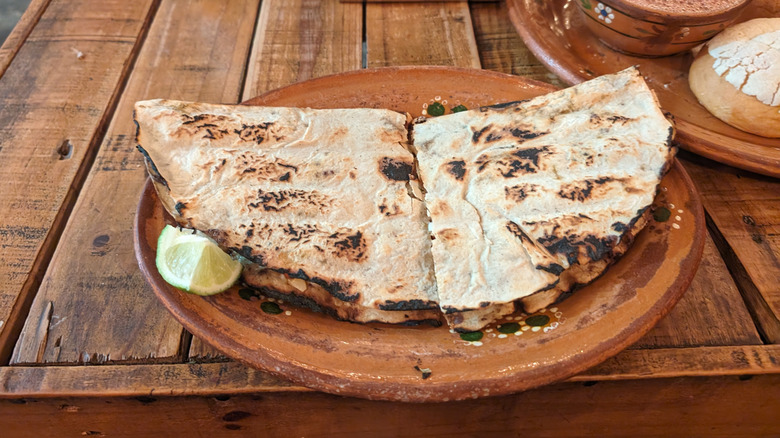
Often described as a "Mexican pizza," tlayudas are one of the most iconic antojitos from the southern state of Oaxaca. Built on a large, thin corn tortilla that has been partially dried to give it a distinctive snap, the tlayuda is brushed with asiento (unrefined lard), then layered with refried black beans, crumbled cheese, shredded lettuce or cabbage, and any number of toppings, ranging from grilled meats, like tasajo or cecina, to sliced avocado and fresh salsa. Once assembled, the whole thing is folded over and charred briefly on a comal or over an open flame, creating a smoky, crunchy, and deeply satisfying street meal.
The dish embodies the region's culinary ethos: Rustic, robust, and generous in flavor. Oaxaca is renowned for its mezcals, moles, and indigenous foodways. The tlayuda, too, is a perfect bite of those traditions, but in handheld form. While it has gained international fame and is often romanticized as Oaxacan fast food, the tlayuda remains a fixture of everyday life in the region, especially in nighttime markets and late-night food stalls.
Tlayudas are less about strict recipes than they are about format. Like pizza, the base remains consistent, but the toppings vary widely depending on what's available. This adaptability has allowed the dish to travel and evolve while staying rooted in its original context.
5. Panuchos
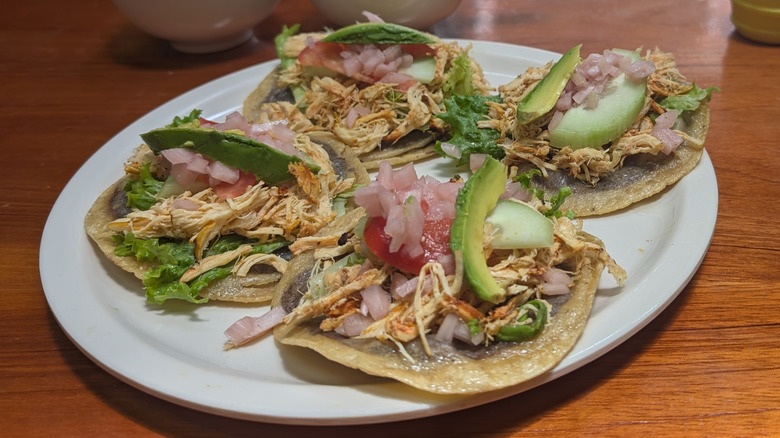
A specialty of Mexico's Yucatán Peninsula, panuchos are antojitos with layers of texture, color, and culinary history. At first glance, they may look like simple tostadas — but bite into one, and you'll uncover a hidden layer of refried black beans tucked inside the corn tortilla itself. This clever innovation sets panuchos apart and gives them a satisfying richness at their core.
The tortilla, typically thicker than average, is slit open while still warm and stuffed with beans before being lightly fried. It's then topped with a bright array of ingredients: Crunchy cabbage or lettuce, pickled red onions, avocado slices, and either shredded chicken or cochinita pibil, a deeply seasoned, pit-roasted pork marinated in achiote paste and sour orange juice. The vibrant red hue and smoky-sour flavor of the meat are unmistakable and emblematic of Yucatecan cuisine's unique blend of Mayan and colonial influences.
More than just a street snack, panuchos are a mark of local approaches to cooking that reflect Yucatán's marked spirit of cultural independence. In Mérida and other cities across the peninsula, they are often enjoyed at casual loncherías or nighttime street stalls, accompanied by a glass of horchata or an icy beer. Though intensely flavorful, they're rarely spicy unless a fiery habanero salsa or chile-laced pickled onions are added on top. Spice control is typically left to the diner.
6. Bocoles
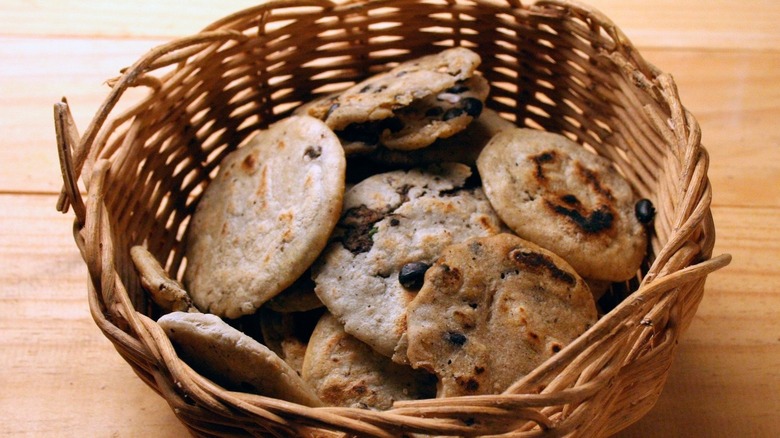
From the lush, tropical Huasteca region of eastern Mexico come bocoles — thick, palm-sized corn patties that are griddled until golden and filled with humble yet hearty ingredients. These antojitos may not be as widely known as tacos or quesadillas, but they're deeply rooted in the culinary and cultural fabric in areas of Veracruz, San Luis Potosí, and Hidalgo.
What sets bocoles apart is their reverence for masa itself. In bocoles, the tradition of nixtamalization, used to make the masa, is on full display. Rather than functioning as a mere vessel, bocoles put corn dough center stage. Prepared with lard and sometimes mixed with whole black beans, a tangy local ricotta-like cheese called requesón, or chopped herbs like cilantro and peppermint, the masa is shaped into thick discs and cooked on a comal until lightly crisped on the outside and steamed within.
Eaten for breakfast, lunch, or as an afternoon snack, bocoles exemplify the indigenous heritage of La Huasteca's rich and rooted culinary culture. Their portability and durability make them popular among the region's farmers, creating a perfect loop wherein last harvest's beans and corn empower campesinos to continue reaping the benefits of an ancient agricultural system — one that continues to fill bellies across the region.
7. Garnachas
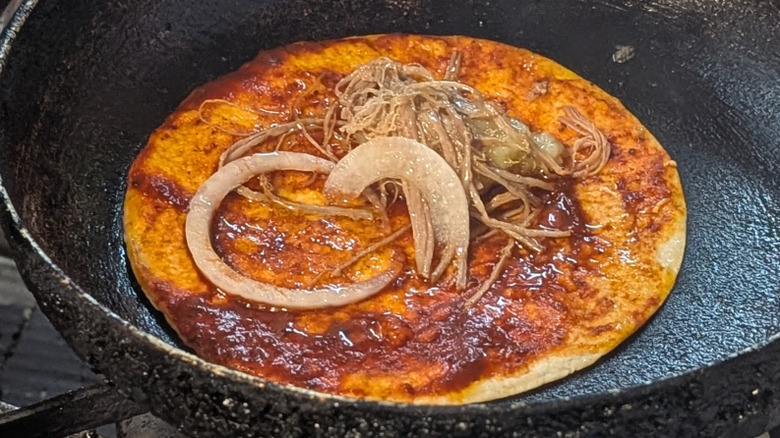
In much of Mexico, the term garnacha is a catch-all for any fried street snack, but along the central coast of Veracruz, it refers to a very specific, and much beloved, antojito. These garnachas begin with small, thick corn tortillas griddled until slightly crispy and then topped with a few quintessential ingredients: A ladle of salsa roja, a scattering of finely shredded beef or chicken, and a crown of thin-sliced white onion. The effect is compact, punchy, and deeply satisfying.
Unlike the mass-market versions of street food seen in tourist hotspots, Veracruz-style garnachas are handmade and fiercely local. The corn masa, often freshly ground, brings an earthy depth; the mild and tomato-forward salsa is always homemade; and the meat, though used sparingly, is rich with flavor from long, slow cooking. They're usually fried in batches on large, flat metal griddles set up in street stalls that open at night, where the aroma alone can stop pedestrians in their tracks.
What makes these garnachas special is their balance. Each bite delivers the comfort of warm masa, the tang of salsa, and the savoriness of meat in perfect proportion. They're typically purchased by the dozen and are ideal for eating on the go or sharing among friends and family. In a country overflowing with regional antojitos, garnachas from towns like Rinconada, Palo Gacho, and Buena Vista stand out as a humble yet powerful expression of place, heritage, and flavor.
8. Burros
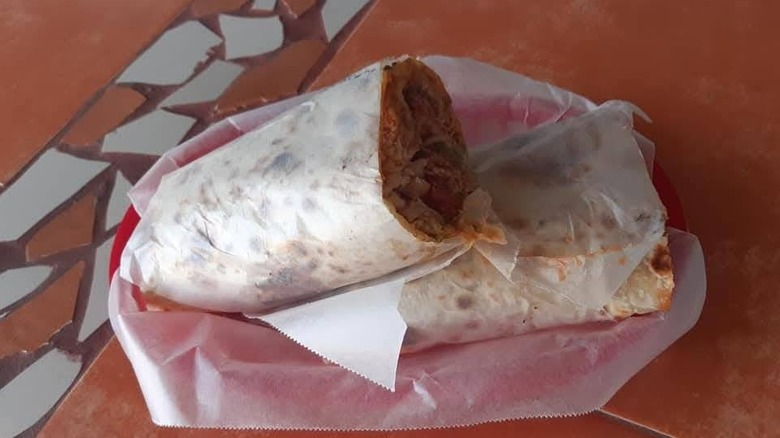
In Northern Mexico, where wheat flour is king, the humble burro reigns as a beloved everyday antojito. Though globally overshadowed by the massive, foil-wrapped burritos of California and Tex-Mex fame, Mexican burros are far more modest, and arguably more soulful. Typically wrapped in soft flour tortillas, these snacks center around a single, well-seasoned filling, such as a guiso (stew) made from beef, pork, or chicken simmered with spices, chiles, and sometimes vegetables, or grilled meat complemented with cheese, herbs, or a sauce.
The term burro (meaning "mule") refers not to size but to utility. Just as a mule reliably carries a load, the tortilla in a burro carries its flavorful cargo with minimal fuss. There's no rice, no lettuce, no sour cream — just protein, sauce, and maybe a little cheese or chile. The restraint is deliberate, emphasizing the richness of the meat and the quality of the tortilla.
Burros are especially common in states like Sonora, Chihuahua, Coahuila, and Tamaulipas, where cattle ranching and flour tortillas are staples of daily life. They're eaten as a quick lunch, a road snack, or a hearty breakfast — rolled up tight and handed over from roadside stands, taco trucks, or basket-carrying vendors on public transportation. Despite their simplicity, a good burro is memorable: Chewy, warm, and infused with the deep flavors of Northern Mexico's culinary landscape.
9. Quesadillas, Mexico City-style
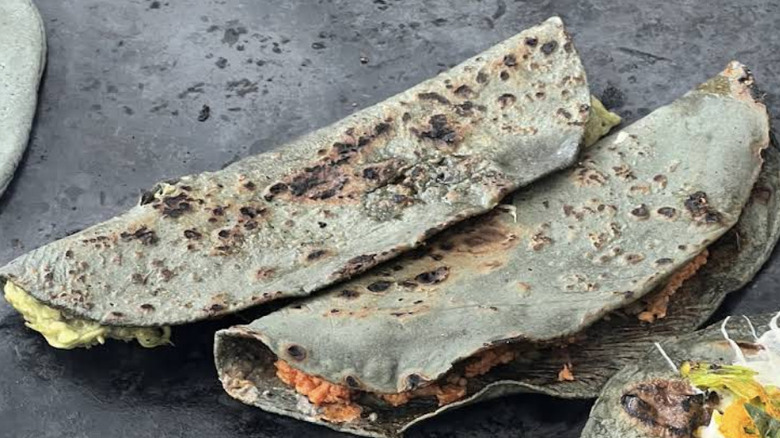
For many outsiders, the word quesadilla is practically synonymous with melted cheese. In the United States, quesadillas are defined by heavy proteins, used to make flavorful steak quesadillas or even quick and easy canned chicken quesadillas, using store-bought flour tortillas. However, in Mexico City, this assumption will often lead to a surprise. Here, quesadillas are beloved antojitos that do not necessarily contain cheese unless you specifically ask for it. This counterintuitive detail has become a running joke and a point of cultural pride among chilangos (Mexico City residents), underscoring how regional food identities can diverge sharply from mainstream expectations.
Built on fresh corn masa that's hand-pressed and folded over a wide range of fillings, these quesadillas are griddled on a comal until the edges are crisp and the contents steam within. While cheese is certainly an option, it often plays second fiddle to vegetables, stews, or fungi. Popular fillings include flor de calabaza (squash blossoms), huitlacoche (corn fungus), rajas con crema (strips of poblano chile in cream), or even offal and long-simmered meats. These quesadillas highlight Mexico City's street food culture, where local ingredients are a part of everyday eating, not just fine dining. Vendors often operate from makeshift stalls equipped with a comal and tubs of fillings, allowing each quesadilla to be made to order. The process is quick but personal, a testament to the city's unique blend of fast-paced living and uncompromising eating culture.
10. Memelas / Picadas
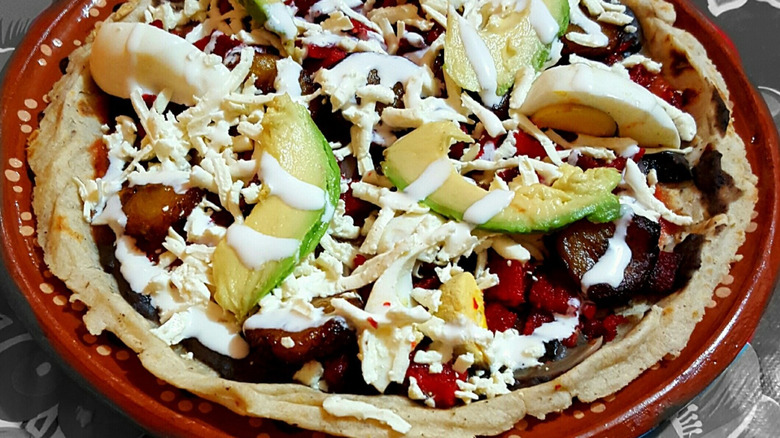
Hailing from the Isthmus of Tehuantepec — a narrow corridor linking the Gulf and Pacific coasts across parts of Oaxaca, Veracruz, and Tabasco — the memela is a bold, open-faced antojito that blurs the line between snack and meal. It begins with a large, thick corn tortilla, often hand-shaped and slightly irregular, griddled until lightly crisped, then generously smeared with refried beans. From there, the memela becomes a canvas for creativity.
Common toppings include shredded meat, crumbly cheese, fresh avocado, and crema, often finished with fried plantains and a perfectly boiled egg. If you're lucky, your memela may include carne de chinameca, the name given to a marinated, smoked pork with a vivid red hue and unmistakably smoky flavor from the town of the same name. The layering of ingredients not only adds richness but reflects the Isthmus's complex cultural heritage, shaped by Zapotec, Mixe, and Afro-Mexican traditions.
What distinguishes the memela is its scale and substance. Much larger and heartier than a taco or tostada, it's built for leisurely eating and robust appetites. Vendors in market stalls prepare these to order, often fanning charcoal embers under a metal comal while arranging ingredients like a painter with a palette. The result is a dish that's visually vibrant, deeply satisfying, and rooted in local ingredients and methods.
11. Gorditas
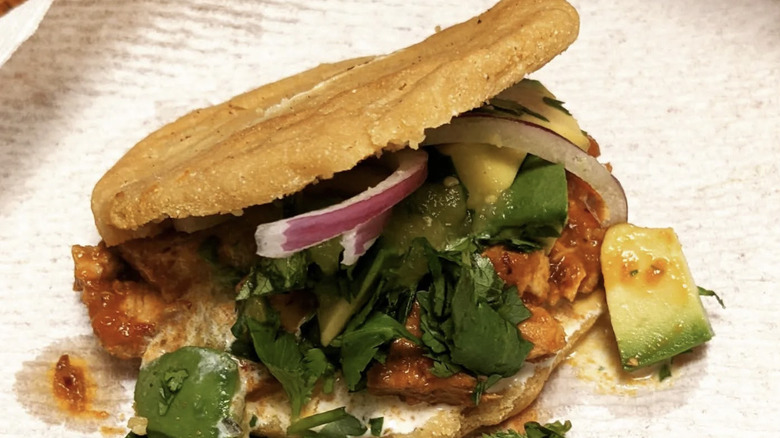
Thick, warm, and irresistibly satisfying, gorditas (literally "little fatties") are among the heartiest antojitos in Mexico's culinary repertoire. In the central highland states of San Luis Potosí, Querétaro, Guanajuato, and Zacatecas, gorditas are especially treasured for their ability to turn everyday ingredients into soulful, portable meals.
At their core, gorditas are made from masa, shaped into thick disks, and either griddled or fried. Once cooked, they're sliced open like a pita and stuffed with a wide variety of fillings. The diversity is staggering, with common choices including papas con chorizo (spiced potatoes with sausage), nopales con huevo (cactus paddles with egg), lengua guisada (braised beef tongue), beans with cheese, or even mole with white rice.
While the fillings offer a burst of regional flavor, it's the masa itself that makes gorditas special. In San Luis Potosí, masa is treated with care and pride, and often mixed with lard for richness and ground fresh each morning. Some gorditas are crisp on the outside and pillowy within, while others lean toward a more delicate, melt-in-your-mouth texture, largely depending on the masa-to-lard ratio. They're often served with salsa on the side, allowing diners to control the heat and acidity. More than just a snack, gorditas function as a full meal in hand-sized form. Whether eaten as a quick breakfast, a midday bite, or a late-night indulgence, they reflect the ingenuity and depth of Mexico's corn-based cuisine.