

16 Grilled Cheese Variations From Around The World
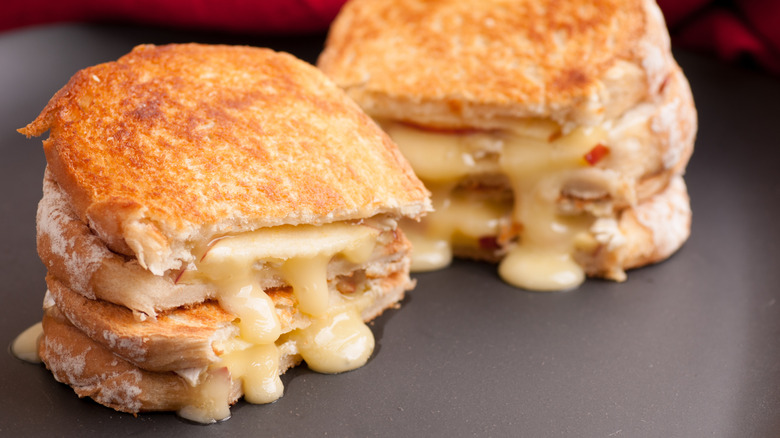
Nothing says comfort food like a grilled cheese sandwich. In the U.S., that typically means two slices of white bread slathered with butter and layered with cheese slices, then griddled until crispy and golden on the outside and molten-hot and gooey inside. But that's not the only way to make this cheesy favorite. Elsewhere in the world, there are multiple variations that feature different types of cheeses, fun twists on the bread, and creative add-ins to amp up the texture and flavor.
For this list, we looked beyond the standard two-slices-of-bread-and-cheese formula to find dishes from around the world that share the same basic idea: melted cheese paired with some kind of carb. That includes open-faced sandwiches, tasty tortilla creations, versions made on an actual grill, and sandwiches where the melty cheese gets paired with upgrades like meats, veggies, and sauces. If you're looking to switch up your grilled cheese game, consider giving these international versions a try.
1. Welsh rarebit (United Kingdom)
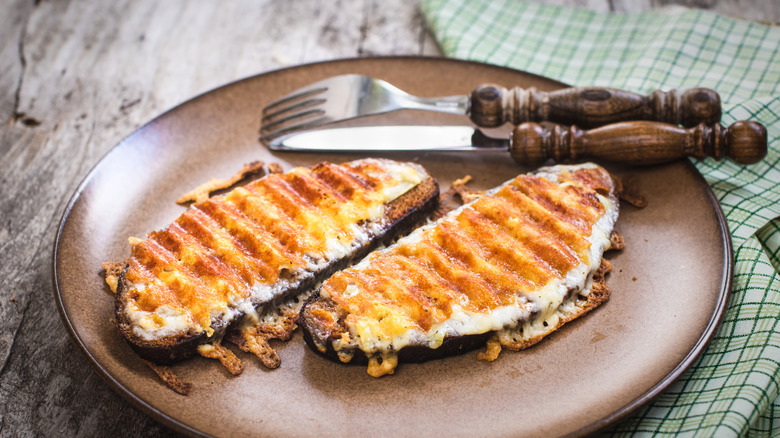
Pop into a pub in Wales, and there's a good chance Welsh rarebit will be on the menu. The quick and cheesy toast dish was originally called "Welsh rabbit," and some speculate that the British gave it that name to poke fun at the Welsh for the fact that it doesn't actually contain meat. Despite its meatless composition, the dish is rich and savory thanks to the cheesy beer sauce that gets slathered over bread.
Welsh rarebit is an easy spin on grilled cheese that you can whip together pretty quickly. The first step is to heat up butter and flour in a pan to make a roux. When it's golden, you add beer and cheddar (or your preferred cheese) and stir to make a thick sauce. Some people add Worcestershire sauce and mustard for extra umami and tang. Pour the sauce over slices of bread, and you can eat them as-is, or slide them under the broiler to make the tops bubbly and slightly crispy.
2. Kalari kulcha (India)
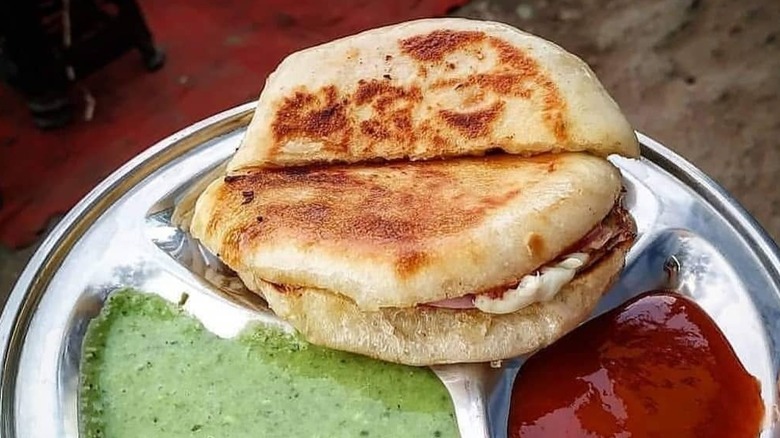
There's no shortage of sandwiches to try in India, from the vada pav with its crispy potato patty in a soft bun to the sausage-stuffed choris pao. But if it's melty cheese you're after, the kalari kulcha is a must. Also called kaladi kulcha, the sandwich comes from the Jammu region in the North of the country, and it features local kalari cheese grilled until golden and melty, then stuffed into a fluffy flatbread.
Kalari cheese is made with either cow, goat, or buffalo milk, and it's dried in the sun until firm on the outside, but still soft in the middle. It has a mild flavor that many liken to mozzarella. When the cheese hits the hot griddle, it crisps up on the outside, and the center melts. The pillowy kulcha bread is the perfect vessel for that gooey goodness, and sometimes the bread is also griddled to make it extra toasty. Common condiments include onions and spicy chutneys.
3. Medianoche (Cuba)
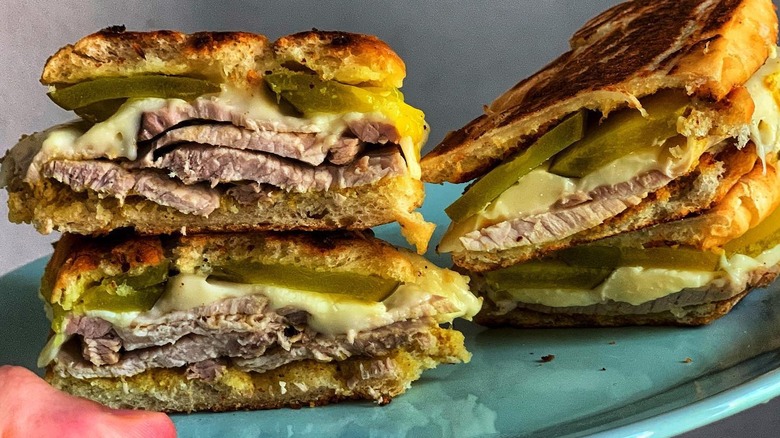
The iconic Cuban sandwich can be prepared perfectly with these tips and gets plenty of love in Tampa and Miami, but head to Cuba and you're more likely to come across its softer, sweeter cousin, the medianoche. The name translates to "midnight," and many say that's because this meaty, cheesy sandwich was once a popular late-night snack for Havana's club-goers in the early 1900s. Nowadays, you can find it any time of day all over the island, and many swear it's even better than the Cubano.
What sets a medianoche apart from a Cuban sandwich is the bread. Called pan suave, it's eggy and soft with just a touch of sweetness. The bread gets smeared with butter and mustard, then packed with Swiss cheese, roast pork (often marinated in a citrusy, garlicky mojo sauce), ham, and pickles. The sandwich is then pressed on a hot griddle or pan. As the Swiss melts, it binds the salty ham, tangy pickles, and rich roast pork together, and the hot griddle crisps up the bread.
4. Mozzarella in carrozza (Italy)
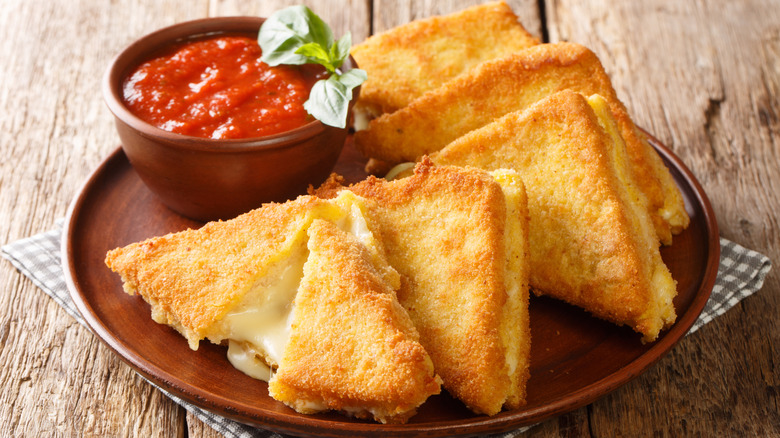
If you prefer your grilled cheese sandwiches extra crispy, then the mozzarella in carrozza sandwich will be right up your alley. It's essentially a grilled cheese sandwich that's breaded and deep-fried to give it a beautiful crunchy crust. It was created as a way to use up leftover scraps of food like bread and cheese. The name translates to "mozzarella in a carriage," which could refer to either the bread encasing the cheese like a carriage or the cheese pull you get that resembles a horse's reins.
As the name suggests, this crispy fried sandwich starts with slices of mozzarella. Low-moisture mozzarella is best, as it melts well without making the sandwich too soggy. The mozzarella gets sandwiched between two pieces of bread, then the whole thing is dipped in an egg wash, coated in breadcrumbs, and fried in oil until golden. Some people like to add prosciutto, tomatoes, or basil for extra flavor and serve it with tangy marinara sauce for dunking.
5. Croque monsieur (France)
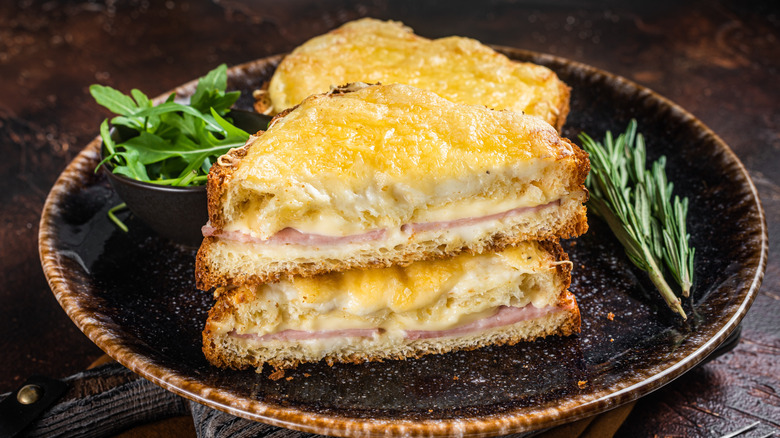
Leave it to the French to turn a grilled cheese sandwich into a decadent gourmet creation. That's what you get with the croque monsieur, a Parisian cafe staple that features salty ham, buttery Gruyère cheese, soft pain de mie bread, and creamy bechamèl sauce. Some people also add a swipe of Dijon mustard. The sandwich gets baked or fried until the cheese is melted and the bechamèl sauce is bubbling.
There are numerous ways to make a croque monsieur and several variations of it. Some chefs add all the ingredients inside the bread and then pan-fry the sandwich, while others top the sandwich with bechamèl sauce and sometimes more cheese and bake it until golden on top. Add a fried egg to the sandwich, and you've just discovered the one ingredient that differentiates a croque monsieur from a croque madame. You can also swap out the cheese for blue cheese or goat cheese, and add fillings like herbs and tomatoes. There's even a version called the croque Hawaiian that features pineapple.
6. Jaffle (Australia)
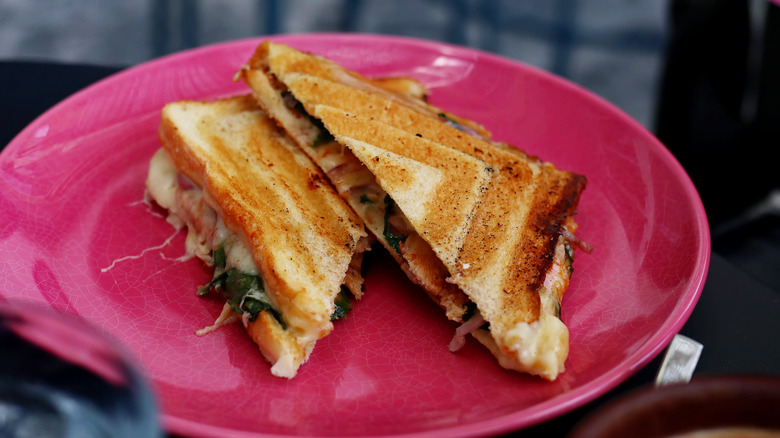
A jaffle is essentially the Australian version of a grilled cheese sandwich, but as any Aussie will tell you, there are some key differences. For one, a jaffle is made in a special machine with hot plates. Like a panini press, the machine melts the cheese and toasts the buttered bread, but it also seals the edges of the sandwich so that all the fillings stay inside. Modern versions also have features that cut the sandwich into two perfect triangles. In addition, the machines give jaffles their distinctive grooved patterns.
Another key difference is that jaffles can contain all manner of ingredients. Common add-ins include ham, tomatoes, onions, and Vegemite (a salty spread made from yeast). There are also sweet versions featuring items like berries, cream cheese, jams, bananas, and Nutella. Some folks also like to think outside the box with their jaffles, adding fun fillings like foie gras, roast chicken with gravy, and spaghetti bolognese.
7. Quesadilla (Mexico)
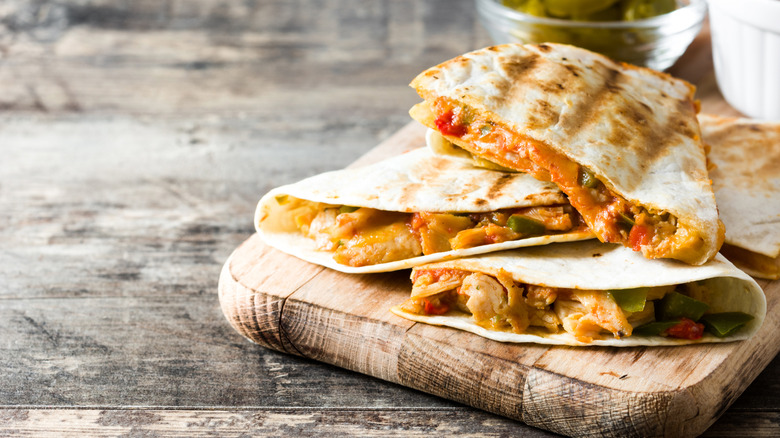
A quesadilla might not look like your traditional grilled cheese sandwich, but it's essentially the same idea with a tortilla instead of bread. It starts with a corn or flour tortilla that's laid on a hot comal (a flat griddle) or pan, topped with cheese, and folded in half. The quesadilla is then flipped and grilled until the cheese melts. There are also versions of quesadillas that are deep-fried to give them an even crunchier exterior.
The key to making crispy quesadillas is starting with a pre-heated pan. That will brown the tortilla and melt the cheese quickly before too much moisture can leak out. You also want to use a mild, semi-firm cheese that melts well, like queso Oaxaca, asadero, or mozzarella. And don't be afraid to add extra ingredients, as they can add extra weight to press the tortilla into the hot surface. Some common fillers include peppers, mushrooms, chorizo, shredded chicken, steak, and shrimp.
8. Princess (Bulgaria)
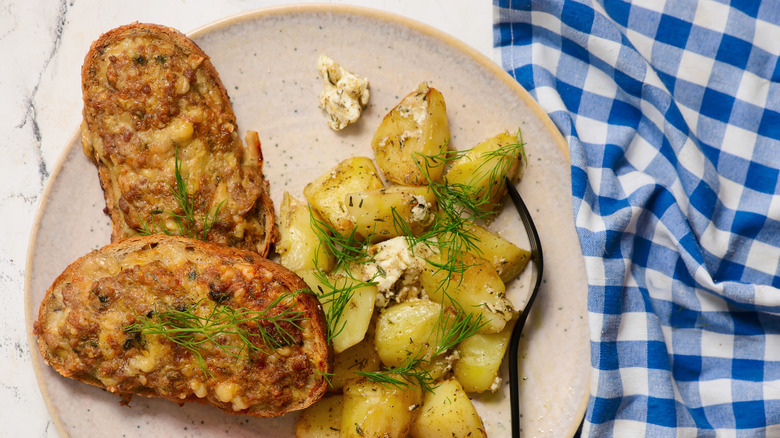
In Bulgaria, a typical breakfast dish is the Princess sandwich, which is an open-faced sandwich layered with melted cheese and proteins like meat or eggs. There are numerous variations, but the preparation is pretty much the same. You take slices of bread, and either toast them ahead of time or spread them with butter. Then, you top the bread with shredded cheese and your preferred protein and pop everything in the oven until the cheese is melted and gooey.
One popular version of the Princess sandwich features minced beef or pork mixed with seasonings like cumin and garlic powder and shredded kashkaval which is a semi-hard yellow cheese made with sheep or cow milk that's slightly tangy. As the meat cooks, the cheese melts throughout and browns on top, giving a great mix of textures. Another version of the Princess sandwich features crumbly feta mixed with kashkaval and eggs. If you can't find kashkaval, any melty cheese will do, such as cheddar or mozzarella.
9. Bauru (Brazil)
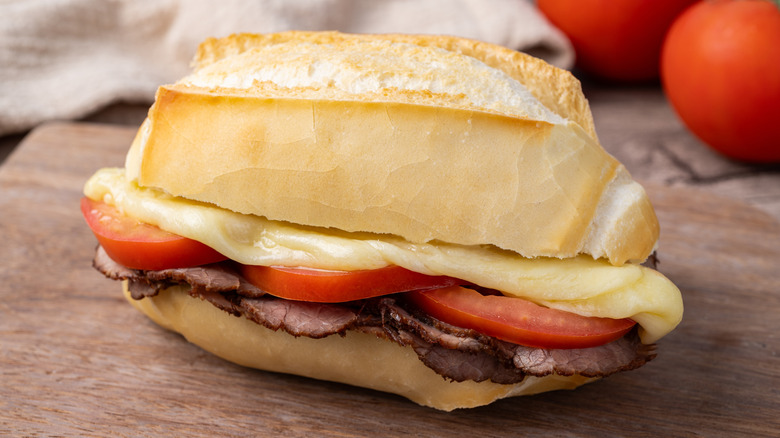
Born in São Paulo, the bauru is one of Brazil's most famous sandwiches. The story goes that in the 1930s, a law student by the name of Casemiro Pinto Nero asked the chef at the Ponto Chic restaurant to make him a special sandwich. The chef whipped up a meaty roast beef creation oozing with melted cheese and topped with tomatoes and pickles. The sandwich was a huge hit and eventually came to be known as "Bauru's sandwich" (later just Bauru) after Nero's nickname and hometown.
A classic Bauru sandwich features a crusty French roll topped with sliced roast beef, melted semi-hard cheese like mozzarella, sliced pickles and tomatoes, salt, and oregano. Many recipes suggest melting the cheese in a bain-marie, which is essentially a hot water bath. Some cooks add the ingredients to a griddle and melt it that way, while others simply pile them in the bun and bake it in the oven until the cheese is sufficiently gooey.
10. Raclette sandwich (Switzerland & France)
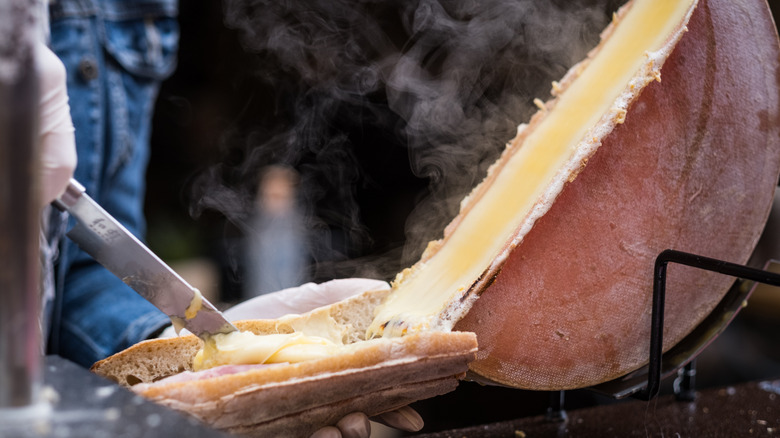
The name raclette comes from the French word racler, meaning "to scrape," and that gives you a good idea of how the raclette sandwich is made. It starts with a half wheel of raclette cheese that's heated slowly until the surface is soft and glistening, then it's scraped onto bread (usually a crusty baguette). The hand-held snack is very popular in the Swiss canton of Valais where raclette is made, but you can also find it in other parts of Switzerland and France. Raclette cheese is also traditionally served over potatoes.
What makes the raclette sandwich stand out from other grilled cheese sandwiches (besides its unique preparation) is the flavor of the cheese. It's made with milk from cows that graze in high-altitude Alpine pastures, and that gives it a subtly sweet taste with herbaceous floral notes. It's flavorful enough to stand on its own in the sandwich, although some people also add meats, veggies, and condiments. If you can't find raclette cheese, some good substitutes include Gruyère and Fontina.
11. Braaibroodjie (South Africa)
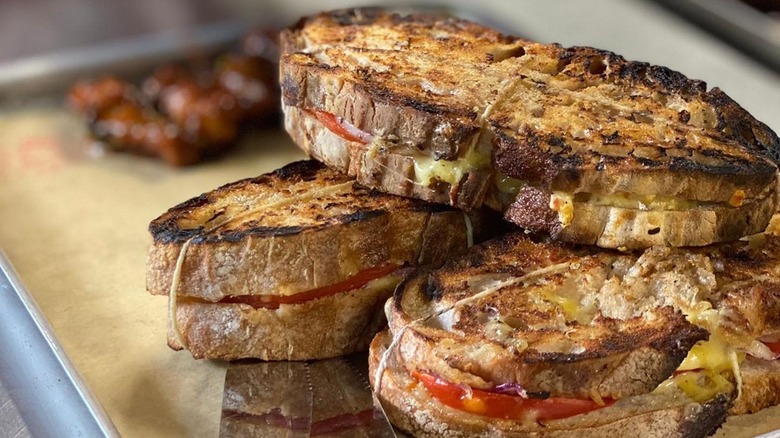
For a sandwich called grilled cheese, it's surprisingly rare to see it made on an actual grill. Well, that's not the case with the braaibroodjie. The name translates to "barbecue bread," and it's a hot ticket item at cookouts, which are called braais in South Africa. The cheese-stuffed sandwich is typically cooked in a double-sided grill basket over hot coals and that gives it a smoky flavor that you just don't get from your run-of-the-mill grilled cheese sandwich.
One of the most common iterations of the braaibroodjie is a classic mix of cheddar cheese, tomatoes, onions, and fruit chutney. The ingredients get piled between two slices of buttered bread, and the sandwich is flipped over the coals until the bread is grilled and the cheese is thoroughly melted. But really, you can put whatever you want in your braaibroodjie, from gourmet cheeses to hearty meats and fun sauces. There are even dessert versions stuffed with items like fruit, marshmallows, and chocolate.
12. Kumru (Turkey)
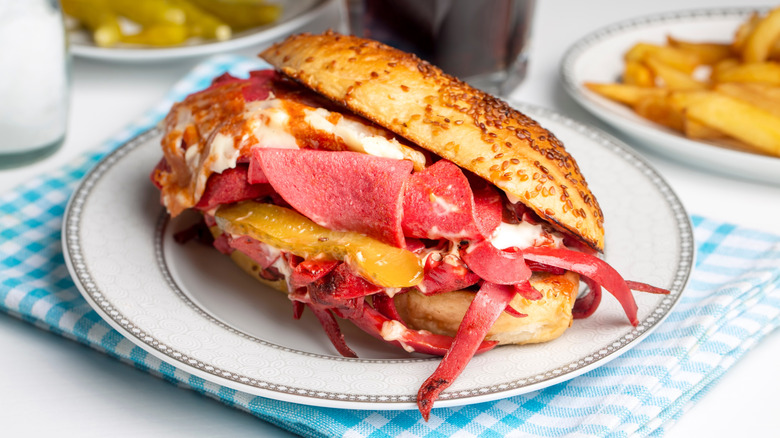
The coastal town of Çeşme in Western Turkey is a popular vacation spot renowned for its sparkling blue water and cobblestone streets. Its other claim to fame is a grilled cheese sandwich called the kumru that can be found at restaurants and food stands all over town. It features a thick slice of kaşar (a buttery sheep's milk cheese) that is grilled on a flat griddle until melted and browned in spots. The cheese is then piled into a crusty sesame seed bun called a kumru that's typically swiped with butter and also thrown on the grill.
Beyond the bubbling hot cheese, there are plenty of ingredients you can add to your kumru. Sliced tomatoes are a nice touch for a bit of freshness. And if you like your sandwiches meaty, you can add sliced beef sausages called sucuk and thin strips of salami heated on the grill. Some people also add condiments like pickled cucumbers, pickled chili peppers, mayonnaise, and ketchup.
13. Pupusa (El Salvador)
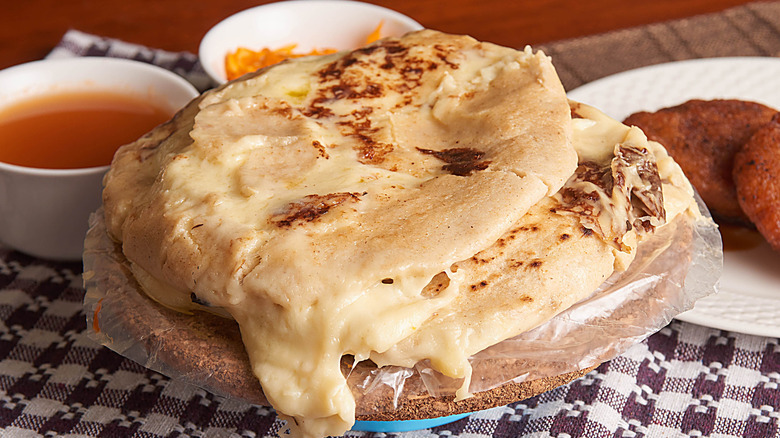
Travel across Latin America, and you'll find a diverse array of cuisines, with each country offering must-try national dishes that speak to their culinary identity. In El Salvador, that dish is pupusas. For over 20 centuries, Salvadorans have been making these thick, flatbread-like discs out of corn flour and stuffing them with various ingredients, one of the most popular of which is queso (cheese). The pupusas are typically flattened and grilled with oil to make them crunchy on the outside and warm and melty inside.
The beauty of pupusas is that they're entirely customizable. That being said, many will tell you that the cheese is an absolute must, with some likening a pupusa without cheese to a cheese-less pizza. The cheese is typically a mild white cheese similar to mozzarella or queso Oaxaca. Beyond that, popular additions include refried beans, pork, chicken, and a leafy plant called loroco. And if you want to go really traditional, you can top your pupusas with a pickled cabbage slaw called curtido.
14. Francesinha (Portugal)
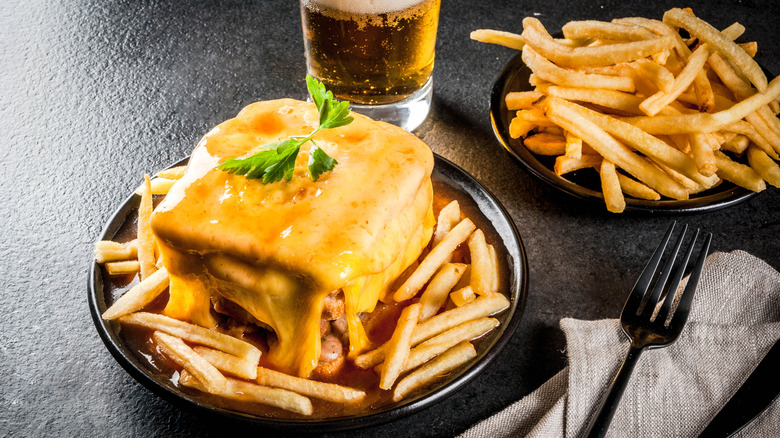
For anyone arriving in Porto, Portugal, with a hardcore hunger, the francesinha is seriously substantial. This decadent cheese-smothered sandwich with French origins features thick slices of toasted bread filled with ham, steak, sausages, and ample slices of flamengo cheese (a mild cow's milk cheese). The sandwich also gets topped with more cheese and doused with piping hot tomato-beer sauce, which transforms it into a gooey and delicious mess. It's often served with french fries on the side and sometimes a fried egg on top.
The name francesinha translates to "little French one," which is a nod to its inspiration. Back in the early 20th century, a chef named Daniel David de Silva spent time in France, where he discovered the croque monsieur sandwich. Upon returning to Porto, he created a version of the French dish using local ingredients. The francesinha began appearing on café menus in the early 1950s, and now it's one of the city's most well-known dishes.
15. Toast Hawaii (Germany)
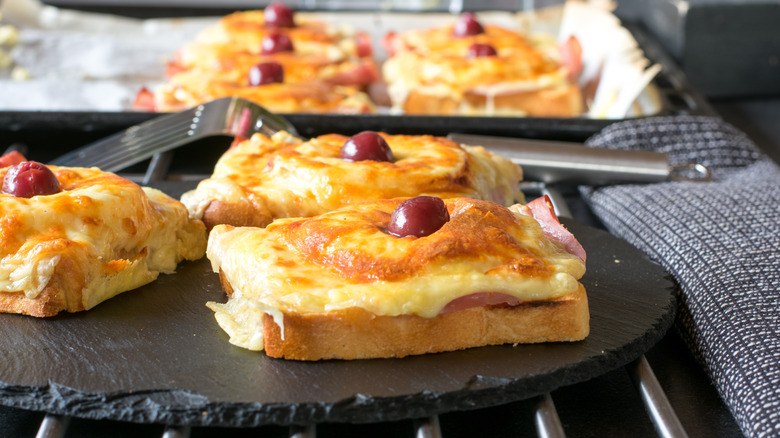
When German television chef Clemens Wilmenrod introduced his viewers to Toast Hawaii in the 1950s, the open-faced grilled cheese sandwich took off in a big way. Not only was it relatively easy to make, but it featured ingredients that many home cooks had in their pantries. The recipe calls for white sandwich bread topped with sliced ham, a pineapple ring, and a slice of processed cheese. Everything goes into the oven until the melted cheese drapes the toast, and a maraschino cherry is added as an optional final touch.
Toast Hawaii became a staple in German kitchens and remained popular through the 1980s. It also spread to neighboring countries and spawned other creations, like Switzerland's Toast Williams, which features toast topped with Gruyère or raclette cheese, slices of Williams pears, and bacon. The German sandwich may have even inspired the Hawaiian pizza, as Toast Hawaii paired ham and pineapple first, about a decade before Sam Panopoulos created the pizza in Ontario, Canada.
16. Bikini (Spain)
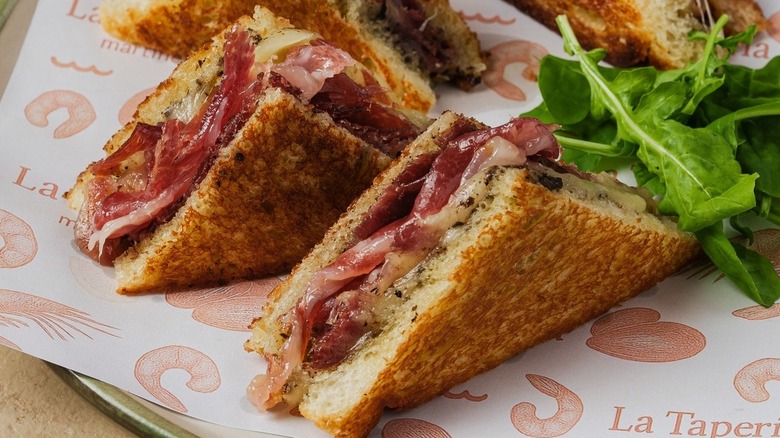
The bikini sandwich has all the elements of a great grilled cheese sandwich with toasty bread and creamy melted cheese, but it kicks things up a notch with the addition of cured ham. It was created at Barcelona's La Sala Bikini nightclub in the 1950s (hence the name), and legend has it that the sandwich was inspired by France's croque monsieur. It's popular all over Barcelona, and you can also find it in other parts of Spain by the name "sandwich mixto."
All you need to make a bikini sandwich at home is bread with a light crust that can hold up to grilling, like ciabatta or country bread. The bread is buttered, then filled with cured ham like jamón serrano and slices of mild white cheese like manchego or mozzarella. In Spain, the layers are typically thin so that when the sandwich is pressed or grilled, the fillings stay inside. It looks light, but the salty ham and milky cheese add richness and make the sandwich ultra-satisfying.