

13 Kitchen Appliances There Are Simply No Need For In 2026
We may receive a commission on purchases made from links.
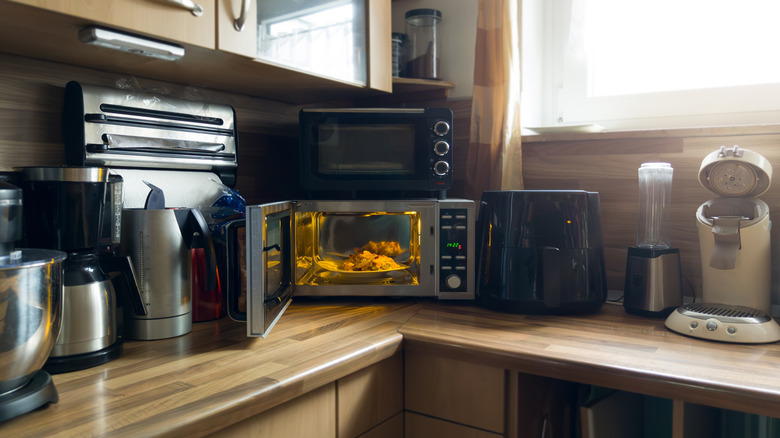
Anyone who lives in a small space knows that there isn't a ton of room for "stuff." Your pantry can only hold so many ingredients, and you can only keep so much junk in your parents' basement before they start asking questions. The logical response to curbing clutter, then, is to think long and hard about the items that take up room in your home that you no longer need. You can purge the socks without matching pairs and toss the umbrellas that don't open right, but how do you decide which kitchen appliances are worth keeping and which ones are worth donating or throwing out?
As someone who declutters their 600-square-foot condo on a seemingly weekly basis, I can tell you from personal experience that making this decision is harder than it looks. The harsh reality is that we often buy kitchen appliances we don't need because we think they will make our lives easier, and we hold on to them, waiting for that day to come. But the only thing they do is create mess, crowd shelves, and make us feel guilty that we spent so much money on them in the first place.
This is why I created a guide for what I think are the most useless kitchen appliances for those who already have a full kitchen. Although their intended uses vary, the one thing that they have in common is that those uses tend to overlap with more useful, space-saving, and cost-effective tools, many of which you likely already own.
1. Air fryers
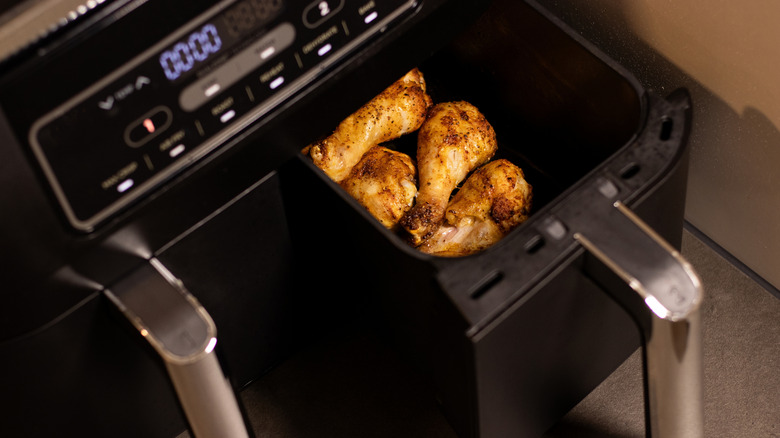
The time has finally come for me to denounce the it-girl appliance of the 21st century. I'm going to hold your hand really, really tight when I tell you that there is no need to buy an air fryer anymore.
Compared to other kitchen appliances, air fryers are a relatively new invention — coming out as recently as the 2010s. Their explosion on the market was compounded, and arguably propelled, by two classes of people: those influenced by healthy eating trends and the end of the fats-are-bad movement of the '80s and college students (and millennials) who wanted a simpler way to reheat frozen chicken nuggets, french fries, and the like. The first group is valid, as air fryers do require less oil than, say, deep-frying, but the second doesn't make sense to me at all. How much simpler does it get than putting frozen food on a sheet pan, sliding it into a preheated oven (which most homes are already equipped with), and taking them out when the timer beeps? You're doing the same thing in an air fryer, only taking up more counter space than you should have to.
Yeah, yeah, yeah, you can cook more than just frozen food in an air fryer. But why do you have to buy a totally different appliance when you can already make cake, soufflés, baked potatoes, egg bites, bacon, and more in a normal oven? Air fryers are a trend we just need to let die at this point for clutter's sake.
2. Toaster ovens
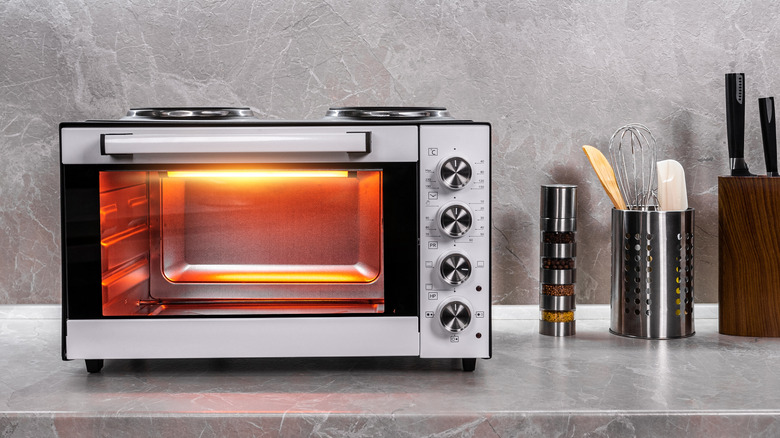
I will start this one with a disclosure: My parents had a toaster oven (which they may have gotten as a wedding present in the '70s), and I can count on one hand the number of times they used it — twice, actually (Both times to make London broil. It was about as appetizing as you'd think London broil made in a toaster oven would be). But I'm putting that bias aside to ask: Who the heck is still buying toaster ovens in 2026?
I get that modern toaster ovens are equipped with air frying capacity, in addition to their regular toasting duties. But can't you just make regular toast in, say, a compact toaster? And grilled cheese in, I don't know, a pan on the stove? I find that toaster ovens are so cumbersome and take up way too much space on the countertop to justify their use. And perhaps even worse, when you never use this awkwardly shaped appliance, you have to find a place to store it. And these things aren't light, by any means, and you have to awkwardly shimmy around with it in your arms looking for a place for it. Is that worth the marginally shorter preheat time, dear reader? I, for one, look forward to the sound of that toaster oven hitting the bottom of the dumpster when the time comes.
3. Electric kettles
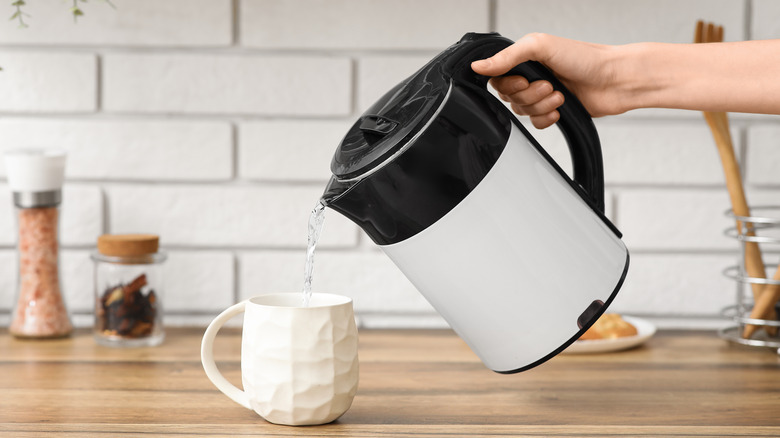
For folks reading this list who know me, this one may come as a surprise, as I swear by an electric kettle in the winter — but just to put hot water in my horse's grain. Other than that, I see absolutely no need to own one. I get that regular, non-electric stovetop kettles are quite loud, and if you aren't in the room when they go off, you have to run like a banshee to shut off the heat so that it doesn't wake everyone else in the house up. But that doesn't mean electric kettles are a better solution.
Here's my gripe with this countertop appliance: It's not good at heating up quickly, nor is it good at retaining heat. If you want a cup of tea when you wake up in the morning, you have to refill the kettle, wait for it to boil, and then add your teabag. You could also just put your cup in the microwave, put it on for three minutes, and be done with it. Or, even better, just use your Keurig or coffee maker for hot water. And like I said, even if that first cup is perfect, you usually have to reheat the water if you want a second cup because it doesn't keep things at the ideal scalding temperature for tea. Unless you are absolutely guzzling tea after tea (or own livestock in a cold climate), there is just no reason why you need to invest in this space-hogging appliance.
4. Sous vide machines
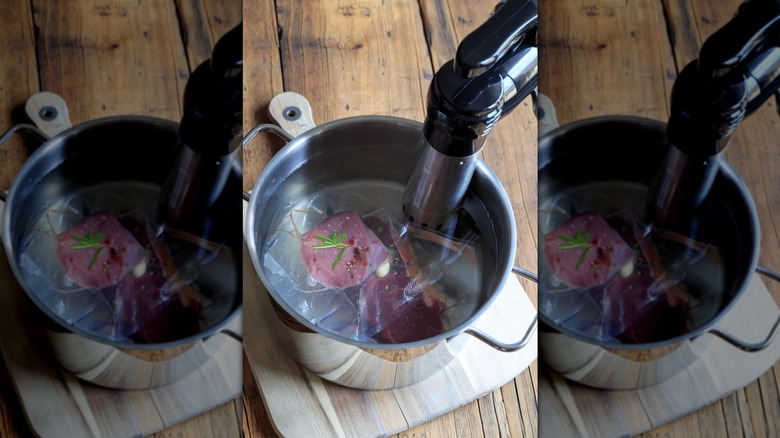
When was the last time you (or someone you know) sous vide-d something? I'm going to venture to guess that it's been a hot minute, as this technology has rapidly fallen out of style. Sous vide, for the unfamiliar, is a cooking method that involves vacuum-sealing your food in a plastic bag, then gently heating it in a water bath so it cooks evenly. Some people swear by it for foods like burgers, but I find nothing but issues with it. For one, who wants to cook burgers for an hour in a sous vide, only to have to take them out, preheat a cast iron pan, and sear the ever-living daylights out of them to get more than a pile of (albeit well-cooked) mush? I just have better things to do than watching a plastic-wrapped packet of burgers swirl around in a pot of water like a clump of hair moving around in a bathtub. It seems like the only people who sous vide in this day and age are people with a lot of time on their hands — and I'm just not one of them.
Not to mention, these machines aren't cheap! You're paying at least $100 — sometimes upwards of $300 — for an appliance whose only job is to cook food very, very slowly. Oh wait, and you may even have to buy the bags separately and the vacuum sealer? Count me out.
5. Food processors
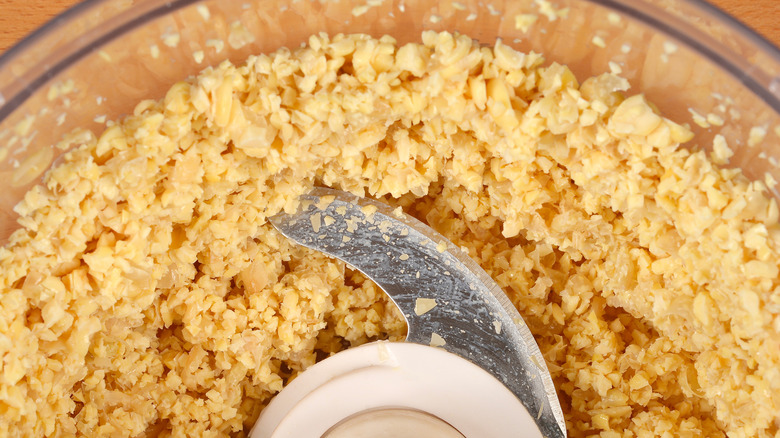
I grew up making pie dough in my mother's food processor, so I have fond memories of jolting my sleepy self awake with the sound of the "pulse" function. I'm sure these appliances have gotten quieter since then, but I still don't think that warrants keeping one in your cabinet. Sure, food processors can be fitted with multiple blades depending on what you're slicing and can make quick work of carrots, potatoes, and more, but you can make equally quick work of them with a box grater, mandoline, high-powered blender, or even the right stand mixer attachment. For pie dough specifically, well, you can just break out a good ol' pastry blender and have perfectly sized butter pieces in no time.
The need to own a food processor has also waned with the expansion of grocery store products. If you want to make a homemade coleslaw, don't buy a whole head of cabbage; just get the pre-shredded stuff from the store — no one at your barbecue will know the difference. There are so many other alternatives that will save you both the initial purchase price and valuable real estate in your kitchen.
6. Bread machines
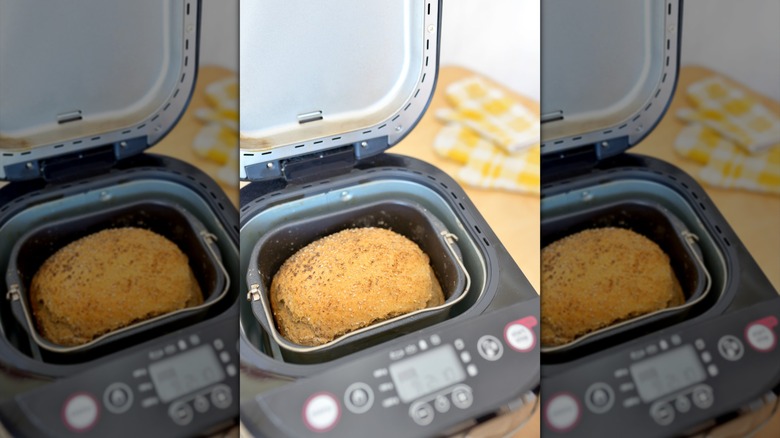
To me, bread machines are something that you buy on QVC or from a yard sale because you think they'll spur your interest in making homemade bread. Spoiler alert: This only lasts a few months before you realize that stores sell sandwich bread for a reason.
Bread machines' allure is that they do it all for you: You add the ingredients to the pot, walk away, and when the timer beeps, your bread is done — like, done done. No mixing, no kneading, no baking, no fun. Now, I get that bread makers can make cooking accessible to people who have less time or cannot manually knead dough themselves. But considering you can have a stand mixer knead things for you, I would argue that when you use a bread maker, you're not really making bread — all you're doing is dumping in ingredients and letting a computer do the work for you. It's the equivalent of using artificial intelligence (AI) to write something: You toss in the raw ingredients hoping something good will come out, then you realize it would probably be better and have more character if you made it yourself. It might be edible, sure, but it's bread you're embarrassed to share with others. Say no to AI, kids, and say no to bread machines.
7. Popcorn poppers
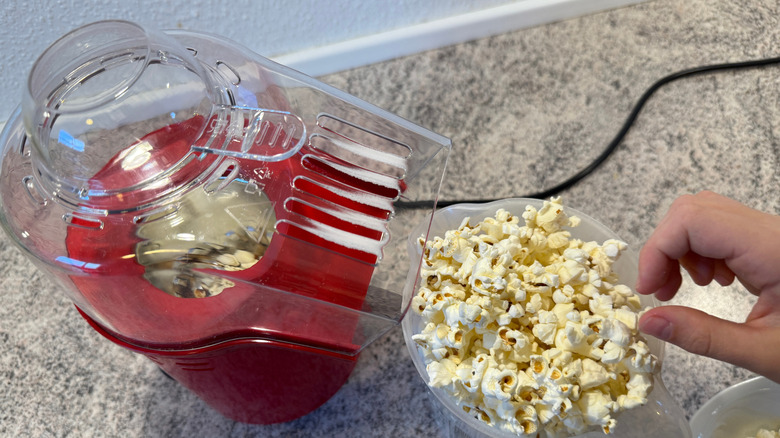
Let's be real here: We all wanted our parents to buy us the vintage popcorn maker we saw at the yard sale because who doesn't want to have unlimited popcorn (and, by proxy, unlimited movie nights)? But like the Sno Cone machines and cotton candy machines of yesteryear, popcorn machines quickly lose their novelty and become a pain to store and use.
"Popcorn makers" encompass both air poppers and those old-timey machines that have a center kettle — like the kind you'd find at a movie theater. Regardless of the type you use, the reason for getting rid of it is the same: Why would you own an appliance that takes up that much room if you only use it occasionally? How much popcorn can one person eat? There are so many better alternatives, including microwaving popcorn (our taster tried several brands to determine which one was the best) or making it on the stovetop (heck, you can even make it in a wok). There might be some nostalgia associated with staring at the canister and waiting for the first "pop!" but the pantry space this machine occupies doesn't justify owning one.
8. Countertop ice makers
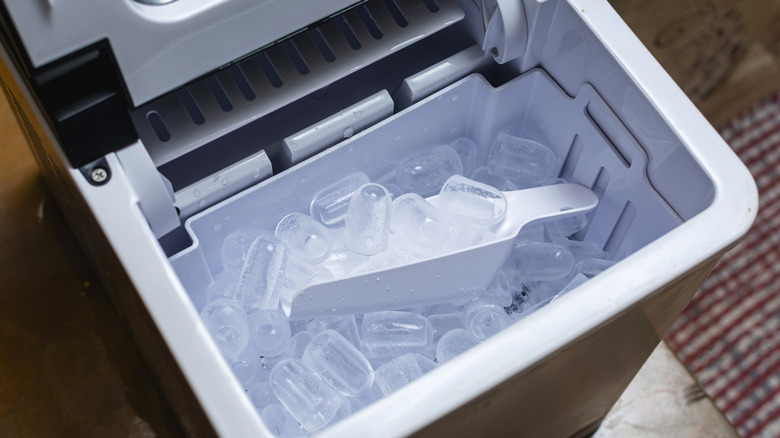
Countertop ice makers are popular, and plenty of brands sell them. However, as someone who owned one of them — and had it break on me in under a month — I can't, in good conscience, recommend buying one. I was living without a built-in ice machine in my fridge (the tragedy), so I was relying on the countertop appliance as my sole source of ice. In hindsight, it would have been cheaper to buy ice trays and freeze it myself. It got to a point where my machine didn't have the capacity that I needed for events, either, so I ended up just going to the local packy (liquor store, for those non-New Englanders) and grabbing a 10-pound bag of ice because it couldn't refill fast enough.
The only thing worse than having to watch a countertop ice machine refill painfully slowly is having to clean said appliance. It's one more thing that you have to unplug, clean, rinse, descale, and flush. Do you want to know what you don't have to unplug, clean, rinse, descale, and flush? The bag of ice you get from the packy that costs a couple of bucks. Either stick with the bag, grab a cheap ice cube tray, or, if you're lucky, use your fridge's built-in ice maker.
9. Deep fryers
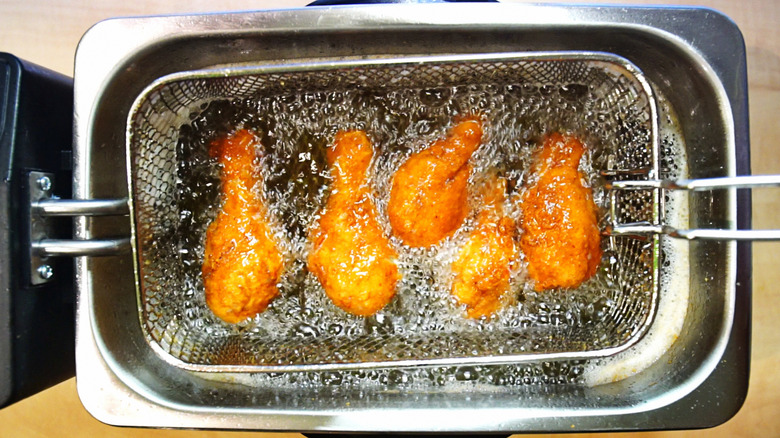
Whenever I think of countertop deep fryers, I think of the "Arrested Development" episode with the Cornballer — mainly because they're just as dangerous for exposed arms. Anyone who has watched the oil sputter off the top and onto every surface in the kitchen knows that. But this is an inevitable outcome of any frying experience.
Rather, the countertop deep fryer is impractical because it takes up a fair amount of room for something that you can make in a deep cast-iron skillet. Like the other appliances on this list, it has limited use in the kitchen — and really, how often is anyone deep frying food at home, aside from Sunday night fried chicken? Plus, the baskets are usually too small to cook multiple batches of food at once, so they end up taking a lot more time than you may anticipate. Personally, I don't blame people for not wanting to have a sputtering crock of oil sitting in the middle of their kitchen, just waiting to become a grease fire.
10. Countertop pizza makers
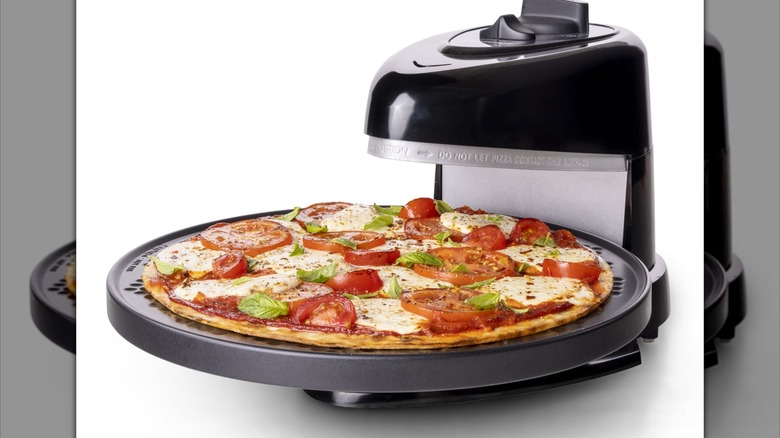
I have to admit that these countertop pizza makers make me laugh because of how funny they look. You mean to tell me that this can opener-looking pizza maker makes a better pie than I could get from my convection oven? There's just no way. These gadgets have top and oven heating elements that are supposed to cook both the crust and the toppings; however, you can get the same (if not better) results from a baking stone — and baking stones usually don't cost as much. And, the shape of this pizza maker is limiting. On the other hand, you can bake practically anything on a pizza stone (I use mine for bread).
Speaking from the perspective of someone who owns and loves their outdoor pizza oven, I can also say that this appliance is just too niche for most people. It's kind of like an ice cream maker, popcorn maker, or a cotton candy machine; you only pull it out when you have a once-in-a-blue-moon craving for that food. And when you don't have that craving, you have to find space for storing this cumbersome and awkwardly shaped appliance.
11. Electric knife sharpeners
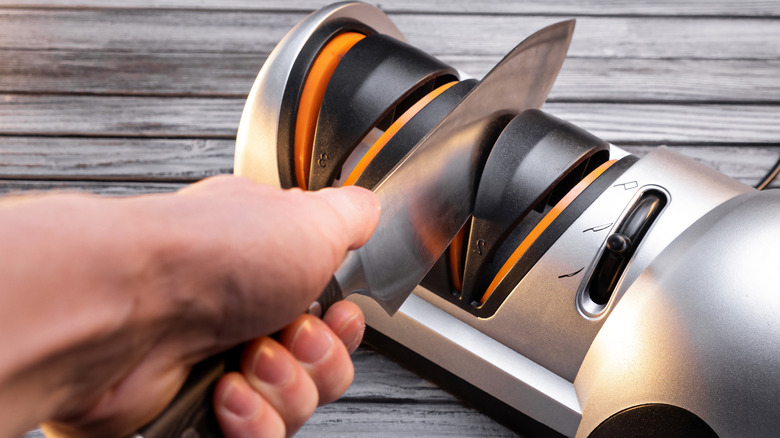
There are a few items that are on this list solely because they do more harm than good. Actually, by "few," I mean only one: an electric knife sharpener. These machines can be very aggressive and rapidly strip your knife of its metal edge. Not only does this mean your knives need to be replaced more often, but they also will not work as well. Moreover, since the angle of the sharpener is set in the machine, you have very little control over where your knife is being sharpened. Although the technology has developed a lot and electric knife sharpeners are not as bad as they once were, when you consider the other options for sharpening knives, an electric version loses its appeal.
For one, you can use a whetstone to sharpen your knives; it may be a bit of a learning curve at first, but it's well worth learning how to use properly. You can also take them to a professional for sharpening (Knife Aid even offers a mail-in sharpening service).
12. Cocktail machines
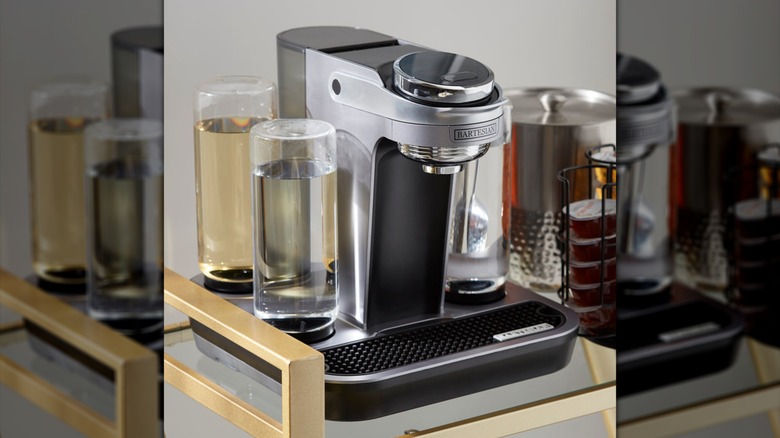
Like the bread maker, using a Bartesian or similar cocktail-making system feels like cheating. These machines are the Keurigs and Nespressos of mixology; you add a pre-mixed pod (which includes bitters, juices, and other flavorings) to the appliance (which can cost upwards of $400), fill the jugs with spirits of your choosing, and press a button to dispense your drink. You have to BYOB for this machine, which drives up its cost of use even more, and I doubt its pre-packaged sour mix tastes like the fresh lime juice in a high-quality margarita. The one appeal I can see with this machine, though, is that it can make a bunch of different drinks without requiring all of the mixers, bitters, flavorings, and add-ins — but I can't promise that those drinks will be objectively good.
Maybe it's because I find a lot of joy in mixing drinks for others and making non-alcoholic sippers for myself, but I think that this machine simplifies the art of mixology too much. I feel the same way about cocktail machines as I do about Keurigs — what they lose in quality they make up for in convenience.
13. Dehydrators
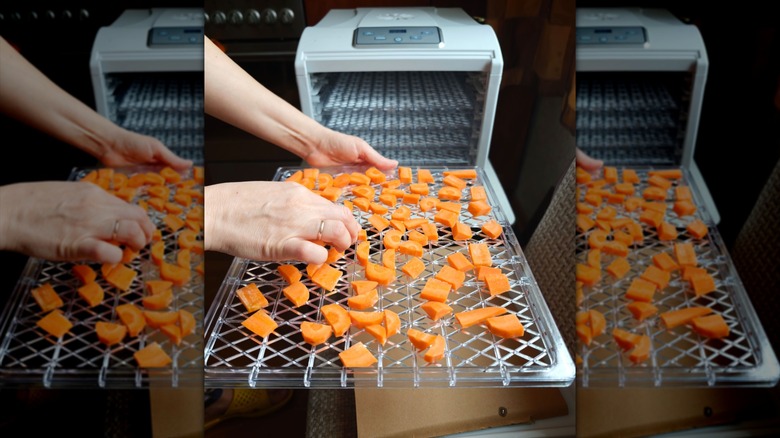
I'm sure there is someone somewhere out there who gets a lot of joy and utility from a food dehydrator — maybe if you butcher your own animals or have a penchant for homemade jerky or fruit leather. But the majority of us would be better off without this cumbersome appliance in our homes.
Anyone who has ever dehydrated food knows that it takes a long time. It can take several days to dehydrate whole meals, and I'm going to venture to guess that the average person does not have that kind of spare time for a "fun weekend project." And if you're the person who bought one thinking they would use it, then you also know you have to find a place to store it — which is not easy, considering they can weigh anywhere from a few pounds to upwards of 30 pounds. If push comes to shove, you can use your conventional oven; however, it needs to be able to be set at a very low temperature (like around 120 degrees Fahrenheit), so that it zaps the moisture out of the food rather than cooking it.