

Why There's Simply No Need For Air Fryers Anymore
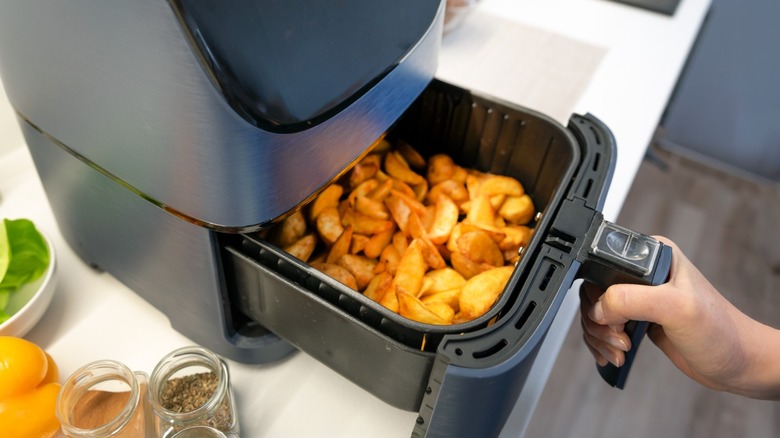
"Cynical" is an understatement for my reaction when my partner's parents gifted us an air fryer. My objections covered all the bases, from "it takes up too much counter space" to "if this is anything like our waffle-maker it's going to gather more dust than crumbs." Nevertheless, I eventually learned to use it — after perhaps too much angry button-smashing and some exploded mozzarella sticks. I've since apologized for my initial lack of appreciation, but I still don't think we need it. My experience has only reinforced that belief. Call me an appliance curmudgeon or outdated, even though I use ours regularly for DnD session snacks, I'm firmly team anti-air fryer.
Everyone got along just fine before Dutch engineer Fred van der Weij invented the air fryer in 2006, but it wasn't until the late 2010s that it started really taking off; the air fryer market roughly doubled between 2018 and 2025, and Grand View Research projects it will reach $2.07 billion by 2030. Of course, that's if the trend doesn't die off. Just as there are certain old-school kitchen appliances you don't see anymore thanks to practicality eventually winning over, I predict the air fryer will eventually go the way of the DrinkMaster, the quesadilla maker, and other small appliances that were once trendy must-haves. There's just no need for air fryers anymore — if there ever even was a need.
The air fryer is a bulky countertop appliance with not enough pros to beat the cons
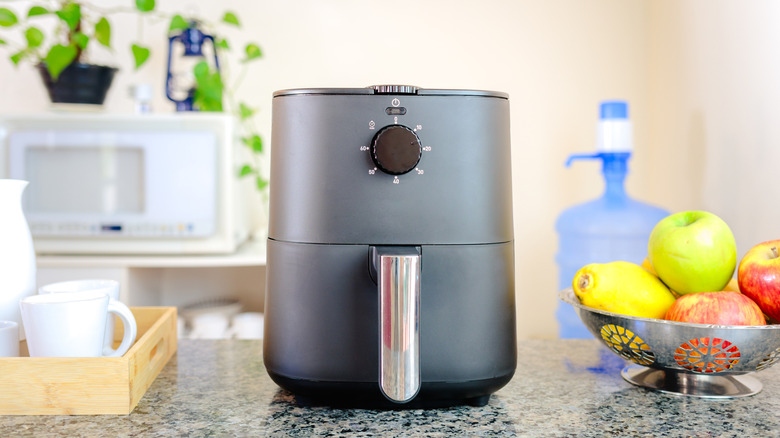
Air fryers are bulky devices. Ours is over a foot tall and almost a foot wide, and it's heavy. Since it can't sit under the cabinets during use (ignoring appliance steam and heat is a great way to ruin your cabinets), it has to be annoyingly lifted out each time. It does have a pretty wide range of functions that account for its size, but we have yet to use most of those, and likely never will. As for the settings we do use, they still don't make our oven or toaster obsolete. Besides, a lot of new ovens come with air fry settings, making a separate countertop air fryer even more unnecessary than it's ever been. You can also make only a small amount of food in one go, so is it even saving that much time?
Then there's the cleaning. You have to wait for it to completely cool and, unlike an oven, you can't just switch on a cleaning mode or use some baking soda, water, and elbow grease. You have to take the basket out and scrub it clean, often with difficulty, and you can't use any water or soap inside the rest of it, which isn't immune to grease and crumbs. Plus, if it's not thoroughly cleaned after each use, the grease builds up and polymerizes, becoming a thick, hardened sludge that's tough to remove.
Air fryers may not be as healthy as claimed
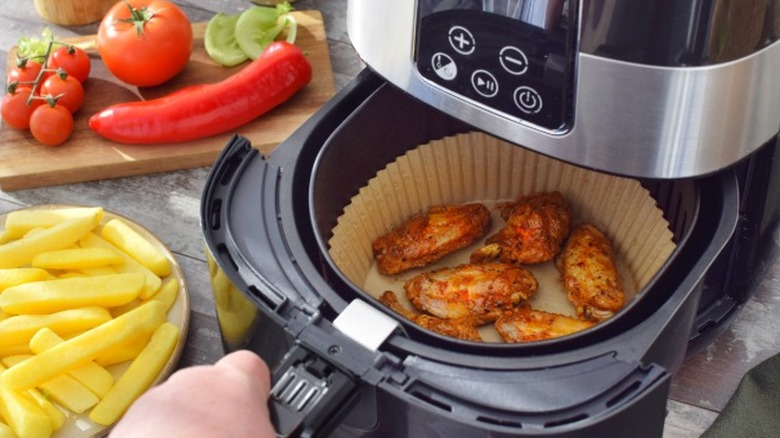
One of the biggest factors driving the air fryer trend is clever health-focused marketing. I've worked in marketing, and I know never to take value propositions like this at face value because they often stand on thin technicalities. All air fryers do is act as mini convection ovens (that's right — they're not even friers despite the name) to cook your food with less oil than if you actually fried it. However, these devices don't magically make your favorite fried foods healthy; what you eat still matters more than how you make it.
On a concerning note, at least one study (from the National Library of Medicine) has found that cooking in an air fryer releases higher levels of acrylamide — a potential carcinogen — than oven cooking. More research is needed before any firm conclusions are drawn, but it's worth adding that, because air fryers cook so fast, it's easy to char your food (ask me how I know). Eating burned food can also up your cancer risks, so that's no fun either. Regardless, I still use my air fryer because, well, it's there. Until the next trendy appliance comes along, it's here to stay, in all its unnecessary glory.